
10 Signs You Need an Interior Designer (Even If You Think You Don’t)
Most people don’t start a project thinking they’ll need an interior designer.
It usually begins with a few ideas, a saved photo here and there, maybe a couple of pieces you’re excited about. At first, it feels manageable—even fun. But as more decisions pile up, things start to shift.
You might find yourself going back and forth on choices, unsure if anything actually works together. The layout doesn’t feel quite right, or the space looks fine on its own but still feels off as a whole. Sometimes it’s not even clear what’s wrong—just that something isn’t clicking the way you expected.
I’ve seen this happen many times with clients who are thoughtful and have a strong sense of style. The challenge isn’t a lack of ideas—it’s figuring out how to bring everything together in a way that feels intentional, functional, and finished.
If you’re somewhere in that process, here are ten signs that it may be time to bring in an interior designer—even if you’ve been trying to make it work on your own.
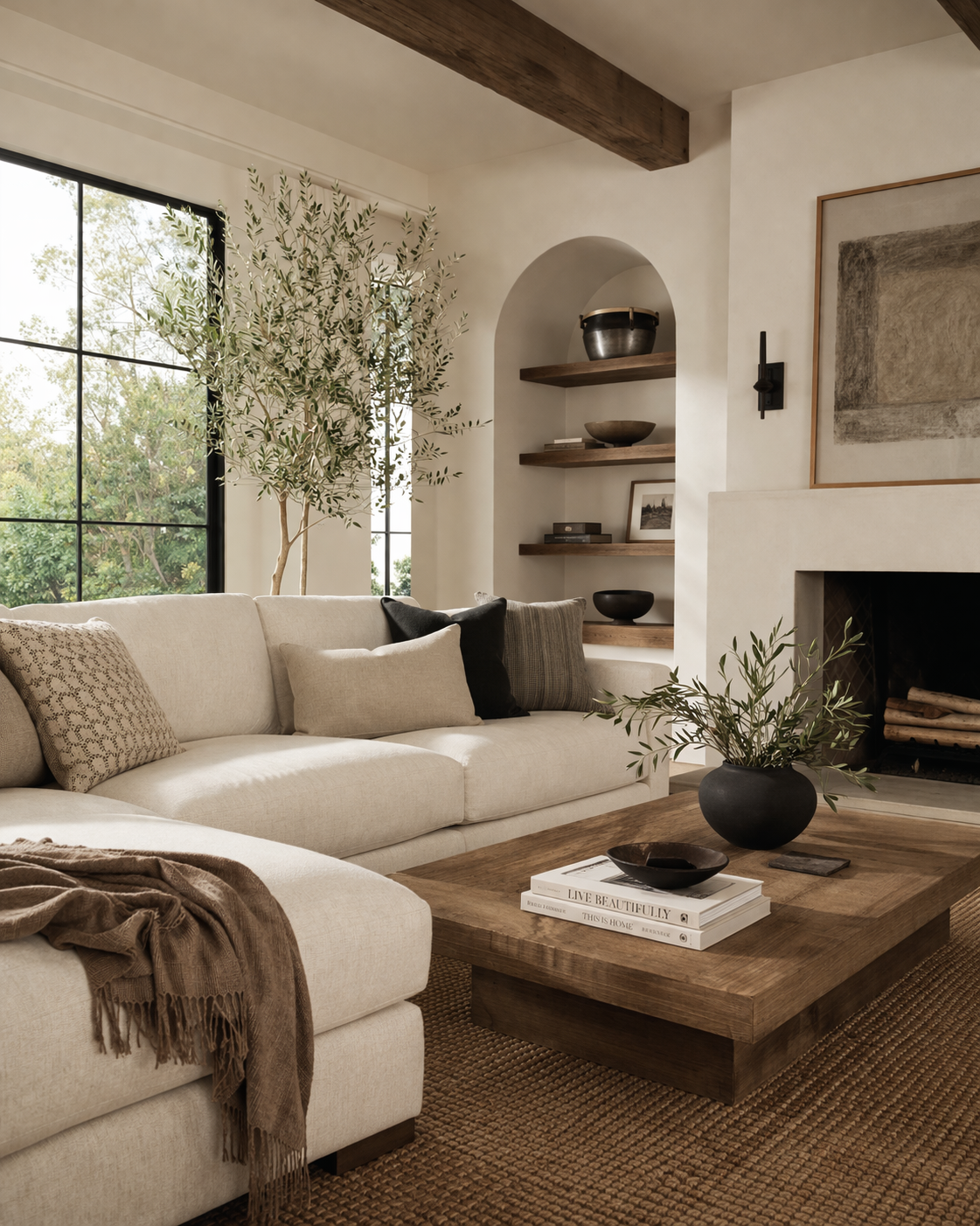
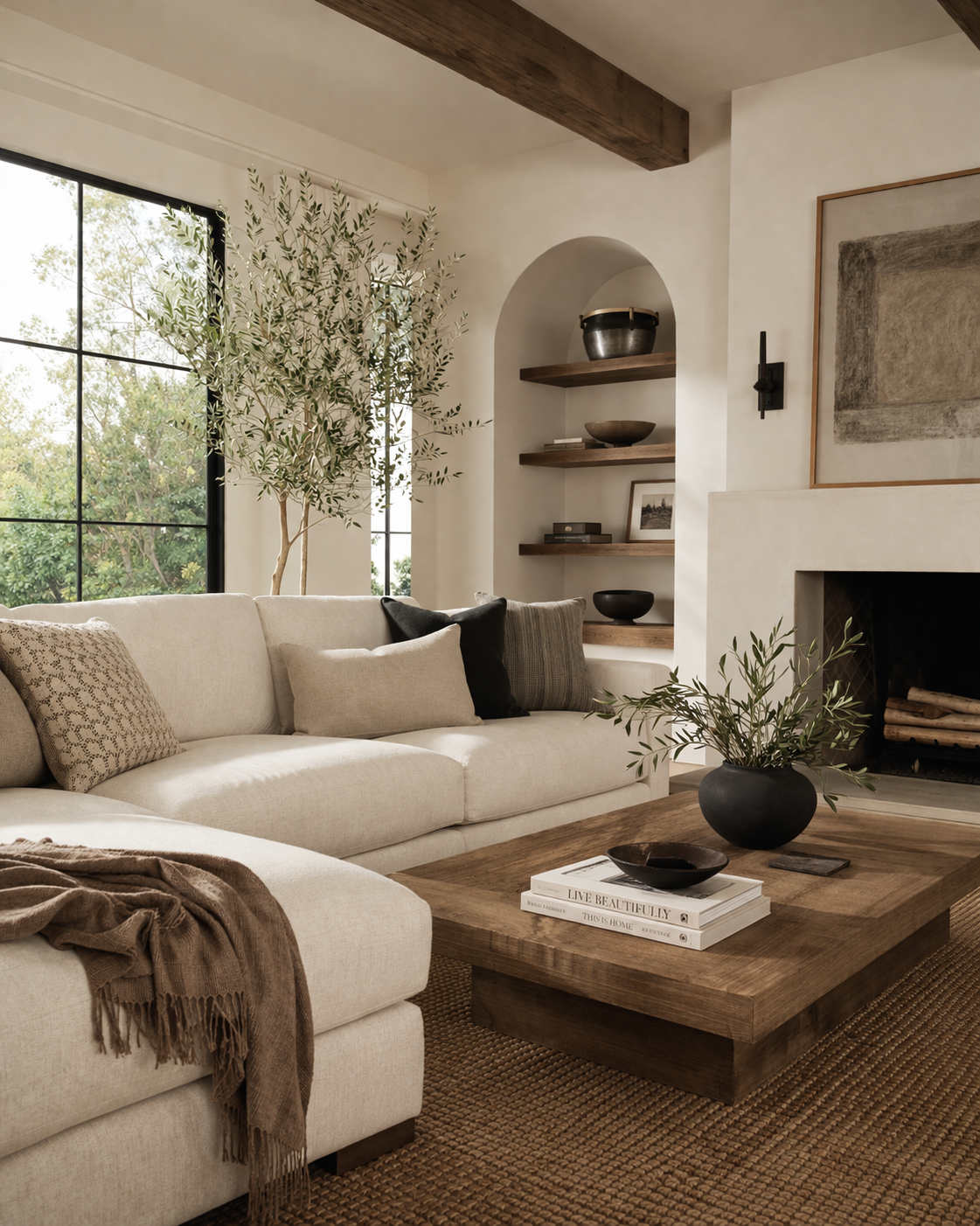
Modern rustic living room with layered neutral textures and warm wood accents. AI image generated.
1. You’ve Made Purchases, But the Room Still Doesn’t Feel Right
You’ve already started. Maybe you’ve bought a sofa, a rug, a coffee table—pieces you genuinely like on their own. But when everything comes together, the room still feels off.
It’s one of the most common situations I see.
Nothing is necessarily “wrong,” but something isn’t clicking. The scale might be slightly off, the layout doesn’t flow the way it should, or the pieces don’t relate to each other in a cohesive way. It can be frustrating because you’ve already invested time and money, yet the space doesn’t feel finished.
At this point, many people try to fix the issue by adding more—new decor, different accents, another piece of furniture—hoping it will pull everything together. More often than not, it just creates more noise.
This is where a designer shifts the approach. Instead of layering on more, we step back, look at the space as a whole, and figure out what’s actually causing the disconnect—whether it’s layout, proportion, or how each element relates to the next.
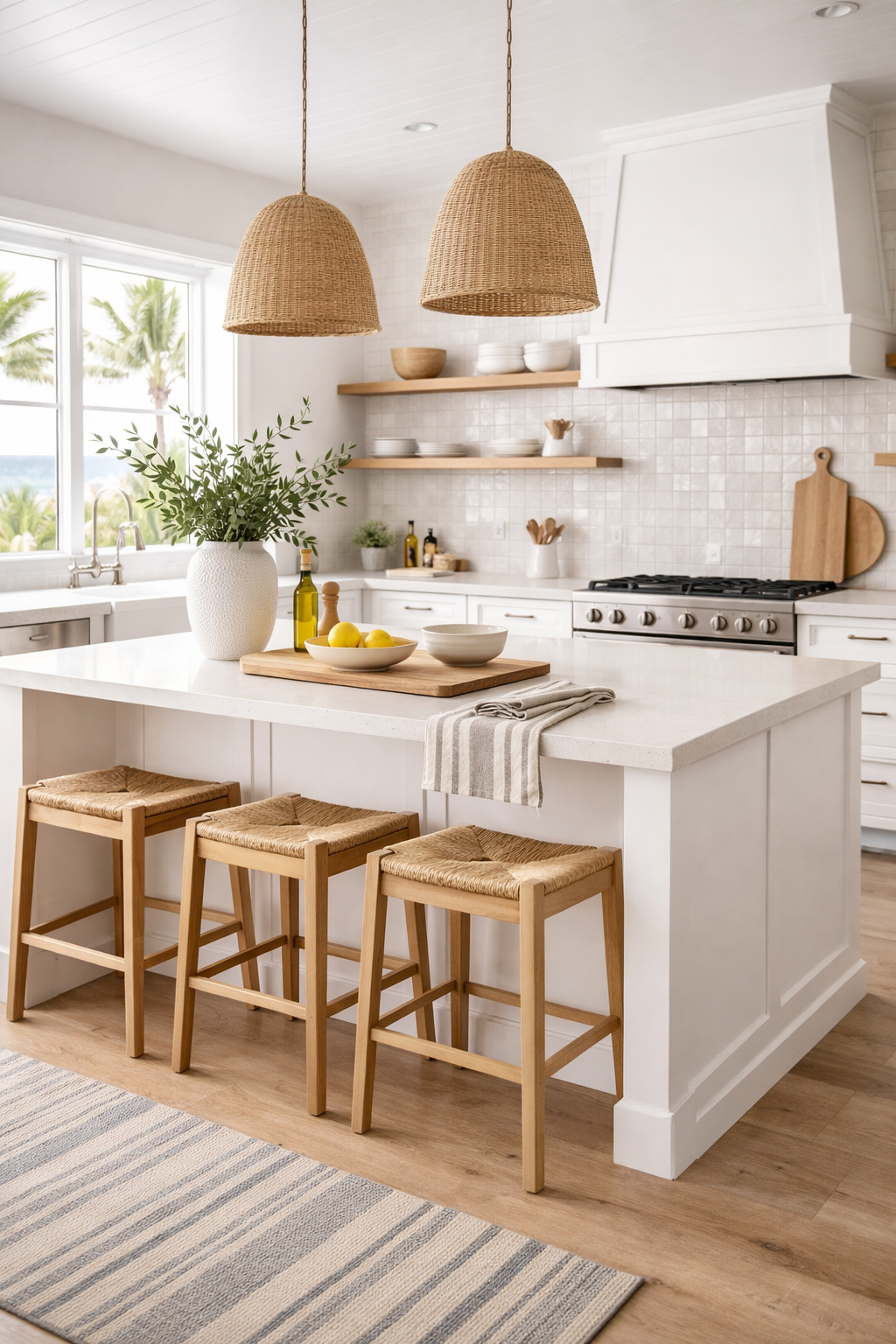
Modern coastal kitchen with light wood accents, soft neutral finishes, and a clean, relaxed layout. AI image generated.
2. You Keep Second-Guessing Every Decision
What should be simple decisions start to feel heavier than they should.
You find yourself going back and forth—this sofa or that one, light or dark, wood or metal. Even after making a choice, there’s that lingering doubt: Did I pick the right one? So you revisit it, compare more options, and end up right back where you started.
This kind of decision fatigue builds quickly. What was once an enjoyable process turns into something draining, and progress slows down because nothing feels certain.
I see this often with clients who have good instincts but don’t have a clear framework to guide their choices. Without that structure, every decision feels isolated instead of part of a bigger plan.
A designer removes that uncertainty by creating a clear direction from the start. Once the overall vision is defined, each decision becomes easier—and more importantly, you can move forward with confidence instead of constantly second-guessing yourself.
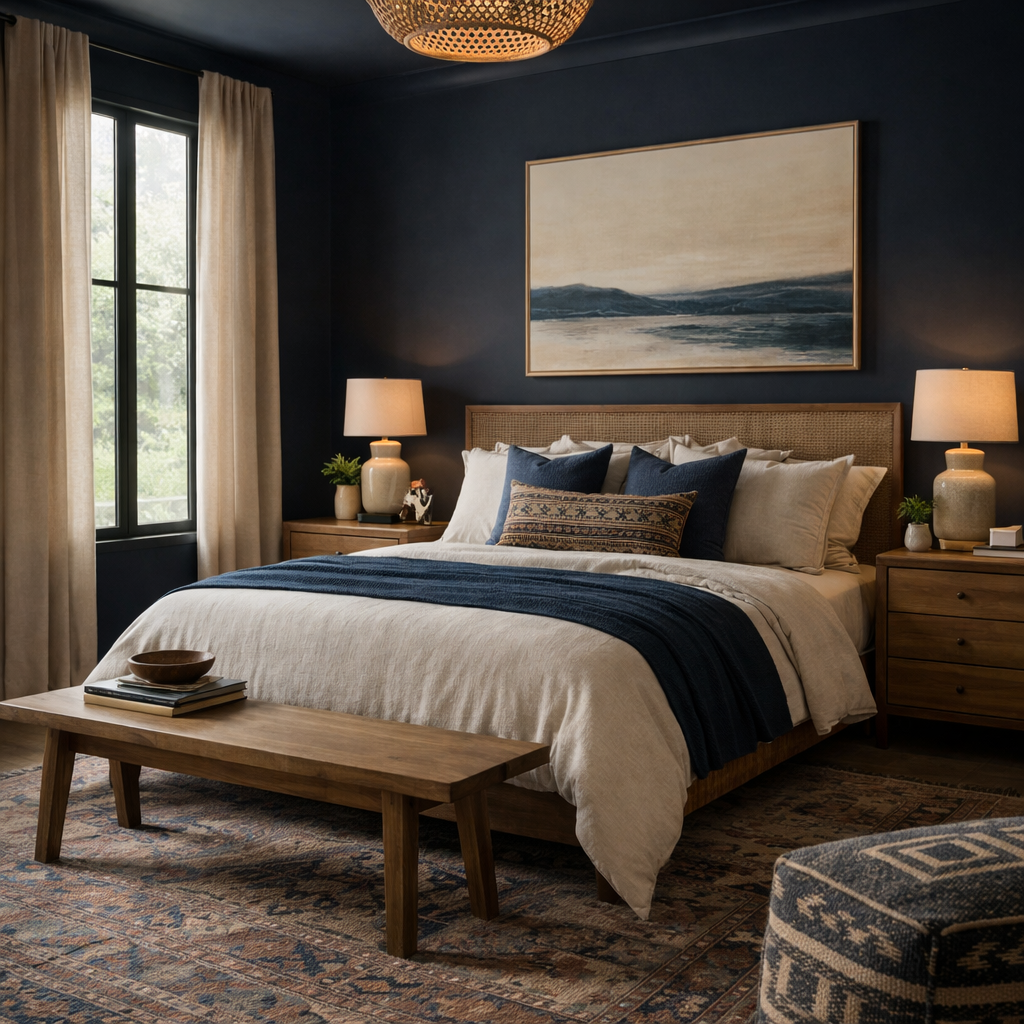
Modern bohemian bedroom with deep blue walls, warm wood tones, and layered natural textures for a cozy, grounded feel. AI image generated.
3. You’re Spending More Than You Expected (and Still Not Done)
At the beginning, it feels like you have a reasonable budget in mind.
But as the project moves along, costs start adding up in ways you didn’t anticipate. A piece doesn’t work, so it gets replaced. Something looks different in person, so you try another option. Shipping, returns, and small add-ons quietly stack on top of each other.
Before you know it, you’ve spent more than planned—and the space still isn’t where you want it to be.
This is one of the biggest misconceptions about hiring a designer. Many people assume it’s an added expense, when in reality, it often prevents costly missteps. Having a clear plan from the beginning means fewer trial-and-error purchases and fewer decisions that need to be undone later.
It’s not about spending more—it’s about spending with intention and getting it right the first time.
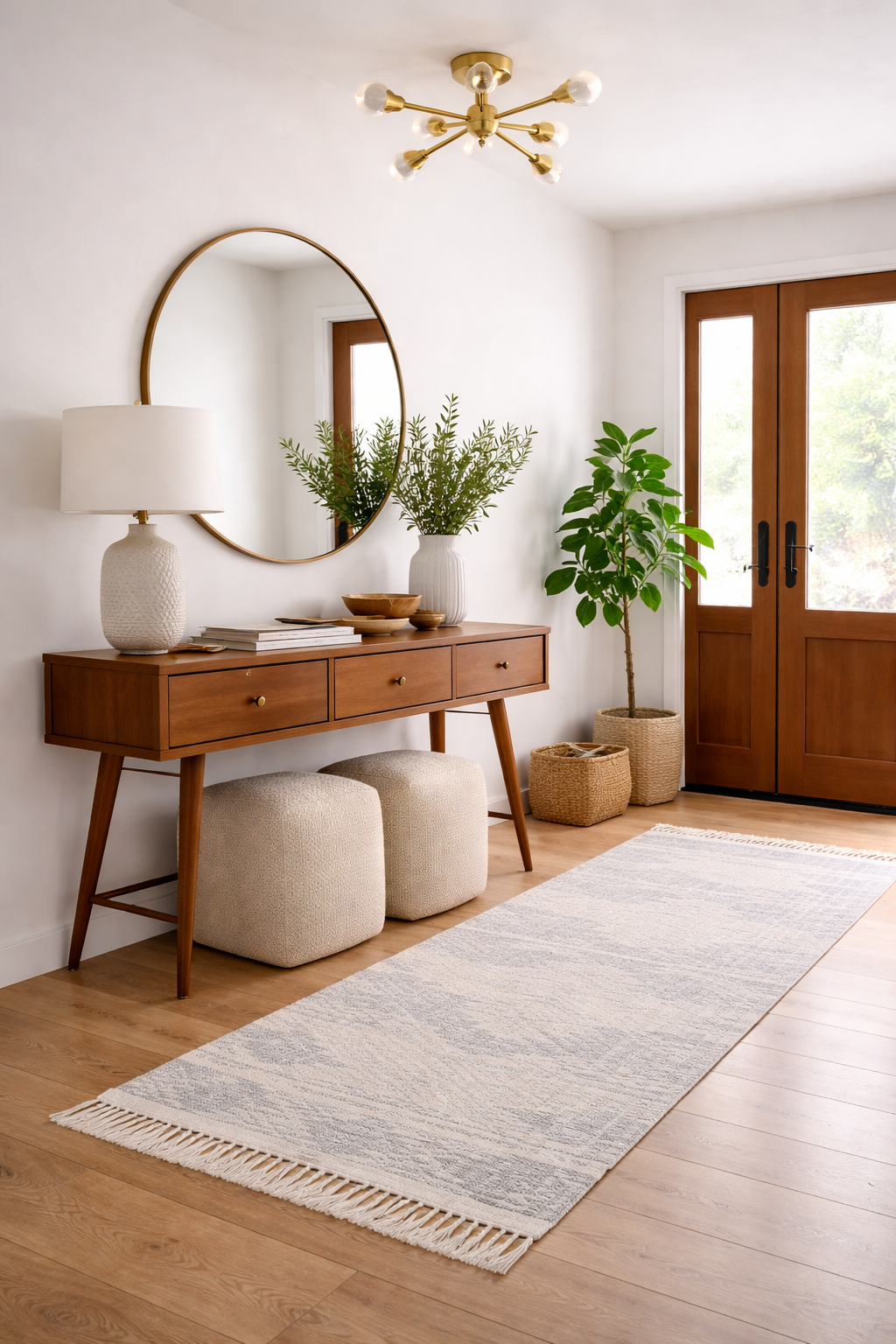
Mid-century modern foyer with a warm wood console, brass accents, and clean styling for a welcoming first impression. AI image generated.
4. You Have Ideas, But Don’t Know How to Pull Them Together
You know what you’re drawn to.
You’ve saved images, bookmarked products, maybe even started building a vision in your head. There’s a clear sense of your style—but when it comes to putting everything into one cohesive space, it’s harder than expected.
Some pieces feel like they belong, others don’t. The overall look starts to feel a bit scattered, even though each individual item works on its own.
This is where the difference between having good taste and executing a complete design really shows.
Design isn’t just about selecting beautiful pieces—it’s about how they relate to each other. Scale, proportion, color balance, and material mix all play a role in making a space feel intentional rather than pieced together.
A designer connects those dots. Instead of a collection of ideas, the space becomes a complete, cohesive environment where everything works together.
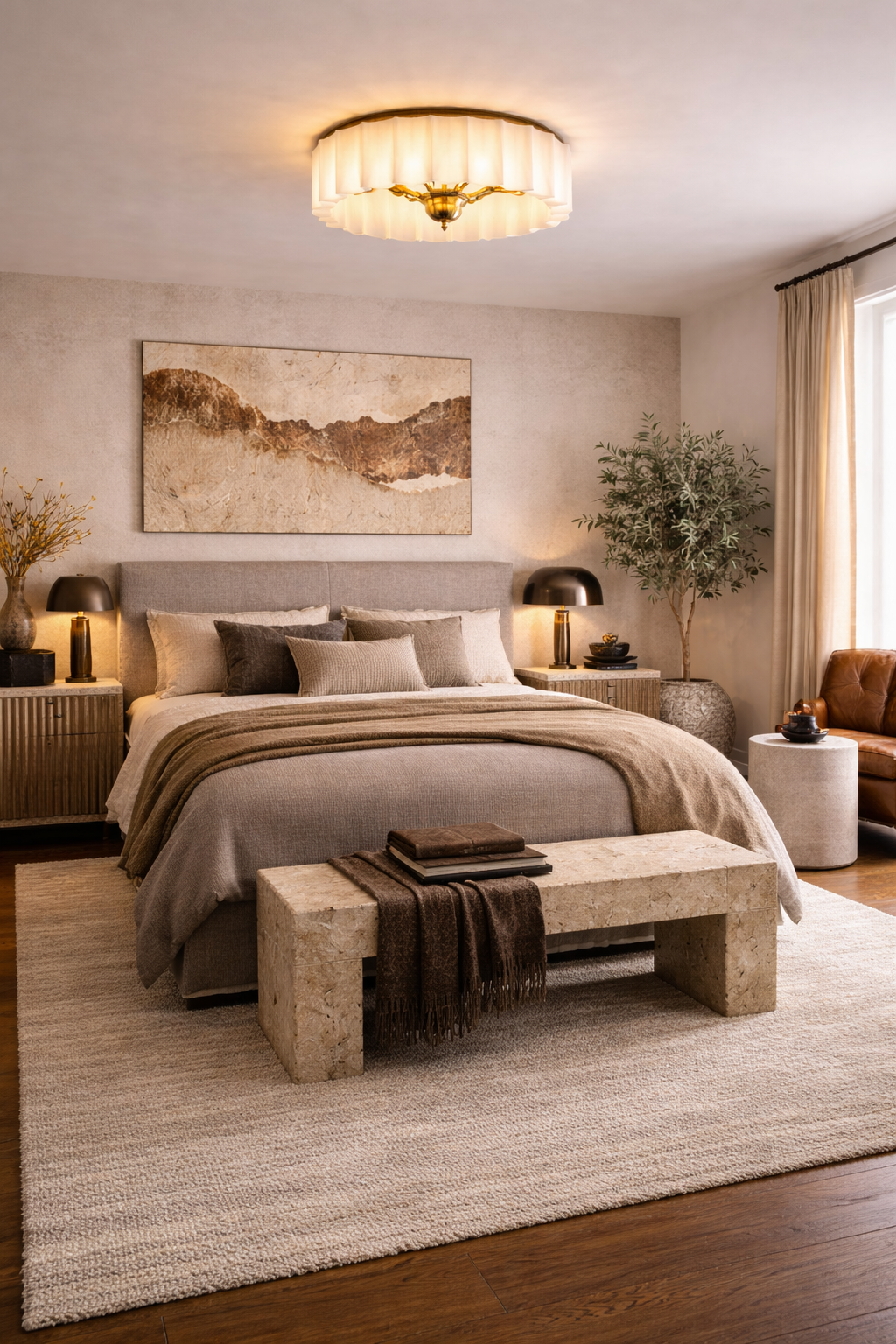
A modern brutalist bedroom with warm neutral tones, layered textures, and a sculptural Florentine-style flush mount that softens the space. AI image generated.
5. The Layout Feels Off, No Matter What You Try
You’ve moved things around more than once.
Maybe the sofa has been in three different spots, the chairs keep shifting, and you’ve tried a few variations hoping something will finally click. But no matter what you do, the room still doesn’t feel quite right.
It might feel cramped in one area and empty in another, or the flow through the space feels awkward. Sometimes the furniture technically fits, but the room just doesn’t function the way you expected.
This is where layout becomes more than just placement—it’s about how the space is used.
I’ve worked with many clients who thought they needed new furniture, when in reality, the issue was how everything was arranged. Small adjustments in layout can completely change how a room feels and functions.
A designer looks at the space with fresh eyes, taking into account scale, circulation, and how you actually live in the room. Once the layout is resolved, everything else tends to fall into place much more naturally.
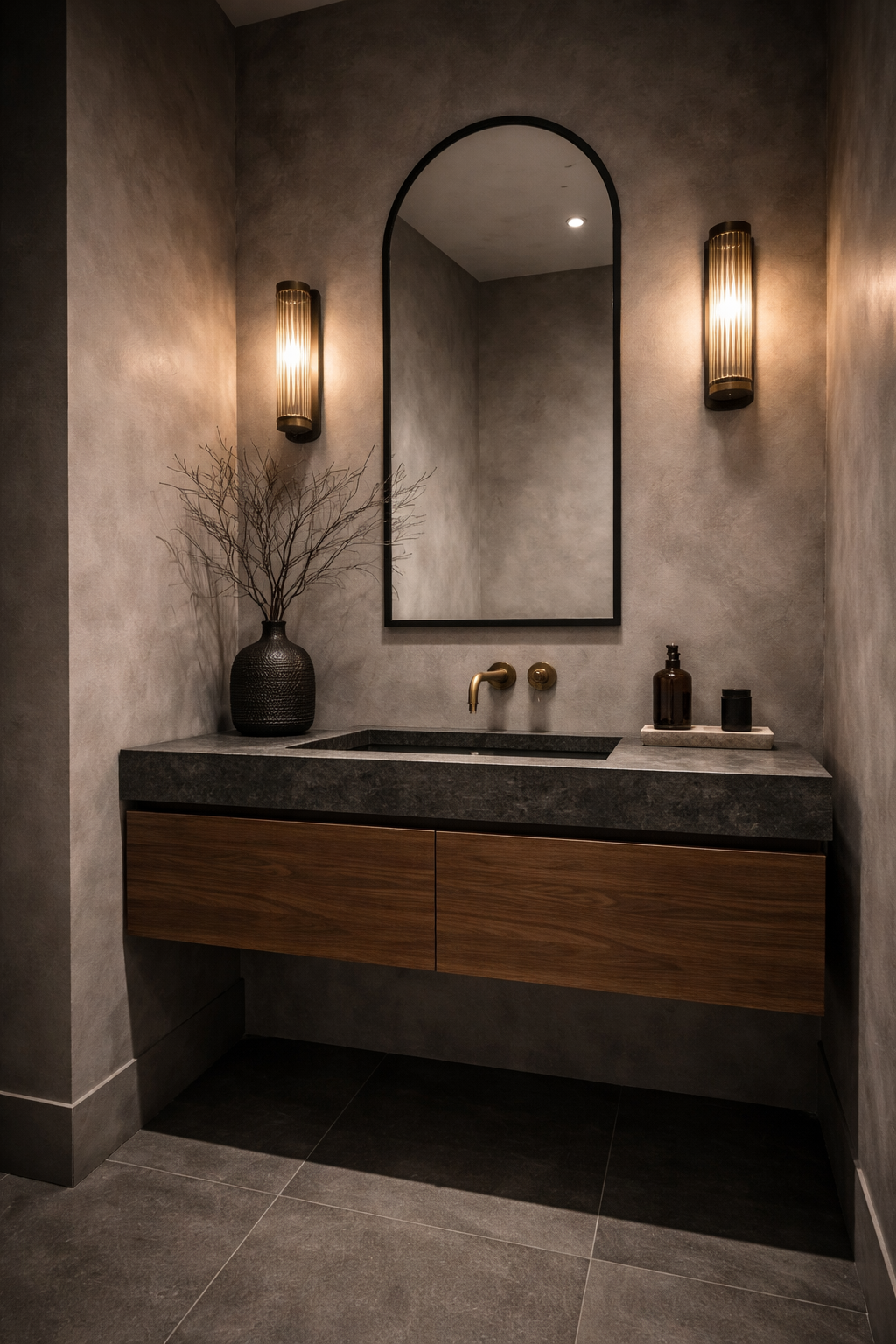
A modern industrial powder room featuring a floating walnut vanity, textured stone surfaces, and warm brass lighting for a refined, moody look. AI image generated.
6. You’re Short on Time to Do It Right
Designing a space takes more time than most people expect.
It’s not just picking a few pieces and calling it done. It’s researching options, comparing dimensions, checking materials, tracking orders, coordinating deliveries, and making sure everything works together as it comes in. Even a single room can take hours of back-and-forth before it starts to come together.
For many of my clients, it’s not that they can’t do it—it’s that they don’t have the time to do it well.
Projects get stretched out over months, decisions get delayed, and the space stays in that “almost finished” stage longer than it should.
Working with a designer streamlines the process. Instead of juggling dozens of decisions on your own, you’re presented with a clear plan that’s already been thought through. It saves time, reduces stress, and helps you move forward without the project taking over your schedule.
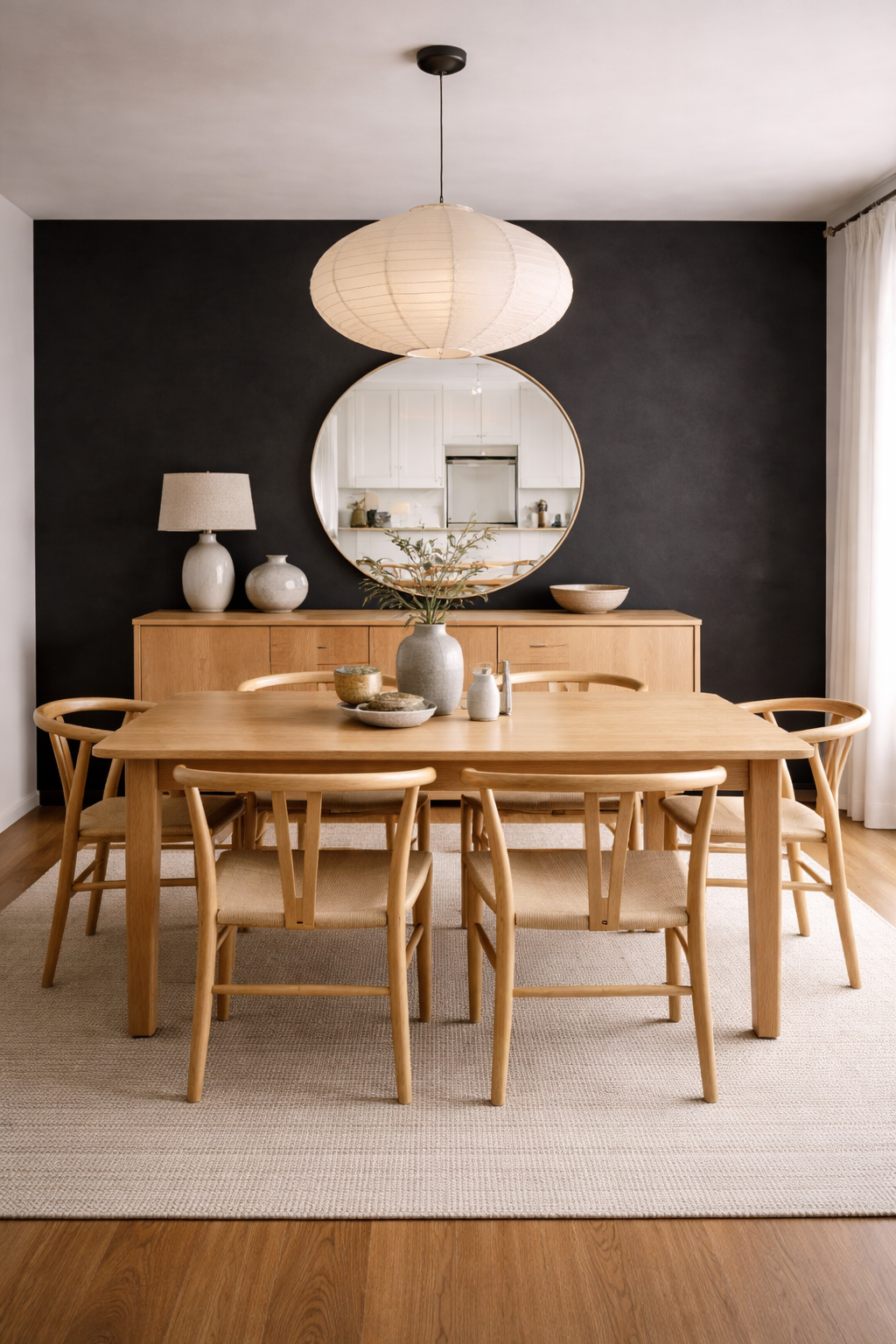
A Scandinavian dining room with a bold black accent wall, light oak furniture, and a round mirror that reflects the adjacent kitchen for a clean, cohesive look. AI image generated.
7. You’re Unsure How to Balance Style with Function
You want the space to look good—but it also needs to work for your everyday life.
That’s where things can get tricky.
A piece might look beautiful online, but it doesn’t hold up to how you actually use the room. Or the layout looks clean and minimal, but it doesn’t support how you move through the space or spend time in it. Sometimes it goes the other way—the room functions well, but it feels flat or unfinished.
Finding that balance isn’t always obvious.
I’ve worked with clients who were torn between choosing what looks best and what feels practical, when the goal is to have both working together. A well-designed space should support your lifestyle just as much as it reflects your style.
A designer helps bridge that gap—making sure the space not only looks intentional, but also feels comfortable, usable, and tailored to how you live day to day.
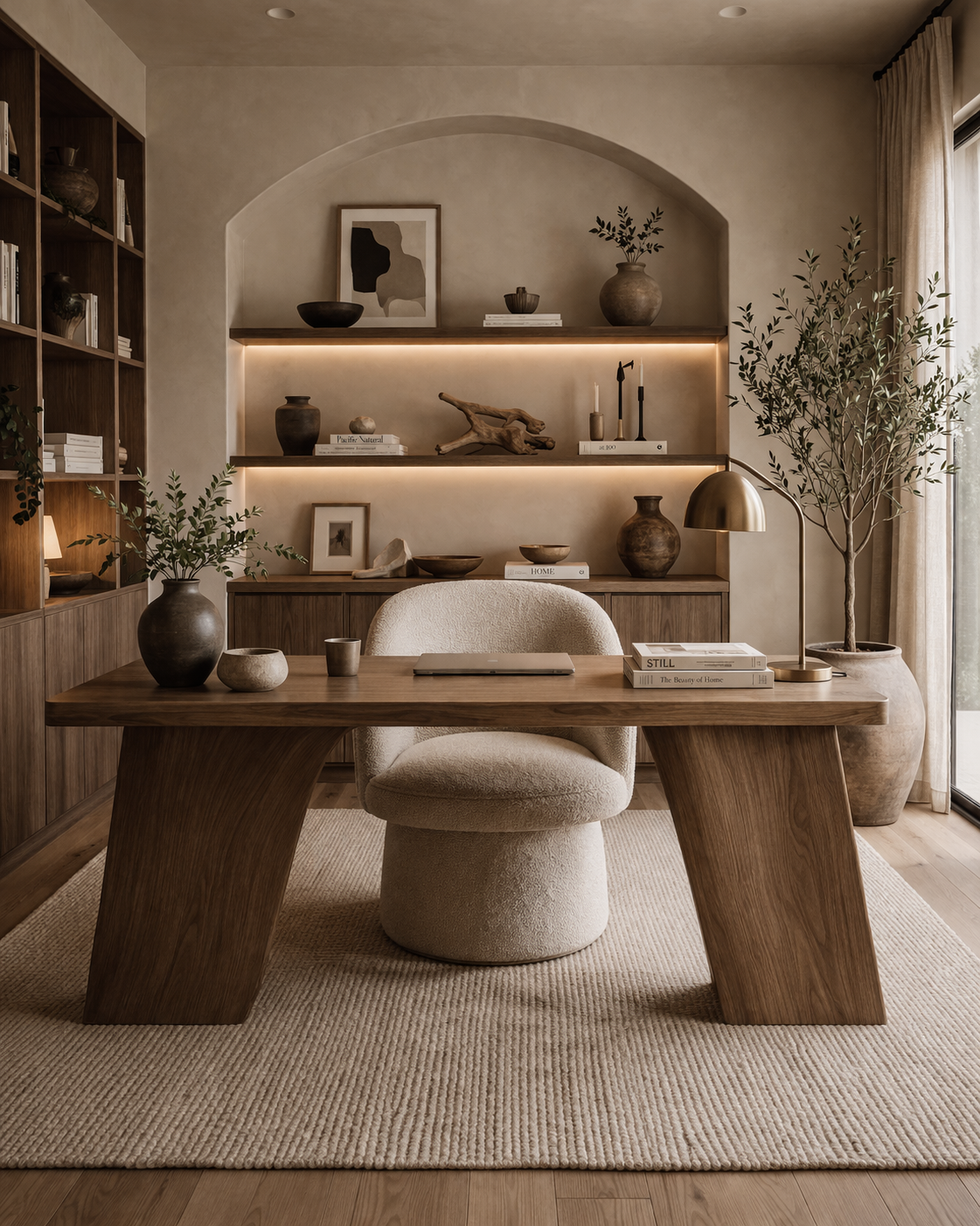
A modern organic home office featuring light wood finishes, arched built-in shelving, and a woven pendant that adds warmth and texture to the space. AI image generated.
8. You’re Overwhelmed by Too Many Options
There are endless choices out there.
Thousands of sofas, countless finishes, fabrics, lighting options—it never really stops. At first, having so many options feels exciting. But after a while, it becomes harder to narrow things down.
Everything starts to blur together.
You might find yourself opening dozens of tabs, comparing similar pieces, or saving more ideas without making any real decisions. The process slows down, not because you don’t care, but because there’s just too much to sort through.
I’ve seen this happen often. The issue isn’t a lack of options—it’s the absence of a clear direction to filter them.
A designer simplifies that process. Instead of sorting through everything, you’re presented with options that already align with your space, your style, and your budget. It turns an overwhelming experience into a focused one, where decisions feel manageable again.
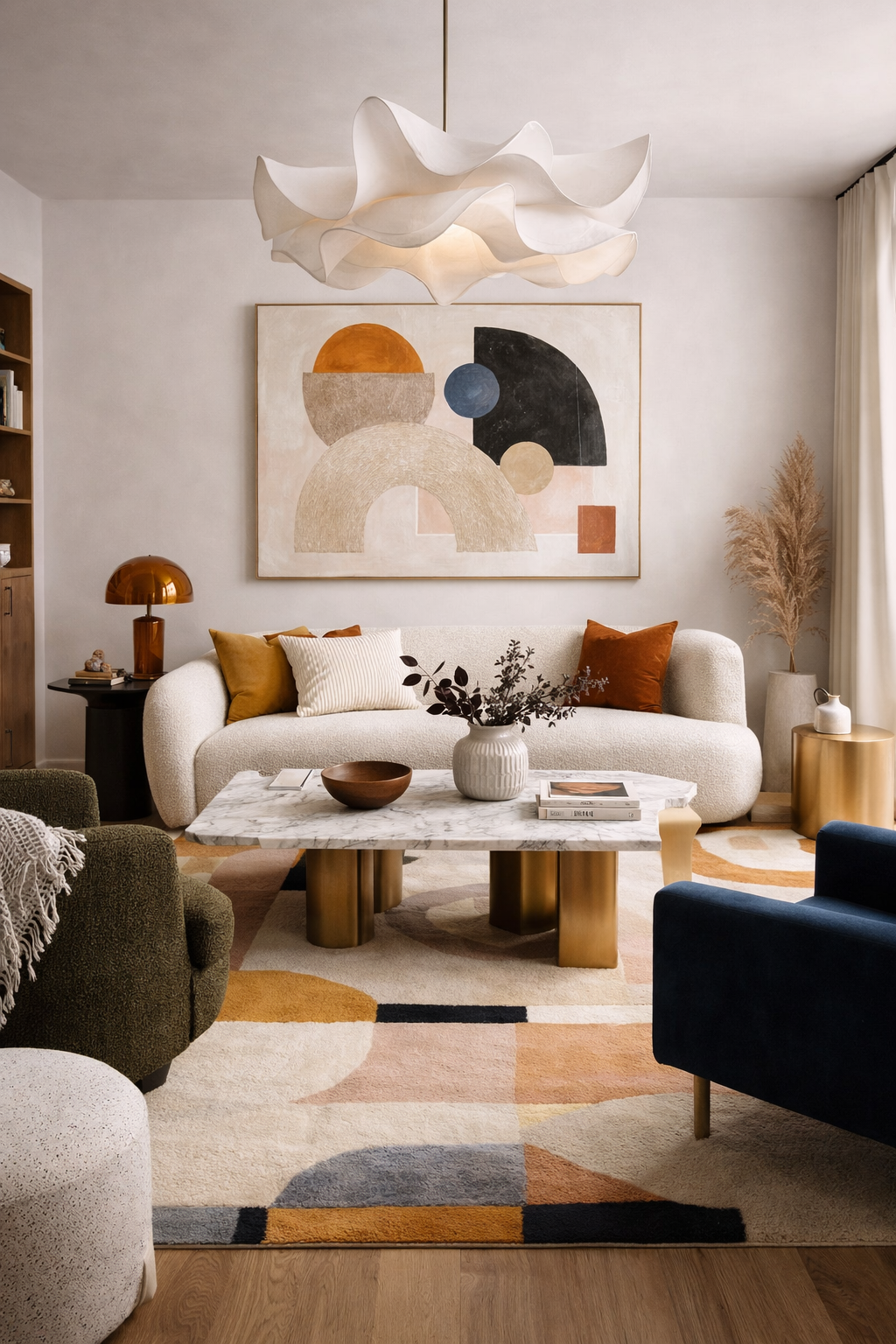
A layered mix of shapes, textures, and statement lighting brings this modern eclectic living room together. AI image generated.
9. You’re Avoiding Certain Decisions Altogether
There’s usually one part of the project that keeps getting pushed aside.
It might be window treatments, lighting, artwork, or even just final styling. Everything else is mostly in place, but this one category feels harder to tackle, so it gets delayed again and again.
Over time, the space stays in that almost-finished state.
I’ve seen this happen with clients who made solid progress on their own but got stuck on the details that pull everything together. These decisions often feel smaller, but they have a big impact on how complete the room feels.
Avoiding them doesn’t make them easier—it just leaves the space unresolved.
A designer helps move things forward by addressing those final layers with intention. Once those pieces are in place, the room shifts from “almost there” to finished in a way that feels cohesive and complete.
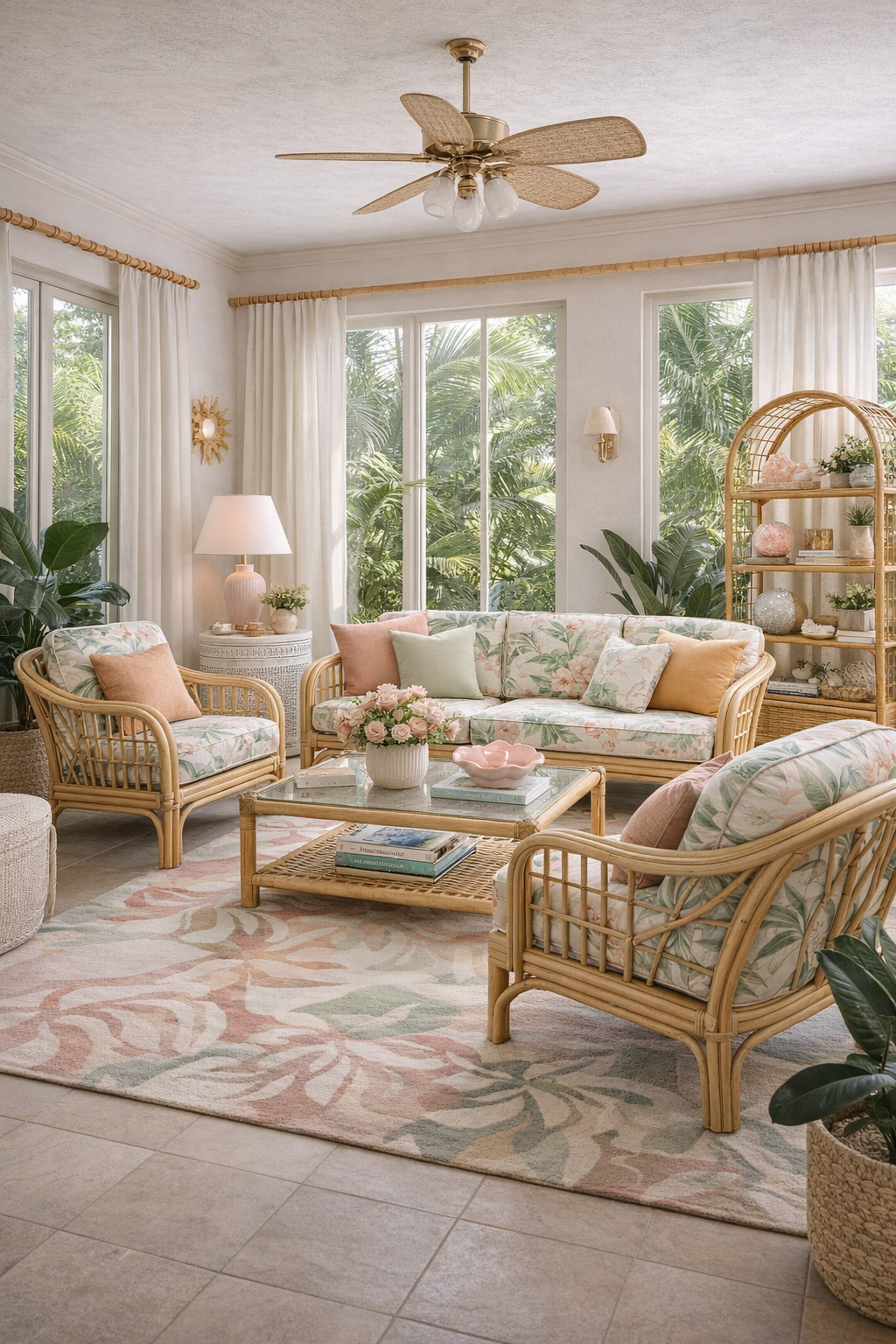
A fresh take on a classic tropical sunroom, blending nostalgic charm with a lighter, more modern approach. AI image generated.
10. You Want the Space to Feel Finished—Not Just “Good Enough”
At a certain point, the room is… fine.
Everything is in place, it functions well enough, and nothing stands out as a major issue. But it doesn’t quite have that finished feeling you were hoping for. It doesn’t feel layered, intentional, or fully pulled together.
So you live with it.
This is where many people stop—not because they’re satisfied, but because they’re tired of making decisions and just want to move on.
But there’s a difference between a space that works and a space that feels complete.
I’ve worked with clients who were close, but not quite there. What was missing wasn’t more furniture—it was refinement. Adjusting proportions, adding the right textures, editing what didn’t belong, and bringing everything into balance.
A designer helps take a space from “good enough” to something that truly feels finished—where every element has a purpose and the room finally feels the way you imagined it would.
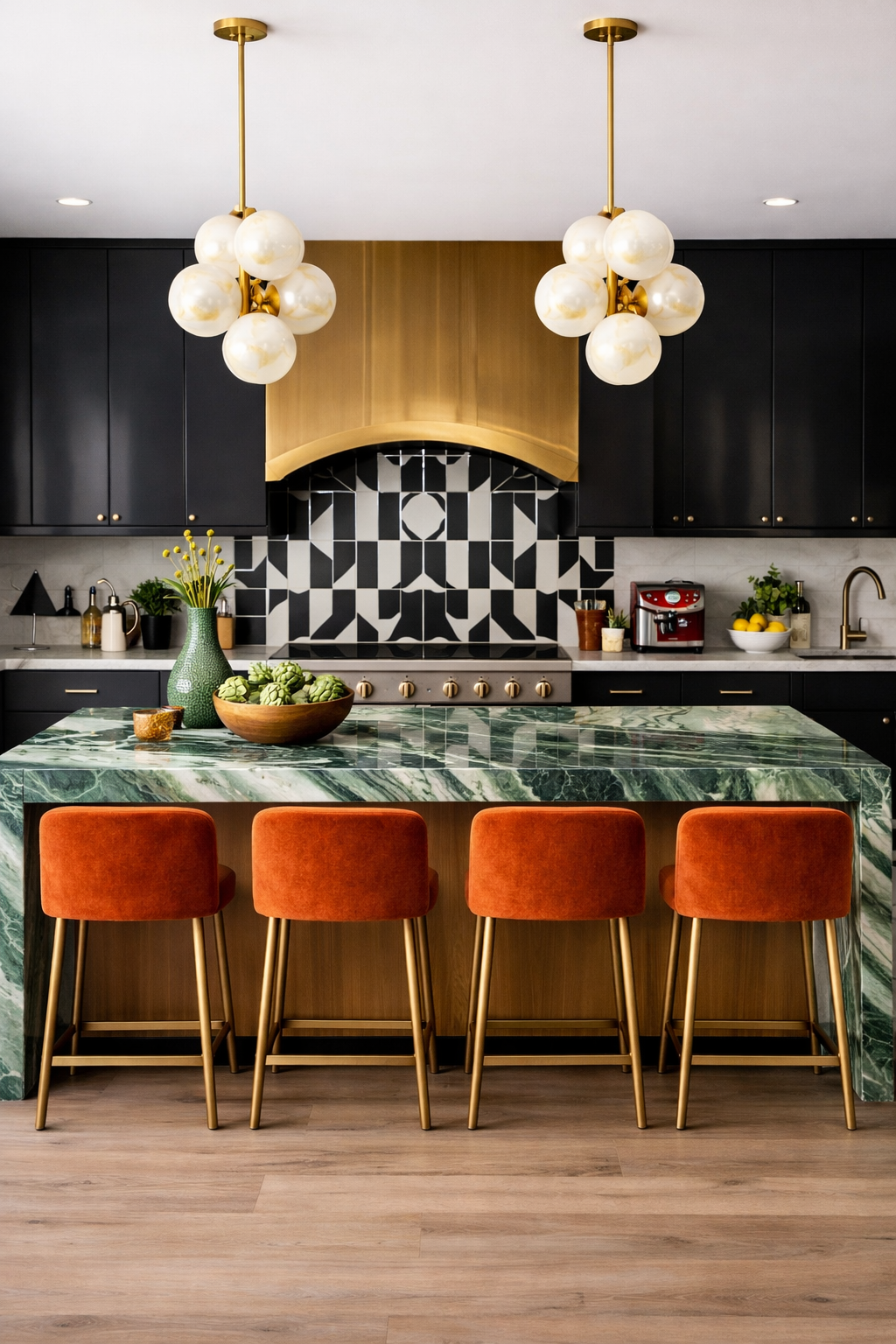
A bold, layered approach to kitchen design that leans into contrast, material richness, and statement lighting. AI image generated.
If you found yourself relating to even a few of these signs, you’re not alone.
Most of the clients I work with didn’t start out planning to hire a designer. They made thoughtful decisions, explored ideas, and put real effort into their spaces—until they reached a point where something still wasn’t coming together the way they expected.
That’s usually where I come in.
My virtual interior design service is designed to help you move forward with clarity—whether that means refining a layout, narrowing down selections, or creating a complete plan that brings everything together in a cohesive and intentional way.
If you’re ready to stop second-guessing and finally feel confident in your space, you can explore my virtual interior design services below.
