Ask Joshua: Can You Put an Area Rug Over Carpet?
Hi Joshua,
I recently moved into a rental home here in Berkeley, and it has wall-to-wall carpet almost everywhere—from the living room to the bedrooms. The carpet itself is fine, but it’s pretty dull and doesn’t add much personality to the space.
I’d love to make each room feel a little more unique and interesting. I’ve been thinking about adding area rugs to bring in some color and texture, but I’m not sure if putting rugs over carpet is actually a good idea. Would that look stylish, or would it end up looking weird or tacky?
Thank you,
Melissa
Berkeley, California
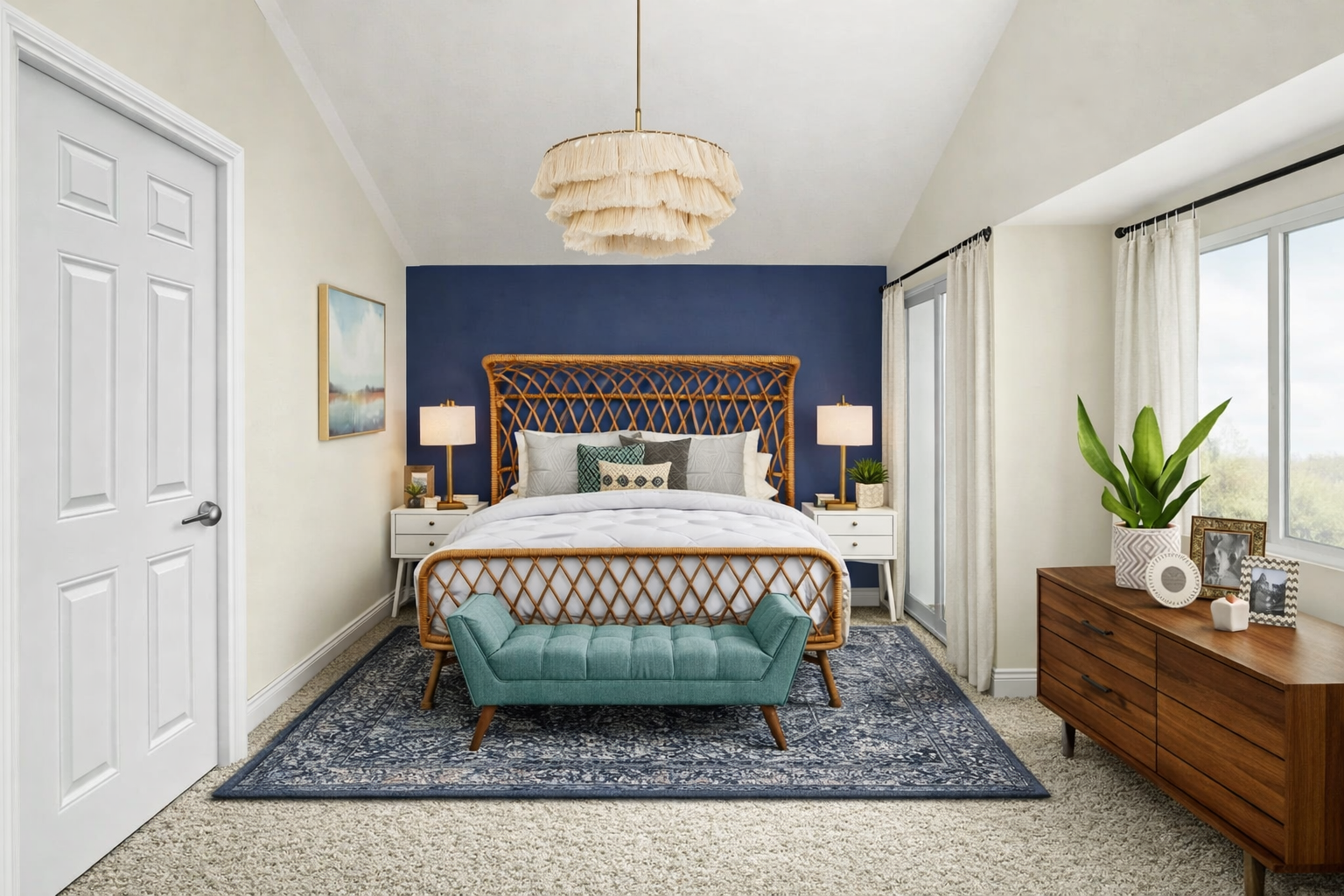
Modern bohemian style primary bedroom designed by Joshua Jones. This photorealistic image was generated with AI based on Joshua’s original 2D design rendering and shows how a large area rug can be layered over wall-to-wall carpet to add texture, color, and definition.
Hi Melissa,
Great question—and you’re definitely not the only one wondering about this. Many rental homes and apartments come with wall-to-wall carpet, and while it’s practical, it often feels bland and doesn’t add much character to the space.
The short answer is yes—you can absolutely place an area rug over carpet. In fact, designers often use this approach to introduce color, texture, and definition to a room, especially when replacing the existing carpet isn’t an option.
In homes with neutral carpeting, layering a rug can completely change the atmosphere of the space. A thoughtfully chosen rug helps anchor furniture, establish a seating area, and add visual interest that the original carpet might lack. It’s also a great way to give each room its own personality, which is exactly what you’re hoping to do.
That said, the key is choosing the right type of rug and using it intentionally.
For example, rugs with a low pile or flat weave tend to work best over carpet. These styles sit more smoothly on top of the existing surface and create a cleaner look. Natural fiber rugs, such as wool or flat-woven styles, can also add a nice layer of texture without feeling bulky.
Size is another important factor. A rug that’s too small can end up looking like it’s floating awkwardly in the middle of the room. Instead, choose one large enough to anchor your furniture. In a living room, for instance, the front legs of the sofa and chairs should ideally sit on the rug so the seating area feels visually connected.
Rug Size Guide
One situation where layering rugs might not work as well is when the existing carpet is very thick or plush. In those cases, the rug can shift more easily and may not sit as flat. Using a rug pad designed specifically for carpet can help keep everything in place.
From a design perspective, adding rugs over carpet can actually elevate a room that might otherwise feel a bit generic. Many homes come with builder-grade carpet in neutral tones, and while it serves a purpose, it doesn’t always contribute much to the overall design. A thoughtfully selected rug can introduce pattern, warmth, and personality, making the space feel more curated.
So no—it won’t look weird or tacky if done thoughtfully. Quite the opposite, actually. When layered properly, a rug over carpet can make a room feel more intentional and inviting.
If your goal is to give each room its own identity, rugs are one of the easiest and most effective ways to do it—especially in a rental where permanent changes may not be possible.
Warmly,
Joshua
Have interior design related questions? You can ask Joshua here.