Ask Joshua: Are Granite Countertops Outdated?
Hi Joshua,
My husband and I are considering renovating our kitchen early next year. Because we may sell the house within a few years, we spoke with several local real-estate agents about which improvements could support its resale value.
They all told us that granite countertops are no longer popular and that buyers do not want them. I was surprised because I love the natural variation and character of granite.
Are granite countertops truly outdated? If we decide against granite, which countertop materials should we consider instead?
Thank you,
Susan - Santa Clarita, California
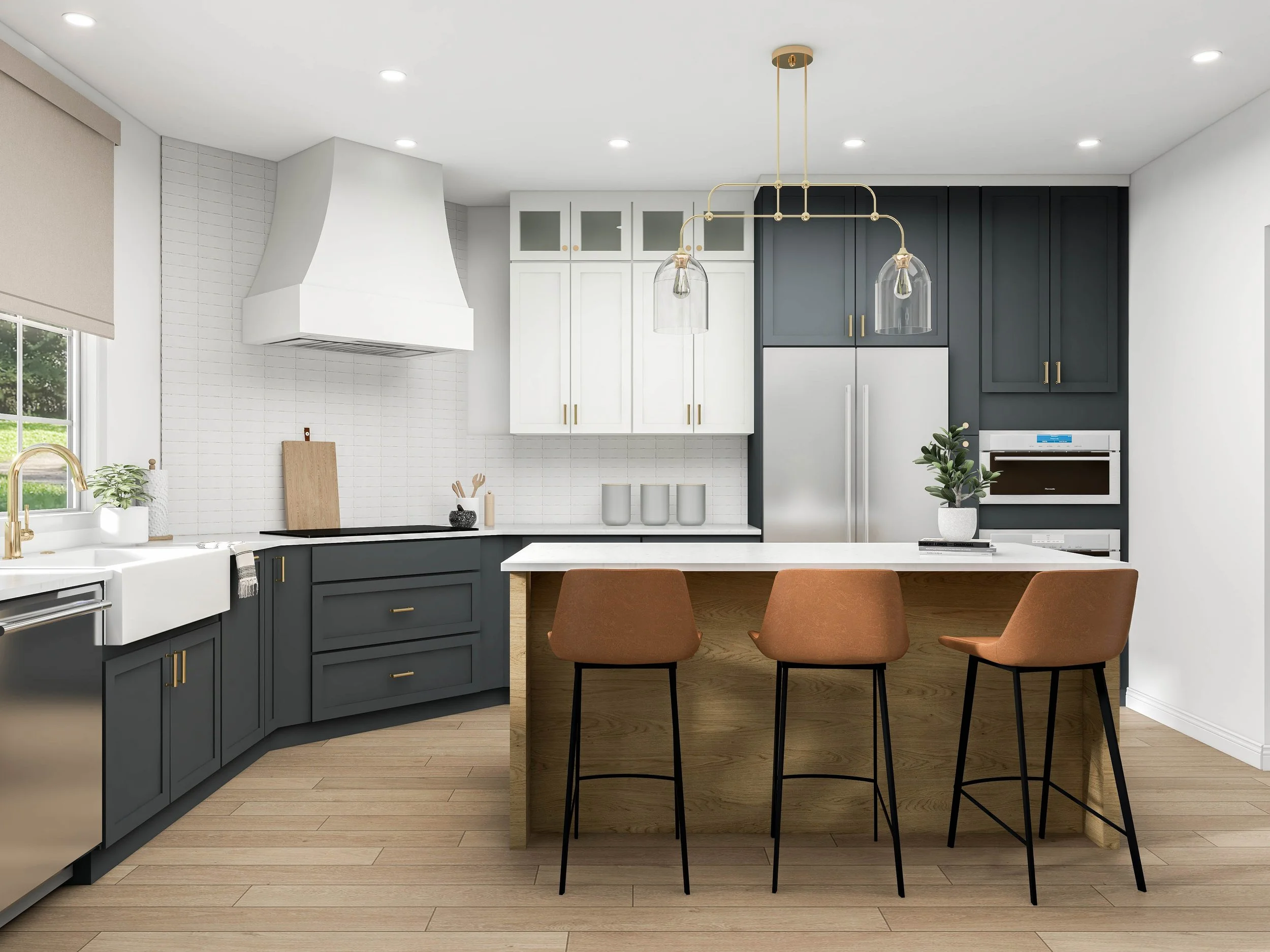
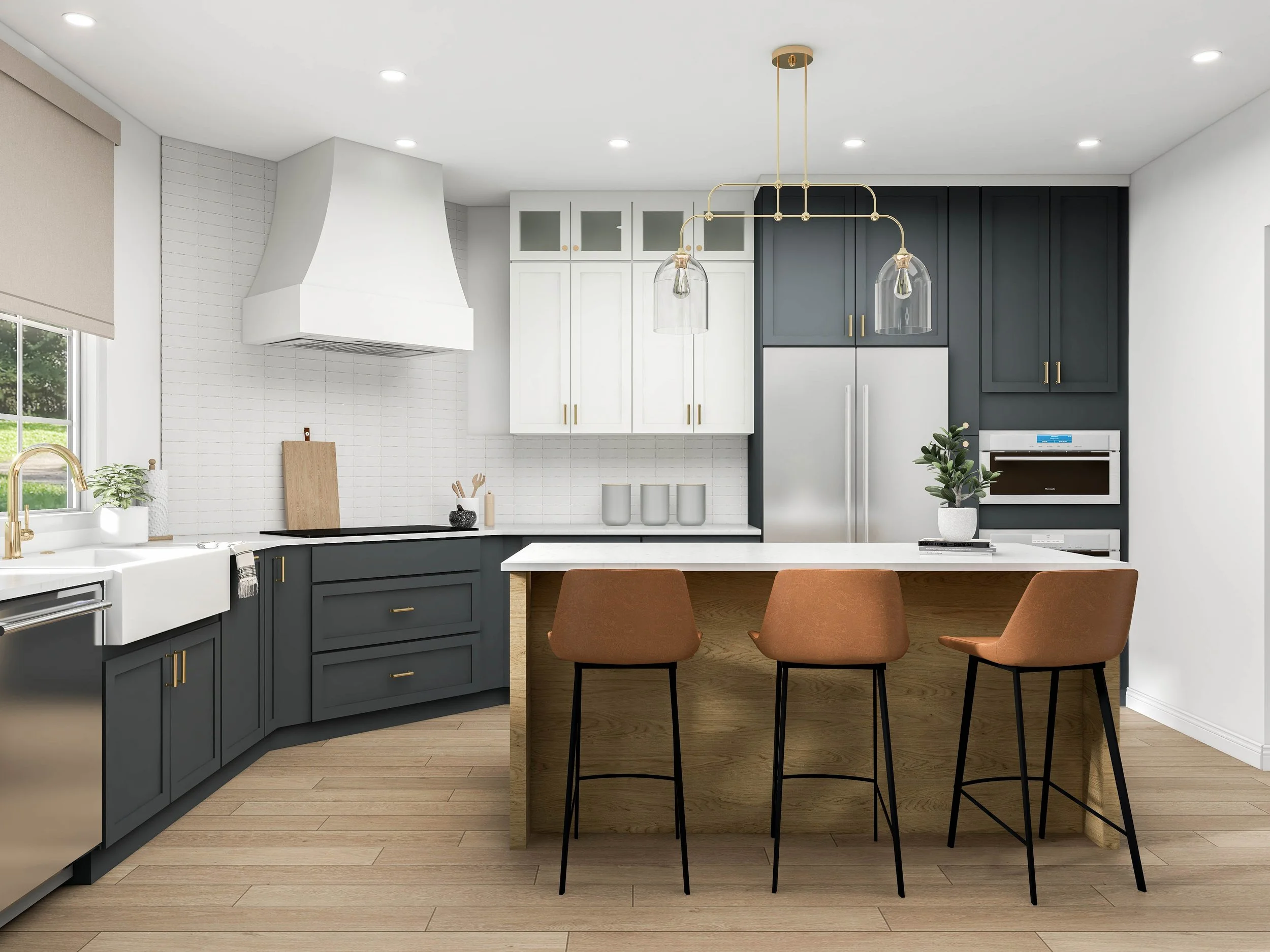
A Mediterranean-style kitchen with white slab countertops, contrasting cabinetry, and a natural-wood island, designed by virtual interior designer Joshua Jones of JJones Design Co.
Hi Susan,
Thank you for writing in with such an important renovation question. Granite countertops are not universally outdated, but certain granite styles and kitchen combinations can make a space feel dated.
During the 1990s and early 2000s, highly polished granite with dense speckling and strong color variation became extremely common. When those countertops are combined with ornate cabinetry, heavy decorative tile, and other finishes from the same period, buyers may associate the entire kitchen with an older design trend.
That does not mean granite itself is no longer desirable. Granite is a natural material with unique movement, color, and mineral variation. Many current granite selections have quieter patterns, softer colors, or dramatic veining that can look sophisticated in a thoughtfully designed kitchen. Honed and leathered finishes can also give granite a different character than the glossy slabs many people remember.
Because you may sell within a few years, the opinions of real-estate professionals who understand your local market deserve consideration. However, I would ask them to clarify whether buyers are rejecting all granite or reacting to particular colors and styles commonly found in older kitchens. Those are two very different conclusions.
Look at recently renovated homes in your neighborhood and price range. Pay attention to which countertop materials appear in listings that sell successfully and how those materials are paired with cabinetry, flooring, backsplashes, and hardware. Resale appeal depends on the kitchen as a whole rather than the countertop material alone.
If you still love granite, visit a reputable stone yard before ruling it out. You may find a slab that gives you the natural beauty you prefer while looking completely different from the granite associated with previous design trends. Select the actual slab rather than relying only on a small sample because natural stone can vary significantly from one section to another.
You should also consider how long you will realistically use the kitchen. Even if you expect to sell within a few years, you will still live with the renovation in the meantime. Choosing a surface solely for an unknown future buyer can leave you with a kitchen that does not reflect your own preferences.
What Countertop Materials Should You Consider?
If you decide to explore other materials, these are some of the most common options:
Engineered Quartz
Engineered quartz remains popular because it provides a consistent appearance and is available in a broad range of colors and patterns. It is nonporous, easy to maintain, and generally does not require sealing.
Quality varies considerably. Some designs reproduce the depth and movement of natural stone convincingly, while others may look repetitive or artificial when viewed across an entire slab. Always see a full slab in person rather than making the decision from a small sample.
Quartz is durable, but it is not impervious to damage. The resins used in the material can be affected by excessive heat, so hot cookware and countertop appliances that produce prolonged heat should be placed on appropriate trivets or protective surfaces.
Natural Quartzite
Quartzite is a natural stone that often appeals to homeowners who like the movement of marble but want a harder surface. Each slab is unique, and the material can bring depth and organic character to a kitchen.
Do not assume every slab labeled quartzite will perform identically. Stone classifications and trade names can be confusing, and some materials sold as quartzite may behave differently from true quartzite. Work with a knowledgeable stone supplier and fabricator, ask about the specific slab’s care requirements, and view the entire slab before purchasing it.
Natural quartzite may require sealing, depending on the stone and its finish. It can also be more expensive to purchase and fabricate than some quartz or granite options.
Porcelain and Sintered Surfaces
Large-format porcelain and sintered materials are another option for contemporary kitchens. They are available in stone-inspired designs and generally resist heat, stains, and ultraviolet exposure well.
These surfaces require an experienced fabricator because the slabs can be thin and the finished edges need careful detailing. Ask to see completed installations and discuss seams, edge profiles, sinks, and the possibility of chipping before selecting the material.
Marble
Marble offers natural beauty and a timeless appearance, but it develops etching, scratches, and patina with use. Some homeowners appreciate the way it ages, while others find the changes frustrating.
If you are considering marble, be honest about your expectations. It may be beautiful, but it is not the right choice for someone who wants the countertop to remain visually unchanged.
Soapstone
Soapstone has a soft, matte appearance that works particularly well in historic, rustic, and quietly modern kitchens. It is nonporous and handles heat well, but it is softer than granite or quartzite and will develop scratches and wear.
Like marble, soapstone is best for homeowners who appreciate materials that acquire character over time.
Regardless of which surface you choose, consider the color, pattern scale, finish, edge profile, slab thickness, and seam placement. These details can influence whether a countertop feels current more than the material’s name.
Bring cabinet-door, flooring, backsplash, and paint samples to the stone yard. View them together under natural and artificial light. If you select natural stone, examine the entire slab and identify which sections will be used around prominent areas such as the island, range, and sink.
You should also discuss maintenance honestly with the supplier and fabricator. Ask about sealing, cleaning products, heat exposure, scratching, staining, repairability, warranty coverage, and whether the material is appropriate for your household’s cooking habits.
My recommendation is not to dismiss granite simply because someone described it as outdated. If you find a granite slab you love and pair it with cabinetry and finishes that feel appropriate for the home, it can still create a beautiful and marketable kitchen. If local buyers strongly prefer another surface, quartz, quartzite, porcelain, marble, and soapstone each offer different advantages and compromises.
If you need help selecting countertops and coordinating them with your cabinetry, backsplash, flooring, lighting, and hardware, my virtual interior design service can help. I can create a cohesive kitchen design that reflects your preferences while considering the home’s future resale appeal.
I hope this helps you compare the options with greater confidence and choose a countertop based on the complete kitchen rather than one passing trend.
Warmly,
Joshua
Have interior design related questions? You can ask Joshua here.