Ask Joshua: Is Black-and-White Checkerboard Flooring Timeless?
Hi Joshua,
My husband and I are in the middle of a major renovation of our 100-year-old home. We’re considering black-and-white checkerboard tile for the foyer, hallway, back entry, and laundry room.
Most of these spaces have white wainscoting, and I can imagine the checkerboard pattern complementing the home’s character. However, my husband is concerned that it may eventually look dated because he hasn’t seen it used in many recently remodeled homes.
Do you consider black-and-white checkerboard flooring timeless, and would it work throughout these connected areas?
Thank you,
Matt – Washington, D.C.
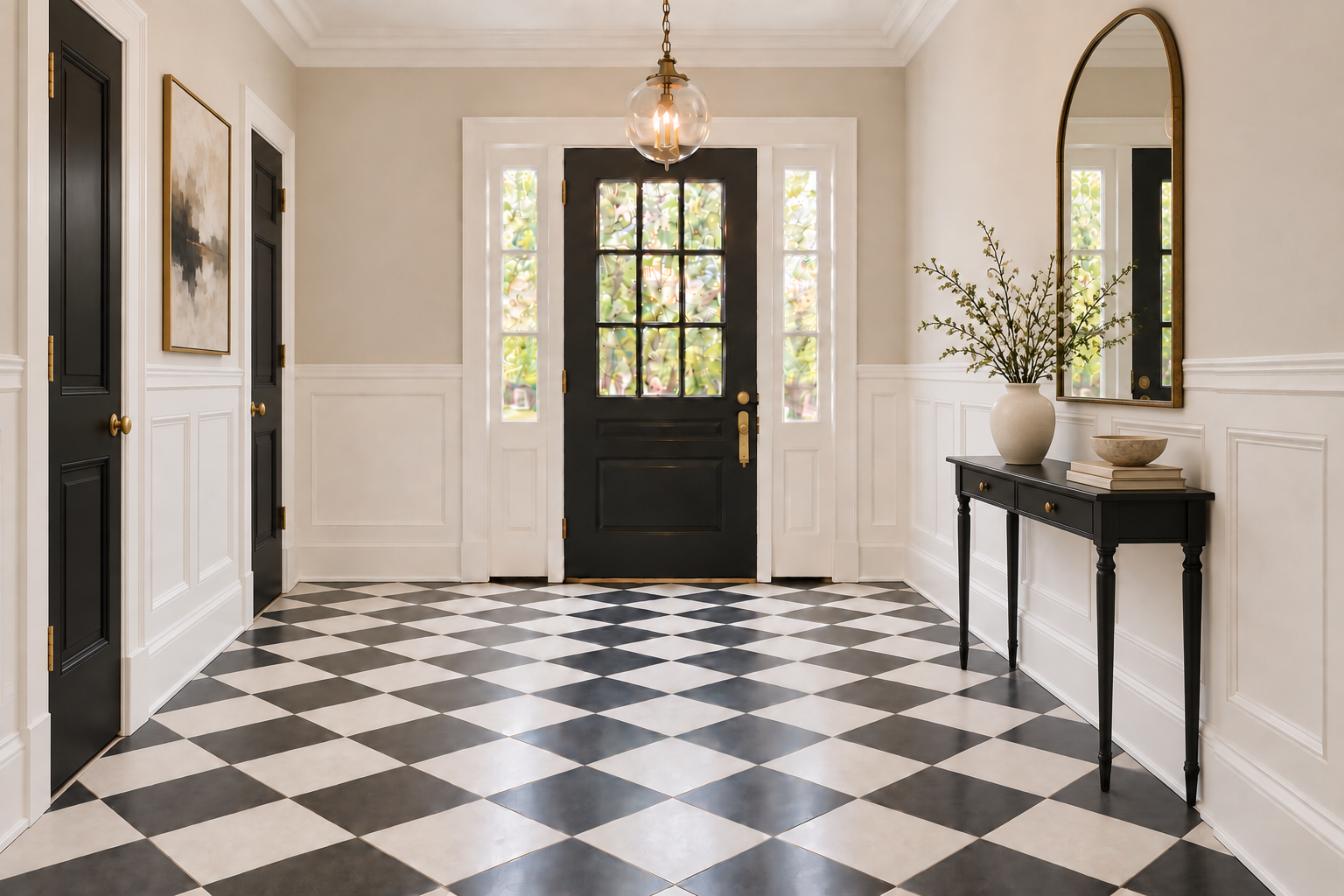
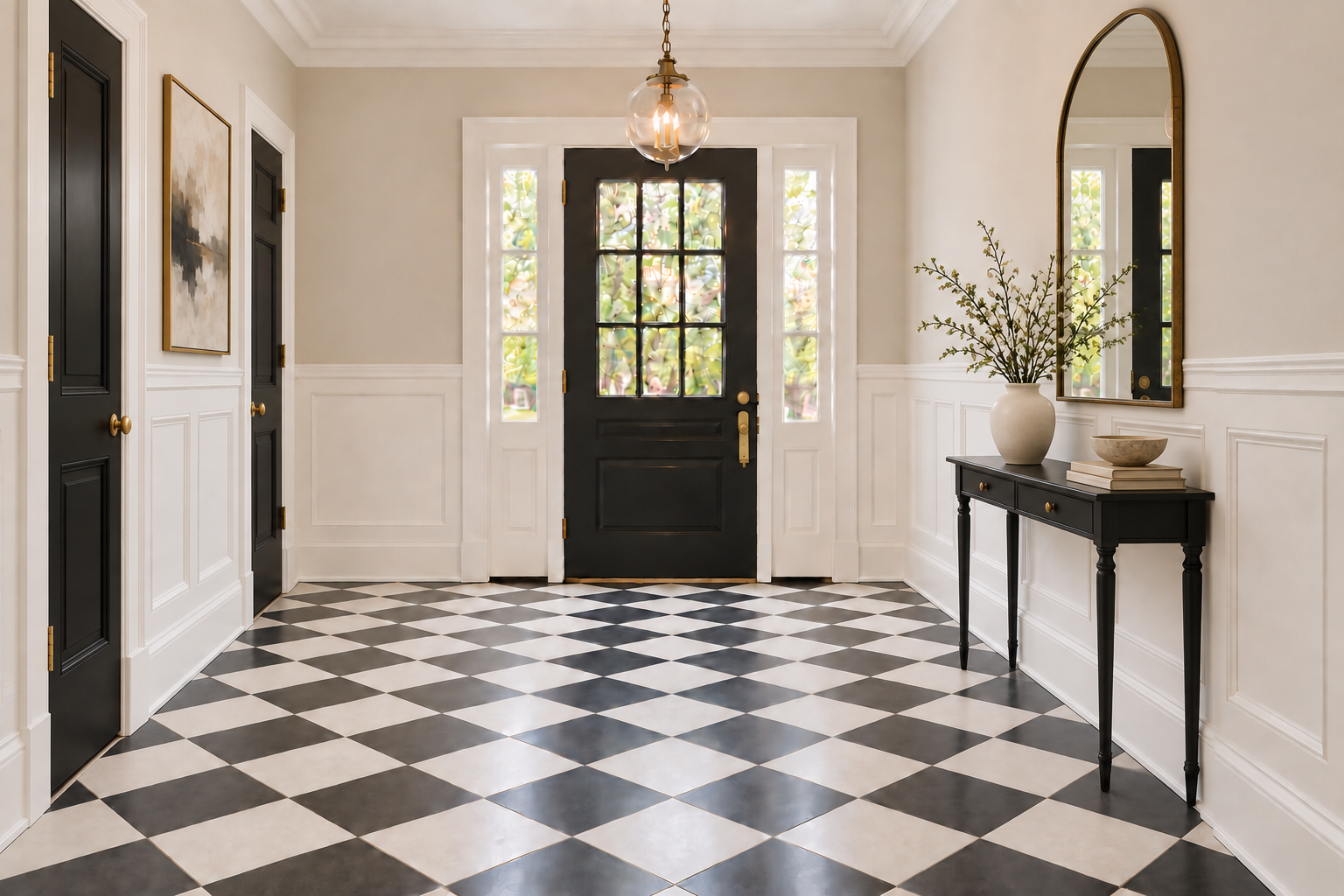
AI rendering of a traditional foyer with white wainscoting and black-and-white checkerboard flooring, styled by virtual interior designer Joshua Jones of JJones Design Co.
Hi Matt,
Black-and-white checkerboard flooring has been used in interiors for centuries, so I consider it a classic rather than a passing trend. Its popularity may rise and fall, but the pattern itself has never been limited to one particular decade or design movement.
It can work especially well in an older home because it adds character while complementing traditional architectural details such as wainscoting, millwork, and paneled doors. Based on the age and features of your house, I think you’re moving in the right direction.
Choose Materials That Suit the Home
The material and finish will influence whether the floor feels timeless or trendy. Marble can create an elegant, historic appearance, but it requires more maintenance and may be susceptible to staining, scratching, and etching.
Porcelain tile is generally easier to maintain and can be a practical choice for a foyer, hallway, back entry, and laundry room. If you select porcelain, look for tiles with natural color variation and a matte or honed appearance rather than a highly polished or obviously printed surface.
Because these are high-traffic areas where wet shoes may be present, confirm that the tile is rated for flooring and provides suitable slip resistance.
Consider the Scale and Layout
Tile size should relate to the width and proportions of the space. Oversized squares can overwhelm a narrow hallway, while very small tiles may make a long passage feel visually busy. Before ordering, map the pattern on the floor with painter’s tape or request a scaled layout from your installer.
Installing the tiles diagonally creates the familiar diamond pattern and can bring movement to a foyer or hallway. A straight grid feels quieter and slightly more contemporary. Either layout can be timeless when it suits the architecture and is installed carefully.
Keep the Surrounding Finishes Simple
Since checkerboard flooring already makes a strong visual statement, I recommend keeping the surrounding finishes relatively restrained. Your white wainscoting will provide a crisp backdrop, while warm wood, aged brass, or antique furnishings can prevent the black-and-white palette from feeling too stark.
Using the same flooring through the foyer, hallway, back entry, and laundry room will also create continuity between the connected spaces. Make sure the installer plans the tile placement across doorways and transitions so the pattern flows intentionally rather than appearing interrupted.
Your husband shouldn’t interpret the absence of checkerboard flooring in nearby remodeled homes as evidence that it is outdated. A renovation should respond to the character of your house rather than copy what is currently appearing in every other home.
In your 100-year-old house, thoughtfully selected black-and-white checkerboard tile should feel distinctive, historically appropriate, and beautiful for many years.
Warmly,
Joshua
Have an interior design related question? You can ask Joshua here.