Ask Joshua: How to Turn a Cabin Deck Into an Outdoor Living Space
Hi Joshua,
I have a small cabin in the woods near a lake. We enjoy hosting friends, including people who camp nearby, but the cabin itself does not provide enough room for everyone to gather comfortably.
We have a generously sized deck and additional cleared outdoor space with a few chairs and a small table. However, the area feels underwhelming, and we would like to make it more comfortable and memorable for weekends with friends.
How can we transform the outdoor space into an extension of our cabin?
Thank you,
Jeremy - Alton, New Hampshire
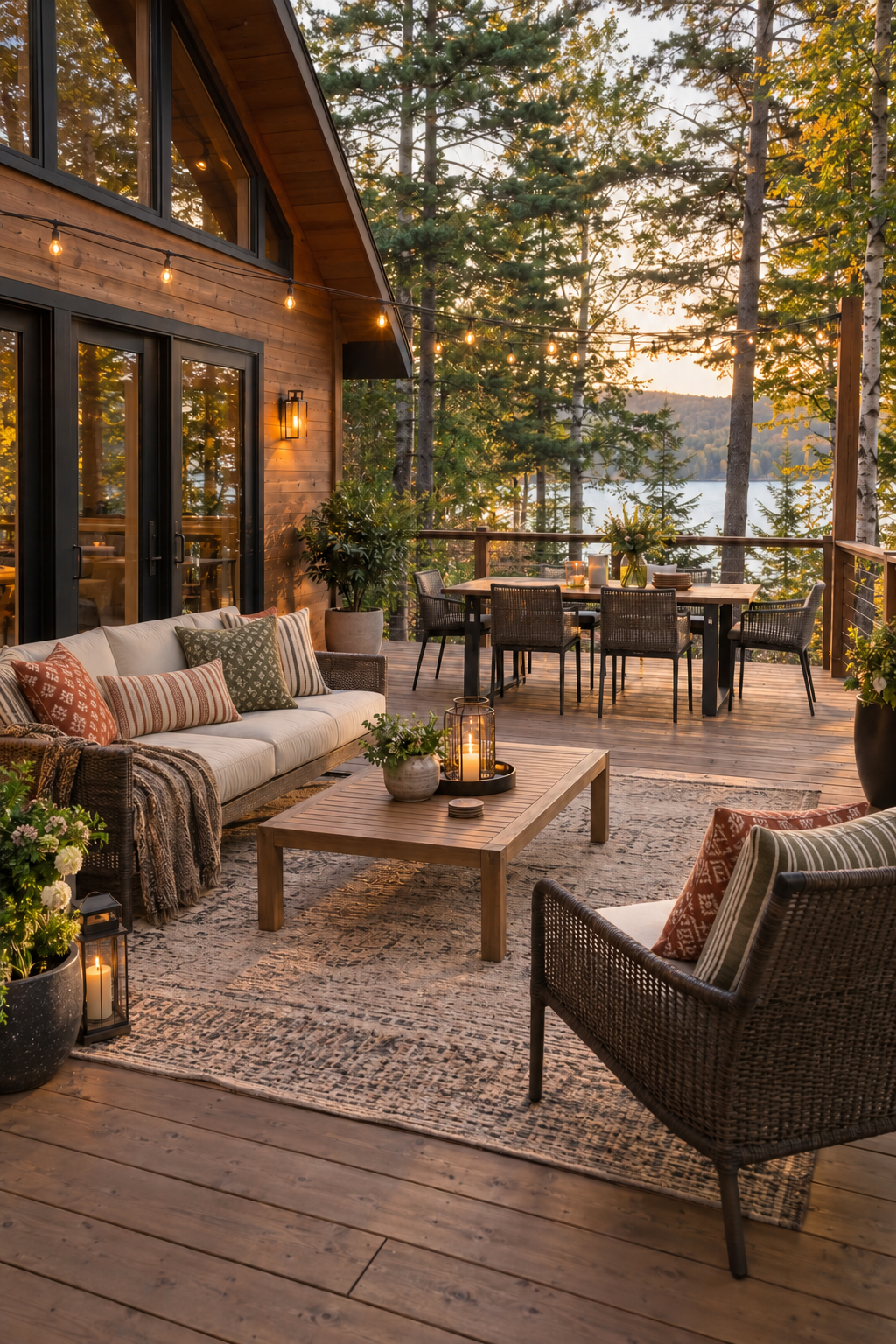
A New Hampshire lakeside cabin deck with separate dining and lounge areas, layered outdoor textiles, and string lights, styled by virtual interior designer Joshua Jones of JJones Design Co. This image is an AI-generated rendering.
Hi Jeremy,
Thank you for writing in. Because the cabin has limited interior space, the deck and surrounding property can become valuable living and entertaining areas rather than simply places to put extra chairs.
Begin by thinking about the activities that happen during a typical weekend. You may need a place for outdoor meals, a comfortable conversation area, additional seating for campers, and a quiet spot for enjoying the lake or morning coffee. Identifying these activities will help you create an outdoor space that feels purposeful rather than filled with unrelated furniture.
Divide the Outdoor Space Into Functional Areas
A large deck will feel more comfortable when it is divided into smaller zones. I would create two primary areas: an outdoor dining space and a lounge area.
Position the dining table close enough to the cabin for carrying food, dishes, and drinks outside. If the kitchen door opens directly onto the deck, preserve a clear route between the doorway and table so people carrying food do not need to navigate around chairs.
Place the lounge area where guests can enjoy the best view of the woods or lake. Arrange the seating as you would in an indoor living room, with chairs and sofas facing one another rather than lining every piece around the perimeter of the deck.
You can define the two zones with separate outdoor rugs, furniture arrangements, lighting, or planters. These visual boundaries will make the deck feel organized without requiring walls.
Select Furniture for the Way You Entertain
Before purchasing anything, measure the entire deck and create a simple furniture plan. Include doors, stairs, railings, windows, and the primary walking paths. Large outdoor furniture can occupy considerably more room than it appears to in a showroom or product photograph.
Choose a dining table that accommodates the number of guests you regularly host rather than the largest possible gathering. An extendable table could provide flexibility without consuming unnecessary deck space every weekend.
Benches can seat several people and tuck beneath the table when not in use, although chairs with backs will be more comfortable for longer meals. A combination of dining chairs and a bench can offer both comfort and flexibility.
For the lounge area, consider an outdoor sofa or loveseat paired with movable lounge chairs. Individual chairs can be repositioned when the number of guests changes, while lightweight stools and small side tables can serve multiple purposes.
Avoid choosing every piece from one matching furniture collection. Combining complementary materials—such as wood, woven fiber, powder-coated metal, and stone—will give the space a more collected appearance that suits the cabin setting.
Provide Flexible Seating for Larger Gatherings
You do not need permanent seating for every person who might visit. Instead, create a comfortable foundation for the number of people who use the cabin most often and supplement it with flexible pieces.
Folding chairs, stackable stools, benches, poufs made for outdoor use, and lightweight Adirondack chairs can be brought out when additional guests arrive. Built-in benches around the edge of the deck may also provide seating without interrupting the center of the space, depending on the deck’s structure and railing requirements.
Tree stumps or log-style stools could relate naturally to the wooded setting, but make sure they are stable, properly finished, and comfortable enough for their intended use.
Introduce Outdoor Textiles
An outdoor rug can make a deck feel more like a finished room while visually defining the seating or dining area. Select one made for exterior use that can tolerate moisture, sunlight, and frequent cleaning.
The rug should be large enough to relate to the furniture. In the lounge area, at least the front legs of the primary seating should rest on it. Beneath the dining table, the rug should extend far enough for the chairs to remain on it when they are pulled out.
Outdoor cushions and pillows can introduce color and pattern while making the furniture more comfortable. Look for fabrics intended to resist moisture, mildew, fading, and stains. Even outdoor textiles will last longer when they are protected or stored during severe weather and throughout the winter.
Because the property is surrounded by woods, I would use colors and patterns that complement the setting without disappearing into it. Rust, deep blue, moss green, ochre, warm ivory, and muted red could add character while maintaining a connection to the landscape.
Plan for Shade and Rain
Weather protection will determine how often you can use the space. An umbrella may provide sufficient shade for the dining area, while a retractable awning, pergola, or covered section of the deck could offer more dependable protection.
Before adding a permanent overhead structure, confirm that the existing deck can support it and determine whether permits are required. A qualified local professional should evaluate the structure and its connection to the cabin.
For a temporary solution, a freestanding cantilever umbrella can cover a larger seating area without placing a pole through the center of the furniture. Make sure any umbrella has a properly weighted base and can be closed or stored during high winds.
Create Layers of Outdoor Lighting
Lighting will help the deck remain comfortable after sunset and create the atmosphere you want for evening gatherings.
Use more than one type of light:
Install appropriate exterior wall lights near doors and stairs.
Add low-level lighting along steps and walking paths.
Hang outdoor-rated string lights above a gathering area if suitable supports are available.
Place rechargeable table lamps or lanterns on dining and side tables.
Use subtle landscape lighting to illuminate selected trees or architectural features.
Avoid making the surrounding woods excessively bright. A few layers of warm, softly directed light will create a more inviting atmosphere while preserving the experience of being near nature.
All permanent electrical work and fixtures should be appropriate for exterior use and installed according to applicable safety requirements.
Consider a Separate Gathering Area Beyond the Deck
If the cleared ground near the cabin is relatively level, you could create a second gathering area away from the deck. A circle of Adirondack chairs around a gravel or stone surface could provide an informal place for conversation, stargazing, or enjoying the surrounding landscape.
A fire feature may seem like a natural addition to a cabin property, but it requires careful planning. Confirm local fire restrictions, required setbacks, seasonal burn bans, insurance requirements, and the rules governing your particular property before installing or using one.
Do not place a wood-burning fire pit directly on a combustible deck. If any fire feature is appropriate for the property, it should be selected and positioned with professional guidance and adequate clearance from the cabin, trees, furniture, and other combustible materials.
Add Convenient Outdoor Storage
A weather-resistant storage cabinet or deck box can hold furniture covers, outdoor pillows, games, lanterns, and dining supplies. This will make it easier to prepare the area for guests and protect items when the cabin is unoccupied.
Choose storage that can be securely closed to discourage moisture, insects, and animals. In a wooded setting, avoid leaving food, trash, scented candles, or cooking supplies outside when they are not being used.
A rolling outdoor cart could also serve as a beverage station or place for serving food. It can be moved close to the dining area during gatherings and stored against the cabin afterward.
Account for Insects and Other Outdoor Conditions
Mosquitoes and other insects can quickly affect the comfort of an outdoor gathering near a lake. Remove standing water, keep gutters clear, and consider screened solutions where practical.
A ceiling fan rated for outdoor use may help improve air movement on a covered deck. Depending on the cabin and budget, a screened porch or screened section of the deck could significantly extend the amount of time you spend outside.
Also consider how leaves, pollen, sap, and other natural debris will affect the materials you select. Furniture with simple shapes and removable, washable cushions will generally be easier to maintain than highly detailed pieces.
Inspect the Deck Before Furnishing It
Before adding heavier furniture, large planters, a pergola, or other substantial features, have the deck inspected if there is any uncertainty about its condition or structural capacity. This is particularly important if the cabin or deck is older.
Check the boards, railings, stairs, fasteners, footings, and connection to the cabin. Address loose railings, damaged wood, slippery surfaces, and uneven steps before creating a space intended for groups of people.
My Recommendation for Your Cabin
I would begin with a dining area near the cabin entrance and a separate lounge area oriented toward the best outdoor view. Use appropriately scaled furniture, two outdoor rugs, layered lighting, and a few movable seats to establish the foundation.
Add weather protection, storage, and a separate ground-level gathering area as the budget allows. You do not need to furnish the entire property at once. Creating two comfortable and clearly defined outdoor rooms will make a much greater impact than scattering furniture throughout all the available space.
If you need help developing a furniture layout and selecting pieces that can withstand the New Hampshire climate, my virtual interior design service can help. I can create a personalized outdoor design based on the deck’s measurements, surrounding landscape, entertaining needs, and cabin architecture.
I hope this helps you transform the area into an inviting extension of your cabin where you and your friends can continue making memories together.
Warmly,
Joshua
Have interior design related questions? You can ask Joshua here.