Can AI Design Your Home? What It Does Well (And Where It Falls Short)
Artificial intelligence has quickly become part of everyday life, and interior design is no exception. Homeowners are using AI tools to generate room ideas, explore color palettes, create furniture layouts, organize storage spaces, and even produce realistic-looking renderings of rooms in a matter of minutes. What once required hours of searching through magazines, Pinterest boards, and design websites can now happen with a few photos and a simple prompt.
As an interior designer, I've been fascinated by how quickly these tools have evolved. In some ways, AI can be incredibly helpful. It can spark ideas, help homeowners visualize possibilities, and make it easier to take the first steps on a project that may have felt overwhelming before.
At the same time, I've noticed a growing misconception that AI can completely replace the design process. After all, if a computer can generate beautiful images and suggest furniture layouts in seconds, why would anyone need to hire a designer?
The answer is a little more complicated than a simple yes or no.
AI is a powerful tool, but like any tool, it has strengths and limitations. Some projects can benefit greatly from it, while others require a level of experience, problem-solving, and real-world decision-making that goes far beyond what a rendering or generated design concept can provide.
So, can AI design your home?
The answer depends on what you're asking it to do.
Let's take a closer look at where AI shines, where it struggles, and how homeowners can use it effectively when planning their next project.
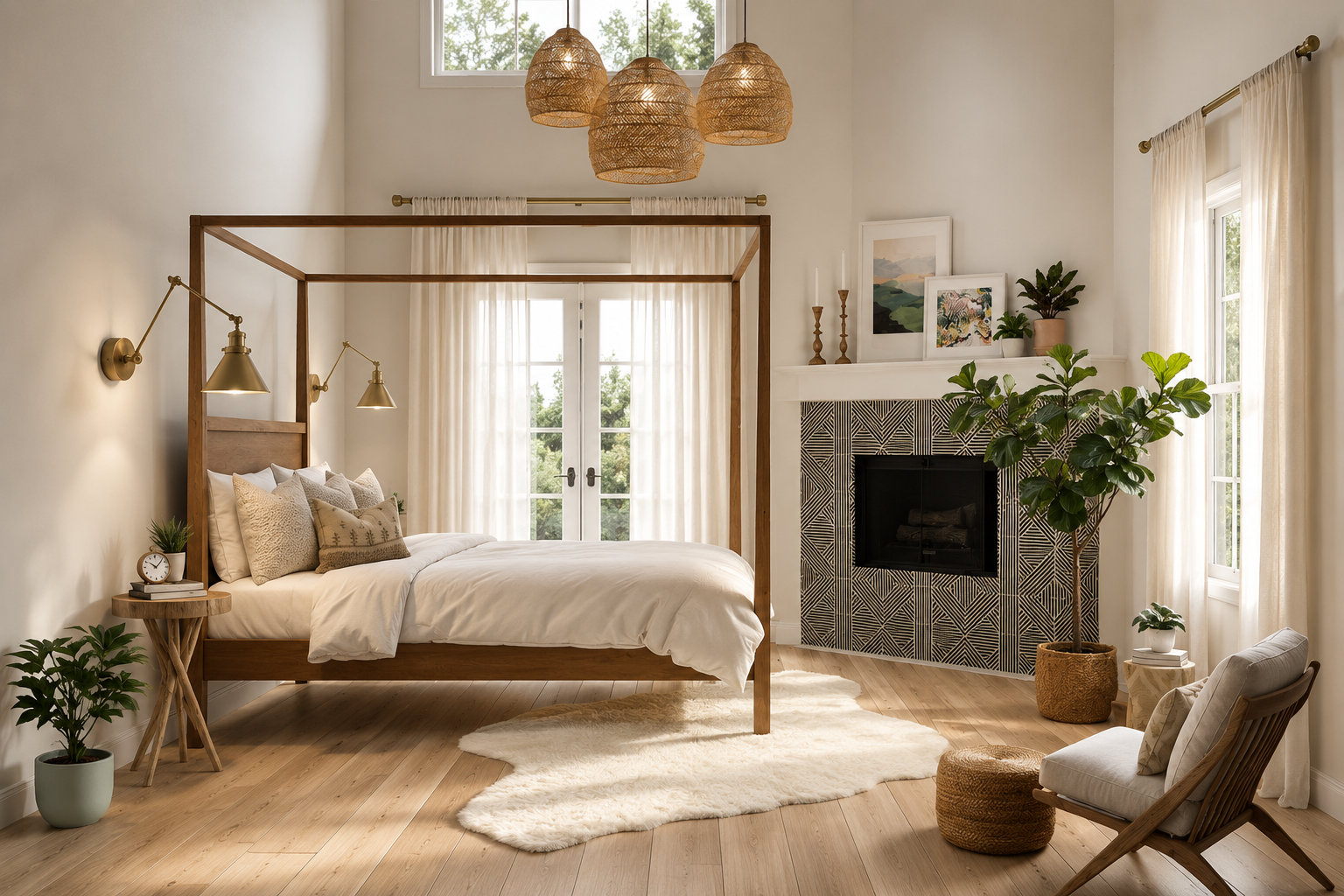
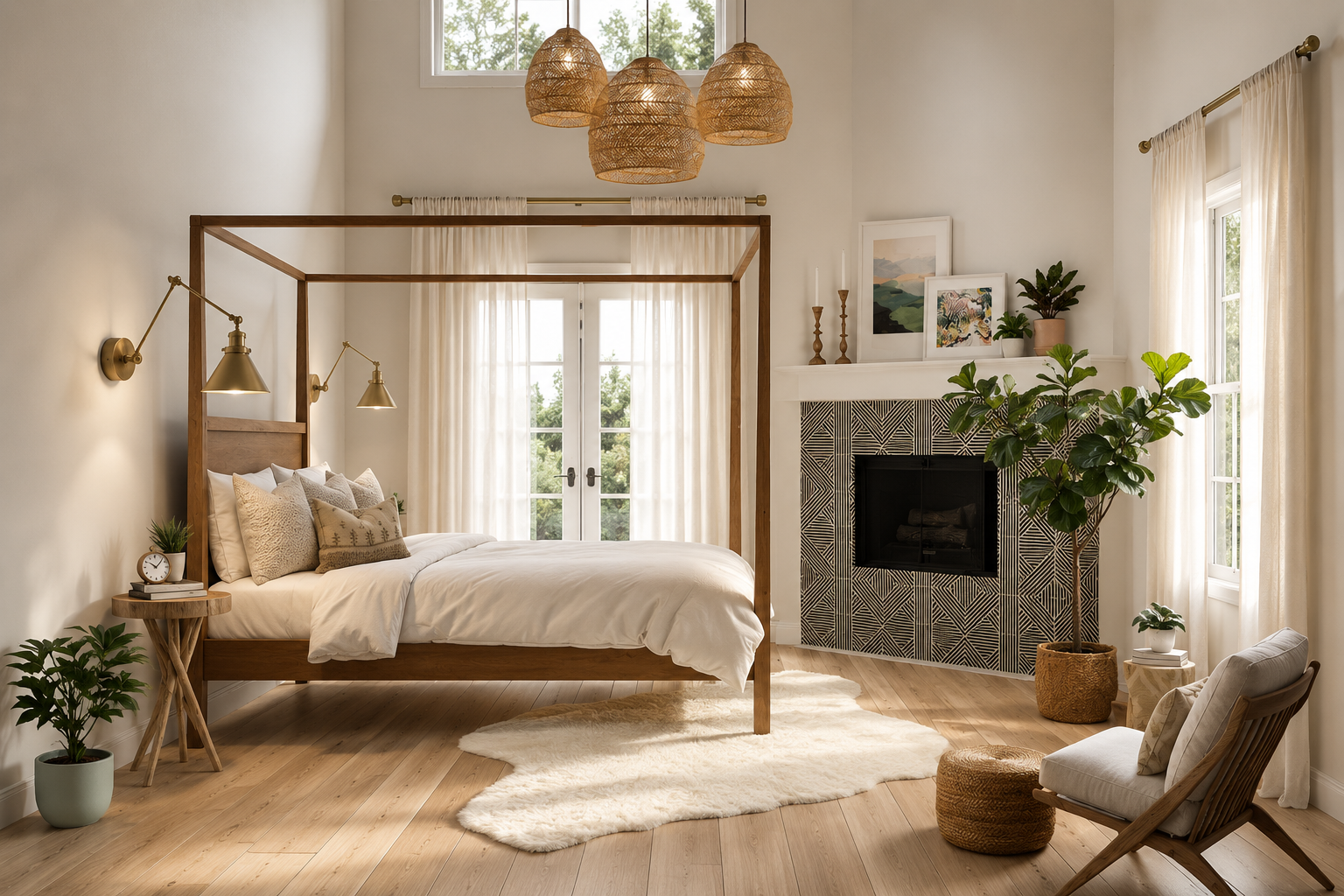
California Casual style primary bedroom designed by virtual interior designer Joshua Jones of JJones Design Co. This AI-generated rendering demonstrates how artificial intelligence can help homeowners visualize design concepts before making decisions.
What AI Does Well
Let's start with what AI is actually good at, because there are several areas where these tools can be genuinely useful for homeowners.
One of AI's biggest strengths is helping people move past a blank slate. Many homeowners know they want to update a room but struggle to define exactly what they like or where to begin. AI can quickly generate ideas, suggest different design styles, and help narrow down preferences. Whether you're drawn to Scandinavian, Modern Organic, Traditional, or Coastal design, AI can provide visual examples and inspiration within seconds.
AI can also be helpful for organizing thoughts and exploring possibilities. A homeowner might upload photos of a pantry, closet, home office, or living room and ask for ideas on how to improve functionality. In many cases, AI can generate practical suggestions that make the space more efficient and easier to use.
Visualization is another area where AI excels. Not everyone can look at a floor plan or paint sample and imagine the finished result. AI-generated renderings can help homeowners better understand how a room could look with different furniture arrangements, colors, materials, or layouts. Even if the images aren't perfect, they can help people feel more confident about moving forward with a project.
AI can also save time during the early planning stages. Instead of spending hours searching through websites, magazines, and social media, homeowners can gather ideas, compare options, and explore different directions much faster than they could in the past.
For smaller projects, AI may provide enough guidance to help someone move forward on their own. Organizing a pantry, improving closet storage, selecting decorative accessories, brainstorming furniture layouts, or gathering ideas for a guest bedroom refresh are all examples where AI can be a valuable resource.
There is no question that AI has changed how homeowners approach design projects. It can be a useful source of inspiration, help clarify goals, and make the design process feel more approachable for people who may not know where to start.
The challenge begins when inspiration is mistaken for a complete design solution.
While writing this article, I decided to test AI using one of my own past projects. I provided the original floor plan and design concept for a California Casual living room and asked AI to visualize the space. The results were fascinating.
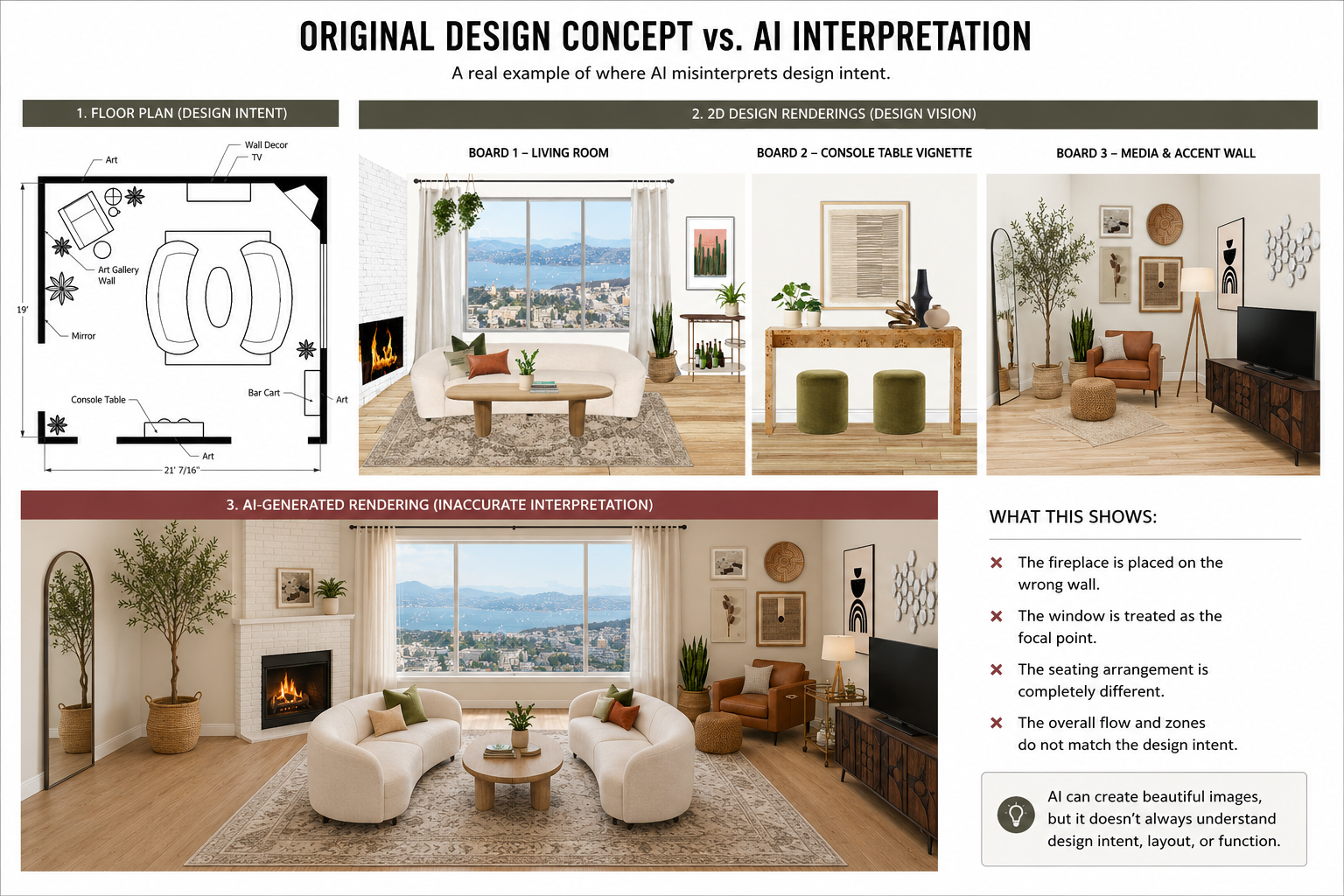
Comparison of a California Casual living room designed by virtual interior designer Joshua Jones of JJones Design Co. The floor plan and 2D design boards illustrate the original design intent, while the AI-generated rendering demonstrates how artificial intelligence can create an attractive image while misinterpreting key aspects of the layout, furniture arrangement, and overall design concept.
Where AI Starts to Struggle
While AI is excellent at generating ideas, interior design projects involve much more than creating attractive images. This is where many homeowners discover the difference between inspiration and implementation.
One of the biggest limitations is that AI doesn't truly understand your home. It only knows the information you provide. If a measurement is missing, a ceiling height is incorrect, or a photo doesn't show an important architectural detail, the AI has no way of recognizing the problem. It simply works with the information it has been given.
This can become especially important when dealing with furniture layouts, renovations, and custom-built elements. A beautiful AI-generated living room may feature a sectional sofa that is too large for the space, a walkway that doesn't meet comfortable clearance requirements, or furniture arrangements that look great in a rendering but feel awkward in real life.
AI also struggles with the countless practical considerations that affect real-world projects. It doesn't visit your home, measure your rooms, inspect construction details, or identify issues that may impact the design. A rendering might show a stunning built-in cabinet wall, but it won't automatically account for electrical outlets, HVAC vents, plumbing access, structural requirements, or contractor limitations.
Product recommendations can present challenges as well. AI may suggest furniture, lighting, finishes, or materials that are unavailable, discontinued, outside the budget, or simply unsuitable for the way a family actually lives. A room can look beautiful in a generated image while being completely impractical for households with children, pets, accessibility needs, or heavy daily use.
Renovation projects create an even wider gap between concept and reality. Kitchens, bathrooms, additions, and whole-home remodels involve hundreds of decisions that affect one another. Material selections, appliance specifications, cabinetry dimensions, lighting plans, plumbing locations, flooring transitions, and construction budgets all need to work together. AI can generate ideas for these spaces, but it cannot manage the complex decision-making process required to successfully bring them to life.
Another important limitation is that AI cannot produce permit-ready construction documents. While it can generate room concepts, layouts, and renderings, those images are not construction drawings. Most renovation and construction projects require detailed plans that communicate dimensions, specifications, materials, electrical locations, plumbing requirements, and other technical information needed by contractors, engineers, architects, and building departments.
Depending on the scope of the project, homeowners may also need permits before work can begin. Building departments typically require professionally prepared drawings that meet local codes and regulations. An AI-generated rendering may help visualize an idea, but it cannot replace the technical documentation required to obtain permits or guide a construction team through the building process.
This distinction becomes especially important for kitchens, bathrooms, additions, structural changes, custom built-ins, and new construction projects, where accurate documentation is often just as important as the design itself.
Another limitation is that AI cannot draw from experience. It doesn't know that a particular flooring material tends to show scratches more easily, that a specific upholstery fabric may not hold up well for a family with large dogs, or that a design trend that looks exciting today may feel dated in a few years. Those insights come from years of working with real clients, real products, and real projects.
Perhaps most importantly, AI doesn't take responsibility for the outcome. If a generated design doesn't function properly, exceeds the budget, or creates unexpected challenges during construction, the homeowner is left to solve those problems themselves.
That's where professional design becomes less about generating ideas and more about helping homeowners avoid costly mistakes, navigate difficult decisions, and create spaces that work well long after the renderings have been forgotten.
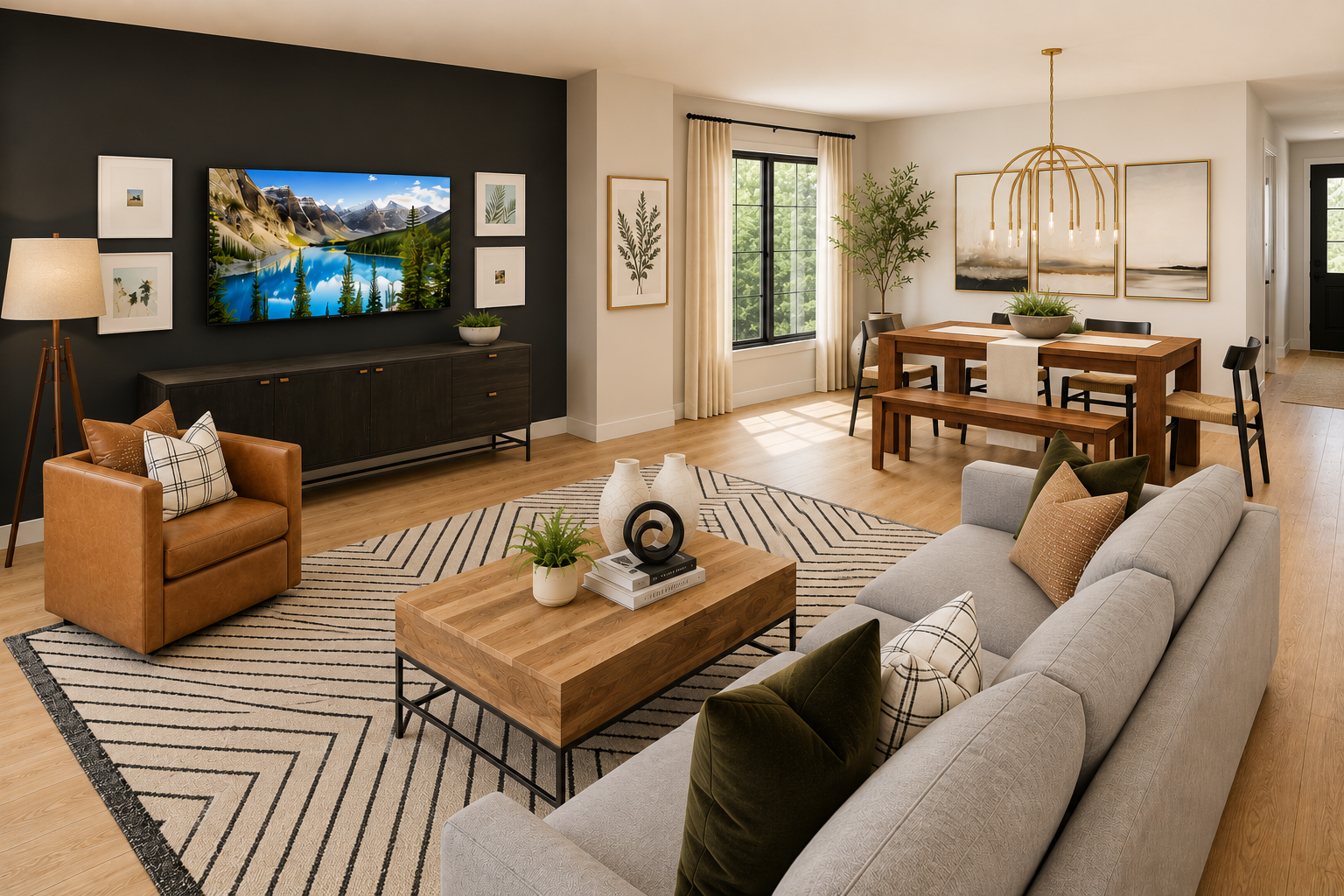
Open-concept living and dining room designed by virtual interior designer Joshua Jones of JJones Design Co. This AI-generated rendering demonstrates how artificial intelligence can transform a furniture and finish concept board into a realistic visualization, helping homeowners better understand how individual selections may work together in a completed space.
A Realistic Way to Think About AI and Home Design
One of the biggest mistakes I see people make when discussing AI is treating it as either a miracle solution or a complete waste of time. In reality, the truth falls somewhere in the middle.
Think of AI as a brainstorming partner rather than a designer.
If you're staring at an empty pantry, an outdated closet, or a room that isn't functioning well, AI can help generate ideas you may not have considered. For many homeowners, that initial spark of inspiration is often the hardest part.
I've also seen how AI can help people tackle projects they have been putting off for months. Sometimes all it takes is seeing a few possibilities to transform a project from overwhelming to manageable.
Where problems tend to arise is when homeowners assume the generated concept is the finished solution.
A rendering can show what a space might look like. It cannot tell you whether the layout will feel comfortable to live with every day. It cannot tell you if a custom cabinet will interfere with an outlet, if a contractor can build it as shown, or if the materials fit within your budget.
The reality is that most successful design projects involve many rounds of decision-making, adjustments, and problem-solving. Measurements need to be verified. Products need to be sourced. Budgets need to be managed. Construction details need to be resolved. Unexpected issues need to be addressed along the way.
AI can certainly help start that process, but it doesn't replace the work required to finish it.
In many ways, AI is similar to browsing Pinterest, design magazines, or social media. These tools can provide inspiration and help homeowners discover what they like. The difference is that AI can generate those ideas much faster and tailor them to your specific questions.
That's incredibly valuable.
The important thing is understanding that inspiration and execution are not the same thing. One helps you imagine possibilities. The other is what transforms those possibilities into a finished space that functions well for years to come.
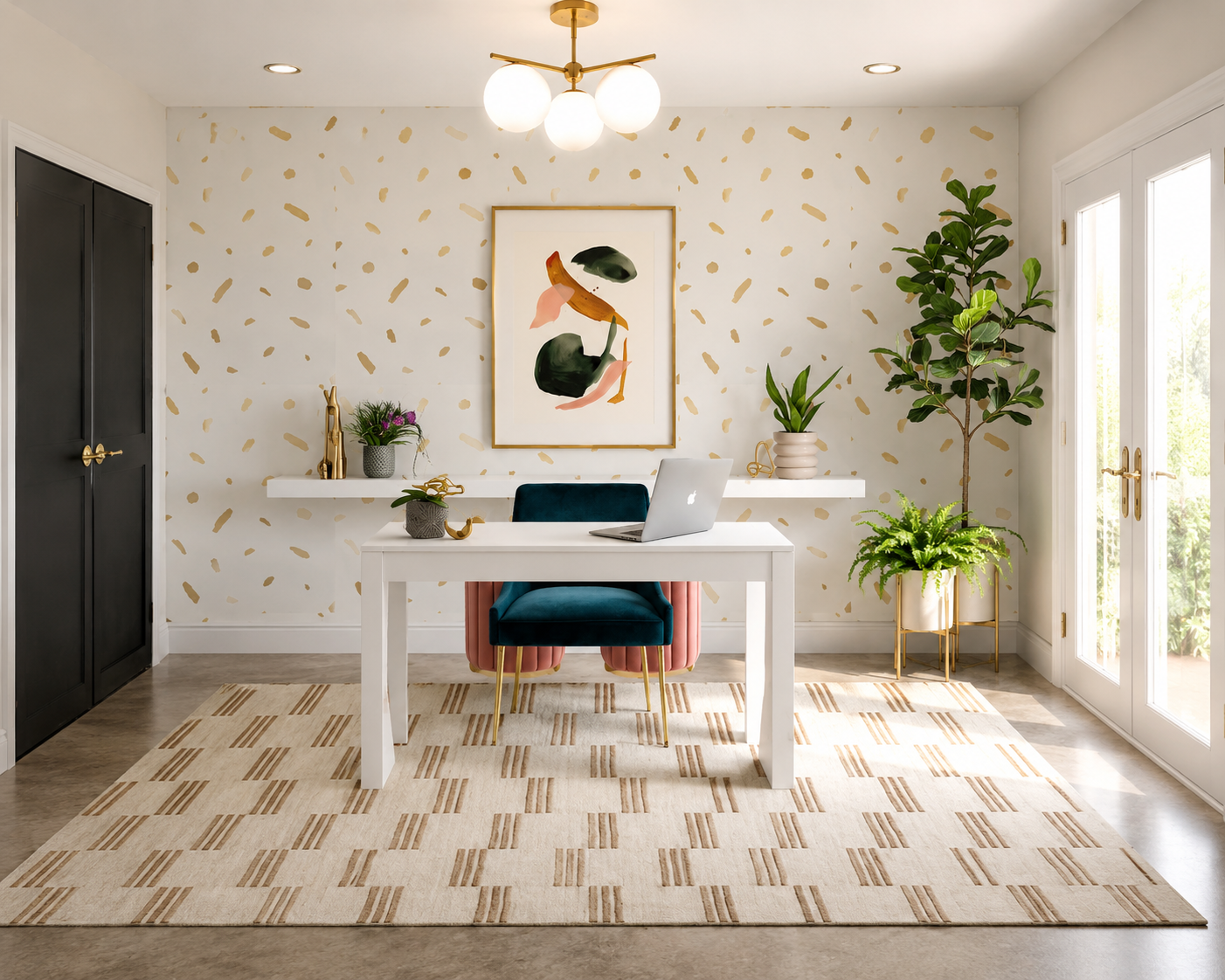
Modern glam home office designed by virtual interior designer Joshua Jones of JJones Design Co. This AI-generated rendering demonstrates how artificial intelligence can help homeowners visualize design concepts, materials, furnishings, and decorative details before making purchasing decisions.
When AI May Be Enough
Not every project requires professional design services, and that's perfectly okay.
There are plenty of situations where homeowners simply need help exploring ideas before making decisions. In those cases, AI is particularly effective when the stakes are relatively low. If you're deciding between different paint colors, trying to identify your design style, considering a furniture rearrangement, or exploring ways to make a space function better, AI can provide ideas that help move the process forward.
It can also be valuable during the research phase of a larger project. Some homeowners use AI to help organize their thoughts, create wish lists, compare options, and identify priorities before meeting with a designer, architect, or contractor.
For many people, one of the most useful aspects of AI is the ability to quickly test different possibilities. Instead of wondering how a room might look with darker walls, lighter flooring, or a different furniture arrangement, homeowners can explore multiple directions before investing time and money into real-world changes.
The key is understanding what AI is providing.
It is generating ideas, concepts, and possibilities based on the information available. For some projects, that may be all that's needed to move forward.
There is nothing wrong with using AI as part of your design process. Like design magazines, Pinterest boards, television shows, and social media, it can be another source of inspiration. The difference is that AI can tailor those ideas to your specific questions and goals.
The challenge comes when a project moves beyond inspiration and begins requiring technical knowledge, detailed planning, coordination, and real-world problem-solving.
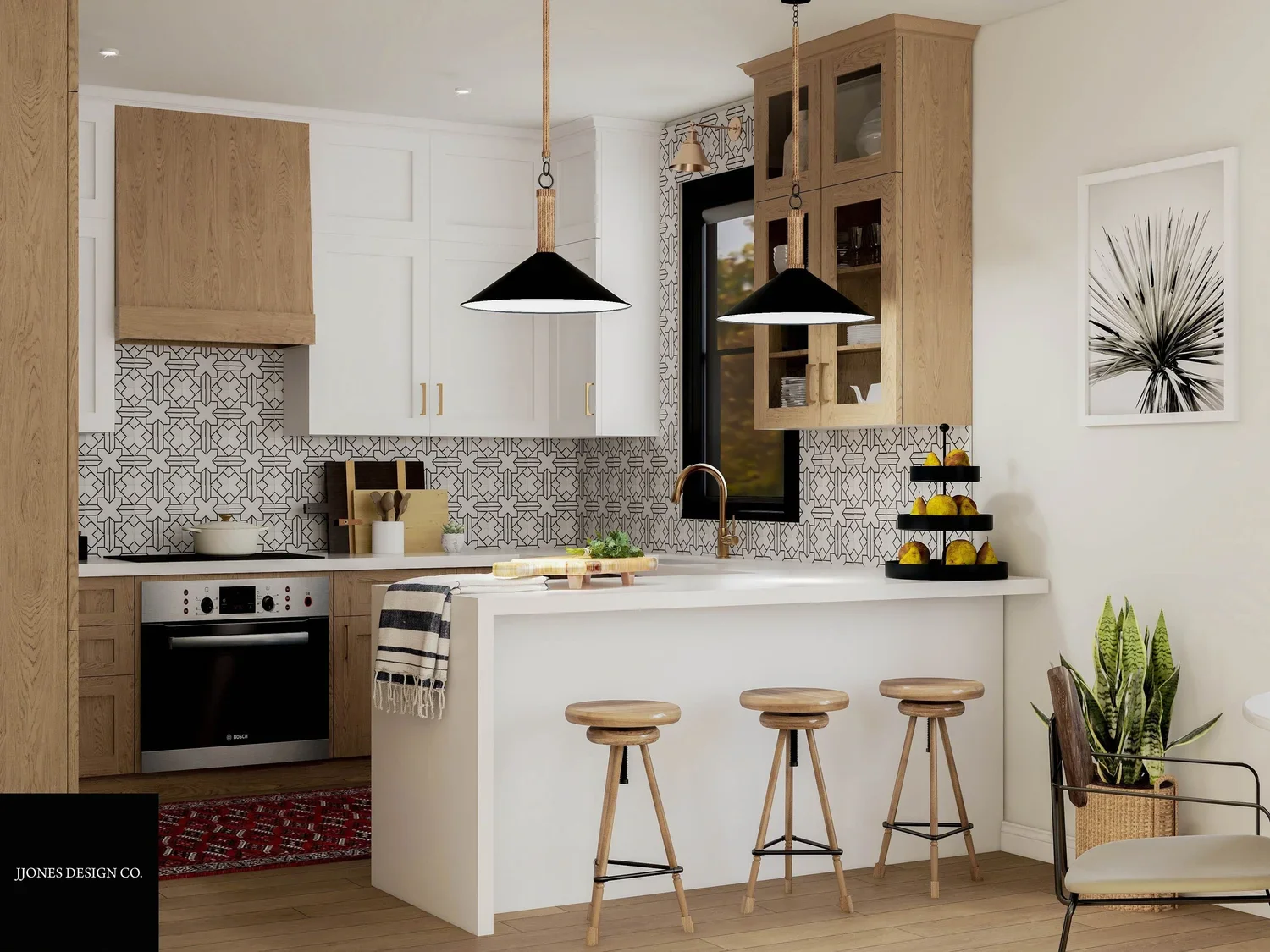
California Casual kitchen designed by virtual interior designer Joshua Jones of JJones Design Co. While AI can help homeowners explore ideas and visualize possibilities, projects like kitchens often involve hundreds of decisions related to layout, cabinetry, materials, lighting, appliances, and functionality that benefit from professional design expertise.
When Hiring a Designer Can Save Time, Money, and Frustration
As projects become more complex, the value of professional design often has less to do with generating ideas and more to do with making sure those ideas work in the real world.
Renovations, new construction projects, kitchens, bathrooms, custom built-ins, and whole-home updates involve hundreds of decisions that affect one another. A change in one area can impact budgets, timelines, materials, lighting plans, furniture layouts, and construction details throughout the project.
This is where experience becomes valuable.
A designer's role extends beyond selecting furniture and choosing paint colors. Designers help evaluate options, identify potential issues before they become expensive problems, coordinate details that homeowners may not realize need attention, and create solutions that balance aesthetics, function, and budget.
For example, a beautiful rendering may show exactly what a homeowner wants. The challenge is determining whether that design can actually be built, whether the materials are appropriate for the intended use, whether the layout functions well in everyday life, and whether the project remains within budget.
Professional designers also spend years learning about materials, construction methods, lighting, furniture dimensions, space planning, and how people interact with their homes. Those experiences often help prevent costly mistakes that may not become obvious until after a project is completed.
Another advantage is having someone who can see the bigger picture. Homeowners are often focused on individual decisions such as selecting a sofa, choosing a countertop, or picking a paint color. Designers help ensure that those decisions work together to create a cohesive result rather than a collection of unrelated choices.
This becomes especially important in larger projects where multiple rooms, contractors, consultants, and suppliers are involved. A successful project requires more than a good idea. It requires planning, coordination, communication, and the ability to adapt when unexpected challenges arise.
In many cases, hiring a designer isn't about having someone tell you what your home should look like. It's about having an experienced partner who helps guide decisions, solve problems, and create a space that functions as well as it looks.
That's something no rendering, algorithm, or prompt can fully replace.
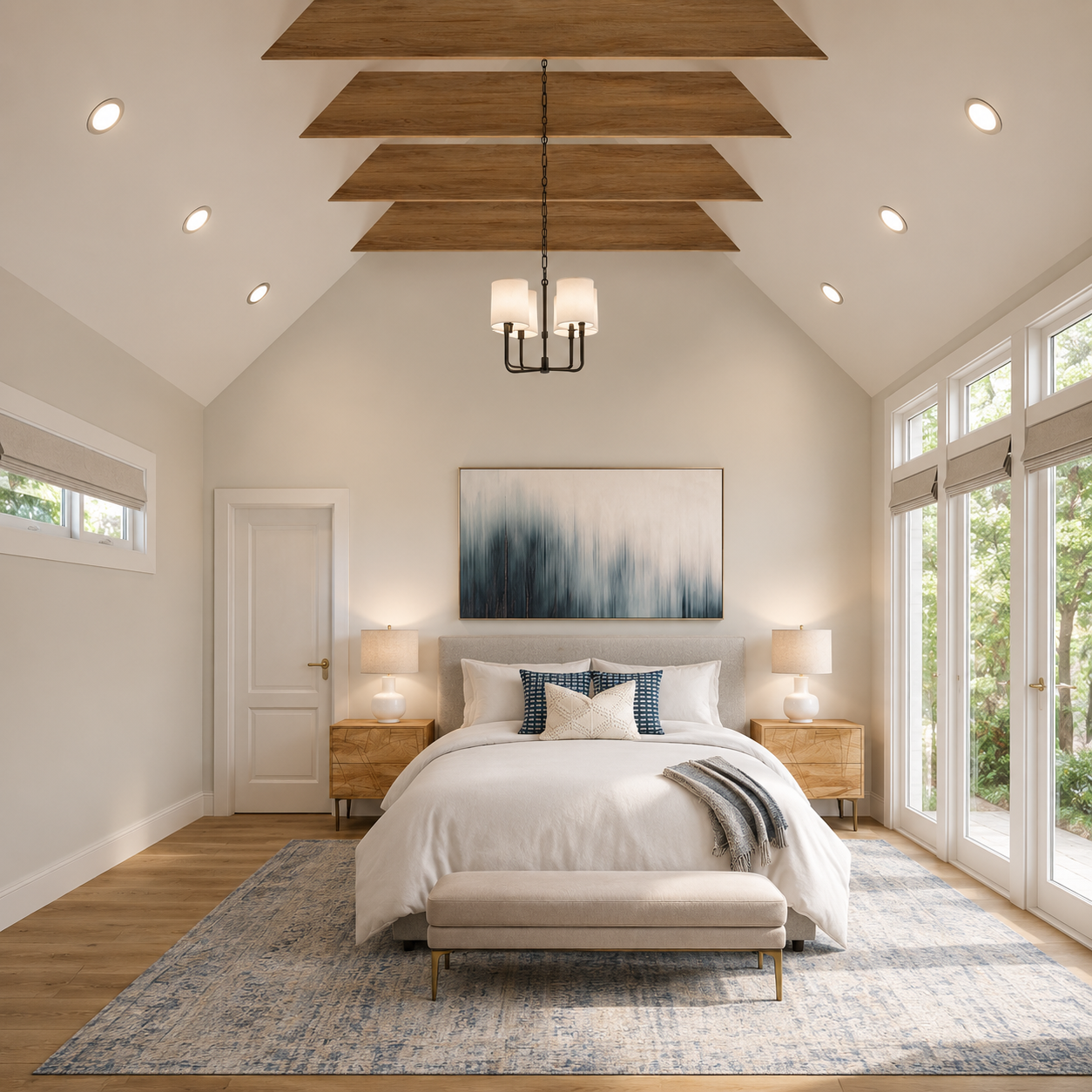
Scandinavian style primary bedroom designed by virtual interior designer Joshua Jones of JJones Design Co. This AI-generated rendering demonstrates how artificial intelligence can help homeowners visualize architectural features, materials, furnishings, and lighting before construction is completed.
The Future of AI and Interior Design
Artificial intelligence is not going away, and neither is interior design.
In many ways, the design industry has always evolved alongside technology. Designers once created drawings entirely by hand before computer-aided drafting became common. Physical mood boards gave way to digital presentations. Photorealistic 3D renderings became more accessible and allowed homeowners to visualize spaces in ways that were difficult to imagine just a few decades ago.
AI is simply the latest tool to enter that evolution.
Rather than viewing AI as a replacement for interior design, I believe it is more helpful to think of it as another resource homeowners can use during the planning process. It can help generate ideas, explore possibilities, and make design concepts easier to visualize.
The most successful projects will likely combine the strengths of both.
Homeowners can use AI to gather inspiration, refine their preferences, compare options, and develop a clearer understanding of what they want. Designers, architects, contractors, and other professionals can then help evaluate those ideas, identify potential challenges, and turn them into practical solutions that work in the real world.
For homeowners considering AI as part of their design process, my advice is simple: use it as a starting point, not the final answer.
Ask questions. Explore different directions. Test ideas. Use it to learn more about your home and your personal style.
At the same time, remember that every project eventually reaches a point where expertise, experience, and technical knowledge become just as important as inspiration. The larger and more complex the project becomes, the more valuable those skills tend to be.
AI can help generate possibilities.
People are still the ones who turn those possibilities into places where real life happens.