4 Easy Home Decor Styling Ideas for a Beautifully Styled Home
Sometimes, it’s the smaller details that make a room feel complete. Decorative objects can add personality, texture, color, and visual interest to a space, but figuring out how to style them isn’t always as easy as it looks. What should you pair together? How do you create balance without making a surface feel cluttered? And where should you put those beautiful decorative pieces you’ve collected over time?
As an interior designer, I like to think beyond simply finding a place for an object. I look at how it relates to everything around it—the scale, height, texture, color, and even the negative space between pieces. A few thoughtfully arranged objects can often make a bigger impact than filling every available surface.
Recently, Bloomist gifted me a collection of decorative pieces, including sculptural candle holders, decorative beads, a botanical paperweight, and stone bookends. Rather than simply showing you the products, I thought this would be a great opportunity to share four easy home decor styling ideas you can use with pieces you already own or when adding something new to your home.
Throughout this guide, I’ll show you how to style candle holders on a fireplace mantel, use decorative beads in an unexpected way, give a small decorative object more presence, and create a beautifully styled bookshelf. I’ll also share some of the design principles behind each arrangement so you can adapt these ideas to your own home and personal style.
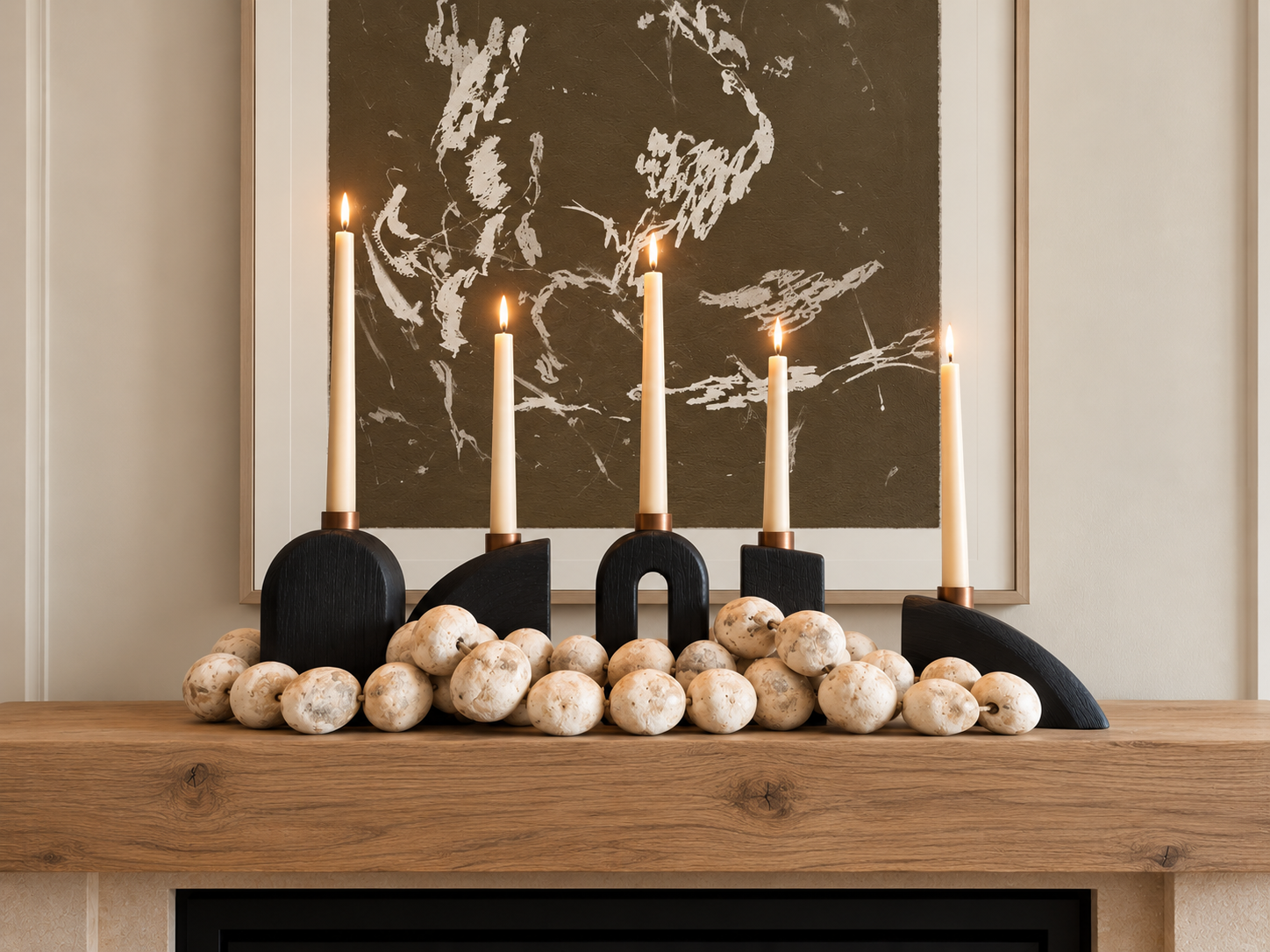
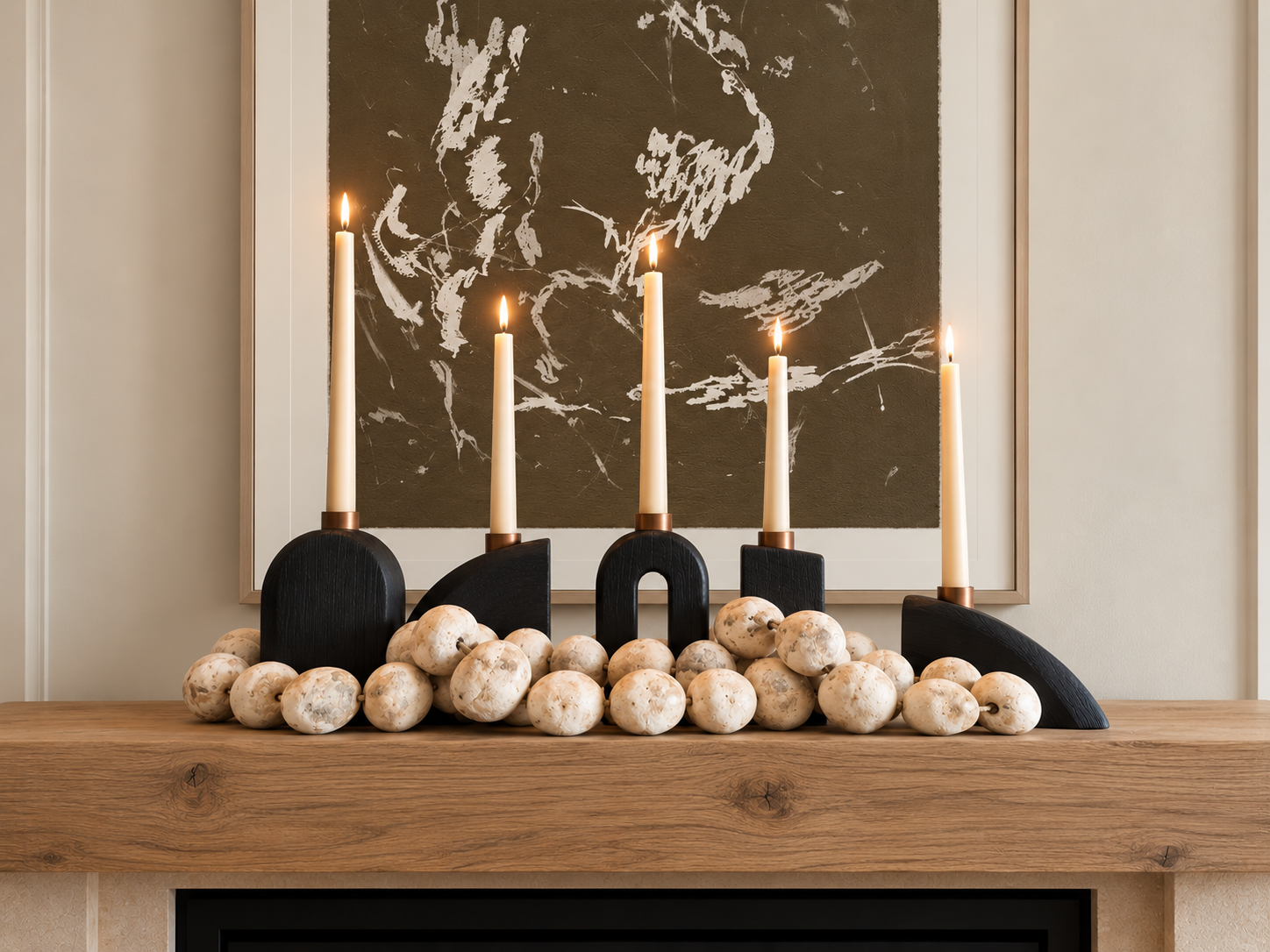
Virtual interior designer Joshua Jones of JJones Design Co. styled sculptural candle holders with decorative beads on a natural oak fireplace mantel, using contrasting shapes, textures, and heights to create a collected look.
How to Style Candle Holders on a Fireplace Mantel
A fireplace mantel is a natural focal point in a room, which makes it one of my favorite places to create a decorative moment. The key is to make the arrangement feel collected and interesting without adding so many accessories that everything begins competing for attention.
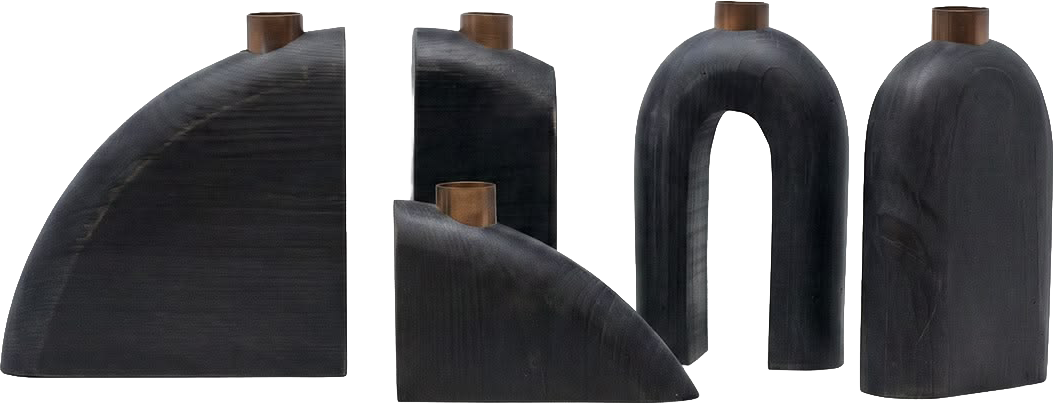
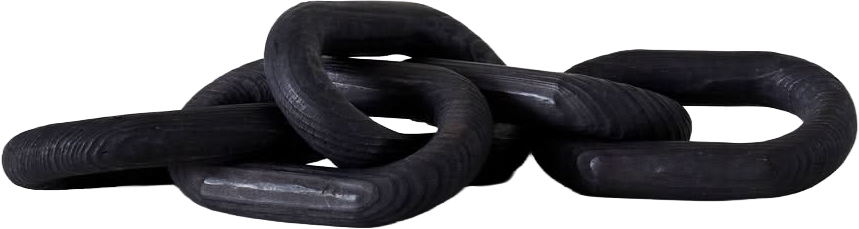
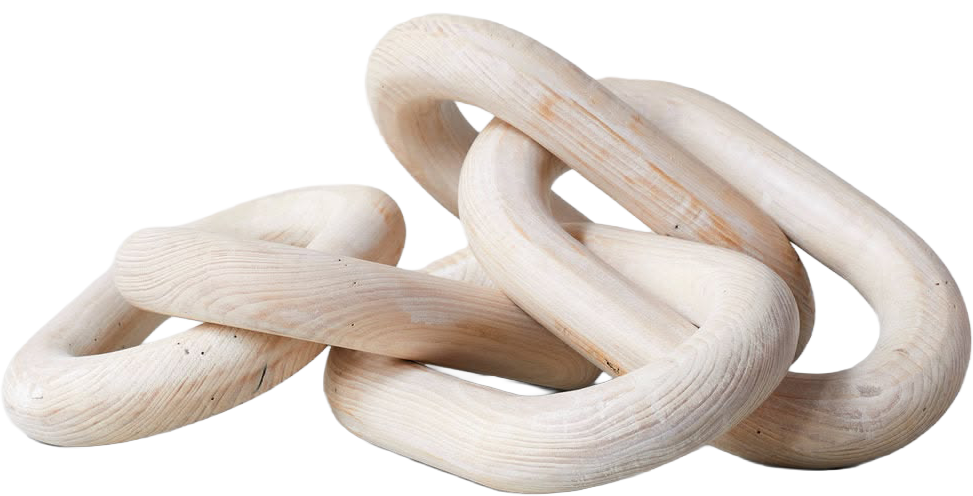
For this mantel, I used Bloomist’s Sculptural Loop Wood Candle Holders in a set of five. One of the reasons I love styling candle holders in a group is the opportunity to play with different heights and shapes. Instead of creating a perfectly symmetrical arrangement, varying the placement gives the mantel movement and allows each sculptural form to stand out.
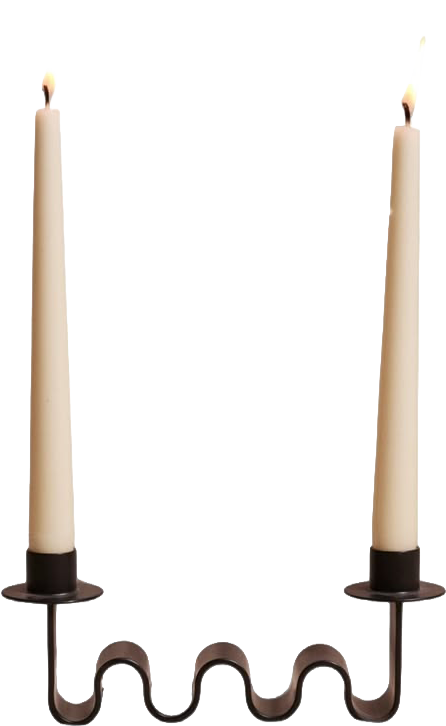
I paired the dark candle holders with ivory taper candles to create contrast and placed them against a large piece of abstract artwork. The artwork acts as an anchor for the entire arrangement while the natural oak mantel adds warmth and helps soften the contrast between the black candle holders and the light wall.
Try Adding Decorative Beads Around Candle Holders
Here's where I decided to do something a little unexpected. Rather than styling the candle holders by themselves, I loosely arranged decorative beads around and between their bases.
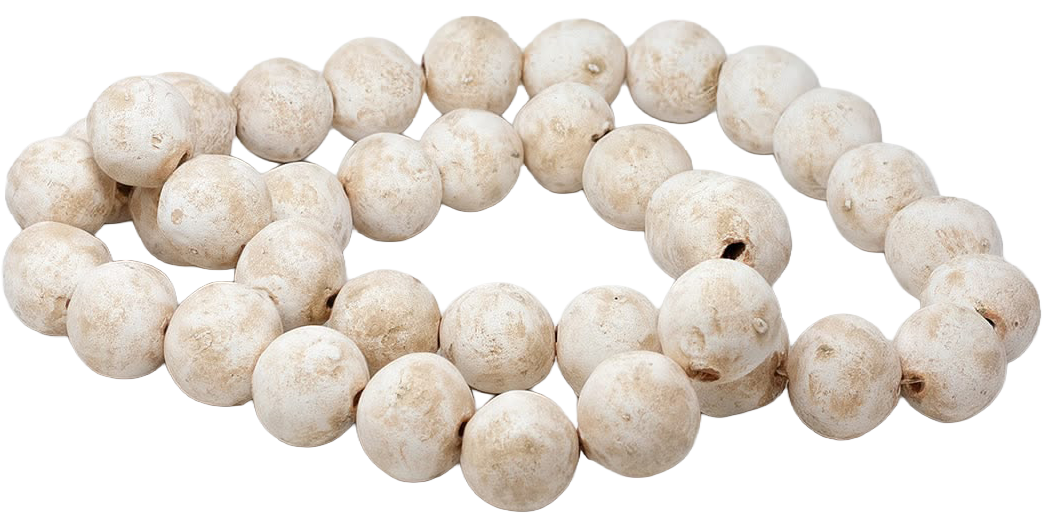
Decorative beads are often draped over books, placed inside bowls, or casually arranged on a coffee table. Those are all great options, but there’s no reason they have to be styled the same way every time. Layering the beads around the candle holders adds texture and creates a visual connection between five individual objects, making the entire arrangement feel like one composition.
The contrast is also what makes this combination work. The candle holders are dark, smooth, and sculptural, while the beads are light, irregular, and heavily textured. Combining those opposing characteristics gives the mantel more depth without requiring additional decorative accessories.
When styling your own mantel, experiment with height, texture, scale, and contrast rather than trying to perfectly recreate an arrangement you’ve seen somewhere else. Start with one larger anchor, such as artwork or a mirror, add objects at varying heights, and then introduce a smaller textural element to connect everything together. Most importantly, leave enough breathing room for each element to be appreciated.
Styling tip: If you plan to light your candles, keep dried greenery, books, fabrics, and other flammable decor safely away from the flames. A beautiful mantel should also be a safe one.
Shop This Look
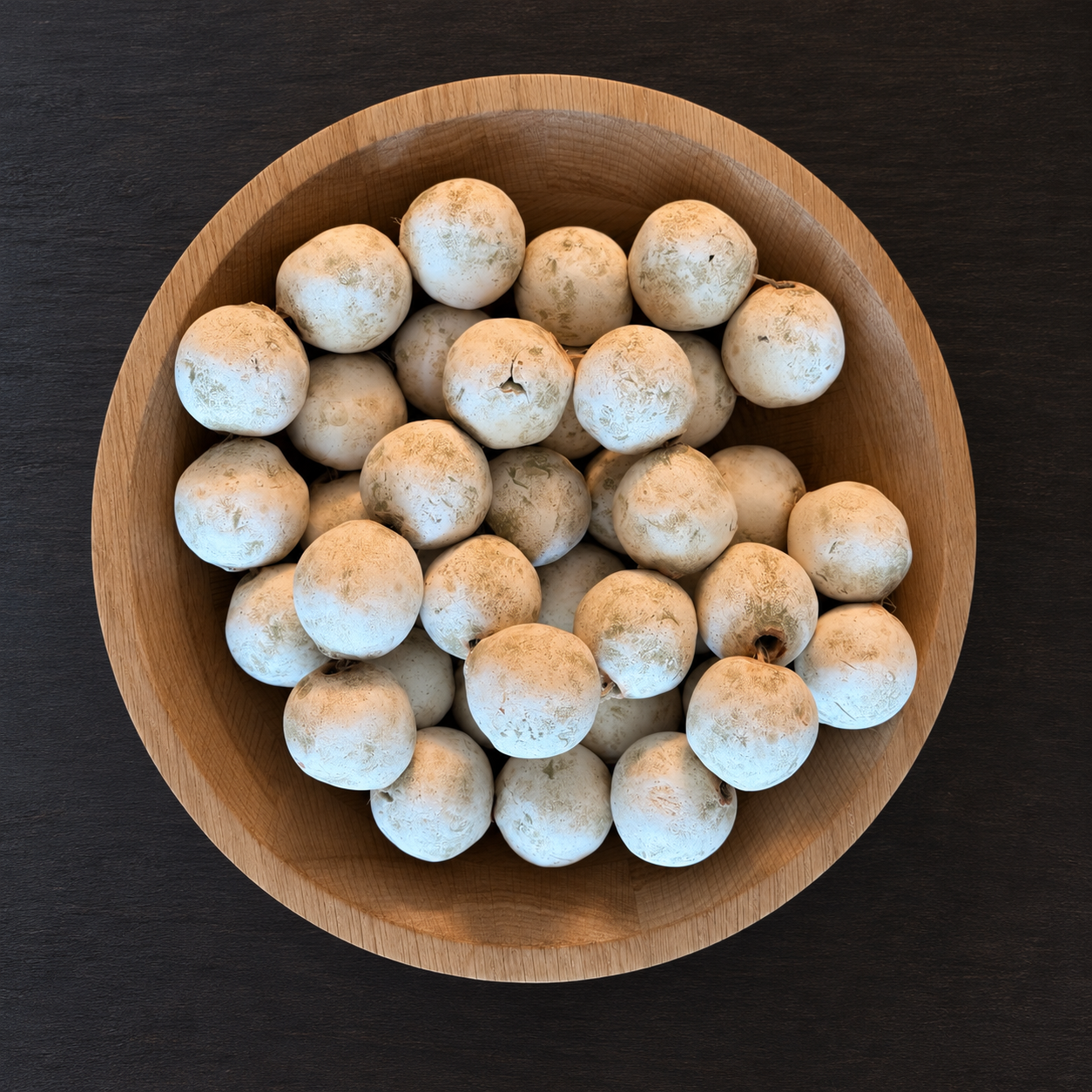
Virtual interior designer Joshua Jones of JJones Design Co. styled white patina decorative beads in a natural wood bowl on a black coffee table, using contrast and organic textures to turn a simple accessory into a statement.
How to Style Decorative Beads in a Bowl
Decorative beads are one of those accessories that can be styled in so many different ways. You’ll often see them draped over coffee table books, layered on trays, or casually placed across a console table. For this look, I wanted to do something a little different and use the beads as a decorative object all on their own.
I placed Bloomist’s Terracotta Decorative Beads in White Patina inside a natural wood bowl, allowing the beads to loosely pile and overlap rather than arranging them too perfectly. The irregular shapes and weathered finish give them an organic, collected quality, while the simple wood bowl provides enough structure to contain the arrangement.
Use Contrast to Make Decorative Objects Stand Out
One of the easiest ways to make a simple arrangement more interesting is to think about contrast. Instead of placing the natural wood bowl on another light wood surface, I styled it on a black coffee table. The darker background immediately draws attention to the warm wood bowl and lighter beads.
You can use this same principle throughout your home. A light decorative object can have much more presence against a dark surface, while darker accessories often stand out beautifully against lighter woods, stone, or painted finishes. You don't necessarily need more decor—you may simply need more contrast.
Texture is equally important here. The smooth, dark coffee table, visible wood grain of the bowl, and distressed surface of the terracotta beads each bring something different to the arrangement. Keeping the color palette relatively simple allows those textures to become the focus.
Let the Arrangement Feel Natural
When filling a decorative bowl, resist the temptation to make everything perfectly symmetrical. I prefer allowing decorative beads to overlap, turn in different directions, and settle naturally inside the bowl. Those small irregularities are what give an arrangement character.
This is also an easy styling idea to adapt to different rooms. A bowl filled with decorative beads could work on a coffee table, console table, entry table, dining table, or open shelf. You can also change the bowl material—wood, stone, ceramic, or metal—to complement the other finishes in your space.
Styling tip: Before buying another decorative accessory, try moving something you already own onto a surface with greater contrast. Sometimes changing the background is enough to make a familiar piece feel completely different.
Shop This Look
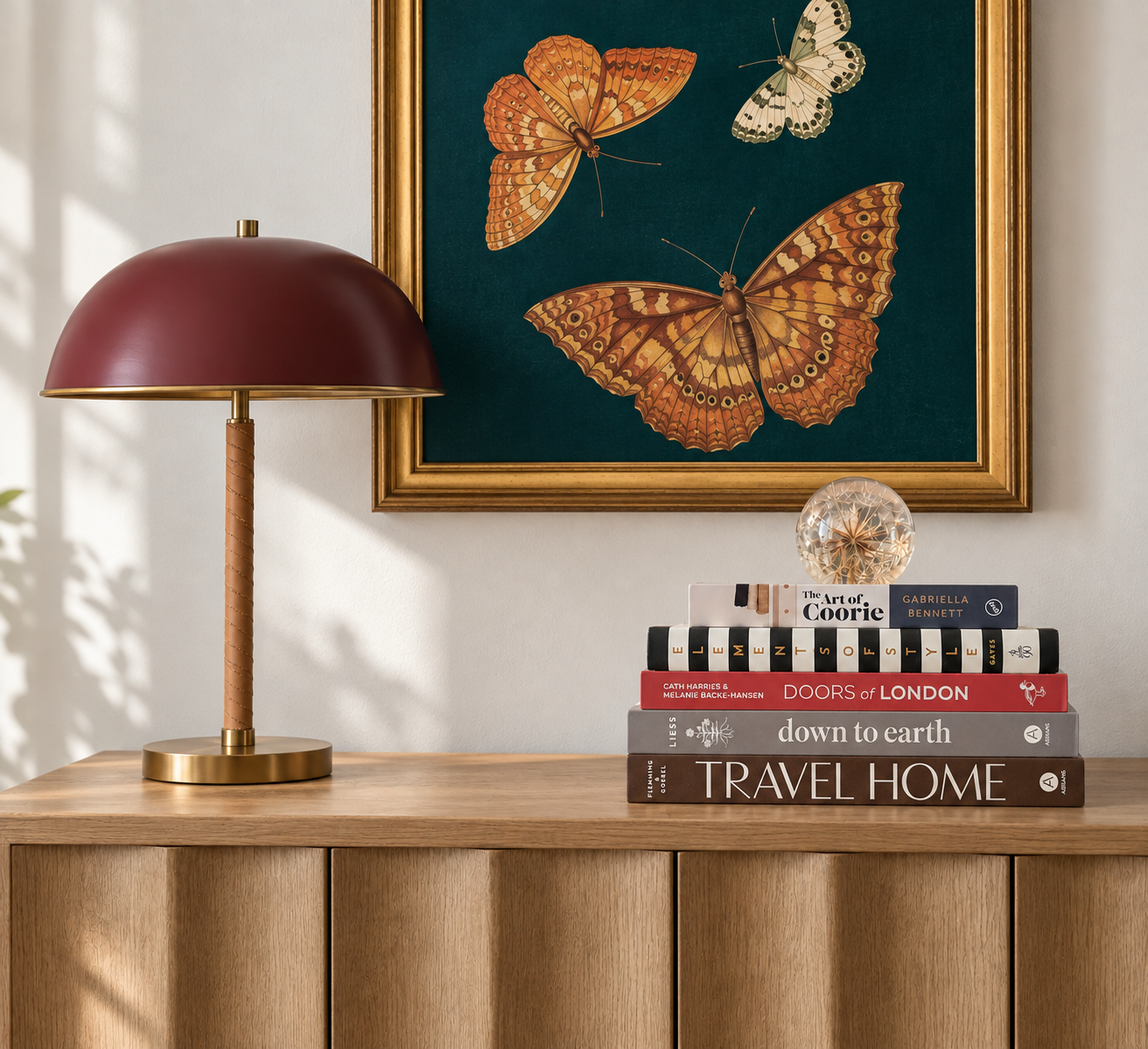
Virtual interior designer Joshua Jones of JJones Design Co. styled a botanical paperweight on a stack of books, using different heights, colors, and scale to create a collected console table arrangement.
How to Style a Decorative Paperweight
Paperweights may be small, but they can bring an unexpected decorative detail to a room. While they were traditionally designed with a practical purpose in mind, I like treating them as small sculptural objects that can be displayed on coffee tables, consoles, desks, bookshelves, and other surfaces throughout the home.
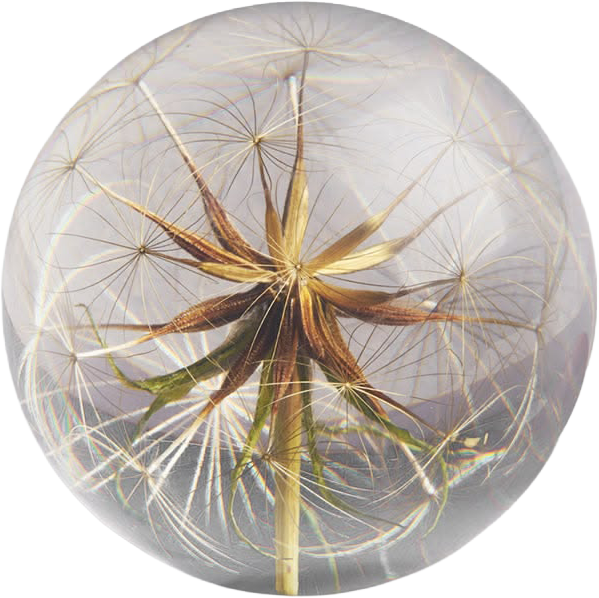
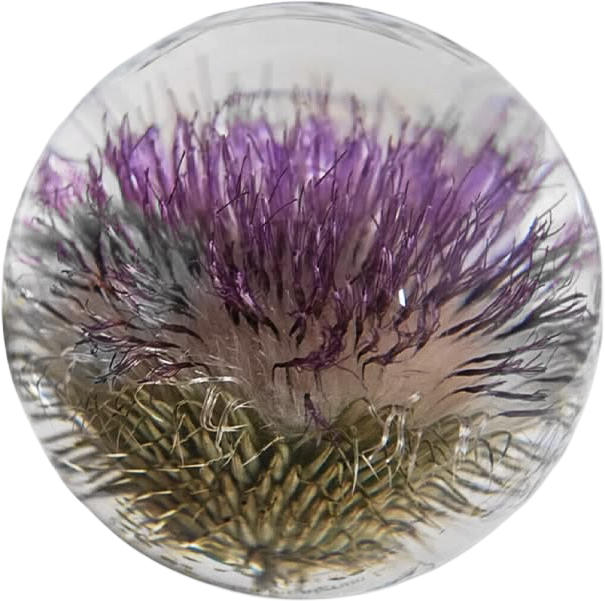
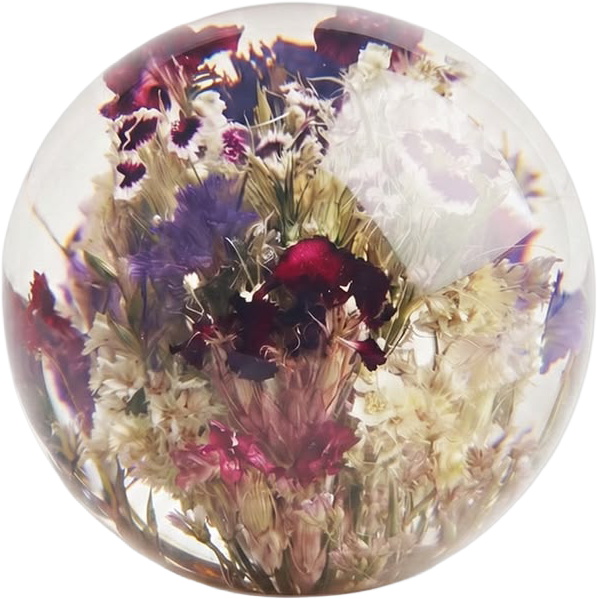
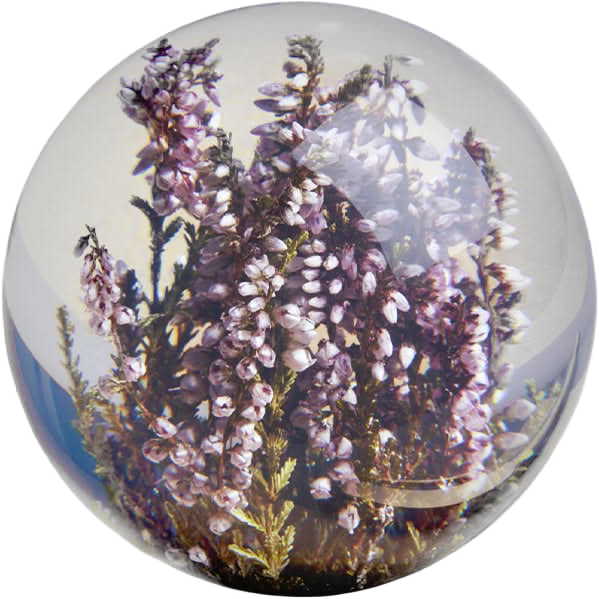
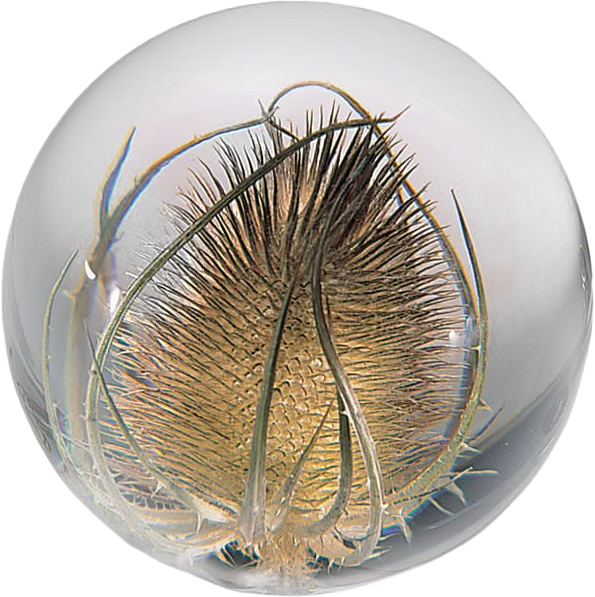
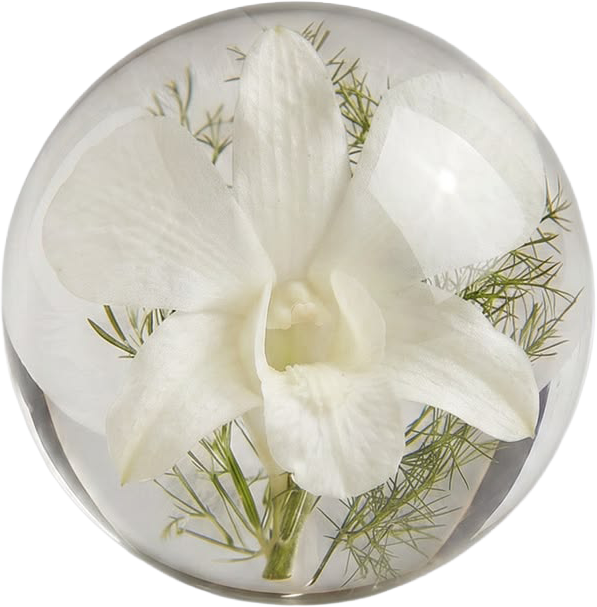
I have to give Bloomist a special shout-out for their botanical paperweights. Their Goatsbeard Botanical Resin Paperweight immediately caught my attention because of the way the delicate plant is preserved inside the clear form. I haven't personally come across many decorative paperweights designed this way, and I love how Bloomist takes something as simple as a paperweight and turns it into a little piece of botanical art.
The transparent material allows you to appreciate the plant from different angles while also giving the paperweight a light, almost jewel-like appearance. It's an especially beautiful way to bring an organic element into a room without adding another vase or potted plant.
Give Small Decorative Objects More Presence
One challenge with styling a small object like a paperweight is scale. If you place it by itself in the middle of a large console table, it can easily get lost. One of my favorite solutions is to elevate smaller objects on a stack of books.
For this arrangement, I placed the botanical paperweight on five stacked design and travel books. The books give the paperweight additional height and visual weight while also introducing layers of color underneath it. Instead of the paperweight looking like a tiny accessory sitting on a large console, the books and paperweight become one decorative composition.
You can use this same technique with other smaller objects you already own. A small sculpture, decorative box, collected object, or sentimental piece can often have much more presence when placed on one or two larger books.
Create Balance With Different Heights
To complete the console table, I paired the book stack and paperweight with a taller table lamp and placed a large framed artwork behind them. Using objects at different heights helps move your eye around the arrangement rather than keeping everything on the same horizontal plane.
The artwork provides a visual backdrop, the lamp creates height on one side, and the stacked books bridge the space between the taller lamp and smaller paperweight. Keeping some open space on the console also prevents the arrangement from becoming overcrowded.
When you're styling a console table, you don't need to fill every empty spot. Start with a few pieces of different heights and scales, then step back and look at the overall balance. Sometimes what you leave out is just as important as what you add.
Styling tip: If you have a beautiful small object that seems to disappear wherever you place it, don't immediately surround it with more accessories. Try elevating it on a few books first. Giving it height may be all it needs to become part of the larger composition.
Shop This Look
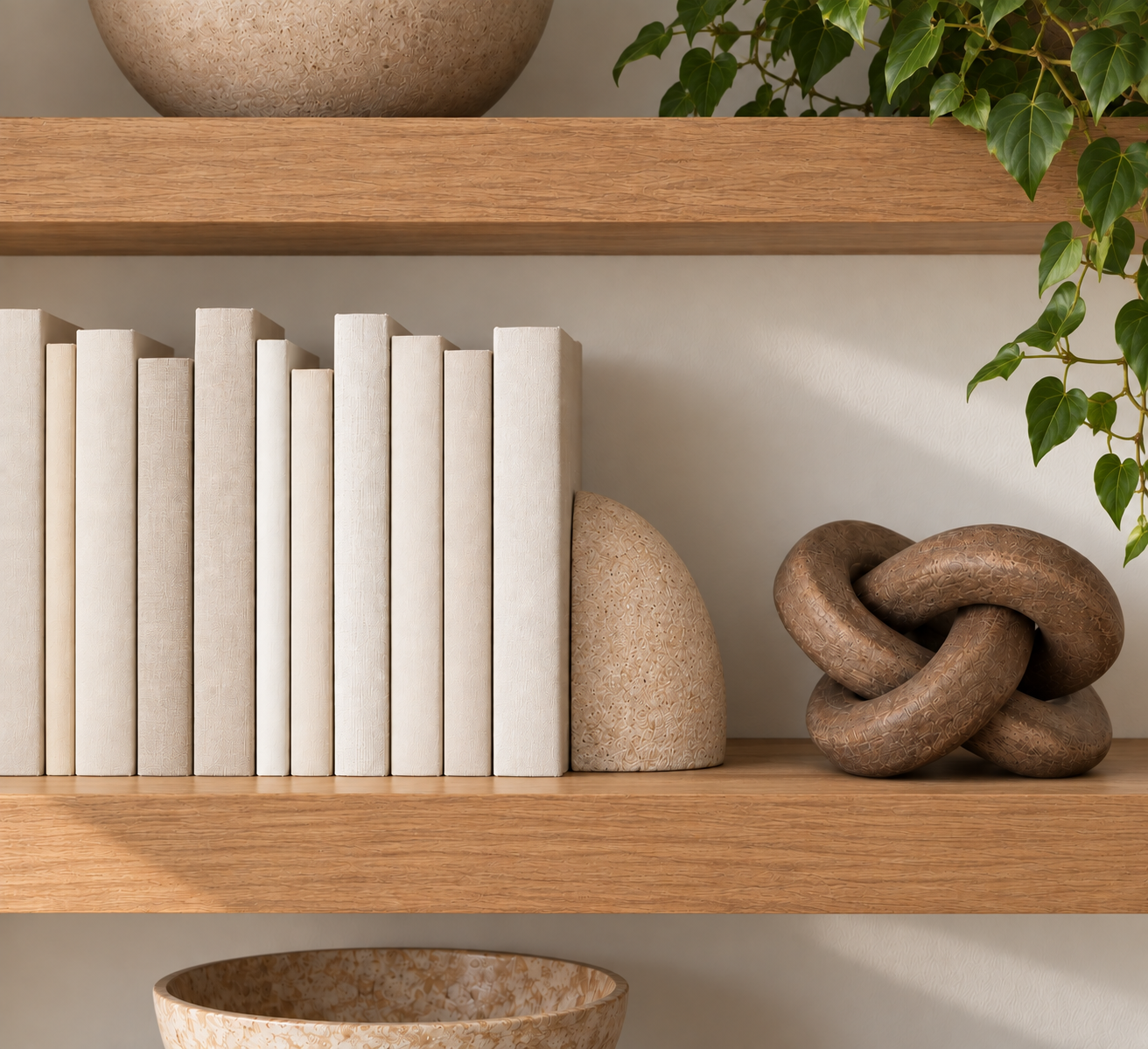
Virtual interior designer Joshua Jones of JJones Design Co. styled a stone bookend with neutral books, a textured wood sculpture, and natural oak shelves to create a simple, modern-organic bookshelf arrangement.
How to Style Bookends on Open Shelves
Bookends are practical, but I think they deserve more attention as decorative objects. Instead of treating them as something that simply keeps books upright, I like choosing bookends with interesting shapes and materials so they become part of the overall shelf styling.
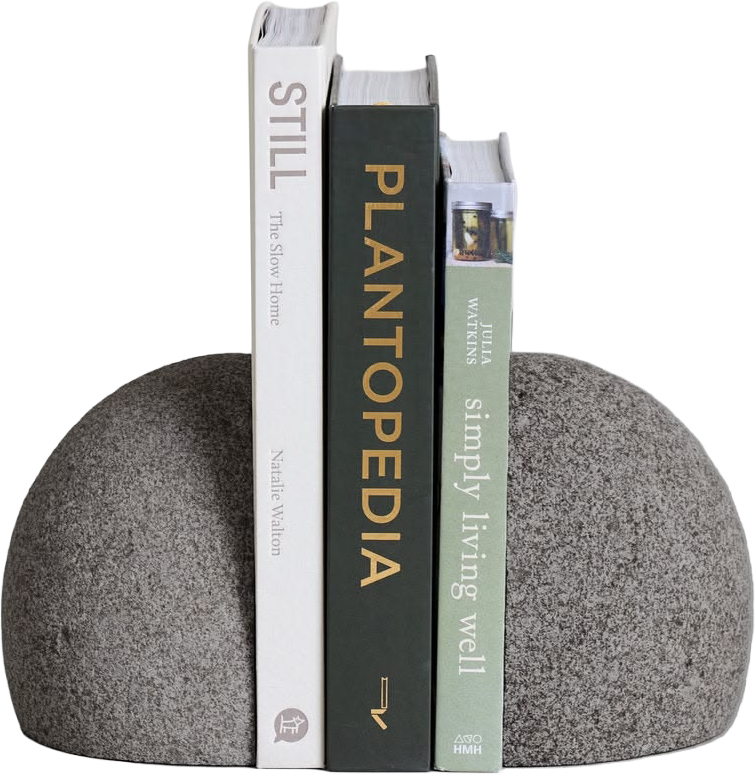
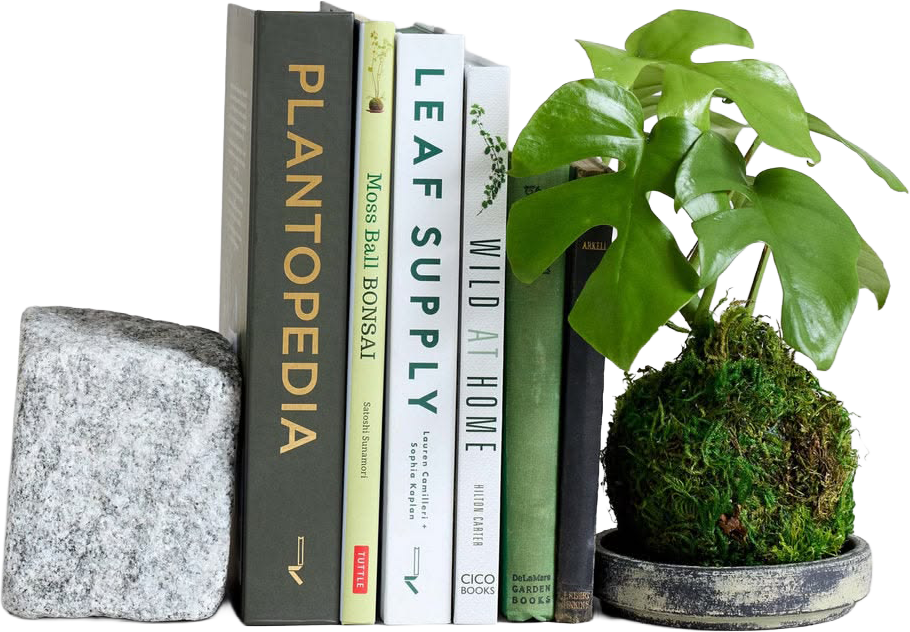
For this arrangement, I used Bloomist’s Stone Bookends. Their simple rounded shape and natural stone texture bring an organic quality to the shelves without demanding too much attention. I especially like pieces like these because they can quietly add texture and character while still serving a purpose.
Keep the Books Visually Simple
Books naturally introduce a lot of color, typography, and pattern to open shelving. Sometimes that's exactly what a room needs, but in a quieter space, all those different book spines can quickly create more visual activity than you want.
For this look, I kept the books completely neutral with simple white covers. This allows the shapes and textures around them to become more noticeable. Against the white books, you can really appreciate the speckled surface and curved form of the stone bookend.
You can achieve a similar look with neutral book covers, books that already have simple spines, or by removing colorful dust jackets when the hardcover underneath works better with your room. You don't need every book in your home to match—the idea is simply to think about books as part of the overall color palette when styling open shelves.
Mix Materials and Textures
One of my favorite ways to keep a neutral room from feeling flat is to layer different natural materials. Here, the smooth white books are paired with a textured stone bookend, a rough wood sculpture, and thick natural oak shelves.
Even though the color palette is restrained, the different materials keep the arrangement interesting. Wood, stone, paper, and greenery all have their own textures, so they can create depth without relying on lots of color or decorative accessories.
This is especially useful when you're going for a modern-organic look. Rather than filling shelves with many small objects, try using fewer pieces with stronger shapes and noticeable textures.
Give Your Shelves Some Breathing Room
One of the easiest mistakes to make when styling bookshelves is feeling like every open space needs something in it. It doesn't.
Leaving negative space around books and decorative objects allows you to actually notice them. In this arrangement, the bookend and sculpture have enough room around them that you can appreciate their individual shapes while they still feel connected as part of the same composition.
When styling your own shelves, start with the things that actually matter to you—books, collected objects, artwork, sculptures, or pieces from your travels—and build around those. Step back frequently as you work. If your eye doesn't know where to rest, try removing something before adding something else.
Styling tip: When working with a mostly neutral palette, texture becomes even more important. Mix materials such as wood, stone, ceramic, glass, metal, and natural fibers to create visual interest without making your shelves feel busy.
Shop This Look
Create a Home That Feels Collected, Not Decorated
Beautiful home styling isn't about filling every surface or following a specific formula. Some of the most interesting spaces are created by combining pieces you genuinely love and finding unexpected ways to display them.
As you’ve seen throughout these four styling ideas, even small decorative objects can make an impact when you pay attention to scale, height, texture, contrast, and negative space. Candle holders can become more interesting when layered with decorative beads. A bowl of beads can stand out simply by changing the surface underneath it. A small paperweight can gain presence when elevated on books, while a sculptural bookend can become part of the overall design of a bookshelf.
When styling your own home, give yourself permission to experiment. Move things from one room to another, pair objects you wouldn't normally put together, change the height of an accessory with a stack of books, or remove a few pieces when a surface starts feeling too busy. You don't always need to buy something new to make a space feel refreshed.
Most importantly, your home doesn't need to look exactly like anyone else's. The goal is to create rooms that feel layered and collected over time while still reflecting your own personality and the things you enjoy having around you.
I hope these home decor styling ideas inspire you to look at some of the smaller objects in your home a little differently—and perhaps discover a new way to style something you already own.
This post contains gifted products from Bloomist. All opinions and styling ideas are my own. This post may also contain affiliate links, which means I may earn a commission if you make a purchase through one of my links at no additional cost to you.