How to Choose the Right Flooring for Your Home: Pros, Cons, and Designer Tips
Flooring is one of the biggest decisions you’ll make when designing or renovating a home. It sets the visual foundation for every room and affects how the space feels and functions over time.
Many homeowners start by focusing on appearance alone, but flooring needs to do more than look good. Durability, maintenance, comfort, moisture resistance, and long-term value all play a role in determining what will actually work best in your home.
In my design work, flooring is often one of the first things I discuss with clients because it influences so many other decisions. The flooring choice can affect everything from cabinetry finishes and furniture selections to how cohesive the entire home feels.
In this guide, I’ll walk through several popular flooring options, explain what they are, and share the pros and cons of each. I’ll also include a few designer insights that can help you think through which flooring might make the most sense for your space and lifestyle.
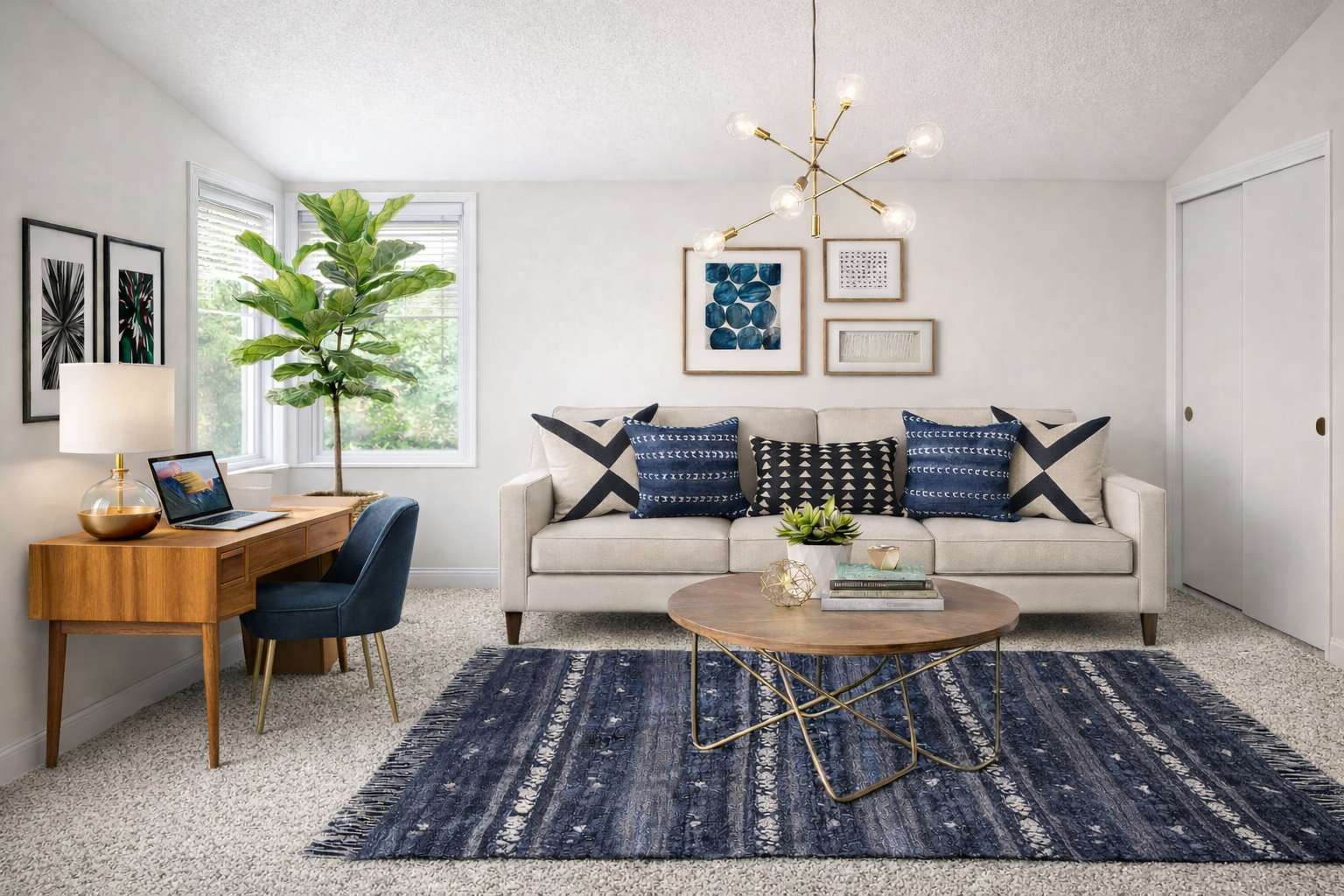
Modern boho style home office with carpet flooring designed by Joshua Jones. This photorealistic 3D rendering was created from the designer’s original concept and generated using AI.
Popular Types of Flooring to Consider
There is no single flooring material that works best for every home. Each option has its own strengths and limitations depending on how the space will be used, the level of foot traffic, and the overall style of the home.
Some flooring materials are valued for their durability, while others are chosen for comfort or visual appeal. Budget, maintenance requirements, and moisture exposure can also influence which option makes the most sense.
Below are several of the most common flooring types used in residential homes today. Understanding the differences between them can help you narrow down which materials may be the best fit for your home.
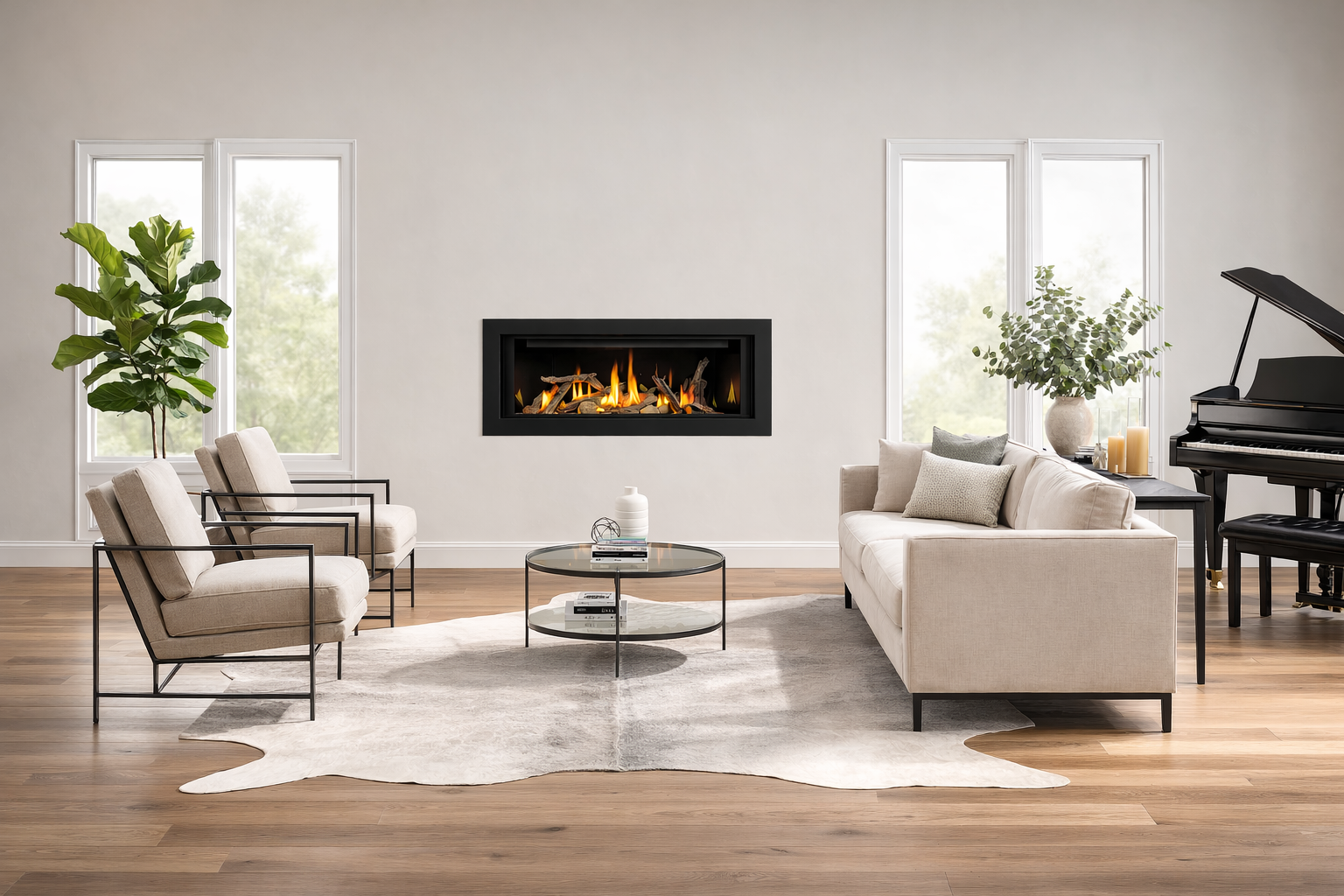
Modern living room design with hardwood flooring by virtual interior designer Joshua Jones of JJones Design Co. (AI-generated rendering based on the designer’s original concept)
Hardwood Flooring
What It Is
Hardwood flooring is made from solid wood planks cut from a single piece of timber. Common wood species include oak, maple, walnut, and hickory, each offering its own grain pattern and natural color variation. The planks are typically finished with stain and a protective coating to enhance the wood’s appearance and protect the surface from daily wear.
Hardwood floors have been used in homes for generations and are often associated with timeless, high-quality interiors. They can work well in a wide range of design styles, from traditional homes to modern spaces.
Pros
• Timeless appearance that rarely goes out of style
• Adds strong resale value to many homes
• Can be sanded and refinished multiple times
• Wide variety of wood species, stains, and plank sizes available
• Works well in living rooms, dining rooms, and hallways
Cons
• Typically more expensive than many other flooring options
• Susceptible to scratches and dents from pets or heavy furniture
• Requires periodic maintenance and refinishing to keep it looking its best
• Can expand or contract with humidity changes
• Not recommended for bathrooms or areas with frequent moisture
Hardwood floors can last for decades, but they do require occasional refinishing or restaining over time to restore their appearance, especially in high-traffic areas.
Designer’s Tip
Hardwood flooring is still one of the most reliable choices when homeowners want a classic look that will hold its value over time. In many projects, I like to use hardwood in the main living areas of a home and keep the flooring consistent across connected spaces to create a more cohesive feel.
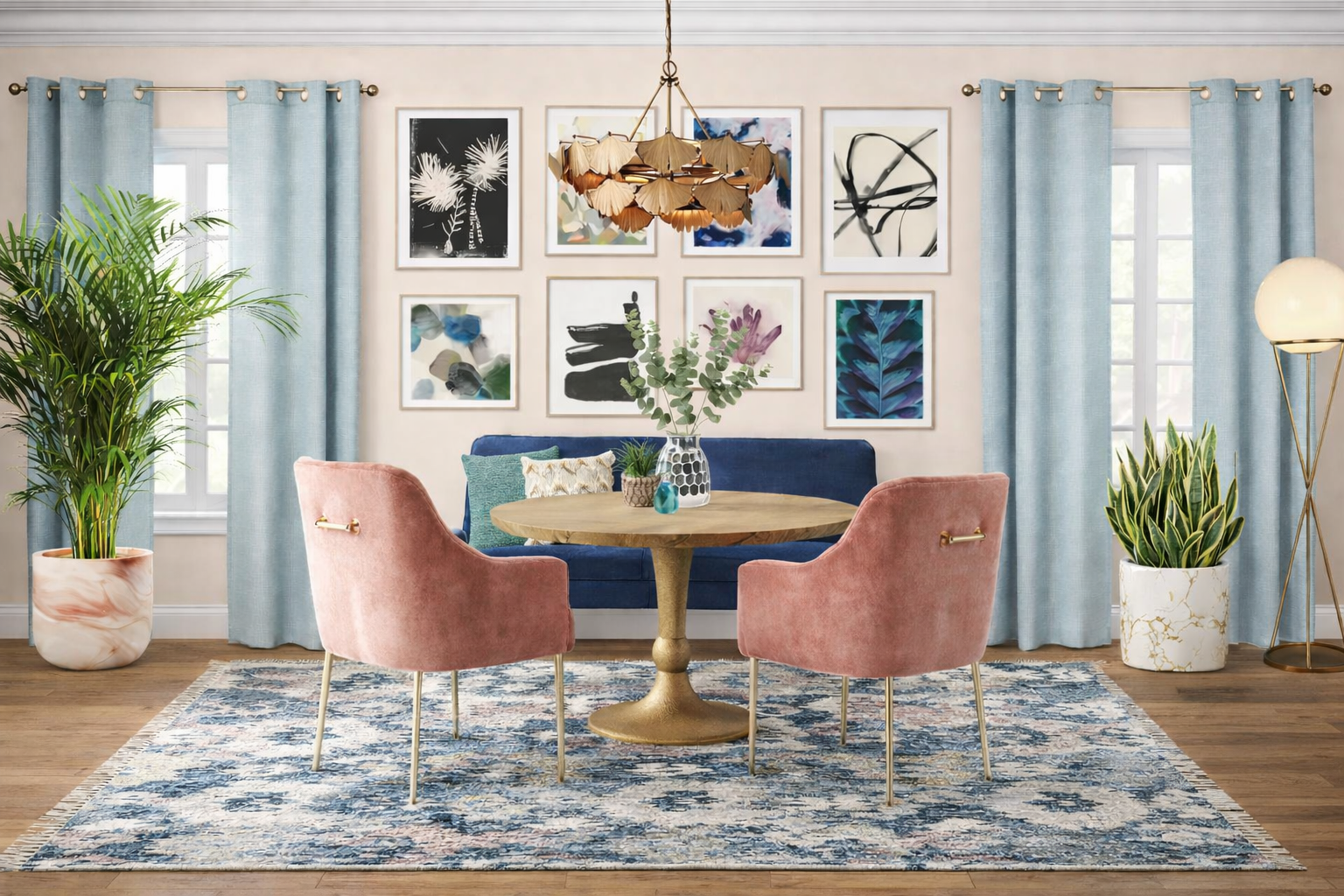
Eclectic dining nook design featuring engineered wood flooring by virtual interior designer Joshua Jones of JJones Design Co. (AI-generated rendering based on the designer’s original concept)
Engineered Wood Flooring
What It Is
Engineered wood flooring is designed to provide the look of hardwood while offering improved stability. Instead of being made from a single piece of solid wood, engineered flooring consists of a thin layer of real hardwood on top of multiple layers of plywood or high-density fiberboard. These layers are bonded together to create a plank that is more resistant to changes in temperature and humidity.
Because the top layer is real wood, engineered flooring still provides the natural grain and appearance many homeowners want, but with a construction that can perform better in certain environments.
Pros
• Real wood surface provides the appearance of hardwood
• More stable than solid hardwood in changing humidity conditions
• Often less expensive than traditional hardwood
• Available in a wide range of finishes, plank widths, and wood species
• Can work well in homes with concrete subfloors
Cons
• The top wood layer is thinner than solid hardwood
• Limited refinishing compared to traditional hardwood
• Quality can vary depending on the thickness of the wood veneer
• Lower-cost products may feel less substantial underfoot
• Water can damage the flooring if moisture penetrates beneath the planks
Not all engineered wood flooring products are designed to handle moisture exposure. If water seeps underneath the flooring, it can damage the core layers and may require replacing large sections or even the entire floor.
Another thing homeowners should keep in mind is that manufacturers sometimes discontinue flooring styles or change plank dimensions over time. If a section of flooring becomes damaged later, finding a matching replacement can be difficult, which may lead to replacing a much larger area than expected.
Designer’s Tip
Engineered wood flooring is often a practical option for homeowners who want the look of hardwood but need something that performs better in modern homes with varying humidity levels. In some projects, it can be a good solution for maintaining a consistent wood look across multiple rooms while staying within budget.
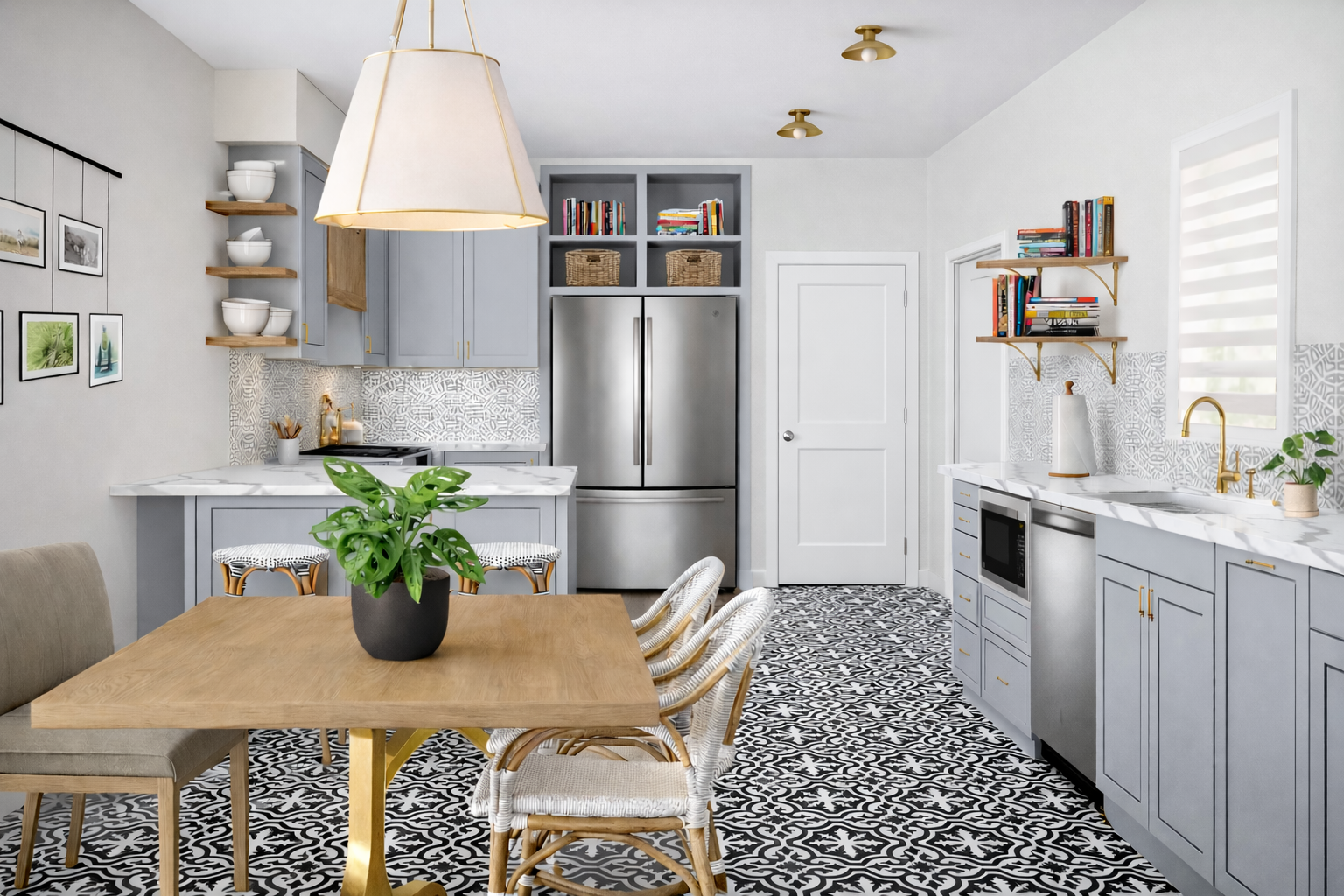
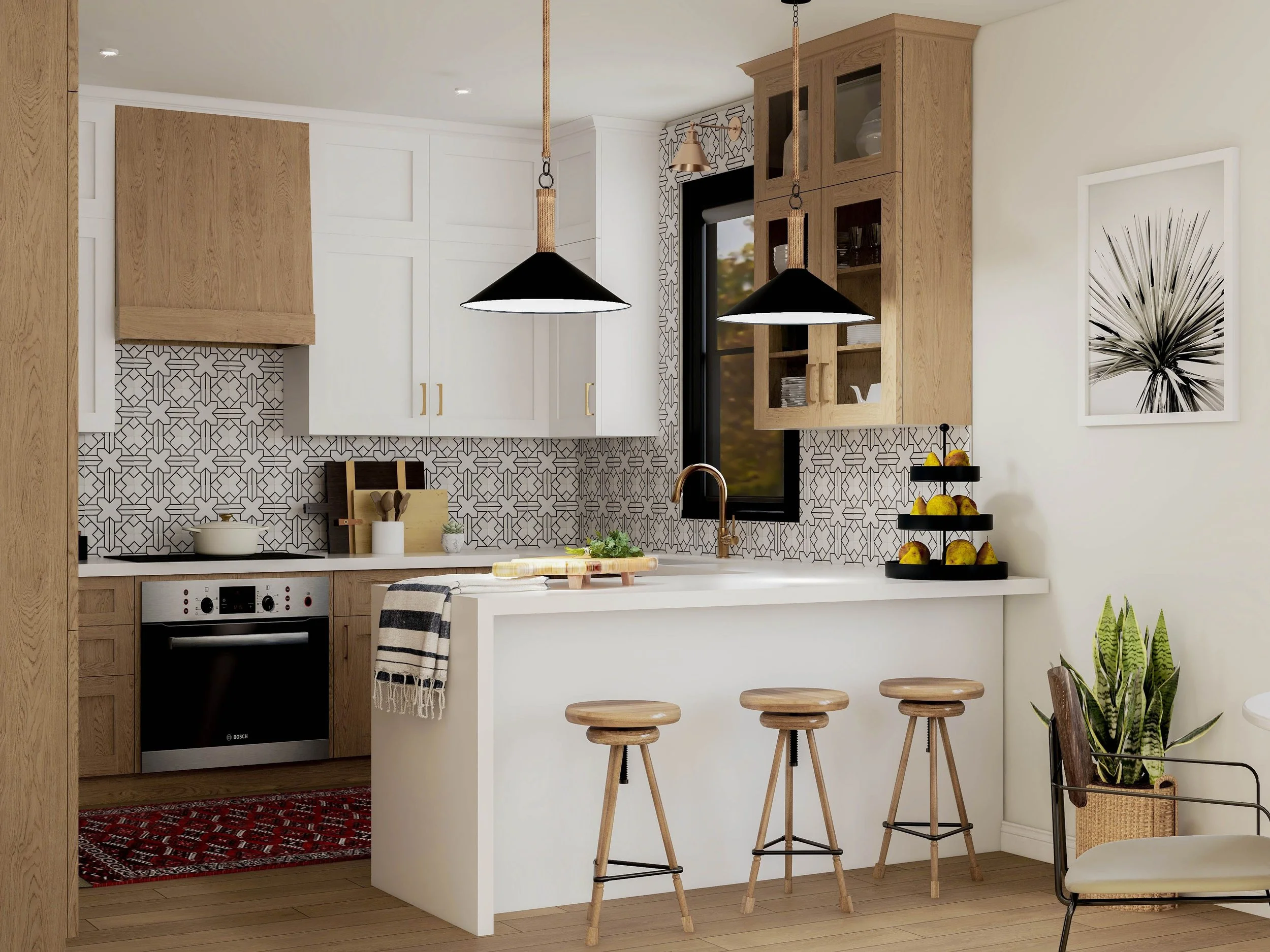
Modern coastal style kitchen featuring patterned luxury vinyl plank flooring, designed by virtual interior designer Joshua Jones of JJones Design Co. (AI-generated rendering based on the designer’s original concept)
Luxury Vinyl Plank (LVP)
What It Is
Luxury vinyl plank flooring, often referred to as LVP, is a synthetic flooring material designed to mimic the appearance of real wood. The planks are made from multiple layers of vinyl, including a durable wear layer, a printed design layer that replicates wood grain, and a rigid core that provides stability.
Modern LVP products can be surprisingly realistic in appearance, with textures and finishes that closely resemble natural wood. Because it is manufactured rather than cut from natural materials, it is often designed to be more resistant to moisture and everyday wear.
Some luxury vinyl products are also available in tile format rather than long planks. These individual tiles can offer more flexibility during installation and may be easier to replace if a section becomes damaged, since you may only need to replace a small portion rather than an entire section of flooring.
Pros
• More affordable than hardwood in many cases
• Highly durable and resistant to scratches and dents
• Many products are water-resistant or waterproof
• Easy to clean and maintain
• Available in a wide range of colors, textures, and plank styles
• Individual planks or tiles can make small repairs easier if damage occurs
Cons
• Does not provide the same long-term value as real hardwood
• Cannot be sanded or refinished if the surface becomes damaged
• Lower-quality products may look artificial
• Some products may feel less solid underfoot compared to wood flooring
Although many luxury vinyl products are designed to resist moisture, homeowners should still pay attention to installation and manufacturer guidelines. If water becomes trapped beneath the flooring, it can sometimes lead to issues with the subfloor or mold development.
Designer’s Tip
Luxury vinyl plank flooring can be a practical option for busy households, especially in spaces that experience heavy foot traffic or occasional moisture exposure. Some clients also choose this flooring because it provides a slightly softer surface compared to materials like tile or concrete, which may reduce the risk of injury if someone falls.
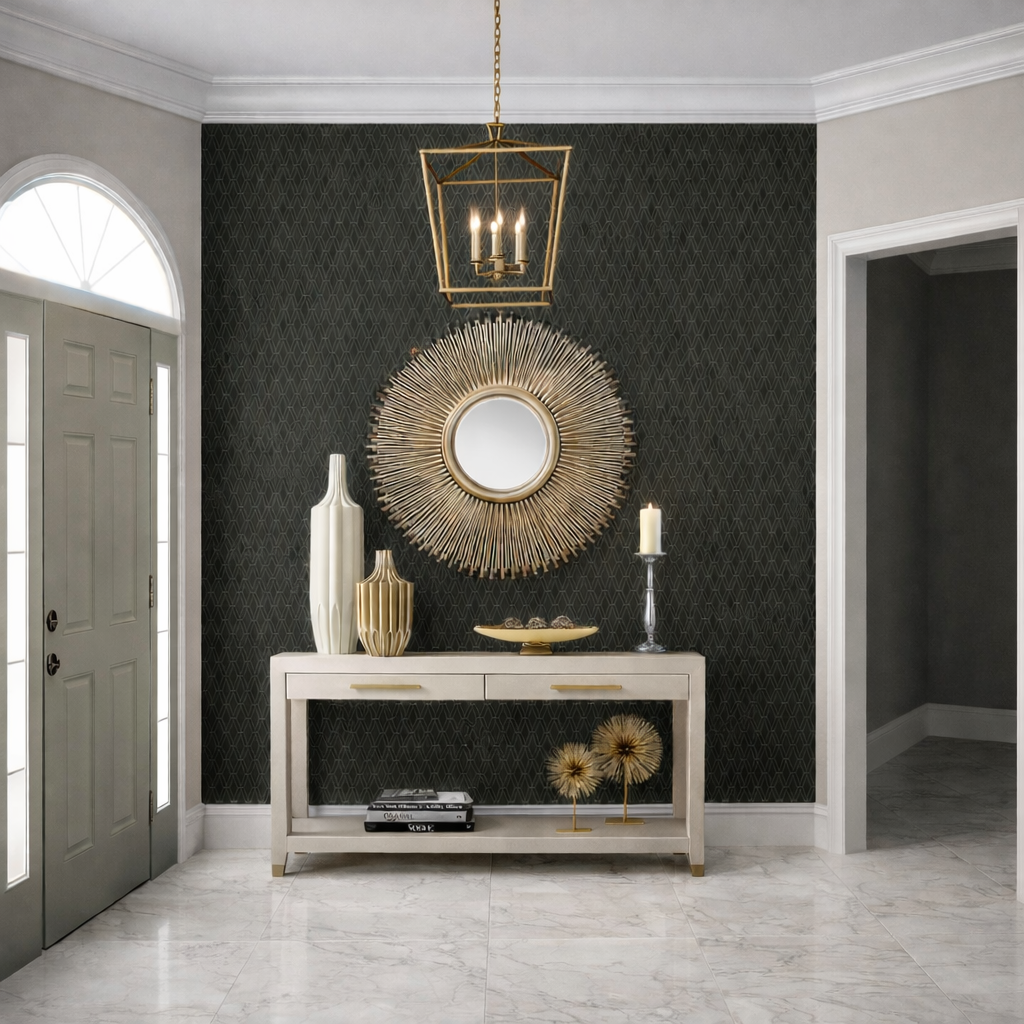
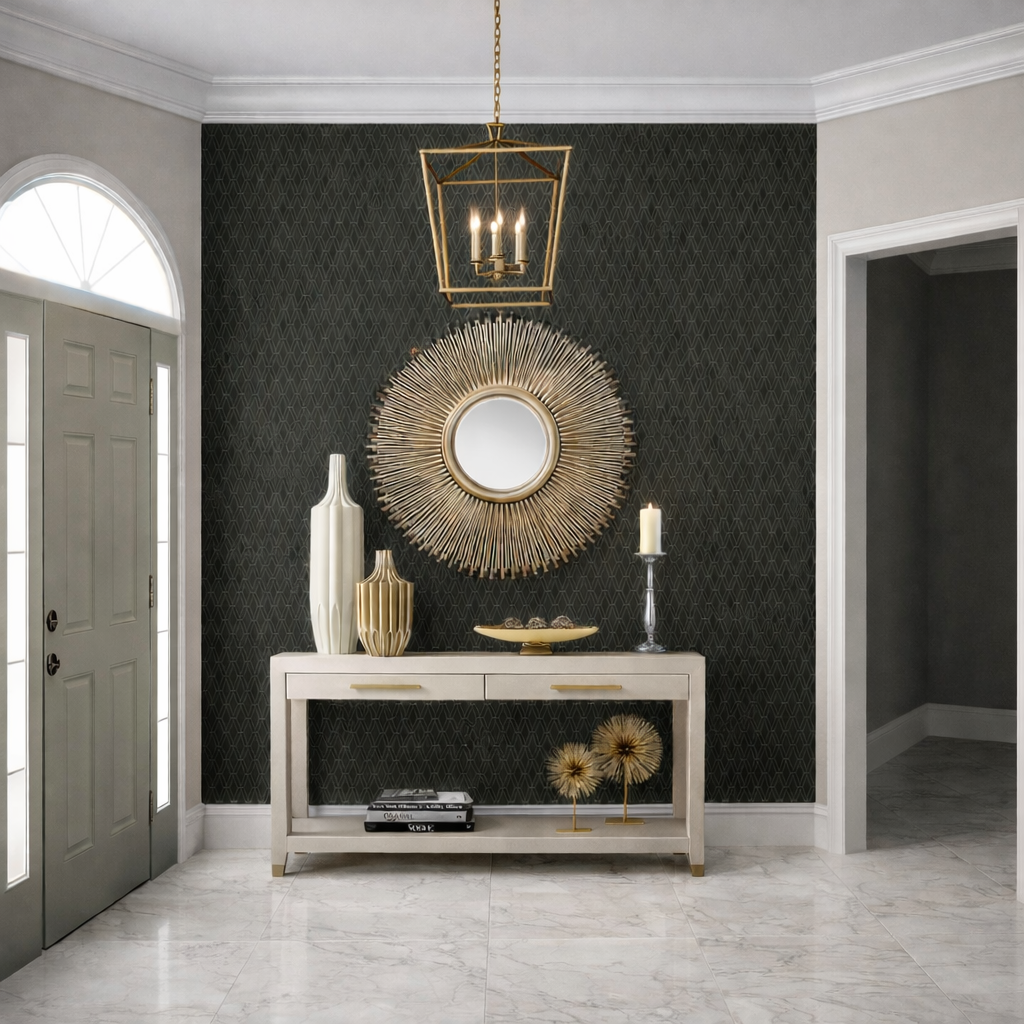
Modern glam foyer design featuring large-format tile flooring, designed by virtual interior designer Joshua Jones of JJones Design Co. (AI-generated rendering based on the designer’s original concept)
Tile Flooring
What It Is
Tile flooring is made from materials such as ceramic or porcelain and is installed piece by piece using adhesive and grout. These tiles are manufactured at high temperatures, which makes them extremely durable and resistant to moisture.
Tile flooring has been widely used in homes for many years, particularly in areas where water exposure is common. Because it comes in a wide range of colors, patterns, sizes, and textures, tile can work in many design styles from traditional homes to more modern interiors.
Pros
• Extremely durable and long lasting
• Highly resistant to moisture and water
• Ideal for bathrooms, kitchens, laundry rooms, and entryways
• Available in a wide range of colors, sizes, and patterns
• Easy to clean and maintain
• Works well with radiant floor heating systems
Cons
• Hard surface that may feel uncomfortable for long periods of standing
• Can feel cold underfoot without radiant heating
• Grout lines require occasional cleaning and maintenance
• Tile can crack if a heavy object is dropped
Designer’s Tip
Tile flooring is often the most practical option for spaces where moisture is common. In many projects, I like to use larger tile formats because they create fewer grout lines and can make a space feel more open and modern.
For homeowners who love the look of hardwood flooring but are concerned about moisture, porcelain tiles that mimic wood can be a great alternative. These tiles replicate the appearance of wood planks while providing the durability and water resistance of tile, which can be especially useful in bathrooms, kitchens, or homes with higher humidity levels.
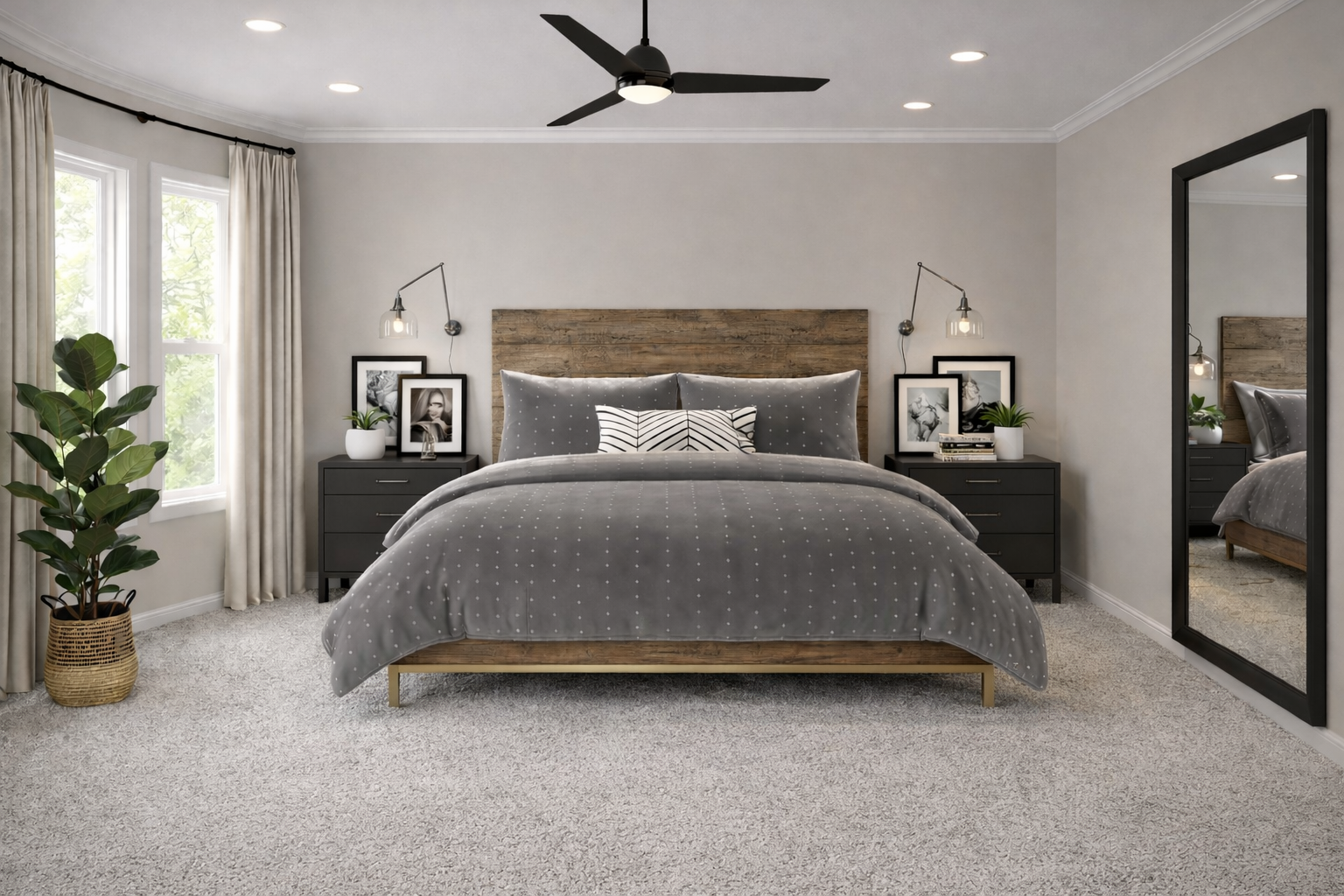
Modern rustic primary bedroom with plush carpet flooring, designed by virtual interior designer Joshua Jones of JJones Design Co. (AI-generated rendering based on the designer’s original concept)
Carpet Flooring
What It Is
Carpet flooring is a textile floor covering made from fibers such as nylon, polyester, wool, or polypropylene. It is typically installed wall-to-wall over a padded underlayment, which helps provide cushioning, insulation, and sound absorption.
Carpet has long been a common flooring choice in residential homes, particularly in bedrooms and living spaces where comfort and warmth are priorities.
Pros
• Soft and comfortable underfoot
• Warmer than most hard flooring materials
• Helps reduce noise and echo within a room
• Provides a softer surface that may reduce the risk of injury from falls
• Often more affordable than many hard flooring options
Cons
• More susceptible to stains compared to hard surfaces
• Can trap dust, allergens, and pet hair
• Requires regular vacuuming and occasional deep cleaning
• Typically needs replacement sooner than many hard flooring materials
Designer’s Tip
Carpet can still be a great choice for spaces where comfort is the main priority. In many projects, I recommend carpet for bedrooms because it creates a softer and warmer environment compared to hard flooring.
If you’re not a fan of the typical carpet look, consider architectural or textured carpet styles. These carpets use varying pile heights and textures to create subtle patterns, which can add visual interest and give the space a more modern and sophisticated appearance.
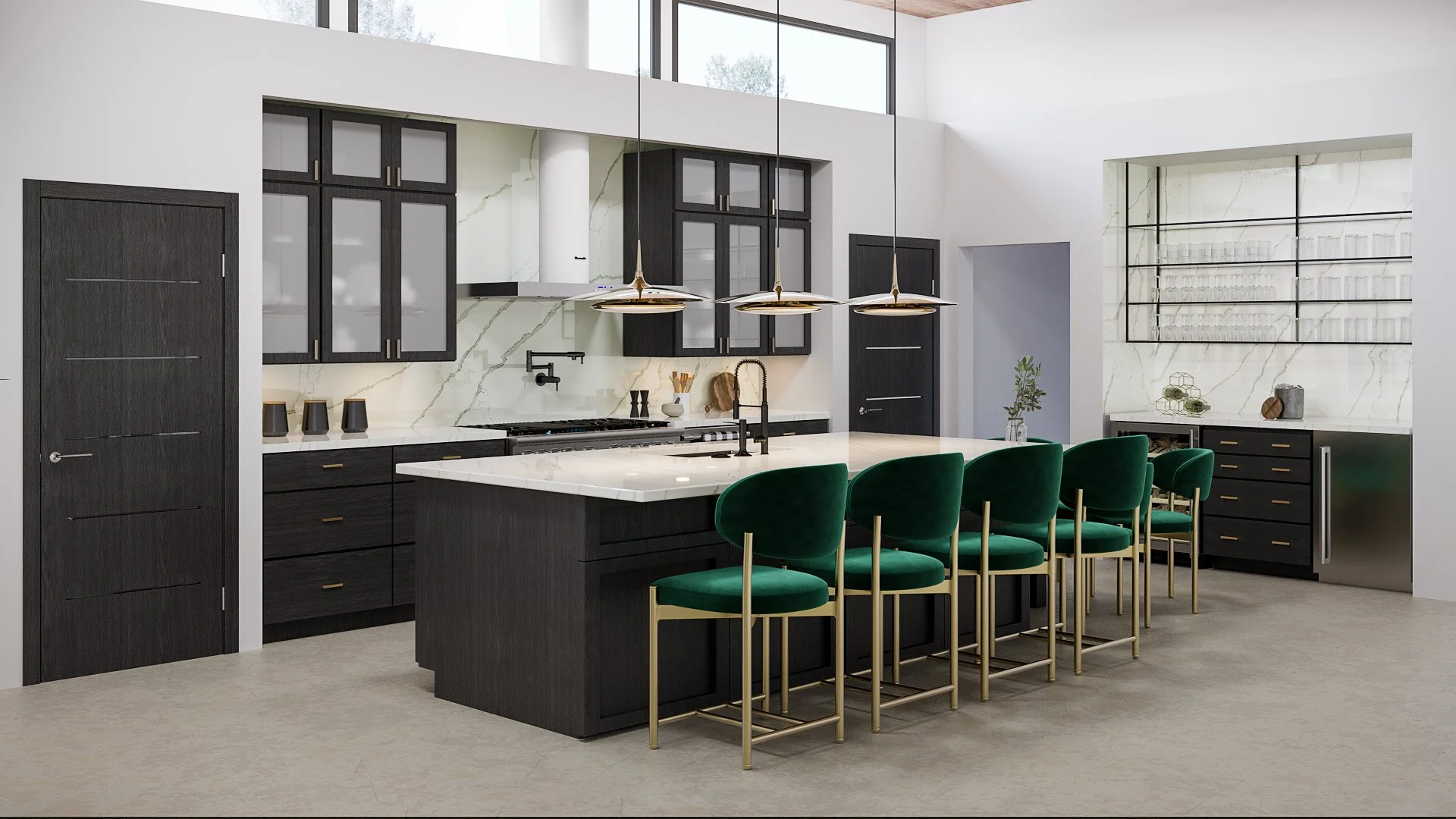
Mid-century and industrial style kitchen with polished concrete flooring, designed by virtual interior designer Joshua Jones of JJones Design Co. (3D rendering)
Concrete Flooring
What It Is
Concrete flooring uses the home’s concrete slab foundation as the finished floor surface. Instead of covering the slab with another flooring material, the concrete is polished, stained, sealed, or textured to create a durable and finished appearance.
This type of flooring has become more popular in modern homes, loft-style spaces, and contemporary interiors. Because the concrete slab is already part of the structure of many homes, it can sometimes be transformed into the final flooring surface with the right finishing techniques.
Pros
• Extremely durable and long lasting
• Very low maintenance once properly sealed
• Resistant to moisture and water damage
• Works well with modern, industrial, and minimalist design styles
• Can be painted, stained, or designed with patterns for a more customized look
Concrete floors can be finished in a variety of ways, allowing homeowners to add color, patterns, or decorative finishes. This flexibility can make concrete flooring a surprisingly creative design option compared to more traditional flooring materials.
Cons
• Hard surface that may feel uncomfortable underfoot
• Can feel cold without rugs or radiant heating
• Cracks may develop over time as the home settles
• Limited design flexibility compared to some other flooring materials
Designer’s Tip
Concrete flooring can work beautifully in modern homes and open-concept spaces. To balance the harder surface, I often recommend incorporating large area rugs, warm lighting, and natural materials like wood furniture or textiles to soften the overall look of the space.
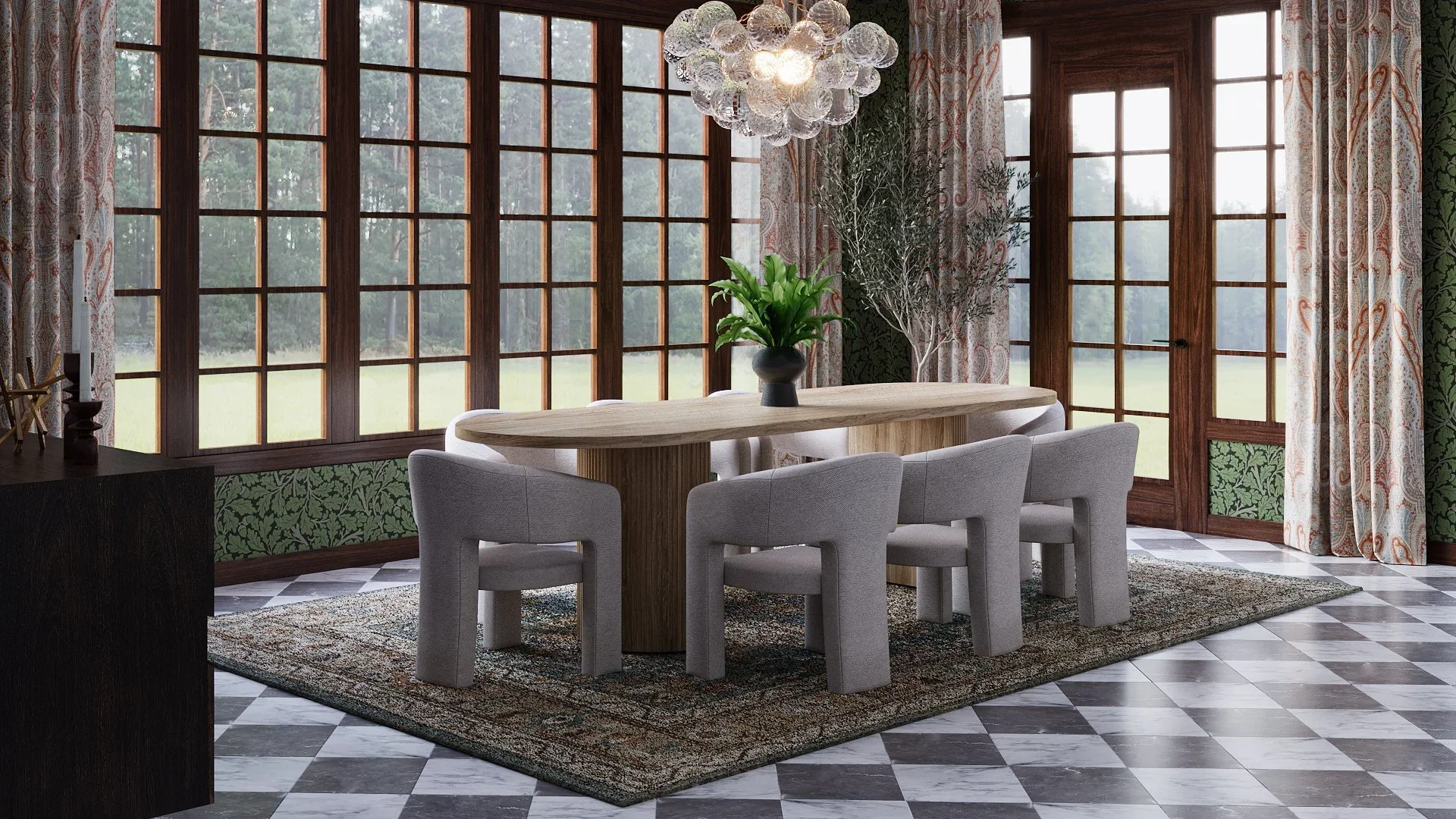
Modern organic and eclectic luxury dining room with classic checkerboard tile flooring, designed by virtual interior designer Joshua Jones of JJones Design Co. (3D rendering)
Common Flooring Mistakes Homeowners Make
Choosing flooring is a long-term decision, and mistakes can be expensive to fix later. Over the years, I’ve seen a few common issues that homeowners run into when selecting flooring for their homes.
One of the most common mistakes is choosing flooring based only on appearance. While style is important, factors like durability, moisture exposure, maintenance, and daily wear should also play a major role in the decision.
Another issue is using too many different flooring materials throughout the home. When every room has a different type of flooring, the overall design can start to feel visually fragmented. In many cases, using fewer flooring types and maintaining consistency between connected spaces can create a more cohesive look.
It’s also important to think about how the flooring will perform in everyday life. Homes with pets, children, or heavy foot traffic may require more durable materials than homes with lighter use.
Taking time to evaluate both the practical and visual aspects of flooring can help ensure the final choice works well for your home and lifestyle.
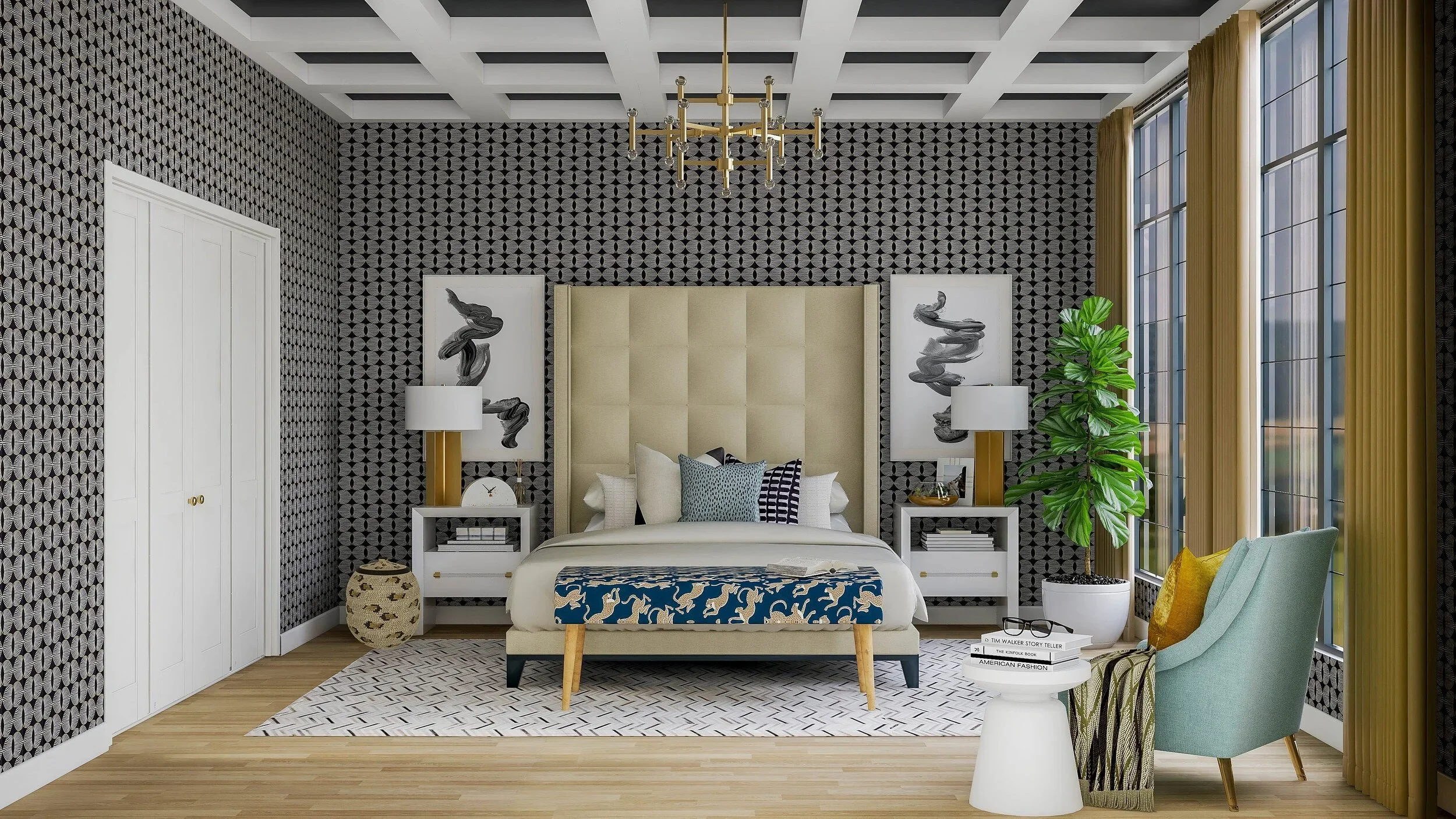
Modern eclectic style primary bedroom designed by virtual interior designer Joshua Jones of JJones Design Co., featuring hardwood flooring, bold patterned wallpaper, and a coffered ceiling (3D rendering)
Choosing the Flooring That Works for Your Home
Selecting the right flooring involves balancing style, durability, maintenance, and how each space in your home is used. While some homeowners prioritize timeless materials like hardwood, others may prefer more practical options such as luxury vinyl, tile, or carpet depending on their lifestyle and budget.
Each flooring type has its own advantages and limitations, and the best choice often depends on factors such as foot traffic, moisture exposure, comfort, and long-term maintenance. Taking the time to evaluate these considerations can help ensure the flooring you choose works well for both your design goals and everyday living.
In many homes, a thoughtful combination of flooring materials can create the right balance between beauty and function. The key is selecting materials that not only look good but also perform well in the spaces where they are installed.
If you’re planning a renovation or building a new home and want guidance selecting flooring that fits your space, I offer virtual interior design services where I help clients evaluate materials, finishes, and layouts to create a cohesive design plan. You can learn more about my services here: