
How to Make a Cookie-Cutter Home Feel Custom (Without a Full Renovation)
Many homes today are built to appeal to as many people as possible—which often means they end up feeling a little too similar.
If you’ve ever walked into your home and thought, “It looks nice, but it doesn’t feel like me,” you’re not alone. I hear this from clients all the time. Their homes are functional and well-built, but something feels missing. The space lacks character, depth, or a sense of intention.
The good news is that creating a more custom, personal home doesn’t require a full renovation. In most cases, it comes down to a series of thoughtful decisions—how elements relate to each other, how materials are layered, and how the space is visually structured.
In my work as a virtual interior designer, I focus on helping clients move beyond that “builder-grade” feel and create spaces that feel considered, cohesive, and truly their own. Below are the strategies I use to make that shift happen—without taking everything back to the studs.
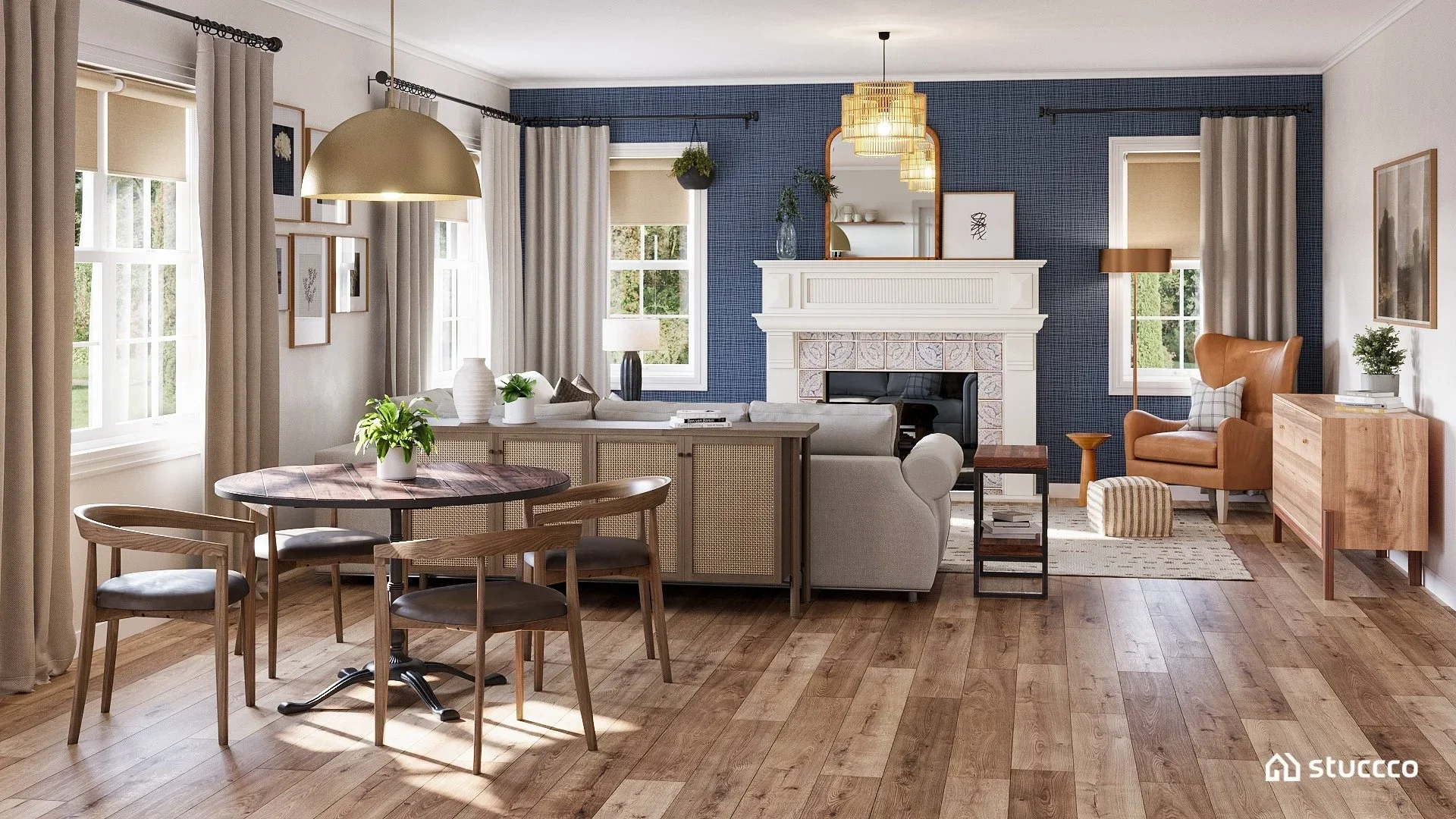
Eclectic family room and breakfast nook designed by Joshua Jones of JJones Design Co. 3D rendering by Stuccco.
1. Start With One Clear Design Direction (Not a Mix of Everything)
One of the biggest reasons homes end up feeling cookie-cutter isn’t the architecture—it’s the lack of a clear design direction.
A lot of homeowners start by collecting pieces they like: a sofa from one style, lighting from another, a rug that felt right in the moment. Individually, these choices can work. But without a unifying vision, the space starts to feel disconnected rather than intentional.
When I work with clients, I don’t start with individual items. I start with the overall direction of the space—how it should feel, what the visual tone is, and how each element will relate to the next. That clarity is what allows every decision afterward to feel cohesive instead of random.
This doesn’t mean your home needs to follow a strict “design style.” In fact, some of the most interesting spaces mix influences. The difference is that the mix is controlled. There’s a clear point of view guiding the decisions, so nothing feels out of place.
If your space currently feels a bit all over the place, it’s usually not because you chose the wrong pieces—it’s because those pieces were never tied together by a bigger plan.
What most homeowners get wrong is trying to fix the space one item at a time. They replace a sofa, then add new lighting, then swap out decor—hoping it will eventually come together. In reality, that approach often leads to more spending and more frustration.
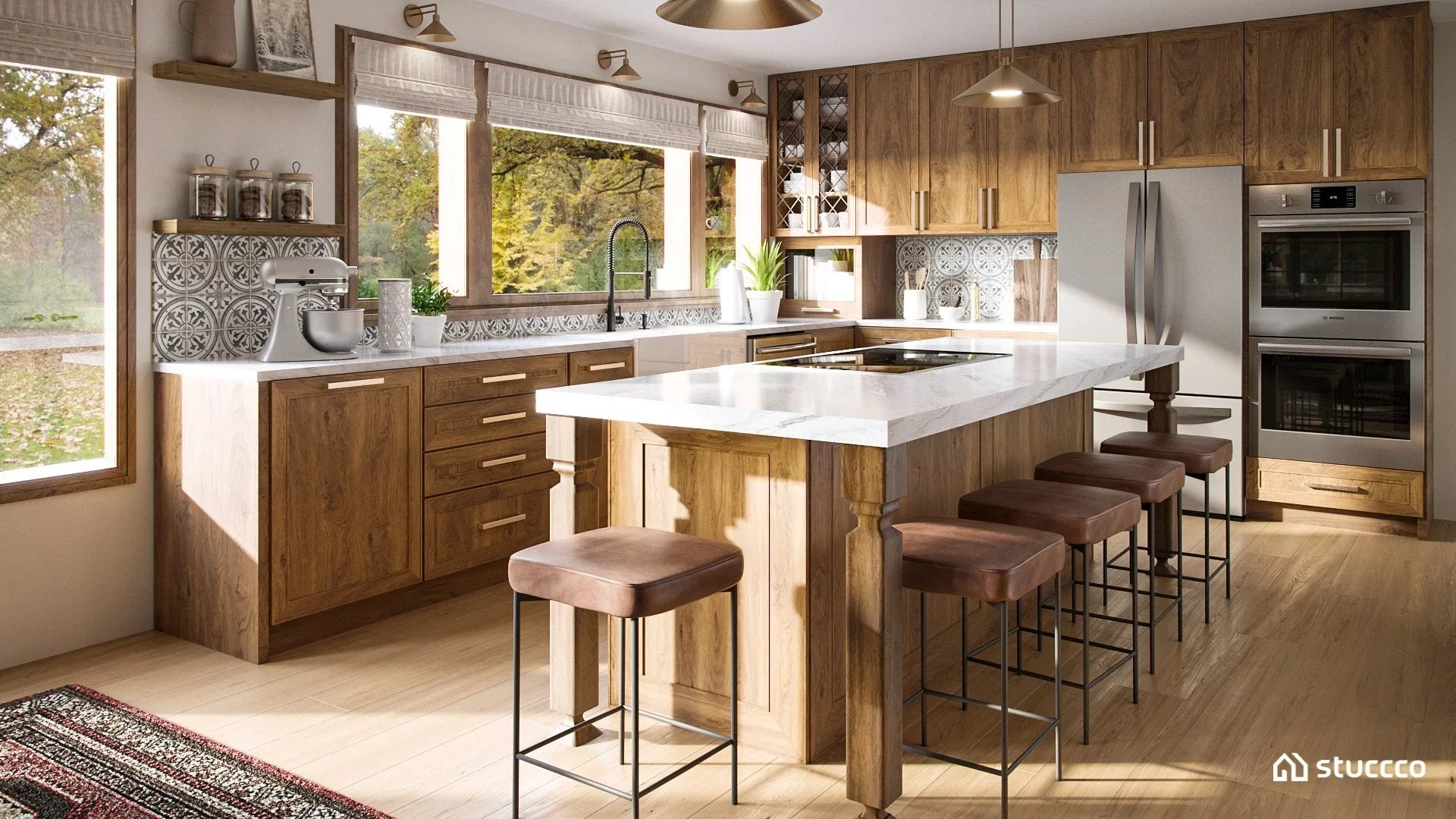
Country eclectic kitchen designed by Joshua Jones of JJones Design Co., featuring warm wood cabinetry and layered materials. 3D rendering by Stuccco.
2. Use Material and Finish Contrast to Add Depth
One of the easiest ways to make a home feel more custom is by paying attention to materials—not just individually, but how they interact with each other.
Builder-grade homes often rely on safe, uniform choices. The same finishes repeat throughout the space—similar wood tones, consistent metals, minimal variation. It keeps things cohesive, but it can also make the home feel flat.
To create a more custom look, you need contrast.
That might mean pairing warm wood tones with painted finishes, mixing metal finishes in a controlled way, or layering different textures like upholstery, stone, glass, and matte surfaces. The goal isn’t to add more—it’s to create visual interest through variation.
When these elements are thoughtfully balanced, the space starts to feel more dynamic and intentional. Instead of everything blending together, each piece has a role in the overall composition.
A common mistake is trying to match everything exactly—same wood tone, same metal finish, same color family throughout. While that approach feels safe, it often strips the space of dimension.
A more refined approach is to allow contrast, but control it. Repetition still matters—but it should feel deliberate, not automatic.
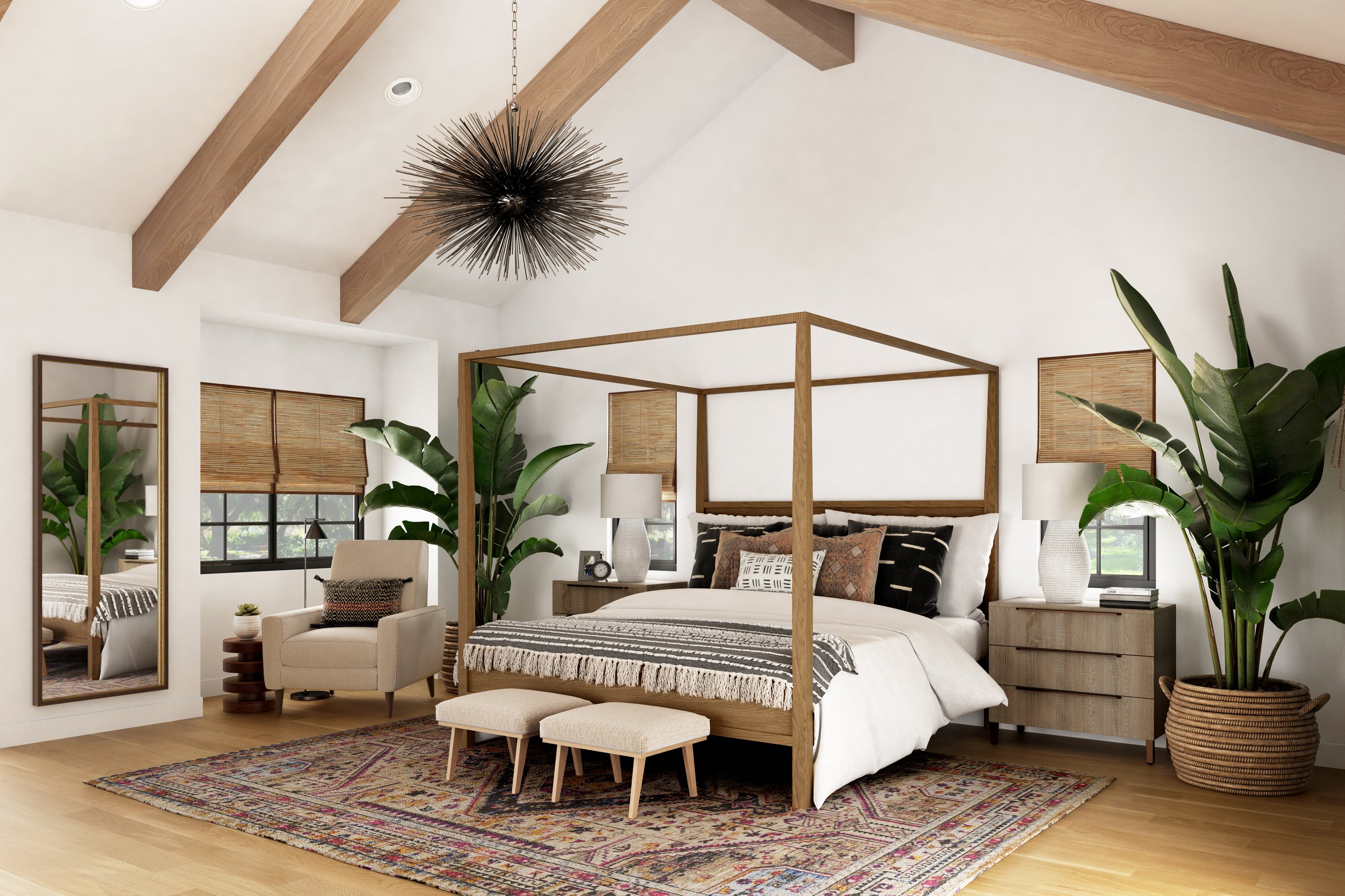
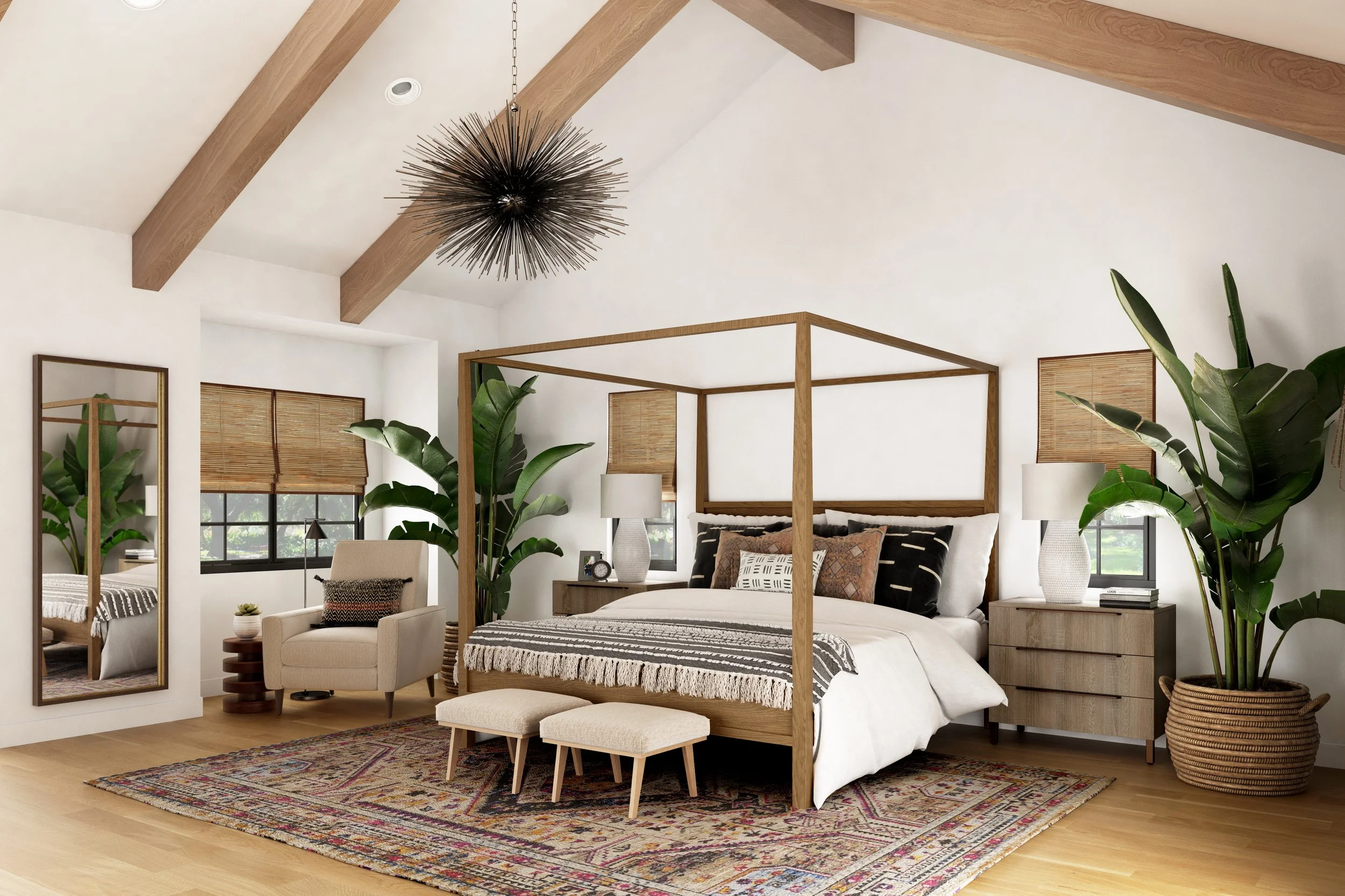
California casual primary bedroom designed by Joshua Jones of JJones Design Co., featuring exposed ceiling beams and a warm, relaxed aesthetic.
3. Introduce Subtle Architectural Details (Including the Ceiling)
A home doesn’t feel custom just because of furniture or decor—it’s the architectural details that quietly shape how the space is experienced.
Builder-grade homes tend to keep these elements simple: flat walls, standard baseboards, and ceilings that are left completely untouched. It works, but it doesn’t create much character.
You don’t need a full renovation to change that.
Small, intentional updates can make a significant difference—things like adding wall molding, upgrading baseboards, or introducing paneling. Even wallpaper can be used in a more architectural way, such as defining a focal wall.
But one of the most overlooked opportunities is the ceiling.
Adding subtle ceiling details—like beams, a coffered or paneled ceiling, or even a simple trim detail—can completely shift how a space feels. It draws the eye upward, adds depth, and gives the room a more finished, custom look without needing to change the entire structure.
When these elements are done well, they don’t feel like add-ons. They feel like they were always part of the home.
One thing I pay close attention to is balance. If the walls and ceiling both compete for attention, the space can start to feel heavy.
The goal is to choose where the architectural emphasis belongs—walls, ceiling, or both—and let that decision guide the rest of the design.
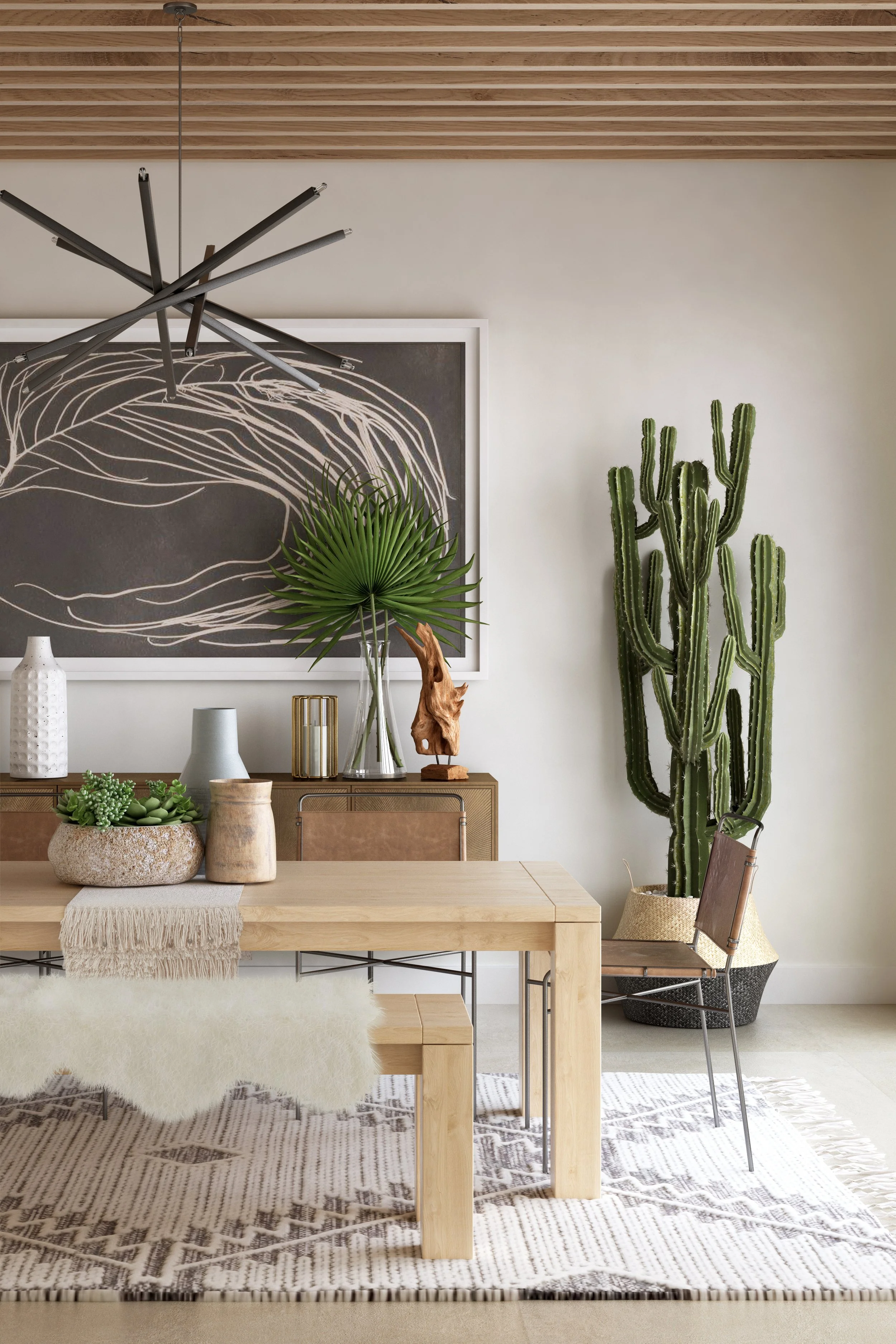
Desert Breeze style dining room designed by Joshua Jones of JJones Design Co., featuring curated styling, natural textures, and a restrained neutral palette.
4. Get the Scale and Proportion Right
One of the most common reasons a home feels “off”—even when everything looks nice—is scale.
I see this all the time. A sofa that’s slightly too small for the room. A rug that doesn’t extend far enough. Lighting that feels undersized or disconnected from the space. None of these choices are wrong on their own, but together they make the room feel unfinished.
Getting the scale right is what gives a space presence.
In larger rooms, furniture needs to hold its own. That might mean a properly sized area rug that anchors the seating area, a substantial coffee table, or lighting that visually fills the space. In smaller rooms, the goal isn’t to go tiny—it’s to choose pieces that are appropriately scaled without overcrowding.
Proportion matters just as much as size. The relationship between pieces—sofa to coffee table, chair to side table, chandelier to dining table—needs to feel balanced. When those relationships are off, the room can feel awkward even if each individual piece looks good.
When everything is scaled correctly, the space starts to feel grounded, intentional, and complete.
One thing I often see is homeowners trying to “play it safe” by choosing smaller pieces, especially in open-concept spaces. The assumption is that smaller furniture will make the room feel bigger.
In reality, it usually has the opposite effect. Undersized furniture can make a space feel disconnected and underwhelming. It’s often better to go slightly larger and create a stronger visual anchor than to have everything feel like it’s floating.
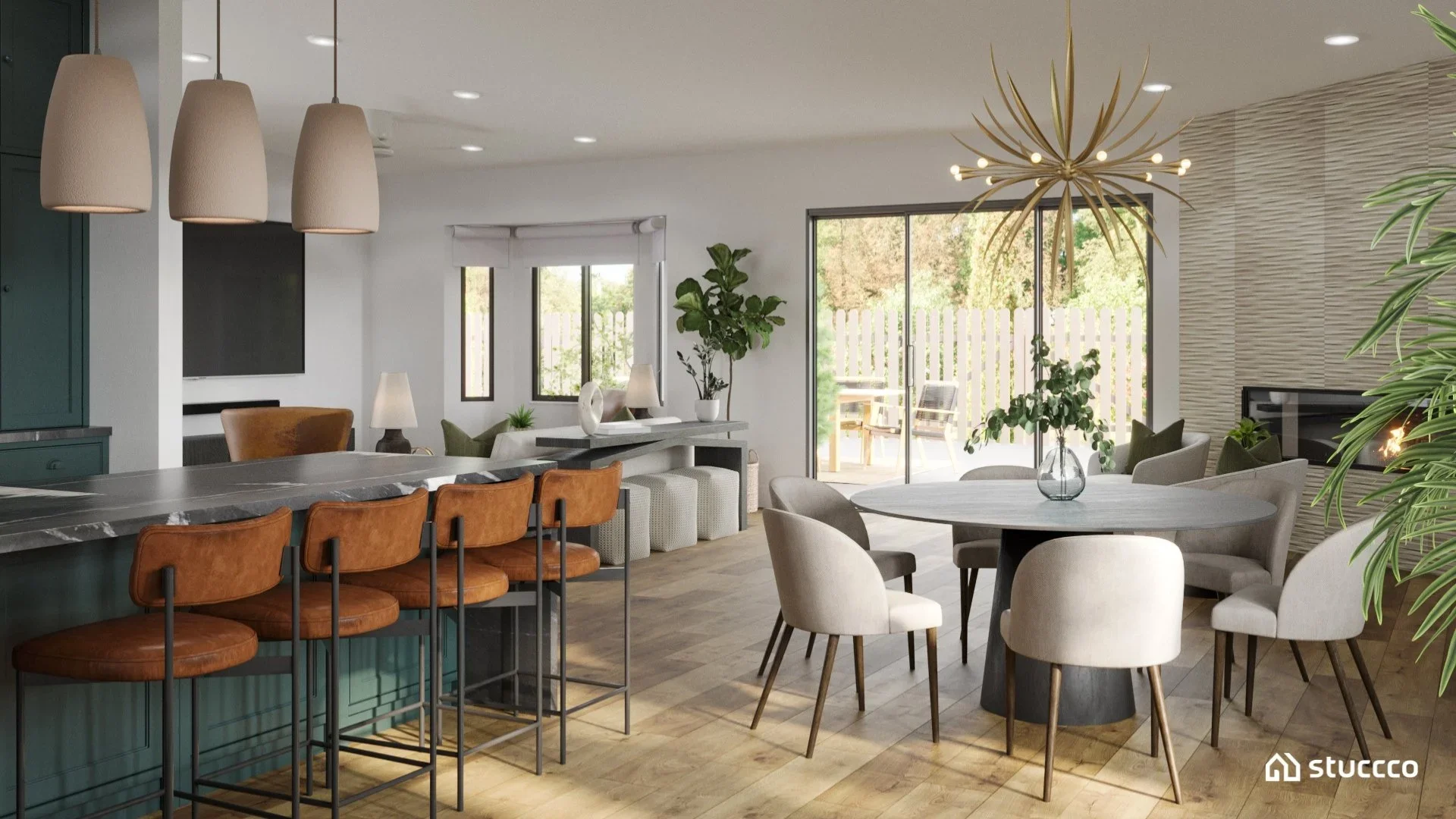
Modern organic open-concept kitchen, dining, and living area designed by Joshua Jones of JJones Design Co., featuring layered lighting throughout the space. 3D rendering by Stuccco.
5. Layer Lighting Instead of Relying on One Source
Lighting is one of the most overlooked elements in a home—and one of the biggest reasons a space can feel flat or unfinished.
In many homes, lighting is treated as a single decision. A ceiling fixture gets installed, and that becomes the main (and sometimes only) source of light in the room. While it provides function, it rarely creates the kind of depth or atmosphere that makes a space feel inviting.
A more considered approach is to layer lighting.
That means combining multiple sources—ambient lighting (like ceiling fixtures), task lighting (such as table or floor lamps), and accent lighting (like wall sconces or picture lights). Each layer serves a different purpose, but together they create a more balanced and flexible environment.
Layered lighting allows you to shift the mood of a space depending on the time of day or how the room is being used. It also helps highlight key areas of the room instead of washing everything in the same level of light.
When lighting is thoughtfully layered, the space feels warmer, more functional, and more complete.
One thing I often see is relying too heavily on recessed lighting alone. While it can be useful for general illumination, it doesn’t provide the depth or character that a well-layered lighting plan can achieve.
The goal isn’t to add more fixtures randomly—it’s to create a mix of light sources that work together to support both function and atmosphere.
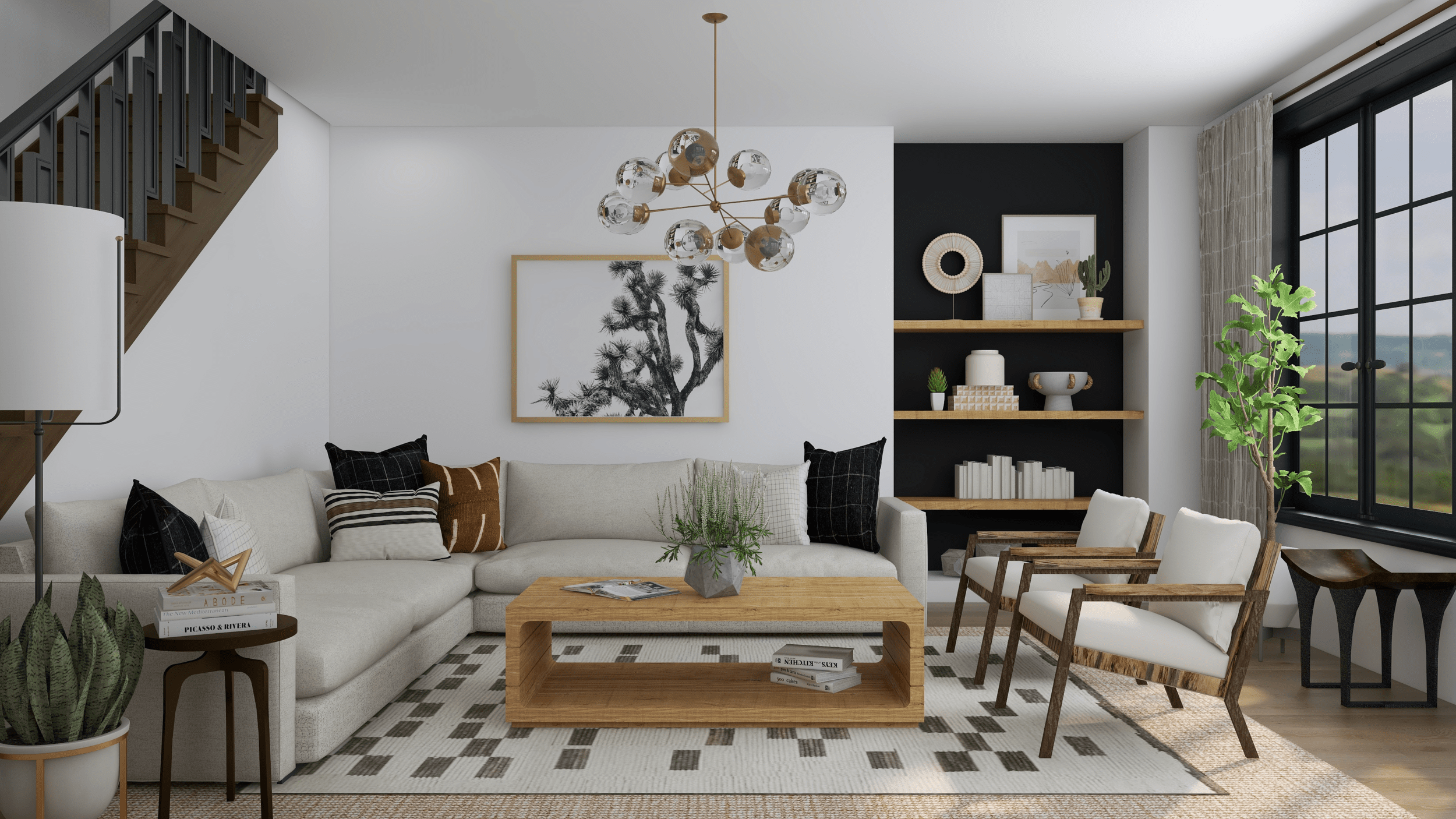
Luxury Scandinavian living room designed by Joshua Jones of JJones Design Co., featuring curated shelving, layered textures, and a refined neutral palette.
6. Edit What You Add (Not Everything Needs to Be Filled)
One of the most overlooked parts of creating a custom-feeling home is knowing when to stop.
It’s easy to feel like every wall, corner, or surface needs something—more decor, more furniture, more styling. But filling every space is often what makes a home feel cluttered or generic rather than intentional.
A well-designed space isn’t about how much you include. It’s about what you choose to leave out.
When I work with clients, I pay just as much attention to negative space as I do to the items themselves. Giving certain areas room to breathe allows the more important pieces to stand out. It also creates a sense of calm and clarity throughout the space.
This applies to everything—from shelving and coffee tables to walls and corners of a room. Not every surface needs to be styled, and not every wall needs art.
When the right balance is achieved, the space feels more refined, more thoughtful, and ultimately more custom.
One thing I often see is the tendency to keep adding pieces in an attempt to make the space feel “finished.” In reality, that usually has the opposite effect. The room starts to feel busy, and the original design direction gets lost.
A more effective approach is to step back and edit. Remove what isn’t contributing, keep what truly works, and allow the space to feel complete without being overfilled.
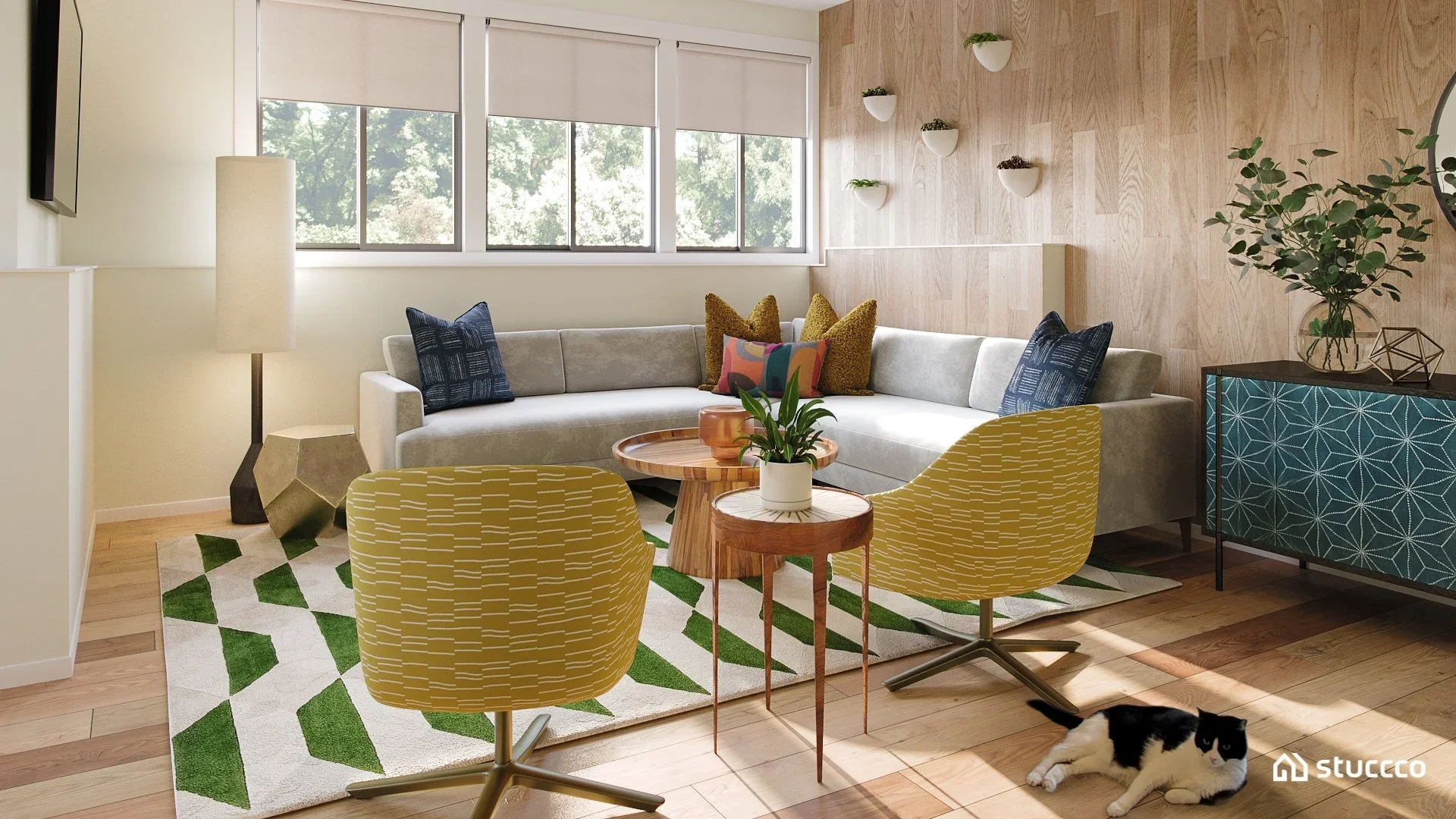
Mid-century modern basement designed by Joshua Jones of JJones Design Co., featuring curated color accents, warm wood tones, and a balanced, personalized layout. 3D rendering by Stuccco.
7. Make It Personal (But Keep It Intentional)
Adding personality is what ultimately separates a home that looks nice from one that feels lived-in and meaningful.
This is where many homeowners either hold back too much—or go too far.
On one hand, playing it too safe can leave a space feeling generic. On the other, adding too many personal items without structure can make the room feel cluttered or disconnected.
The key is to be selective.
Personal elements—whether it’s artwork, collected objects, books, or meaningful pieces from travel—should feel integrated into the overall design, not placed randomly. They should support the direction of the space while still telling your story.
In my work, I often guide clients on how to incorporate these pieces in a way that feels natural and balanced. It’s not about filling every shelf with meaningful items—it’s about choosing the right pieces and giving them the space to stand out.
When done well, these personal touches bring warmth and individuality to the home without disrupting the overall design. They make the space feel complete in a way that furniture alone never can.
One thing I often see is the urge to display everything at once—every photo, every object, every memory. While each piece may be meaningful, showing too much at the same time can dilute their impact.
A more thoughtful approach is to curate. Rotate pieces over time, edit what’s displayed, and allow each item to have a moment. That restraint is what keeps a personal space from feeling cluttered while still making it feel uniquely yours.
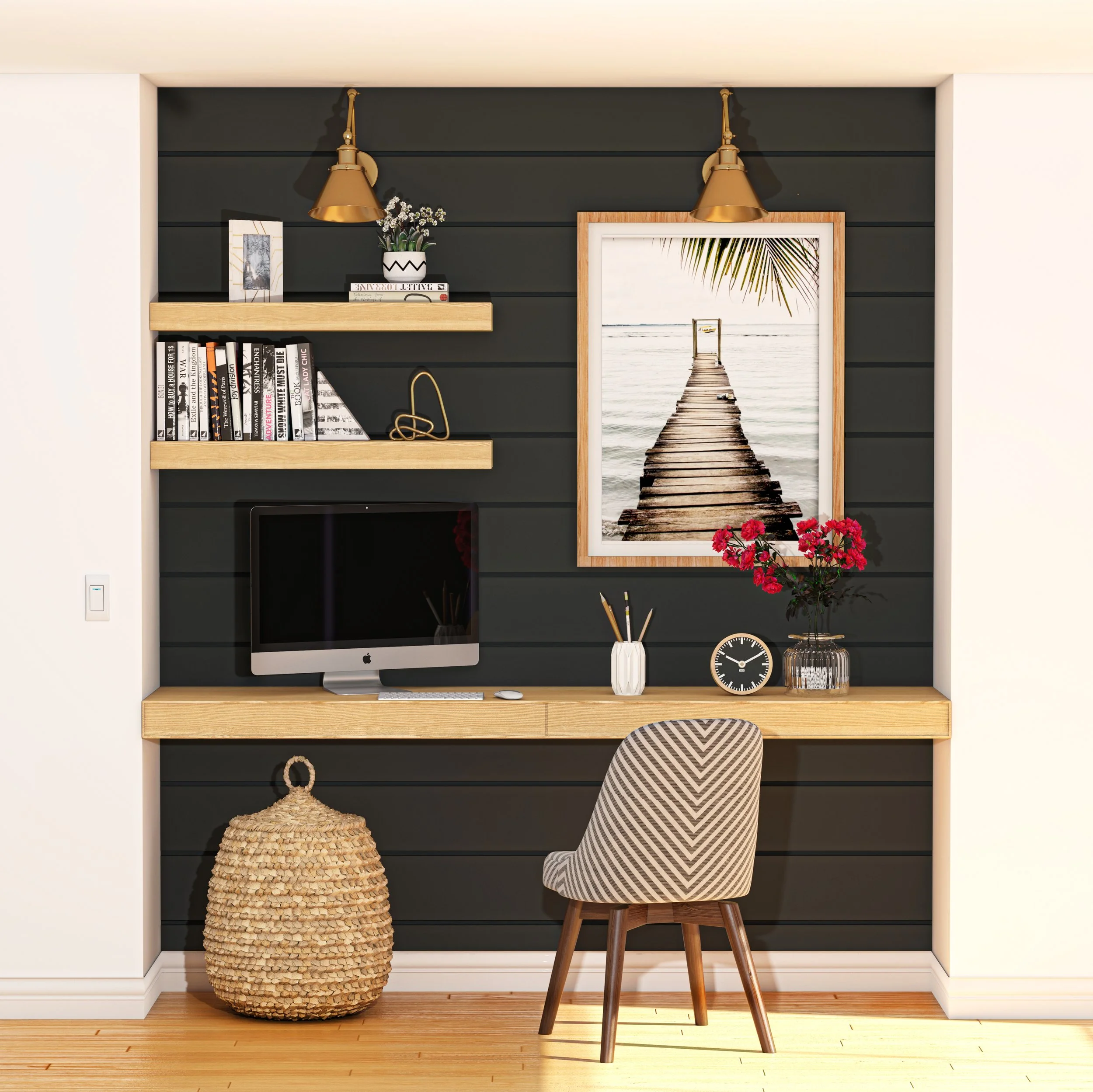
California casual workspace designed by Joshua Jones of JJones Design Co., featuring a built-in desk, floating shelves, and layered lighting to transform a niche wall into a functional, personalized area.
Bringing It All Together
Creating a home that feels custom isn’t about doing more—it’s about making better, more intentional decisions.
It comes down to having a clear direction, paying attention to scale and proportion, layering materials and lighting, and knowing when to stop. These are the elements that quietly shape how a space feels, even if you can’t immediately point to why.
Most builder-grade homes aren’t lacking potential. They just need a more thoughtful approach to bring everything together in a way that feels cohesive and complete.
If you’re finding it difficult to make those decisions or pull everything into a clear vision, that’s where working with a designer can make a meaningful difference. Having a plan upfront helps avoid costly mistakes and creates a space that feels resolved from the start.
If you’re ready to move beyond the trial-and-error approach and create a home that feels intentional and truly yours, you can explore my virtual interior design services to get started.

