How to Make a Small Room Look Bigger Without Knocking Down Walls
At some point, most homeowners stand in their living room and think, “This should feel better than it does.”
The furniture fits. The walls are painted. The lighting works. And yet the space still feels tight — especially in apartments, condos, and older homes where square footage is limited and layouts can be narrow or awkward.
In my virtual interior design projects, this is one of the most common challenges I help clients solve. Often, the room has good bones and natural light, but the layout and proportions are working against it.
The first instinct is usually structural: remove a wall, open the floor plan, expand into another space.
But in most cases, that isn’t what’s needed.
A room’s sense of openness has far more to do with scale, flow, and visual decisions than with actual square footage. I’ve seen compact living rooms feel calm and spacious — and larger rooms feel cramped — simply because of how they were arranged.
The good news is that you can dramatically change how a space feels without touching the walls.
Here are the exact strategies I use when designing small and narrow rooms so they feel lighter, more open, and more intentional.
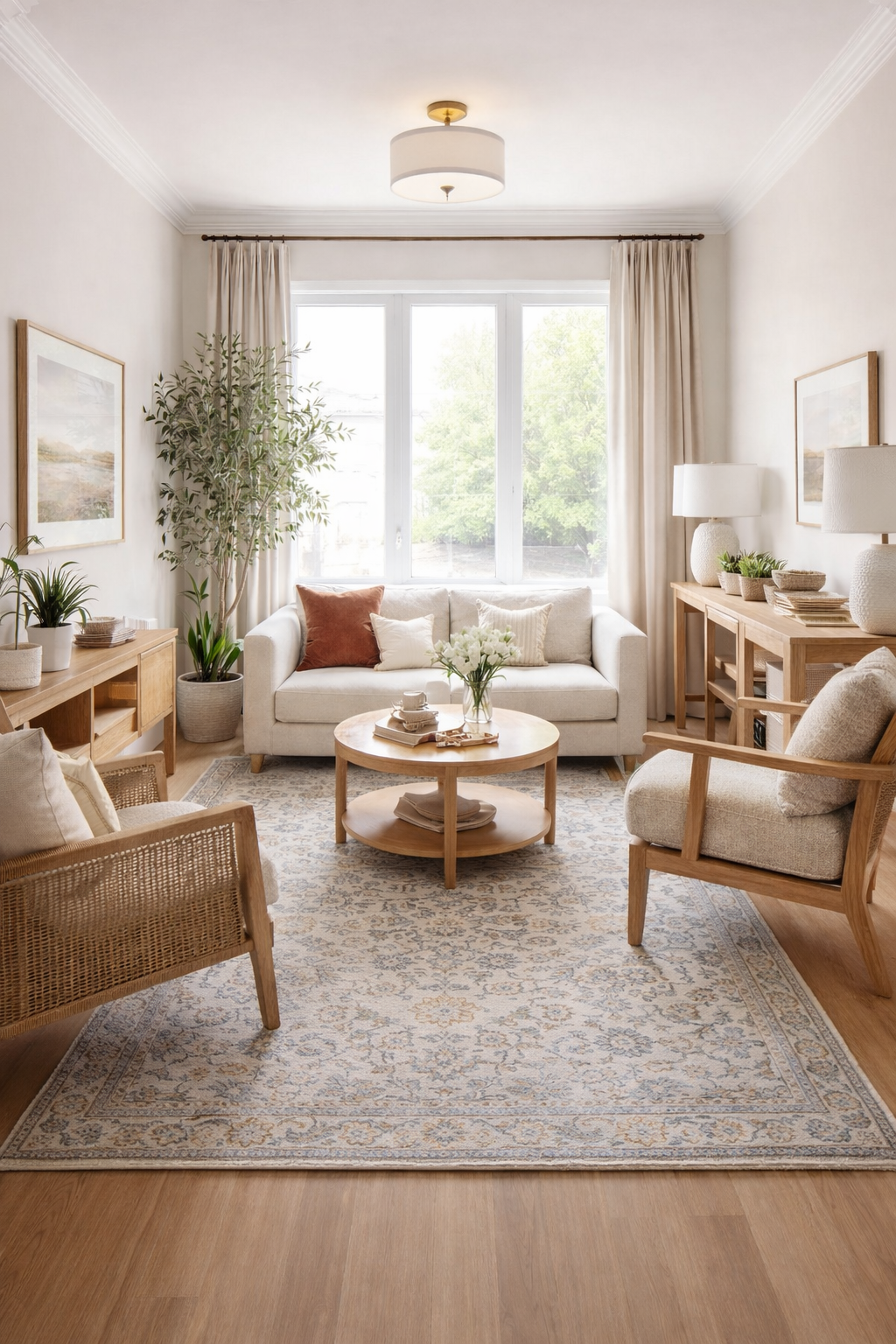
AI-generated image of a small living room layout illustrating how balanced furniture placement, layered lighting, and a patterned area rug can help a compact space feel more open and intentional.
1. Start With Layout Before You Touch Color
When a room feels small, most people immediately think the walls need repainting.
They don’t.
Color can absolutely influence how spacious a room feels, but layout is the foundation. If the furniture arrangement is fighting the architecture, no paint color will fix it.
In many of my virtual design projects, the biggest shift happens before we ever discuss finishes. It happens when we rethink how the room is working.
Stop Pushing Everything Against the Walls
It sounds counterintuitive, but shoving every piece of furniture tight against the perimeter often makes a narrow room feel even more constrained.
When everything hugs the wall, you end up with:
Oversized empty space in the center
Tight traffic paths along the edges
Furniture that feels disconnected
Instead, consider floating key pieces — even just a few inches off the wall. A sofa slightly forward with a slim console behind it can create better balance and give the room a more intentional structure.
The goal isn’t to fill every inch. It’s to create flow.
Scale Matters More Than You Think
Small room does not mean small furniture.
This is one of the most common mistakes I see.
Tiny sofas, narrow coffee tables, and undersized rugs can actually make a room feel smaller because they emphasize the limited proportions. The room starts to look fragmented instead of cohesive.
What usually works better is:
One properly scaled sofa
A substantial area rug that anchors the seating zone
Fewer, more intentional pieces
When furniture is proportionate to the room — not miniature — the space feels calmer and more balanced.
Keep Pathways Clear
In narrow rooms especially, circulation is everything.
If someone has to angle their body to walk through the space, it will always feel tight.
Aim for:
Clear walkways of at least 30–36 inches where possible
No blocking natural light from windows
Furniture placement that guides movement naturally
When movement feels easy, the room feels larger.
Layout is often invisible when it’s done well. You don’t notice it — you just feel that the space works.
And once the layout works, everything else becomes easier.
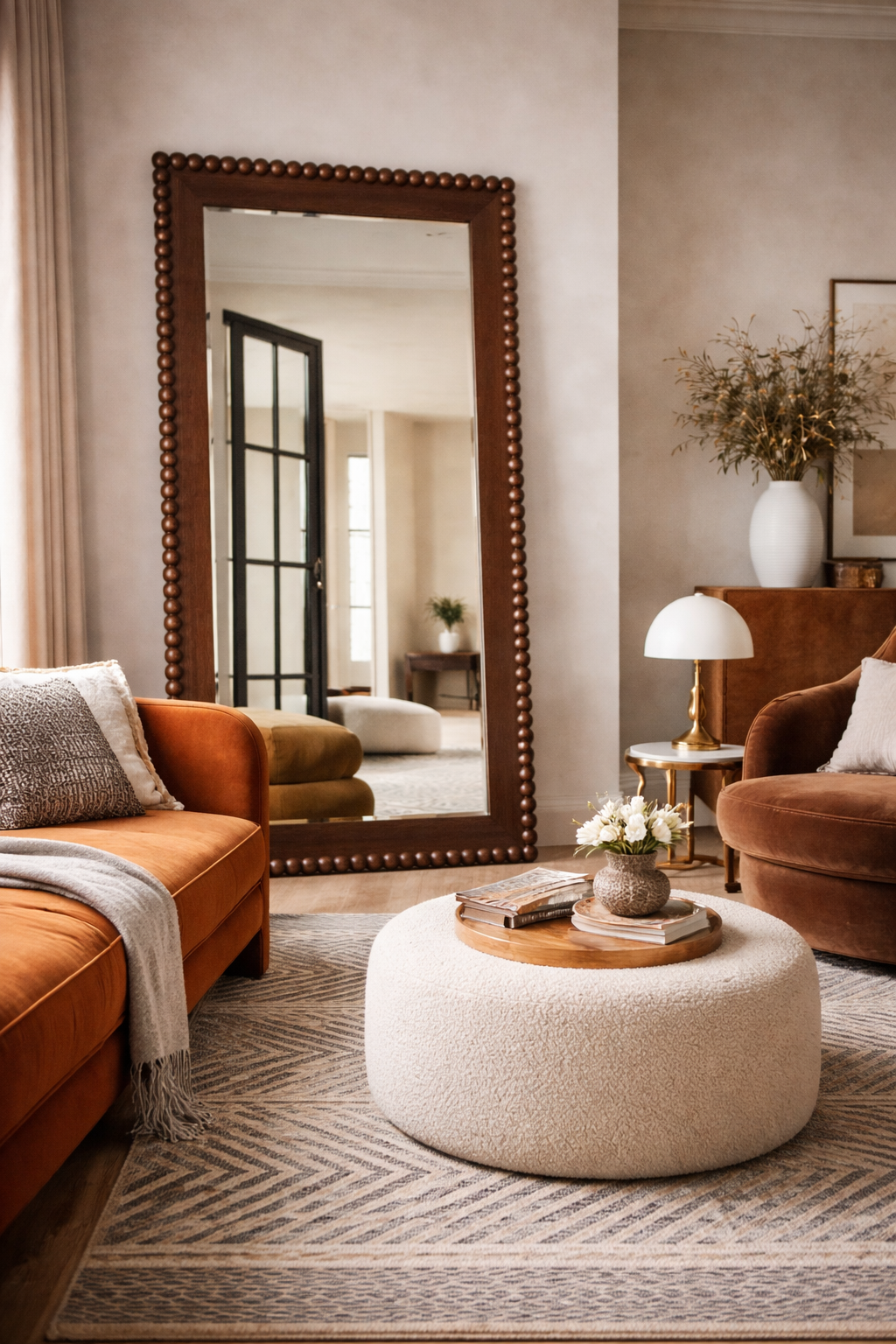
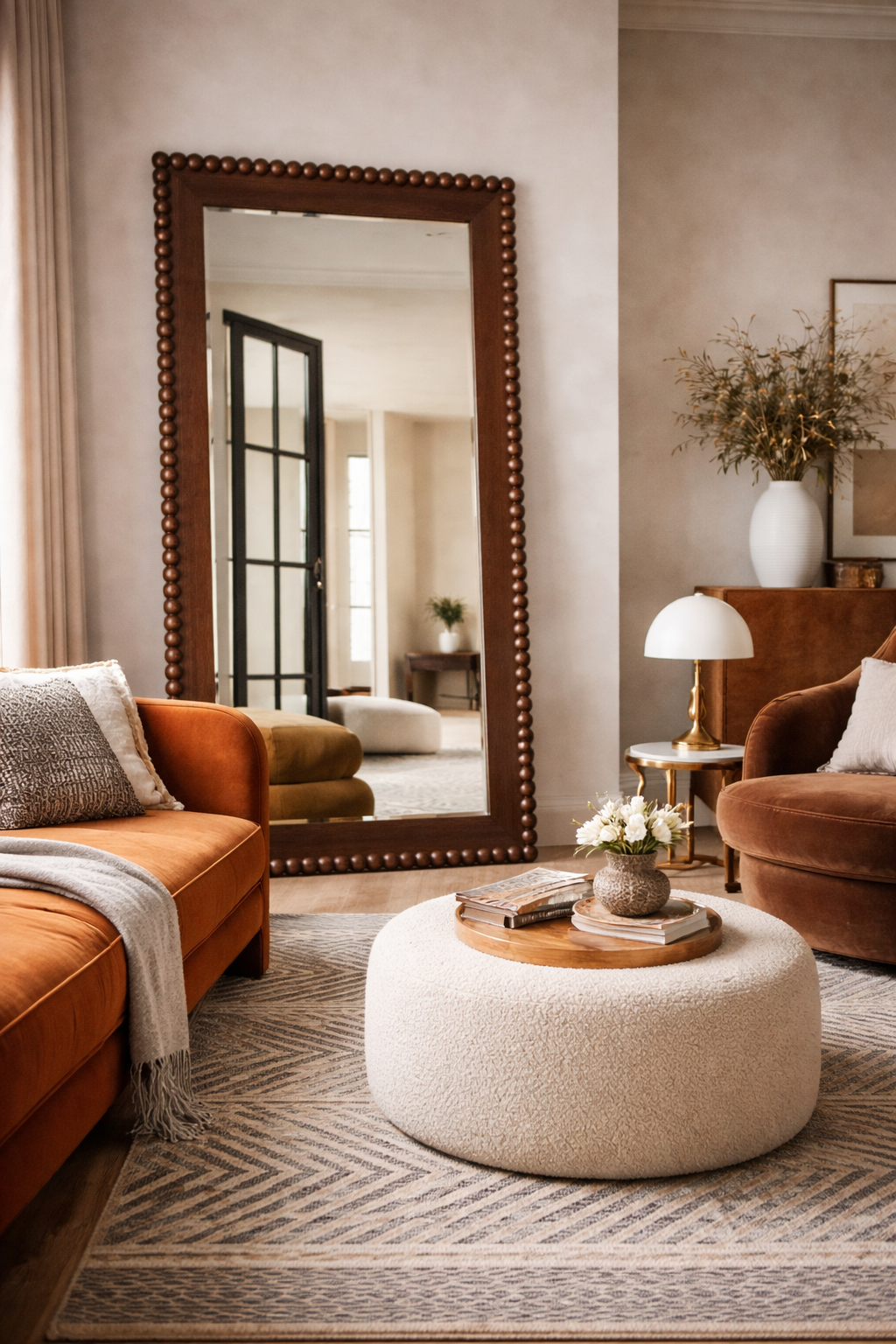
AI-generated image of a warm, modern living room featuring a large beaded wood leaning mirror that draws the eye upward and reflects light, helping the space feel taller and more expansive.
2. Use Vertical Space to Stretch the Room
When a room feels tight, most people focus on width.
Designers focus on height.
Even in compact apartments and narrow living rooms, you almost always have more vertical potential than you think. When you intentionally draw the eye upward, the entire room begins to feel lighter and more expansive.
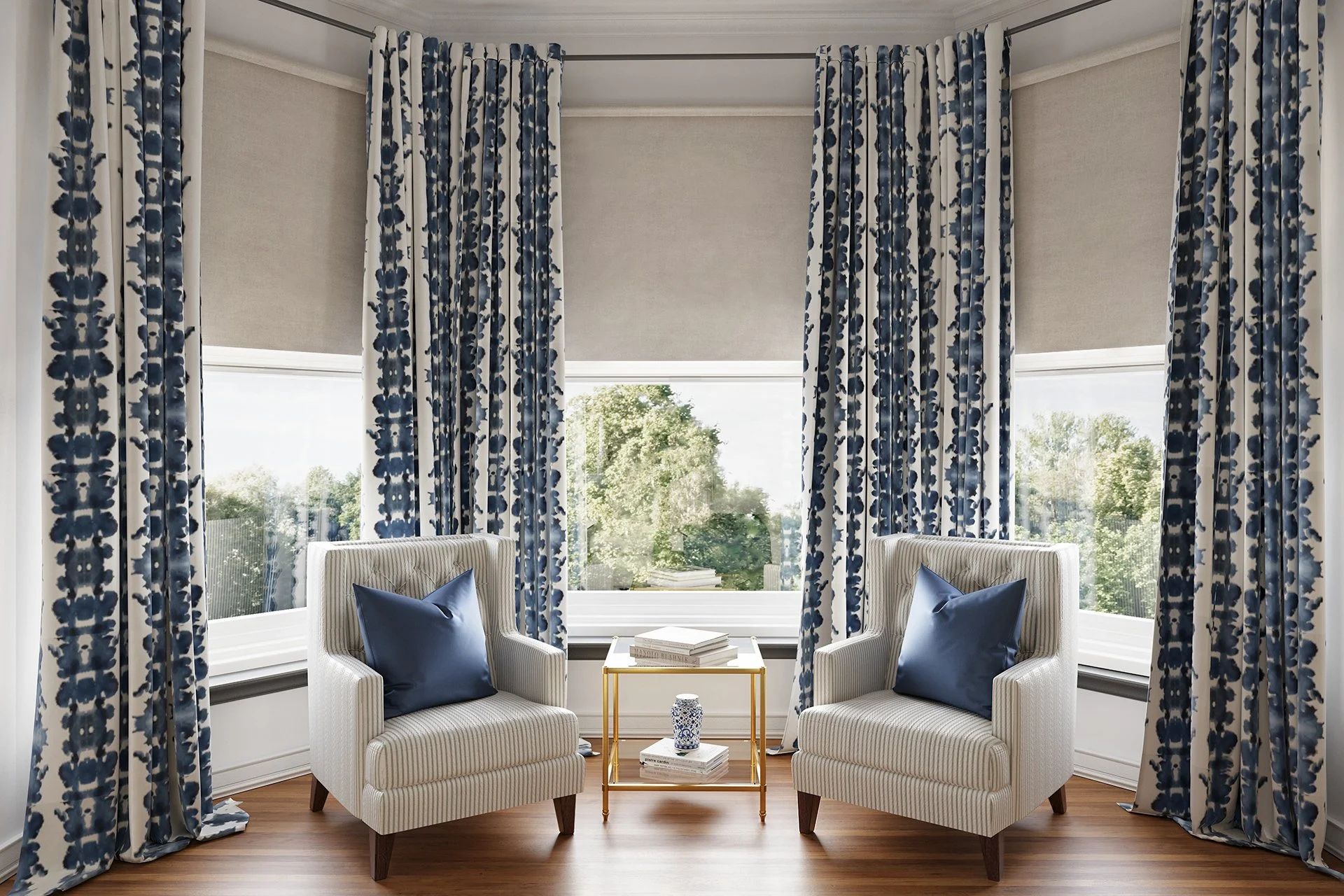
Mount Drapery Higher Than the Window Frame
One of the simplest ways to create the illusion of height is by adjusting where your drapery is mounted.
Instead of placing the rod just above the window trim, install it closer to the ceiling (or just below crown molding, if present). Then extend the panels all the way down so they float no more than one inch above the floor or lightly touch.
This subtle shift does two important things:
It elongates the wall visually.
It makes the window appear larger than it actually is.
In narrow rooms especially, full-height drapery adds vertical rhythm and softens the architecture without adding clutter.
If you’d like a detailed breakdown of rod height, panel length, and measuring guidelines, I’ve outlined it step-by-step in my Drapery Guidance.
Choose Tall Elements Over Wide Ones
When adding storage or decorative pieces, think vertically rather than horizontally.
A tall bookcase naturally pulls the eye upward. A low, wide unit can make the ceiling feel closer than it is.
The same principle applies to artwork. Instead of spreading several small frames across the wall, consider:
One large vertical piece
A stacked pair of artworks
A tall mirror
Vertical emphasis subtly stretches the room’s proportions.
Use Mirrors Strategically
Mirrors can make a room feel larger, but placement matters.
Positioning a mirror across from a window helps amplify natural light and extend sightlines. A tall mirror leaned against a wall reinforces vertical lines.
What doesn’t work as well is scattering small mirrors throughout the space. That creates visual noise rather than openness.
Think of mirrors as architectural tools, not decorative fillers.
Keep the Eye Moving Upward
You can reinforce vertical movement through:
Floor-to-ceiling shelving
Vertical paneling or molding
Slim, tall floor lamps
Drapery with a clean, uninterrupted line
When the eye travels upward instead of stopping halfway up the wall, the room feels less compressed.
Small rooms often feel small because everything sits low. Once you introduce intentional height, the proportions begin to shift in your favor.
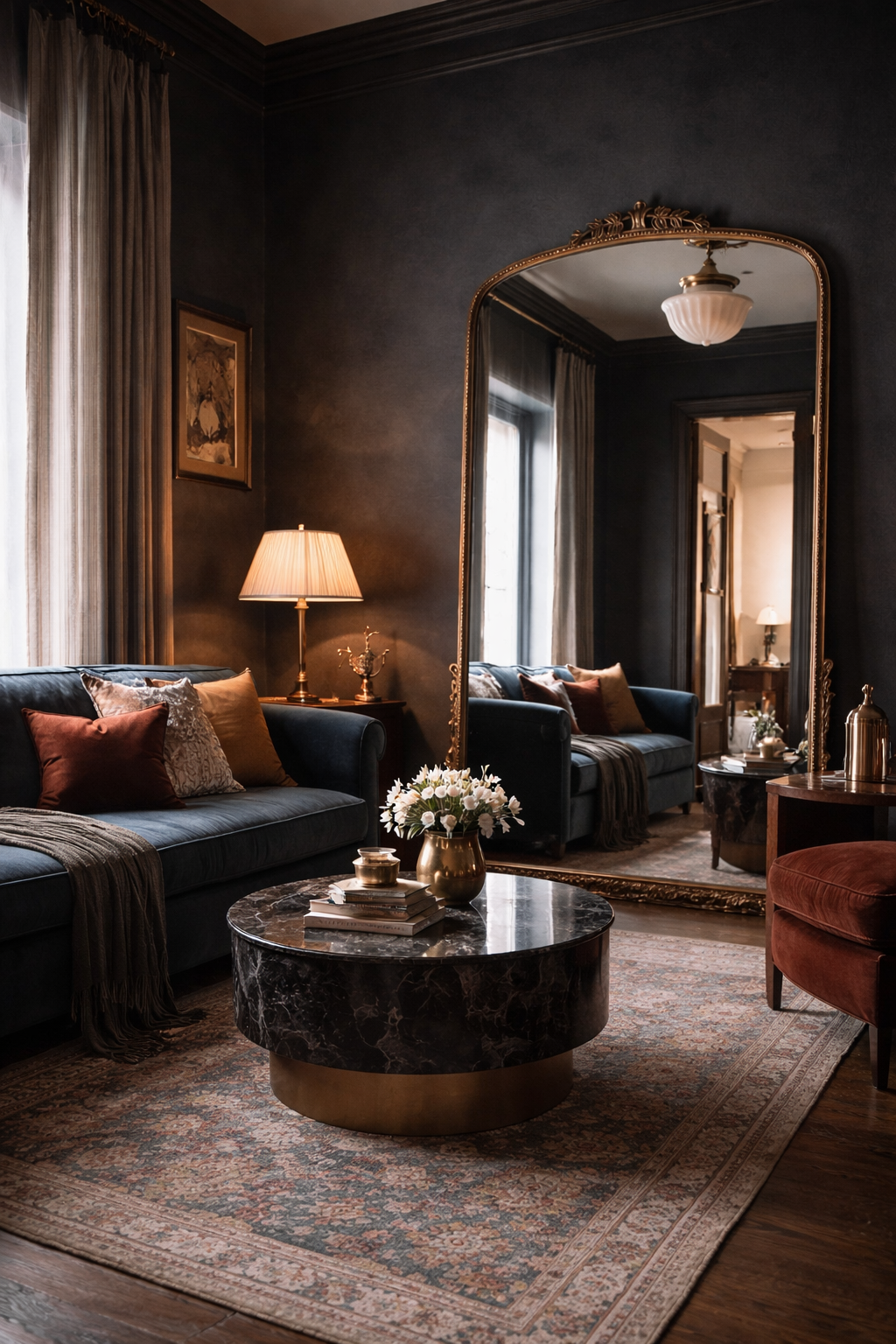
AI-generated image of a moody Modern Victorian living room featuring deep charcoal walls, a tall ornate leaning mirror, and layered brass accents that create visual depth and continuity in a compact space.
3. Rethink Color — It’s Not Just “Paint It White”
When people want a room to feel bigger, the default advice is almost always: paint it white.
White can work. But it’s not a magic solution — and in some cases, it can actually make a room feel flatter and more confined.
What makes a room feel expansive isn’t simply light color. It’s how color is used.
Reduce Harsh Contrast
High contrast can visually “chop up” a small room.
For example:
Dark trim with bright white walls
A bold accent wall surrounded by light neutrals
Strongly contrasting furniture against pale walls
These elements create visual stopping points. In a small or narrow room, too many stops make the space feel segmented.
Instead, consider a more cohesive palette:
Soft neutrals layered within the same undertone family
Trim painted the same color as the walls
Furniture that blends rather than sharply contrasts
When the eye moves smoothly across surfaces, the room feels larger.
Try a Monochromatic Approach
One of the most effective strategies I use in smaller rooms is a monochromatic color scheme.
That doesn’t mean everything matches perfectly. It means staying within a narrow tonal range — layering light, medium, and slightly deeper versions of the same hue.
For example:
Warm greige walls
Slightly deeper upholstery
Lighter area rug
Coordinated accent pillows
Because the palette is cohesive, the room feels calm and expansive rather than visually busy.
When Darker Colors Can Actually Work
This surprises people.
In certain cases, a slightly deeper, enveloping wall color can make a room feel more intentional — and paradoxically, larger.
When all the walls are painted in a consistent medium tone (including trim), the edges of the room visually soften. You’re not constantly aware of where the walls begin and end.
This works particularly well in:
Small dining rooms
Cozy sitting rooms
Bedrooms
The key is consistency and balance — not dramatic contrast.
Don’t Forget the Ceiling
If the walls are light and the ceiling is stark white, the contrast line at the top of the wall can visually “lower” the room.
In some cases, painting the ceiling the same color as the walls — or just slightly lighter — can create a seamless vertical effect that makes the room feel taller.
Again, it’s about continuity.
When color flows instead of interrupts, space feels uninterrupted.
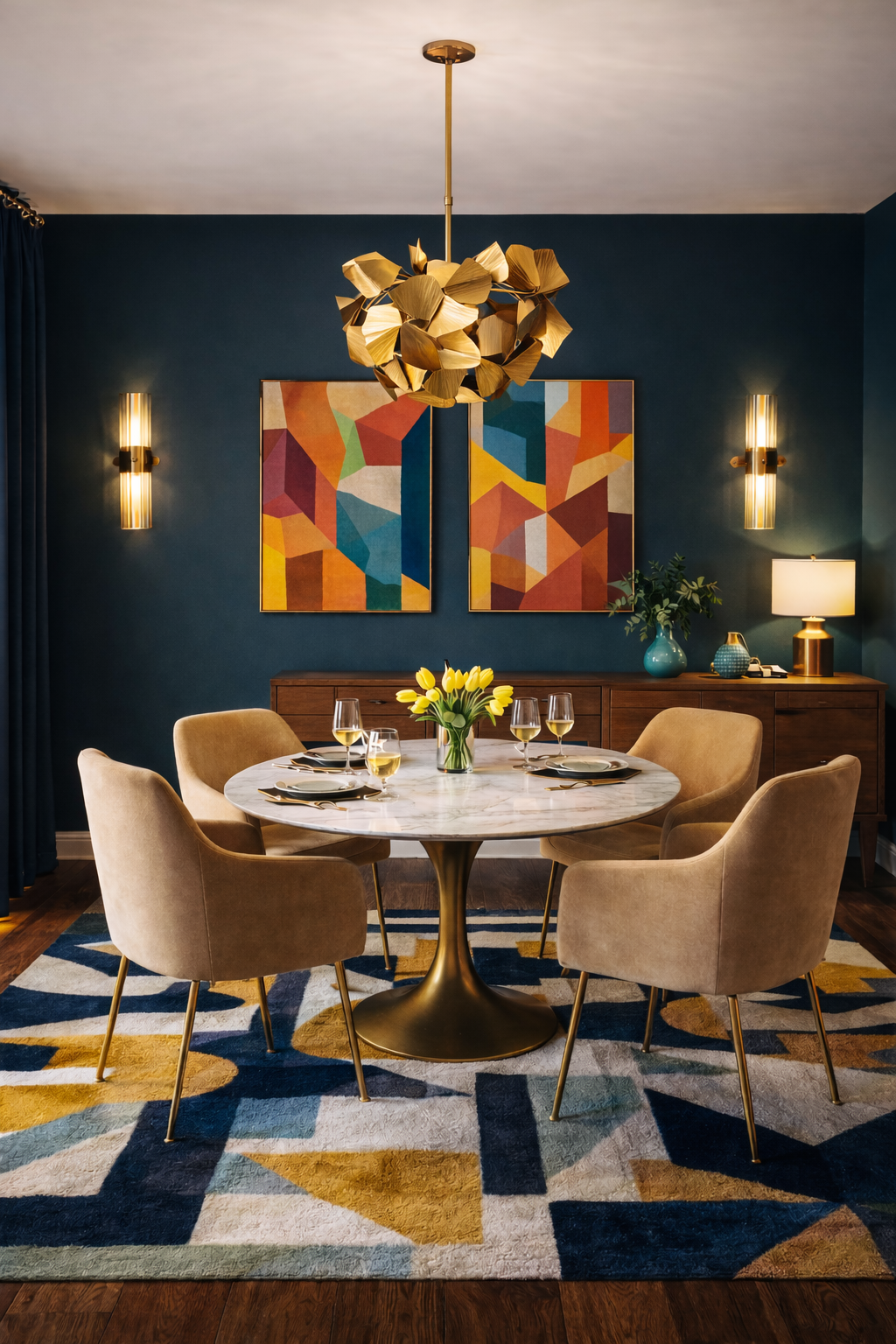
Layering a sculptural chandelier with wall sconces and a table lamp creates dimension and warmth in this colorful modern eclectic dining room. (AI-generated image)
4. Use Lighting to Expand the Room Visually
Lighting is one of the most underestimated tools in small spaces.
When a room feels cramped, it’s often not just about square footage — it’s about shadows. Poor lighting creates heavy corners and visual dead zones, which instantly make a space feel smaller.
The goal isn’t just brightness. It’s balanced, layered light.
Avoid Relying on a Single Overhead Fixture
One ceiling light in the center of the room will almost always create uneven illumination. The perimeter stays dim, and the ceiling can feel lower than it actually is.
Instead, layer your lighting:
A floor lamp in a darker corner
A table lamp on a console or side table
Wall sconces to free up surface space
Accent lighting for artwork or shelving
When light is distributed throughout the room, the edges soften and the space feels more open.
Brighten the Corners
Corners matter more than people think.
Dark corners visually “pull in” the walls. When those areas are illuminated — even subtly — the room appears to expand outward.
A slim floor lamp, an uplight behind a plant, or even a small accent lamp can change the entire perception of the room’s dimensions.
Choose the Right Light Temperature
Cool, harsh lighting can make a room feel flat and sterile.
Warm lighting (around 2700K–3000K) creates softness and depth. That depth adds dimension, and dimension makes a room feel more spacious.
The key is consistency. Mixing cool and warm light sources can create visual imbalance, especially in compact rooms.
Use Reflective Surfaces Wisely
Light bounces.
Glass tables, subtle metallic finishes, and light-toned textiles help distribute light throughout the space. You don’t need everything glossy — just enough reflective surfaces to keep the room from absorbing all the light.
When light travels across the room instead of stopping at dark surfaces, the room feels more expansive.
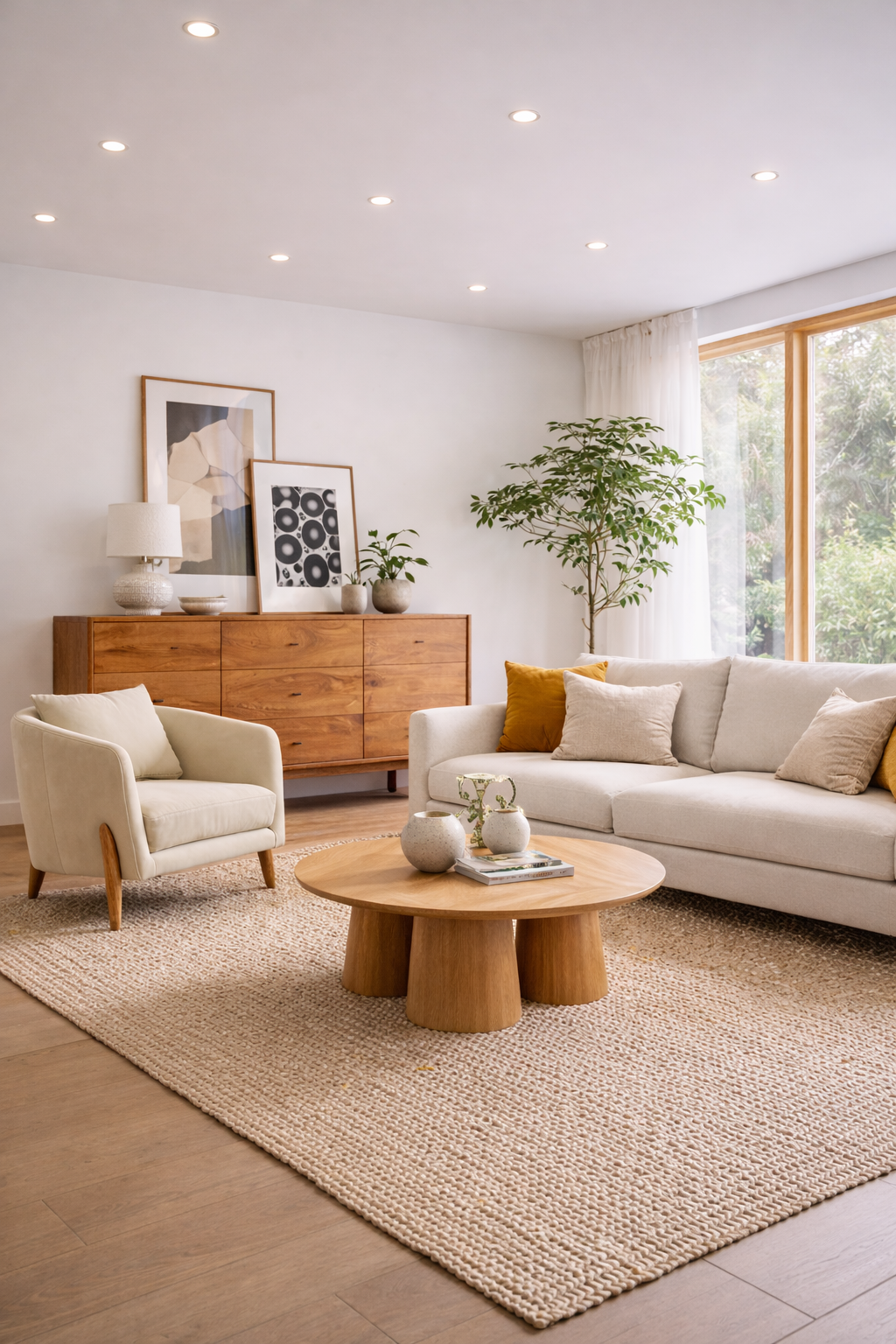
Thoughtfully scaled furniture, open legs, and recessed lighting help this Scandinavian-inspired living room feel airy and spacious. (AI-generated image)
5. Choose Furniture That Allows the Room to Breathe
In small and narrow rooms, heavy furniture can visually weigh down the space.
Even if the dimensions technically fit, pieces that feel bulky or solid from top to bottom can make the room appear compressed.
The goal isn’t to choose tiny furniture. It’s to choose pieces that allow the eye to move through the space.
Show More Floor
One of the simplest visual tricks to make a room feel larger is allowing more of the floor to be visible.
Furniture with exposed legs — rather than skirted or fully enclosed bases — creates openness underneath. When you can see the floor extending beneath a sofa or chair, the room immediately feels less crowded.
Look for:
Sofas with raised legs
Open-base accent chairs
Coffee tables with slim profiles
Console tables that don’t feel boxy
It’s a subtle shift, but it changes the perception of weight.
Avoid Oversized, Overstuffed Pieces
Deep, overstuffed sectionals can overwhelm a narrow living room.
In many of my virtual design projects, simply reducing the depth of a sofa by a few inches makes circulation easier and restores balance to the room.
If the space is tight, consider:
A standard-depth sofa instead of extra-deep
A loveseat paired with two chairs
A slim console behind a sofa instead of a bulky storage unit
Proportion matters more than the number of pieces.
Use Transparent or Light Visual Weight Pieces
Glass, acrylic, and open metal frames help maintain visual flow.
A glass coffee table allows your eye to travel across the room instead of stopping at a solid block in the center. An open-frame side table feels lighter than a fully enclosed cabinet.
You don’t need to make everything transparent — just introduce a few lighter elements to offset heavier pieces.
Anchor the Room Properly
Ironically, undersized rugs can make a room feel smaller.
When the rug is too small, furniture floats awkwardly and the space feels fragmented.
In most cases, a larger area rug that allows at least the front legs of seating to sit on it creates cohesion. Cohesion makes the room feel organized — and organized spaces feel larger.
Furniture selection isn’t about minimizing everything. It’s about balance, proportion, and visual flow.
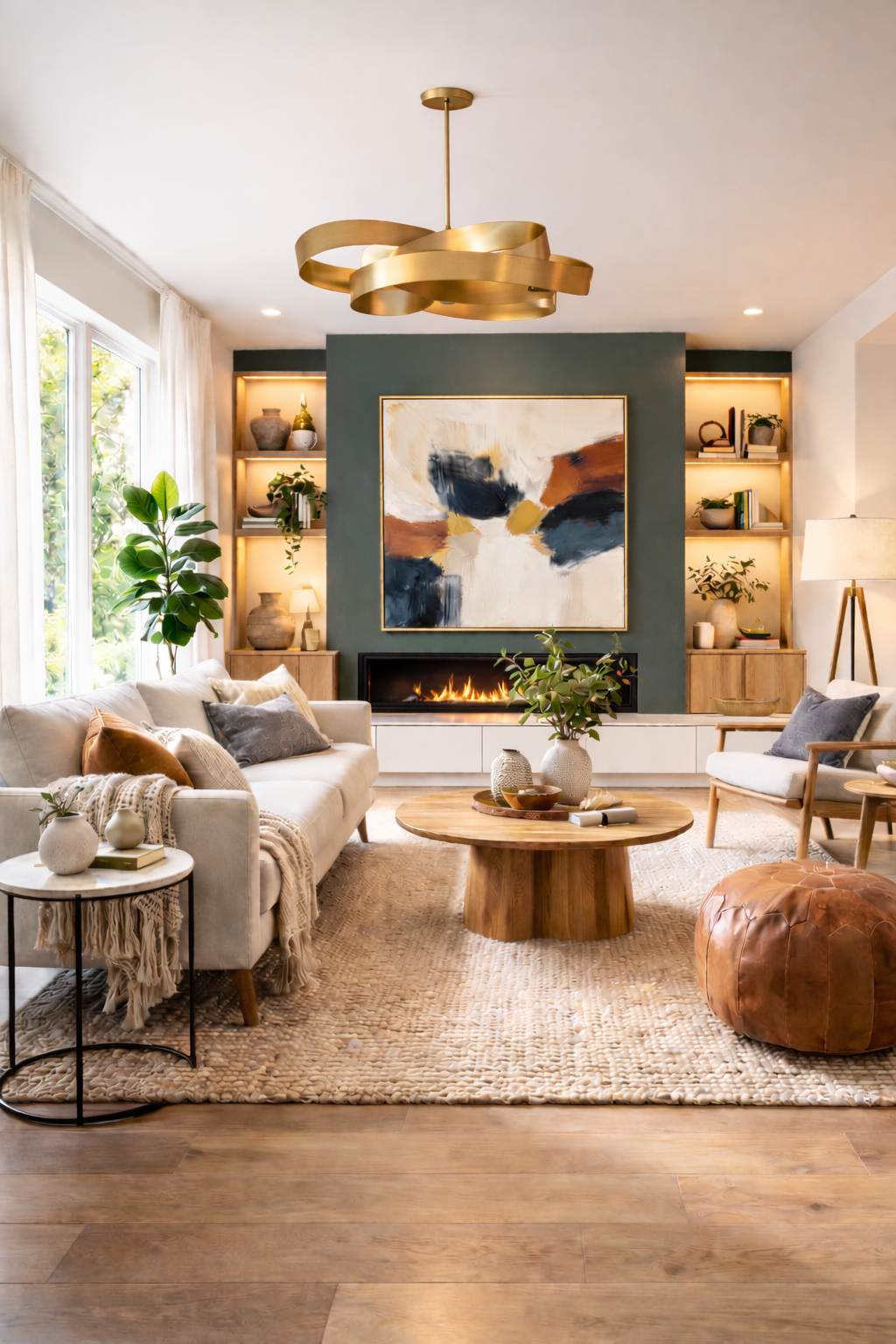
A warm, modern living room centered around a sleek fireplace and bold abstract art, anchored by a sculptural brass ceiling light that draws the eye upward and completes the focal wall. (AI-generated image)
6. Create One Strong Focal Point — Not Several Small Distractions
When a room feels small, clutter is often blamed. But it’s not always about quantity — it’s about fragmentation.
Multiple small visual focal points compete for attention. Your eye jumps from one object to another, and the space starts to feel busy and compressed.
Instead, give the room one clear anchor.
Choose One Area to Emphasize
In a small living room, that might be:
A single large piece of artwork above the sofa
A fireplace wall styled intentionally
A bold but cohesive area rug
A beautifully styled built-in
When one element carries visual weight, everything else can support it quietly.
Avoid Scattering Small Decor Everywhere
Collections of small frames, multiple tiny accessories, or too many accent pillows can create visual noise.
In compact spaces, larger but fewer pieces tend to feel more grounded.
For example:
One large artwork instead of five small prints
One substantial coffee table book stack instead of many scattered objects
One statement chair instead of several small accent pieces
This reduces visual interruption.
Give the Eye a Place to Rest
Rooms feel larger when they feel calm.
Negative space — whether it’s a clean stretch of wall, a simple console surface, or an uncluttered corner — gives the eye breathing room.
Not every wall needs art. Not every surface needs decor.
In small rooms especially, restraint creates openness.
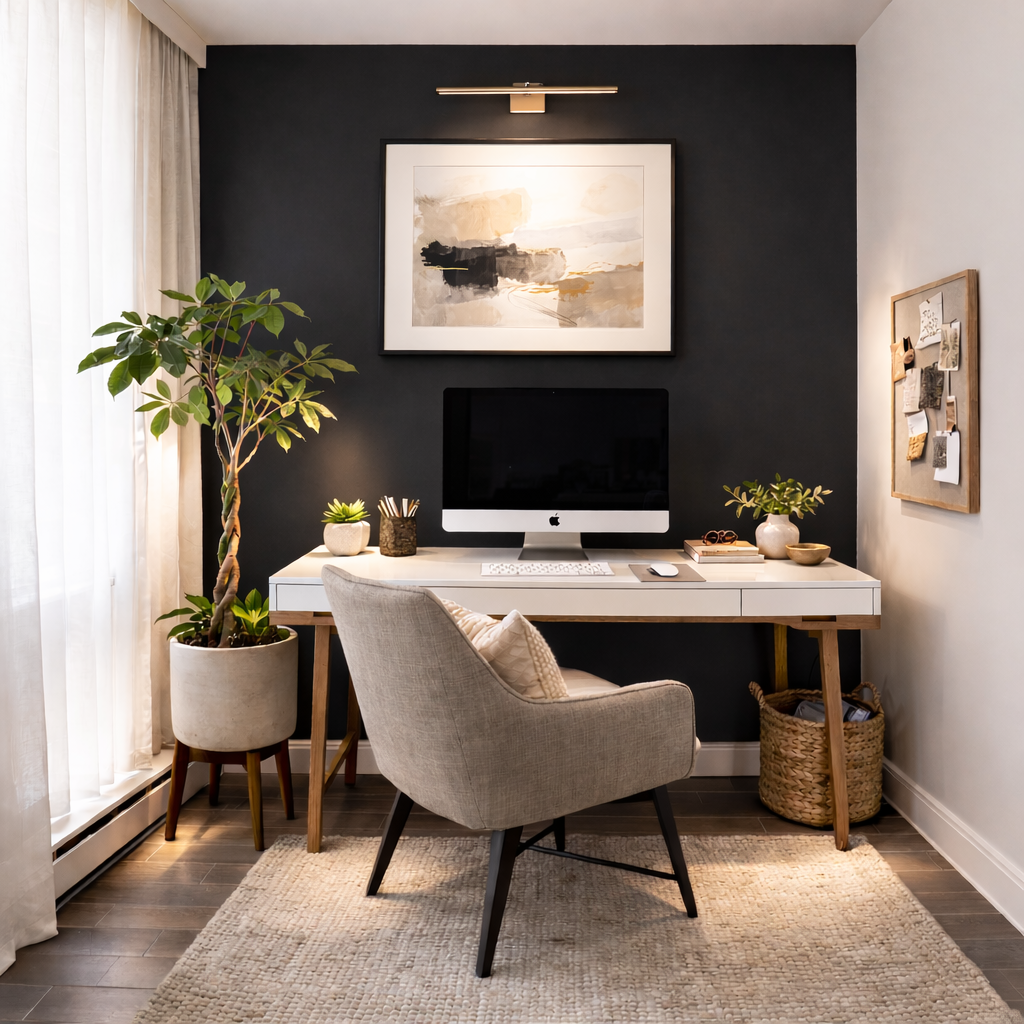
A compact modern organic home office featuring a black accent wall, warm wood desk, and softly lit abstract artwork for a clean yet inviting workspace. (AI-generated image)
Frequently Asked Questions About Making a Small Room Look Bigger
Does painting a room white automatically make it look bigger?
Not necessarily. White can help reflect light, but if the layout, lighting, and furniture scale are off, the room can still feel tight. Cohesion and proportion matter more than color alone.
Should I use mirrors in a small room?
Yes — but strategically. A large mirror placed across from a window can amplify natural light and extend sightlines. Scattering small mirrors around the room can create visual clutter instead of openness.
Is smaller furniture better for small rooms?
Not always. Undersized furniture can make a room feel fragmented. Properly scaled pieces — with exposed legs and balanced proportions — usually create a more cohesive and spacious appearance.
How important is lighting in a small room?
Very. Layered lighting reduces shadows and visually expands corners. A combination of floor lamps, table lamps, and wall lighting creates depth, which makes a room feel larger.
Need Help With a Small or Narrow Room?
Making a small room feel larger isn’t about one quick fix. It’s about how layout, scale, color, lighting, and proportion work together.
In many of my virtual interior design projects, I help clients rethink compact living rooms, narrow dining areas, and challenging apartment layouts without altering the structure of their homes. Often, small adjustments to furniture placement, drapery height, lighting strategy, and scale make a dramatic difference.
If you’re working with a space that feels tight or awkward and want a design plan tailored specifically to your room, I offer virtual interior design services that provide clear layouts, sourcing guidance, and cohesive direction — all customized to your home.
Sometimes the solution isn’t more square footage. It’s better strategy.