

Kitchen Island Lighting Rules: How to Choose the Right Size, Height & Number of Fixtures
Kitchen island lighting is one of those details that can completely change how a kitchen feels. I’ve worked with many clients over the years who invested heavily into a kitchen renovation, only to realize afterward that something still felt off in the space. In many cases, the issue came down to the lighting above the island. Fixtures that are too small, hung too high, overcrowded, or out of proportion with the island can throw off the balance of the entire kitchen surprisingly fast.
Today’s kitchen islands do much more than provide extra prep space. They’ve become gathering spots for everyday living — from casual meals and entertaining to working from home and helping kids with homework. In many open-concept homes, the island also acts as a visual anchor for the kitchen and surrounding living areas, which makes the lighting above it even more important.
Choosing the right kitchen island lighting is about much more than finding a fixture you like online. Scale, spacing, hanging height, light output, ceiling height, and the overall style of the kitchen all play a role in whether the lighting feels intentional or awkward once installed. I’ve seen beautiful kitchens lose some of their impact simply because the island lighting was selected as an afterthought.
In this guide, I’m going to walk through some of the most important kitchen island lighting rules I use when designing kitchens for clients, including fixture sizing, spacing, hanging height, number of pendants, and how to create a balanced look that works with the overall kitchen design. Whether you’re remodeling your kitchen, building a new home, or replacing outdated fixtures, understanding these basics can help you avoid expensive mistakes later.
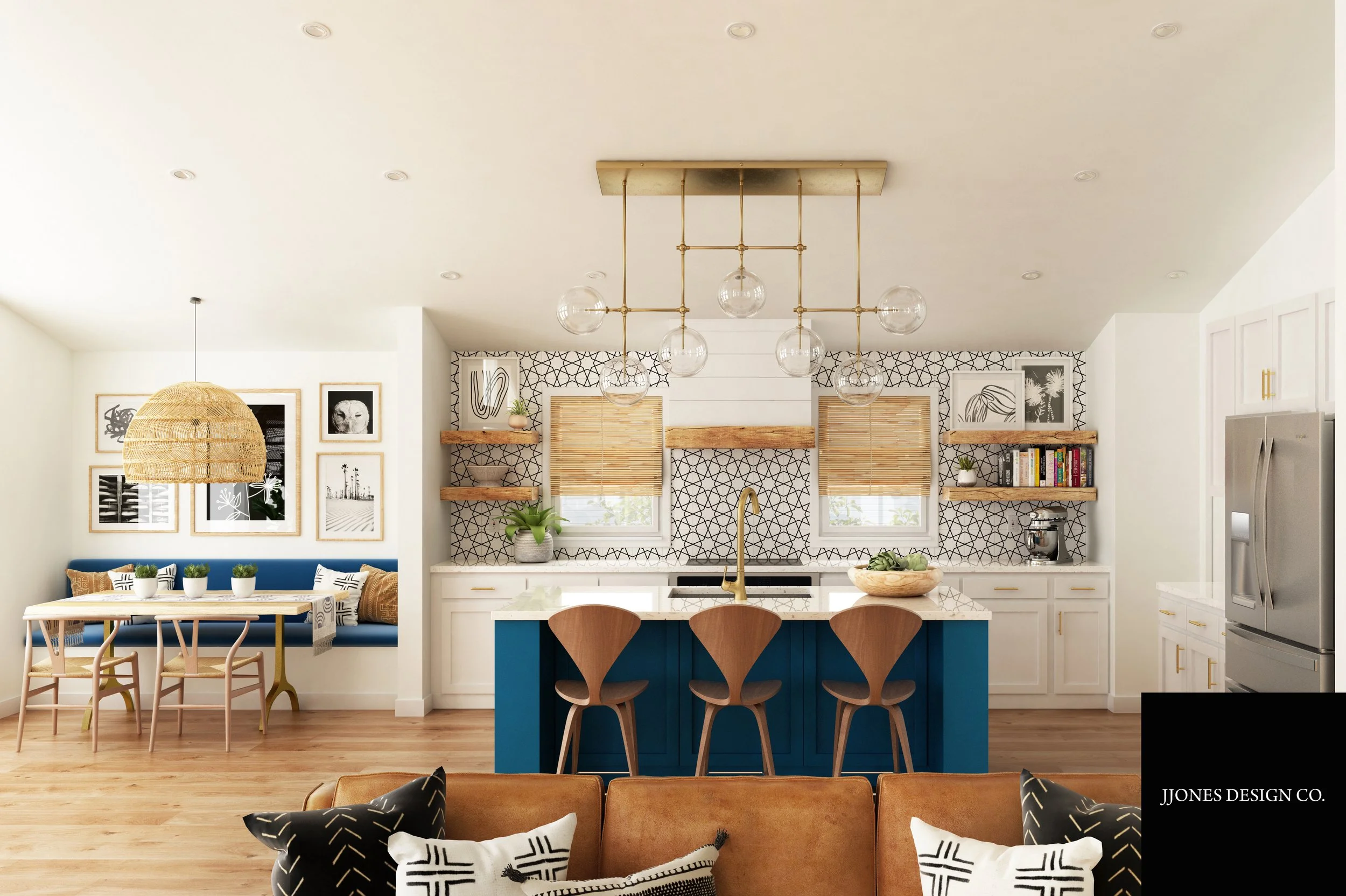
Open-concept kitchen with a blue island, brass linear chandelier, and layered natural textures designed by virtual interior designer Joshua Jones of JJones Design Co.
Determine the Purpose of Your Kitchen Island Lighting
Before choosing pendant lights or chandeliers for a kitchen island, it’s important to think about what the lighting actually needs to do in the space. One of the biggest mistakes I see is people selecting fixtures based only on appearance without considering how the kitchen functions day to day.
In some kitchens, the island lighting primarily serves as task lighting for cooking and food prep. In others, the island acts more as a gathering space for entertaining, casual dining, or everyday family activities. Some homeowners want the lighting to quietly blend into the design, while others want it to become a major focal point that adds personality and visual impact to the room.
Understanding the role of the lighting early on helps narrow down the right fixture style, size, placement, and brightness level. For example, a kitchen that relies heavily on the island for prep work may benefit from multiple pendants with stronger light output, while a more decorative approach may call for oversized statement fixtures paired with recessed lighting elsewhere in the kitchen.
This is also where layered lighting becomes important. Kitchen island fixtures rarely need to do all the work on their own. Recessed ceiling lights, under-cabinet lighting, sconces, and natural light all contribute to how the kitchen feels throughout the day and evening. When the lighting plan works together as a whole, the kitchen tends to feel much more balanced and comfortable instead of overly harsh or too dim in certain areas.
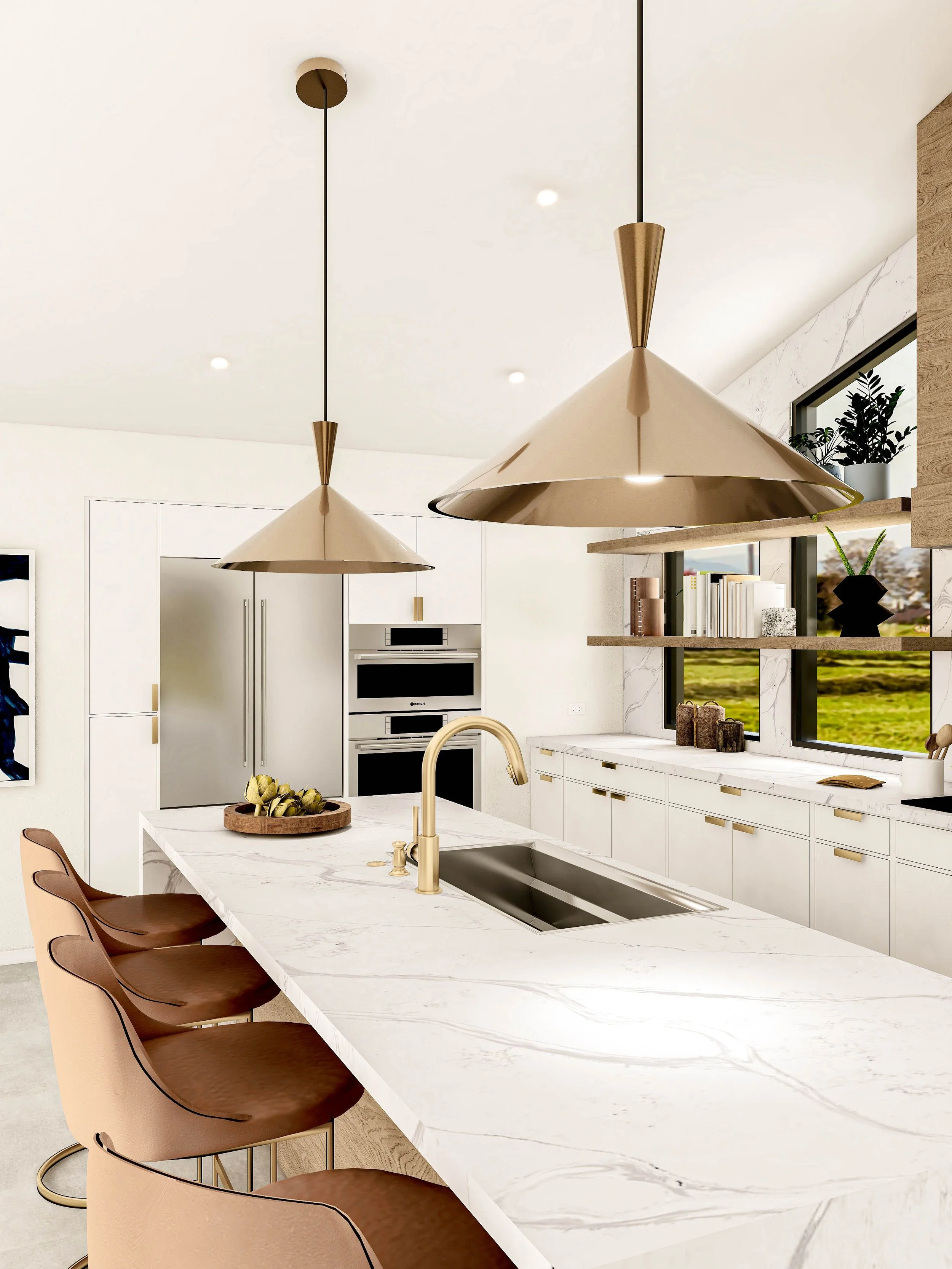
Mid-century modern kitchen with oversized brass pendant lights above a waterfall island designed by virtual interior designer Joshua Jones of JJones Design Co.
Consider the Size and Proportion of the Fixtures
One of the most common kitchen island lighting mistakes is choosing fixtures that are too small for the island and surrounding space. A tiny pendant floating above a large island can look visually disconnected, while oversized fixtures in a smaller kitchen can quickly overwhelm the room. Getting the scale right is what helps the lighting feel intentional and balanced within the overall design.
As a general guideline, the total width of the light fixture — or the combined width of multiple pendants — should usually span around two-thirds to three-quarters of the island’s width. This tends to create a proportion that feels visually comfortable without making the lighting look cramped or undersized. Ceiling height, ceiling volume, and the openness of the kitchen also influence how large or small fixtures will appear once installed.
I also encourage homeowners to think beyond the island measurements alone. In open-concept homes, the island lighting is often visible from the living room, dining area, and entry spaces, so the fixture scale needs to work with the room as a whole rather than just the countertop below it. A fixture that technically “fits” the island may still feel too small if the kitchen opens into a large great room with tall ceilings.
Visual weight matters just as much as actual dimensions. Some fixtures feel much heavier because of dark finishes, thick frames, or solid materials, while others feel lighter and more airy even at larger sizes. Glass pendants, for example, often allow you to go slightly larger without making the space feel visually crowded.
When in doubt, I usually recommend avoiding fixtures that are too small rather than too large. Undersized island lighting is one of the easiest ways to make a kitchen feel incomplete, especially in newer homes where larger islands and taller ceilings have become increasingly common.
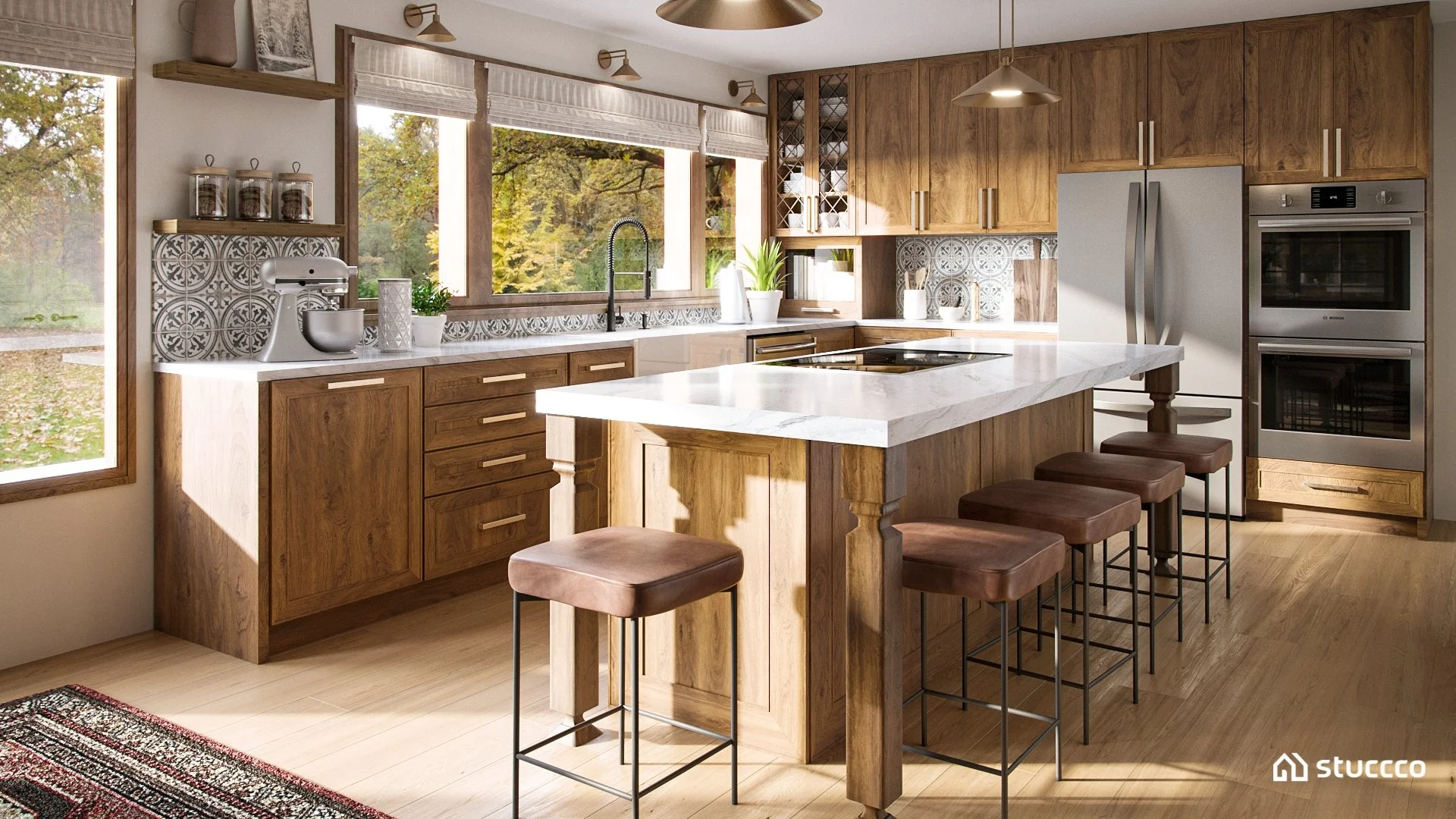
Country eclectic style kitchen with warm wood cabinetry and pendant lighting above the island designed by virtual interior designer Joshua Jones of JJones Design Co. 3D rendering by Stuccco.
How Many Pendant Lights Should You Use Over a Kitchen Island?
The number of light fixtures above a kitchen island depends on several factors, including the island length, the size of the fixtures, ceiling height, and the overall look you want to create. There isn’t a single formula that works for every kitchen, which is why two kitchens with similar island sizes can end up needing completely different lighting layouts.
For smaller kitchen islands, a single statement fixture or two pendants is often enough. Longer islands usually benefit from three pendants or a linear chandelier that helps distribute light more evenly across the countertop. In larger open-concept kitchens, the lighting also needs to visually hold its own within the scale of the room, which sometimes calls for larger fixtures or a more substantial arrangement.
One guideline I often use when designing kitchens is to choose one fewer pendant light than the number of stools at the island. For example, if the island has seating for four stools, three pendants often create a more balanced and less crowded appearance. This isn’t a strict rule, but it’s a helpful starting point that tends to work well in many kitchens.
Spacing is just as important as the number of fixtures themselves. Pendants that are placed too close together can feel cluttered, while fixtures spaced too far apart can make the island lighting look disconnected. I usually aim for consistent spacing between fixtures while also leaving enough breathing room near the edges of the island so the lighting arrangement feels centered and intentional.
This is also where fixture size plays a major role. Larger pendants may only require two fixtures over an island that would otherwise need three smaller pendants. Oversized fixtures have become increasingly popular in modern kitchens, especially when homeowners want the lighting to act as a strong visual statement rather than quietly blend into the background.
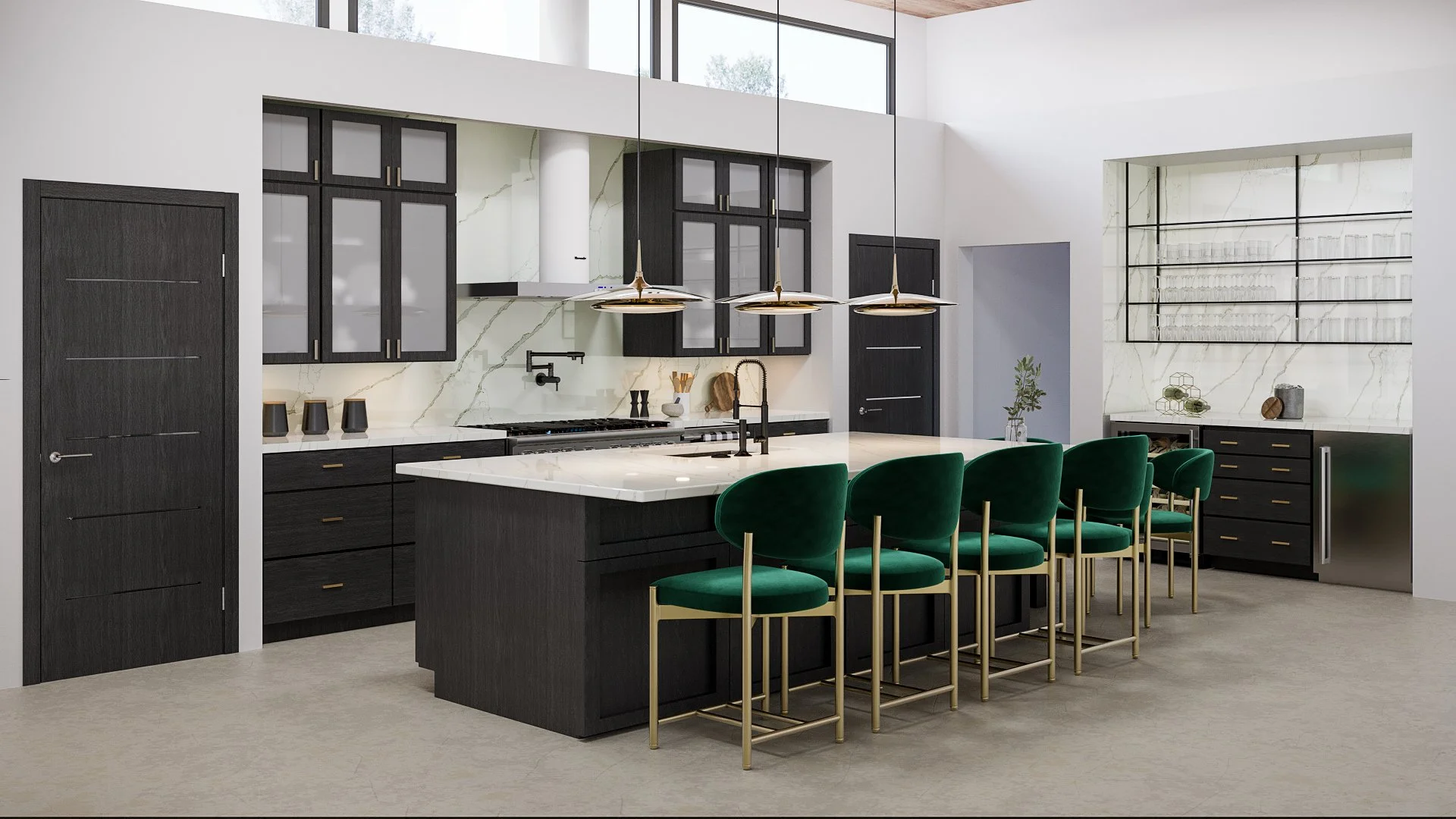
Modern industrial kitchen with sleek pendant lighting above the island designed by virtual interior designer Joshua Jones of JJones Design Co.
Pendant Lights vs Linear Fixtures: Which One Works Best?
Pendant lights remain one of the most popular choices for kitchen islands because they offer a lot of flexibility in both style and scale. They can work in almost any kitchen design style, from modern and Scandinavian interiors to farmhouse, traditional, and more eclectic spaces. Depending on the size and shape of the pendants, they can either quietly complement the kitchen or become one of the main focal points in the room.
Multiple pendants are often a great choice when you want to create rhythm and symmetry above the island. They also allow light to spread more evenly across longer countertops while adding visual interest at different eye levels. Smaller pendants tend to feel lighter and more casual, while oversized pendants can create a stronger architectural presence in the kitchen.
Linear fixtures and chandeliers, on the other hand, can work especially well over longer islands or in kitchens with a more open-concept layout. A single linear fixture often creates a cleaner and less cluttered appearance compared to several individual pendants, particularly in modern kitchens where simplicity plays a major role in the design.
I also find that linear fixtures can help visually anchor large islands without overwhelming the space. In kitchens with tall ceilings or larger room volumes, a properly scaled linear chandelier can feel more cohesive than several smaller pendants competing for attention.
The choice ultimately comes down to the overall style of the kitchen, the scale of the room, ceiling height, and how dramatic or subtle you want the lighting to feel. In some kitchens, a pair of oversized pendants creates the perfect balance. In others, a single sculptural linear fixture feels much more refined and intentional.
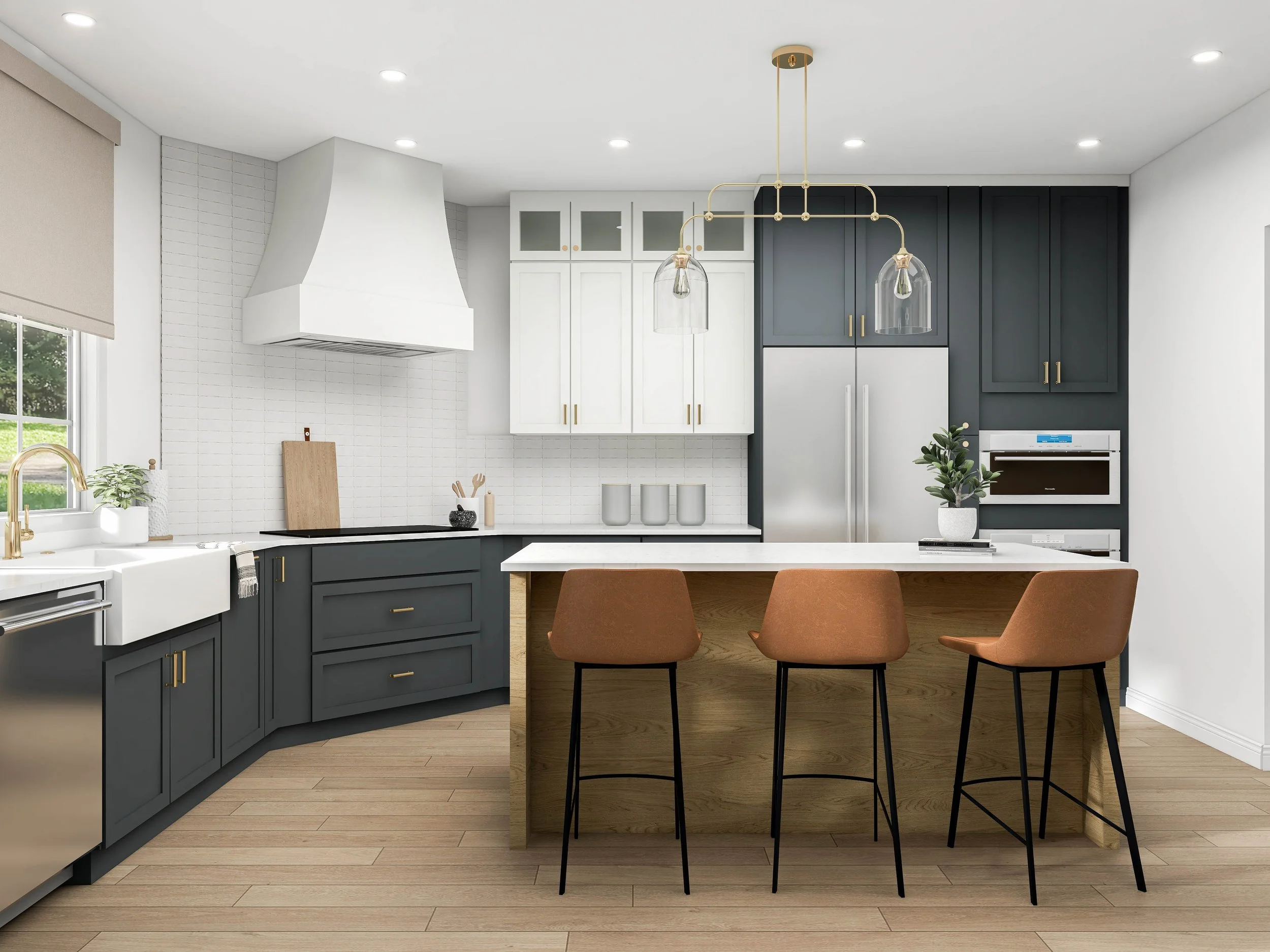
Mediterranean style kitchen with a linear brass light fixture above the island designed by virtual interior designer Joshua Jones of JJones Design Co.
Kitchen Island Lighting Height and Spacing Rules
Even the most beautiful light fixture can feel awkward if it’s hung at the wrong height. Kitchen island lighting that sits too high often feels disconnected from the island, while fixtures that hang too low can block sightlines and make the space feel cramped. Finding the right balance is what helps the lighting feel comfortable, functional, and visually grounded within the kitchen.
In most kitchens, pendant lights are typically installed around 30 to 36 inches above the countertop surface. This range usually provides enough clearance for conversation, cooking, and everyday movement without making the fixtures feel too distant from the island. However, ceiling height and fixture size can slightly shift what feels appropriate in a space.
For kitchens with taller ceilings, the fixtures may need to hang a little lower visually to maintain proper proportion within the room. Smaller fixtures hung too high in a large kitchen can sometimes appear disconnected or insignificant once everything is installed. On the other hand, oversized pendants in a lower-ceiling kitchen may need additional clearance so the room doesn’t feel visually heavy.
Spacing between fixtures matters just as much as hanging height. Pendants that are crowded together can create visual clutter, while fixtures placed too far apart often make the lighting arrangement feel scattered across the island. I usually recommend keeping the spacing consistent while also leaving enough room between the outer pendants and the edges of the island so the layout feels centered and balanced.
It’s also important to think about sightlines throughout the home, especially in open-concept layouts. Kitchen island lighting is often visible from nearby living rooms, dining spaces, and entry areas, so the fixture placement should feel visually comfortable from multiple angles rather than only looking correct while standing directly in the kitchen.
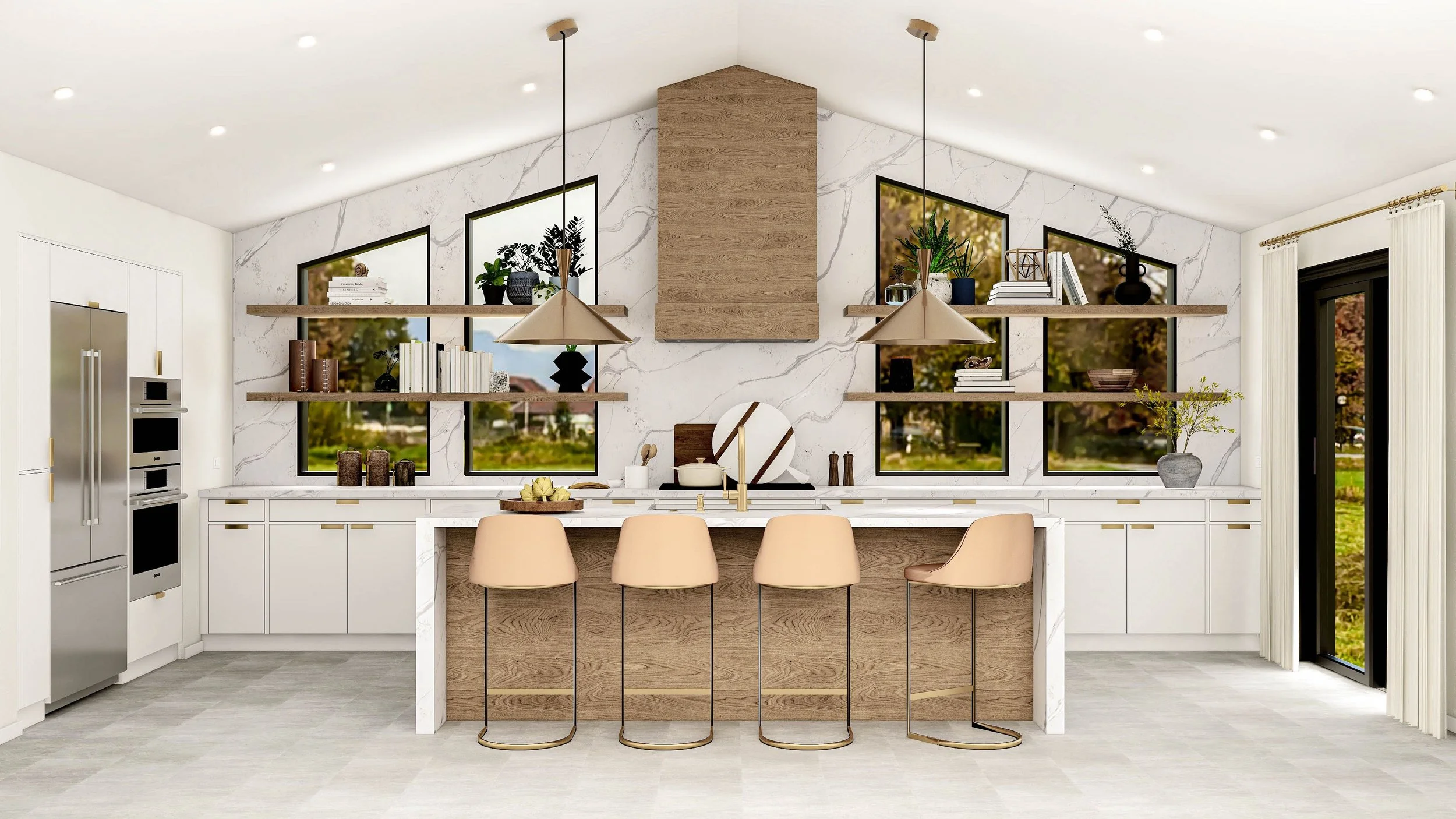
Mid-century modern style kitchen with oversized pendant lighting above the island designed by virtual interior designer Joshua Jones of JJones Design Co.
Match the Lighting Style to the Kitchen Design
Kitchen island lighting should feel connected to the overall design of the kitchen rather than looking like a completely separate decision. I often see kitchens where the cabinetry, countertops, hardware, and finishes all work beautifully together, but the light fixtures feel disconnected from the rest of the space. Because island lighting sits at eye level and naturally draws attention, it has a major impact on how cohesive the kitchen feels overall.
In modern kitchens, cleaner fixture silhouettes with simple lines and minimal detailing often work best. Scandinavian and modern organic kitchens tend to lean toward softer shapes, lighter finishes, natural textures, and fixtures that feel warm without becoming overly decorative. Traditional and farmhouse kitchens usually have more flexibility for detailed fixtures, mixed materials, or vintage-inspired lighting.
That doesn’t mean everything has to perfectly match. Some contrast can actually make a kitchen feel more layered and interesting. For example, a sleek modern kitchen can benefit from slightly warmer or more sculptural lighting to keep the space from feeling too cold. Likewise, a more traditional kitchen may feel fresher with lighting that introduces cleaner lines or a slightly updated silhouette.
Finish selection also plays a big role in how the lighting integrates into the kitchen. Matte black, aged brass, polished nickel, bronze, and mixed-metal combinations can all work beautifully depending on the surrounding finishes in the space. I usually recommend looking at the kitchen as a whole instead of trying to match every metal finish exactly. A kitchen tends to feel more collected and intentional when there’s some variation rather than every finish being identical.
The goal is for the lighting to feel like part of the overall architectural story of the kitchen. When the scale, style, and finishes all work together, the island lighting helps elevate the entire room instead of competing with it.
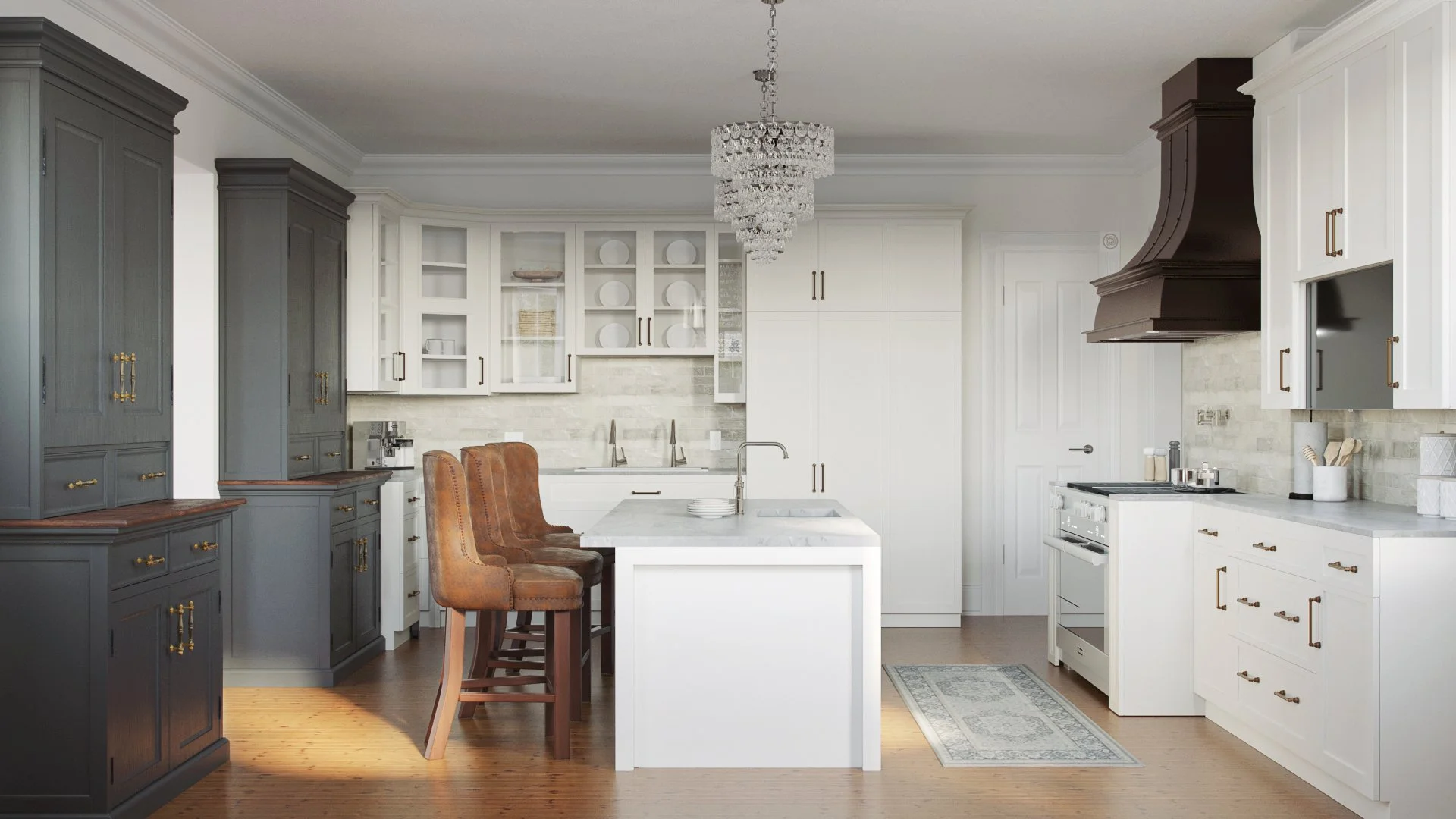
Modern Victorian style kitchen with a crystal chandelier above the island designed by virtual interior designer Joshua Jones of JJones Design Co.
Don’t Rely on Island Pendants as the Only Light Source
One mistake I see fairly often is homeowners relying entirely on pendant lights to illuminate the kitchen. While island lighting plays a major visual role in the space, it usually shouldn’t be the kitchen’s only source of light. Even beautiful pendants can create uneven lighting, shadows, or darker areas if there isn’t additional lighting layered throughout the room.
A well-designed kitchen lighting plan typically combines several different light sources working together. Recessed ceiling lights help provide overall ambient lighting, under-cabinet lighting improves visibility for prep areas, and decorative fixtures above the island add both function and personality. In some kitchens, sconces, toe-kick lighting, or interior cabinet lighting may also contribute to the overall atmosphere.
Layered lighting becomes especially important in larger kitchens and open-concept homes where the kitchen transitions into dining and living spaces. Lighting needs can shift throughout the day depending on natural light levels, entertaining, cooking, or evening routines. Having multiple lighting sources allows the kitchen to feel more flexible and comfortable instead of relying on a single bright fixture overhead.
This also creates more freedom when selecting island fixtures. If recessed lighting and under-cabinet lighting are already providing strong functional illumination, the island pendants don’t necessarily need to produce intense light on their own. That opens the door for more decorative fixture styles that prioritize scale, texture, or sculptural design without sacrificing how the kitchen functions day to day.
One of the best kitchens usually isn’t the one with the most dramatic lighting fixture — it’s the one where all the lighting works together naturally and makes the space feel comfortable to live in.
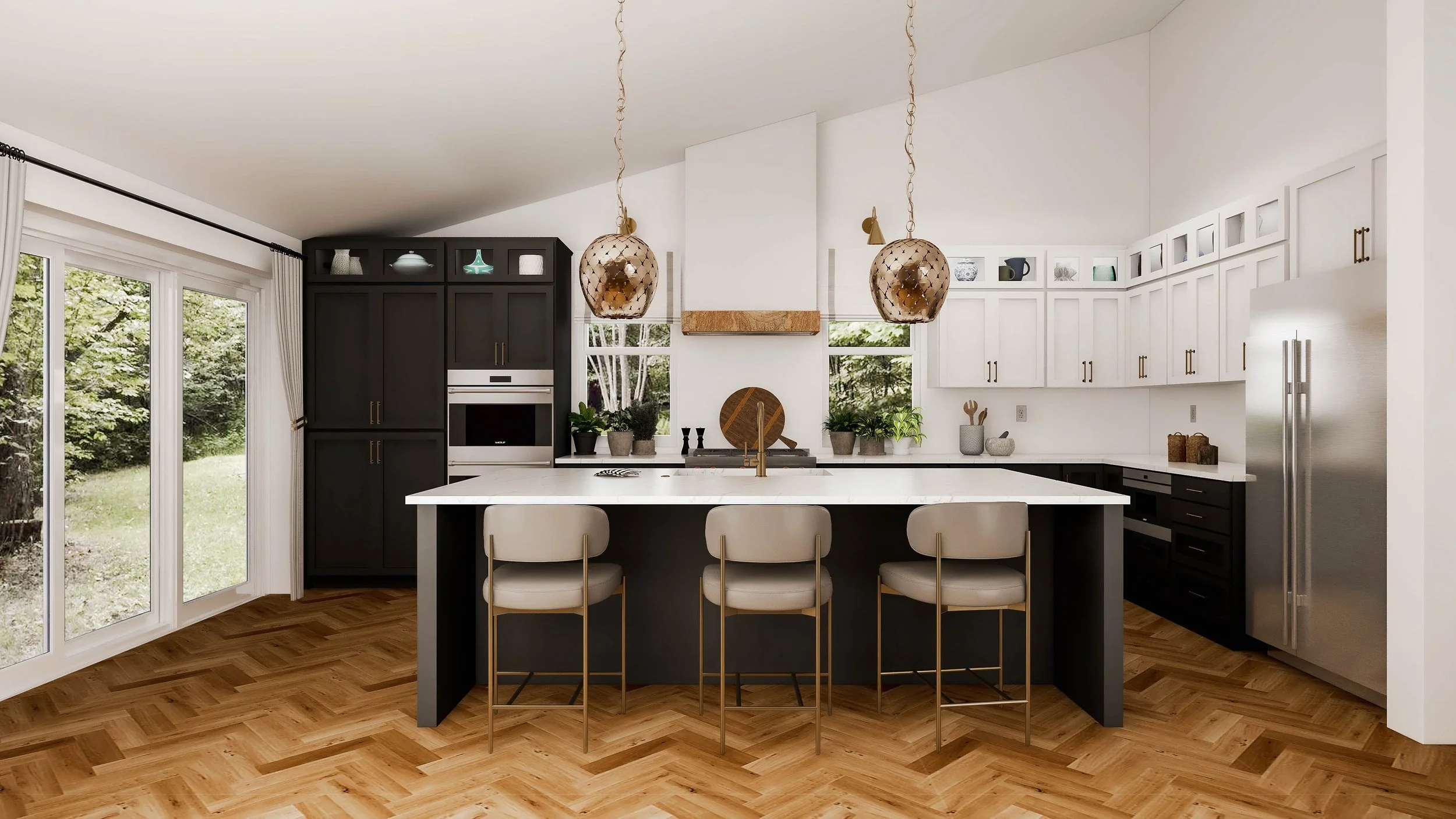
Modern eclectic style kitchen with statement pendant lighting above the island designed by virtual interior designer Joshua Jones of JJones Design Co.
Common Kitchen Island Lighting Mistakes to Avoid
Even expensive light fixtures can look disappointing when the sizing, placement, or overall lighting plan isn’t carefully considered. I’ve seen kitchens with beautiful cabinetry, countertops, and finishes lose some of their impact simply because the island lighting felt out of scale or poorly positioned within the room.
One of the most common mistakes is choosing fixtures that are too small. Many homeowners underestimate how large kitchen islands have become, especially in newer homes with open-concept layouts and taller ceilings. Small pendants that may have looked fine in a showroom or online can quickly feel undersized once installed in a large kitchen.
Another issue is hanging fixtures too high above the island. When pendants sit too close to the ceiling, they often lose their visual connection to the countertop below and stop feeling grounded within the space. On the opposite end, fixtures that hang too low can block views across the kitchen and make the room feel visually crowded.
Spacing problems are also extremely common. Pendants placed too close together can create clutter and visual heaviness, while fixtures spaced too far apart often make the island feel disconnected and uneven. This becomes especially noticeable over longer islands where balance and symmetry play a major role in how polished the kitchen feels overall.
I also encourage homeowners to avoid selecting fixtures purely because they’re trending on social media. Some lighting styles photograph beautifully online but may not work well with the architecture, ceiling height, or overall design direction of a specific home. Kitchen island lighting tends to look best when it complements the scale and style of the space rather than trying to dominate it unnecessarily.
Lastly, many kitchens simply don’t have enough layered lighting. Pendants alone rarely provide balanced illumination for the entire kitchen, particularly in larger spaces. Without recessed lighting, under-cabinet lighting, or additional ambient lighting, kitchens can end up with shadows, overly bright hotspots, or areas that feel dim and uncomfortable at night.
A kitchen island usually sits at the center of the room both visually and functionally, which is why the lighting above it has such a major influence on how the entire kitchen feels once everything is finished.
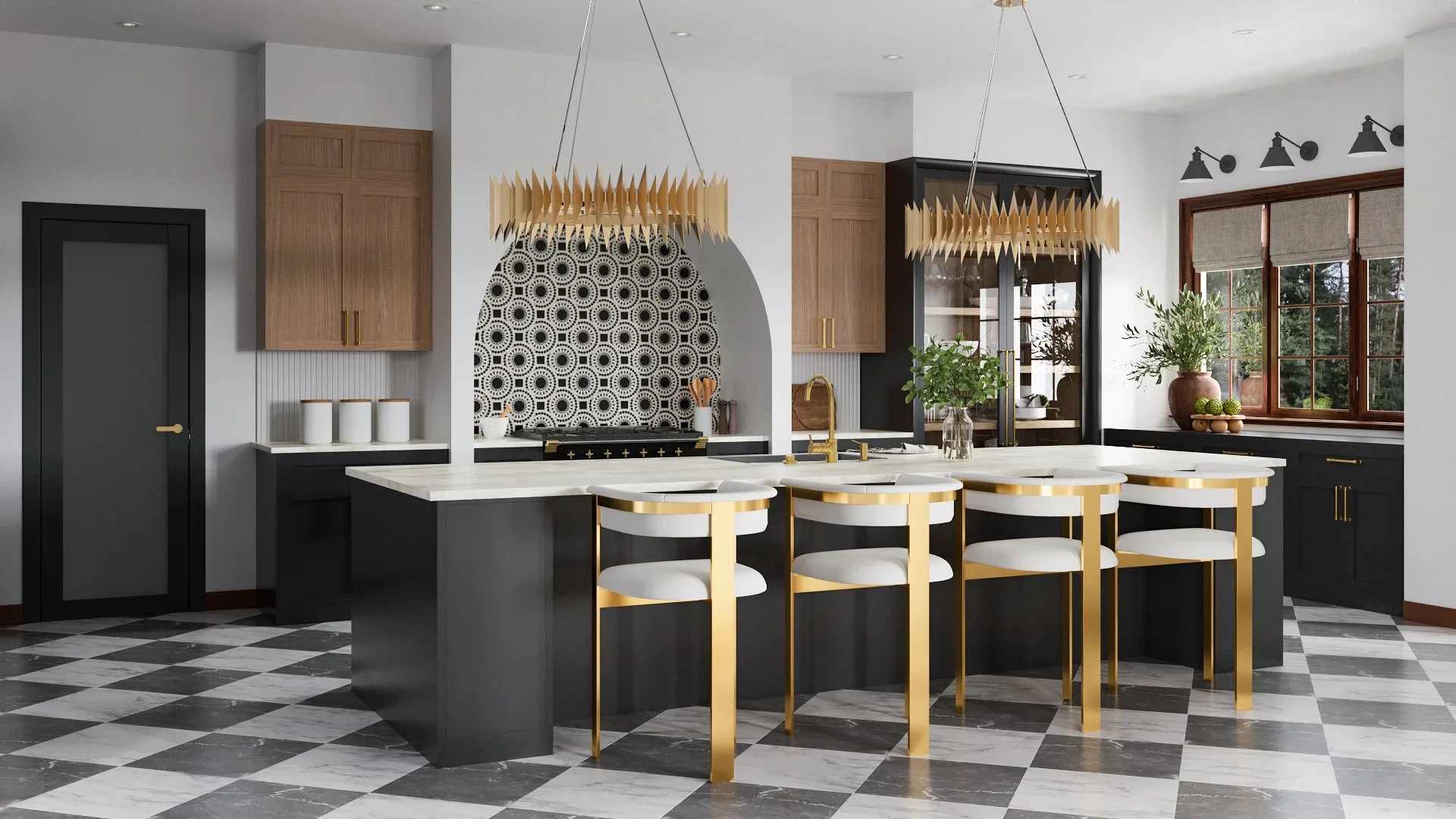
Art Deco style kitchen with sculptural statement lighting above the island designed by virtual interior designer Joshua Jones of JJones Design Co. Featured in Architectural Digest.
Why Kitchen Island Lighting Matters More Than People Think
Kitchen island lighting has a much bigger impact on a kitchen than many people initially realize. It’s not just about adding light above a countertop. The fixtures above the island often influence how balanced, comfortable, and visually connected the entire kitchen feels once everything comes together.
Because the island usually sits at the center of the kitchen, the lighting naturally becomes one of the first things people notice when entering the space. The right fixtures can help anchor the room, complement the architecture, and add personality without overwhelming the design. When the scale, spacing, height, and style all work together properly, the kitchen tends to feel far more polished and intentional overall.
At the same time, kitchen island lighting needs to function well for everyday life. A kitchen should feel comfortable whether you’re preparing meals, entertaining guests, helping kids with homework, or simply grabbing coffee in the morning. Lighting that looks beautiful but creates glare, shadows, or awkward proportions can quickly become frustrating to live with over time.
There’s no single fixture or formula that works for every kitchen, which is why it’s important to look at the space as a whole rather than focusing only on the island itself. Ceiling height, room size, natural light, kitchen layout, and surrounding finishes all influence what type of lighting will feel most successful in the space.
When thoughtfully selected, kitchen island lighting can elevate the entire room and help create a kitchen that feels both functional and visually balanced for years to come.
If you’re planning a kitchen renovation, building a new home, or struggling to figure out the right lighting layout for your island, my virtual interior design services can help guide you through the process with a cohesive plan tailored to your home and lifestyle.