
Polyester Upholstery vs. Velvet: Why Furniture Retailers Rarely Tell You How Fabric Actually Feels
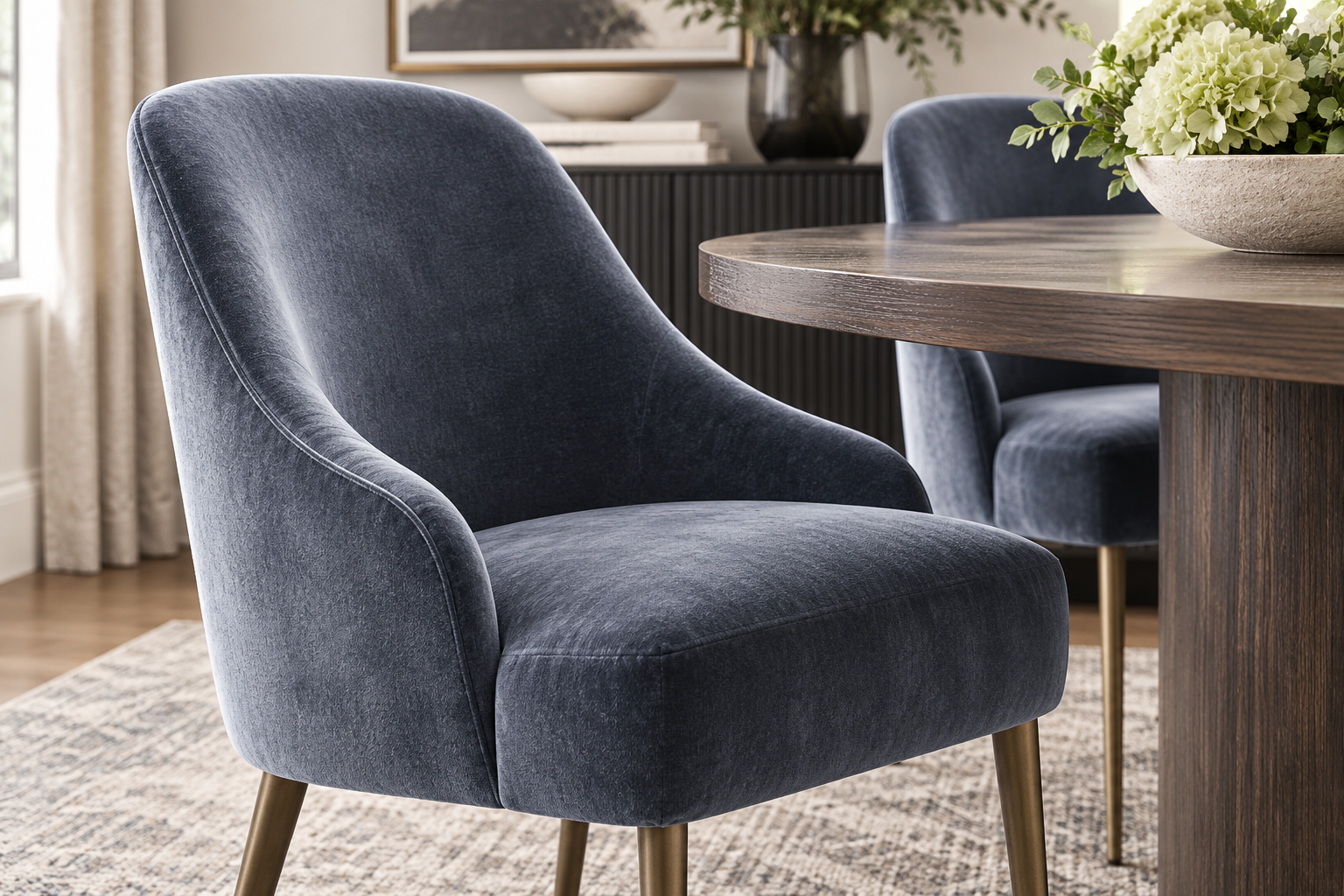
A few weeks ago, I was walking through a furniture store when I came across a dining chair that immediately caught my attention. The fabric looked soft, had a subtle sheen, and felt remarkably similar to velvet when I sat down and ran my hand across it.
Naturally, I checked the product tag to see what kind of fabric it was.
Instead of finding the word "velvet," the description simply said polyester upholstery.
That left me scratching my head.
If the chair looks like velvet and feels like velvet, why not just call it velvet?
As it turns out, this is something I encounter quite often as an interior designer. Many furniture retailers describe upholstery using the fiber content rather than the texture or construction of the fabric. While that information can be useful, it doesn't always tell shoppers what they really want to know: What will this fabric actually feel like in my home?
If you've ever browsed furniture online and found yourself confused by terms like polyester, performance fabric, velvet, chenille, or bouclé, you're not imagining things. Fabric descriptions can be surprisingly vague, especially when you're trying to make a purchase without being able to touch the piece in person.
So let's clear up the confusion. Understanding the difference between polyester and velvet can make shopping for furniture much easier—and may help explain why that "polyester upholstery" sofa or dining chair feels a lot more luxurious than you expected.
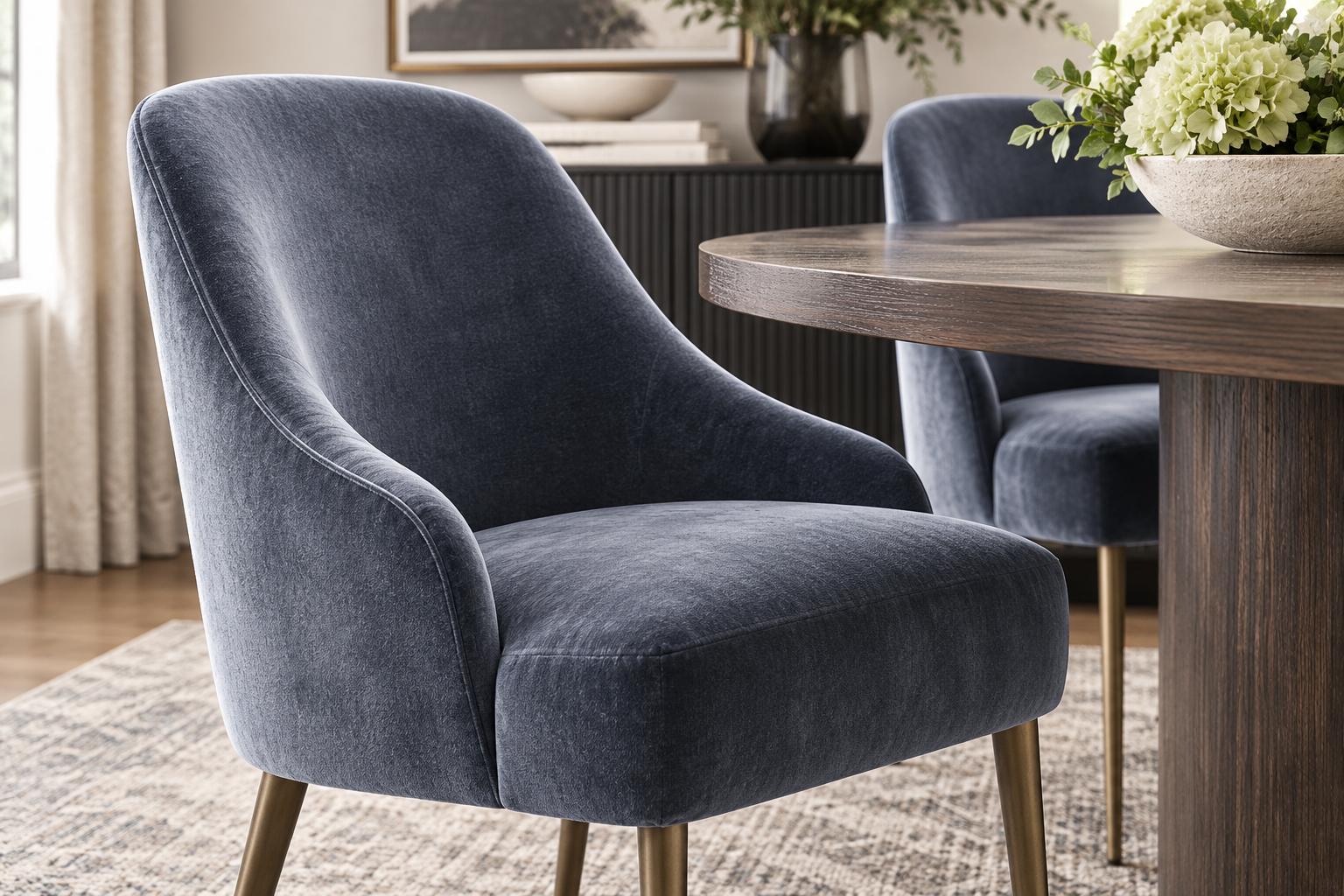
AI-generated image: A velvet-like upholstered dining chair showcasing the soft texture and subtle sheen often associated with velvet fabrics. Many modern dining chairs with this appearance are made from polyester upholstery rather than traditional velvet fibers.
Polyester and Velvet Aren't Actually the Same Thing
The first thing to understand is that polyester and velvet are not competing fabric types. They are actually describing two completely different things.
Polyester refers to the fiber itself—the material used to create the fabric. Velvet, on the other hand, refers to the way a fabric is constructed and the texture it creates.
Think of it this way: if someone tells you a dining table is made of oak, they're describing the material. If they tell you the table has a distressed finish, they're describing how it looks and feels. Both pieces of information are useful, but they tell you different things.
The same concept applies to upholstery.
A fabric can be made from polyester and still have a velvet texture. In fact, many of the velvet sofas, dining chairs, benches, and accent chairs you see today are made primarily from polyester rather than traditional materials such as silk or cotton.
This is one reason furniture shopping can become confusing. A retailer may list "100% polyester upholstery" in the specifications, while the product photos and the actual fabric feel very much like velvet.
Neither description is wrong. One is simply telling you what the fabric is made from, while the other describes how the fabric looks and feels.
As a designer, I often find that shoppers are much more interested in the second part. Most people aren't walking into a furniture store wondering what fibers were used to manufacture a chair. They're asking questions such as:
Is it soft?
Does it feel smooth or textured?
Will it look formal or casual?
Does it have that rich velvet appearance?
Those are the details that help someone picture a piece of furniture in their home.
Once you understand that polyester and velvet are describing different characteristics of the same fabric, those product descriptions start to make a lot more sense.
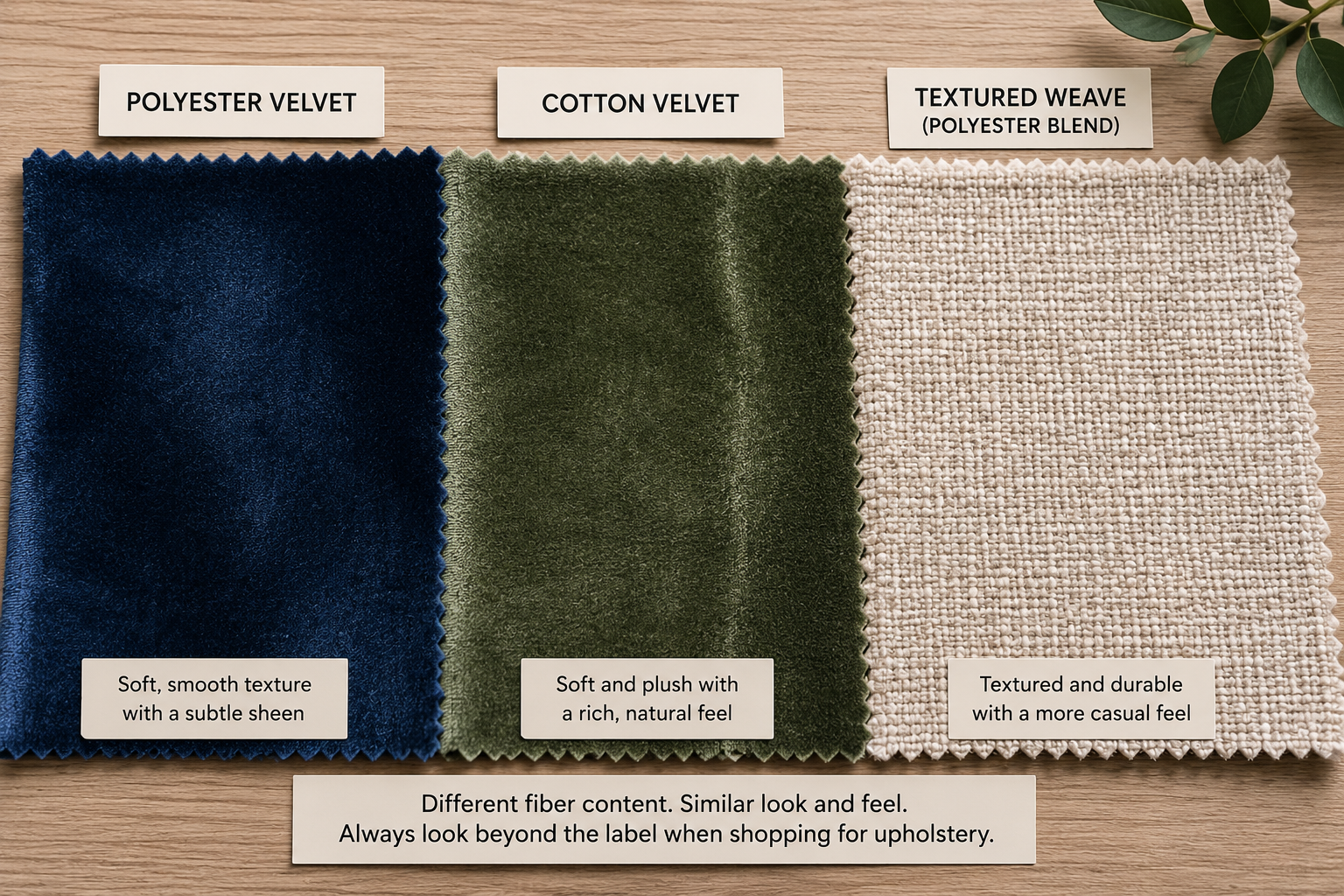
AI-generated image: Upholstery fabric swatches demonstrating how different fiber contents and fabric constructions can create a similar look and feel. While polyester and velvet are often discussed as if they are competing materials, they actually describe different characteristics of a fabric.
Why Some Furniture Retailers Say "Polyester Upholstery" Instead of "Velvet"
After learning the difference between polyester and velvet, the next question becomes obvious:
Why don't some retailers simply tell us that?
It's something I've wondered myself while shopping for furniture. If a fabric clearly looks and feels like velvet, it seems like that would be one of the first details worth mentioning.
The reality is that some furniture retailers focus primarily on technical specifications rather than sensory descriptions. Product pages are often built around manufacturing details, dimensions, materials, and care instructions. From their perspective, listing the fiber content provides clear and measurable information.
That's where terms like polyester, cotton, linen, rayon, and acrylic come into play.
The challenge is that those words don't necessarily tell shoppers what they can expect when they actually sit on a sofa or run their hand across a dining chair.
To make things even more confusing, fabric terminology isn't always used consistently across the furniture industry. One retailer may describe a chair as velvet, while another might use terms such as performance fabric, plush upholstery, or simply polyester upholstery for a fabric that feels very similar.
I've noticed this especially when sourcing furniture online for clients. Two products can have nearly identical textures, yet their descriptions look completely different. One may proudly highlight its velvet upholstery, while the other only lists the fiber content in the specifications.
This is one reason I encourage homeowners to look beyond the product title and spend a few extra moments reviewing photos, close-up fabric images, and customer reviews.
Personally, I wish more retailers would include simple texture descriptions alongside the technical information. A phrase like "soft velvet-like finish" or "low-pile plush texture" would instantly give shoppers a better idea of what they're purchasing.
After all, most people don't experience furniture through a specification sheet. They experience it through sight, touch, and comfort.
Knowing that a chair is made from polyester may be helpful. Knowing that it feels similar to velvet is often what helps someone decide whether it's the right fit for their home.
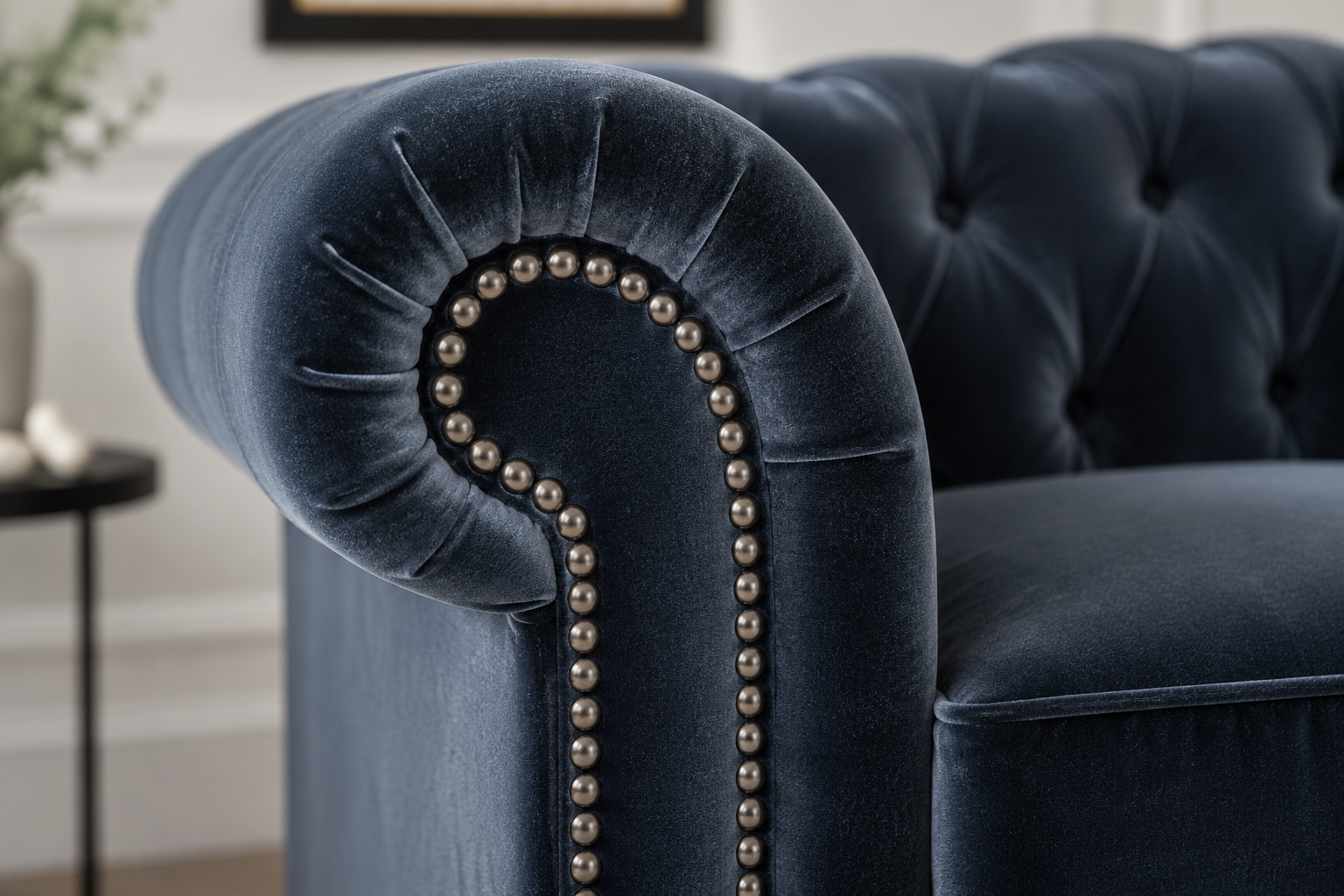
AI-generated image: A close-up view of a velvet-upholstered Chesterfield sofa arm featuring decorative nailhead trim. Images like this help illustrate how velvet and velvet-like polyester fabrics catch light differently across the surface, creating the rich texture and subtle sheen many homeowners associate with luxury upholstery.
Why Some Polyester Fabrics Feel Like Velvet
This is especially common with dining chairs, sofas, upholstered beds, benches, ottomans, and accent chairs. Some fabrics are marketed as velvet, while others may be described as performance velvet, plush upholstery, soft-touch fabric, or simply polyester upholstery.
The result is that two pieces of furniture can feel remarkably similar even though their product descriptions look completely different.
As a designer, I've found that photos can provide a few clues when you're shopping online. If a fabric appears to have a slight sheen, shows light and dark variations across the surface, or looks soft enough that you can almost imagine running your hand across it, there's a good chance it has some of the characteristics people associate with velvet.
Of course, photos only tell part of the story.
Whenever fabric swatches are available, I always recommend requesting them before making a major furniture purchase. Seeing the fabric in your home and feeling it in person will tell you far more than a product description ever can.
I also encourage my clients to visit local furniture stores whenever possible. Even if you're planning to purchase furniture online, spending some time sitting on sofas, testing dining chairs, and feeling different fabrics in person can be incredibly helpful. It gives you a much better understanding of how various materials look, feel, and perform in everyday life.
That's especially important if texture plays a big role in your decision. What feels soft and luxurious to one person may feel too formal or high-maintenance to someone else.
Furniture is something you interact with every day, which is why understanding how a fabric feels can be just as important as understanding what it's made from.
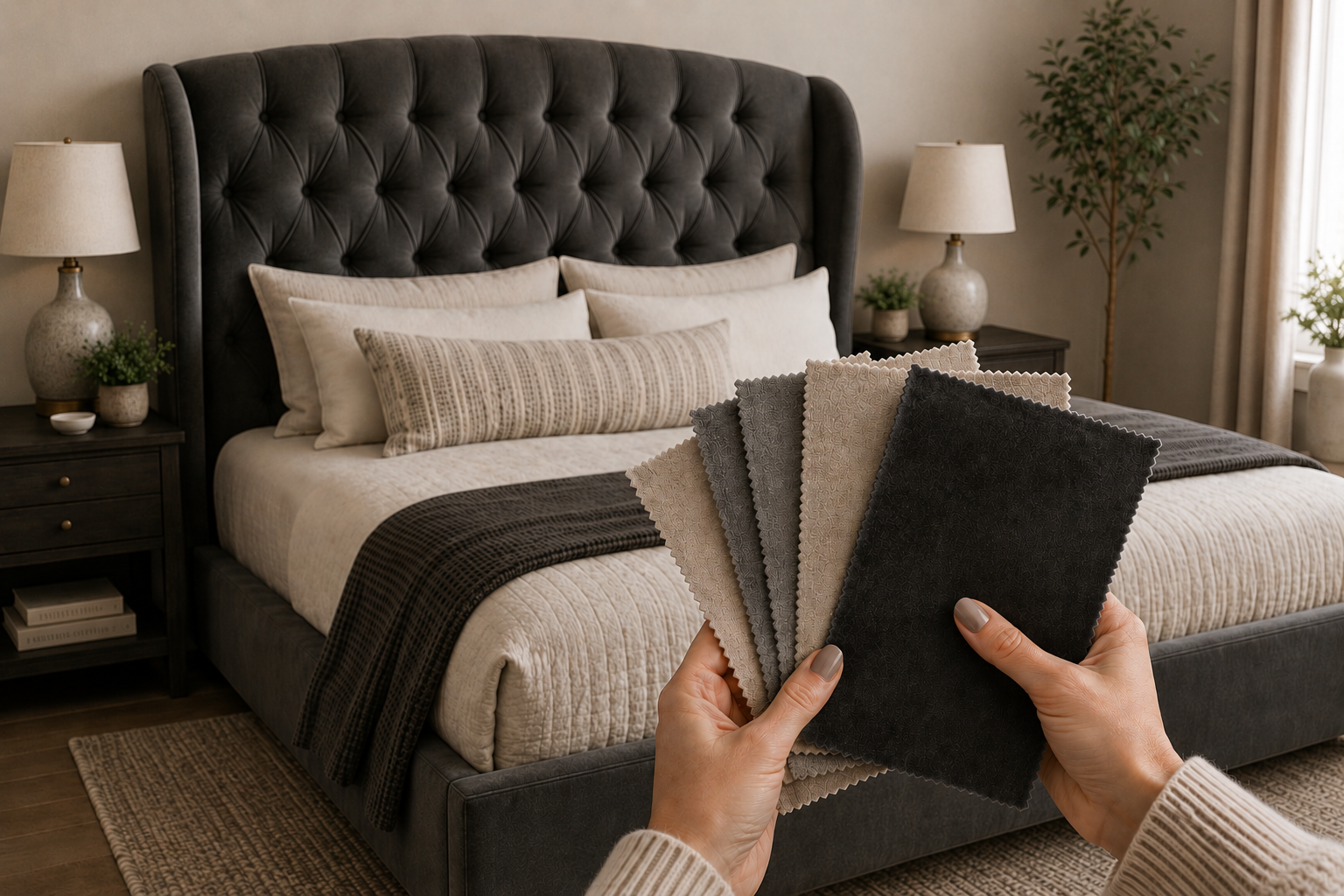
AI-generated image: Fabric swatches held in front of a charcoal upholstered bed, illustrating how viewing materials in a room setting can help homeowners evaluate color, texture, and overall compatibility before purchasing furniture. Fabric swatches are one of the most effective ways to understand how upholstery may look and feel in your home.
How to Get a Better Sense of Fabric Texture When Shopping Online
Shopping for furniture online has never been easier, but one challenge remains: you can't reach through the screen and touch the fabric.
That's why I always encourage homeowners to slow down and gather as much information as possible before making a purchase, especially when fabric texture is important to them.
One of the first things I look at is the product photography. Close-up images can often reveal details that aren't mentioned in the description. Pay attention to how the fabric reflects light, whether it has visible texture, and if the surface appears smooth, plush, or heavily woven.
I also recommend scrolling through customer photos whenever they're available. Professional product photography is helpful, but customer images often show how a fabric looks under real-world lighting conditions. Sometimes you'll notice details in those photos that aren't obvious in the retailer's marketing images.
If fabric swatches are offered, take advantage of them. A small swatch can tell you a lot about color, texture, softness, and overall quality before committing to a larger purchase.
If the furniture you're considering isn't available locally or is located too far away for you to see in person, don't hesitate to contact the retailer directly. Many furniture retailers offer live chat features on their websites where you can ask questions about the upholstery, texture, durability, or overall feel of a fabric.
This is something I do from time to time when sourcing furniture for my virtual interior design clients. If I'm unsure how a fabric compares to another material or need clarification beyond what's listed online, reaching out to the retailer can often provide valuable information that isn't included in the product description. A quick conversation may help you avoid surprises and feel more confident in your purchase.
Another helpful approach is reading reviews carefully. Many shoppers describe how a fabric feels in their own words, which can provide valuable insight that may not appear anywhere in the official product description. Comments such as "softer than expected," "similar to velvet," or "more textured than it appears online" can help paint a clearer picture.
And whenever possible, visit local furniture stores to experience different fabrics in person. Even if you're not considering a specific brand or model, touching a variety of upholstery materials can help you develop a better understanding of the differences between velvet, chenille, bouclé, linen blends, and other common fabrics.
I often encourage my clients to do this, even when they're planning to purchase furniture online. Spending time sitting on sofas, testing dining chairs, and feeling different fabrics in person provides a much clearer understanding of what to expect than relying solely on product photos and descriptions.
The more familiar you become with furniture fabrics, the easier it becomes to interpret online product descriptions.
Over time, you'll start recognizing visual clues and terminology that help you predict how a fabric may feel before it ever arrives at your door.
While online shopping offers convenience, combining product photos, reviews, fabric swatches, retailer support, and in-person research can help eliminate much of the guesswork and lead to a purchase you'll feel confident about.
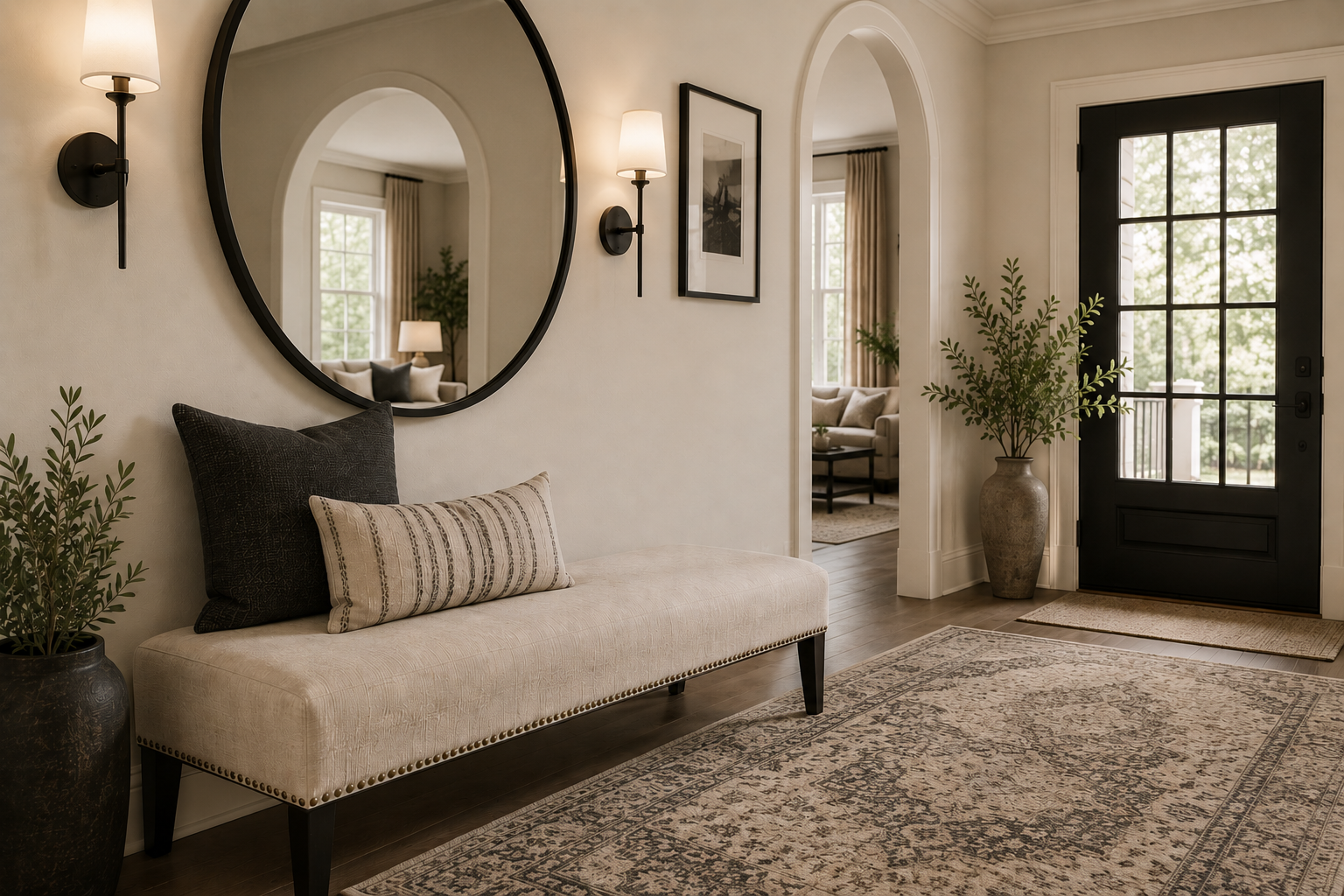
AI-generated image: A welcoming foyer featuring an upholstered entry bench, demonstrating how texture plays an important role in furniture selection. Whether you're shopping for a bench, dining chair, sofa, or upholstered bed, understanding how a fabric looks and feels can help you make more confident purchasing decisions.
What I Wish More Furniture Retailers Would Tell Shoppers
After working with hundreds of homeowners over the years, I've learned that many people don't struggle with choosing furniture—they struggle with understanding what they're actually buying.
Dimensions, materials, and specifications are all important. They help shoppers compare products and determine whether a piece will fit their space and lifestyle.
But when it comes to upholstery, texture matters just as much.
A fabric can be durable, easy to maintain, and pet-friendly, but if it doesn't feel the way someone expected, the furniture may still end up being a disappointment.
That's why I wish more furniture retailers included simple descriptions of how a fabric feels in addition to the technical specifications.
For example, phrases such as "soft velvet-like texture," "smooth brushed finish," "plush upholstery," or "heavily textured weave" can give shoppers a much clearer understanding of what to expect before making a purchase.
Those descriptions don't need to replace information about fiber content. Both details serve a purpose. Instead, I believe they should work together to create a more complete picture.
When I'm sourcing furniture for clients, I'm not just looking at dimensions, colors, and materials. I'm also thinking about how the piece will feel when someone sits down at the end of a long day, rests their arm on an upholstered chair, or walks into a room and experiences the overall look and texture of the space.
Furniture isn't only visual. It's something we interact with every day.
Shoppers can still make informed decisions, even when product descriptions leave a few questions unanswered. Looking closely at photos, requesting fabric swatches, reading reviews, visiting local furniture stores, and reaching out to retailers for clarification can all help fill in the gaps.
So the next time you see a furniture listing that simply says "polyester upholstery," don't assume you know exactly how it will feel.
It may be smooth and tailored. It may be textured and woven. Or it may have the soft, rich feel that many people associate with velvet.
Sometimes, the most important details aren't what a fabric is made from—they're how that fabric feels when you experience it in person.