Ask Joshua: Should Bathroom Floor Tile Match Shower Tile?
Hi Joshua,
I’m in the process of renovating my bathroom, and I’m a little confused about whether the bathroom floor tile and shower tile are supposed to match. A few friends have told me that I should use the same tile throughout the bathroom to make everything look cohesive, while others think the shower should have a different tile to add some contrast.
I’ve seen bathrooms that look great both ways, so now I’m not sure which direction to go. Is there a general rule for this? Should the bathroom floor tile match the shower tile, or is it okay to mix different tiles without making the bathroom look too busy?
I’ve seen you answer a lot of interior design questions like this, so I thought I’d ask!
Thanks,
Greg - Coeur d’Alene, Idaho
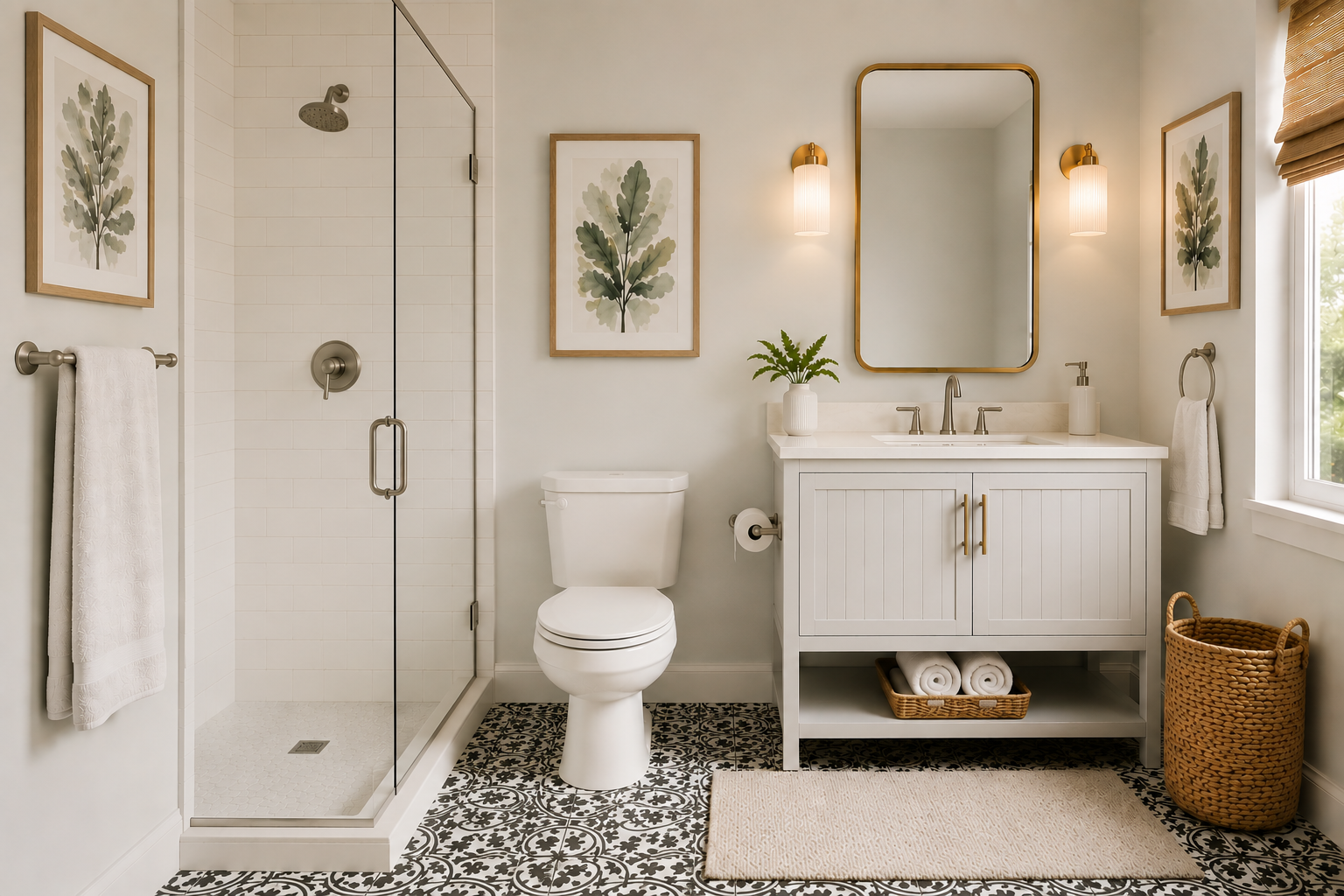
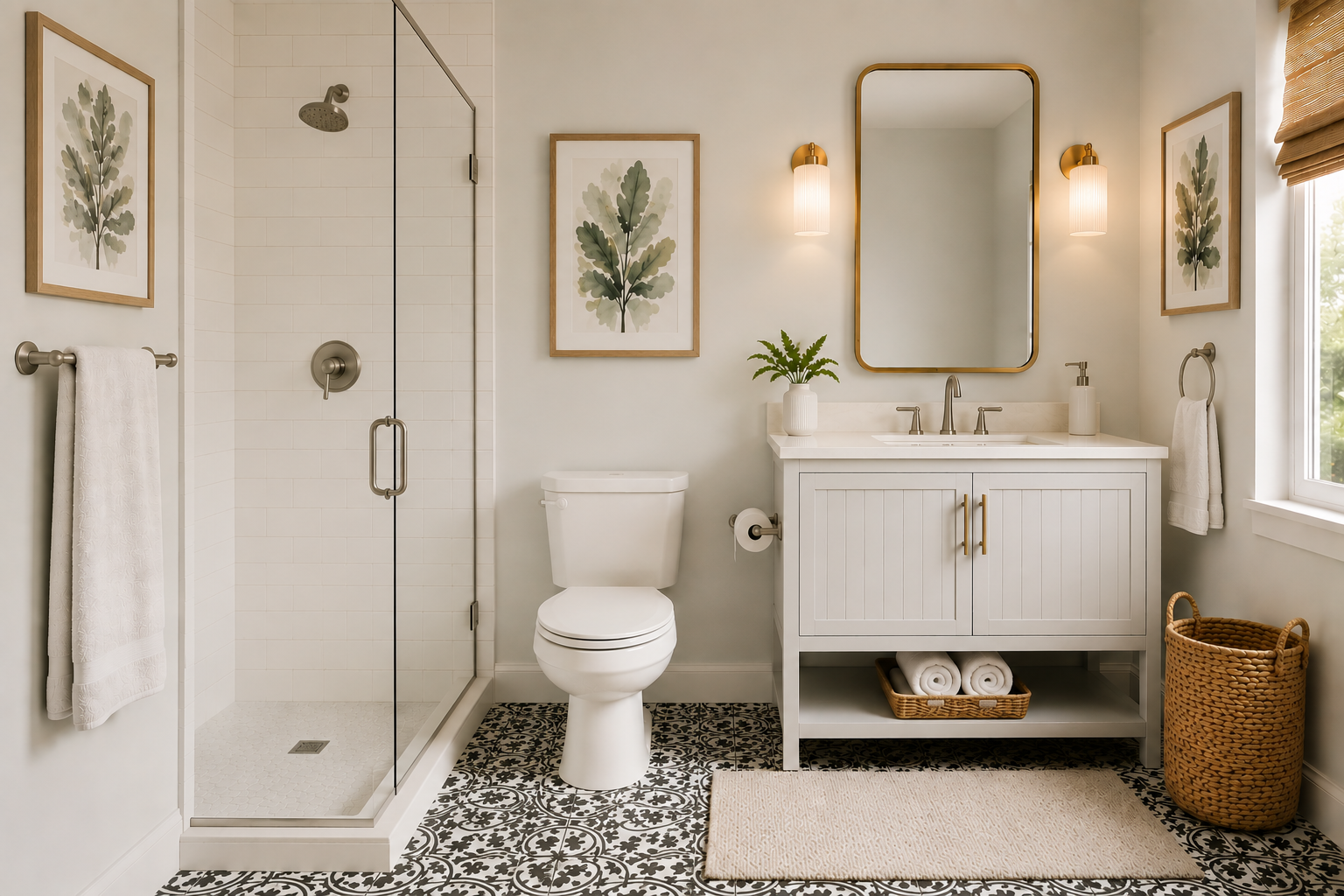
Bathroom designed by virtual interior designer Joshua Jones of JJones Design Co., featuring patterned floor tile, white shower tile, a white vanity, warm brass accents, and natural details. AI rendering created to visualize his original design.
Hi Greg,
This is a great question, and it’s something many homeowners struggle with when selecting tile for a bathroom remodel. The short answer is no, your bathroom floor tile does not need to match your shower tile. In fact, I often prefer using different but coordinating tiles because they can give the bathroom more depth, character, and visual interest.
The key word here is coordinating. Your tiles don't need to match, but they should feel like they belong in the same bathroom.
When I Prefer Different Tiles
Using different tiles on the bathroom floor and in the shower is a great way to create contrast. For example, you might use a larger-format neutral porcelain tile on the bathroom floor with a smaller mosaic on the shower floor and a coordinating tile on the shower walls.
You can also let one tile become the focal point. If you choose a beautiful patterned, colorful, or textured shower tile, I generally recommend keeping the bathroom floor quieter. If the floor is the statement, let the shower tile play a supporting role.
Pay attention to undertones as well. Two beige, white, or gray tiles aren't automatically going to coordinate simply because they're technically the same color. Always look at your samples together before making your final selections.
When Matching Tile Works
There’s also nothing wrong with using the same tile throughout the bathroom. It can create a clean, minimal, and seamless appearance, especially in a smaller bathroom.
You don't necessarily have to use the tile in exactly the same format. For example, you could use a large-format tile across the bathroom floor and shower walls with a smaller mosaic version from the same collection on the shower floor.
Don't Forget About the Shower Floor
Your shower floor has practical requirements beyond appearance. Not every bathroom floor tile is appropriate for a shower floor.
Shower floors need adequate traction when wet, and smaller tiles are commonly used because the additional grout lines provide grip and allow the tile to follow the slope toward the drain. Always make sure the tile you're considering is recommended by the manufacturer for shower-floor use.
What About the Shower Niche?
Your shower niche should also be part of the overall tile plan.
You can continue the shower wall tile into the niche for a clean, seamless look, or repeat the shower floor mosaic inside the niche to connect the two areas. Both are approaches I frequently prefer because you're repeating an existing material rather than introducing yet another tile.
You certainly can use a decorative tile in the niche, but be careful. If you already have several tiles or patterns in the bathroom, adding another accent tile inside the niche can quickly make the shower feel too busy.
How Many Tiles Are Too Many?
This is where restraint becomes important.
Bathroom floor tile, shower floor tile, shower wall tile, and a separate niche tile can potentially give you four different tiles in one relatively small room. Individually, they might all be beautiful, but together they can compete for attention.
Rather than focusing on a strict number, I recommend making sure every tile has a purpose. Repeat materials where you can, choose one area to be the focal point, and allow the other surfaces to support it.
So, Greg, don't feel obligated to match your bathroom floor tile to your shower tile. It isn't a design rule.
Focus less on whether the tiles match and more on whether they work together. Whether you choose one tile or several coordinating tiles, that relationship between the materials is what will make your finished bathroom feel cohesive and thoughtfully designed.
I hope this helps with your bathroom remodel!
Warmly,
Joshua
Have interior design related questions? You can ask Joshua here.