Ask Joshua: Should Every Room in a House Be the Same Style?
Hi Joshua,
My husband and I recently purchased our first home here in Des Moines, and we’re really excited about it. Now that we’ve started decorating, we’ve been wondering about something that keeps coming up in our conversations.
Should every room in a house be the same style, or is it okay for different rooms to have different decorating styles? Our home has an open-concept layout, so we were thinking the living room, dining area, and kitchen would all stay in the same style for a cohesive look. But we’re also tempted to have a little fun in smaller spaces like the powder room, guest bedroom, or home office with something different.
Do rooms in a house need to match for good design flow, or can you mix styles throughout a home without it looking disconnected?
We love your work and would really appreciate hearing your thoughts.
Thank you,
Christine in Des Moines, Iowa
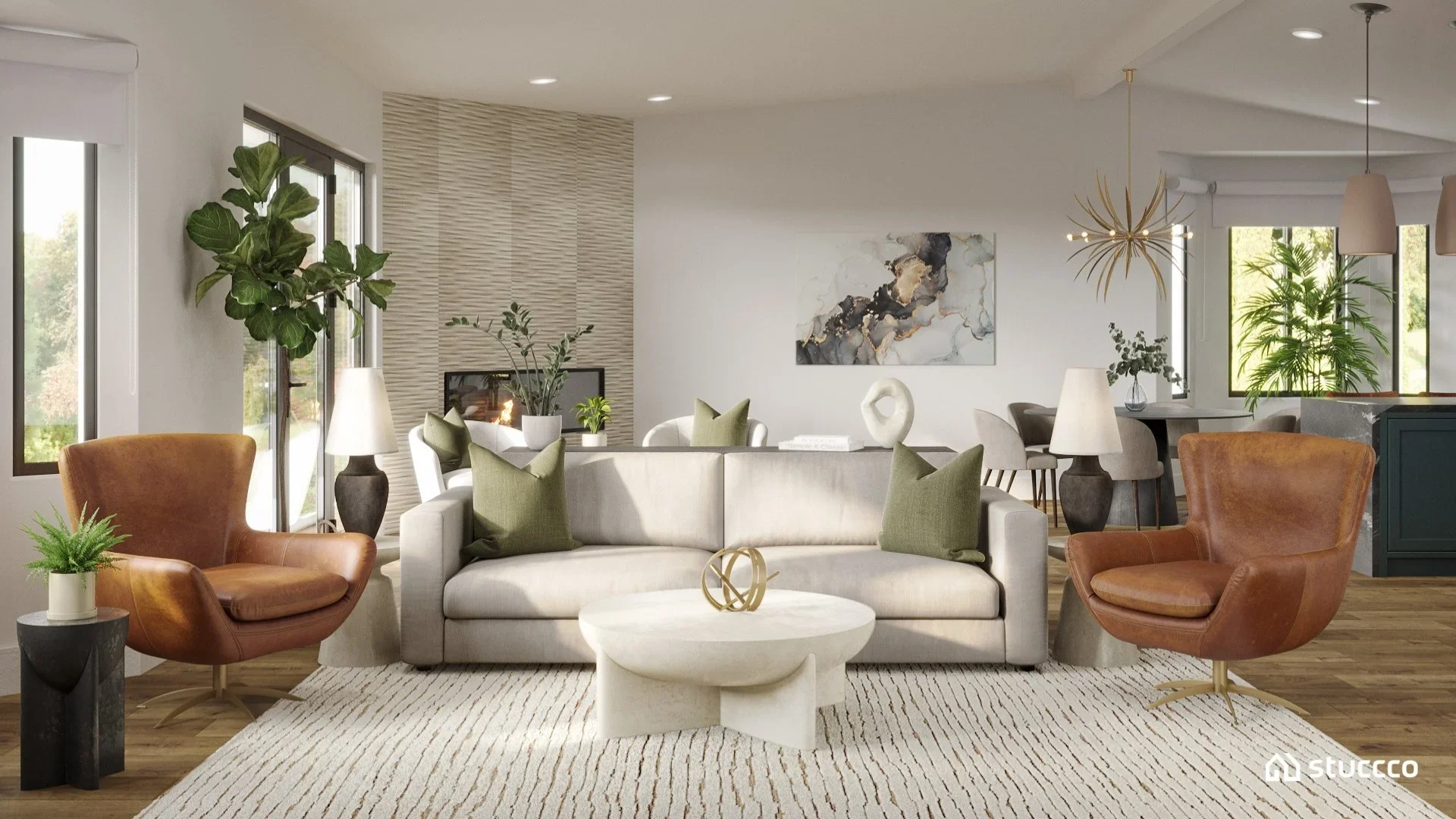
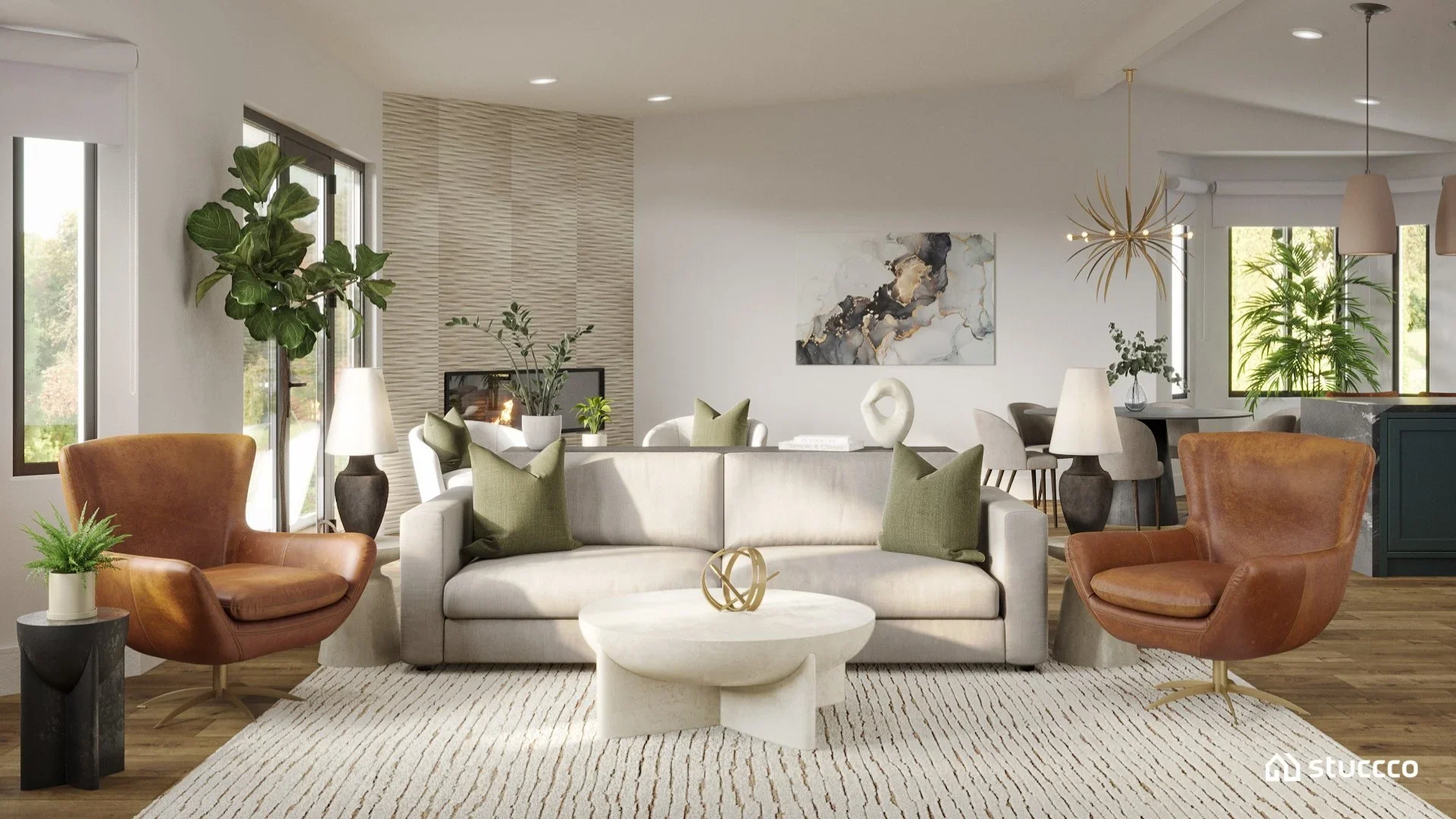
Open-concept living and dining room designed by Joshua Jones of JJones Design Co., showing how connected spaces can share a cohesive interior design style. 3D rendering by Stuccco.
Hi Christine,
Congratulations on your first home! This is a great question and one that comes up often when people start decorating a new house.
The short answer is no—every room in a house does not need to be the same style. In fact, most well-designed homes include a mix of styles and personalities from room to room. What matters more than matching styles is creating a sense of overall cohesion, especially in areas that are visually connected.
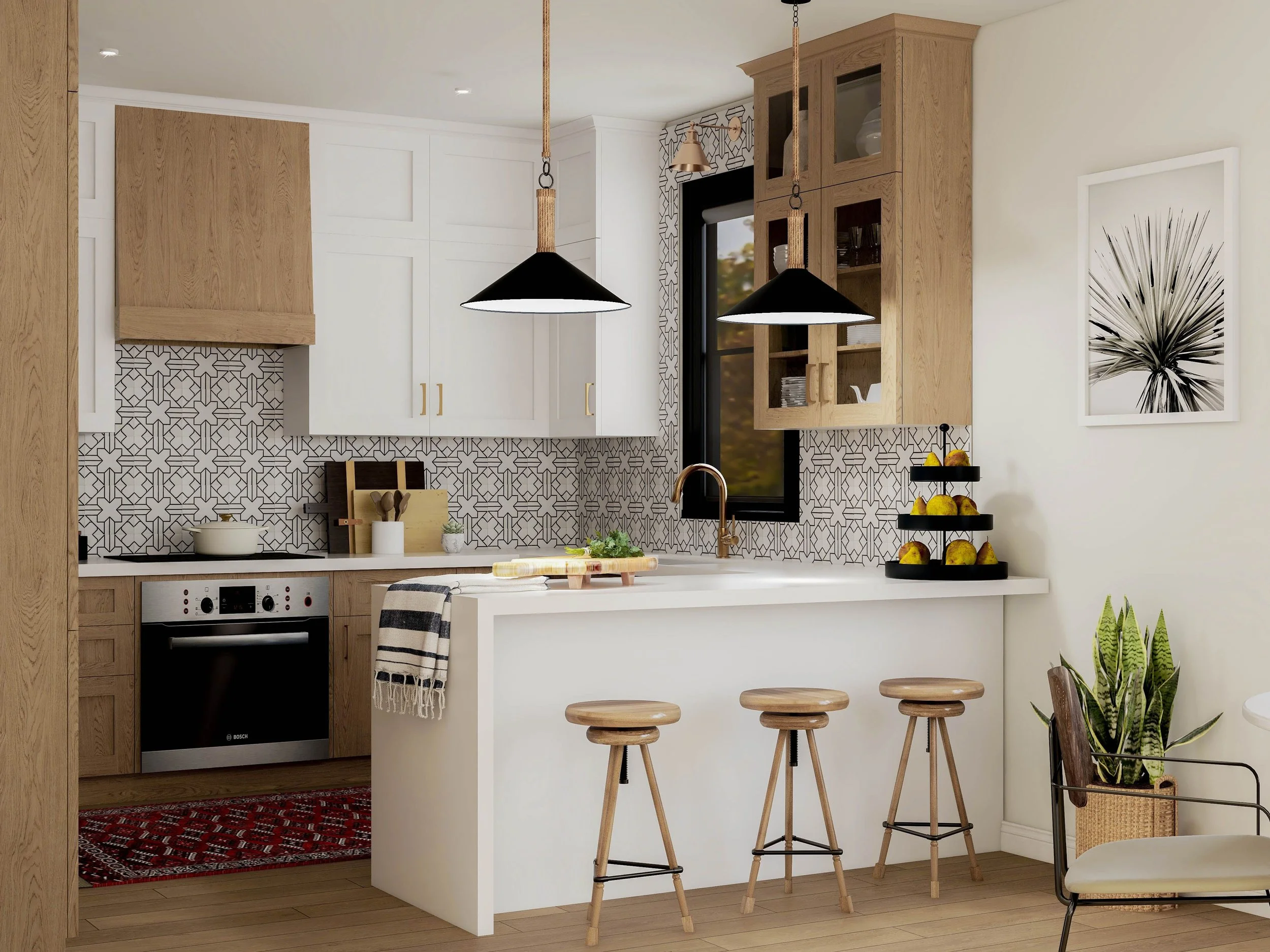
Since your home has an open-concept layout, it’s a good idea for the main spaces—like the living room, dining area, and kitchen—to share a similar design language. This doesn’t mean everything has to match perfectly, but repeating certain elements such as color tones, materials, or shapes helps those spaces feel connected.
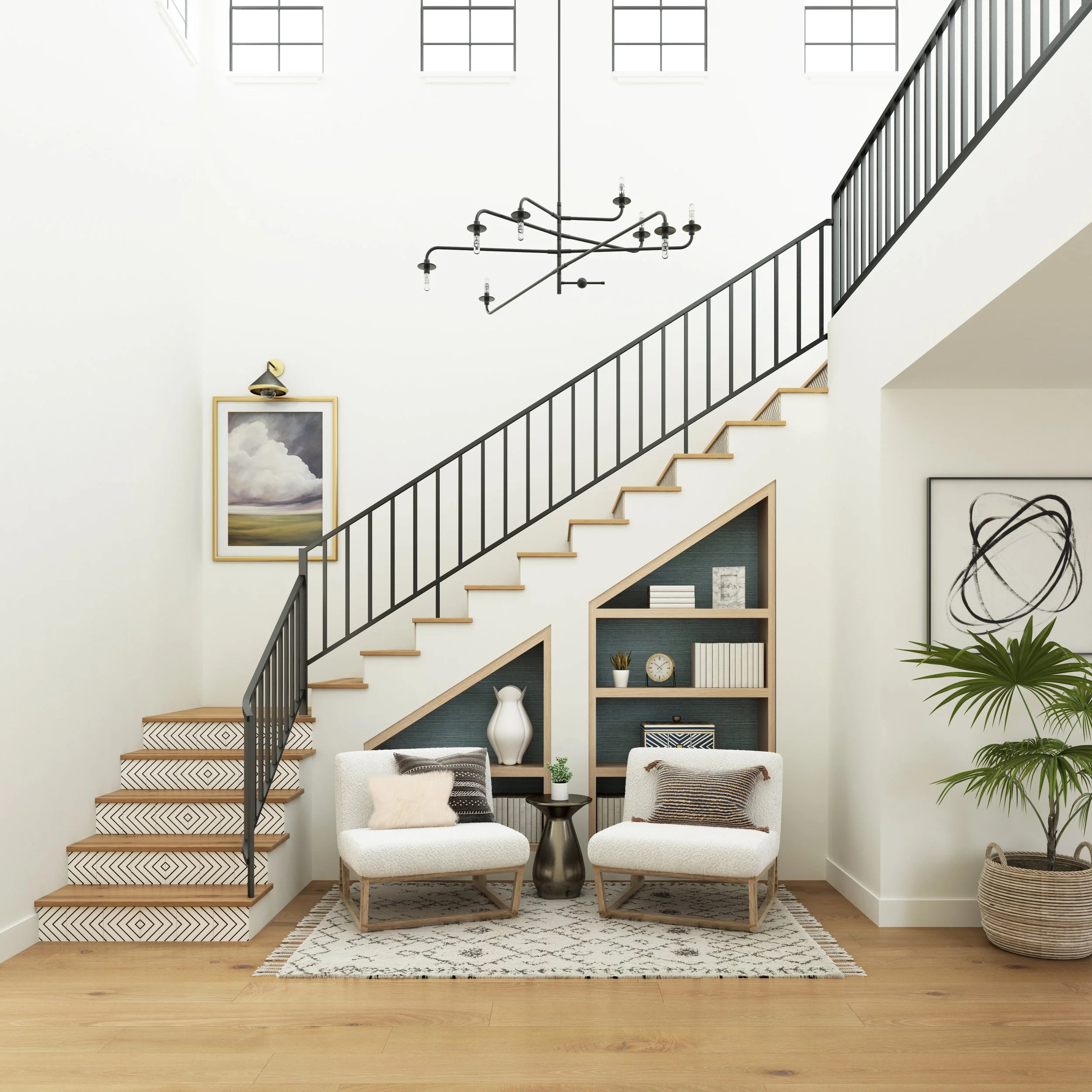
Where you can have more freedom is in smaller or more private rooms. Spaces like powder rooms, guest bedrooms, or a home office are great opportunities to introduce a slightly different style, color palette, or mood. Because these rooms are separate from the main living areas, they can have their own personality without disrupting the overall flow of the home.
A helpful way to think about it is this: your home should feel cohesive, not identical. When certain materials, colors, or design elements repeat throughout the house, the spaces naturally relate to one another—even if each room has its own character.
Many designers actually use smaller rooms as a chance to be a little more playful or experimental with wallpaper, color, or décor. It keeps the home interesting while still maintaining a sense of balance overall.
So don’t feel pressured to make every room follow the exact same style. A well-designed home often tells a story room by room while still feeling connected as a whole.
If you’re planning to decorate multiple rooms in your home and want to make sure everything feels cohesive, working with a designer can make the process much easier. As a virtual interior designer, I regularly help clients create homes where each room has its own personality while still feeling connected to the rest of the house. If you’d like help developing a clear design direction for your space, you can learn more about my virtual interior design services.
Warmly,
Joshua
Have interior design related questions? You can ask Joshua here.