How the Pandemic Is Changing the Way We Live at Home
Editor’s Note (2026 Update):
This post was originally written during the early stages of the COVID-19 pandemic. While many of these observations reflected what we were experiencing at the time, some of those changes have since evolved into longer-term shifts in how we live at home.
If you’re curious how these ideas have held up over time, you can read my follow-up post here.
Since earlier this year, the pandemic has affected all of us in one way or another. As an interior designer working primarily through virtual design, I’ve seen a clear shift in how people are thinking about their homes and personal spaces. Rooms that once had a single purpose are now being reworked to serve multiple roles—home offices, homeschooling areas, or even temporary spaces for self-quarantine to create distance from family members or roommates.
For many people, the home is no longer just a place to relax at the end of the day—it has quickly become the center of daily life. This shift has forced homeowners to rethink how their spaces function in ways they may have never considered before.
Before diving deeper into this topic, I want to be clear that I’m speaking from my own experience working on e-design projects with clients, along with my observations from reviewing and mentoring projects for other designers through the platform I contract with. Some of these changes may seem expected, but others have been more surprising than I anticipated.
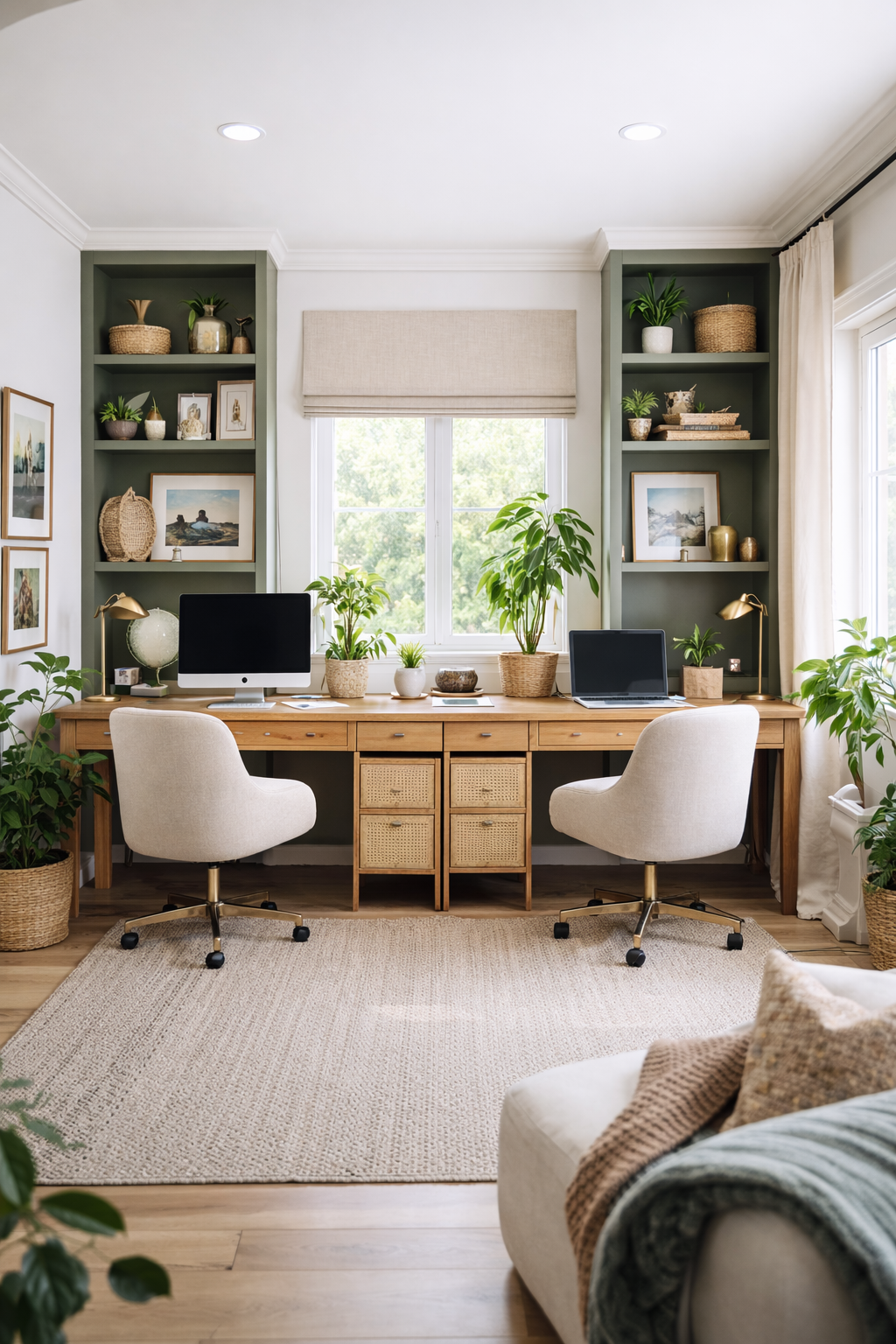
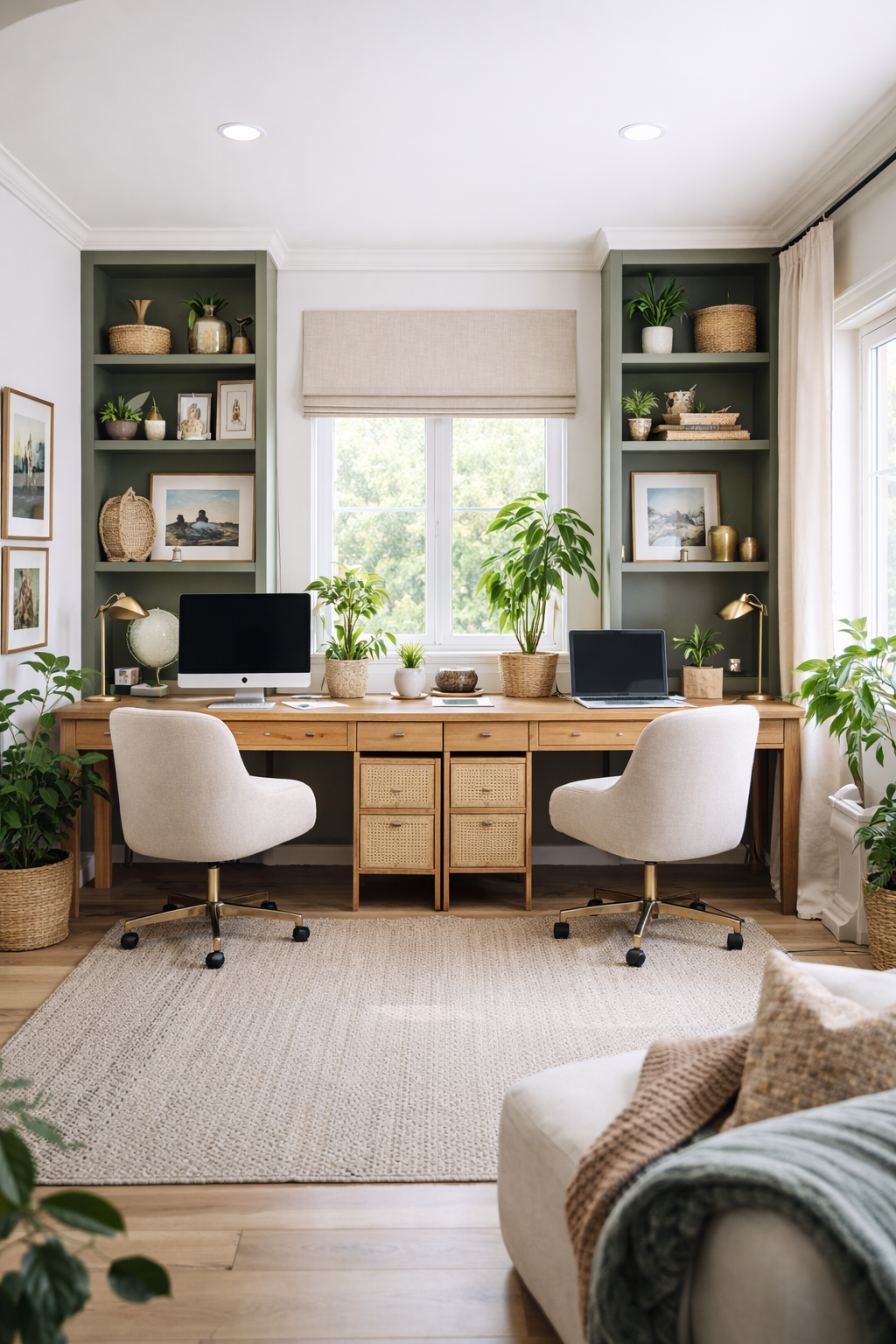
AI-generated image created to illustrate a two-person home office concept
The Demand for the Home Office Has Skyrocketed
The home office is certainly nothing new, but when COVID hit and non-essential businesses began to close, it forced a sudden and widespread shift to working from home. Almost overnight, homes that were never designed for full-time work had to adapt.
For those lucky enough to already have a dedicated home office, a new challenge quickly emerged—most of these spaces were designed for one person. Many couples suddenly found themselves working from home at the same time, needing a space that could comfortably support two people without sacrificing productivity. This often meant rethinking layouts, adding additional work surfaces, or finding creative ways to divide the room.
For others, a dedicated office simply wasn’t an option. I’ve seen many clients begin converting guest bedrooms into functional workspaces. When that’s not available, spaces like living rooms, dining areas, or even primary bedrooms are being reworked into multi-functional environments that can support both daily living and work needs.
One unexpected trend that has stood out to me is the growing interest in tiny homes or backyard office structures. Whether purchased prefabricated or custom-built, these small, separate spaces offer a practical solution—minimal commute, fewer distractions, and a clear boundary between work and home life. It’s a thoughtful approach that allows for a highly personalized workspace that still feels distinct from the main home, and it’s a concept I find especially compelling.
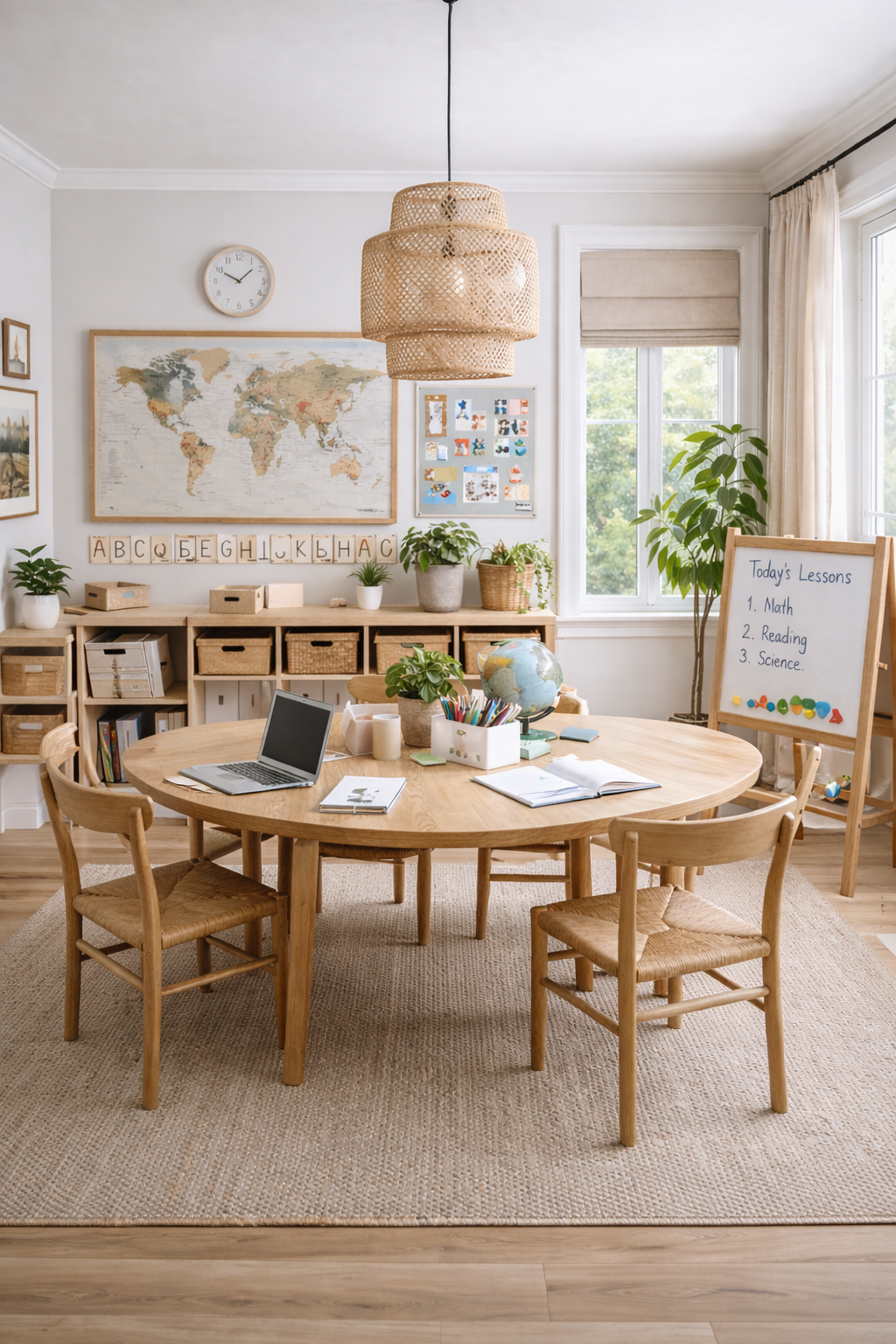
AI-generated image created to illustrate a homeschooling setup within a dining room
The Rise of Homeschooling
With schools forced to shut down and many still not reopening for in-person instruction, parents have had to quickly step into a new role—educator. Almost overnight, homes needed to support not just work, but also structured learning environments for children.
This shift has created a growing need for dedicated spaces that help kids stay focused and engaged with schoolwork. I’ve worked with several e-design clients to repurpose rooms into temporary or even semi-permanent classroom setups. Much like the challenges we’re seeing with home offices, families are adapting existing spaces such as dining rooms, guest bedrooms, and bonus rooms to serve a completely new function.
In many cases, these solutions need to be flexible and cost-conscious. Most clients are not looking to invest heavily in permanent built-ins or major renovations, knowing that children will eventually return to school. Instead, the focus has been on creating practical, adaptable setups that can support learning now, while still allowing the space to transition back to its original use in the future.
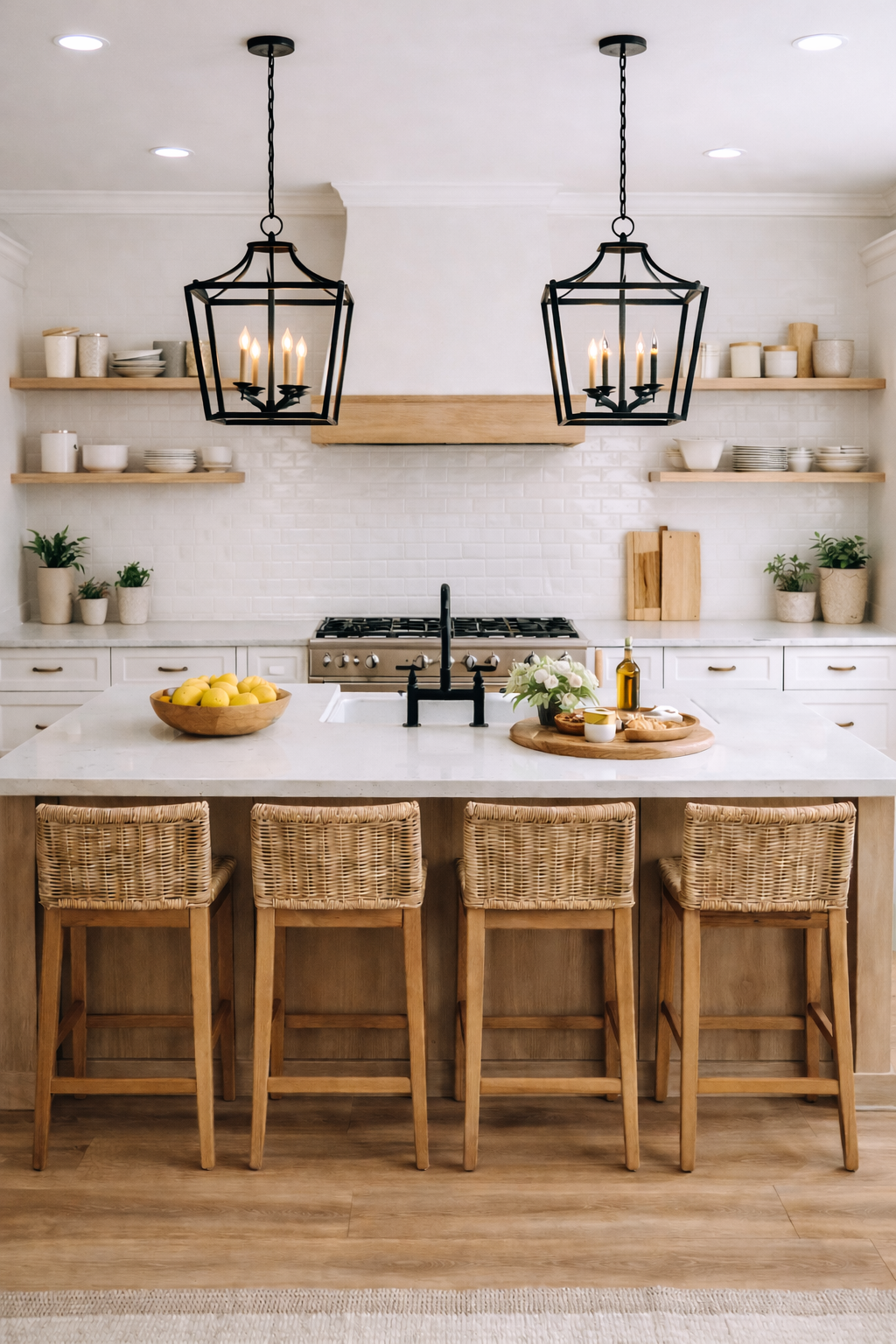
AI-generated image created to illustrate a modern farmhouse kitchen concept
The Kitchen Just Keeps Getting Bigger
The kitchen has long been considered the heart of the home, but that has become even more apparent during the pandemic. With more time spent at home during lockdown, many people are turning to cooking and baking—whether to learn something new or simply to pass the time in a meaningful way.
Before COVID, when you weren’t spending as many hours in the kitchen, it was easy to overlook small frustrations or design details that didn’t quite work. Now, with so much more time spent in this space, those same details feel much more noticeable—and often become the motivation for change.
In several recent projects, I’ve seen clients focus on simple, budget-friendly updates such as painting cabinets or replacing hardware. These smaller changes don’t require a major investment but can dramatically refresh a tired kitchen and make it feel more enjoyable to use on a daily basis.
At the same time, some homeowners are thinking bigger. I’ve also worked with clients who are removing walls to expand their kitchens, turning them into a more central, open part of the home. As the kitchen continues to take on a larger role in everyday life, investing in this space—whether through small updates or larger renovations—can make a meaningful difference both in how the home functions and in its overall value.
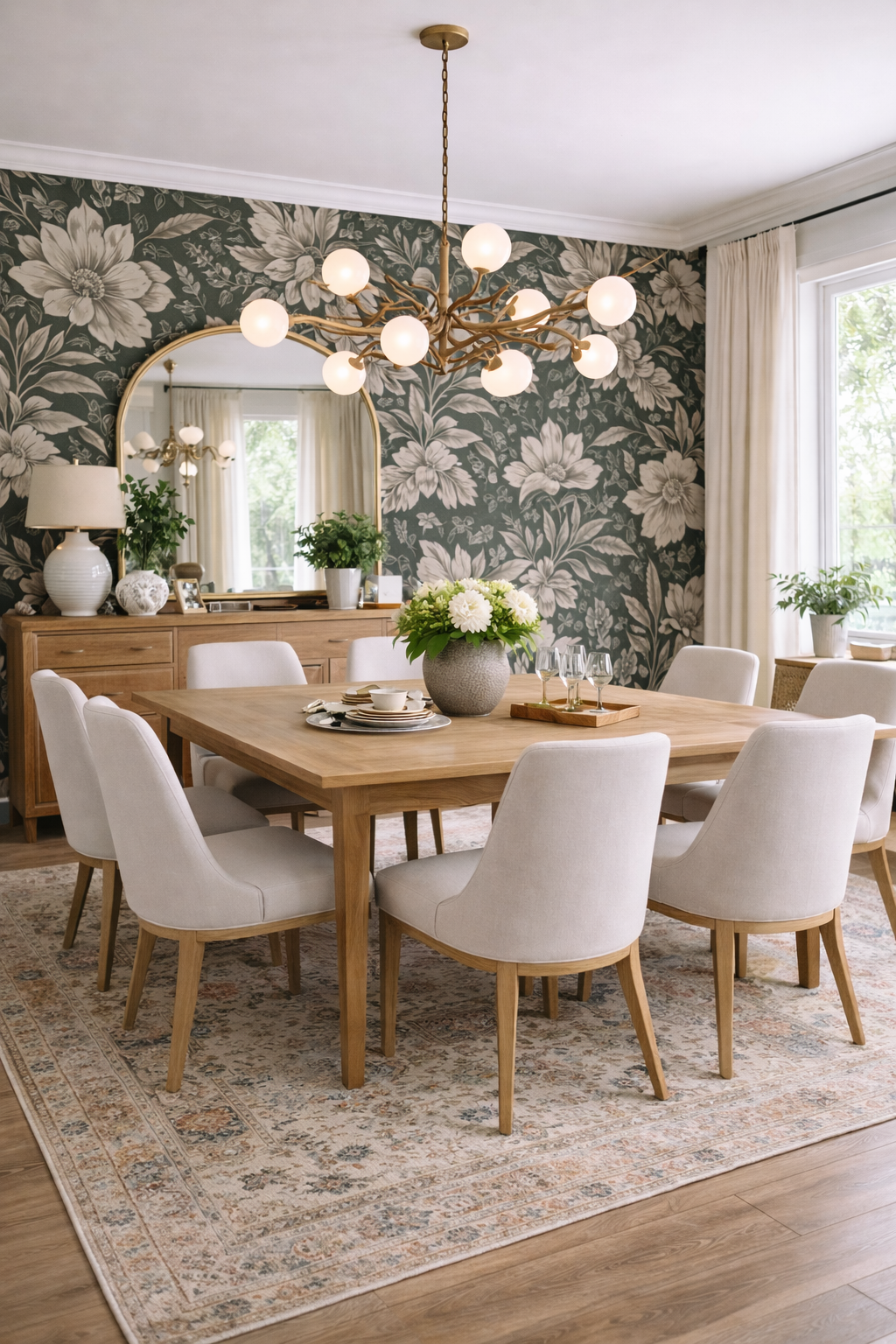
AI-generated image created to illustrate a dining room with a bold accent wall and statement lighting
The Dining Room Is No Longer Taken for Granted
Yes, you read that right. Over the past few months, I’ve heard from many clients who have begun to re-evaluate their priorities after being forced to stay at home. One thing that keeps coming up is the importance of spending quality time with loved ones—and not wanting to take that time for granted.
As a result, the dining room is starting to reclaim its role as a meaningful gathering space within the home. It’s no longer just reserved for formal occasions or a few holidays each year. Instead, it’s becoming a place where families come together daily—sharing meals, playing board games, and creating moments of connection when it’s needed most.
I’ve seen a noticeable increase in dining room projects, with clients looking to make these spaces more functional, comfortable, and visually inviting. In many cases, dining rooms had previously been repurposed as home offices, playrooms, or even storage areas. Now, the goal is to bring them back to life while still allowing for flexibility.
This often involves incorporating smart storage solutions and thoughtful layouts that support multiple uses without sacrificing the room’s primary purpose. At the same time, clients are becoming more open to adding personality—whether through bold color choices, statement lighting, or unique design elements that make the space feel more enjoyable to spend time in. These are the kinds of transformations I especially enjoy working on, as they bring both function and meaning back into the home.
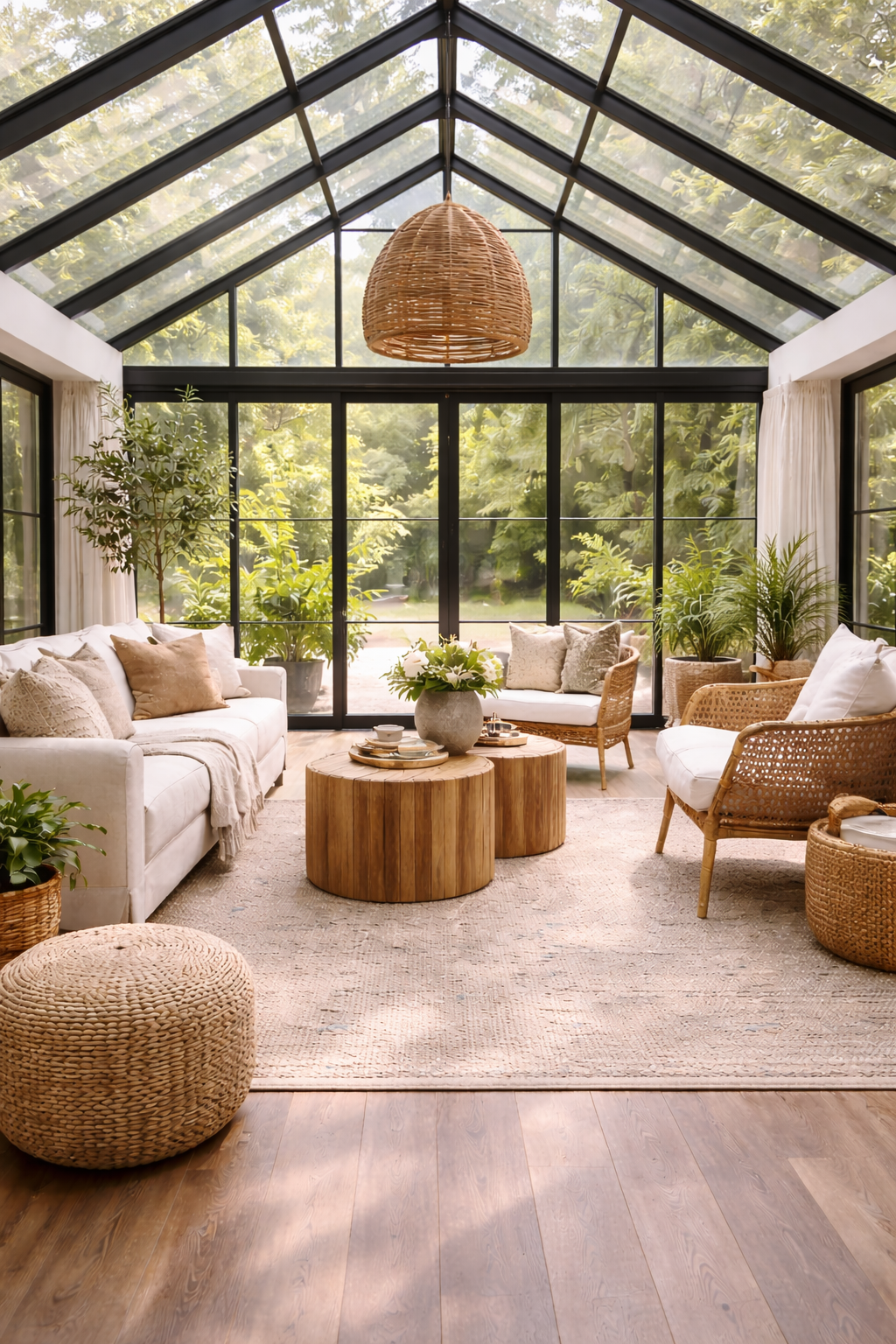
AI-generated image created to illustrate a modern sunroom retreat concept
The Sunroom Is Making a Comeback
A sunroom—typically defined as a light-filled space with expansive windows—has long been more common in Southern and East Coast homes. Lately, however, I’ve been seeing a growing interest in sunrooms across different parts of the country, with more homeowners either adding them on or rethinking underused spaces to capture more natural light.
While it’s difficult to pinpoint one specific reason for this shift, it likely ties back to how much more time we’re all spending at home. There’s a stronger desire to create spaces that feel open, calming, and connected to the outdoors—especially when access to public spaces has become more limited.
Sunrooms offer a unique balance of comfort and escape. Filled with natural light, greenery, and softer furnishings, these spaces can serve as a place to unwind, recharge, or simply take a break from the more functional areas of the home. In a time when the home is expected to do so much, having even a small retreat like this can make a meaningful difference.
I’ve always been drawn to sunrooms for their relaxed, uplifting atmosphere, and it’s a space I would love to create in my own home someday.
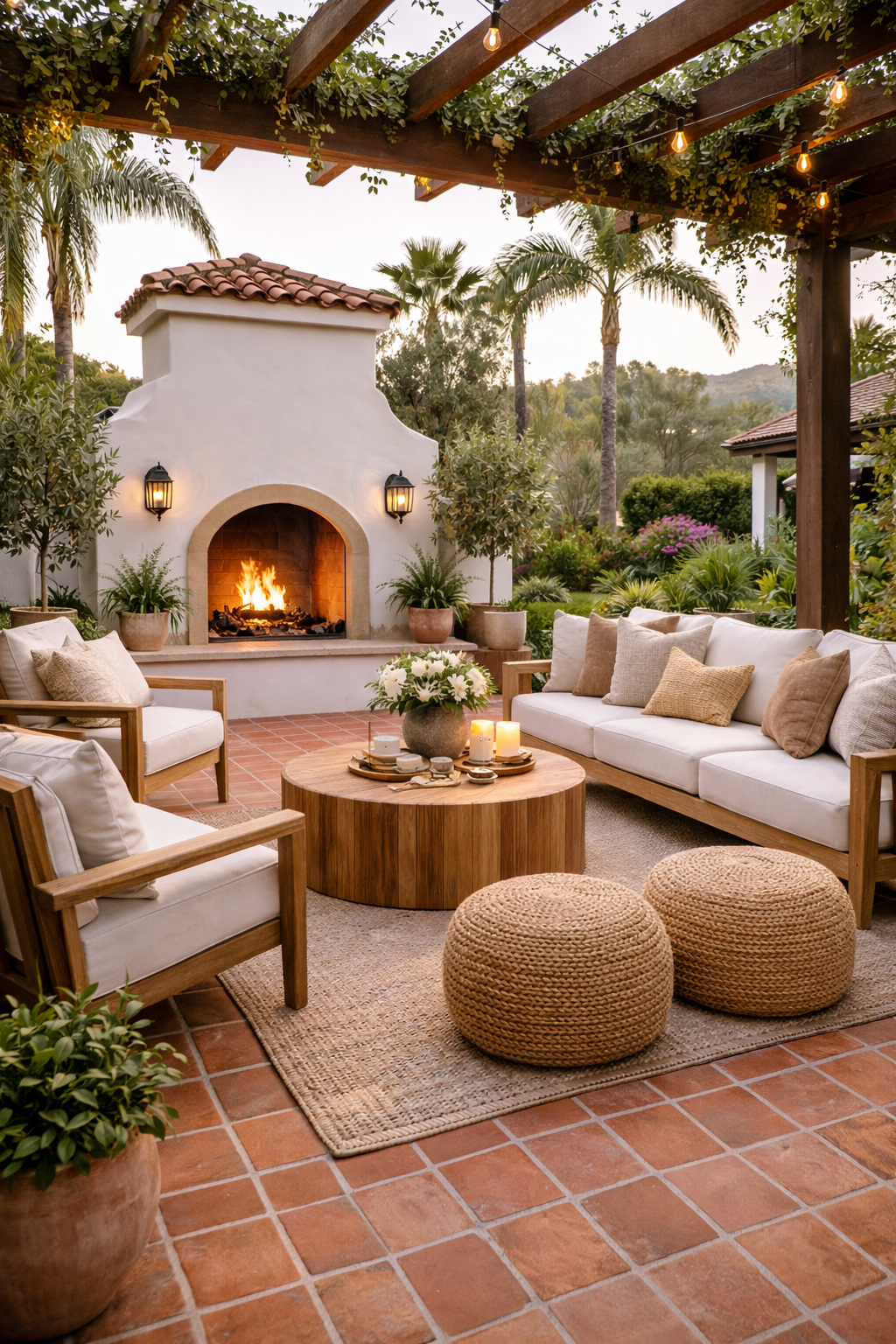
AI-generated image created to illustrate a luxury outdoor living space concept
Turning Outdoor Spaces Into a Personal Resort
The pandemic has disrupted travel plans for many—including myself, with a cancelled trip to Australia and New Zealand. With vacations suddenly off the table, people have started looking for ways to recreate that sense of escape at home.
One of the biggest shifts I’ve seen is a growing focus on outdoor spaces. Homeowners are reimagining patios, backyards, and terraces as personal retreats—spaces that feel less like an extension of the home and more like a destination. Instead of simply having a place to sit outside, the goal has become creating an environment that offers the same sense of relaxation and enjoyment as a vacation.
I’ve worked with several clients to design outdoor areas inspired by places they love, whether that’s the tropical feel of Bali, the laid-back luxury of Hawaii, or the warm, earthy tones of the Arizona desert. Through thoughtful furniture choices, layered textures, and intentional layouts, these spaces can begin to feel like a true getaway.
The beauty of this approach is that it doesn’t rely on travel—it’s something that can be enjoyed any time of year. In a time when leaving home feels uncertain, having a space like this provides a much-needed way to step away, unwind, and recharge without going anywhere at all.
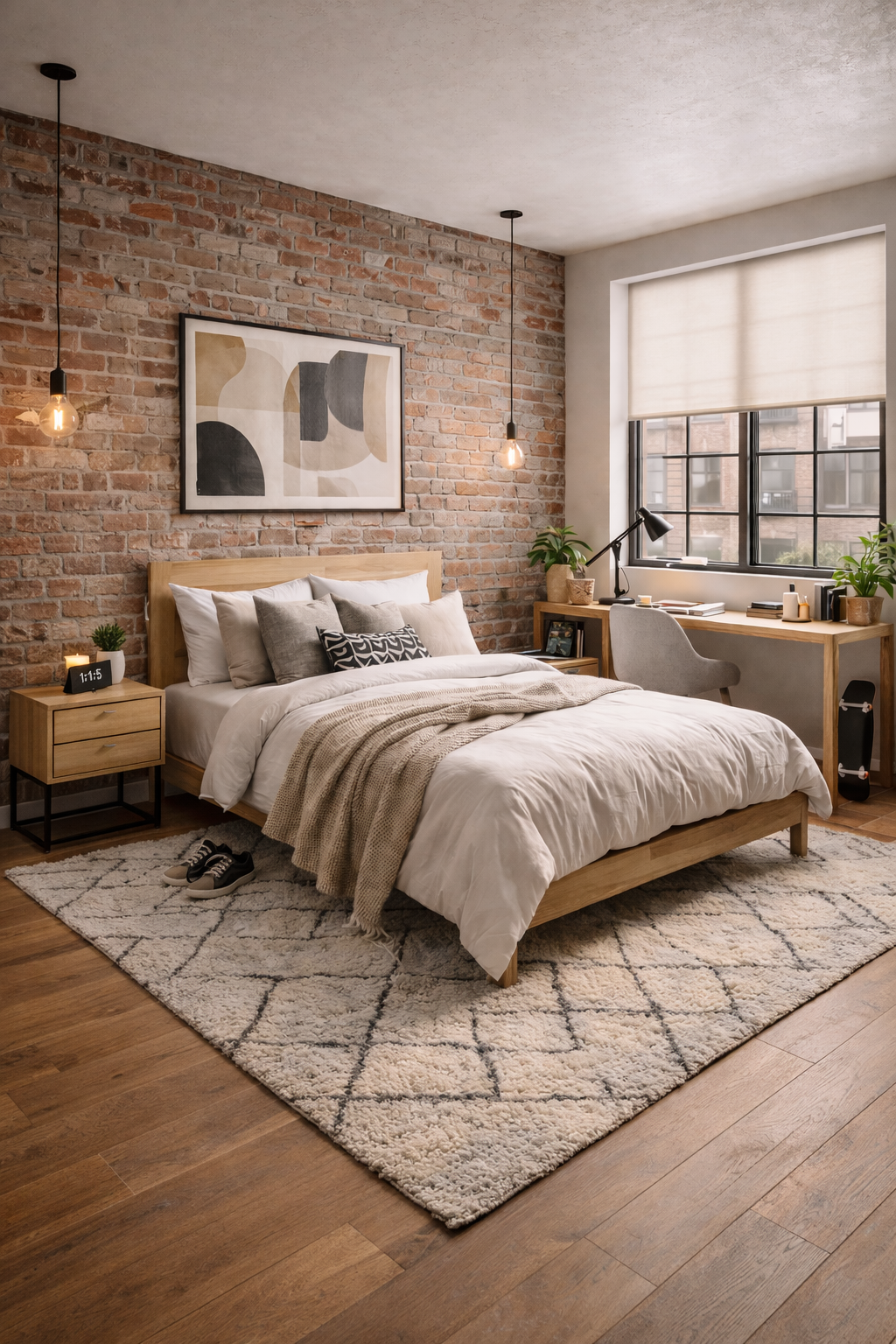
AI-generated image showcasing a refined Industrial-Scandinavian blend for a functional young adult space
Turning a Teen’s Room Into a Young Adult Space
The pandemic has also disrupted college life, with many universities shutting down or shifting to remote learning. As a result, students who had moved away for school are suddenly back home—often with little notice.
This creates a new challenge for families. A bedroom that once functioned for a teenager now needs to support a much broader range of activities—attending virtual classes, studying, relaxing, and sleeping—all within the same space. At the same time, parents may also be working from home while managing the needs of younger children, making it even more important for each area of the home to function efficiently.
I’ve worked with several e-design clients to reimagine these rooms in a way that better supports young adults. In many cases, the goal is to create a space that feels more independent and adaptable—similar to a dorm room or even a small studio apartment, just without the kitchen. This often includes incorporating a defined work area, improving storage, and selecting furnishings that feel more mature and long-lasting.
These updates not only make the space more functional, but also help create a sense of comfort and autonomy for young adults adjusting to an unexpected return home.
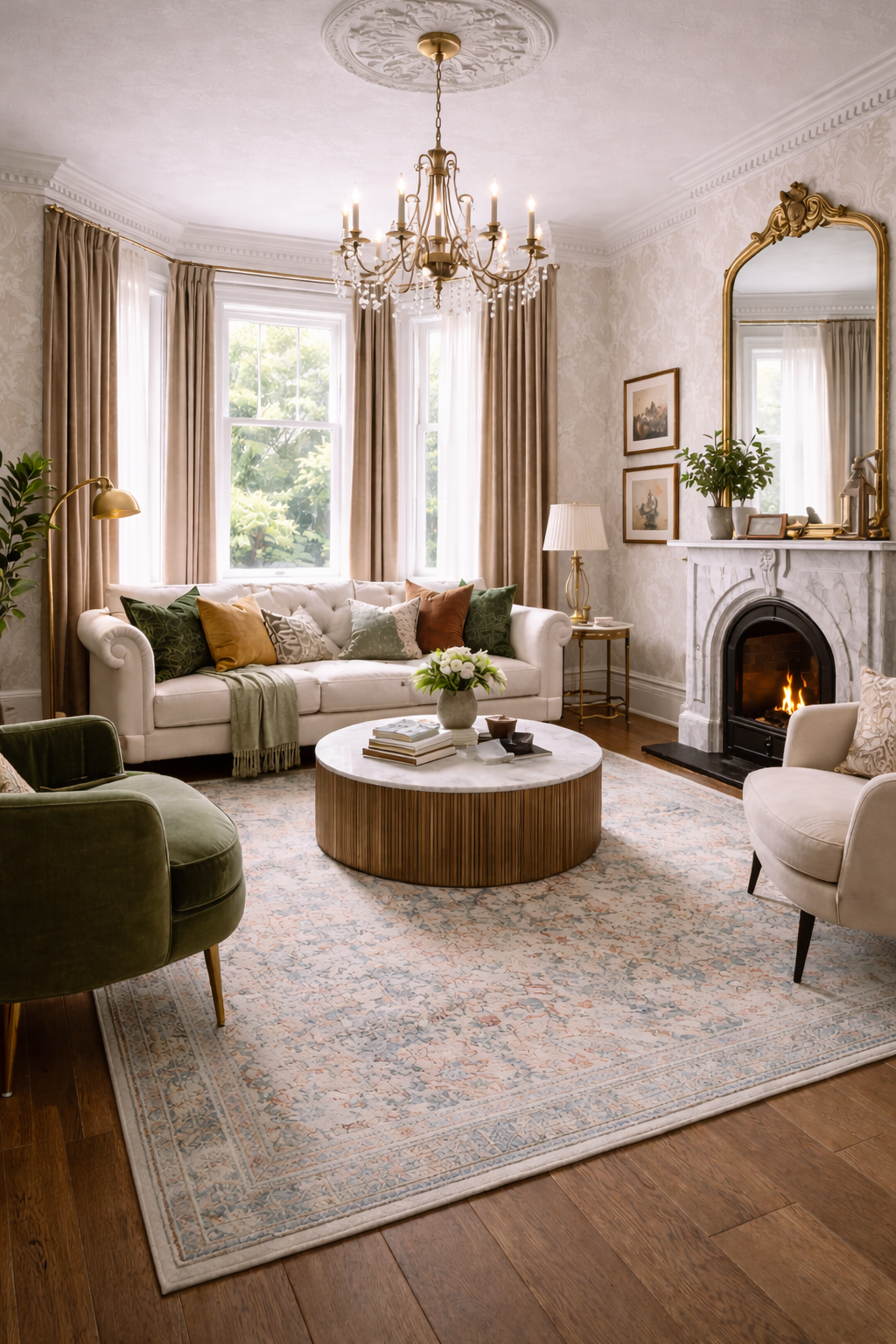
AI-generated image showcasing a modern Victorian living room designed with layered textures, classic detailing, and a refined, livable approach
A Shift in How We Live at Home
We are living through a defining moment—one that is reshaping how we see ourselves, how we work, and how we connect with others and the world around us. With so much uncertainty and disruption, it’s easy to feel overwhelmed.
At the same time, our homes have taken on a new level of importance. They are no longer just a backdrop to daily life—they are central to how we live, work, and recharge. Taking the time to thoughtfully adjust your space, even in small ways, can bring a sense of clarity, comfort, and control during an otherwise unpredictable time.
That’s where thoughtful design can make a real difference—helping you create a home that supports your life as it is now.