300 Blog Posts Later: My Thoughts on the Evolution of Virtual Interior Design
It is hard to believe that I have reached my 300th blog post since I first started blogging back in 2017. Around that time, I also rebranded my virtual interior design firm from Roomz Design to JJones Design Co., marking the beginning of a new chapter for my business and creative journey. Looking back over the years, both the blog and the virtual interior design industry have evolved tremendously.
Since starting my career in virtual interior design back in 2014, I have witnessed major changes in how people view online interior design services, how designers communicate with clients remotely, and how technology transformed the entire experience. What was once considered a niche or unconventional way to hire an interior designer has now become a widely accepted and mainstream part of the design industry.
Over the years, I have also seen how virtual interior design has helped people in ways that many did not expect in the beginning. From homeowners living in rural areas without access to local designers to busy families, professionals, and clients across different states and countries, online interior design has made professional design services more accessible and flexible for a wide range of people.
As I reach this 300-blog-post milestone, I wanted to take a moment to reflect on how the virtual interior design industry has evolved over the years, how client expectations changed, and some of the lessons and observations I have learned along the way since starting my journey in 2014.

Virtual interior designer Joshua Jones visiting Edinburgh Castle during a trip to Scotland in March 2026.
The Early Days of the Virtual Interior Design Industry
Some of you have been following me since the early days and may already be familiar with my background. For those who are not, I wanted to briefly share my story so you can better understand how I got started in the virtual interior design industry.
Just a few years before launching my firm, I graduated with a Bachelor of Fine Arts in Interior Design from the The Art Institute of Seattle in 2008, which unfortunately was around the same time the Great Recession hit. The recession had a major impact on the architecture and interior design industries, causing many firms to lay off employees, freeze hiring, or shut down entirely. Like many graduates during that time, I struggled to find opportunities in my field. The closest experience I had was an internship at a design showroom inside the Seattle Design Center, but after that, I had to put my career plans on hold and work in retail for several years.
As the economy slowly recovered, I started applying for interior design-related positions again. However, I quickly ran into another challenge — discrimination based on the fact that I am Deaf. Some employers seemed more focused on how I communicated rather than my creativity, design knowledge, and how we could work together effectively as a team. After multiple unsuccessful attempts to break into the industry, I became increasingly frustrated with the situation and began questioning how I could realistically build the career I had worked so hard for.
Then in 2013, one morning while having brunch with my boyfriend — who is now my husband — I shared my frustrations with him. He suggested something that completely changed the direction of my career: starting an interior design business online. His thought was simple but smart. Since most communication could happen through email, my Deafness would not be viewed as a barrier in the same way traditional firms had treated it. At the same time, online interior design services could also make professional design more accessible and affordable for people who either could not afford or did not want to hire a traditional full-service interior designer.
I thought it was an excellent idea, and in March 2014, I officially started my business.
Interestingly, the virtual interior design industry was also just beginning to emerge around that same time, which was completely unexpected. There were already a small number of designers experimenting with similar concepts, but everyone structured their services differently in order to stand out and create their own niche. Back then, there was not even a widely accepted term for what we were doing. Most of us simply referred to it as “online interior design services” because phrases like “virtual interior design” and “e-design” had not fully entered mainstream use yet.
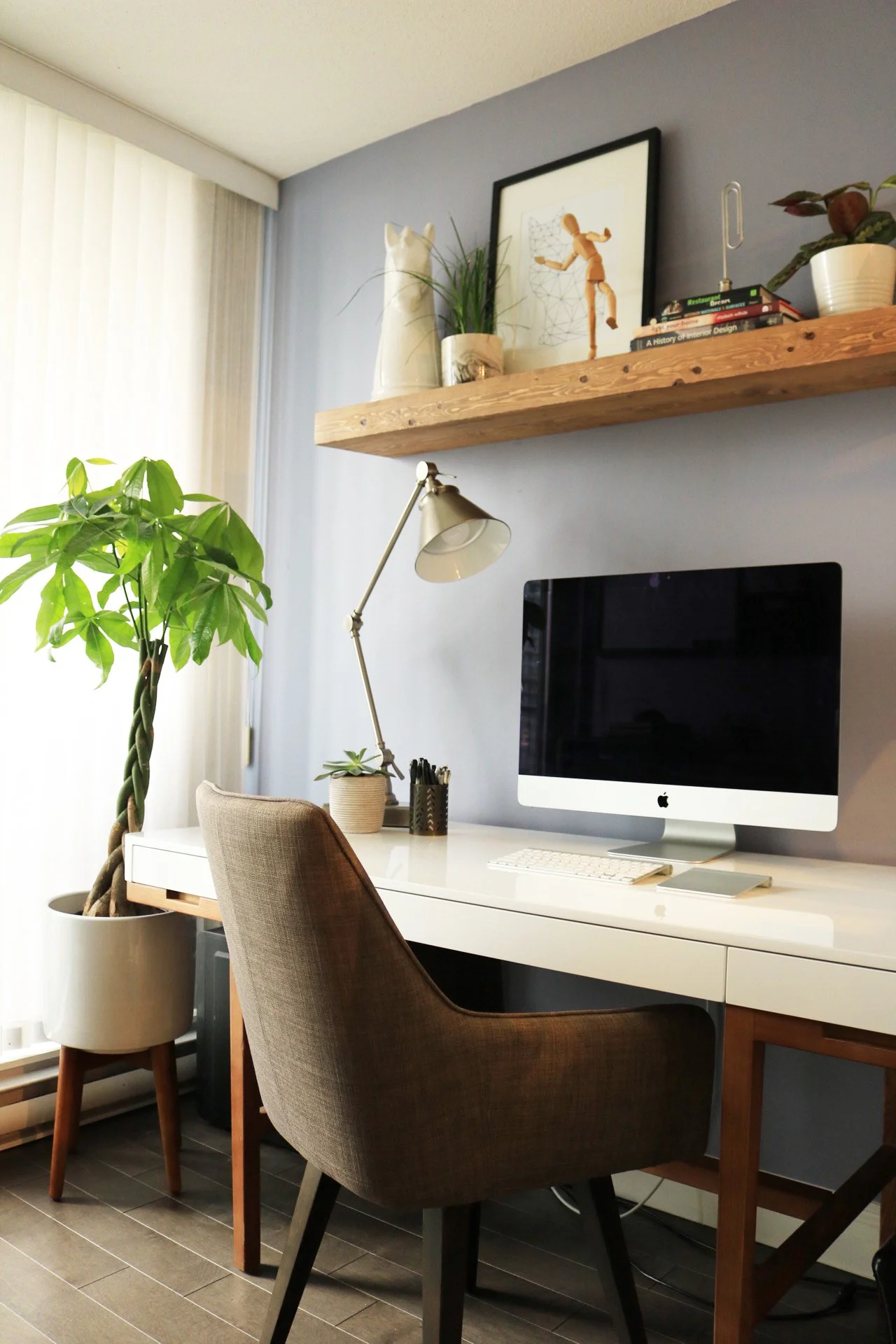
My former home office in Vancouver, BC, which I designed myself and used during the early years of building my virtual interior design business.
The Challenges of the Rise of the Virtual Interior Design Industry
During the first few years of working in the virtual interior design industry, I found myself spending a lot of time simply explaining to people what this business concept was and how it worked. Many people were confused because online interior design services were still very new and unfamiliar at the time. Most homeowners were used to the traditional idea of hiring an interior designer who would physically visit their home, so the concept of working remotely through email, floor plans, measurements, and online communication felt unusual to many people back then.
I am not going to lie — those early years were challenging. Since virtual interior design was still in its infancy, there were very few established examples for people to reference or fully understand. I constantly had to educate potential clients on how the process worked, what information I needed from them, and how an entire room could successfully be designed remotely.
At that time, I also did not personally know anyone doing similar work in the industry, so there was very little guidance available. Unlike today, there were no major online communities, Facebook groups, or professional networks specifically focused on virtual interior design or e-design services. There was no roadmap for how to market these services, communicate the value of remote design, or build trust with clients who had never experienced anything like it before.
In many ways, I had to figure everything out on my own through trial and error. Looking back now, it is interesting to see how much the industry has evolved since those early days. Today, virtual interior design is widely recognized and understood by homeowners, builders, renters, and even traditional design firms — something that felt almost impossible to imagine when I first started my business in 2014.
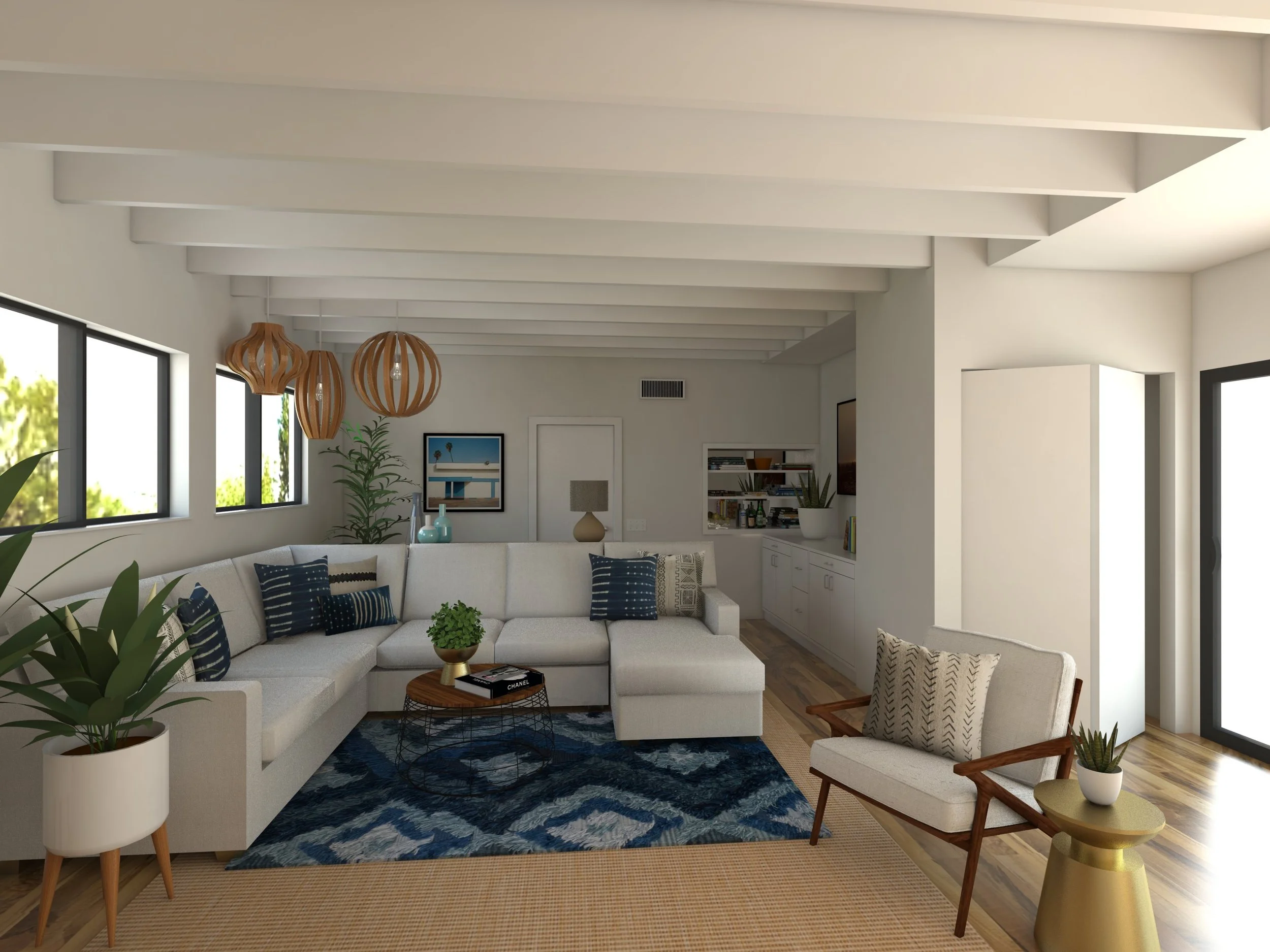
Photorealistic 3D rendering created by Joshua Jones during his time working with Decorist. Original interior designer unknown.
The Introduction of 3D Renderings for Better Visualization
When I was in school, I only learned the basics of renderings to help clients visualize spaces. At that time, photorealistic 3D renderings were not really part of the curriculum yet. Most of what we learned involved hand renderings, watercolor presentations, or rough 3D models created through CAD programs. Compared to today’s standards, the visualization tools available at that time were very limited.
I do not remember exactly how I first discovered photorealistic 3D renderings, but once I did, I immediately became excited about the possibilities. I quickly realized that this technology could become a powerful tool for helping clients better visualize their homes, especially within the growing virtual interior design industry. Since clients were not physically walking through a showroom or meeting with designers in person, strong visual communication became incredibly important.
Because of that, I decided to teach myself how to create 3D renderings. I started producing renderings for my own virtual interior design projects so clients could better understand the scale, layout, lighting, materials, and overall atmosphere of a space before making purchasing decisions. At the time, this approach was still relatively new within online interior design services, but I believed it would eventually become a major part of the industry.
As my skills improved, I also started working freelance as a 3D rendering artist. Around that same time, I came up with the idea of offering virtual staging services for real estate listings. I created several work samples and reached out to more than 300 realtors throughout Orange County and the San Diego area while I was living in Irvine, California. However, none of them responded or showed much interest because traditional physical home staging was still heavily preferred at that time. Virtual staging was simply too new and unfamiliar for many realtors back then.
Looking back now, I realize I probably should have focused my efforts on more tech-forward markets such as the Bay Area, Seattle, or New York City, where people were generally more open to innovation and new technology. I also realized that I was probably a few years too early for virtual staging to gain real traction within the real estate industry. At that time, many people still strongly preferred traditional methods because digital visualization tools were not yet widely trusted or understood. In many ways, I think the virtual interior design industry experienced something very similar during those early years as well.
Although my virtual staging idea did not take off at the time for me, it eventually led to another opportunity. I was hired by Decorist as one of their 3D rendering artists, creating renderings for various interior designers on the platform. It was an exciting experience because it gave me a deeper understanding of how rapidly the virtual interior design industry was evolving and how important visualization tools were becoming for both designers and clients.
Interestingly, one of the 3D renderings I created during that time eventually became part of my interview process with Decorist. The living room rendering featured in this article was actually the test rendering I completed for Decorist, which ultimately helped me secure my position with the company. Looking back now, it feels like an important moment in my career because it showed me just how valuable visualization tools were becoming within the virtual interior design industry.
I continued doing 3D rendering work for several years until my own virtual interior design business became increasingly busy. Eventually, I reached a point where I needed to focus entirely on my design clients full-time, so I stepped away from freelance rendering work and began outsourcing renderings for my projects instead.
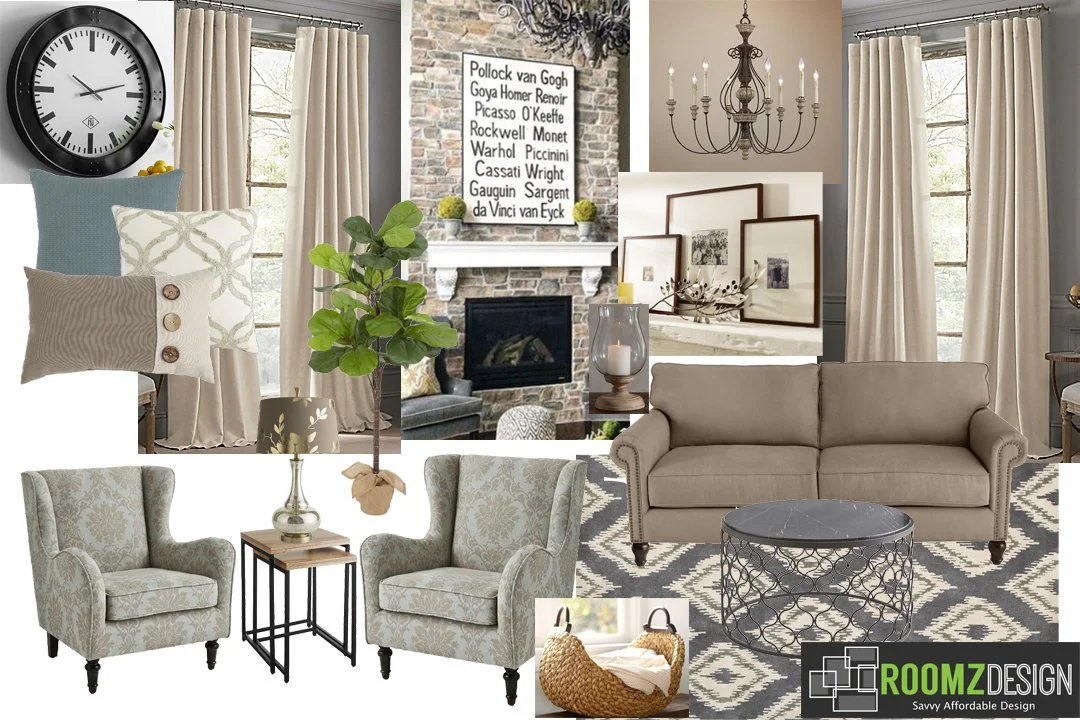
One of my earliest virtual interior design mood boards created for a PurpleWall client during the early days of my former firm, Roomz Design. This modern farmhouse living room proposal was also my first winning project on the platform.
The Rise and Fall of Virtual Interior Design Platforms
In the early days of the virtual interior design industry, several online interior design platforms started to emerge shortly after I launched my own firm. Some of the early platforms included PurpleWall, Laurel & Wolf, and Decorist. Each company approached virtual interior design differently, but all of them played a role in helping bring online interior design services into the mainstream conversation.
PurpleWall
PurpleWall was the first platform I decided to join in order to expand my client base, gain more experience, and better understand the growing virtual interior design industry. Their concept was interesting at the time. Homeowners would post their projects, and designers would submit design ideas, concepts, and pricing proposals in hopes of being selected for the project.
In the beginning, I thought it was a great idea. I was able to secure a good number of projects through the platform, although I also lost some projects to other designers whenever clients felt another designer was a better fit for their style or needs.
However, after some time, I started noticing a major flaw in the system. Some people simply wanted free ideas and inspiration without any intention of hiring a designer. Designers like myself would spend time creating concepts and proposals, only for some clients to disappear after gathering ideas. At the same time, PurpleWall also struggled because many people were still unfamiliar with the concept of virtual interior design, making it difficult for the company to grow consistently and generate sustainable revenue.
Eventually, PurpleWall went out of business. I was genuinely saddened by that because I truly enjoyed working with the founder and employees behind the company. They were thoughtful, supportive, and passionate people who believed in the future of online interior design. Looking back now, though, I can better understand why that particular business model struggled within the design industry.
Laurel & Wolf
I first discovered Laurel & Wolf through online advertisements and became curious about how their platform operated. At the time, I was impressed by how innovative and ambitious the company seemed, so I decided to join the platform for similar reasons as PurpleWall.
I ended up working on many projects through Laurel & Wolf and gained valuable experience during that period. However, during the final couple of years before the company shut down, I began noticing growing issues within the company’s management and internal culture. It became increasingly clear that the pressure to stay competitive against other platforms was affecting both employees and designers.
In an effort to attract more customers and projects, the company started lowering prices aggressively. Over time, the environment became increasingly stressful and unsustainable. As a designer, I started feeling unsupported and uncomfortable with the direction things were heading, so I eventually decided to leave the platform. About a year later, Laurel & Wolf went out of business.
Decorist
As I mentioned earlier, I originally joined Decorist as a freelance 3D rendering artist before eventually becoming one of their interior designers. I genuinely enjoyed working with the Decorist team, which was one of the biggest reasons I continued growing with the company over the years.
After completing more than 200 projects through Decorist, I eventually became one of the platform’s Design Leads, reviewing other designers’ projects to ensure they met company standards and addressed clients’ needs properly. I also mentored designers on how to communicate effectively with clients, better understand clients’ needs and personal styles, and create stronger overall client experiences. That role gave me a much deeper understanding of both the strengths and challenges within the virtual interior design industry.
To be completely honest, before Bed Bath & Beyond acquired Decorist, I truly believed Decorist was one of the most innovative virtual interior design companies in the industry. They consistently came up with creative ideas, improved the client experience, and approached online interior design differently from many other platforms. That innovation was one of the main reasons I enjoyed working with them so much.
However, after the acquisition, I started noticing significant changes within the company. The platform became less creative and less innovative over time, and designers were increasingly pressured to use Bed Bath & Beyond products in projects — even when many of those products were not items designers would naturally recommend to clients. There was also growing pressure tied to product sales as Bed Bath & Beyond’s financial struggles worsened.
I could tell that many people within Decorist were unhappy with the direction things were heading, but there was very little they could do about it. Eventually, when Bed Bath & Beyond filed for bankruptcy, Decorist was forced to shut down as well. Personally, I still believe Decorist could have survived if it had been sold to another company rather than being tied so closely to Bed Bath & Beyond’s collapse.
Despite everything, I remain grateful for my experience with Decorist because I had the opportunity to work with so many wonderful clients and talented people through the platform.
What I Learned From These Platforms
Looking back on the platforms I personally worked with — as well as stories I have heard from other designers who worked for different companies — I have noticed a common pattern behind why many virtual interior design platforms struggled or failed over the years.
One of the biggest challenges was pricing.
Many platforms pushed extremely low prices in an effort to attract more customers and stay competitive. While that approach may have helped generate short-term interest, it often created unsustainable business models in the long run. Interior design is still a highly personalized and time-intensive service, even when delivered virtually. Balancing affordable pricing, quality service, company overhead, customer support, technology development, and fair compensation for designers proved to be much more difficult than many companies originally expected.
Another challenge was how inconsistent designer compensation could become depending on the type of project and the amount of time required. Simpler projects, such as basic room refreshes, could sometimes be completed efficiently enough for designers to earn reasonable compensation for their time. However, more complex projects — such as kitchen designs, open-concept layouts, or projects involving unusually difficult client situations — often required significantly more hours of work. In some cases, when factoring in the actual time spent on revisions, communication, sourcing, layouts, and problem-solving, compensation could effectively fall below minimum wage levels for designers.
Looking back, I also believe some companies became too focused on rapid growth, low pricing, and staying competitive rather than building sustainable systems that properly supported both clients and designers long-term. While affordability helped virtual interior design reach a wider audience, it also created challenges around workload, expectations, and fair compensation that many platforms struggled to balance successfully.
At the same time, I also believe these platforms played an important role in helping normalize virtual interior design for the general public. Even though many of them no longer exist today, they helped introduce millions of people to the idea that professional interior design services could successfully happen online.
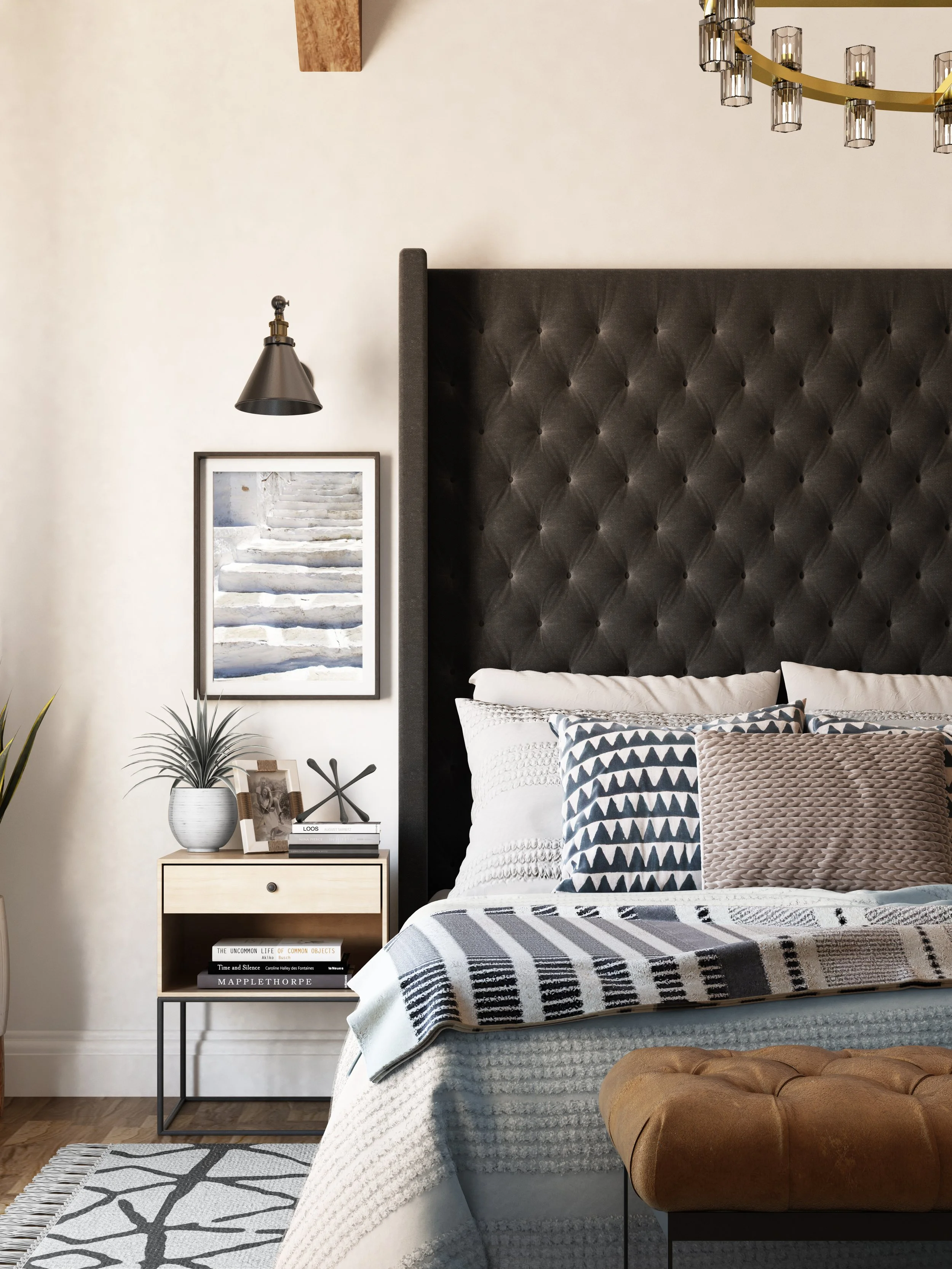
Desert Rustic style primary bedroom designed by virtual interior designer Joshua Jones. Around the beginning of the Covid-19 pandemic, Joshua started pushing for higher-quality photorealistic 3D renderings and began collaborating with professional 3D artists to elevate the visualization experience for clients.
The Covid-19 Pandemic Helped Fuel the Virtual Interior Design Industry Boom
Believe it or not, when the Covid-19 pandemic lockdowns began happening around the world, it ended up fueling a major boom within the virtual interior design industry.
As millions of people suddenly found themselves spending far more time at home, many began realizing that their homes needed more attention, comfort, functionality, and personality. Spaces that once served as simple living areas quickly became home offices, classrooms, workout spaces, entertainment areas, and places where families spent nearly all of their time together.
At the same time, many traditional interior design services became more limited due to travel restrictions, safety concerns, and social distancing measures. Because of that, many homeowners started searching online for alternative ways to work with interior designers remotely, which led a huge number of people to discover virtual interior design services for the first time.
For many clients, virtual interior design suddenly made perfect sense. People could communicate with designers entirely online, receive floor plans, mood boards, shopping lists, and renderings digitally, and continue working on their homes without needing constant in-person meetings. What had once been viewed as a niche or unfamiliar service quickly became normalized almost overnight.
The pandemic also dramatically accelerated public comfort with remote communication and online services in general. Video calls, online shopping, remote work, and virtual collaboration became part of everyday life, which naturally helped online interior design feel more approachable and trustworthy to a much wider audience.
From a business perspective, the pandemic took my own virtual interior design firm to an entirely new level. Demand for online interior design services increased significantly, and many virtual interior design platforms experienced major growth during that period as well. In many ways, I believe the pandemic permanently changed how people view interior design services and helped solidify virtual interior design as a legitimate and lasting part of the industry rather than simply being viewed as an alternative option.
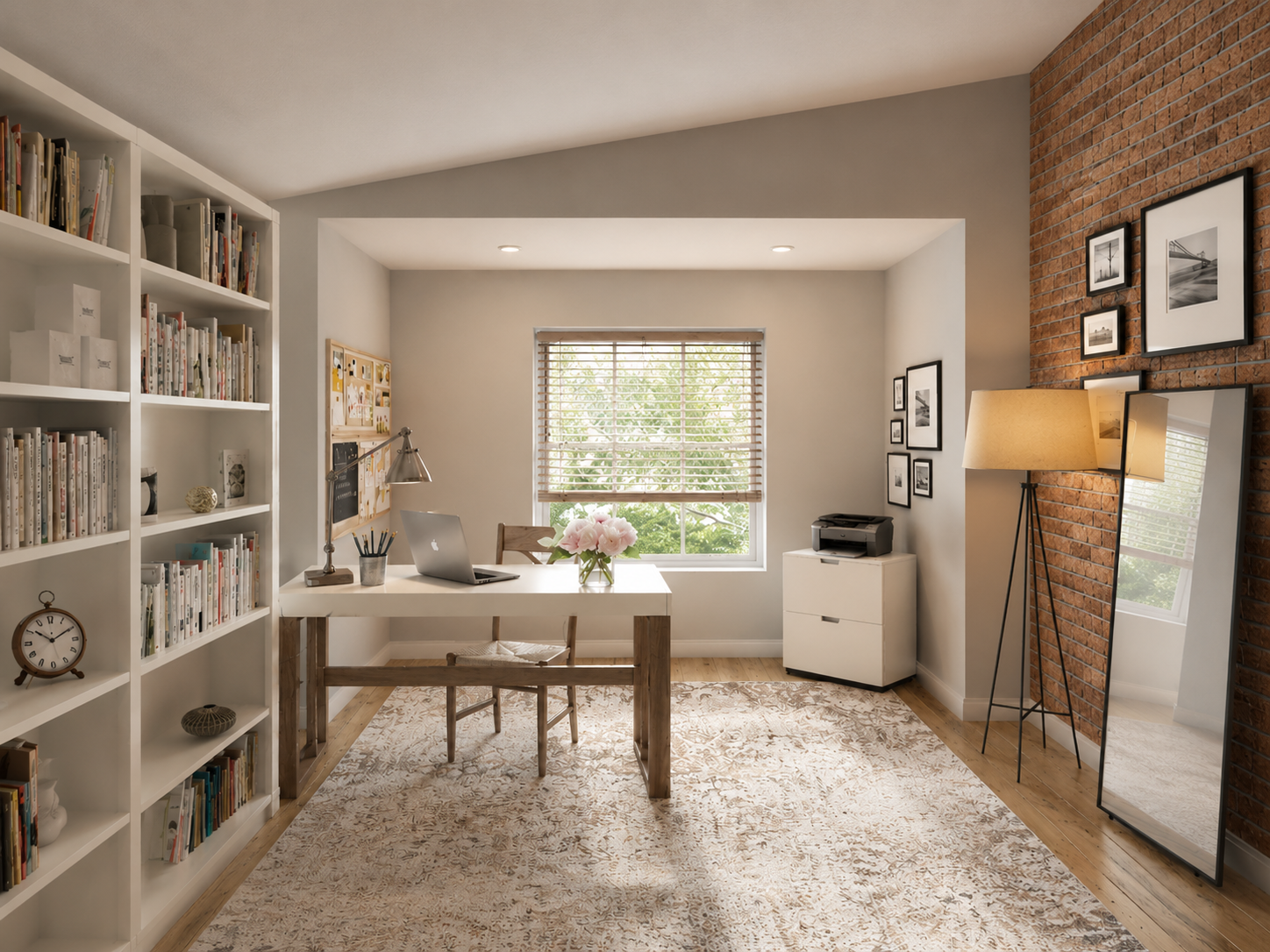
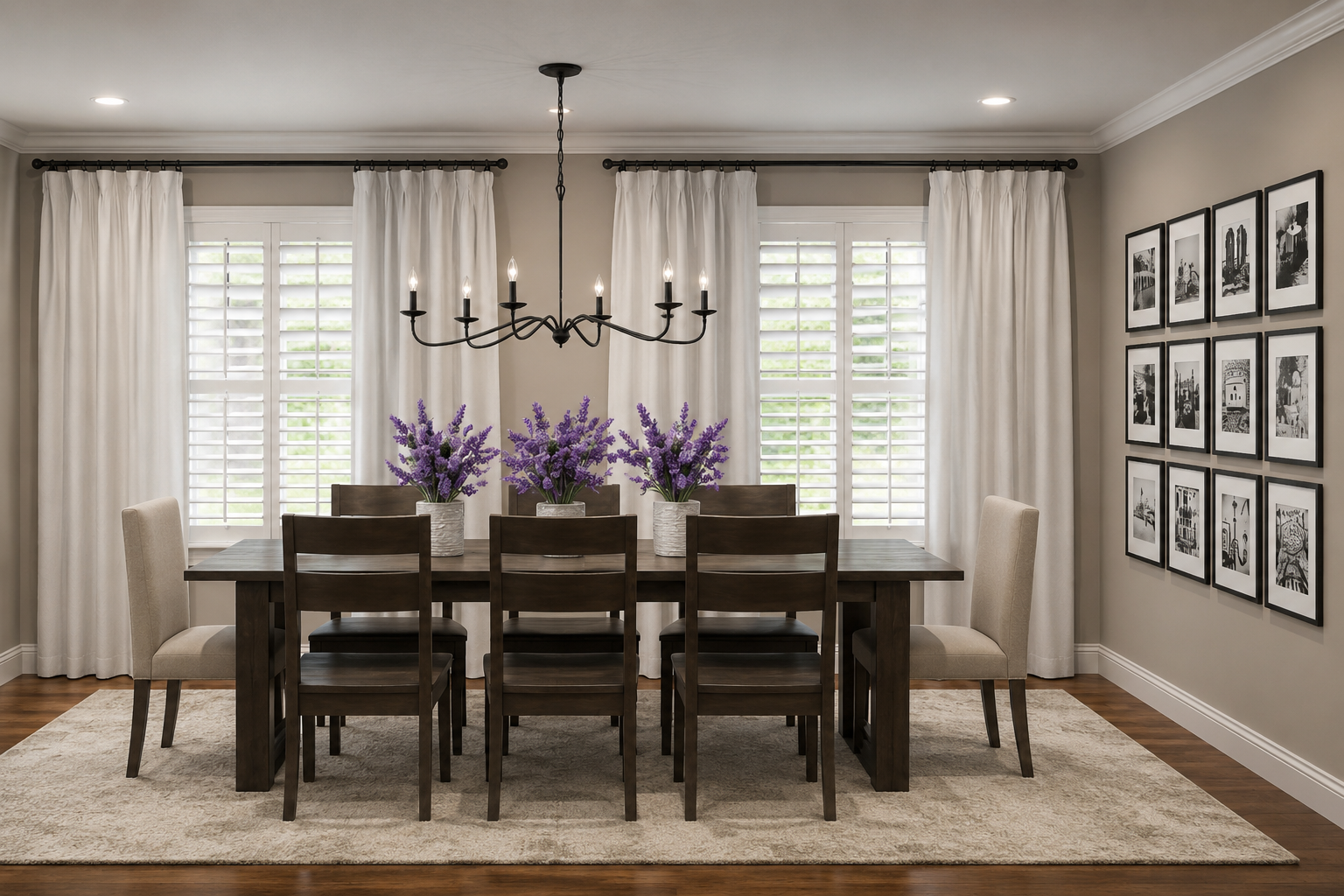
AI-generated photorealistic rendering of a transitional style home office originally designed by Joshua Jones, reimagined from one of his earlier 2D design concepts to showcase how AI technology is transforming visualization within the virtual interior design industry.
The Rise of AI and the Virtual Interior Design Industry
Around two years ago, I first started hearing more conversations about artificial intelligence and how it could be used as a tool to help people work smarter and manage workloads more efficiently. Like many others in creative industries, I became curious about how AI could potentially fit into my own workflow, so I started experimenting with several AI platforms to better understand their capabilities and limitations.
After spending the past couple of years learning and exploring this rapidly evolving technology, I realized that AI can actually be a very useful tool within the virtual interior design industry when used appropriately. In my experience, AI has helped reduce the amount of time spent on certain repetitive tasks, allowing me to focus more of my attention on my clients, projects, creativity, and problem-solving. It has also helped streamline parts of my workflow and improve efficiency, giving me more time to complete projects and manage my business more effectively.
At the same time, I do not believe AI will replace interior designers anytime soon — including my own career.
One thing I have learned throughout my years in virtual interior design is that interior design is far more complex and personal than many people realize. Every home is different, every floor plan has its own challenges, and every client has unique lifestyles, preferences, routines, budgets, and emotional connections to their spaces. Understanding those details requires human communication, interpretation, experience, creativity, and critical thinking in ways that AI still cannot fully replicate.
While AI can generate broad design suggestions and inspiration images, it still struggles with many of the real-world complexities involved in interior design projects. Things such as space planning, accurate floor plans, measurements, construction limitations, functionality, client communication, material understanding, budgeting, and balancing personal style with practical living needs still heavily rely on human expertise and decision-making.
As AI continues to evolve, I recently took a deeper look at a question many homeowners are starting to ask: can AI actually design a home? After testing AI using several of my own past design projects, I found that while it can be surprisingly effective in some situations, it still has notable limitations when it comes to understanding design intent, floor plans, construction requirements, and the many real-world factors involved in creating successful spaces.
I personally view AI as a tool rather than a replacement. Similar to how photorealistic 3D renderings eventually became a valuable part of the virtual interior design industry, I believe AI will continue evolving as another tool that helps designers work more efficiently and communicate ideas more effectively. However, I still believe the human side of interior design — understanding people and creating homes that truly work for their lives — will remain one of the most important parts of this profession.
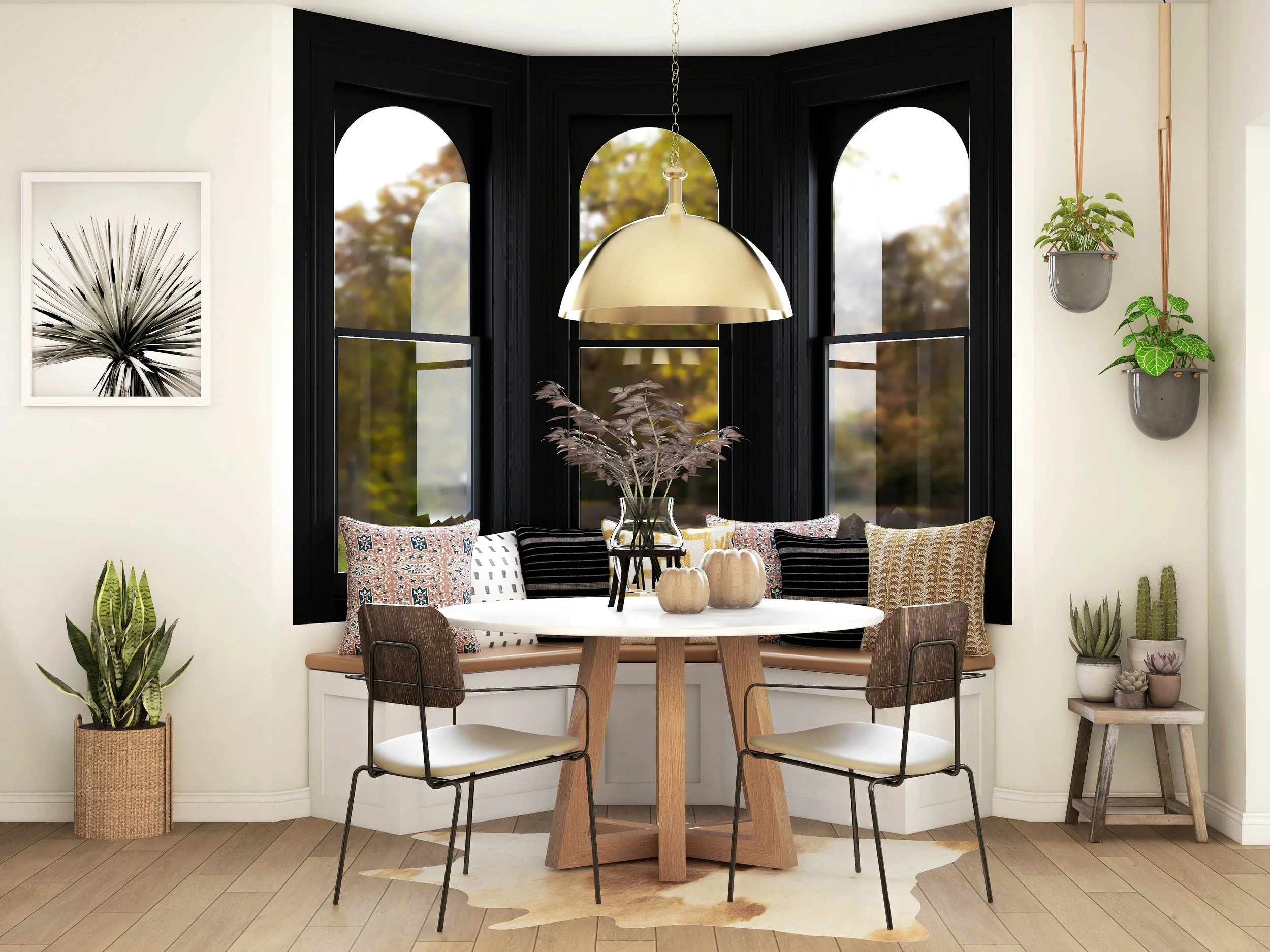
California Casual style breakfast nook and banquette designed by virtual interior designer Joshua Jones, showcasing the highly personalized and photorealistic presentation style that many virtual interior design clients expect today.
How Client Expectations Changed Over the Years
One of the biggest changes I have noticed throughout the evolution of the virtual interior design industry has been how dramatically client expectations have changed over the years.
In the early days of online interior design services, many clients were still trying to fully understand how virtual interior design even worked. Some people were hesitant about measuring their own spaces, taking photos themselves, or making major furniture purchases online without physically seeing items in person first. Because the concept was still so new, there was often a learning curve for both designers and clients.
Over time, however, technology and social media completely changed how people approached interior design. Platforms such as Pinterest, Instagram, and later TikTok exposed millions of people to interior design ideas daily. Clients became far more visually educated and aware of different design styles, furniture brands, color palettes, layouts, and trends than they were when I first started my business in 2014.
At the same time, client expectations also became much higher.
In the early years, simple mood boards and shopping lists were often enough for many clients to feel comfortable moving forward with a design project. Today, many clients expect far more detailed visual presentations, including photorealistic 3D renderings, detailed floor plans, clickable shopping lists, and highly personalized concepts tailored specifically to their lifestyles and homes.
I also noticed that clients became much more comfortable communicating remotely over time. What once felt unusual to many people now feels completely normal. Today, many homeowners are comfortable collaborating entirely through email, online platforms, shared folders, and digital presentations without ever meeting their designer in person. In many ways, the rise of remote work culture and online communication helped strengthen trust in virtual interior design services overall.
Another major shift I have noticed is that many clients today are looking for homes that feel more personal and functional rather than simply trying to copy trends they see online. While social media continues to influence design heavily, I think many homeowners are becoming more aware that a beautiful image online does not always translate into a home that works well for real life. More clients now seem interested in creating spaces that reflect their personalities, routines, and lifestyles rather than chasing every new trend.
Looking back, it has been fascinating to watch how virtual interior design evolved from something people once questioned into something many homeowners now actively seek out and fully trust.
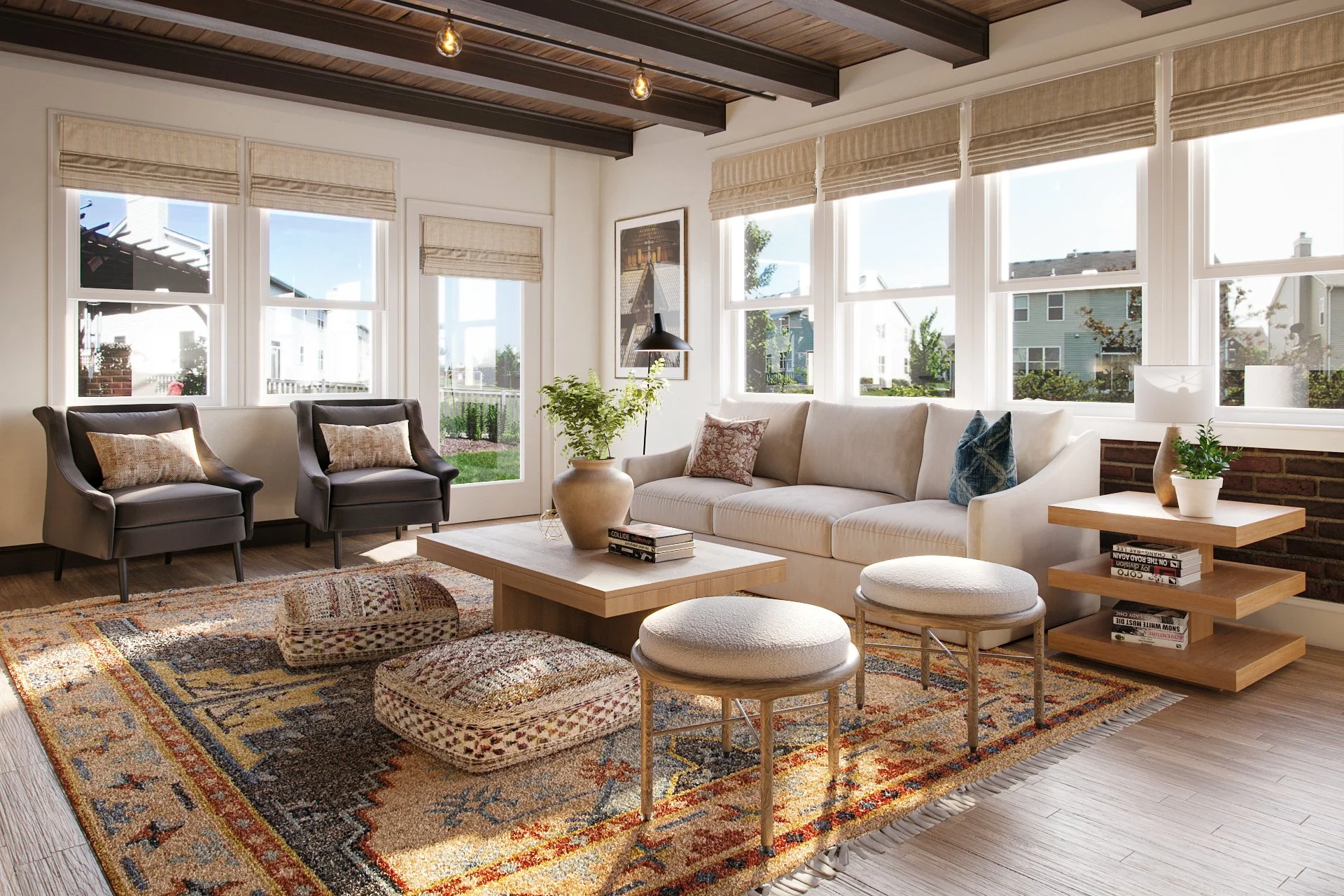
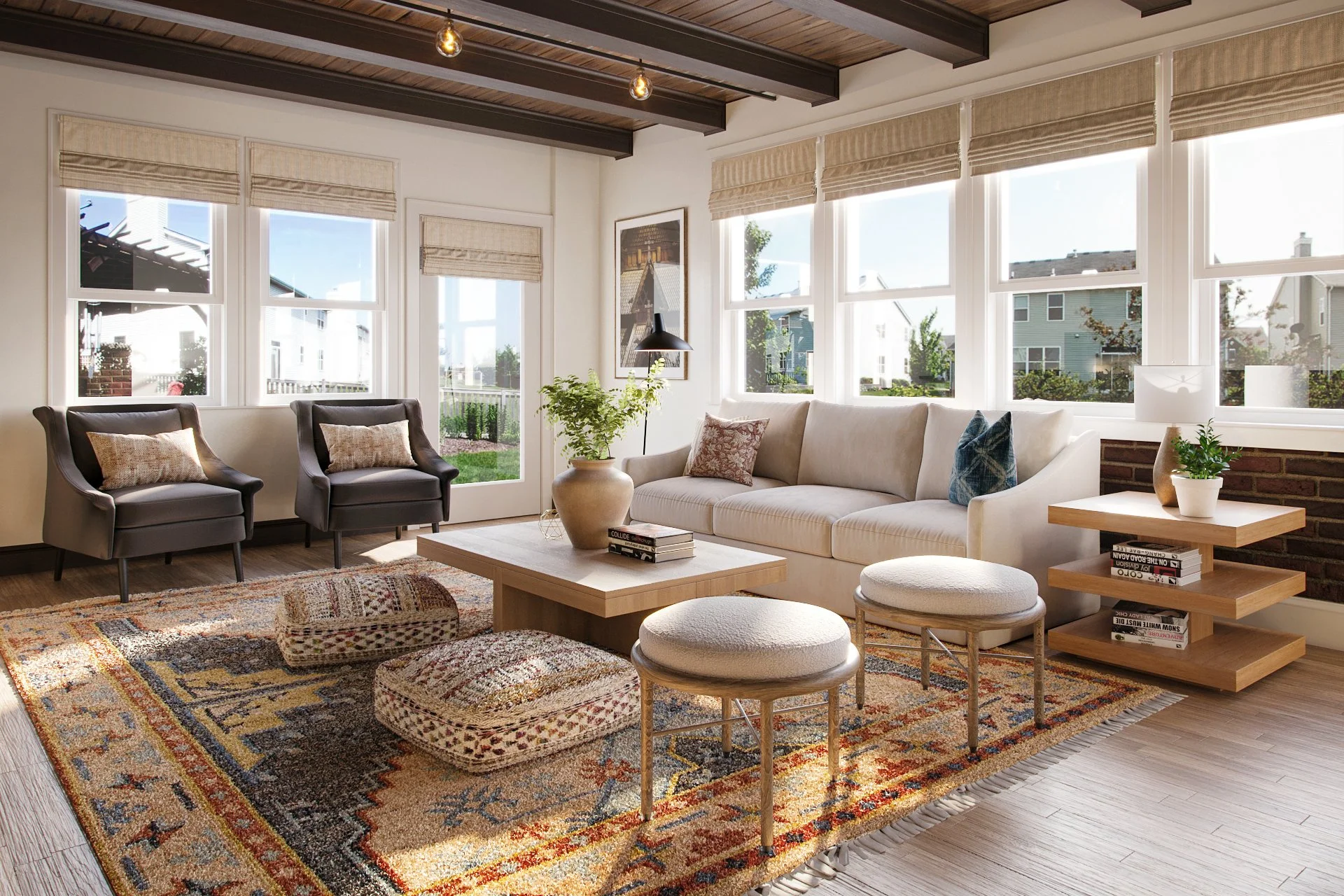
California Cool style living room designed by virtual interior designer Joshua Jones, reflecting the warm, livable, and highly personalized direction that modern virtual interior design has evolved toward over the years.
Looking Ahead at the Future of Virtual Interior Design
Looking back over the past decade, it has been incredible to witness how much the virtual interior design industry has evolved since I first started my business in 2014. What once felt like an unfamiliar and uncertain concept has now become a widely accepted part of the interior design world. From the early days of trying to explain what online interior design even was, to seeing virtual collaboration become completely normalized, the industry has changed in ways I never could have fully imagined when I first launched my firm.
At the same time, I believe the core purpose of interior design has remained the same throughout all of these changes — helping people create homes that improve how they live, function, and feel in their everyday lives.
Technology, 3D renderings, virtual platforms, remote communication, and now AI have all helped reshape how designers and clients work together. However, none of these tools replace the human side of interior design. Understanding how people live, listening to clients’ needs, solving complicated design challenges, and creating spaces that feel personal and meaningful still require human creativity, experience, communication, and empathy.
I also believe virtual interior design has helped make professional design services more accessible to a much wider audience over the years. It opened opportunities for people living in areas without access to local designers, busy professionals with demanding schedules, families wanting more flexibility, and clients who simply felt more comfortable collaborating remotely. In many ways, virtual interior design helped remove some of the barriers that once made interior design feel intimidating or inaccessible to many people.
As I reach this 300-blog-post milestone, I feel incredibly grateful for the experiences, challenges, clients, opportunities, and lessons that shaped both my career and my business over the years. Watching this industry evolve in real time has been fascinating, and I truly believe virtual interior design will continue growing and adapting alongside new technology and changing lifestyles for many years to come.
Even after all these years, one thing still remains true to me: great interior design is not just about making a home look beautiful — it is about creating spaces that genuinely work for the people living in them.