
Ask Joshua: Can You Put a Bed in Front of a Window? When It Works—and How to Make It Look Intentional
Hi Joshua,
I recently moved into an apartment in Somerville, just outside Boston, and I’m having trouble figuring out my bedroom layout. Between the closet, the bedroom door, and the windows, the only spot that seems to work for my queen-size bed is in front of a window.
I’ve always heard you shouldn’t put a bed there, but the other arrangements make the room feel cramped or leave barely any space to walk around. I’d love for my bedroom to feel pulled together, especially now that I’m moving away from the mix of furniture I’ve had since college.
Is it okay to put my bed in front of the window? And how can I make it look intentional without blocking too much light or making the curtains awkward to use?
Thanks!
Emily – Somerville, Massachusetts
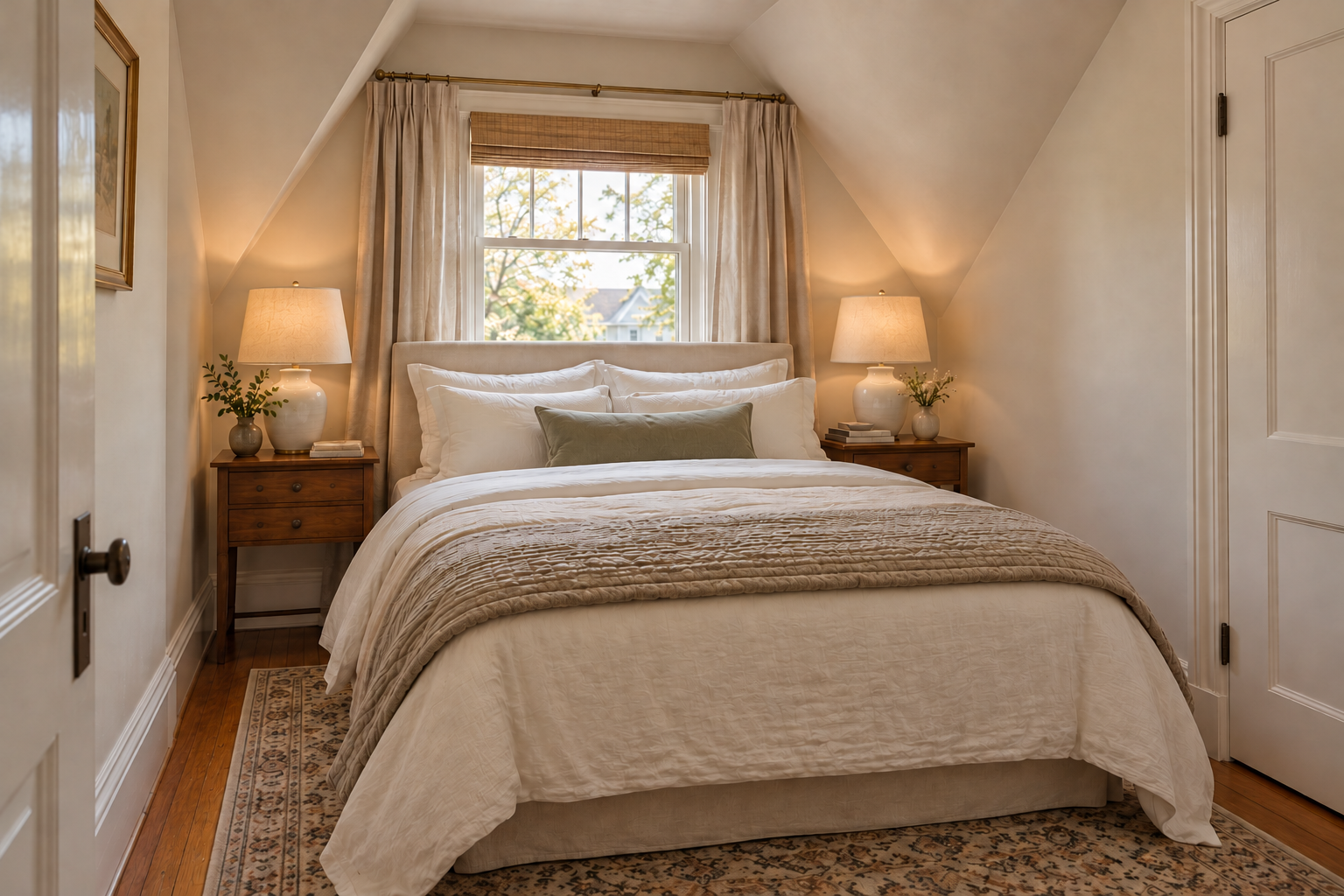
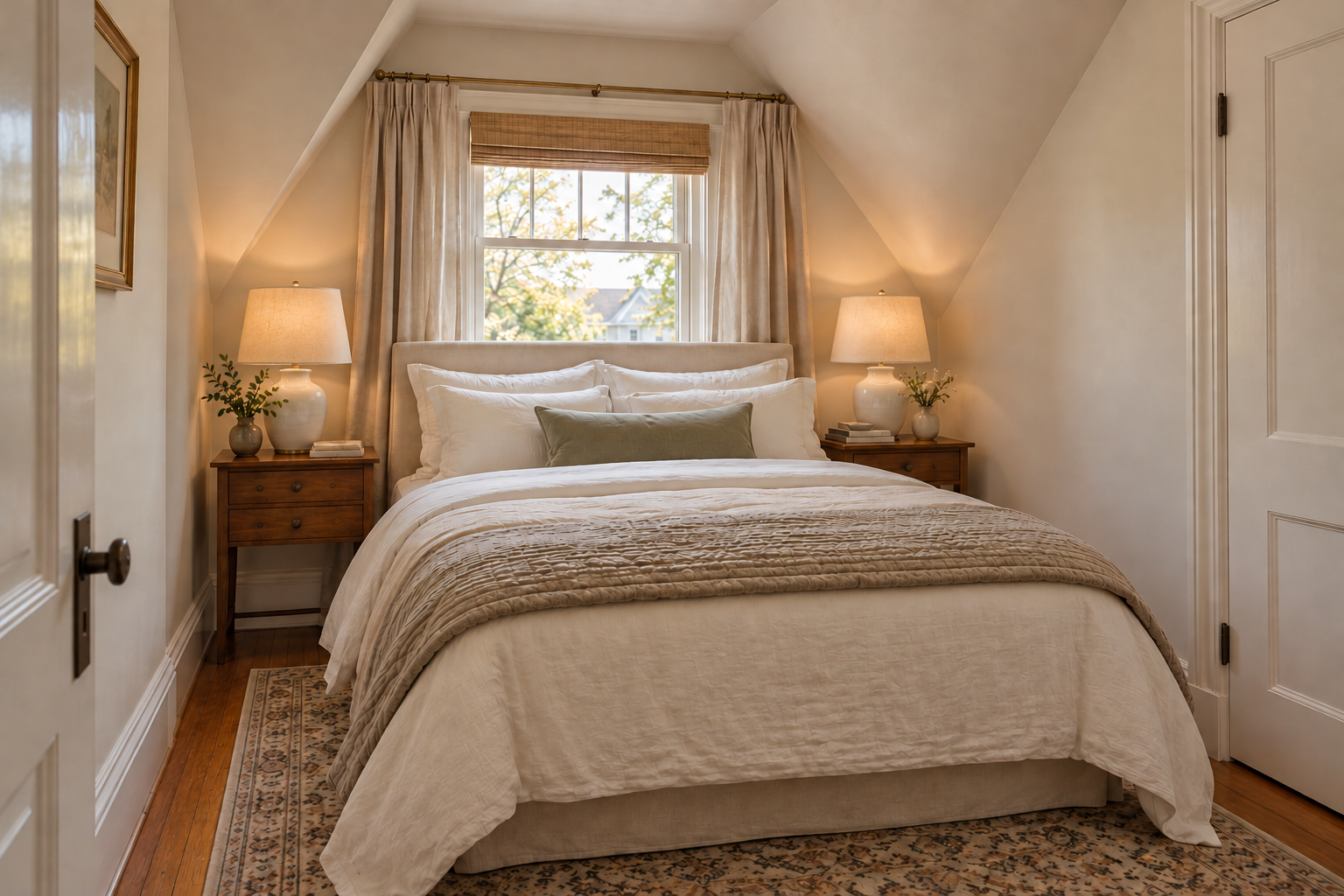
This transitional bedroom was styled by virtual interior designer Joshua Jones of JJones Design Co. for this blog post, illustrating how a bed in front of a window can look intentional in a narrow room with sloped ceilings. AI-generated rendering.
Hi Emily,
Yes, you can put a bed in front of a window. In a bedroom with limited wall space, it can be the arrangement that makes the most sense. I wouldn’t force the bed onto another wall if that means blocking the closet, crowding the doorway, or making it difficult to move around.
The key is treating the bed and window as one composition. When the headboard, window treatments, and bedside furniture work together, this layout can feel thoughtfully designed rather than like you ran out of options.
Start With a Layout That Functions Well
Before choosing a headboard or curtains, make sure the arrangement gives you comfortable access to the bedroom door, closet, and both sides of the bed. You should also be able to reach and operate the window without moving heavy furniture.
Keep any heating or cooling equipment beneath the window in mind. If there’s a radiator or baseboard heater, the bed and bedding need appropriate clearance. A window needed as an emergency exit must also remain accessible.
If those practical needs are met, placing the bed in front of the window is a reasonable design choice.
Choose a Headboard That Preserves the Light
Headboard height makes a big difference here. If the window starts well above the mattress, a lower headboard may fit beneath the sill and leave the glass completely visible.
If the headboard will overlap the window, I would avoid a tall, solid design that covers a large portion of the glass. A lower upholstered headboard or an open wood or metal design can help preserve the light and keep the room feeling more open.
Measure from the floor to the windowsill before shopping, and compare that measurement with the headboard’s overall height. Product photos alone won’t tell you how much of your window it will cover.
You don’t need to give up having a headboard. The right one can help anchor the bed and make the arrangement feel complete.
Use Curtains to Frame the Bed
Curtains can turn the window into a beautiful backdrop. I would generally mount the rod above the window frame and extend it beyond the sides so the panels can stack mostly clear of the glass when open.
Depending on the window’s position, you could extend the curtains farther across the wall to create a wider backdrop for the bed. This can be especially helpful when the window is narrow or slightly off-center.
Keep enough space behind the headboard for the curtains to move freely. If opening and closing panels would be awkward, consider a properly fitted shade for privacy and light control, with stationary curtain panels providing the decorative frame. Keep fabric clear of heating equipment.
Create Balance Without Forcing Symmetry
If centering the bed beneath the window gives you a comfortable layout, that’s a good starting point. A nightstand and lamp on each side can create a balanced focal point when you enter the room.
But the bed doesn’t have to line up perfectly with the window if doing so makes the room harder to use. An off-center arrangement can still work with thoughtful placement of curtains, lighting, and bedside furniture.
Your nightstands don’t have to match, either. Similar proportions or a shared material can help them feel connected while giving your bedroom the more collected look you’re after.
Let the Window Wall Be the Focal Point
With a window behind the bed, you already have an architectural feature framing the space. You don’t need to squeeze artwork above the headboard just because that’s what you see in other bedrooms.
Instead, bring personality into the room through bedding, bedside lighting, and artwork on another wall. A patterned pillow, a textured blanket, or a favorite color can make the bed feel inviting without adding clutter around the window.
For your bedroom, I would start with the arrangement that gives you the best circulation, then choose a headboard and window treatments that support it. A bed in front of a window can look beautiful when the whole wall feels considered—and it’s far better to have a bedroom that works comfortably than to follow a decorating rule that doesn’t suit your space.
If you’d like help putting your bedroom together, my virtual interior design services can help with space planning and selecting furniture, lighting, and window treatments to create a room that looks beautiful and functions well for your everyday needs.
Warmly,
Joshua
Have interior design related questions? You can ask Joshua here.