Ask Joshua: How Can I Make Low Ceilings Look Higher Without Renovating?
Hi Joshua,
I live in a Manhattan apartment with seven-foot-six ceilings. I love the place, but the living and dining area feels pretty boxed in. Renovating isn’t an option, and I don’t want to leave the walls bare or settle for tiny furniture just to make it feel bigger. How can I make the ceilings look higher and give the place some personality without making it feel crowded?
Thanks!
Ryan - New York City, New York
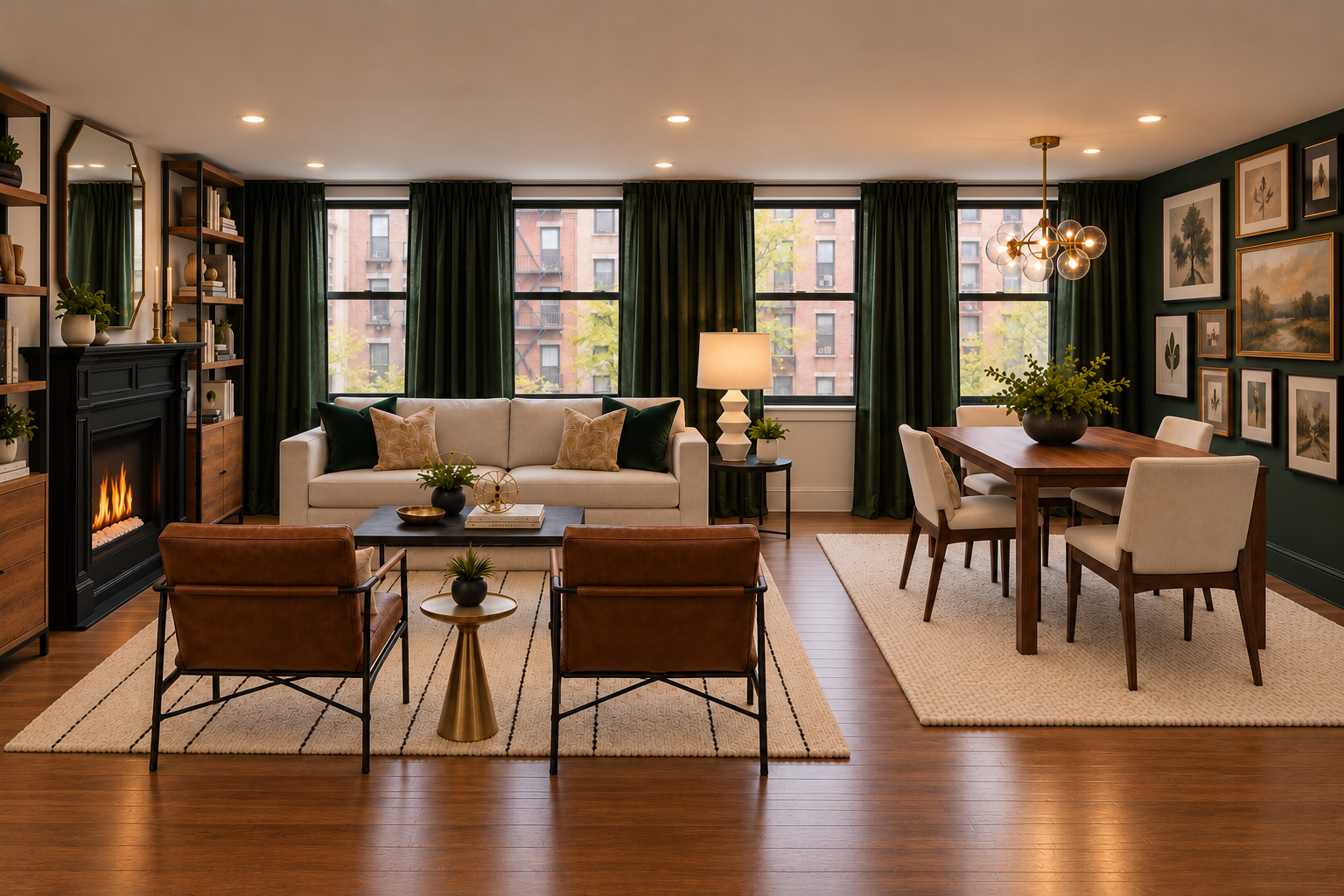
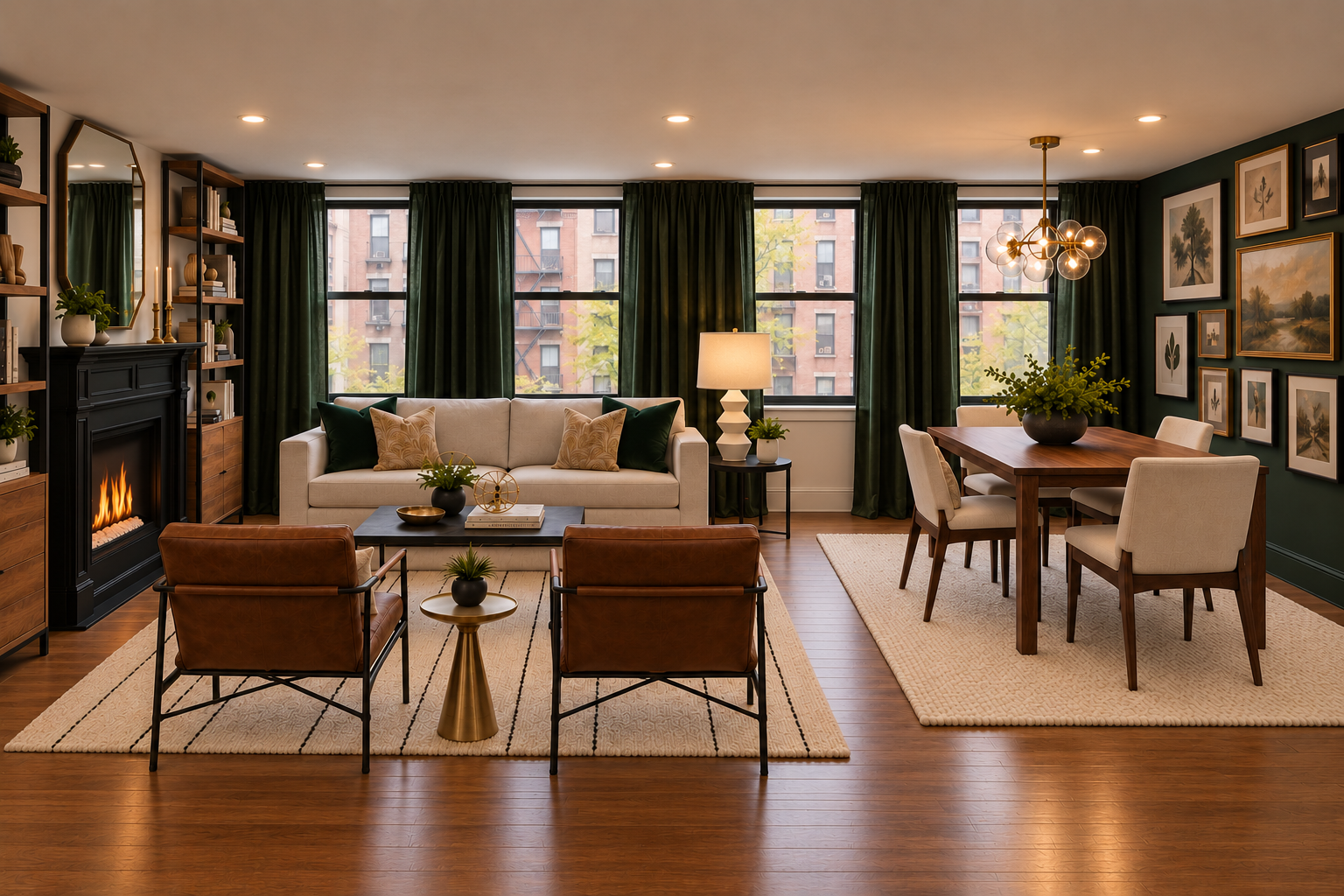
A low ceiling doesn’t have to limit a room’s personality. Full-height green draperies and tall bookcases emphasize vertical lines, while a gallery wall and sculptural chandelier give the dining area its own character. Designed by virtual interior designer Joshua Jones of JJones Design Co.; AI rendering.
Hi Ryan,
You can give your apartment personality and make it feel more open without renovating. With low ceilings, I focus on balancing the room’s proportions, introducing vertical elements, and choosing furniture and lighting that work with the space.
I understand this challenge firsthand. My own apartment has ceilings that are only seven feet, six inches high—the same height as yours. I’ve made it feel comfortable and personal with an accent wall filled with gallery art, tall bookshelves, ceiling-to-floor draperies, and a sculptural chandelier above the dining table. Together, these choices help balance the space without making it feel small or crowded.
Hang Draperies From Ceiling to Floor
Ceiling-to-floor draperies are one of my favorite ways to emphasize height. Hanging the rod or track close to the ceiling allows the panels to create a long, continuous line instead of stopping just above the window.
Choose panels that lightly touch the floor or sit just above it. I would avoid excessive puddling in a compact apartment, where extra fabric can look heavy and get in the way. Make sure the panels can open enough to let daylight into the room, too.
For help with rod placement, panel width, and measuring, visit my Drapery Guidance.
Give Tall Bookshelves a Place in the Room
Low ceilings don’t mean every piece of furniture needs to sit low. A tall bookshelf can draw the eye upward while providing useful storage without taking up much additional floor space.
The key is its proportion and placement. Choose a bookshelf that fits comfortably below the ceiling, check its depth against your available walking space, and secure it according to the manufacturer’s instructions. You can fill it with books and personal objects while leaving a few areas open to keep the arrangement balanced.
In my apartment, tall bookshelves help give the room a sense of verticality. They also make the space feel more complete and functional.
Use a Gallery Wall to Add Personality
You don’t have to leave your walls bare to make a low-ceiling room feel comfortable. In my apartment, I use an accent wall with gallery art extending across much of the wall. It creates a focal point and gives the room depth and personality.
For your space, I would plan the arrangement as a whole before hanging individual pieces. Allow it to extend vertically rather than confining every frame to a narrow horizontal band. Consistent spacing can help a collection of different artworks feel connected.
A gallery wall won’t physically change the ceiling height, but it can shift attention toward something you enjoy and make the room feel thoughtfully designed.
Choose a Chandelier That Fits Above Your Dining Table
You can still have a sculptural chandelier with low ceilings. I have one above my own dining table, and it adds character without overwhelming the room.
It doesn’t need to be oversized to make an impression. Look at the fixture’s overall height, width, and minimum hanging length—not just its appearance in a product photo. A shallow sculptural design may fit much better than a fixture with a tall body and a long suspension.
Above a dining table, approximately 30–36 inches between the tabletop and the bottom of the fixture is a common starting point. With a seven-foot-six ceiling, check the actual measurements carefully to ensure the fixture fits, allows comfortable sightlines, and stays over the table’s footprint.
In areas where people walk underneath the light, a flush or semi-flush fixture is usually a more practical choice.
Choose Furniture for Comfort and Proportion
You don’t need to furnish the apartment with tiny pieces. A properly sized sofa and a dining table that suits your daily needs can make the room feel more settled than several undersized pieces.
Pay attention to furniture height and visual weight as well as width. A sofa with a lower back, chairs with open frames, or tables with slender legs can leave more visible space around them. Balance those pieces with taller elements, such as your bookshelves and draperies.
Keep walking routes clear and give each piece a purpose. That will do more for everyday comfort than trying to make every item as small as possible.
Consider How the Wall and Ceiling Colors Work Together
A light ceiling can help a room feel open, but you don’t have to paint the entire apartment white. Depending on the room’s daylight and your preferred palette, using similar wall and ceiling colors can soften the boundary between them.
An accent wall is also an option, as my own apartment demonstrates. I would choose its location deliberately and coordinate it with the furniture and artwork so it feels connected to the room.
Test paint samples in your apartment during the day and evening before deciding. The same color can look very different under your windows and lighting.
Bring the Choices Together
For your apartment, I would start with ceiling-to-floor draperies, a furniture layout that gives you comfortable walking space, and one well-planned focal wall. Then I would consider tall storage and a dining light that fits the available height.
You can find more advice on furniture scale, layout, and visual balance in my guide, How to Make a Small Room Look Bigger Without Knocking Down Walls.
If you or another reader would like help putting these ideas together, my Virtual Interior Design Service can help you create a cohesive plan with furniture, lighting, colors, and decor suited to your room’s dimensions and your personal style.
Warmly,
Joshua
Have interior design related questions? You can ask Joshua here.