
Ask Joshua: How to Furnish a Dining Room Without Blocking the View
Hi Joshua,
My small dining room has sliding glass doors overlooking a beautiful view of the surrounding greenery. I would like to create a proper dining area, but I also want to preserve as much of the view as possible from the adjoining rooms.
How can I furnish the dining room without making the table and chairs feel like a visual barrier?
Thank you,
Chan - Los Angeles, California
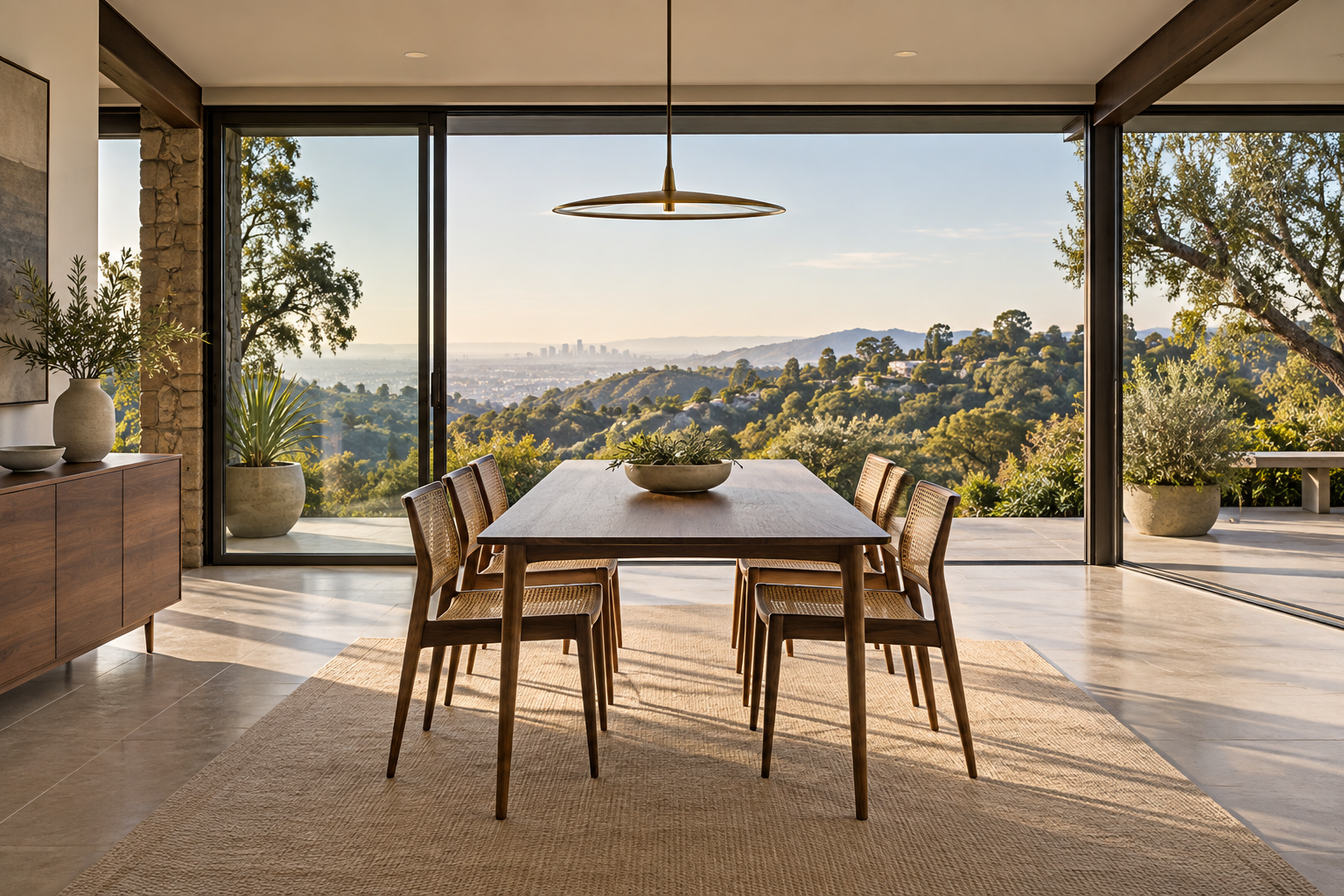
A mid-century modern dining room with low-profile furniture selected to preserve the surrounding hillside view, styled by virtual interior designer Joshua Jones of JJones Design Co. This image is an AI-generated rendering.
Hi Chan,
Thank you for writing in. When a dining room overlooks a beautiful outdoor setting, the furniture should complement the view rather than compete with it. You can still create a comfortable and complete dining area, but the placement, scale, and visual weight of each piece will be especially important.
Begin by studying the view from the adjoining rooms rather than only from inside the dining room. Stand in the areas where you most often see the sliding doors and identify which portions of the view you want to preserve. These sightlines can help determine the best position and orientation for the dining table.
Depending on the shape of the room, placing the table parallel to the sliding doors may allow the furniture to sit lower and wider across the view. In other spaces, positioning the table so its narrow end faces the doors may create a clearer sightline through the center of the room. Before purchasing a table, use painter’s tape to outline its dimensions on the floor and view the proposed placement from the adjoining rooms.
You should also preserve a comfortable walkway to the sliding doors. Allow at least 36 inches between the table and surrounding walls or doors so chairs can be pulled out. If people regularly walk behind the chairs to reach the outdoor area, approximately 42 to 48 inches will create a more comfortable path.
For the dining table, look for a visually lightweight design with a slim tabletop and slender legs. Wood, metal, and glass can all work, so you do not necessarily need a transparent table to preserve the view. A glass top may reduce visual weight, but a simple wood table with thin legs can provide warmth without feeling bulky.
The table base deserves careful consideration as well. Four slender legs can leave the center open, while a thoughtfully designed pedestal table may provide more flexibility when arranging chairs. Avoid thick trestle bases, oversized legs, and heavy aprons that create a solid visual block beneath the tabletop.
Choose dining chairs with low or open backs that allow light and the outdoor scenery to remain visible. Cane, woven rope, spindle, mesh, and other open-back designs are all good options. Armless chairs will generally occupy less visual and physical space, although small armchairs could still be used at the ends of the table if the room allows.
Pay close attention to the height of the chair backs. A beautiful chair can still interrupt the view if its back extends too far above the table. When comparing options, check the overall chair height rather than relying only on how lightweight it appears in a product photograph.
The light fixture should also support the view. Consider a fixture with an open framework, slender profile, or transparent glass rather than a large solid shade. A simple linear chandelier can work particularly well over a rectangular table because it defines the dining area without creating a heavy visual obstruction.
Keep the tabletop styling restrained. Tall floral arrangements, large branches, and oversized decorative objects may look beautiful, but they can quickly block the view. A low bowl, a few small vessels, or a compact arrangement will add interest while allowing the greenery outside to remain the room’s natural focal point.
Window treatments can make a difference as well. If privacy and light control are needed, choose curtains that can stack beyond the glass doors or shades that retract neatly. This will prevent excess fabric from covering the view when the treatments are open.
The goal is not to make the dining furniture disappear completely. Instead, choose pieces that frame the outdoor scenery and allow your eye to travel easily through the room. With the right layout, open silhouettes, and restrained styling, you can create a functional dining space without sacrificing the view you enjoy.
If you need help determining the best dining room layout for your home, my virtual interior design service can help. I can create a personalized design plan that considers your room’s measurements, important sightlines, walkways, and outdoor view while selecting appropriately scaled furniture for the space. Learn more about working with virtual interior designer Joshua Jones of JJones Design Co. to create a dining room tailored to your home and lifestyle.
I hope this helps you create a dining room that feels complete while keeping the greenery outside at the center of the experience.
Warmly,
Joshua
Have interior design related questions? You can ask Joshua here.