
Ask Joshua: How to Display Art Without Putting Holes in the Walls
Hi Joshua,
I am a renter, and my landlord is very strict about putting holes in the walls. I would also prefer not to patch and repaint numerous holes when I eventually move.
I have several pieces of art that I would like to display. I know adhesive strips and hooks are available, but I do not completely trust them. What other renter-friendly options can I use?
Thank you,
Jacqueline - Newark, New Jersey
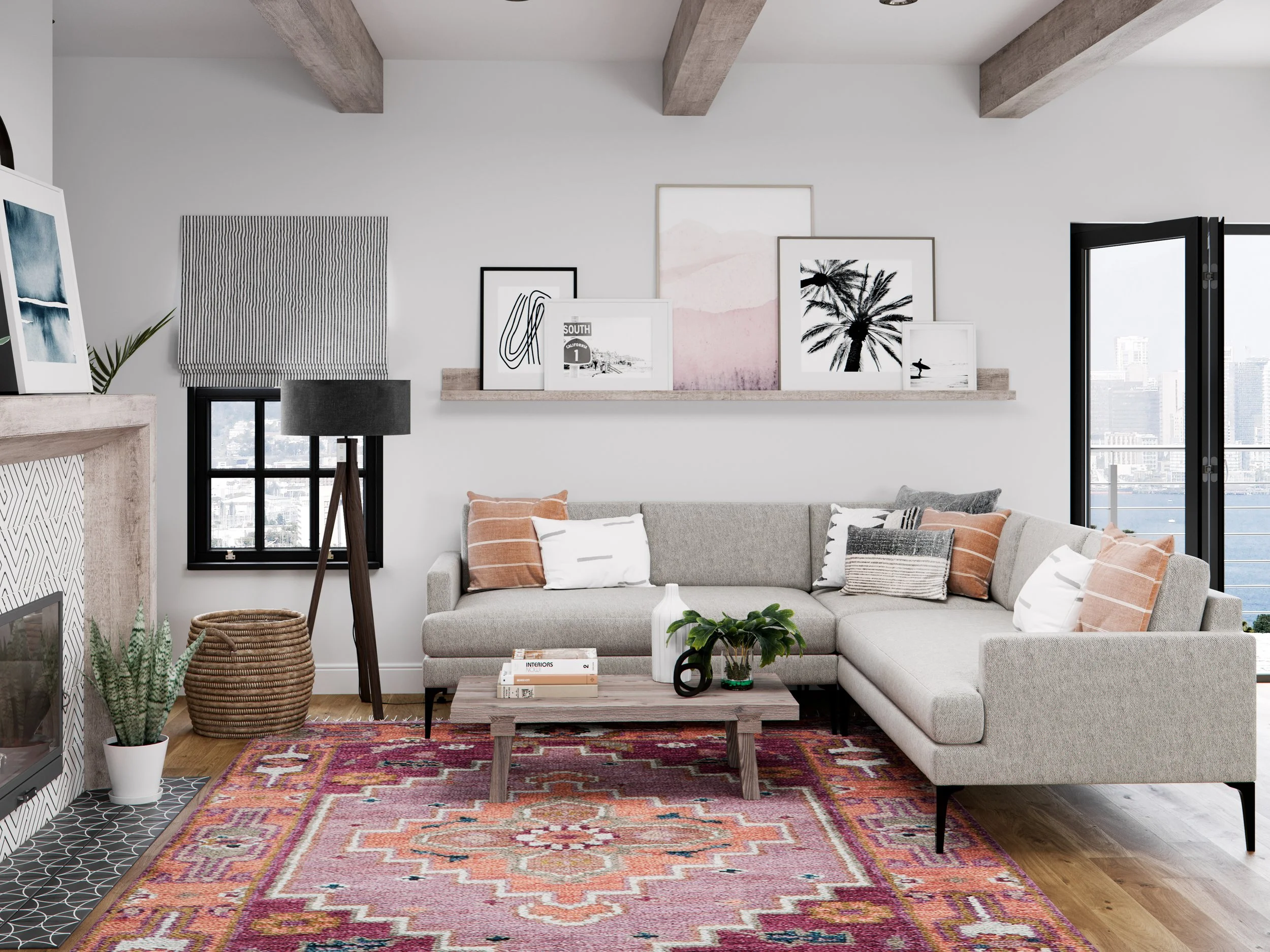
A California casual-style living room with layered artwork displayed on a picture ledge, designed by virtual interior designer Joshua Jones of JJones Design Co.
Hi Jacqueline,
Thank you for writing in. My first recommendation would be to install a picture ledge. It will not completely eliminate holes, but one properly installed ledge can display several pieces of artwork while requiring far fewer holes than hanging every frame individually.
Before installing one, review your lease or ask your landlord whether a small number of holes will be acceptable if you patch them before moving. A picture ledge may be a reasonable compromise because it limits the wall penetrations to one defined area.
Use a Picture Ledge for Several Pieces of Art
Choose a simple, streamlined ledge that allows the artwork to remain the focal point. It should be wide enough to support your frames securely without projecting unnecessarily far into the room.
Instead of lining up equally sized frames in a straight row, combine artwork in different heights, sizes, and orientations. Begin with the largest piece and layer smaller frames partially in front of it. The overlap will create depth and prevent the arrangement from looking stiff.
You can also add one or two small objects, such as a ceramic vase or sculptural piece, but keep the accessories restrained so the ledge does not become cluttered.
One of the greatest advantages of a picture ledge is flexibility. You can rotate the artwork, add new pieces, and change the arrangement without making additional holes every time.
Before purchasing a ledge, measure the available wall and decide how many pieces you want to display. Review its weight limit and installation requirements, and make sure it is secured with hardware appropriate for the wall construction. If you are uncertain about installation, ask the landlord or a qualified professional for assistance.
Lean Artwork on Furniture
If your landlord does not permit any holes, use a console table, dresser, sideboard, media cabinet, mantel, or bookcase as a display surface.
Lean one substantial piece against the wall and place one or two smaller frames partially in front of it. A lamp, small plant, or decorative bowl can help connect the artwork to the furniture without making the surface feel crowded.
Place heavier frames toward the back and avoid displaying fragile art where it could be bumped. This approach works best on furniture with enough depth to support the artwork safely.
Use a Freestanding Art Easel
An easel can turn a favorite painting or framed print into a focal point without requiring any wall attachment. It can work beautifully in an empty corner, beside a console, or near a reading chair.
Choose an easel that relates to the rest of the room. A wood design can introduce warmth, while a slender metal easel may feel more contemporary.
Make sure it is stable and positioned outside the main walkway. This option may not be appropriate for heavy artwork or homes with young children or active pets unless the piece can be secured safely.
Display Oversized Art on the Floor
A large piece of artwork can also be placed directly on the floor and leaned against the wall. This creates a relaxed, gallery-like appearance that works particularly well in a living room, bedroom, or home office.
The artwork should be large enough for the placement to feel intentional. Position it beside a low cabinet, behind a chair, or in another protected location where it cannot easily slide or tip.
Avoid placing heavy frames or artwork with glass in a busy walkway.
Use Existing Shelves or Picture Rails
Bookcases and built-in shelves can hold framed artwork along with books, pottery, photographs, and other decorative pieces. Leaving some open space around the frames will allow the artwork to stand out.
If your apartment has an existing picture rail near the ceiling, you may be able to suspend artwork from it using compatible hooks and cords. Confirm that the rail is securely installed and intended to support artwork before using it.
Be Careful With Adhesive Products
Adhesive strips and hooks can be convenient, but they are not completely risk-free. They may pull away paint, damage wallpaper, or leave a visible difference in the finish—particularly when the paint is old, textured, poorly bonded, or recently applied.
If you decide to try them, follow the instructions carefully and test the adhesive in an inconspicuous area. Confirm that the product is suitable for both the wall surface and the weight of the artwork.
I would not use adhesive hangers for anything valuable, heavy, framed with glass, or difficult to replace.
My Recommendation for Your Apartment
I would ask your landlord for permission to install one picture ledge in the room where you want to display most of your collection. It will require only a limited number of holes while giving you the freedom to layer, rotate, and rearrange several pieces of artwork.
If no holes are permitted, lean artwork on a console, dresser, or bookcase and use a freestanding easel for one favorite piece. These solutions will allow your apartment to feel personal without creating a wall-repair project when you move.
If you need help styling a rental without making extensive permanent changes, my virtual interior design service can help. I can create a personalized design that works with your lease restrictions, existing furniture, and art collection.
I hope this helps you display the artwork you love while respecting the requirements of your rental.
Warmly,
Joshua
Have an interior design related question? You can ask Joshua here.