Ask Joshua: How to Mix Modern Furniture With Dark Wood Built-Ins
Hi Joshua,
I recently moved into an older home, and the only room available for my office has dark-stained wood built-ins. They give the room a traditional, old-fashioned appearance, while my personal style is much more modern.
I do not know how to furnish the office without making the modern pieces feel disconnected from the existing architecture. How can I bring the two styles together?
Thank you,
Tom - Hartford, Connecticut
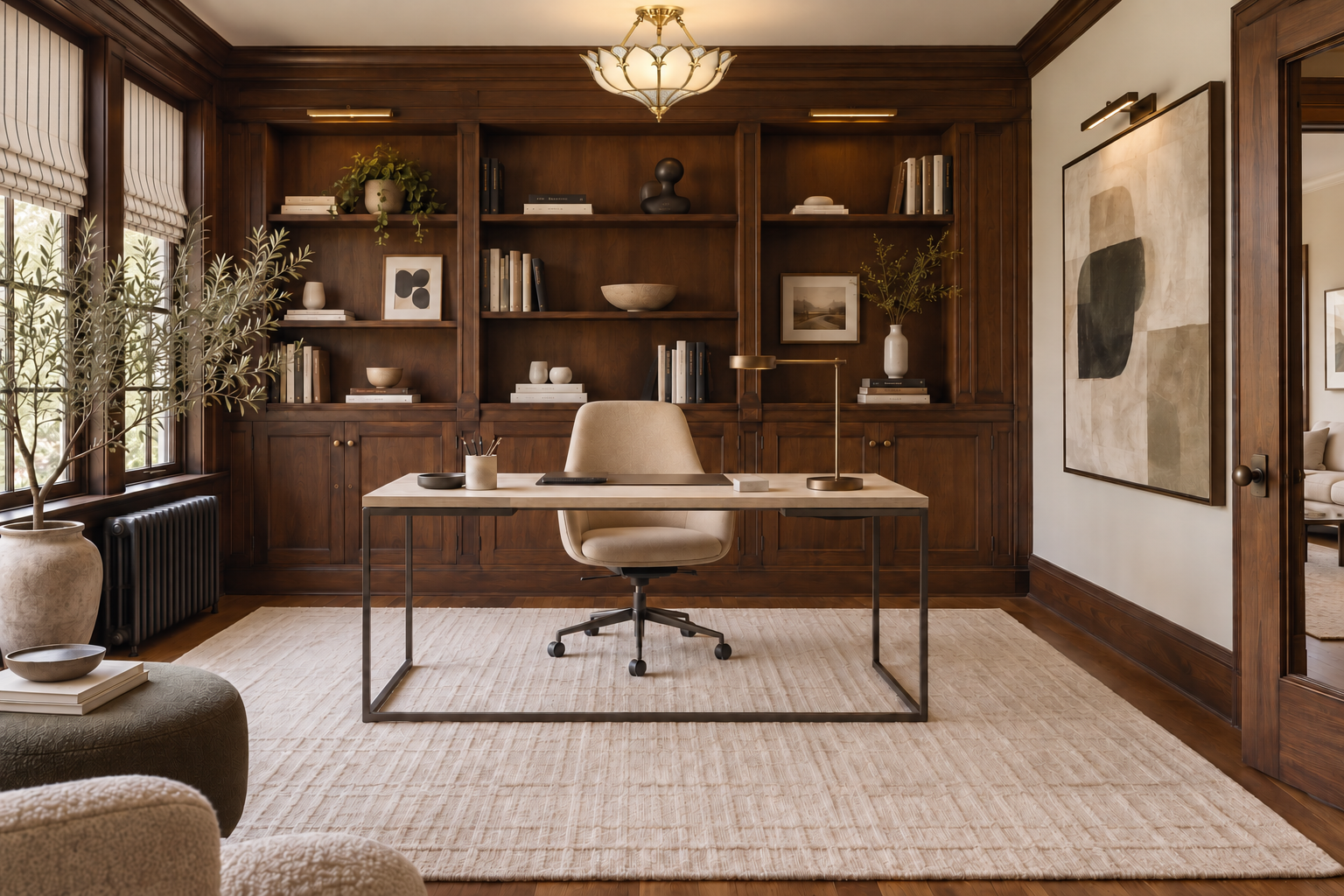
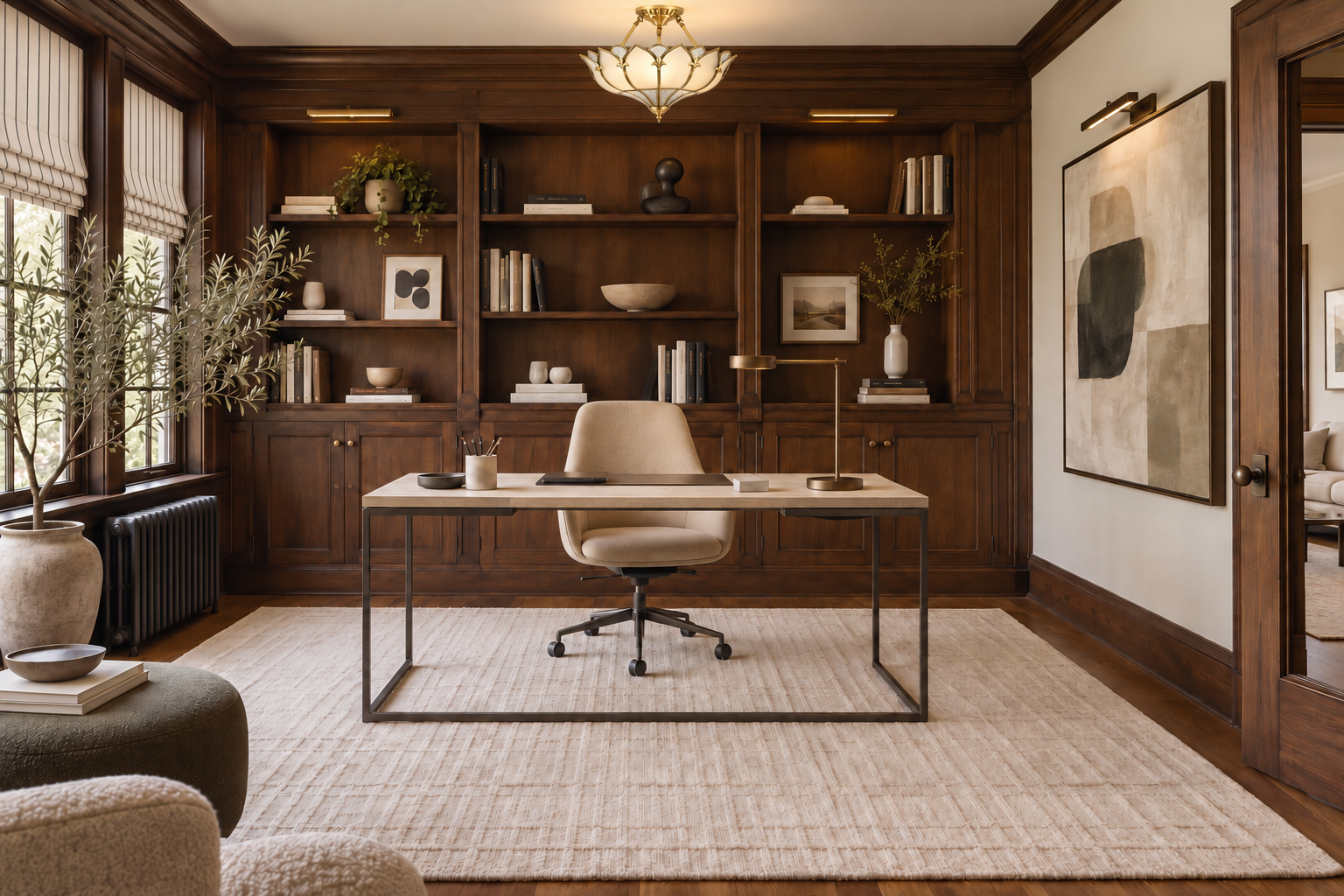
A modern home office paired with original dark walnut built-ins, striped Roman shades, and a sculptural brass light fixture, styled by virtual interior designer Joshua Jones of JJones Design Co. This image is an AI-generated rendering.
Hi Tom,
Thank you for writing in. Combining modern furniture with traditional architectural features can initially feel challenging, especially when dark wood built-ins dominate the room. However, the two styles do not have to match perfectly to create a cohesive interior.
In fact, the contrast between historic woodwork and modern furniture can give your office more character than a room designed entirely in one style. The goal is to create a thoughtful relationship between the old and new rather than trying to disguise one or force it to imitate the other.
Before considering paint, determine whether the built-ins are original to the house and assess the quality and condition of the wood. Well-preserved built-ins can be an important architectural feature, particularly when they relate to other doors, trim, paneling, or cabinetry throughout the home. Painting them is possible, but it should not be the first or only solution.
Begin with a modern desk in a clean, simple silhouette. Avoid an overly ornate traditional desk that may make the room feel heavier and more formal. A streamlined wood, metal, or mixed-material desk will create contrast without competing with the built-ins.
The desk does not need to match the existing stain exactly. Trying to coordinate two similar but noticeably different wood finishes can sometimes look accidental. Instead, create a clear contrast or repeat the existing wood tone in a small, intentional way. For example, a modern desk with a dark wood top and slender metal base could acknowledge the built-ins without attempting to duplicate them.
Choose an office chair with a sculptural contemporary shape and upholstery that lightens the room. Warm ivory, camel, cognac, muted green, or another softened neutral can bridge the dark wood and your modern furniture. If you prefer a black chair, select one with an open or visually lightweight frame so it does not add too much heaviness.
Lighting will make a significant difference. Dark built-ins absorb light, so the room may need more than one source. Combine overhead lighting with a desk lamp and a floor or table lamp. A contemporary light fixture can act as a visual bridge between the modern furniture and traditional architecture while helping the room feel brighter and more current.
You can also introduce contrast through the rug. A light-colored rug will soften the visual weight of the built-ins and define the office area. Look for a subtle geometric pattern, organic texture, or contemporary abstract design that relates to the room’s colors without appearing overly busy.
Treat the built-in shelves as part of the design rather than simply filling them with everything you own. Leave some open space and arrange books in a combination of vertical and horizontal stacks. Add a restrained selection of contemporary ceramics, sculptural objects, framed photographs, and small artwork. The cleaner styling will make the traditional cabinetry feel more modern without permanently altering it.
Large contemporary artwork can be especially effective in an older room. A bold abstract piece or a simple graphic composition introduces a modern point of view while creating an intentional contrast with the dark wood. If the room has open wall space, choose artwork large enough to balance the visual presence of the built-ins.
Your wall color should support both styles. A warm off-white or soft neutral can brighten the room and create a clean backdrop, but you are not limited to pale colors. Muted green, deep blue, warm taupe, or even a rich charcoal can work with dark wood if the room receives enough light. Always test large paint samples beside the built-ins before deciding.
Hardware is another possible update, particularly if the existing knobs and pulls feel unrelated to the direction you want to take. Simple aged-brass, blackened metal, or streamlined bronze hardware can subtly modernize the cabinetry. Save the original hardware so it can be reinstalled later if desired.
If the built-ins have removable backing panels, you may be able to paint or wallpaper only the shelf interiors. This introduces contrast and helps objects stand out without covering the entire wood surface. A warm neutral, muted color, grasscloth, or understated pattern could make the built-ins feel more personalized while preserving most of their original character.
Painting all the built-ins remains an option if the wood is damaged, low quality, previously altered, or simply something you know you will never enjoy. However, paint is a permanent-looking change that can be difficult and expensive to reverse. Before proceeding, consider making the more reversible updates first and living with the room for a while.
You do not need to choose between respecting the older home and expressing your modern style. Let the built-ins provide warmth, history, and architectural depth while your desk, chair, lighting, rug, and artwork introduce cleaner lines and a contemporary perspective. The contrast can become the most compelling part of the room.
If you need help combining existing architectural features with your preferred style, my virtual interior design service can help. I can create a personalized office design that works with the built-ins while selecting modern furniture, lighting, color, and décor that feel true to you.
I hope this helps you see the dark wood built-ins as an opportunity rather than a limitation.
Warmly,
Joshua
Have interior design related questions? You can ask Joshua here.