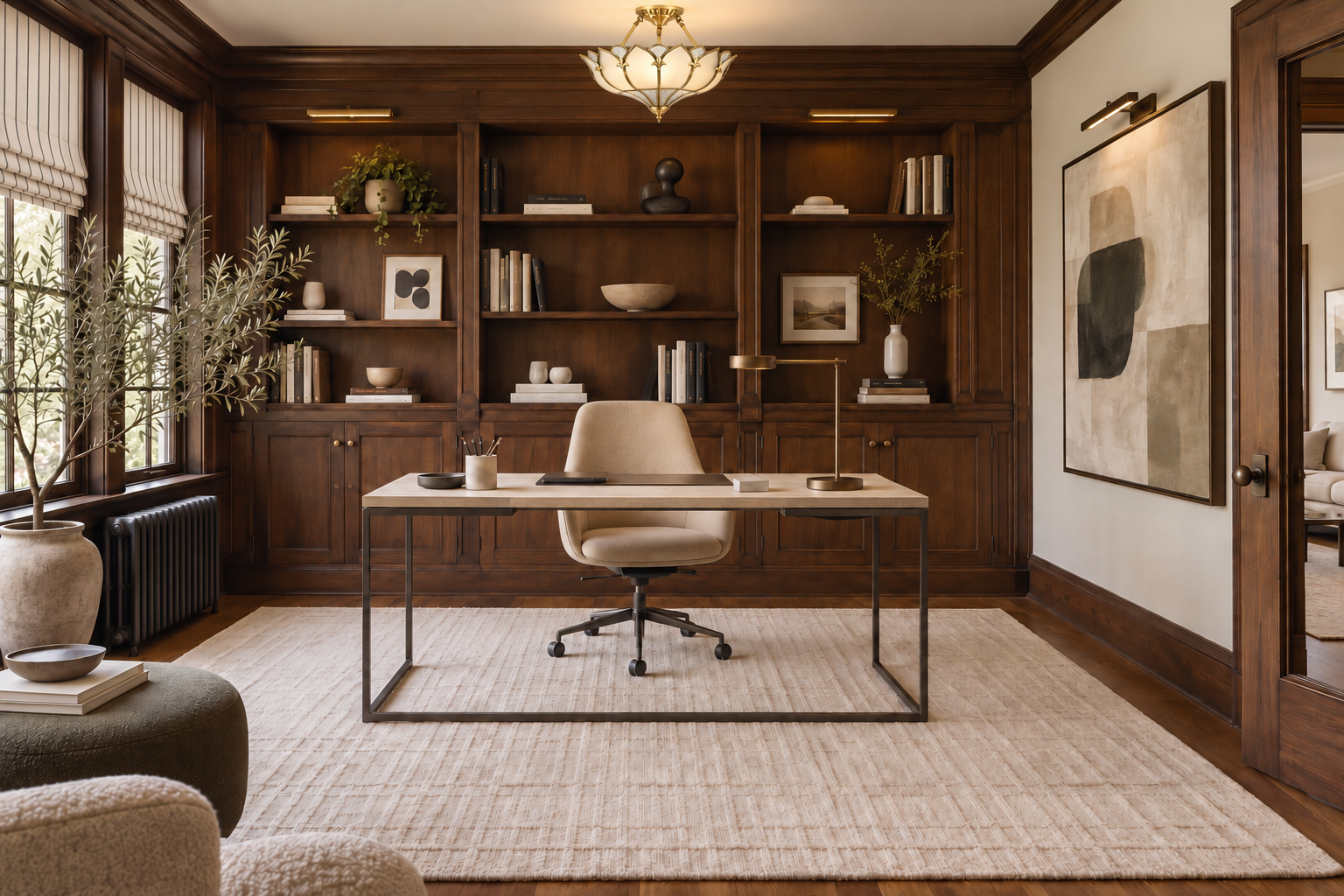
Ask Joshua: Should You Paint the Original Wood Trim in an Older Home?
Dear Joshua,
I inherited my grandmother’s house, and my family plans to move into it after completing a few updates. The home was built in the 1930s and has a great deal of character that I would like to preserve.
I want to paint the main living areas in darker colors, but I am unsure what to do with the original wood trim around the windows, doors, and baseboards. I have considered painting it white so it will coordinate with the darker walls, but several friends have told me that painting the wood would be a mistake and could diminish the home’s character.
How can I modernize the house for my family without losing the details that make it special?
Thank you,
Ryan - Austin, Texas
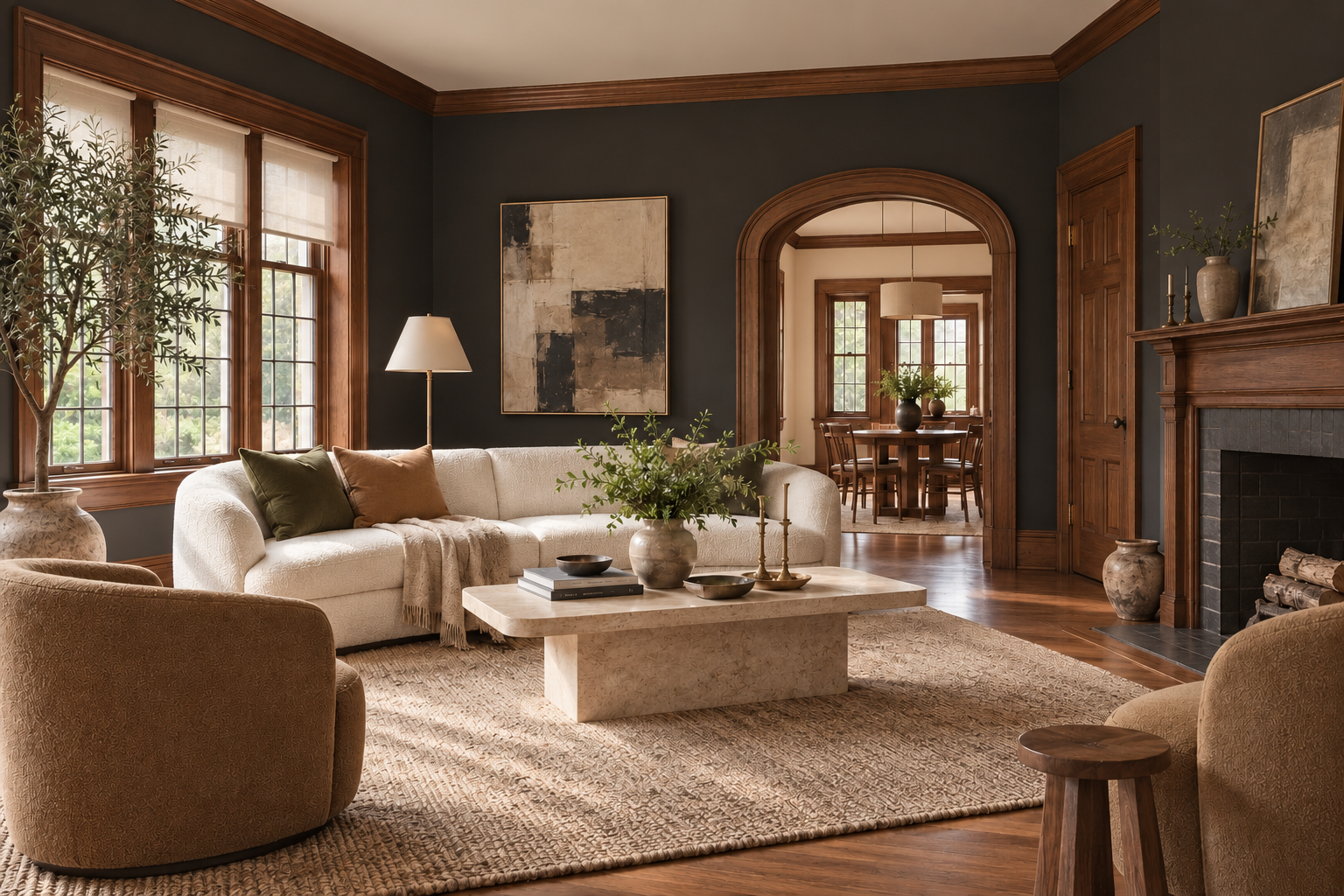
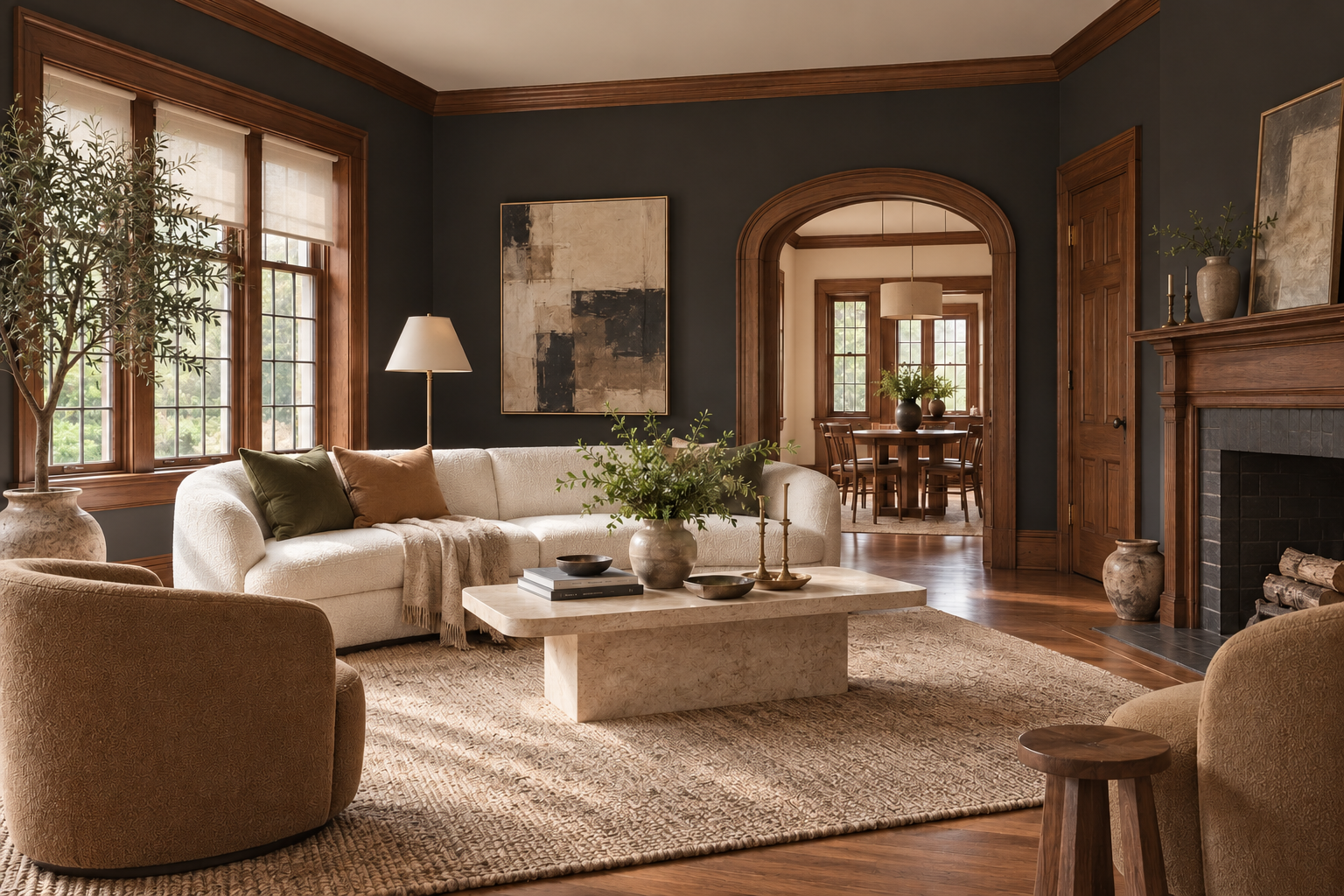
A modern-organic living room in a 1930s home with preserved walnut trim and Benjamin Moore Midnight Oil walls, styled by virtual interior designer Joshua Jones of JJones Design Co. This image is an AI-generated rendering.
Hi Ryan,
Thank you for writing in with such a thoughtful question. Deciding whether to paint original wood trim can be difficult, especially when the home has been passed down through your family. You are not only making a design decision; you are determining how much of the house’s history you want to carry into its next chapter.
After reviewing the pictures you provided, I recommend keeping the existing wood trim unpainted. It appears to be an important architectural feature, and I think the natural wood will look beautiful beside the darker wall colors you are considering.
White trim is not required with dark walls. In fact, the contrast between a rich wall color and warm woodwork can make an older home feel sophisticated, dramatic, and current while preserving its original character. Deep blue, forest green, charcoal, aubergine, and warm brown can all work beautifully with natural wood, depending on the wood’s undertone and the room’s lighting.
Before making any changes, determine whether the trim is original and what type of wood and finish you have. Some older homes contain high-quality hardwood trim intended to remain visible, while other trim may have been made from paint-grade wood or replaced during a later renovation. Its condition, consistency, and relationship to the home’s doors, floors, built-ins, and staircase should all influence the decision.
I would begin by having the woodwork gently cleaned. Years of dust, smoke, furniture polish, and grime can make the finish appear darker, duller, or more orange than it really is. Cleaning a small, inconspicuous area may reveal that the trim needs far less intervention than you expected.
If the finish is scratched, faded, or uneven, consult a professional who has experience restoring historic woodwork. The trim may only need minor touch-ups, conditioning, or a compatible protective finish. Completely stripping and restaining it should not be the automatic first step because that process removes the existing finish and may change the color and patina that developed over decades.
You should also be cautious when sanding, stripping, or disturbing painted and finished surfaces in a home built during the 1930s. Older coatings may contain lead or produce hazardous dust. Have questionable surfaces tested and work with a qualified professional before beginning any process that disturbs the existing finish.
When selecting a wall color, bring large samples into the room and place them directly beside the wood trim. View the colors throughout the day because natural and artificial light will affect both the paint and the wood. A color that appears balanced in bright daylight may look much heavier at night.
Pay close attention to undertones. Warm wood often pairs beautifully with deep greens, muted blues, warm charcoal, and earthy reds. A very cool gray or stark blue may emphasize orange undertones in the wood more than you would like. The goal is not necessarily to match the trim but to select a wall color that creates an intentional relationship with it.
You can modernize the home without changing the woodwork by introducing updated lighting, furniture with cleaner silhouettes, contemporary artwork, and a thoughtful mix of textiles. The contrast between original architectural details and newer furnishings can make the space feel collected rather than dated.
If you remain unsure, update one room before making a decision throughout the entire house. Paint the walls, style the room with your furniture, and live with the natural trim for a while. You may discover that the wood feels completely different once the surrounding colors and furnishings have changed.
Painting original wood trim is not always wrong. If the wood is badly damaged, inconsistent, made from paint-grade material, or already altered beyond restoration, paint may create a more cohesive result. However, paint is difficult and expensive to remove later, so I would avoid making that decision until you understand exactly what you have.
In your home, retaining the wood trim will allow you to preserve an important connection to your grandmother while still creating a richer, more contemporary interior for your family. The character of the house and your preference for dark color do not need to compete—they can make each other more distinctive.
If you need help selecting dark paint colors that complement your existing woodwork, my virtual interior design service can help. I can create a personalized design plan that respects the home’s original architecture while making it comfortable and functional for the way your family lives today.
I hope this helps you move forward with greater confidence and preserve the features that make your grandmother’s home meaningful.
Warmly,
Joshua
Have interior design related questions? You can ask Joshua here.