
Ask Joshua: How to Reupholster an Inherited Chair With New Fabric
Hi Joshua,
I inherited a chair whose shape and traditional style I absolutely love. It also holds a great deal of sentimental value, so I would like to use it in my home.
Unfortunately, the chair was previously reupholstered in a faded yellow-and-brown pattern that does not work with my interior. I would love to replace the fabric, but I have never reupholstered furniture before and feel overwhelmed by the process.
Where should I begin?
Thank you,
Kim - Madison, Wisconsin
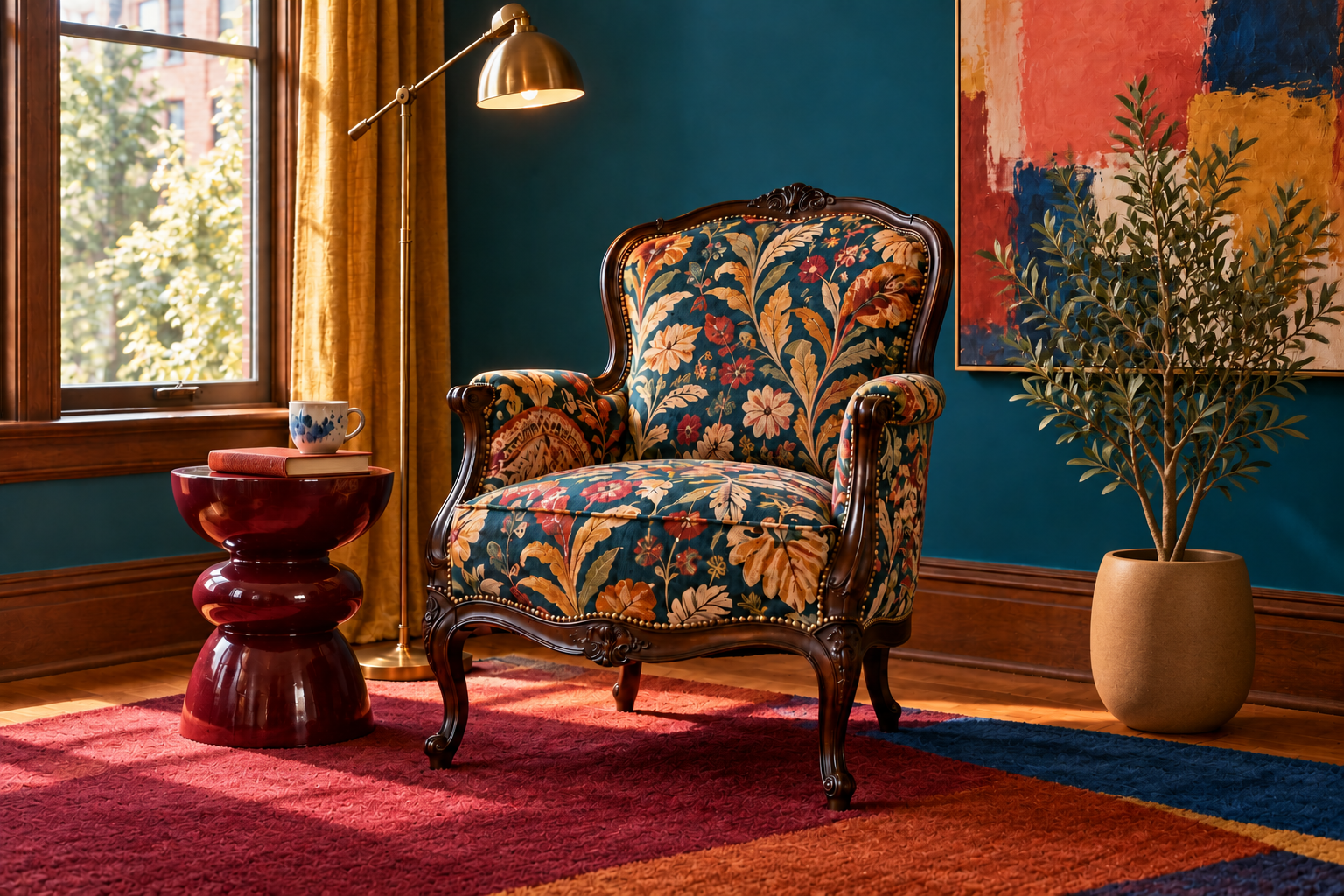
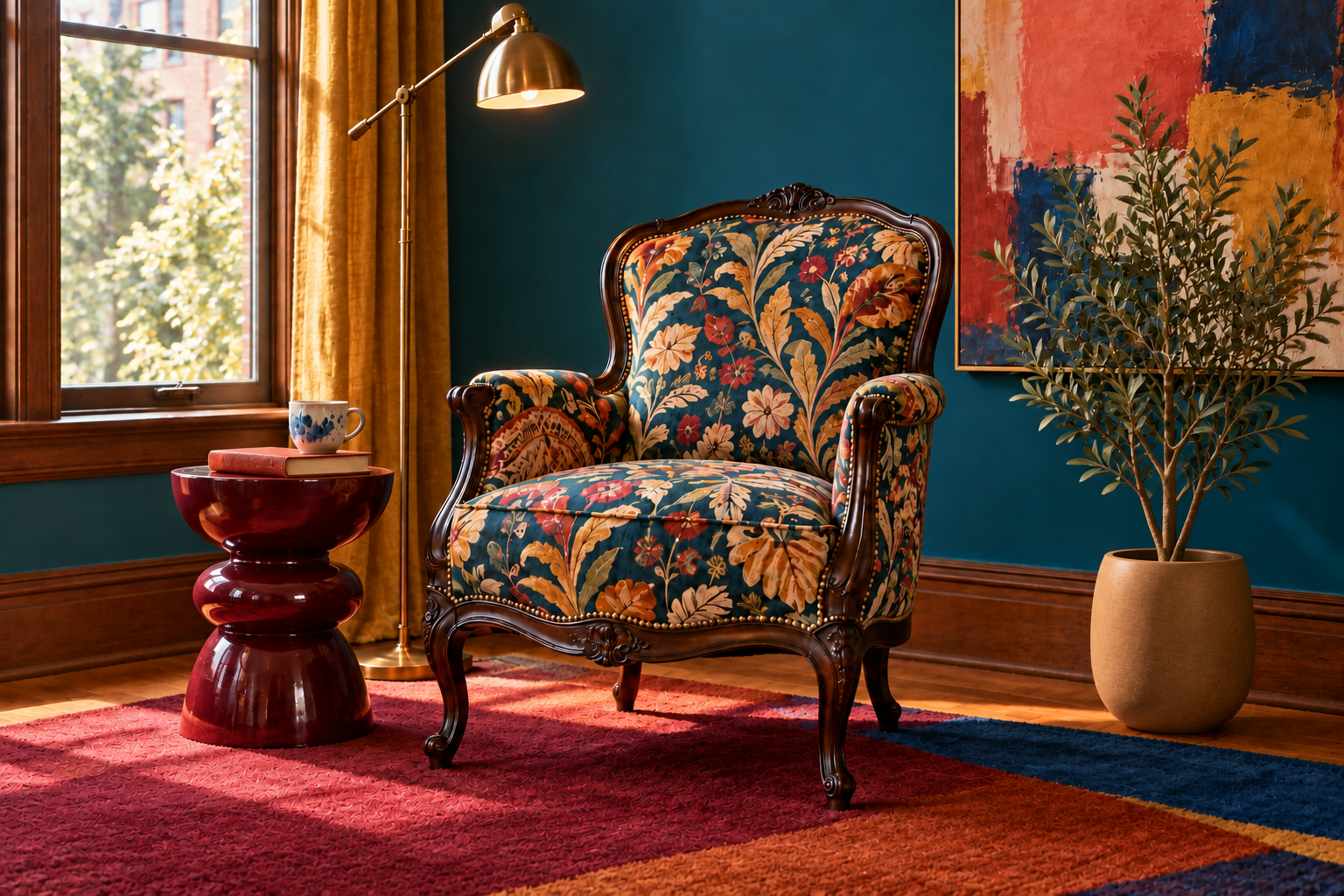
A vintage accent chair reupholstered in bold botanical fabric within a colorful eclectic reading nook, styled by virtual interior designer Joshua Jones of JJones Design Co. This image is an AI-generated rendering.
Hi Kim,
Thank you for writing in. An inherited chair does not need to remain hidden in storage simply because its current fabric does not suit your home. If you love its shape and the piece holds sentimental value, reupholstering it can give the chair another generation of use while preserving an important connection to your family.
Before selecting fabric, have the chair’s condition evaluated. An experienced upholsterer can inspect the frame, joints, springs, webbing, cushion filling, and existing upholstery. A beautiful chair may need more than new fabric, particularly if it is older or has already been reupholstered. Addressing structural or comfort issues during the process will help ensure that the finished chair is attractive, supportive, and durable.
I would not recommend beginning with a complex inherited chair as your first upholstery project. Re-covering a simple removable dining-chair seat can be approachable for a beginner, but an upholstered armchair may involve springs, padding, curved seams, welting, pattern matching, and specialized tools. Because this piece has sentimental value, hiring a professional upholsterer will reduce the risk of damaging it.
Once you find an upholsterer, ask for an estimate before purchasing fabric. The cost will depend on the chair’s construction, its condition, the amount of labor required, and whether the cushions or internal materials need to be replaced. The upholsterer can also determine the correct yardage and explain whether a patterned fabric will require additional material for matching and placement.
When choosing the new fabric, consider how the chair will be used. A decorative chair in a quiet bedroom does not require the same level of durability as a family-room chair used daily by children and pets. Look for fabric specifically labeled for upholstery and review its care instructions, fiber content, abrasion rating, stain resistance, and resistance to fading.
Abrasion ratings can be helpful when comparing fabrics tested using the same method, but they should not be the only factor in your decision. A higher rating does not automatically mean a fabric will resist stains, pet claws, sunlight, or improper cleaning. The weave and texture matter as well. Loosely woven fabrics and fabrics with long loops may be more vulnerable to snagging, while tightly woven performance fabrics are often better suited to active households.
Color and pattern will determine whether the chair quietly complements the room or becomes a focal point. If the chair has a detailed traditional frame, a solid fabric or subtle texture can highlight its silhouette without making it feel overly formal. A stripe, botanical, plaid, or geometric pattern can give the chair more personality, but the pattern’s scale should relate to the chair’s size and shape.
A traditional chair does not necessarily require traditional fabric. Pairing an older frame with a fresh color, contemporary pattern, or richly textured solid can make it feel relevant to your home while preserving its character. Conversely, a timeless fabric such as linen-look upholstery, wool, velvet, or a small-scale pattern can honor the chair’s history without reproducing its previous appearance.
Always order a fabric sample before making a final decision. View it in the room where the chair will be used and examine it in both natural and artificial light. Place the sample beside the rug, wall color, window treatments, and nearby furniture. You should also touch the fabric and consider whether it feels comfortable against your skin.
A small sample may not reveal the full effect of a large pattern, so request a larger memo sample when possible. You can also print or view an image showing the complete pattern repeat. Your upholsterer can help determine which part of the design should be centered on the chair and how the pattern will continue across the seat, back, and cushions.
Before ordering the material yourself, confirm that your upholsterer accepts customer-provided fabric. Some upholstery shops prefer to supply the fabric, while others charge an additional fee or cannot guarantee material purchased elsewhere. Ask whether the fabric needs a particular backing or treatment and whether you should order extra yardage for future repairs.
If you feel uncertain about selecting a fabric that works with the rest of the room, an interior designer can narrow the enormous range of choices into a thoughtful group of options. Through my virtual interior design service, I can help you choose a fabric that respects the chair’s sentimental history while coordinating with your existing furnishings, colors, and lifestyle.
Reupholstering an inherited chair is an investment, but its value is not limited to what the chair might sell for. Giving a meaningful piece new life can make your home feel more personal and allow you to enjoy something that might otherwise remain unused.
I hope this helps you begin the process with confidence and transform your inherited chair into a piece you will be proud to display.
Warmly,
Joshua
Have interior design related questions? You can ask Joshua here.