Ask Joshua: Should You Put an Area Rug Under a Dining Table?
Hi Joshua,
My husband and I recently bought a new dining table, but the room still feels a little unfinished. I think an area rug would help anchor the table and make the space feel warmer, while my husband worries that it will collect crumbs, become stained, and make it difficult to pull the chairs in and out.
We use the dining room every day and have a dog, so the rug would need to be practical and easy to maintain. Our table is rectangular and seats six people.
Do you recommend placing an area rug under a dining table? If so, what material, size, and shape would work best for a busy dining room?
Thank you,
Emily – Nashville, Tennessee
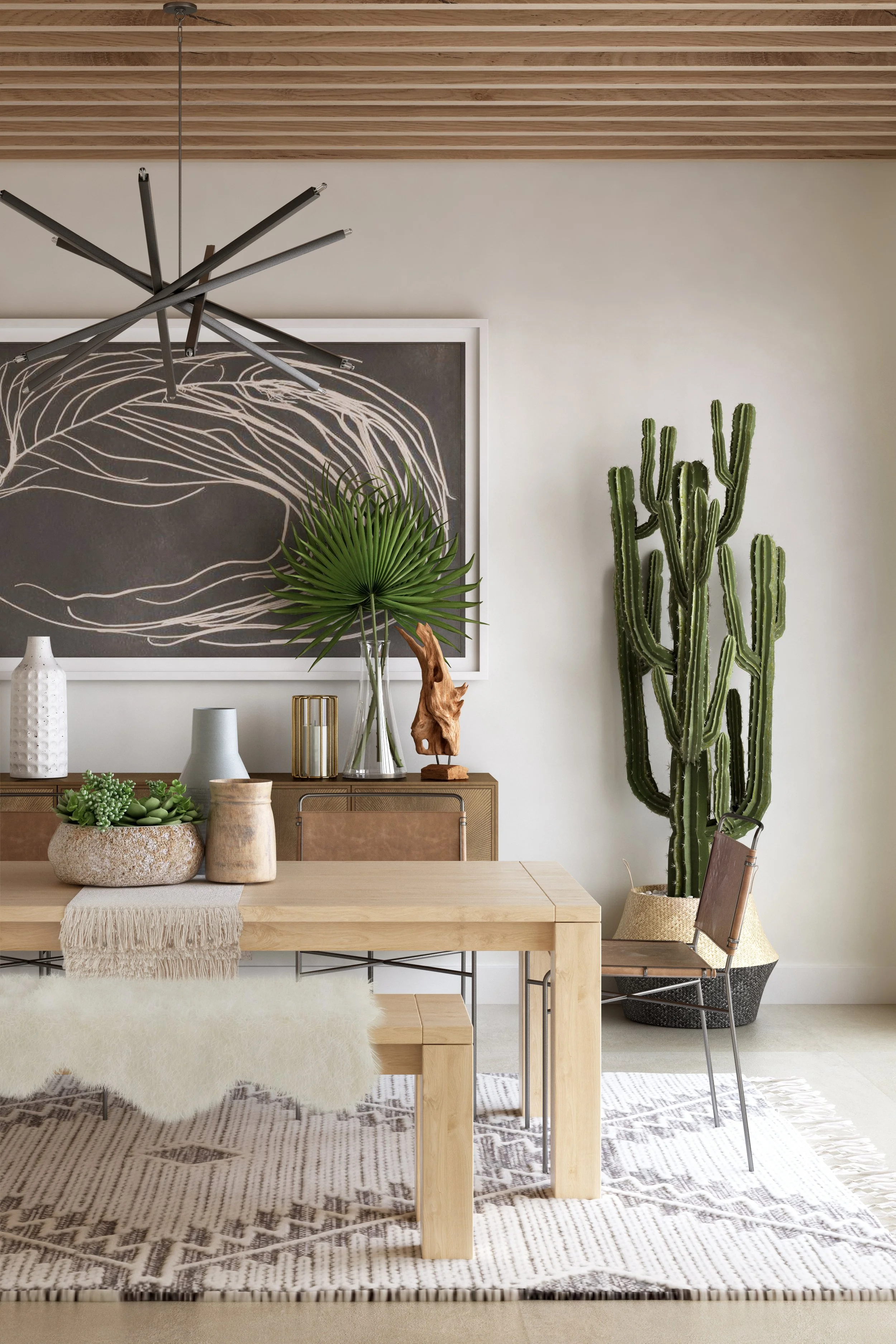
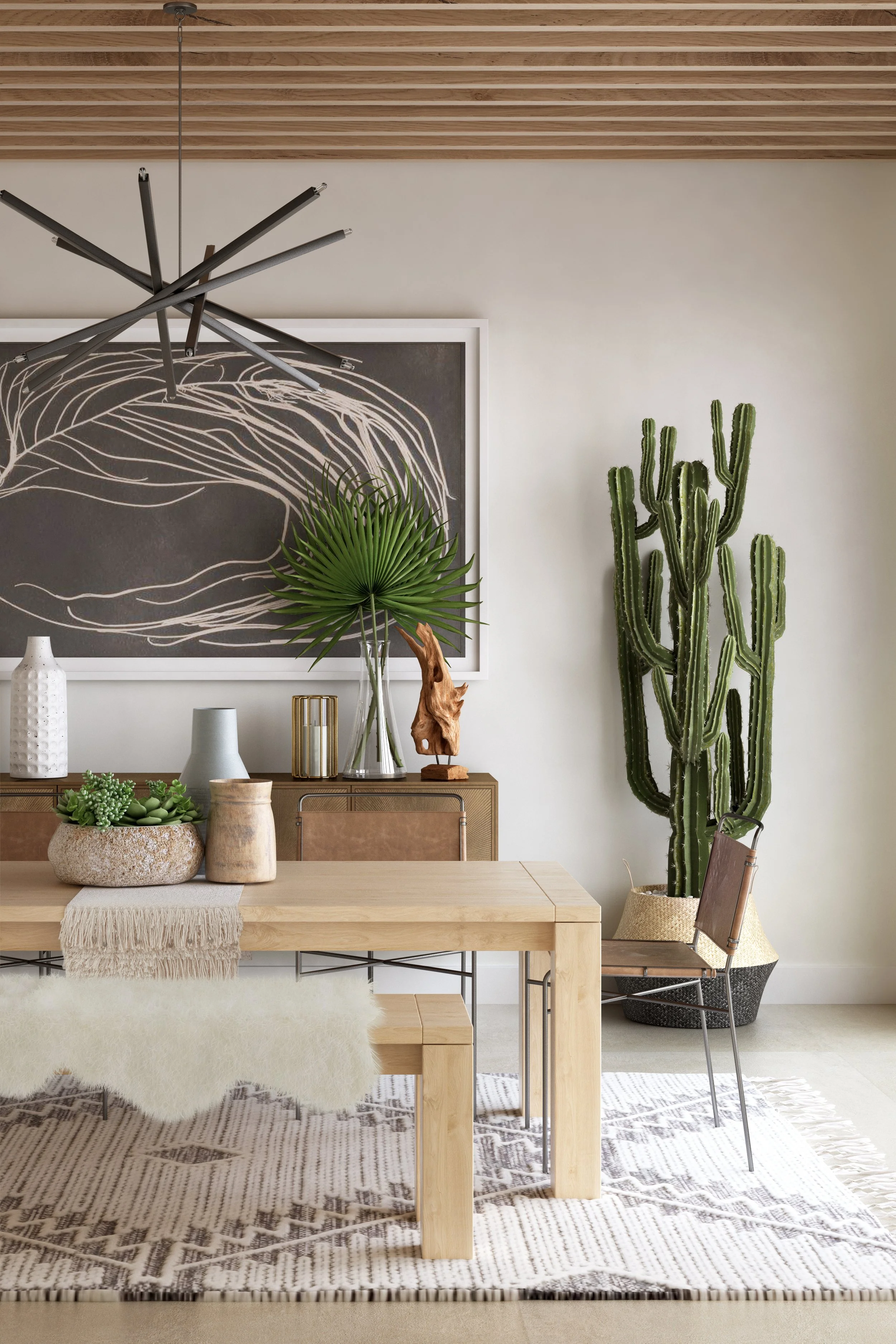
A patterned area rug anchors the rectangular dining table in this Desert Breeze dining room designed by virtual interior designer Joshua Jones of JJones Design Co.
Hi Emily,
An area rug can make a dining room feel warmer, more comfortable, and visually complete—but it isn’t automatically the right choice for every household. Since you use your dining room every day and have a dog, the key is choosing a rug that supports your lifestyle rather than one that creates additional maintenance.
What Are the Benefits of a Rug Under a Dining Table?
A rug helps anchor the dining table and chairs, particularly in an open-concept home where the dining area shares space with the kitchen or living room. It visually defines the dining zone while adding color, pattern, texture, and warmth.
Rugs can also soften sound. Dining rooms contain many hard surfaces, including tables, chairs, flooring, windows, and cabinetry, which can cause sound to echo. A rug absorbs some of that noise and makes conversation around the table feel more comfortable.
It can also help protect hardwood flooring from scratches caused by chairs repeatedly being pulled in and out. However, the rug must be large enough for the chairs to remain on it while they are in use.
When Should You Skip a Dining Room Rug?
There is nothing wrong with leaving the floor bare if your dining room is especially busy, spills happen frequently, or you simply do not want another surface to clean.
I would also skip the rug if the room cannot accommodate one in the proper size. A rug that fits beneath the table but not the chairs will create more problems than it solves. Chair legs may catch on the edge whenever someone sits down or gets up, and the undersized rug can make the entire dining area look smaller.
Bare flooring can still look polished when the table, chairs, lighting, artwork, and window treatments create enough visual interest. A dining room does not require a rug to feel complete.
What Type of Rug Works Best Under a Dining Table?
For your home, I would look for a low-pile or flat-weave rug made from a durable, easy-to-clean material. A flatter surface allows dining chairs to move more easily and prevents food and pet hair from becoming deeply embedded in the fibers.
Performance rugs, washable rugs, and indoor-outdoor rugs can all be practical options for a frequently used dining room. Many indoor-outdoor rugs now look refined enough to use inside while offering better resistance to stains and moisture.
A patterned rug is often more forgiving than a solid-colored one because it can disguise crumbs, pet hair, and minor stains between cleanings. A medium-toned rug will generally be easier to maintain than something extremely light or dark.
I would avoid thick shag rugs and rugs with a high, plush pile beneath a dining table. They are more difficult to clean, and chair legs will not move across them easily. Loosely woven jute rugs can also trap crumbs and may be challenging to clean after a spill, despite their attractive natural texture.
How Large Should a Dining Room Rug Be?
The rug should extend at least 24 inches beyond every side of the dining table. This gives each chair enough room to remain fully on the rug when someone pulls it away from the table.
Before purchasing a rug, pull every chair into a comfortable seated position and measure the complete area they occupy. Do not base the rug size solely on the dimensions of the table.
For a six-person rectangular table, an 8-by-10-foot rug is often a reasonable starting point, but your table dimensions and available floor space should determine the final size. A longer or wider table may require a 9-by-12-foot rug.
My complete rug-size guide includes additional measurements and illustrated layouts showing how a dining room rug should relate to the table, chairs, and surrounding furniture.
Should the Rug Match the Shape of the Table?
In most cases, the rug should follow the general shape of the dining table. A rectangular table typically looks most balanced over a rectangular rug, while a round rug can beautifully frame a round dining table.
However, this is a guideline rather than an absolute rule. A round table can work on a square rug when the room itself is square, and a round table can sit on a rectangular rug in a long dining room. The proportions of the room and the surrounding furniture matter just as much as the shape of the table.
For your rectangular six-person table, I would choose a rectangular rug. It will reinforce the table’s shape, accommodate the chairs more comfortably, and create a balanced relationship with the dining room.
Don’t Forget the Rug Pad
A properly sized rug pad can help prevent the rug from shifting when chairs are moved, provide additional protection for the flooring, and extend the life of the rug. The pad should be slightly smaller than the rug so it remains completely hidden beneath it.
Not every rug requires the same type of pad, so the rug material, backing, and flooring should all be considered. I explain those differences in my guide, Do I Really Need a Rug Pad? Here’s What Actually Matters.
My Recommendation
For your dining room, I would use an appropriately sized rectangular rug in a low-pile, washable, performance, or indoor-outdoor material. Look for a medium-toned pattern that complements the dining chairs and helps disguise the realities of everyday life with a dog.
A dining room rug should make the space more comfortable and inviting without making you anxious every time someone drops a crumb. If you choose a durable material and give the chairs enough clearance, you can achieve the warmth you want while keeping the room practical for daily use.
Warmly,
Joshua
Have interior design related questions? You can ask Joshua here.