Sofa With a Chaise: An Interior Designer’s Complete Guide
A sofa with a chaise is one of those pieces that can completely change how a living room looks and functions. It gives you a comfortable place to stretch out, creates a natural spot for lounging, and often provides more seating without taking up as much room as a large sectional. However, choosing the right chaise sofa involves more than finding one you like online. The size, orientation, depth, fabric, and placement all affect whether it will work in your home.
As an interior designer, I regularly see how the right sofa can bring an entire living room together—and how the wrong one can make the room feel crowded or difficult to navigate. A sofa with a chaise needs enough space to feel inviting without interrupting the natural walking paths through the room. You also need to consider whether a left-facing, right-facing, or reversible chaise will work best with your floor plan.
I have a sofa with a chaise in my own living room, so I understand its advantages from both a designer’s and homeowner’s perspective. It has become one of our favorite places to relax, but living with one has also reinforced how important the surrounding furniture, coffee-table shape, and overall layout are to making it work well.
In this complete guide, I will explain how to choose a sofa with a chaise, measure your living room, determine the correct chaise orientation, and arrange it with a coffee table and other seating. I will also share 15 of the best sofas with chaises at different prices and in different styles, helping you find an option that looks beautiful, feels comfortable, and truly fits your home.
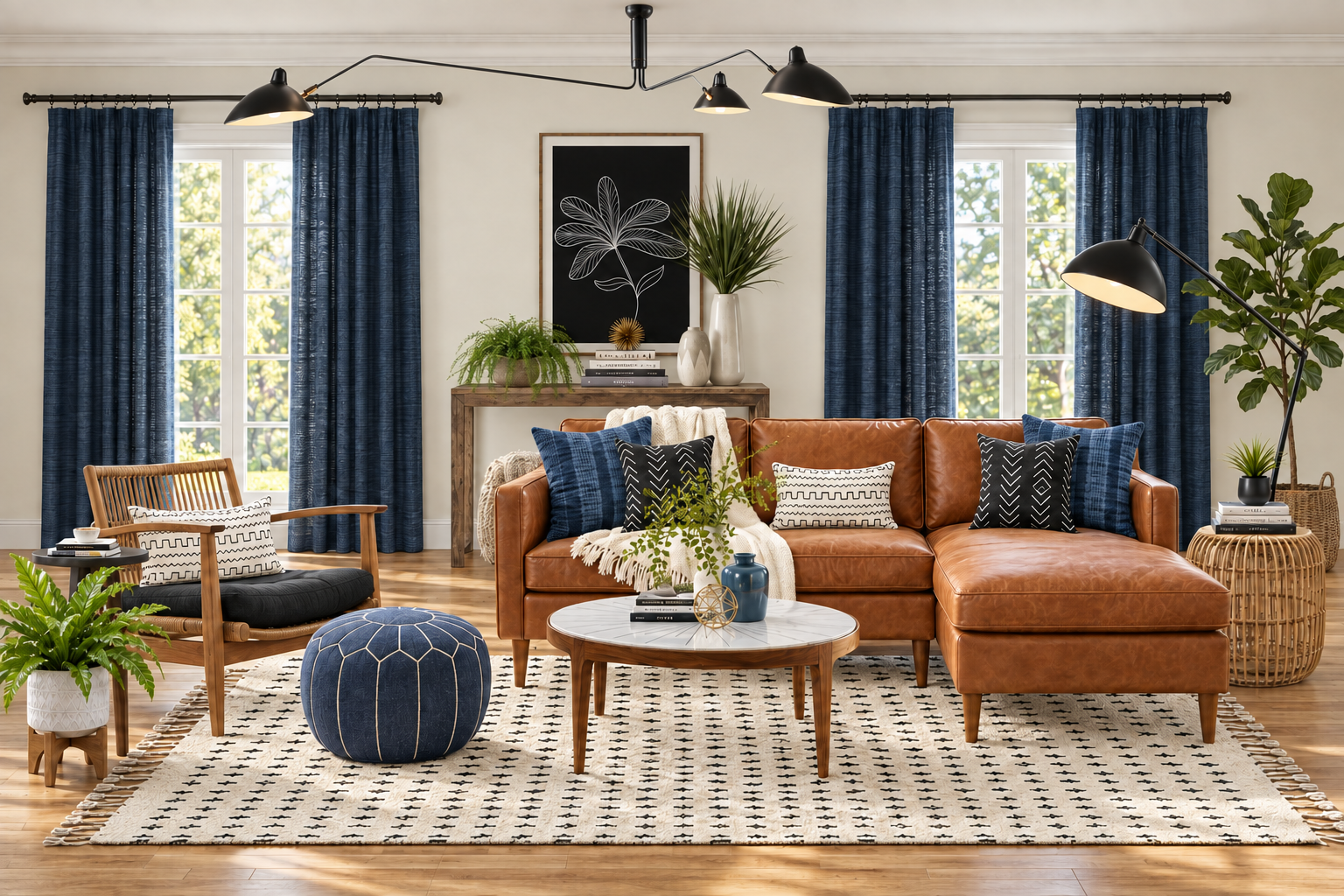
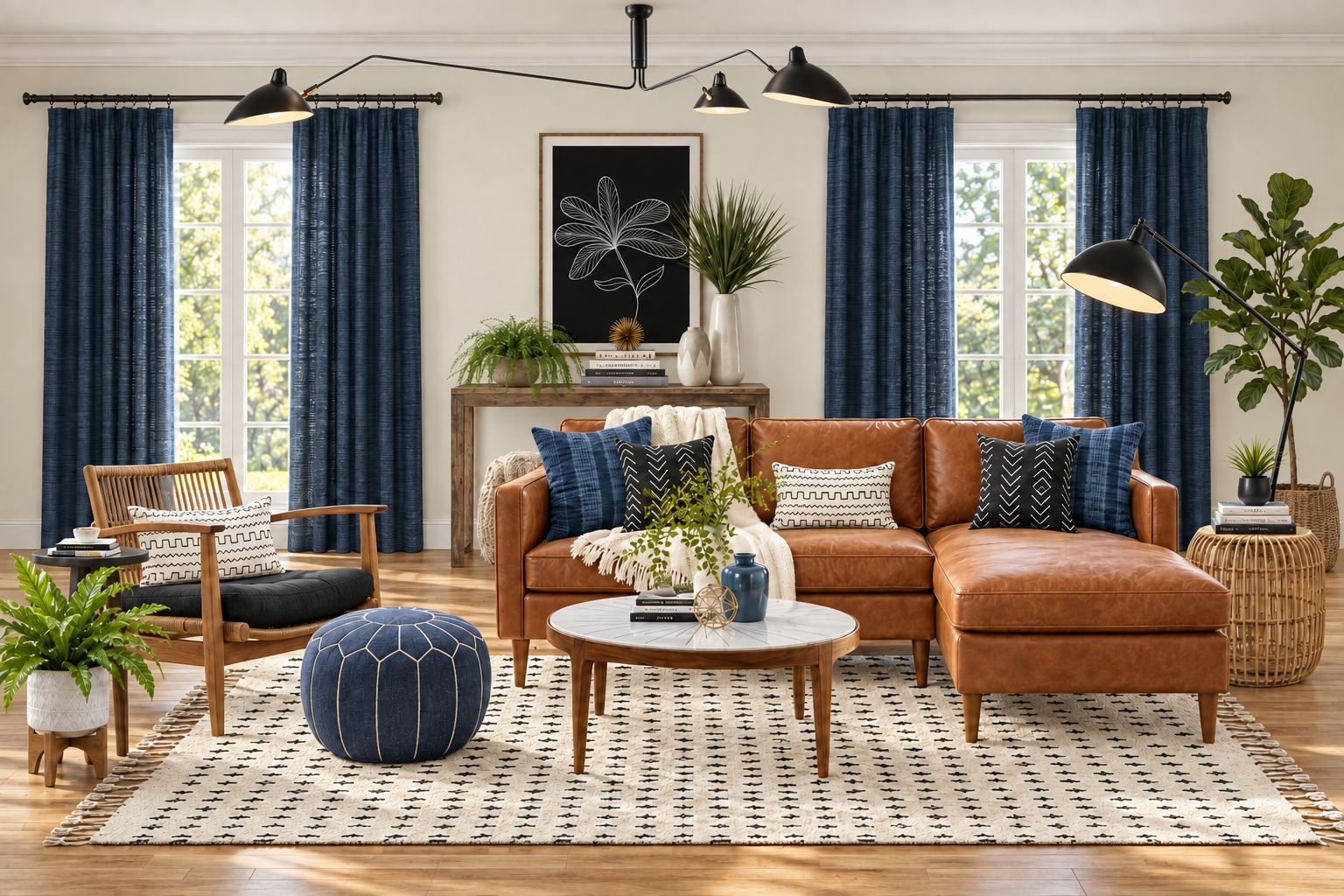
A modern bohemian living room featuring a cognac leather sofa with a chaise, navy curtains, layered patterns, natural textures, and warm wood furnishings. Designed by virtual interior designer Joshua Jones of JJones Design Co. This AI rendering was created from my original 2D rendering of a past design project.
What Is a Sofa With a Chaise?
A sofa with a chaise combines traditional sofa seating with an extended, upholstered section that supports your legs. Unlike a standard sofa, where every seat has the same depth, the chaise creates a deeper place to stretch out and relax. It offers some of the comfort of a sectional while typically requiring less floor space.
You may see several different names used while shopping for a chaise sofa:
Attached chaise sofa: The chaise is permanently connected to one end of the sofa and cannot be moved to the opposite side.
Reversible chaise sofa: The chaise cushion and supporting base or ottoman can be repositioned, allowing you to place the chaise on either side.
Chaise sectional: The sofa is made from multiple connected sections, with an extended chaise on one end.
Modular sofa with a chaise: Individual seating pieces can be rearranged as your room or needs change.
Sofa with a movable ottoman: A separate ottoman can be positioned against the sofa to create the feel of a chaise, although it is not technically attached.
Retailers do not always use these terms consistently, which can make shopping confusing. Before purchasing, look closely at the product description and configuration rather than relying on the name alone. A sofa advertised as “reversible” may have a chaise that genuinely switches sides, while another may only be available to order in separate left- and right-facing versions.
If you are still comparing different seating options, my guide to choosing the right sofa or sectional for every sitting area explains which configurations work best in living rooms, family rooms, basements, sunrooms, and other spaces throughout the home.
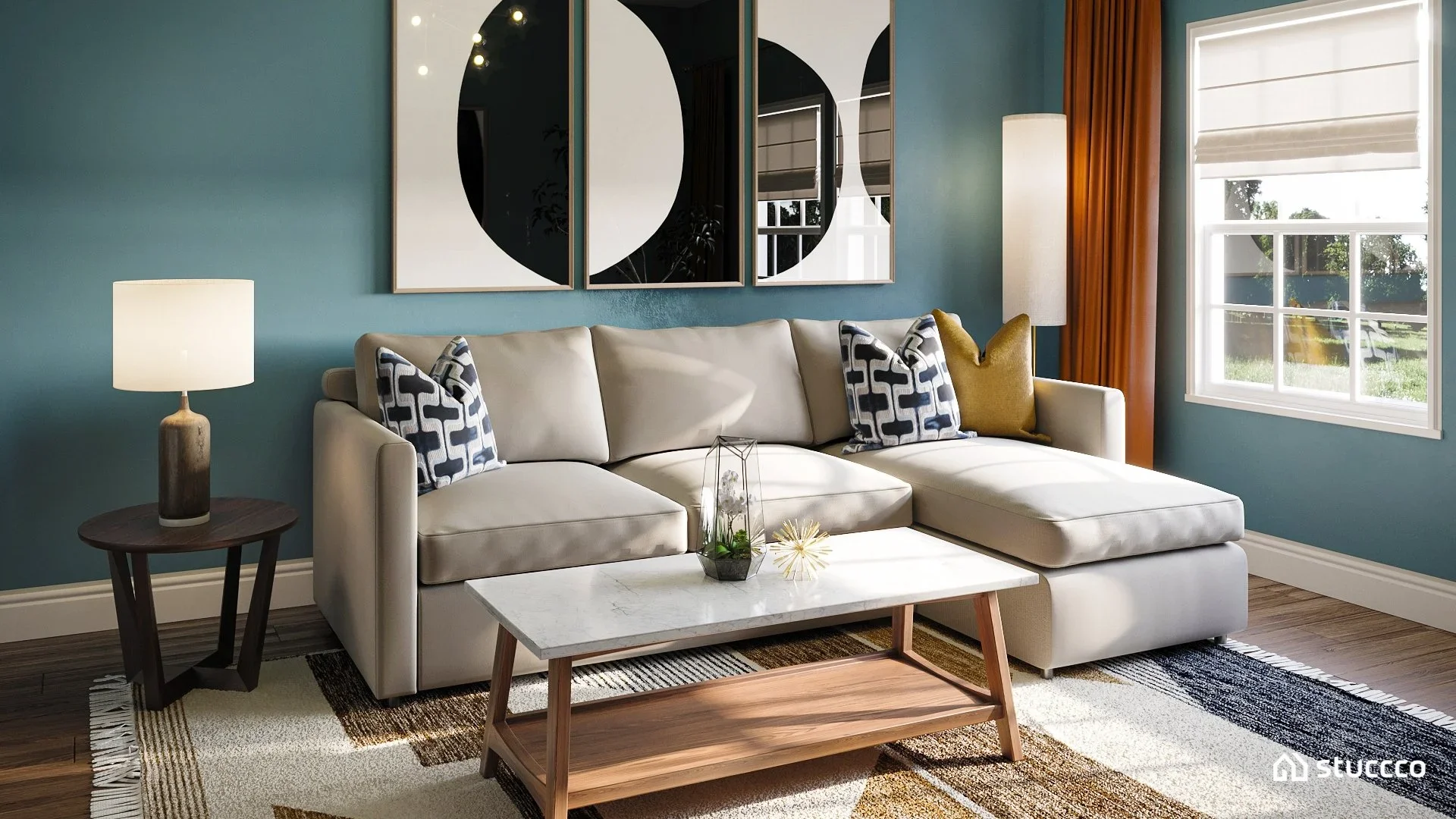
Mid-century modern glam TV room featuring a neutral sofa with a chaise, rectangular coffee table, geometric artwork, and rich teal and rust tones. Designed by virtual interior designer Joshua Jones of JJones Design Co. 3D rendering by Stuccco.
Are Sofas With Chaises Worth It?
Yes, a sofa with a chaise can be worth it if you want a comfortable place to stretch out but do not need—or have room for—a large sectional. It provides more lounging space than a standard sofa while keeping the seating arrangement visually lighter and, in many cases, more flexible.
I especially like chaise sofas for living rooms where comfort is important but every square foot still needs to be used thoughtfully. The extended seat can function as a reading spot, a place to watch television, or an informal seat when guests visit. In everyday life, it often becomes the most popular place on the sofa.
However, a chaise sofa is only worth buying when its size and configuration fit the room. A chaise that projects too far into a walkway can quickly become frustrating, while one placed on the wrong side may interrupt the connection between the living room and nearby spaces. Before purchasing one, consider how you move through the room, where the sofa will face, and whether you may want to rearrange the furniture later.
For the right home, a sofa with a chaise offers an appealing balance between a traditional sofa and a full sectional. You gain a generous place to relax without necessarily committing to the larger footprint or heavier appearance of an L-shaped sectional.
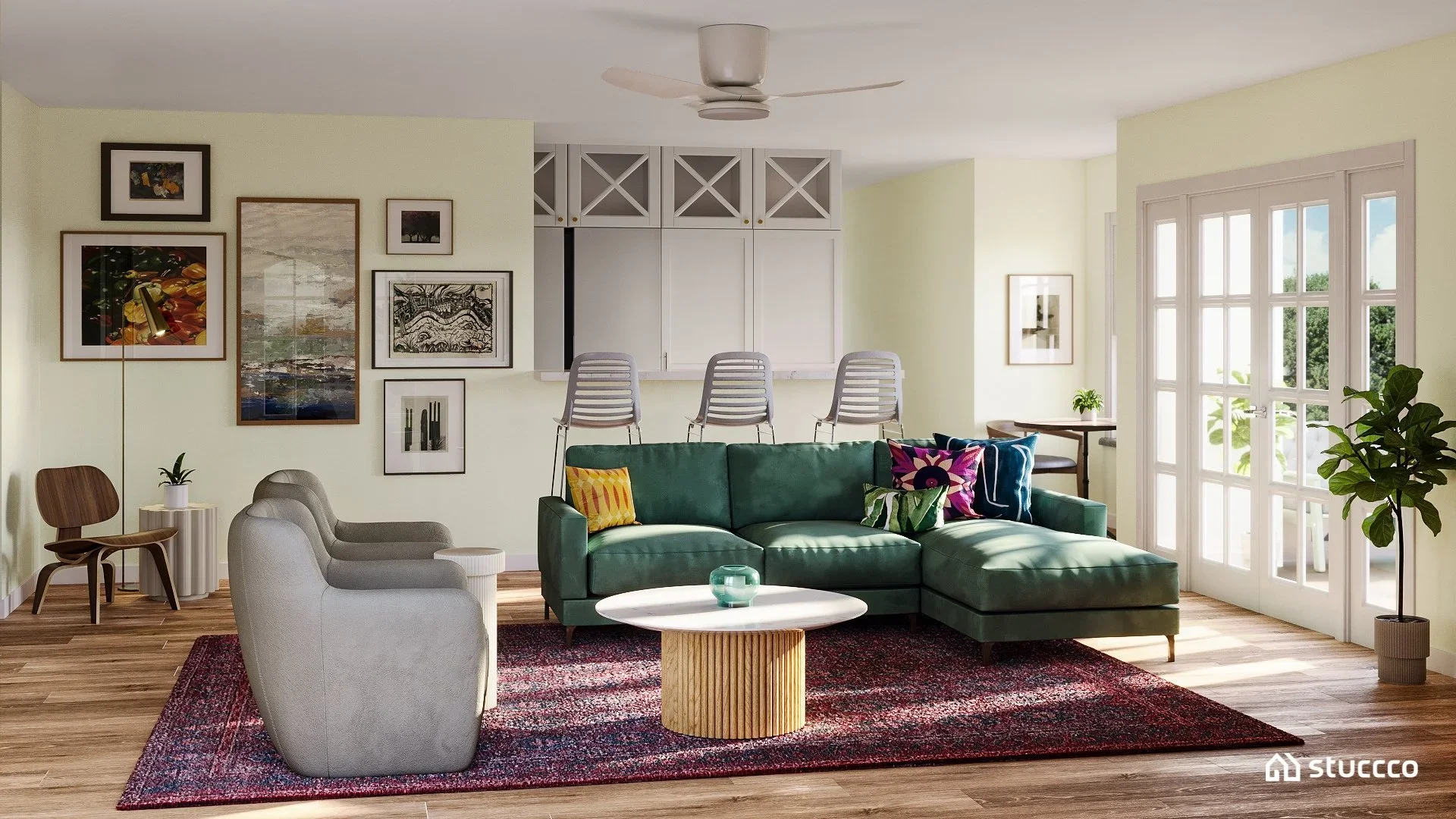
Mid-century modern family room featuring a green sofa with a chaise, oval coffee table, flexible accent seating, and a colorful gallery wall in an open-concept layout. Designed by virtual interior designer Joshua Jones of JJones Design Co. 3D rendering by Stuccco.
Pros and Cons of a Sofa With a Chaise
A chaise sofa can add comfort and function to a living room, but it also requires more planning than a standard sofa. These are the advantages and potential drawbacks I recommend considering before you buy one.
Pros of a Sofa With a Chaise
More room to relax: The extended seat allows you to put your feet up without adding a recliner or separate ottoman.
Smaller footprint than many sectionals: A sofa with one chaise can provide a sectional-like experience without filling as much of the room.
Extra seating for guests: Although the chaise is designed for lounging, it can also accommodate additional people during casual gatherings.
A favorite place for pets: Dogs and cats often love the extra depth of a chaise for sitting, stretching out, or napping. My dog and cats use ours every day, and it has become one of their favorite places in our home.
Helps define an open floor plan: When positioned carefully, the chaise can create a subtle boundary between the living area and an adjacent dining room or kitchen.
Available in flexible configurations: Reversible and modular chaise sofas can adapt more easily if you move or rearrange the room.
Cons of a Sofa With a Chaise
Can block a walkway: The chaise extends farther into the room than a standard sofa seat and may interfere with natural traffic flow.
The orientation matters: Choosing a left-facing or right-facing chaise that does not suit the floor plan can make the entire furniture arrangement feel awkward.
Less flexible than a sofa and ottoman: A permanently attached chaise cannot be moved when you need more open floor space.
May limit coffee-table options: The length and position of the chaise affect the size, shape, and placement of the coffee table.
One seat may become the favorite: In many households, everyone gravitates toward the chaise—which can be either charming or mildly competitive.
From a designer’s perspective, the most important question is not simply whether you like the appearance of a chaise sofa. It is whether the chaise improves the way you will use the room. When its dimensions and orientation work with the floor plan, it can be one of the most comfortable and useful pieces in the home.
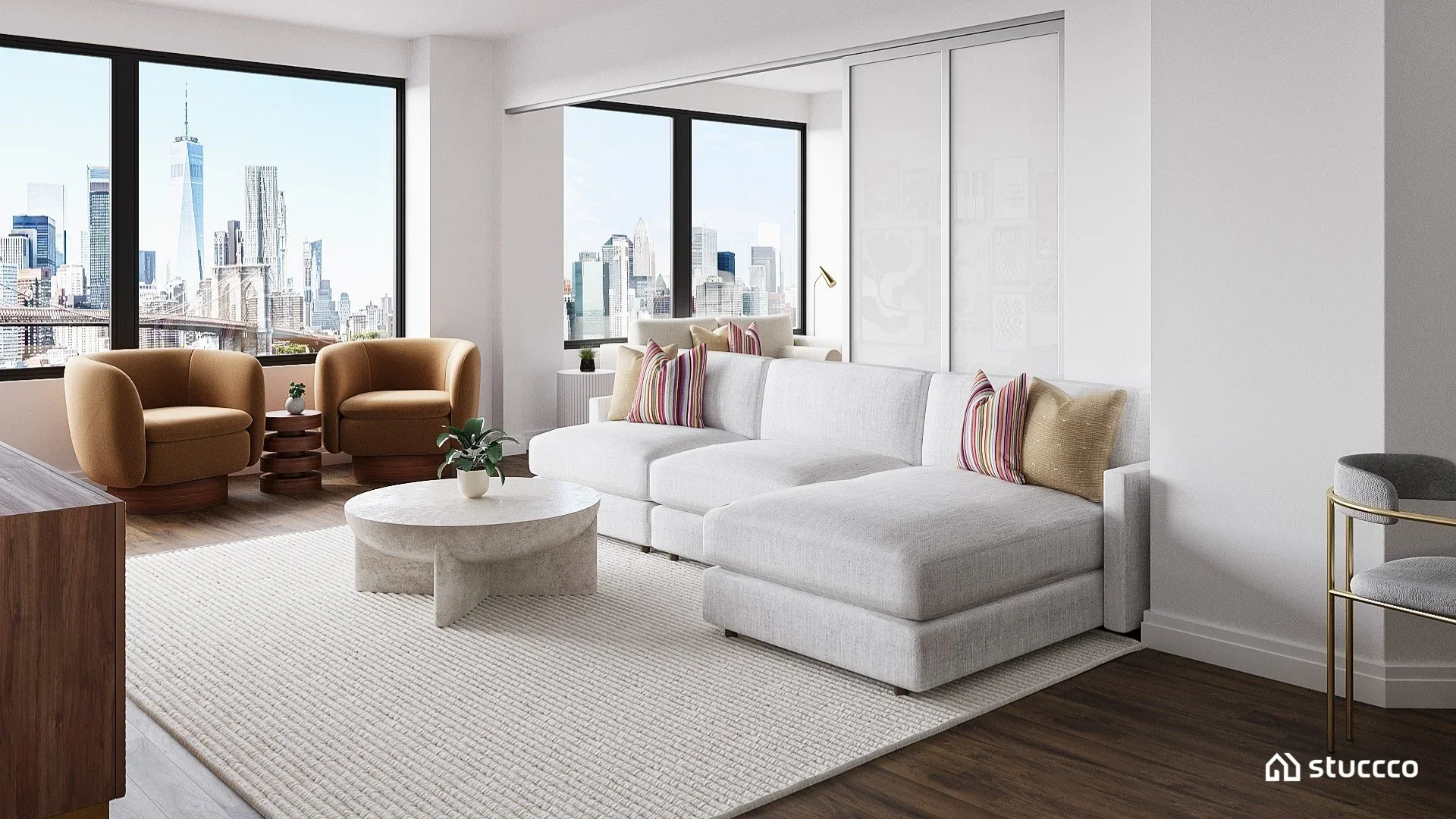
Contemporary New York City high-rise living room featuring a white sofa with a chaise, round coffee table, and separate accent chairs overlooking the Manhattan skyline. Designed by virtual interior designer Joshua Jones of JJones Design Co. 3D rendering by Stuccco.
Sofa With a Chaise vs. a Sectional: What Is the Difference?
The main difference between a sofa with a chaise and a sectional is the overall size and number of seating sections. A chaise sofa generally resembles a standard sofa with one elongated seat, while a sectional is composed of two or more connected pieces and often extends in multiple directions.
The terminology can become confusing because some sofas with chaises are technically sectionals—especially two-piece or modular designs. Retailers may describe the same type of furniture as a chaise sofa, chaise sectional, or sectional sofa with a chaise. Rather than relying only on the product name, study the dimensions and individual components to understand exactly what you are buying.
What Is a Sofa With Two Chaises?
A sofa with a chaise on both ends is commonly called a double-chaise sectional or U-shaped chaise sectional. The two extended seats create a comfortable lounging area on each side, with traditional sofa seating in the center. This configuration works particularly well in a large family room, media room, or household where more than one person wants space to stretch out.
A double-chaise sectional requires more floor space than a single-chaise sofa and can make the seating area feel enclosed. It may also limit where you can place a coffee table and how guests enter the seating area. Carefully measure the distance between the two chaises as well as the sectional’s full width and depth before ordering one. If you are considering this configuration, my guide to arranging a U-shaped sectional in a living room explains how to plan the surrounding furniture, coffee table, and walkways.
When to Choose a Sofa With a Chaise
A sofa with a chaise is often the better choice for a small or medium-sized living room. It gives you a place to stretch out while maintaining a simpler silhouette than a large sectional. It can also leave more room for a side chair, floor lamp, or table, allowing you to create a more layered and flexible furniture arrangement.
Choose a chaise sofa if you:
Want comfortable lounging space without an oversized sectional
Have a small or medium-sized living room
Prefer to combine a sofa with one or two accent chairs
Want the room to feel visually open
Usually need seating for only a few people
When to Choose a Sectional
A sectional is generally better for a large living room, a family room, or a household that needs plenty of seating every day. L-shaped and U-shaped sectionals can accommodate more people and fill a substantial room, but their larger footprint gives you fewer options for arranging the remaining furniture.
Choose a sectional if you:
Need seating for a larger household or frequent guests
Have enough floor space to maintain comfortable walkways
Want the sofa to become the primary feature of the room
Prefer one large seating piece instead of several separate chairs
Do not anticipate changing the furniture layout frequently
Neither option is automatically better. The right choice depends on the room’s dimensions, how many people use it, and how you want the space to function. When I help clients make this decision, I look beyond the number of seats and consider the entire floor plan. A well-scaled chaise sofa can feel more generous than an oversized sectional when it leaves enough breathing room around the other furniture.
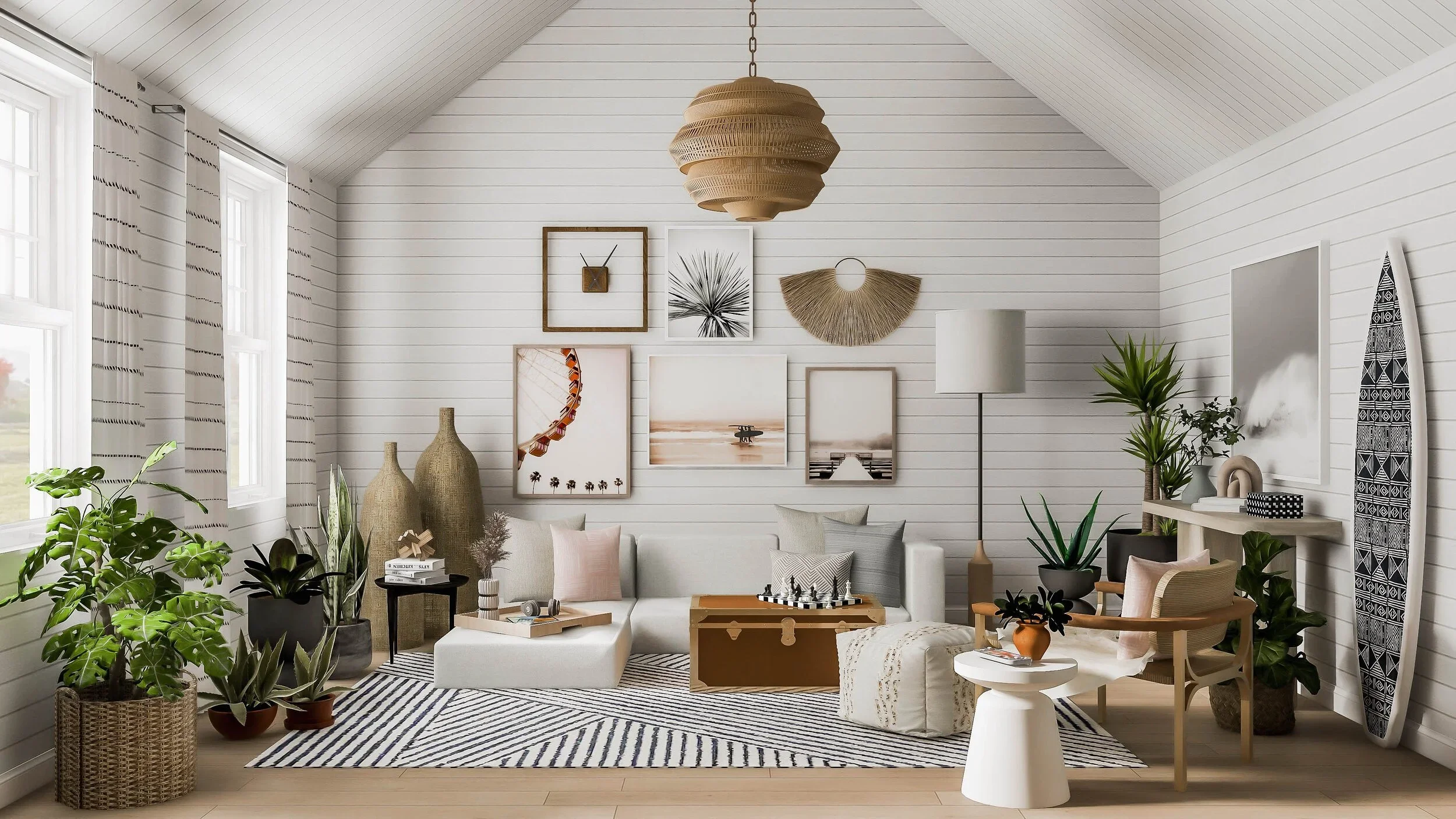
A California Casual-style teen lounge featuring a white sofa with a movable ottoman that provides flexible chaise-style seating. Designed by virtual interior designer Joshua Jones of JJones Design Co.
Left-Facing vs. Right-Facing Chaise: Which One Do You Need?
A left-facing or right-facing chaise describes which side of the sofa contains the extended seat. To determine the orientation, stand in front of the sofa and look directly at it. If the chaise is on your left, it is generally considered a left-facing chaise. If it is on your right, it is generally considered a right-facing chaise.
You may also see the terms left-arm facing (LAF) and right-arm facing (RAF) while shopping. These abbreviations confused me when I first encountered them, so knowing what they stand for can save you a headache. They refer to the location of the arm when you are standing in front of the individual furniture piece and facing it. For example, a RAF chaise has its arm on your right as you look at the chaise.
Unfortunately, not every retailer describes chaise orientation in exactly the same way. Some product listings refer to the location of the chaise, while others identify the position of the arm. Before placing an order, always review the product diagram and photos instead of relying on “left” or “right” in the name alone.
How to Choose the Correct Chaise Orientation
The best chaise orientation is the one that preserves the room’s natural traffic flow and keeps the extended seat from blocking a doorway, window, or access to another room. In many layouts, placing the chaise along a wall or toward the quieter side of the living room helps keep the main walkway open.
I do not recommend positioning a chaise close to a fireplace due to the heat and potential fire risk. A sofa with a chaise should only face or sit near a fireplace when the entire piece remains safely outside the fireplace manufacturer’s required clearance and far enough away for comfortable circulation.
Before choosing a left- or right-facing chaise:
Stand where you will normally enter the living room and note how you move through it.
Identify which side of the sofa can extend farther into the room without creating an obstacle.
Check nearby doors, built-ins, heating vents, radiators, and window treatments.
Confirm that the entire sofa will remain a safe distance from any fireplace or other heat source.
Use painter’s tape to mark the full dimensions of the sofa and chaise on the floor.
Compare your taped layout with the retailer’s product diagram before ordering.
I never recommend selecting the chaise orientation based only on which version looks better in a product photo. The correct side should be determined by your actual floor plan. This single decision can make the difference between a living room that feels comfortable and open and one that feels awkward every time you walk through it.
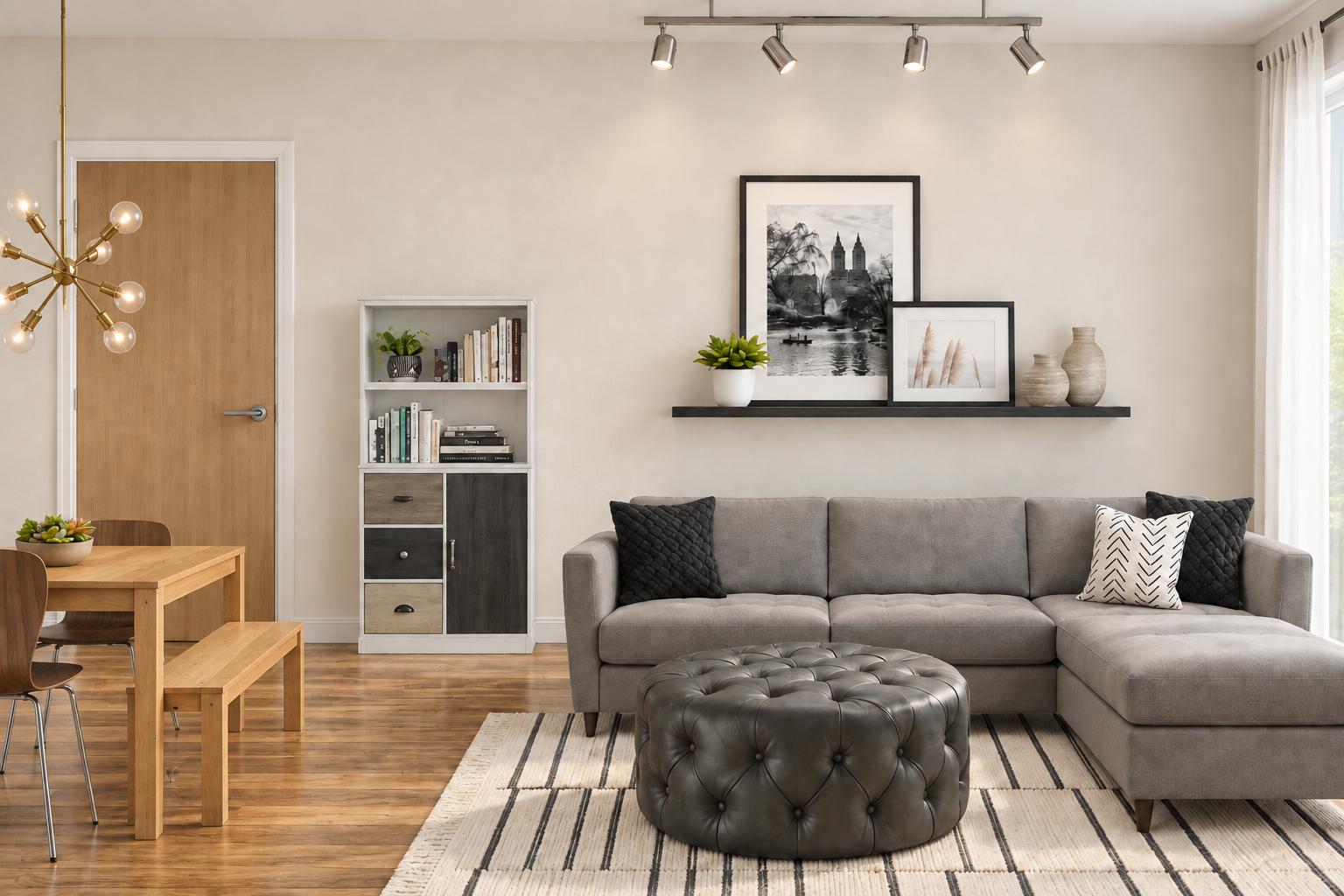
A modern rustic condo living and dining area featuring a gray sofa with a chaise, tufted leather ottoman, warm wood furniture, and a space-saving open layout. Designed by virtual interior designer Joshua Jones of JJones Design Co. This AI rendering was created from my original 2D rendering of a past design project.
What Is a Reversible Chaise Sofa?
A reversible chaise sofa allows you to move the chaise from one side of the sofa to the other. Instead of committing to a permanent left- or right-facing configuration, you can adjust the layout when you rearrange the room or move into a different home.
Most reversible chaise sofas use a movable ottoman or support base beneath one long seat cushion. To switch sides, you reposition the base and move the chaise cushion to the opposite end of the sofa. Some modular sofas provide even more flexibility by allowing you to disconnect and rearrange entire seating sections.
A reversible chaise sofa can be a smart choice for renters, smaller homes, and anyone who expects their furniture arrangement to change. It also removes some of the pressure of selecting the correct chaise orientation when ordering online.
What to Check Before Buying a Reversible Chaise Sofa
Not every reversible chaise feels as secure or comfortable as a fixed chaise. Before purchasing one, look closely at:
How the chaise is supported: Make sure the ottoman or base connects securely to the sofa rather than sliding away during daily use.
Whether the cushions stay in place: A loose chaise cushion may shift or create an uncomfortable gap between the sofa and ottoman.
How easily it can be reversed: Review the assembly instructions to confirm that changing sides is a simple process.
The appearance from both directions: Check that the sofa looks finished and balanced whether the chaise is positioned on the left or right.
The full dimensions: A reversible design still needs sufficient floor space on whichever side you place the chaise.
I appreciate the flexibility of a reversible chaise, but I would not choose one based on versatility alone. The frame, cushions, upholstery, and connection between the sofa and chaise still need to be comfortable and well constructed. A configuration that can change sides is only helpful when the sofa also performs well in everyday life.
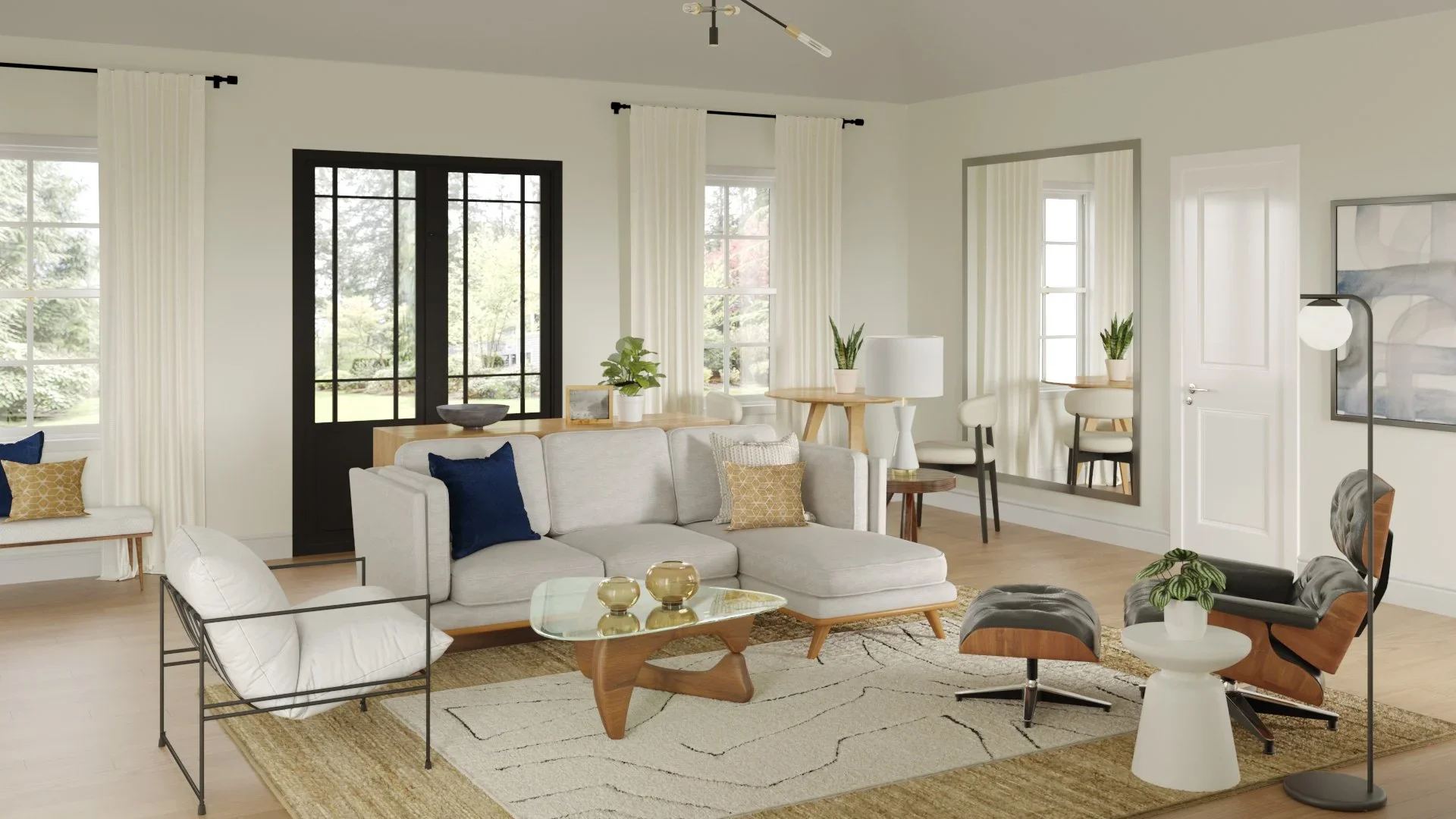
Mid-century modern beach house living room featuring a neutral sofa with a chaise, glass coffee table, sculptural lounge chairs, layered area rugs, and a bright, open layout. Designed by virtual interior designer Joshua Jones of JJones Design Co.
How to Measure for a Sofa With a Chaise
To measure for a sofa with a chaise, you need to account for its full width, standard sofa depth, and the longer chaise depth. The chaise projection is often the dimension people underestimate, and even a few extra inches can affect a walkway or leave too little room for a coffee table.
1. Record the Sofa’s Full Dimensions
Check the product specifications for these measurements:
Overall width: The distance from the outside of one arm to the outside of the other
Overall sofa depth: The depth of the standard sofa seats
Chaise depth: The distance from the back of the sofa to the front edge of the chaise
Overall height: The height from the floor to the tallest part of the back
Seat height and seat depth: Important for determining how comfortable the sofa will feel
Arm height: Helpful when planning nearby side tables and lamps
Do not assume the standard sofa depth and chaise depth are the same. Product listings often include several measurements, so confirm which number represents the chaise’s full projection into the room.
2. Measure the Available Floor Space
Measure the wall where the sofa will sit as well as the distance from that wall to the opposite furniture, doorway, or walkway. Include baseboards, radiators, floor vents, window treatments, and any architectural features that reduce the usable space.
A chaise should not extend into the primary path through the room. Whenever possible, allow approximately 30 to 36 inches for a comfortable main walkway. A tighter secondary passage may work in some rooms, but it should never feel as though you have to squeeze around the chaise.
3. Plan Space for the Coffee Table
Allow approximately 16 to 18 inches between the edge of the sofa or chaise and the coffee table. This keeps the table within reach while leaving enough room to sit down and move comfortably.
Measure the open area in front of the sofa after marking the chaise—not before. The chaise changes the shape of the available floor space and may require a smaller rectangular table, a round or oval coffee table, nesting tables, or an ottoman. My guide to choosing a square or rectangular coffee table for a sectional provides additional help with balancing the table’s shape and proportions with the surrounding seating.
4. Mark the Sofa on the Floor
Use painter’s tape to outline the sofa’s full width and depth directly on the floor. Mark the chaise separately so you can see exactly how far it will extend into the room.
I recommend leaving the tape in place for at least a day. Walk through the room as you normally would, open nearby doors, pull out adjacent chairs, and notice whether the outline interferes with daily movement. Seeing the actual footprint is far more reliable than trying to visualize it from measurements alone.
5. Measure the Delivery Route
A sofa that fits the living room still needs to fit through the home. Measure every doorway, hallway, stairwell, elevator, and tight turn along the delivery path. Compare these dimensions with the sofa’s packaged measurements, and check whether the legs or individual sections can be removed.
This step is especially important for apartments, older homes, and rooms reached by narrow stairs. Modular and multi-piece chaise sofas may be easier to deliver, but each section still needs to clear every point along the route.
Careful measurements protect you from an expensive mistake and help the finished room feel intentional. If the numbers are close or the layout is complicated, a professional furniture plan can confirm the appropriate sofa size and chaise orientation before you place the order.
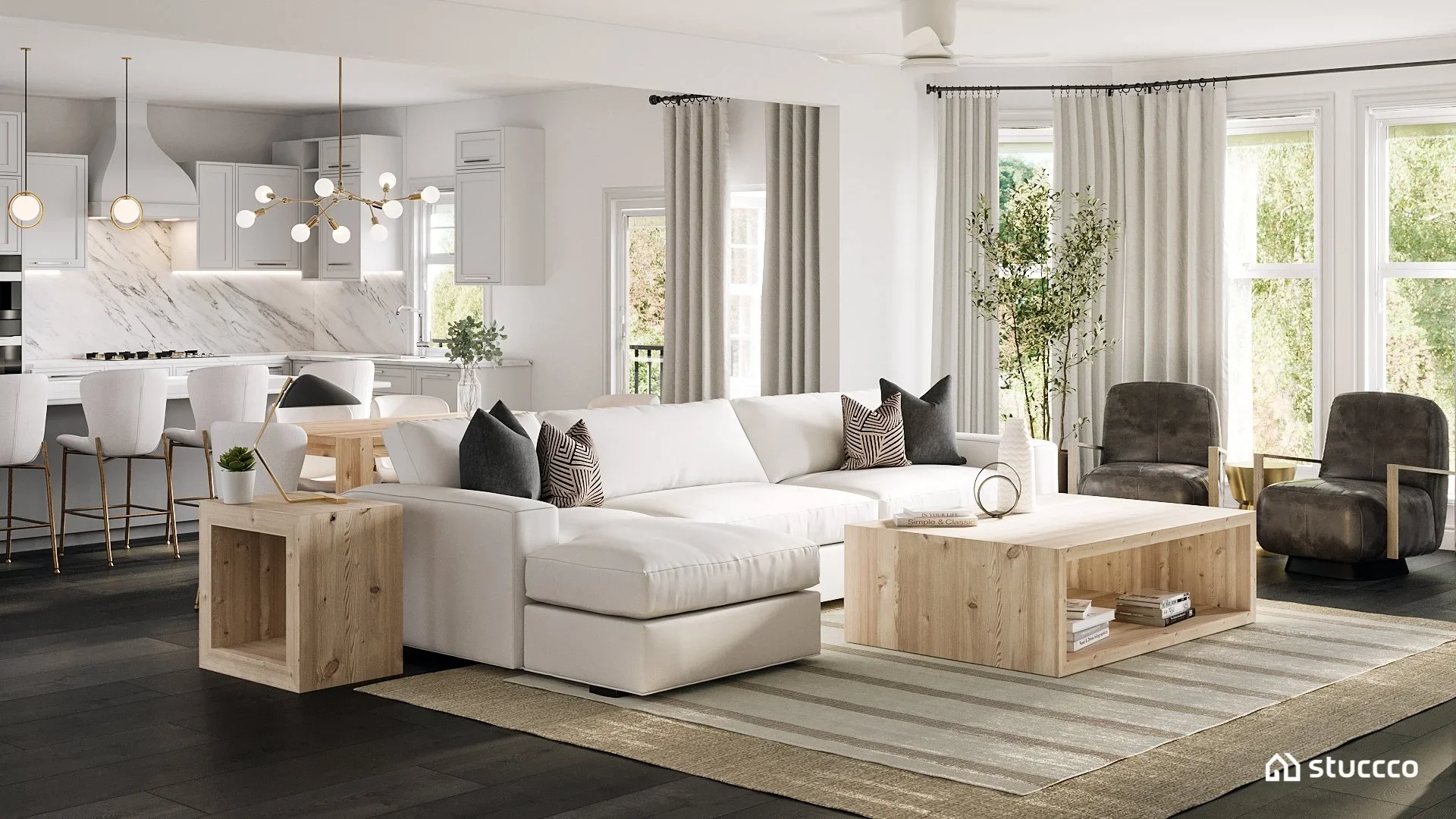
Modern organic open-concept living room featuring a white sofa with a chaise that defines the seating area without blocking the connection to the kitchen and dining space. Designed by virtual interior designer Joshua Jones of JJones Design Co. 3D rendering by Stuccco.
How to Position a Sofa With a Chaise
The best way to position a sofa with a chaise is to place the extended seat where it supports the room’s function without interrupting the main walkway. The sofa should relate to the room’s focal point while leaving enough open space for people to move comfortably around it.
When I create a furniture plan, I begin by identifying how people enter and move through the room. A sofa may look perfectly centered on a wall, but the arrangement is not successful if the chaise creates an obstacle every time someone walks past it.
Place the Chaise Along a Wall or in a Corner
Positioning the chaise along a wall or into a corner is often the easiest arrangement for a small or medium-sized living room. It keeps the extended seat away from the primary walkway and uses an area that might otherwise be difficult to furnish.
Avoid pushing the entire sofa tightly into the corner unless the room genuinely requires it. Leaving a little breathing room around the furniture can make the arrangement feel more intentional and prevent the sofa from appearing wedged into place.
Float the Sofa in a Larger Living Room
A chaise sofa does not always need to sit against a wall. In a large living room, floating it closer to the center can create a more comfortable conversation area and improve the relationship between the seating, coffee table, television, or other focal point.
When floating the sofa, make sure its back looks finished because it will remain visible. You may also place a slim console table behind it, provided there is enough room to preserve a comfortable walkway.
Use the Sofa to Define an Open-Concept Layout
In an open floor plan, the back of the sofa can create a visual boundary between the living room and the dining area or kitchen. The chaise can strengthen that boundary, but it should not close off the seating area or make the route between spaces feel narrow.
If you are furnishing several connected areas, my guide to defining spaces in an open-concept floor plan explains how furniture, rugs, lighting, and a consistent color palette can give each area its own identity while keeping the overall home cohesive.
Arrange the Sofa Around the Main Focal Point
A sofa with a chaise may face a television, fireplace, window, built-in bookcase, or central conversation area. Choose the focal point that matters most to how you use the room rather than assuming the sofa must automatically face the television.
If the room includes a fireplace, keep the entire sofa and chaise safely outside the manufacturer’s required clearance. Do not allow the chaise to project too close to the firebox simply to create a symmetrical layout.
Balance the Chaise With Other Seating
Because the chaise adds more visual weight to one side of the sofa, the opposite side may need an accent chair, side table, floor lamp, or other element to make the arrangement feel balanced. The goal is not perfect symmetry, but the room should not appear noticeably heavier on the chaise side.
Angle an accent chair toward the sofa to encourage conversation rather than placing every seat in a straight line. In a smaller room, one visually light chair may be enough. In a larger space, a pair of chairs can create a fuller seating arrangement without competing with the chaise.
Before settling on the final placement, view the sofa from every entrance to the room. The strongest arrangement should feel welcoming from multiple directions, keep the chaise clear of walkways, and make the entire seating area feel connected rather than arranged around one oversized piece of furniture.
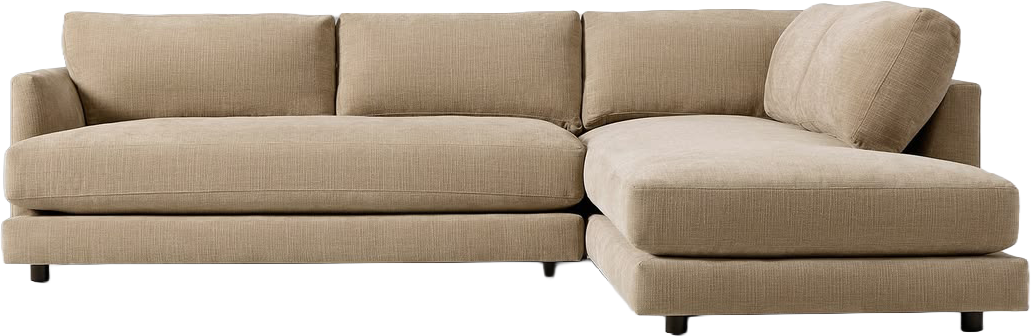
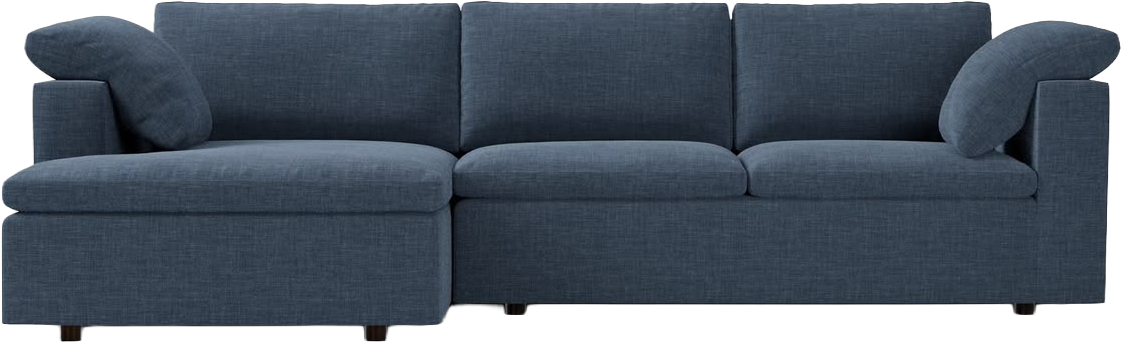
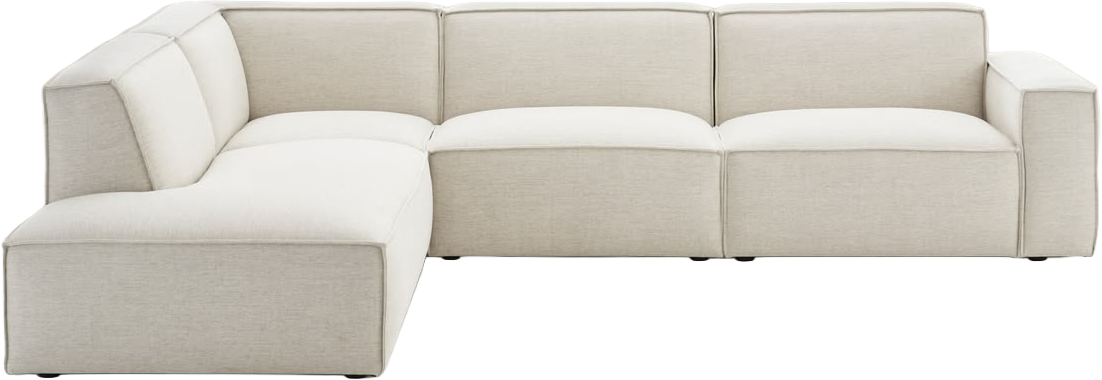
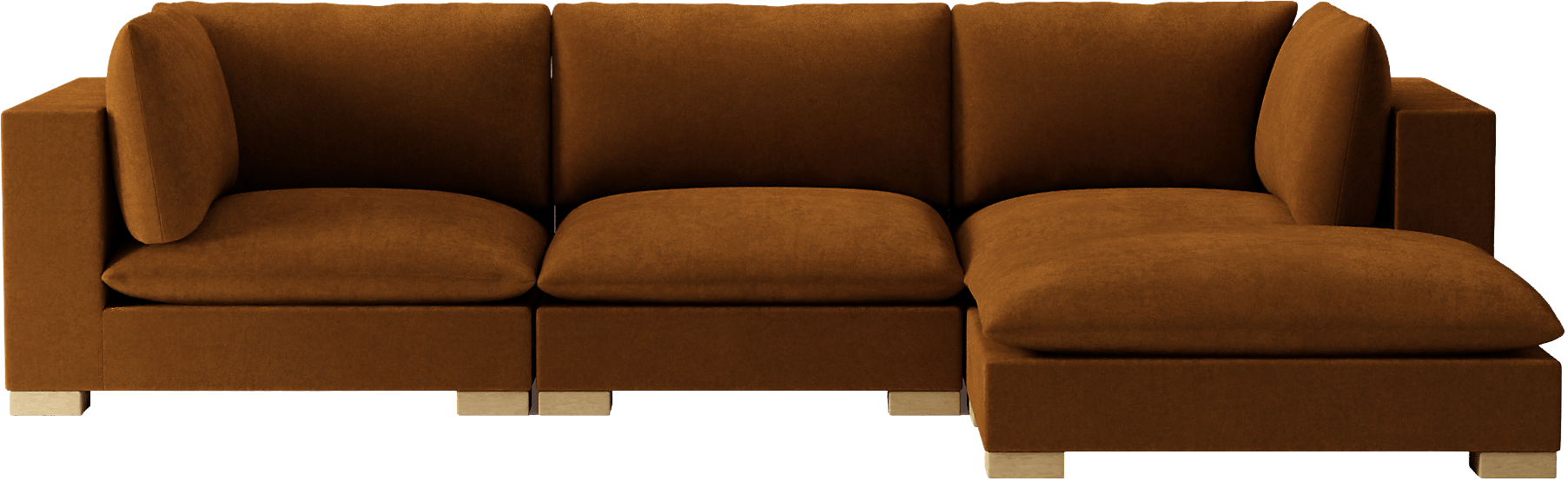
15 Best Sofas With Chaises to Shop
Once you understand the size, orientation, and placement your room needs, shopping for a sofa with a chaise becomes much easier. Instead of being distracted by every beautiful product photo, you can focus on options that will genuinely work with your floor plan and the way you live.
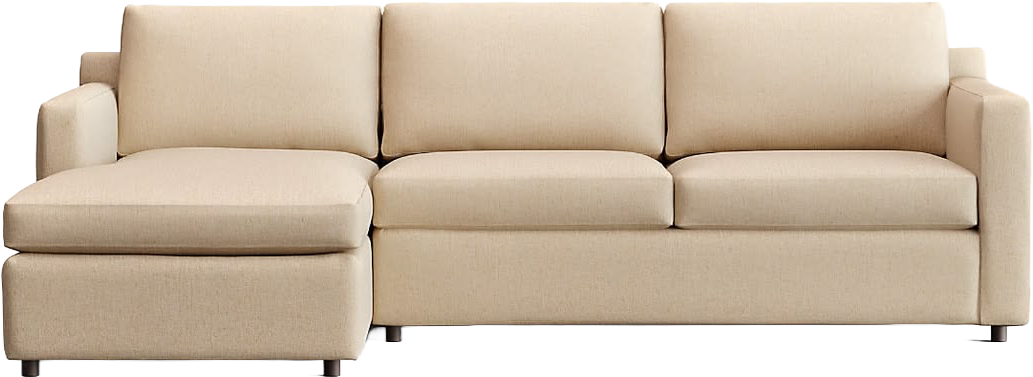
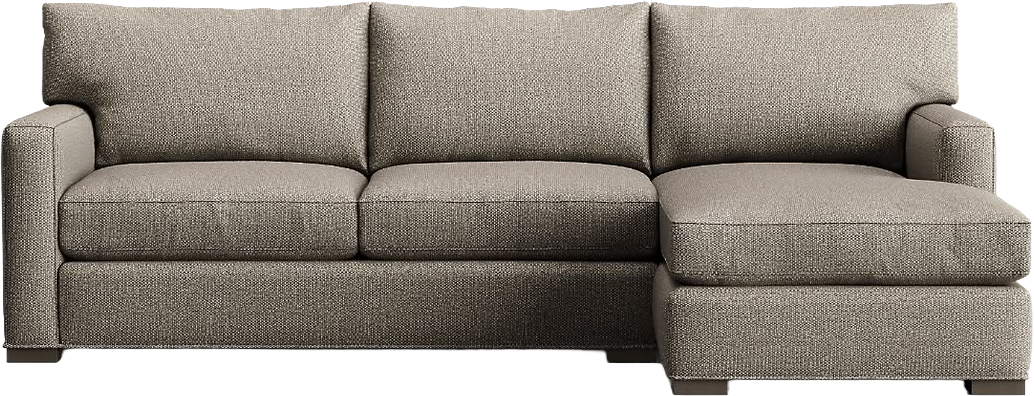
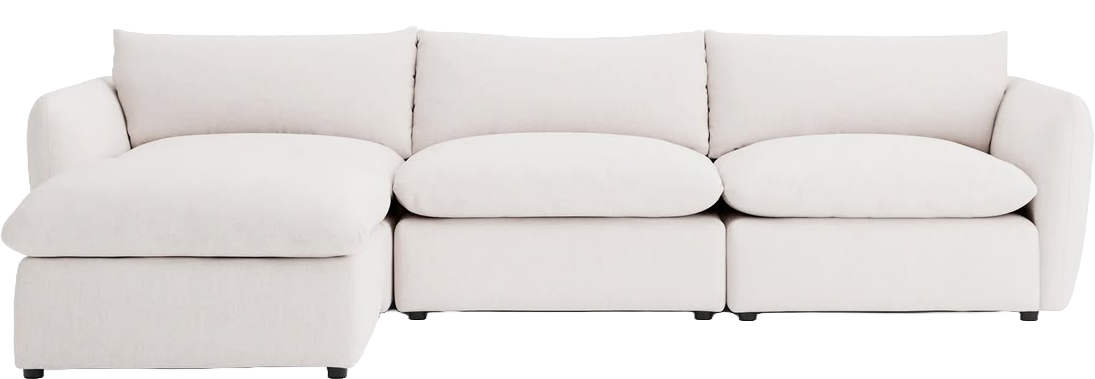
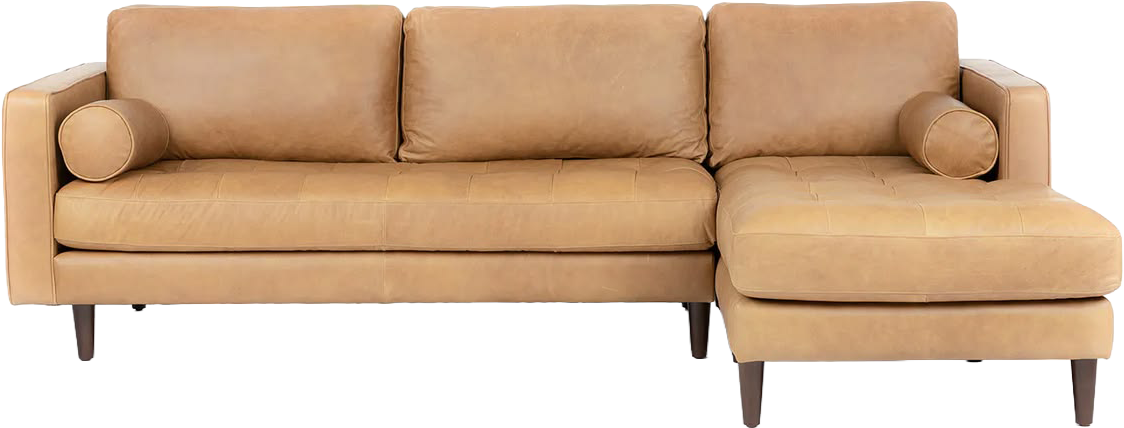
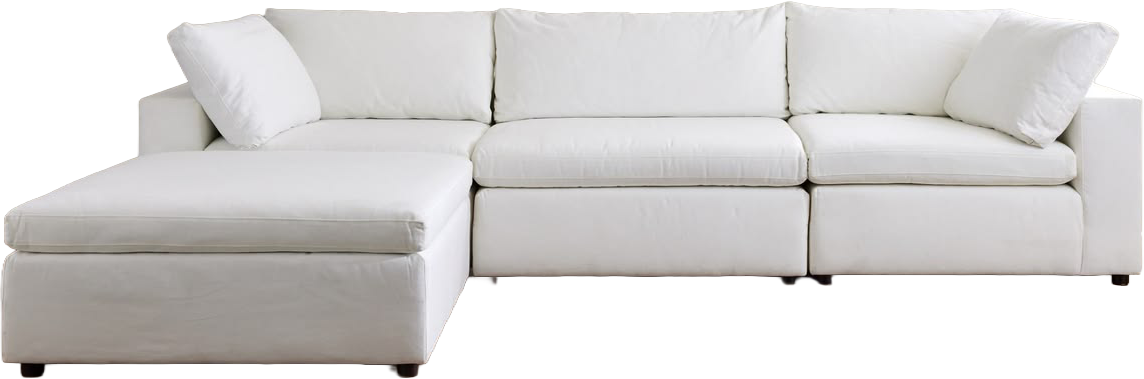
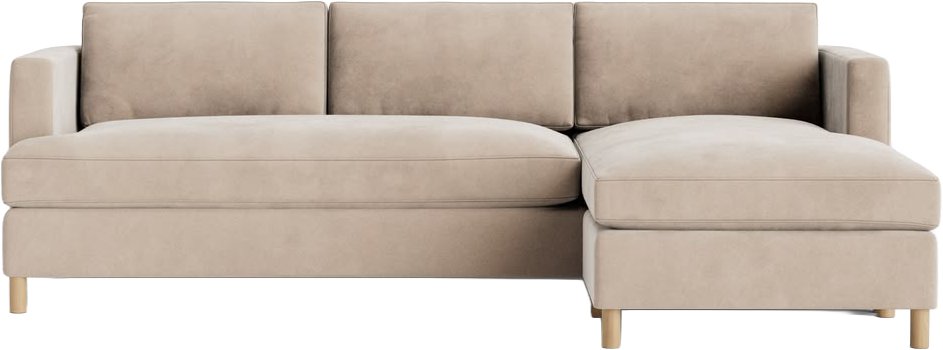
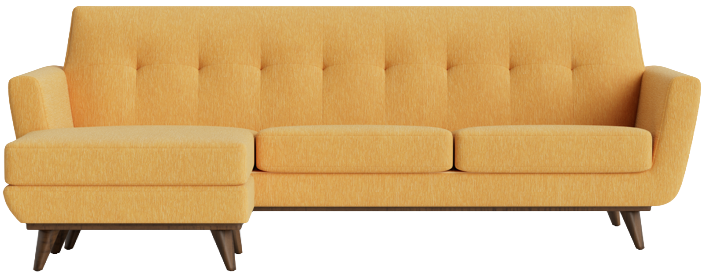
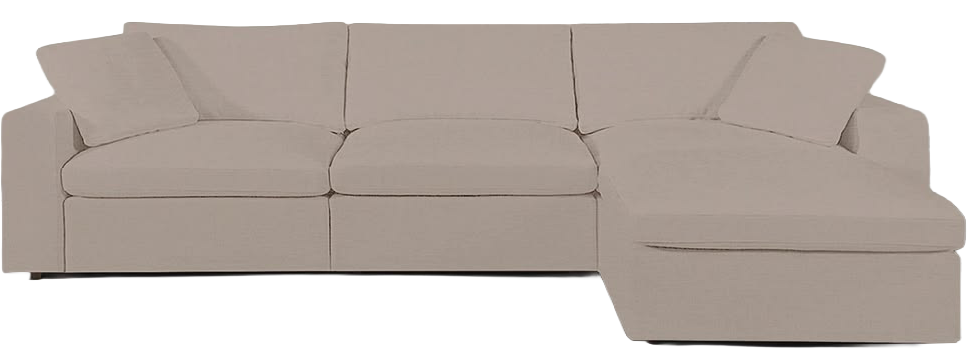
To help narrow the search, I selected 15 sofas with chaises from brands and retailers offering a range of styles, configurations, sizes, and price points. The list includes fixed and reversible chaises as well as modular designs that provide greater flexibility. As you explore my selections, remember to compare each sofa’s full dimensions with your own measurements and confirm the chaise orientation before ordering.


My Experience Living With a Sofa With a Chaise
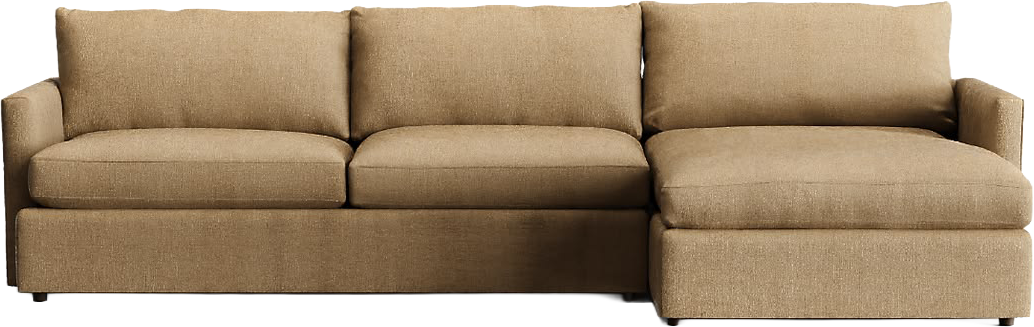
I currently have the Crate & Barrel Barrett II 2-Piece Sectional Sofa with Chaise Lounge in my own living room. Mine is the right-arm chaise configuration, measuring 101.5 inches wide by 61.5 inches deep.
I purchased it in fall 2020, but it did not arrive until January 2021 because of the supply-chain delays happening during the COVID-19 pandemic. Nearly six years have passed since I placed the order, and we have now used the sofa daily for more than five and a half years. The quality remains excellent, and it still has not noticeably shown its age despite how often we use it.
The chaise gives us a comfortable place to stretch out without requiring an enormous sectional. It also gets plenty of use from our pets. My dog and cats sit or nap on it every day, and they often claim the chaise before we have the opportunity to use it ourselves. Considering the amount of daily use it receives from both people and pets, I have been very impressed by how well it has held up.
I paired our sofa with a rectangular coffee table. Although people sometimes assume a chaise sofa requires a round or square table, a rectangular coffee table can work beautifully when its proportions fit the open area in front of the standard sofa seats. Ours follows the length of the sofa without extending too far into the chaise area, leaving enough room to sit down and move around it comfortably.
Living with this arrangement has reinforced something I often tell clients: the best sofa is not simply the one that looks good in a showroom or online. It needs to support the way you relax, move through the room, use the coffee table, and share the space with everyone else in your household—including the pets.
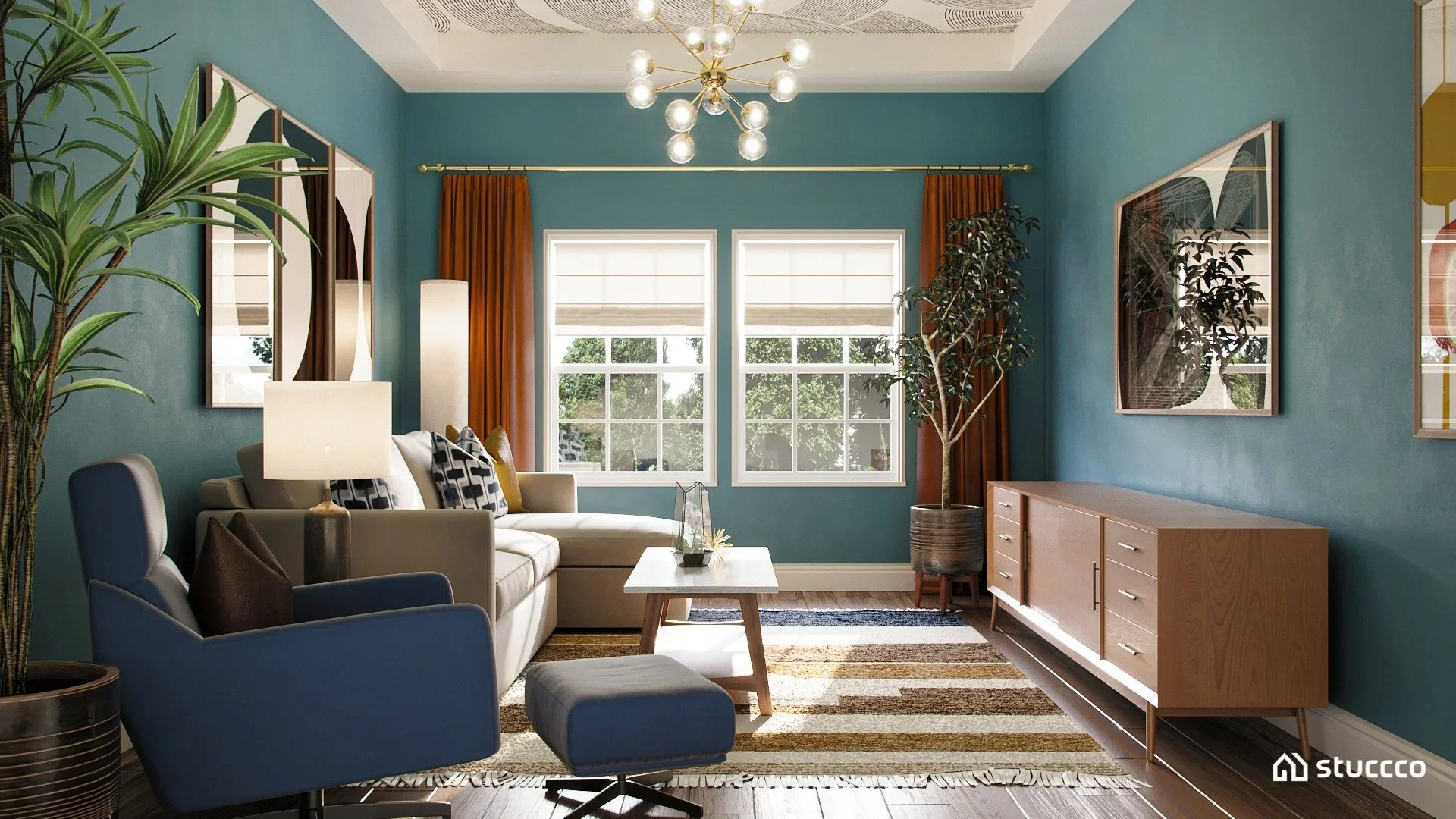
Mid-century modern glam TV room showing how a sofa with a chaise, rectangular coffee table, lounge chair, and ottoman create a comfortable layout oriented toward the television wall. Designed by virtual interior designer Joshua Jones of JJones Design Co. 3D rendering by Stuccco.
Frequently Asked Questions About Sofas With Chaises
Can a Sofa With a Chaise Go in the Middle of a Room?
Yes. A sofa with a chaise can float in the middle of a large living room or open floor plan as long as its back is finished and the chaise does not interrupt a primary walkway. Leave enough room behind and around the sofa for comfortable circulation. If you are furnishing several connected spaces, understanding why open-concept homes are harder to design than they look can help you plan the furniture as one cohesive arrangement.
Should the Chaise Face a Wall or the Open Side of the Room?
The chaise should face whichever direction creates the clearest traffic flow. Placing it toward a wall or corner often works well in smaller rooms, while extending it into the open space can help define a seating area in a larger room. The correct placement depends on the doors, walkways, focal points, and adjoining rooms. For additional layout guidance, I share practical ways to make a small room look bigger without knocking down walls.
What Shape Coffee Table Works Best With a Chaise Sofa?
Rectangular, round, and oval coffee tables can all work with a chaise sofa. A rectangular table often complements the length of the standard sofa seats, while a round or oval table can improve movement when the open area is tight. Select the shape based on the usable floor space between the chaise and the rest of the sofa rather than following one universal rule.
Can You Add a Chaise to an Existing Sofa?
You can only add a true chaise if the sofa belongs to a modular collection with compatible pieces designed to connect to it. A separate ottoman can be placed against an existing sofa to create a similar lounging experience, but it will not function exactly like an attached chaise and may shift during use.
Is a Sofa With a Chaise Comfortable for Sleeping?
A chaise can be comfortable for napping or stretching out, but most are not wide or flat enough to replace a proper sleeper sofa. If overnight guests are a priority, look for a chaise sectional that also includes a pullout mattress or another sleeping configuration.
Are Chaise Sofas Good for Homes With Pets?
Yes. Dogs and cats often enjoy the extra depth of a chaise for lounging and sleeping. For a pet-friendly chaise sofa, choose durable upholstery, tightly woven or performance fabric, and removable cushion covers whenever possible. Always review the manufacturer’s cleaning instructions before treating stains or washing any covers.
How Do You Prevent a Chaise Cushion From Wearing Unevenly?
Fluff and rotate the chaise cushion regularly if its construction allows it. Vacuum the upholstery, redistribute loose filling, and avoid allowing the same edge to carry all the weight every day. Reversible cushions can be flipped periodically, but check the design first because some have fabric on only one side.
If the cushion begins to lose its shape, contact the retailer or manufacturer before replacing the entire sofa. Some furniture companies offer replacement cushion inserts or new filler that can restore the seat’s comfort and appearance. Availability and cost vary by brand, but replacing the interior filling can extend the sofa’s life and make it feel new again.
Can a Sofa With a Chaise Be Placed Near a Fireplace?
Only when the entire sofa remains safely outside the fireplace manufacturer’s required clearance. The chaise should never project close to the firebox or block access to the hearth. Heat exposure can create a fire risk and may also damage the upholstery, foam, or frame over time.
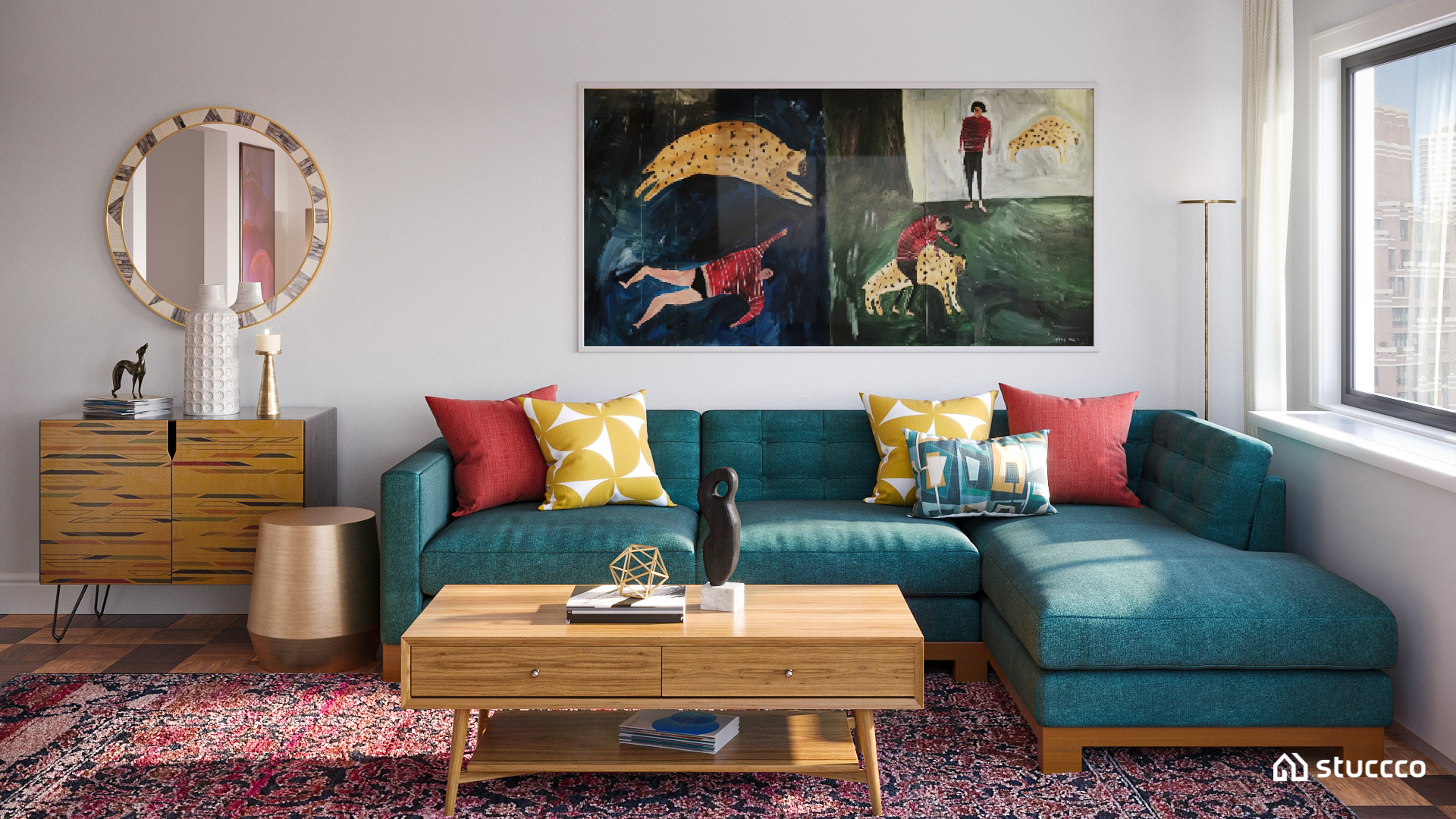
A colorful mid-century modern high-rise living room featuring a teal sofa with a chaise, warm wood furniture, bold artwork, and layered patterns. Designed by virtual interior designer Joshua Jones of JJones Design Co. and rendered by Stuccco.
Is a Sofa With a Chaise Right for Your Home?
A sofa with a chaise may be right for your home if you want a generous place to relax without committing to a much larger sectional. The deciding factor should be how well the sofa fits your room and daily life—not simply how appealing it looks in a product photo.
My goal with this guide and shopping list is to help you look beyond appearance and choose a chaise sofa that feels comfortable, preserves your walkways, works with your coffee table, and continues serving your household for years. A carefully chosen sofa can anchor the entire living room and make the space more enjoyable every day.
If you still feel uncertain about the correct sofa size, chaise orientation, furniture layout, or how to bring the rest of the room together, my virtual interior design services can provide a personalized plan for your home. I can help you select pieces that work together before you invest in furniture that may be difficult or expensive to return.
Affiliate Disclosure - This post contains affiliate links. If you purchase a product through one of these links, I may earn a small commission at no additional cost to you.
I only recommend products that I would consider using in my own projects or that I believe may be a good fit for my readers. Affiliate commissions help support JJones Design Co. and allow me to continue creating free design guides, decorating tips, and educational content like this.