Ask Joshua: Why Open-Concept Homes Are Harder to Design Than They Look
Hi Joshua,
My husband and I bought our first home last summer, and we just wrapped up a full renovation. It’s an open-concept home, which I genuinely love — especially since it makes it easier to keep an eye on our young kids.
That said, now that we’re at the furniture and decor stage, I feel completely stuck. I’ve tried to put everything together myself, but nothing is flowing the way I imagined. The rooms don’t feel connected, and no matter how much I move things around, the whole space still feels “off.”
I love the openness of our home — I just can’t seem to make it feel cohesive or finished. What am I missing, and how do I make an open-concept home actually work?
Thank you so much,
Allison - Kansas City, Missouri
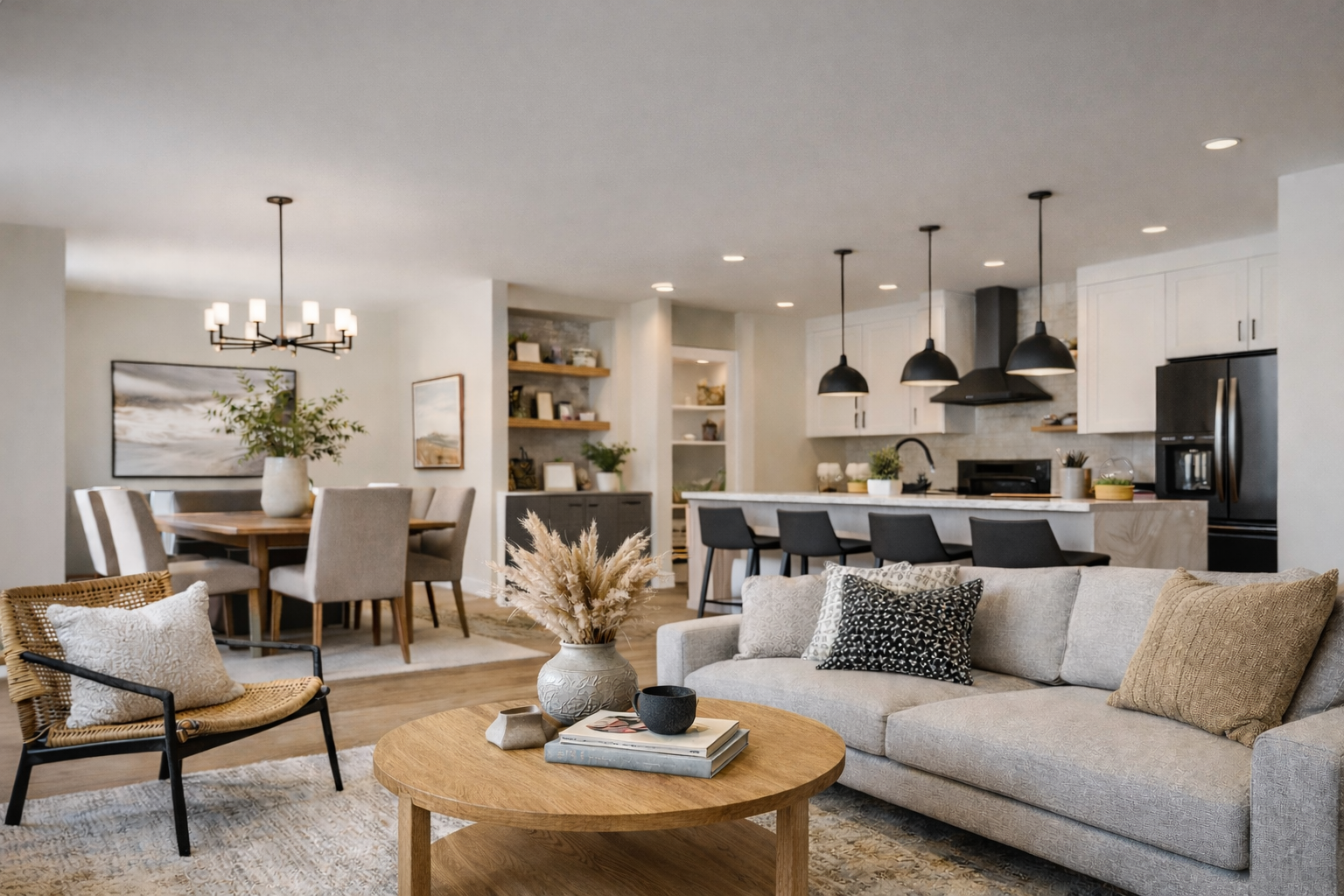
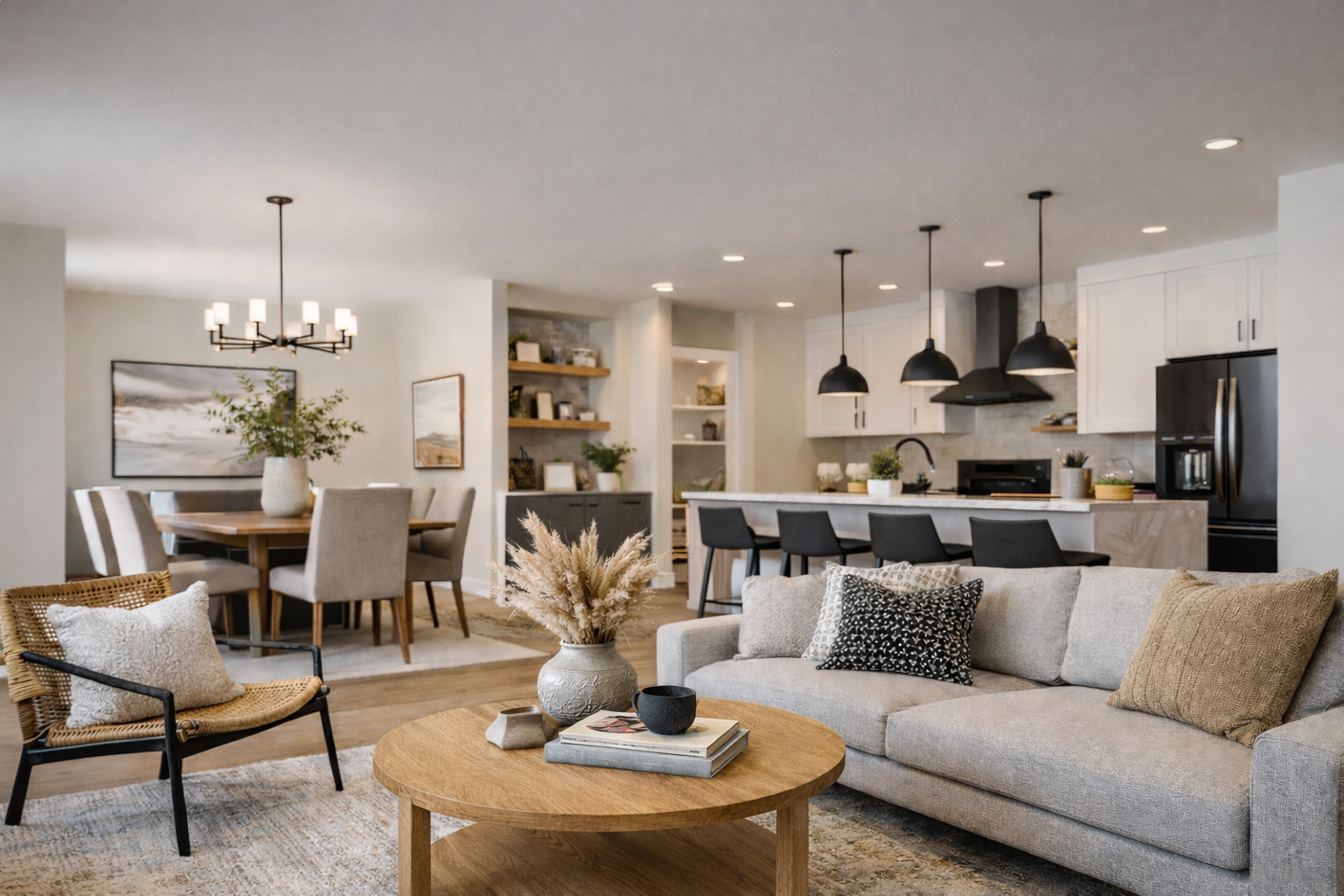
AI-generated image: A modern open-concept living, dining, and kitchen space styled to illustrate how cohesive furniture placement, color flow, and lighting can improve open-concept home design.
Ask Joshua’s Answer:
Hi Allison — congratulations on your first home, and on finishing a renovation. That alone is a big milestone.
What you’re experiencing is incredibly common with open-concept homes, especially once you move past the construction phase and into furniture and decor. The issue isn’t that you’re doing something “wrong” — it’s that open-concept spaces are more complex than they appear.
The biggest shift to understand is this:
an open-concept home isn’t several rooms that happen to connect — it’s one large visual space with multiple functions. When each area is designed on its own, the overall space can start to feel disconnected or unfinished, even if you like all the individual pieces.
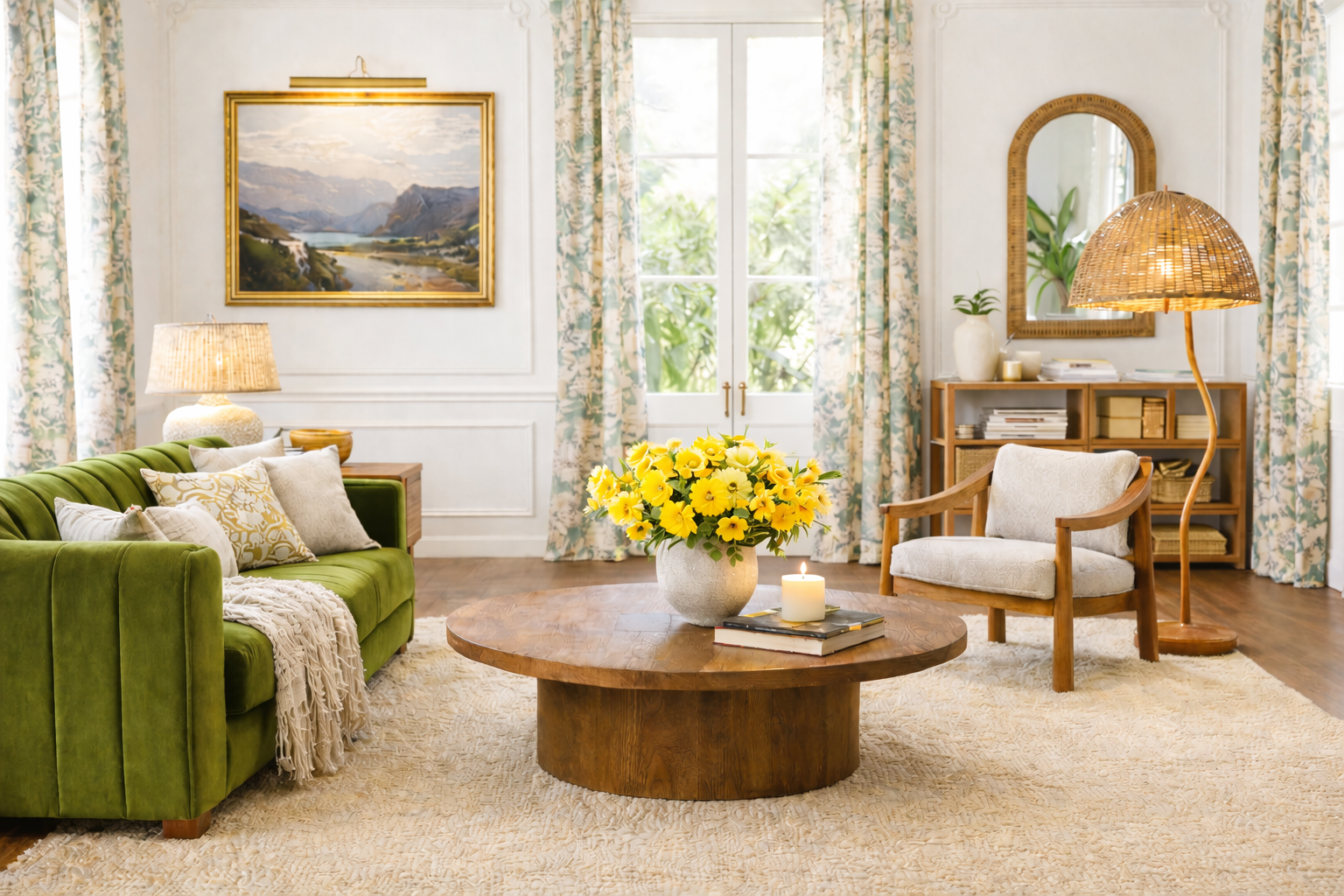
One of the most overlooked elements in open-concept design is the color scheme. Color plays a major role in how a space flows. When colors change too abruptly from one area to the next, the eye has trouble moving comfortably through the home. A cohesive palette — even with subtle variations — helps visually connect each zone and creates a sense of continuity throughout the space.
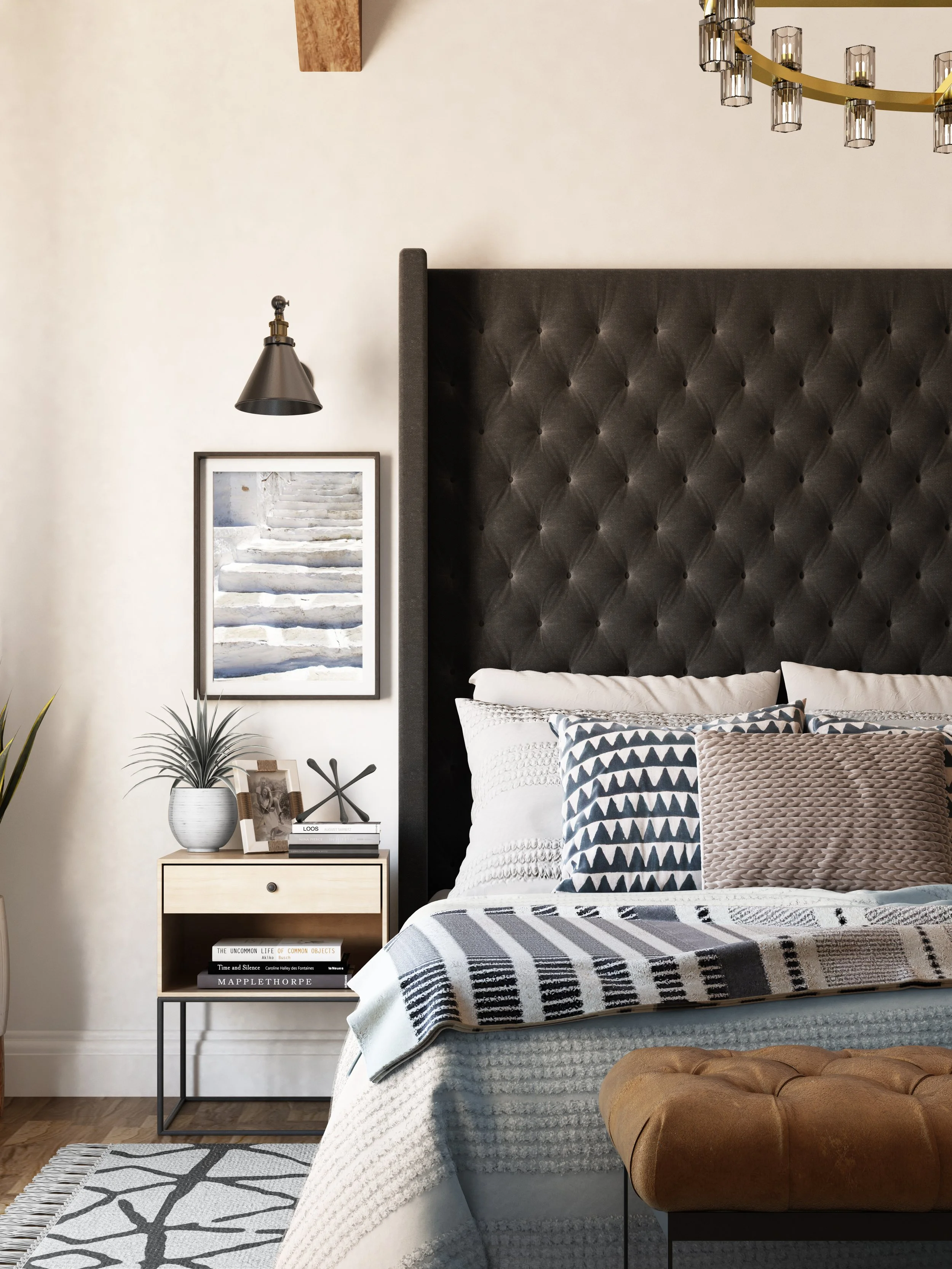
Design style is just as important. Open-concept homes tend to work best when a clear design style carries through the entire space. That doesn’t mean everything needs to match, but the style should feel intentional and consistent. When too many design styles compete within one open area, the space can quickly feel disjointed, even if each section looks good on its own.
(This is also where many homeowners start questioning whether open-concept living is really right for them. If you’re curious about how open-concept homes compare to more traditional floor plans, I break that down in more detail in another post.)
👉 The Great Debate: Open Concept vs. Traditional Floor Plans
Furniture placement also matters far more than most people expect. In open layouts, placement often has a bigger impact than the furniture style itself. Clear zones, thoughtful spacing, and consistent alignment help the space feel organized and purposeful instead of scattered.
Lighting plays a supporting role as well. Open-concept homes often rely heavily on overhead fixtures, which can make the space feel flat. Each zone benefits from its own layer of lighting — whether that’s a floor lamp, table lamp, or accent lighting — to add warmth and definition.
Finally, try not to judge the space too quickly. Open-concept homes take longer to come together because small changes have a big visual impact. Improving flow usually isn’t about adding more decor — it’s about editing, repositioning, and letting the design breathe.
If you find yourself feeling stuck or overwhelmed, this is also where virtual interior design can be especially helpful. Open-concept layouts benefit from a trained eye that can look at the space as a whole, create a cohesive plan, and help you make confident decisions without costly trial and error.
You’re not alone in this, and you’re not failing at design. Open-concept homes simply require more intention when it comes to layout, color, and style continuity. Once those elements align, the openness you love can finally feel cohesive, calm, and finished.
Have interior design related questions? You can ask Joshua here.