Ask Joshua: What to Do If Your Living Room Has No Overhead Lighting
Hi Joshua,
I recently moved into my new apartment in downtown Portland, which I love. The challenge is our living room doesn’t get much natural light since it faces north, and there are no ceiling lights at all. During the gloomy winter months, the space can feel especially dark.
I’m trying to figure out how to improve the lighting in our living room without making it feel harsh or uninviting. Do you have any advice?
Thank you,
Olivia — Portland, Oregon
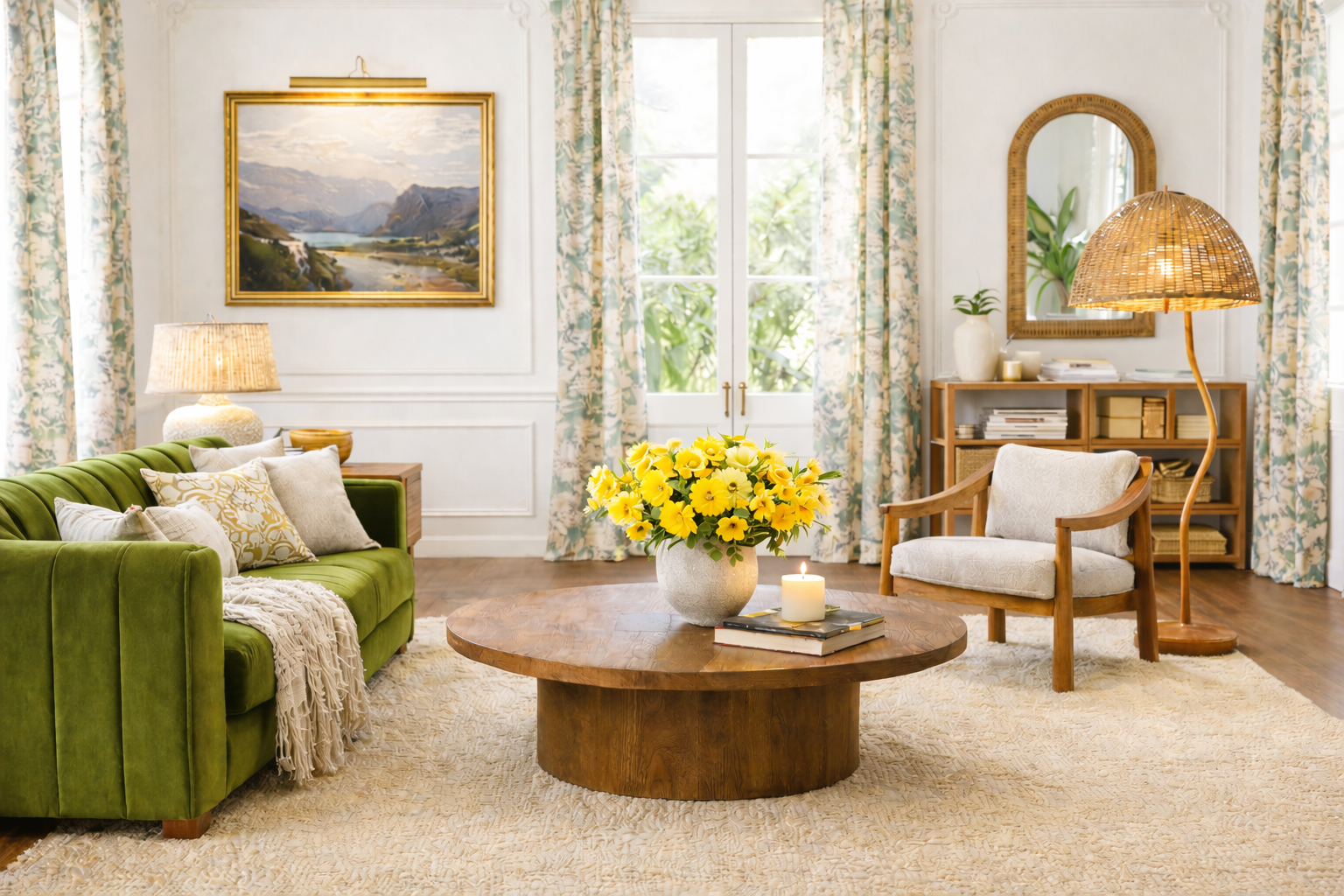
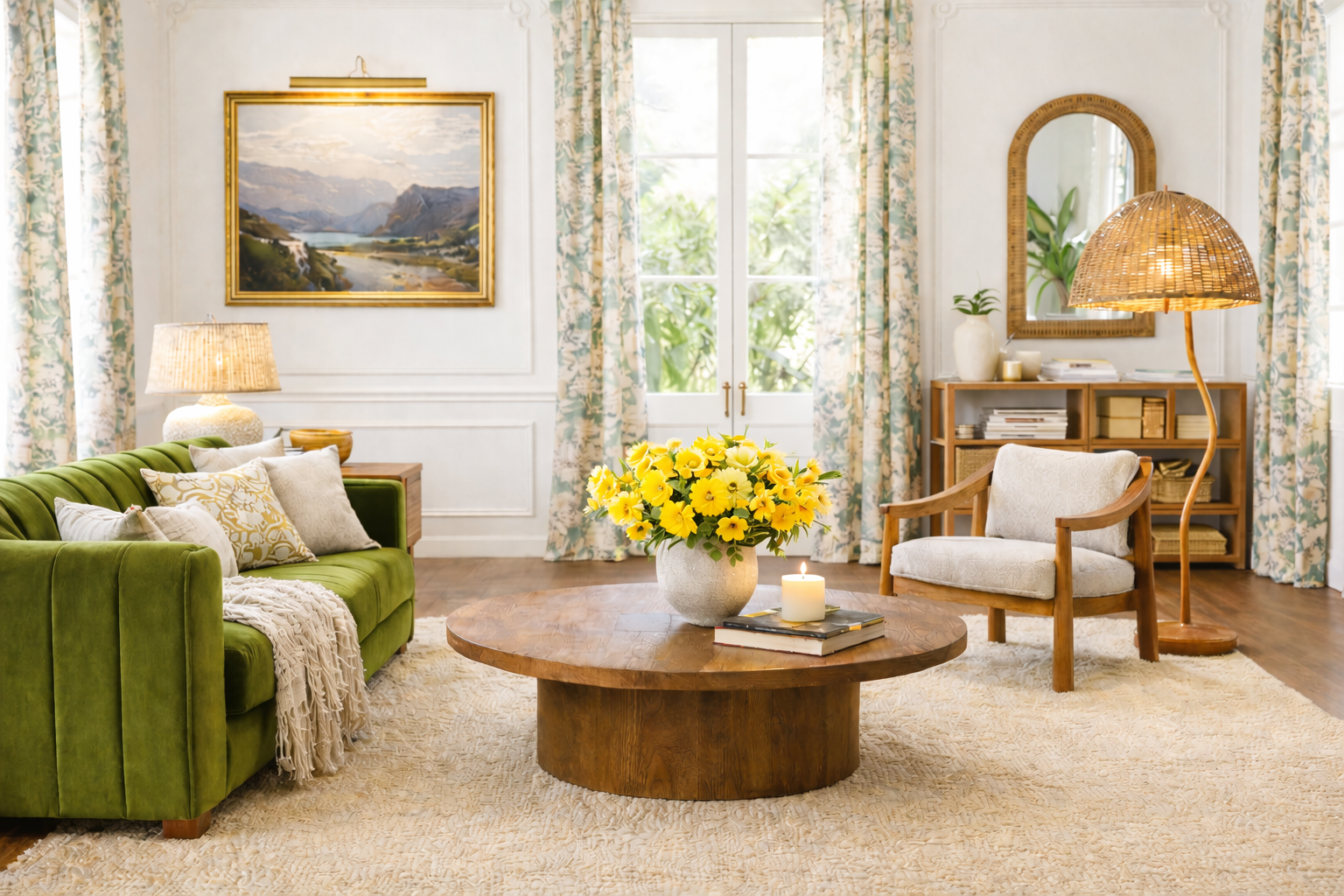
A boho chic living room layered with warm lighting using table lamps, floor lamps, and an art light. Image created with AI.
Hi Olivia — you’re not alone. This is one of the most common issues I see in city apartments, especially in older buildings and north-facing units. The good news is: you don’t need ceiling lights to create a bright, comfortable living room, even during Portland winters.
Here’s how I’d approach it.
1. Think in Layers, Not One Big Light Source
When there’s no overhead lighting, the goal is layered lighting. Relying on a single floor lamp will almost always leave the room feeling dim and uneven.
Ideally, your living room should include:
Ambient lighting (overall glow)
Task lighting (reading, working, relaxing)
Accent lighting (warmth and visual interest)
This combination creates balance and prevents that cave-like feeling many north-facing rooms get in winter.
2. Use Floor Lamps to Create Soft Ambient Light
Start with one or two floor lamps that provide diffused light rather than a harsh spotlight. Look for:
Fabric or frosted shades
Warm LED bulbs (around 2700K–3000K)
Lamps that bounce light outward, not straight down
Place them near seating areas or corners to help spread light evenly throughout the room.
3. Add Table Lamps at Different Heights
Table lamps are essential when there’s no ceiling fixture. They add warmth and help fill in darker areas.
A good rule of thumb:
One table lamp on a side table or console
Another on a bookshelf, media console, or window ledge
Varying the height of your lamps keeps the lighting from feeling flat and makes the space feel more intentional.
4. Consider Plug-In Wall Sconces (Renter-Friendly!)
If your apartment allows it, plug-in wall sconces can be a game changer. They give you the feeling of built-in lighting without hardwiring.
They work especially well:
On either side of a sofa
Near artwork or shelving
In narrow living rooms where floor space is limited
Many options simply mount with anchors and plug into a standard outlet.
5. Don’t Overlook Accent Lighting
Small light sources make a big difference in dark spaces:
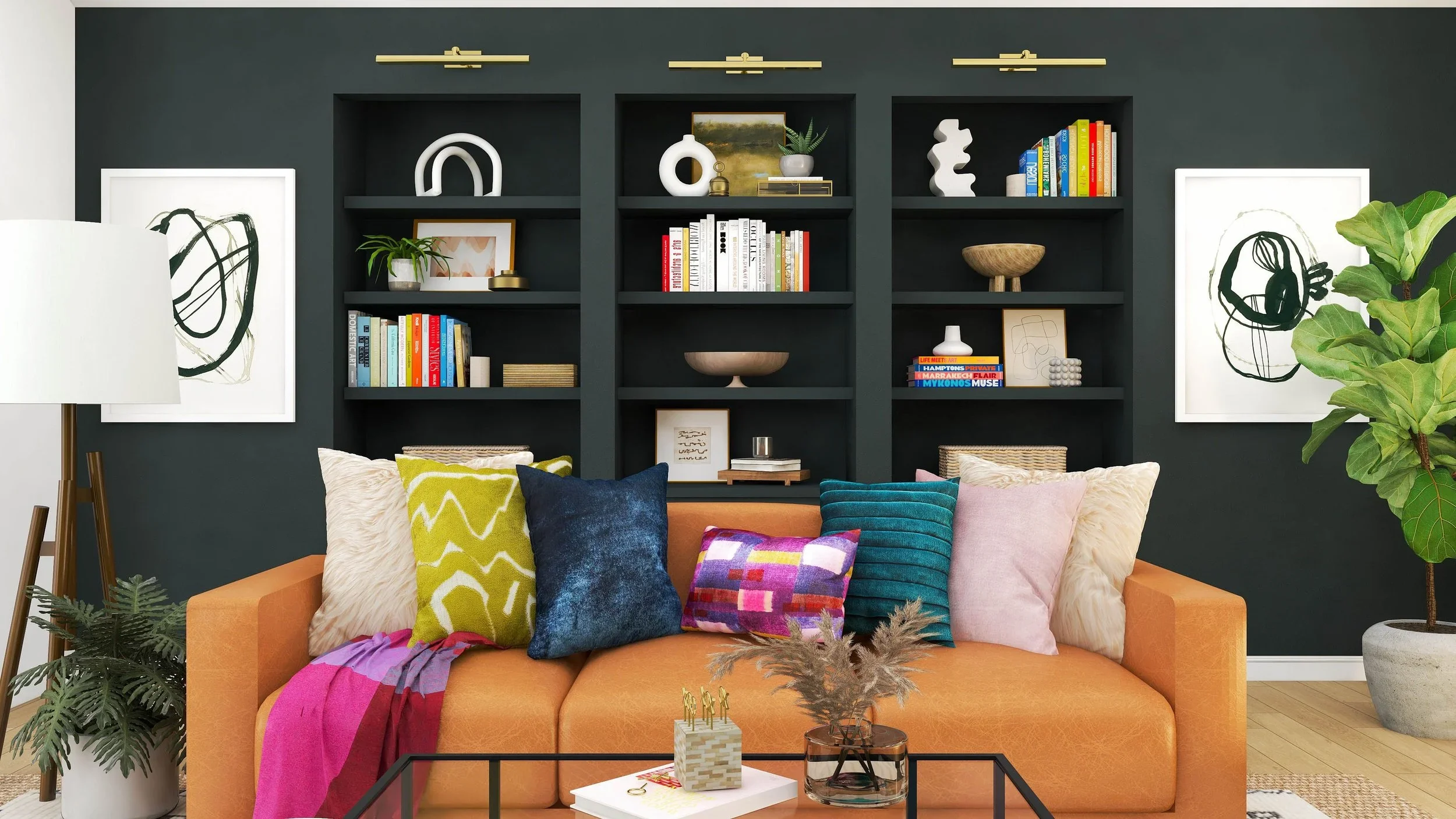
Picture lights over artwork
LED strips behind shelves or media units
A small lamp tucked into a darker corner
These subtle layers help visually lift the room and add depth — especially helpful during long, gray winters.
6. Be Strategic with Bulbs and Shades
Lighting isn’t just about fixtures — bulbs matter.
For north-facing rooms:
Avoid cool or daylight bulbs (they can feel harsh and gloomy)
Stick with warm or soft white tones
Choose shades that allow light to pass through, not opaque materials that trap it
This alone can dramatically change how the room feels.
My Take as a Designer
Living rooms without overhead lighting get a bad reputation, but I actually see them as an opportunity. When you rely on layered lighting instead of one harsh ceiling fixture, the space often ends up feeling warmer, more intentional, and more comfortable — especially during winter.
The key is resisting the urge to “fix” the darkness with cool or overly bright bulbs. Warm light, placed thoughtfully at different heights, will always create a better atmosphere. Start small, adjust as you live in the space, and trust that a well-lit room doesn’t have to be bright — it just has to feel right.
Warmly,
Joshua
Have interior design related questions? You can ask Joshua here.