Ask Joshua: How to Style a Glass-Front Sideboard in an Entryway
Hi Joshua,
A dear friend recently gave us a beautiful sideboard because it would not fit in their new home. We love the piece, and it fits perfectly in our foyer.
However, the sideboard has glass-front doors, so everything stored inside remains visible. I know sideboards are traditionally used in dining rooms, but how can I style the interior so it feels appropriate and organized in an entryway?
Thank you,
Susan - Cleveland, Ohio
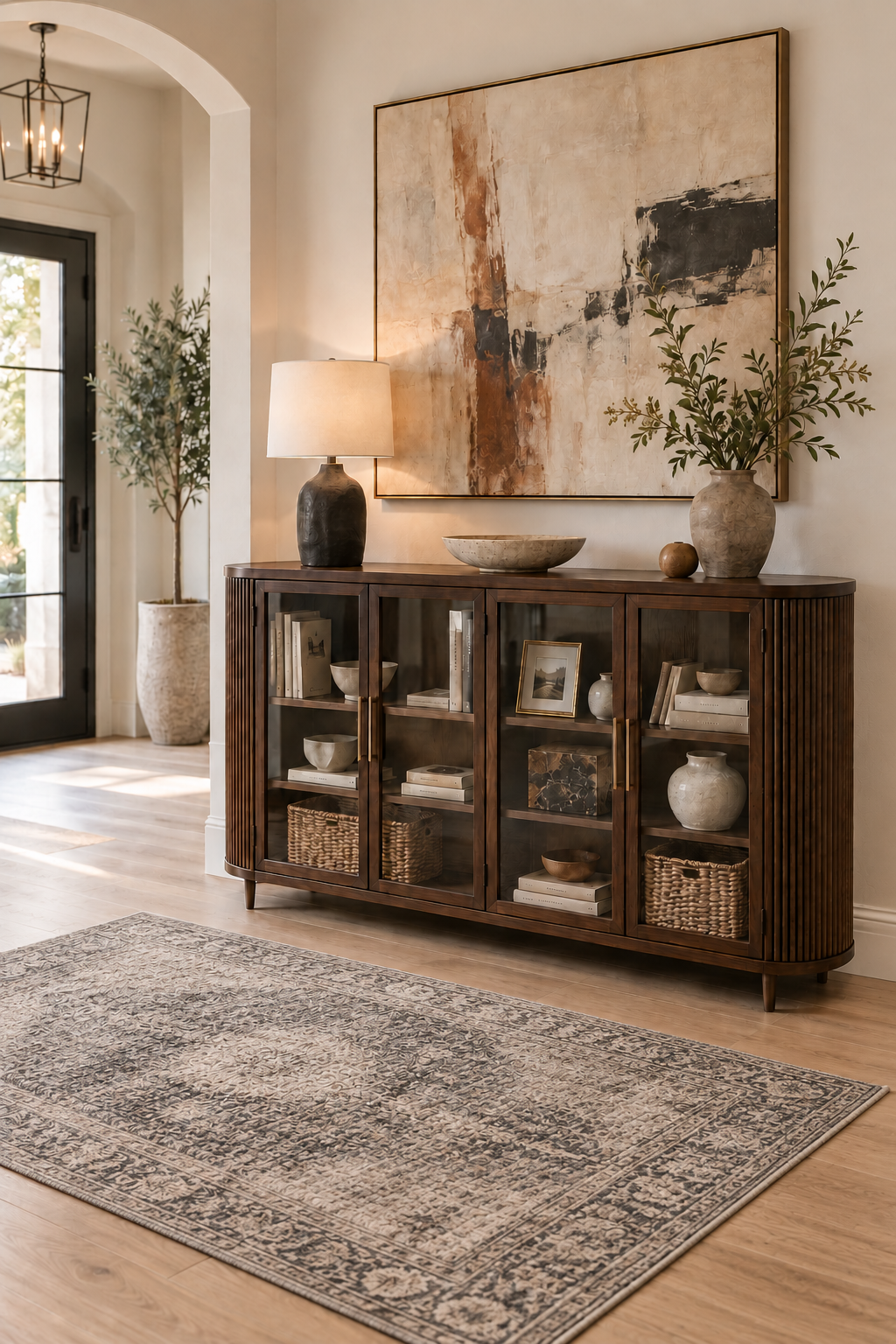
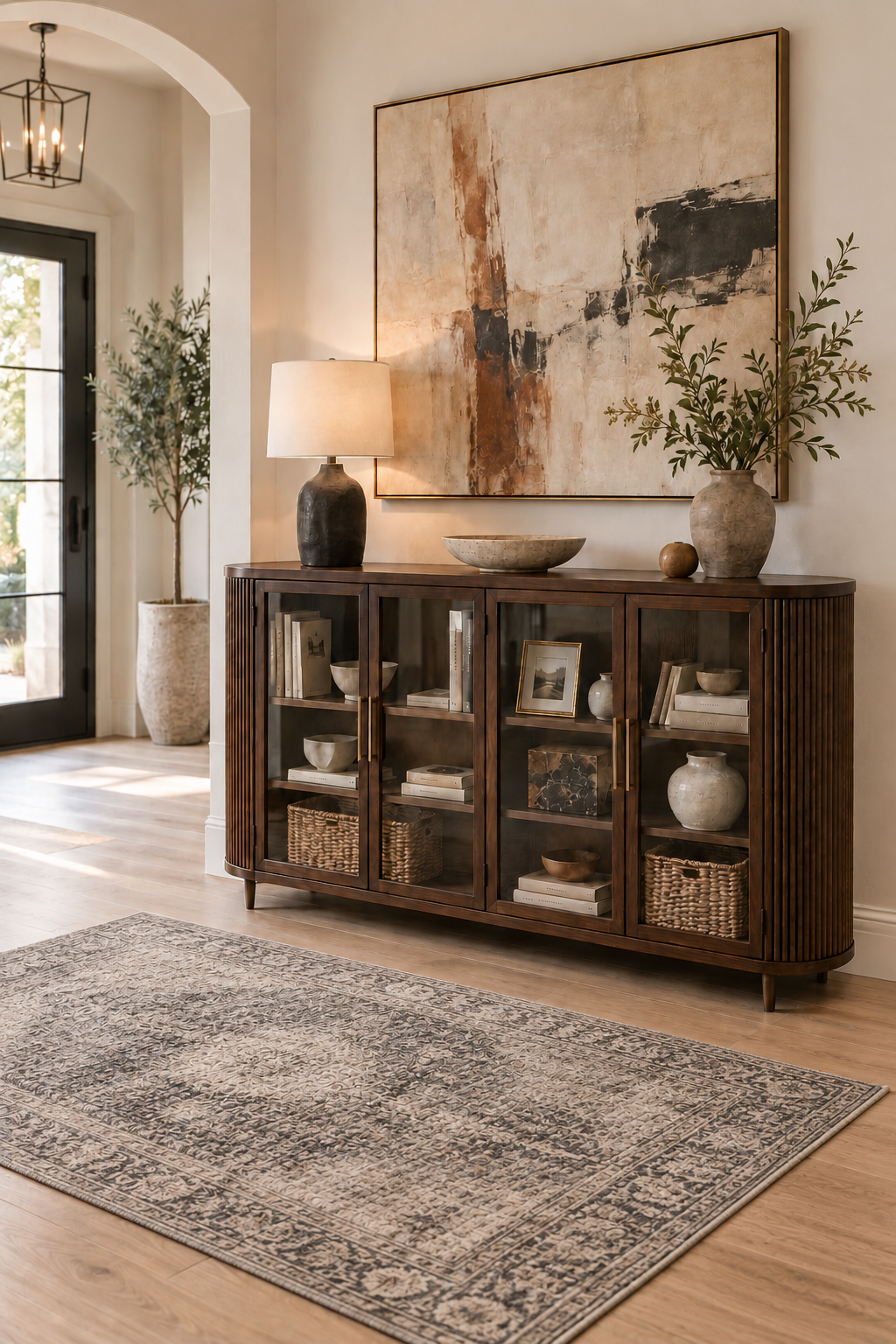
A contemporary foyer featuring a curved walnut glass-front sideboard with thoughtfully arranged books, pottery, baskets, and decorative objects, styled by virtual interior designer Joshua Jones of JJones Design Co. This image is an AI-generated rendering.
Hi Susan,
Thank you for sending a picture. Your friend gave you a beautiful piece, and there is no reason a sideboard needs to remain in a dining room. It can work equally well in an entryway, living room, hallway, bedroom, or home office.
Because yours has glass-front doors, think of the interior as both storage and display. The goal is to create an arrangement that looks attractive from across the foyer while still making the cabinet useful.
Begin With What You Already Own
Gather a small collection of objects from around your home before purchasing anything new. Books, pottery, decorative boxes, baskets, framed photographs, small sculptures, and attractive bowls can all work beautifully behind glass.
Since the sideboard is in your entryway, you can also include practical items connected to that space. A decorative box might hold spare keys, sunglasses, or dog-walking supplies, while a basket could conceal hats, gloves, or other seasonal accessories.
Not every practical item needs to remain visible. Reserve the open display areas for attractive pieces and use opaque containers for anything that would create visual clutter.
Create Small Groupings
Avoid lining up objects evenly across every shelf. Instead, arrange them in small groups with different heights and shapes.
For example, place a horizontal stack of books beside a ceramic vase, or pair a decorative box with a small framed photograph. A sculptural object can sit on top of a book stack to give it more presence.
Repeat a few colors or materials throughout the cabinet so the shelves feel connected. You might use several pieces of white pottery, touches of brass, warm wood, or colors that already appear elsewhere in the foyer.
The objects do not need to match, but they should feel as though they belong to the same overall story.
Leave Some Open Space
Glass-front storage can quickly look crowded because every item remains visible. You do not need to fill the entire cabinet.
Leaving open space around the objects will allow the individual pieces to stand out and make the interior easier to appreciate. Begin with fewer items than you think you need, then add something only when a shelf feels noticeably incomplete.
Step back frequently while arranging the cabinet. The display should look balanced from the primary entrance to the foyer, not only when you are standing directly in front of it.
Use Baskets and Decorative Boxes Carefully
Matching or coordinating baskets can provide useful concealed storage, particularly on the lowest shelf. Choose styles that fit comfortably behind the doors and leave enough room to remove them without difficulty.
Avoid filling every shelf with identical baskets because that may make the glass-front cabinet feel more like utility storage than a decorative furnishing. One or two containers mixed with books and objects will create a softer balance between storage and display.
Measure the shelf depth, height, and door opening before purchasing any containers. A basket may technically fit inside the cabinet but still be difficult to maneuver through the framed opening.
Consider the Interior Background
If the sideboard’s interior feels dark, you could add removable wallpaper or fabric-backed panels to the inside rear surface. A subtle pattern or contrasting color can help lighter objects stand out and give the cabinet a more customized appearance.
For a less permanent solution, cut foam board or thin removable panels to fit the back of each section and cover them with wallpaper or fabric. This will allow you to change the look later without altering the sideboard.
Small rechargeable cabinet lights could also brighten the display if the foyer lacks natural light. Conceal them near the top of the cabinet so the light source is not immediately visible through the glass.
Coordinate the Interior With the Top
The objects inside the sideboard should relate to what is displayed above it without duplicating everything.
If you have a large mirror or artwork above the sideboard, keep the accessories on top relatively simple. A lamp, a bowl or tray, and one taller decorative element may be enough. This will allow the sideboard to function as an entryway piece while the interior display adds a second layer of interest.
The cabinet can also provide a useful place to store items you occasionally rotate onto its surface. Seasonal décor, extra vases, and small framed pieces can remain organized inside until you want to use them.
My Recommendation for Your Sideboard
I would combine a few books, ceramic pieces, decorative boxes, and one or two baskets. Use the baskets on the lowest shelf for practical entryway storage and reserve the upper shelves for the most attractive objects.
Repeat two or three colors or materials throughout the arrangement, vary the height of the groupings, and leave some open space. This will make the cabinet feel intentionally styled without turning it into a crowded display case.
If you need help styling existing furniture and accessories so they work in a new location, my virtual interior design service can help. I can create a personalized plan that incorporates meaningful pieces while making your entryway feel welcoming and complete.
I hope this helps you enjoy your beautiful sideboard and give your friend’s thoughtful gift a fitting place in your home.
Warmly,
Joshua
Have an interior design related question? You can ask Joshua here.