The Complete Guide to Shower Design: Types, Layouts, Materials & Features
When homeowners start planning a bathroom remodel, the shower is often one of the first features they think about. Some dream of a spacious walk-in shower with beautiful tile, while others want a curbless design that feels open and easy to access. Many simply want a shower that looks great, functions well, and doesn't create maintenance headaches down the road.
What many people don't realize is that shower design involves much more than selecting tile and fixtures. The layout, materials, storage, lighting, ventilation, accessibility, and daily usability all play an important role in creating a shower that works well for years to come.
As an interior designer, I've found that homeowners often focus on finishes first because they're the most exciting part of the process. While finishes certainly matter, the overall design and planning of the shower usually have a much bigger impact on how the space functions every day. A thoughtfully designed shower can make a bathroom feel more comfortable, organized, and enjoyable to use, while a poorly planned shower can become a source of frustration long after the remodel is complete.
In this guide, I'll walk you through the most common types of showers, important layout considerations, popular materials, and the features worth considering before starting your bathroom renovation. Whether you're updating a guest bathroom, remodeling a primary suite, or building a new home, this guide will help you make informed decisions and create a shower that fits your lifestyle.
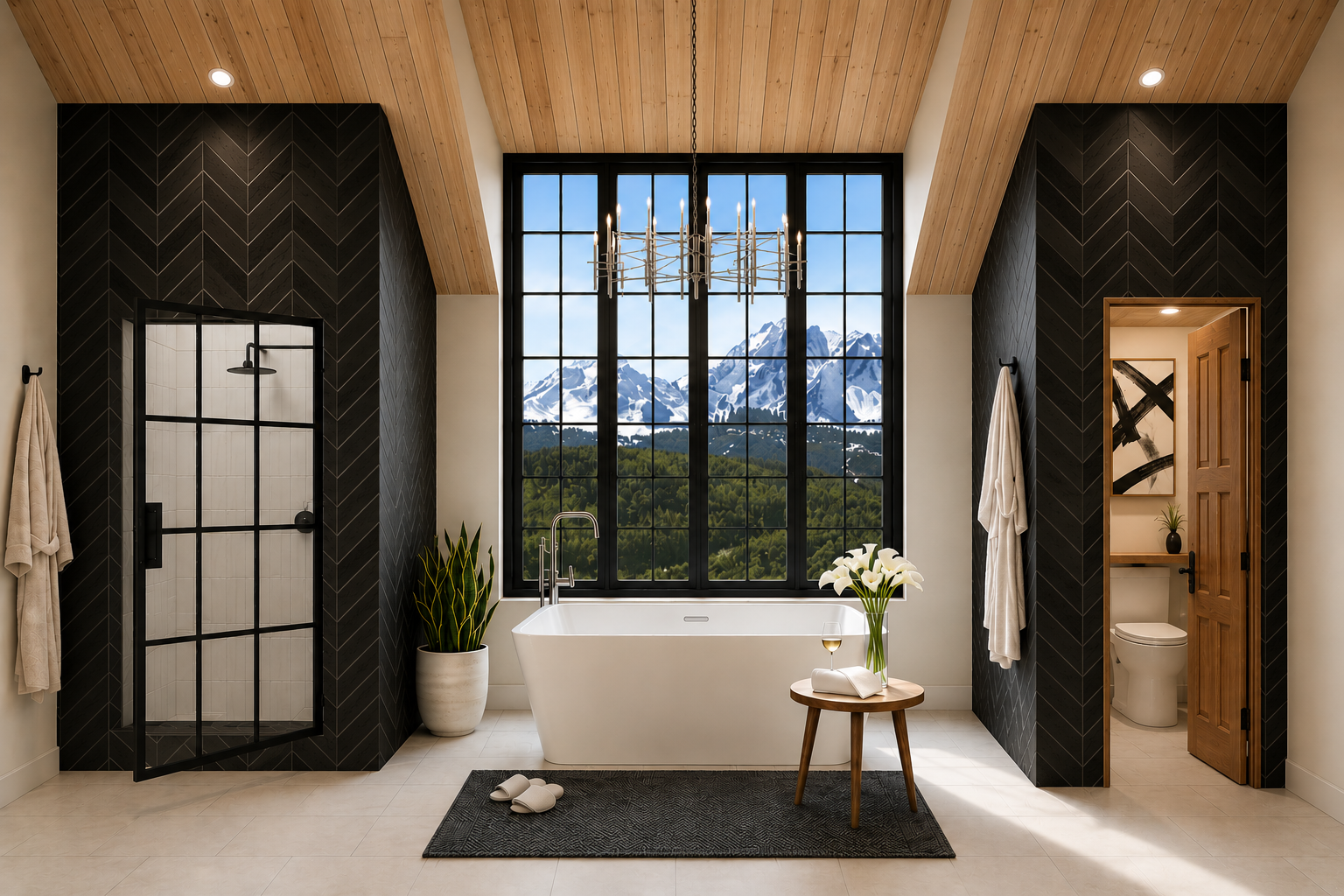
AI-generated 3D rendering based on an original 2D bathroom design created by virtual interior designer Joshua Jones of JJones Design Co.
What Makes a Well-Designed Shower?
A well-designed shower is about more than appearance. While beautiful tile and stylish fixtures can certainly elevate a bathroom, the best showers balance aesthetics, comfort, functionality, and long-term durability.
Over the years, I've noticed that homeowners often become focused on selecting finishes before fully considering how the shower will actually be used. Questions such as who will be using the shower, how much maintenance the materials require, whether accessibility may become important in the future, and how the layout affects daily comfort are often overlooked during the early planning stages.
Before choosing tile, fixtures, or decorative details, I encourage homeowners to think about the following factors:
Layout and Flow
The shower should feel comfortable to enter, exit, and move around in. Poorly placed shower heads, awkward door swings, and cramped layouts can make even an expensive shower feel inconvenient to use.
Daily Functionality
Think about how the shower will be used on a daily basis. Will multiple family members use it? Do you need storage for shampoo, conditioner, body wash, and shaving supplies? Is a handheld shower head important? These practical considerations often have a greater impact on satisfaction than the tile itself.
Maintenance Requirements
Some materials and design features require more upkeep than others. For example, showers with numerous grout lines may require more cleaning than larger format tile installations. Certain natural stone materials may also require periodic sealing and maintenance.
When selecting materials, it is important to consider not only how they look on installation day but also how they will perform years later.
Accessibility and Aging in Place
Even if accessibility is not a current concern, it is worth considering how your needs may change over time. Features such as curbless entries, wider openings, handheld shower heads, built-in benches, and properly placed grab bars can improve comfort and usability for people of all ages.
Ventilation and Moisture Control
Bathrooms generate a significant amount of moisture, and showers are often the primary source. Proper ventilation helps reduce humidity, protect materials, and minimize the risk of mold and mildew.
A beautiful shower will not stay beautiful for long if moisture management is ignored.
Personal Style
Finally, your shower should reflect your personal taste and complement the overall design of your home. Whether you prefer a clean Scandinavian aesthetic, a modern organic look, a traditional bathroom, or something more contemporary, the shower should feel connected to the rest of the space rather than designed in isolation.
When all of these elements work together, the result is a shower that not only looks great but also functions well for many years to come.
Popular Shower Types and Layouts
There is no single "best" shower design for every bathroom. The right choice depends on the size of the space, your budget, how the bathroom will be used, and your long-term goals for the home.
Below are some of the most common shower types you'll encounter during a bathroom renovation or new construction project.
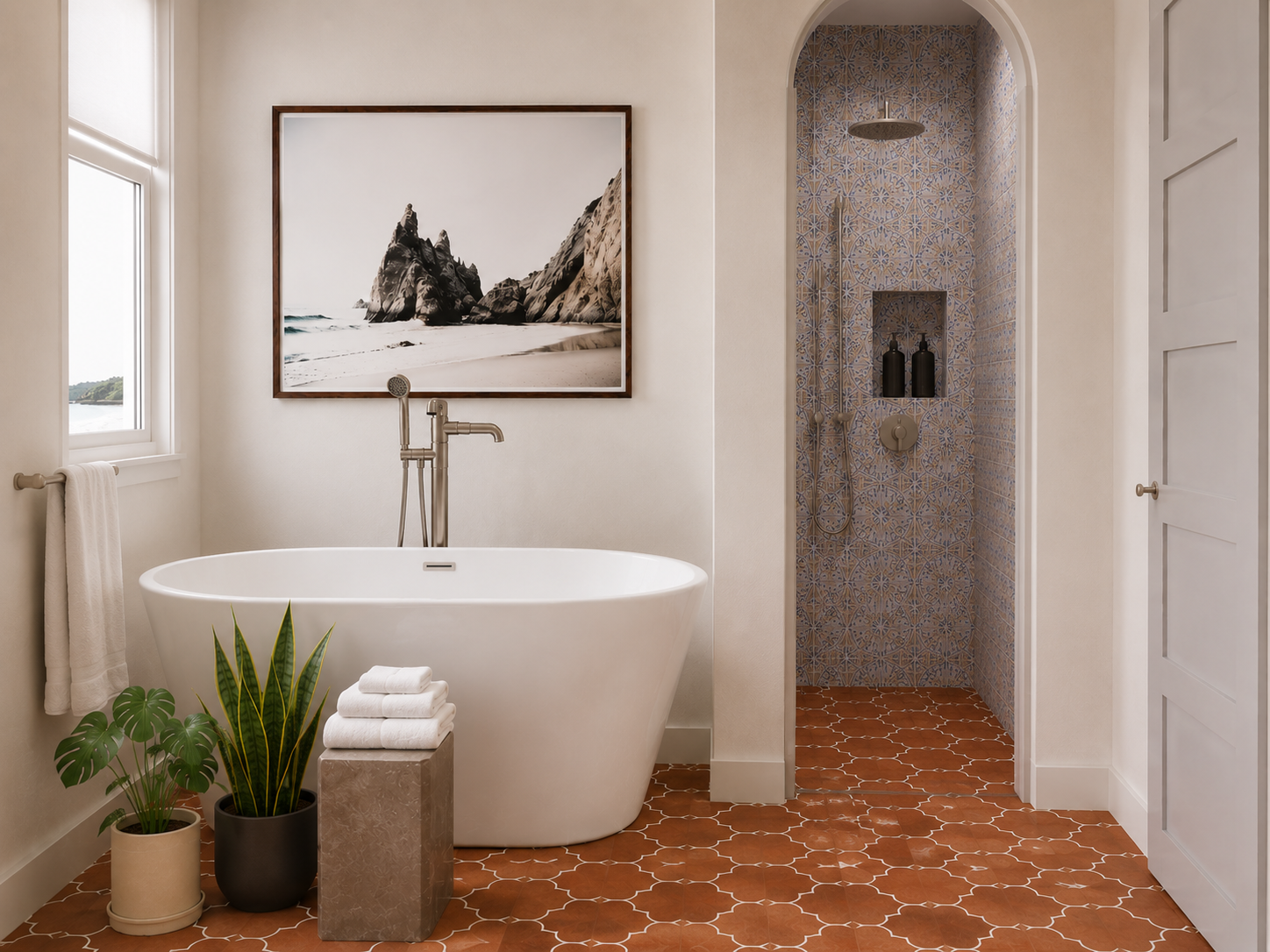
AI-generated 3D rendering based on an original Mediterranean-inspired bathroom design created by virtual interior designer Joshua Jones of JJones Design Co.
Enclosed Shower Room (Often Called a "Cave Shower")
An enclosed shower room features walls that fully surround the shower area, with access provided through a doorway or arched opening rather than a glass door. The walls, ceiling, and surrounding surfaces are often finished with tile, stone, or other water-resistant materials, creating a highly immersive shower experience.
This style has become increasingly popular in luxury homes, modern organic interiors, Mediterranean-inspired homes, and spa-inspired bathroom designs.
Pros:
Creates a private and relaxing shower experience
Can feel luxurious and spa-like
Minimizes concerns about water escaping the shower area
Allows dramatic use of tile, stone, and architectural details
Cons:
Requires more space than many traditional shower layouts
Construction costs are often higher
Proper ventilation becomes especially important
Can feel enclosed for homeowners who prefer open spaces
One reason I appreciate this type of shower is that it allows the shower itself to become an architectural feature. Rather than relying solely on tile selections, the shape of the opening, ceiling treatments, niches, and materials all contribute to the overall experience. When designed thoughtfully, an enclosed shower room can become one of the most memorable spaces in a home.
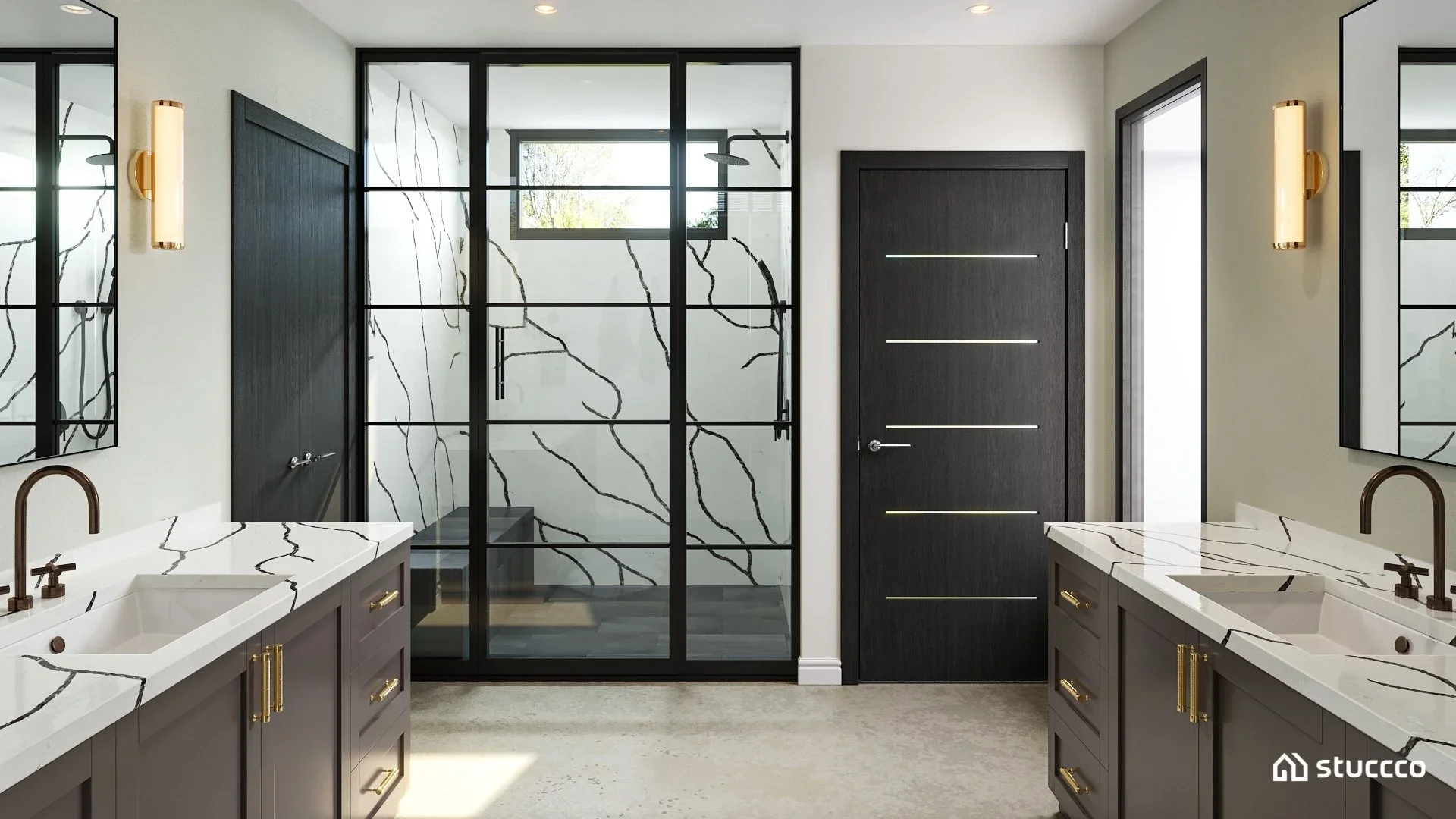
3D rendering by Stuccco based on an original industrial-inspired bathroom design created by virtual interior designer Joshua Jones of JJones Design Co.
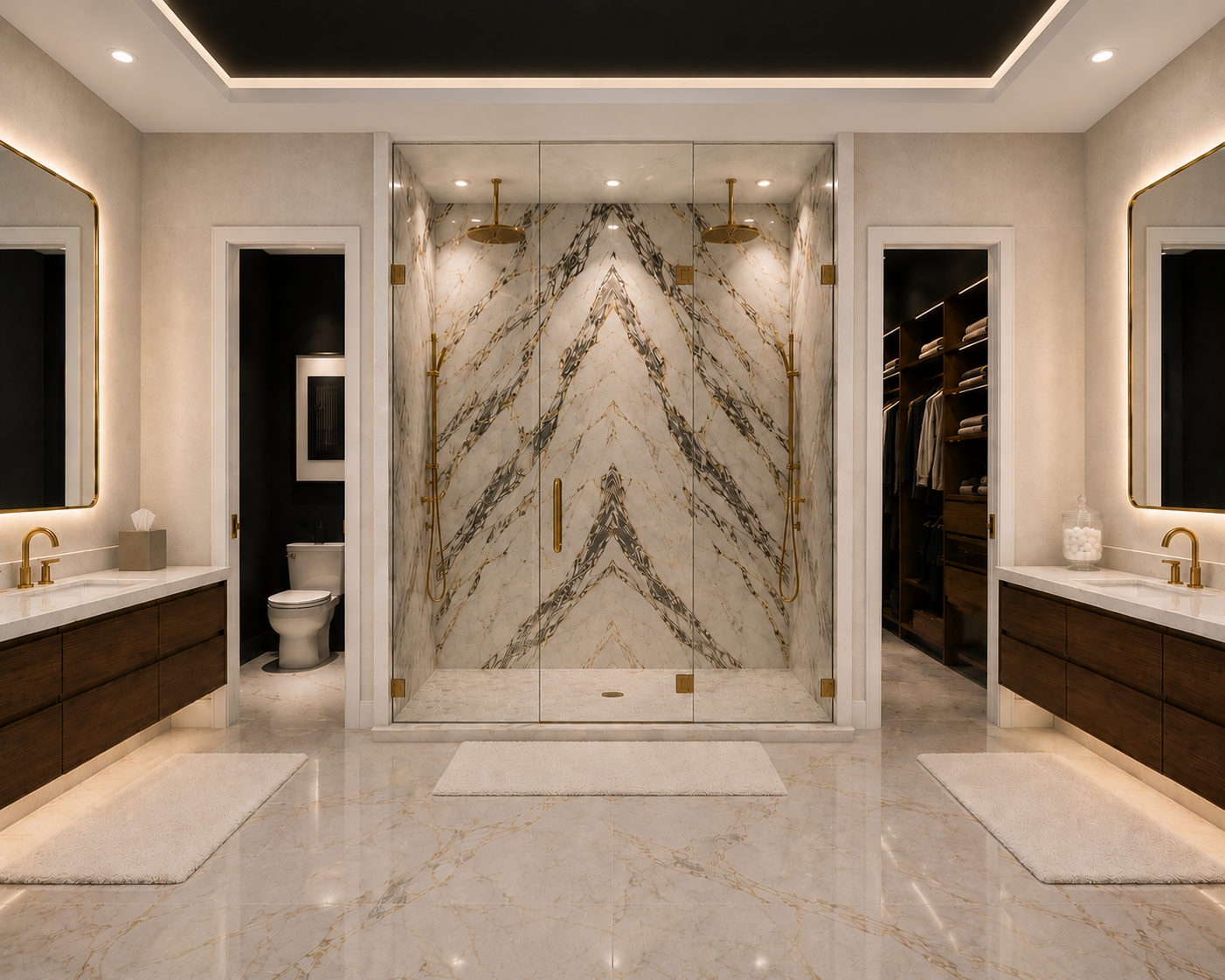
Open Shower Room with Glass Screen
This style is commonly found in larger primary bathrooms and luxury homes. It typically features a spacious shower area with one or more shower heads, a built-in bench, and a fixed glass panel rather than a fully enclosed shower door.
The design creates an open feeling while still helping contain water within the shower area.
Pros:
Open and spacious appearance
Provides room for multiple shower heads and additional features
Creates a luxurious, spa-inspired experience
Easier access compared to many traditional shower enclosures
Cons:
Requires adequate space for proper planning
Construction costs are typically higher
Drainage and water containment must be carefully designed
May feel oversized in smaller bathrooms
Many of my clients are drawn to this style because it combines the openness of a walk-in shower with the functionality of a dedicated shower room. Features such as built-in benches, niches, rainfall shower heads, handheld fixtures, and multiple spray zones can all be incorporated without making the space feel crowded.
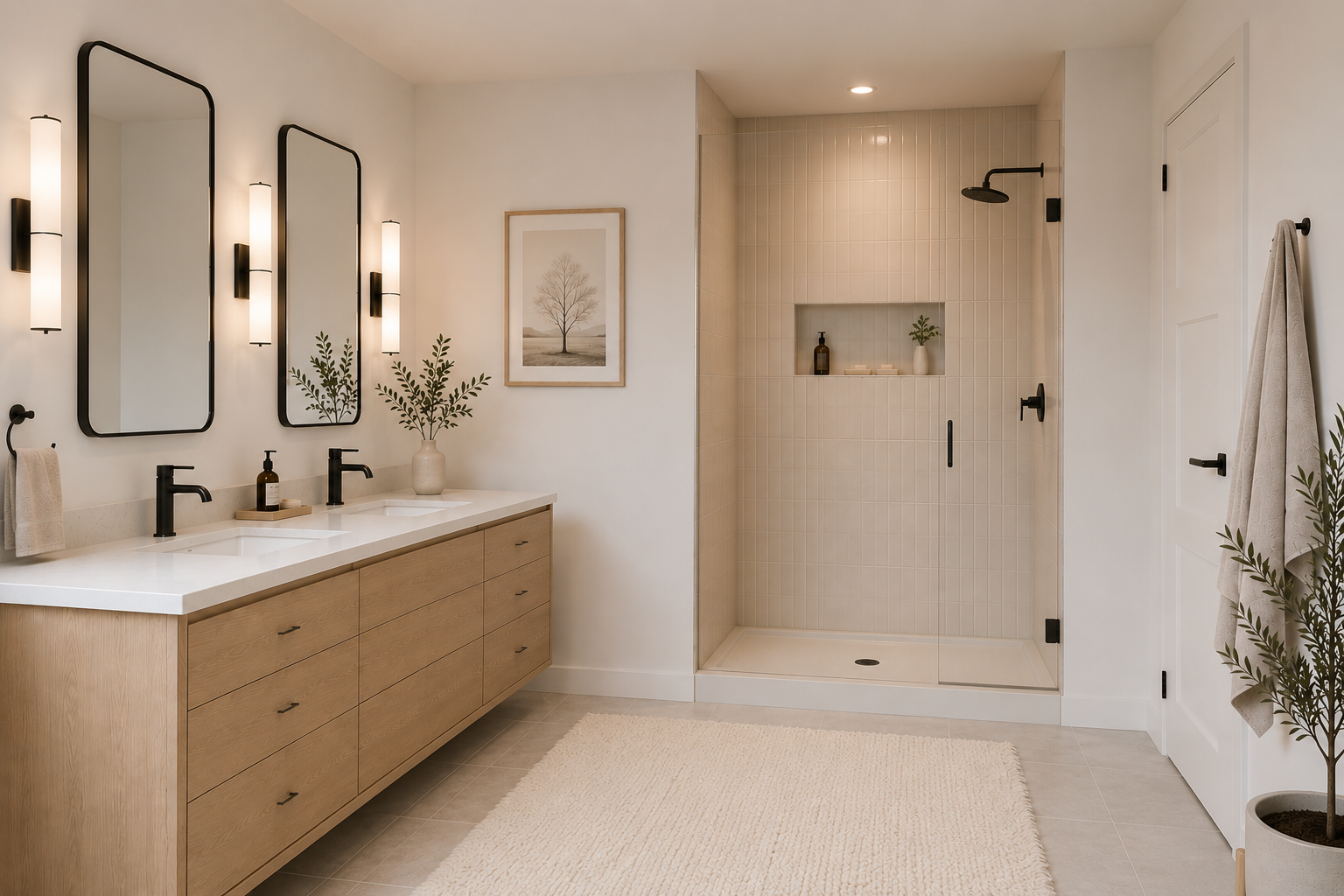
AI-generated 3D rendering of a Scandinavian-inspired primary bathroom designed by virtual interior designer Joshua Jones of JJones Design Co.
Alcove Shower
An alcove shower is one of the most common shower designs. It is installed between three walls with an opening or door on the fourth side.
This type of shower is often found in guest bathrooms, secondary bathrooms, and smaller spaces where maximizing square footage is important.
Pros:
Efficient use of space
Typically more affordable than larger custom showers
Works well in small and medium-sized bathrooms
Easier to contain water within the shower area
Cons:
Can feel smaller than other shower styles
Limited flexibility for larger layouts
May not create the open, spa-like feeling some homeowners desire
In my experience, alcove showers are frequently overlooked because homeowners associate them with builder-grade bathrooms. However, with thoughtful tile selections, quality fixtures, and proper lighting, an alcove shower can feel every bit as custom as more expensive alternatives.
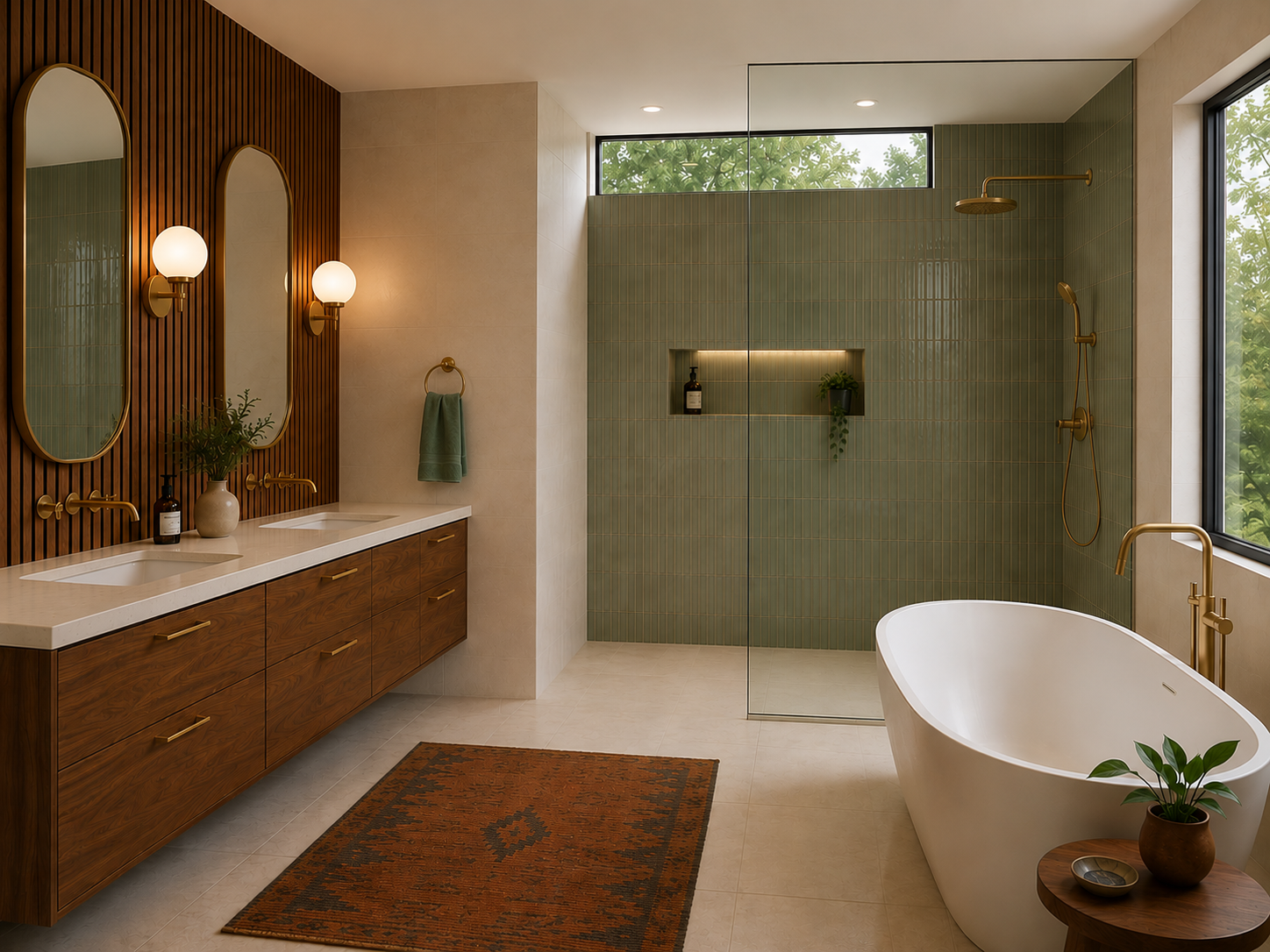
AI-generated 3D rendering of a Mid-Century Modern-inspired primary bathroom designed by virtual interior designer Joshua Jones of JJones Design Co.
Walk-In Shower
Walk-in showers have become increasingly popular over the past decade and are often requested by homeowners looking for a more open and modern bathroom design.
Unlike traditional enclosed showers, walk-in showers typically feature a larger footprint and may include a glass enclosure or a partially open entry.
Pros:
Creates an open and spacious feeling
Can make a bathroom appear larger
Offers flexibility for custom layouts
Works well in contemporary and modern bathroom designs
Cons:
Often requires more space
Usually costs more than a standard alcove shower
Improper planning can lead to water escaping the shower area
One misconception I frequently hear is that larger automatically means better. While walk-in showers can be wonderful, the layout is what truly determines whether the shower feels comfortable and functional. A thoughtfully planned walk-in shower often performs better than a much larger shower with an awkward layout.
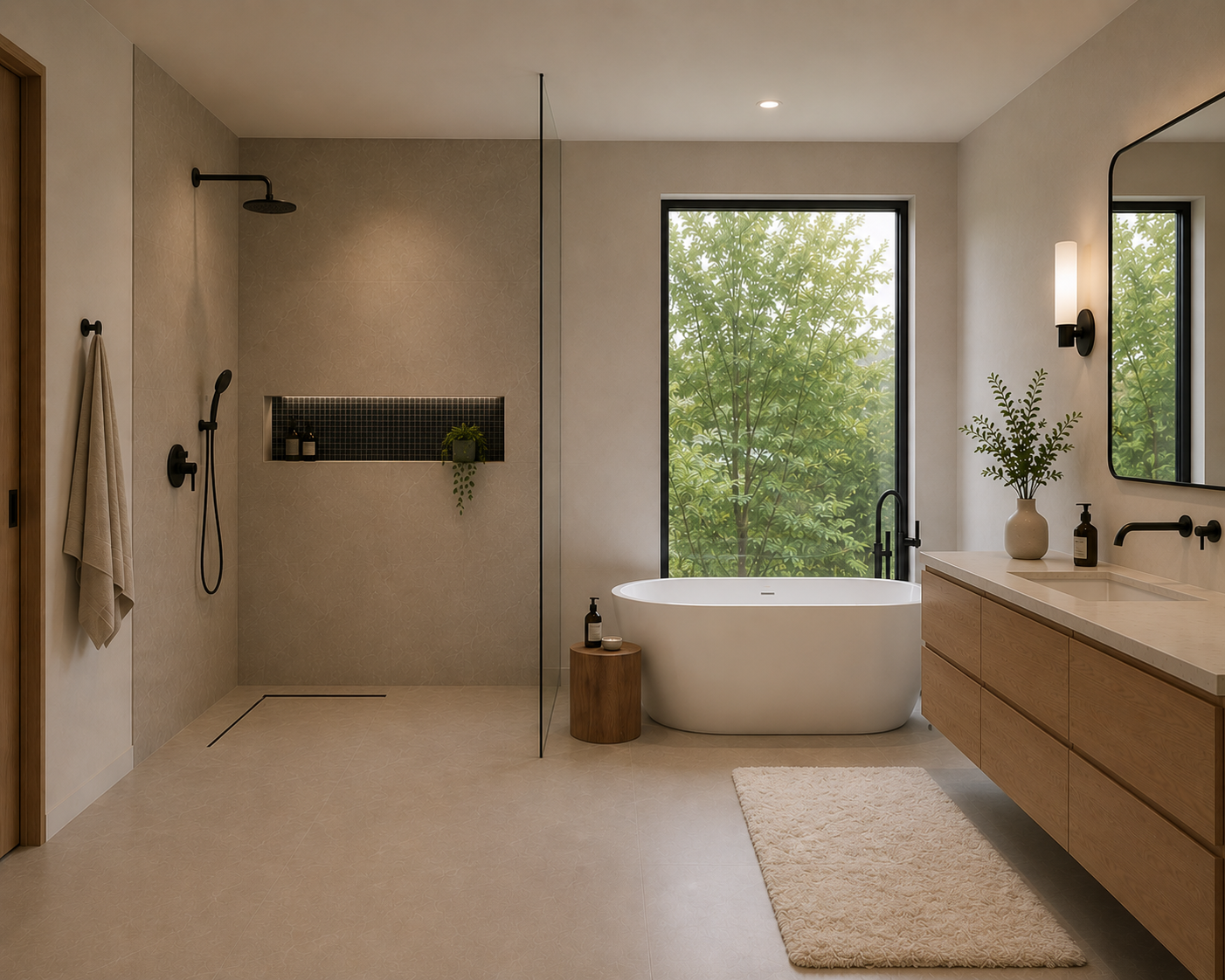
AI-generated 3D rendering of a modern-inspired primary bathroom designed by virtual interior designer Joshua Jones of JJones Design Co.
Curbless Shower
A curbless shower eliminates the raised threshold found in traditional showers, allowing the bathroom floor to transition seamlessly into the shower area.
This design has become increasingly popular in both contemporary homes and aging-in-place renovations.
Pros:
Easy to access
Clean, streamlined appearance
Creates visual continuity throughout the bathroom
Can make a space feel larger
Cons:
Requires careful drainage planning
Installation is often more complex
May increase construction costs depending on the existing structure
Many homeowners are initially drawn to curbless showers because of their appearance, but accessibility is one of their greatest advantages. Even for homeowners who do not currently need accessible features, a curbless design can provide greater flexibility for the future.
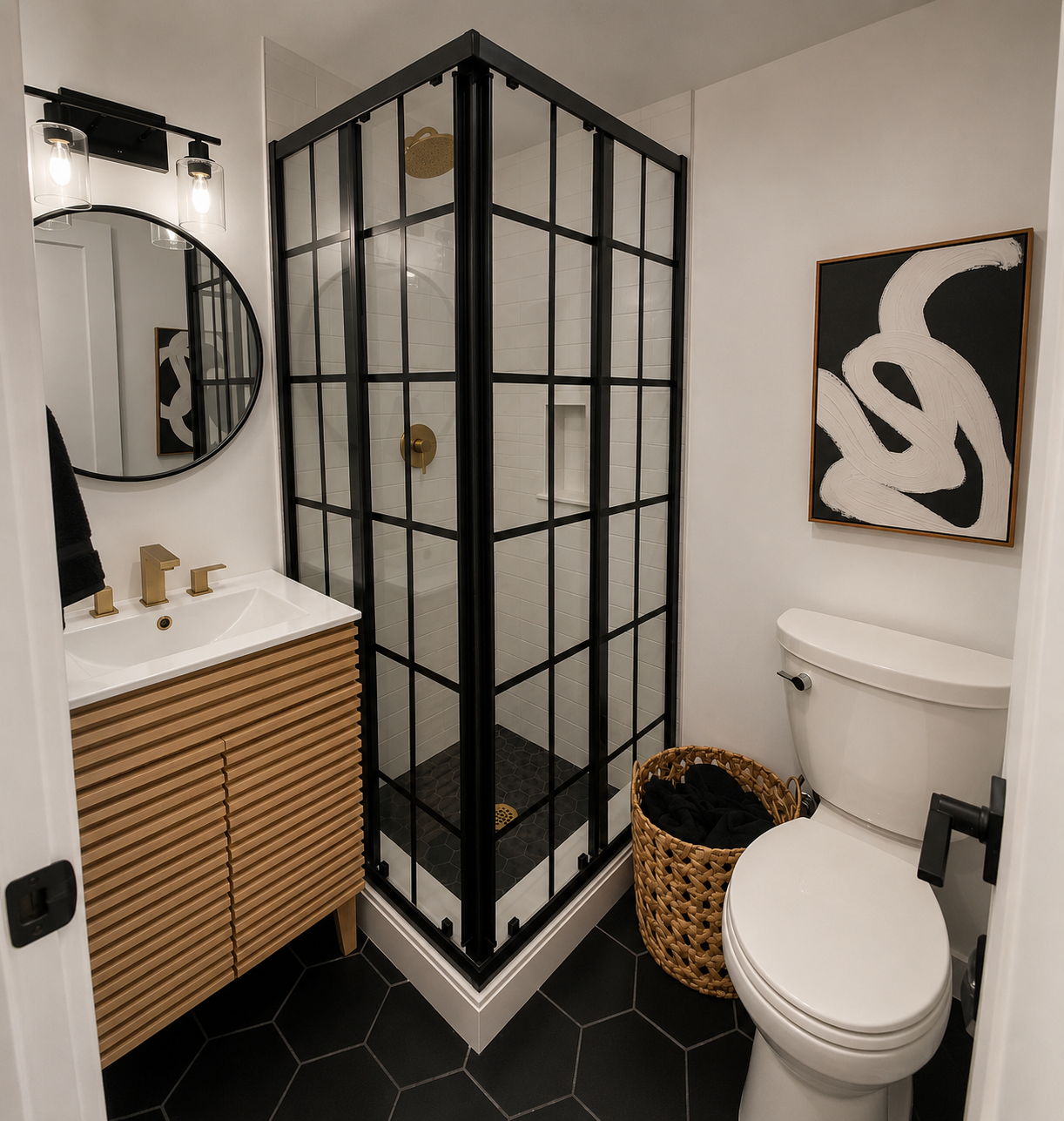
Modern industrial-style small full bathroom designed by virtual interior designer Joshua Jones of JJones Design Co.
Corner Shower
Corner showers are designed to fit into a corner of the bathroom, making them a practical option for smaller spaces.
They are commonly found in powder rooms with showers, guest bathrooms, and compact primary bathrooms where space is limited.
Pros:
Efficient use of floor space
Ideal for smaller bathrooms
Leaves more room for other fixtures
Cons:
Can feel cramped depending on the design
Limited space for multiple users
Fewer layout options compared to larger showers
While corner showers can be a practical solution, I typically recommend evaluating whether a different layout might provide a more comfortable experience if the bathroom allows for it.
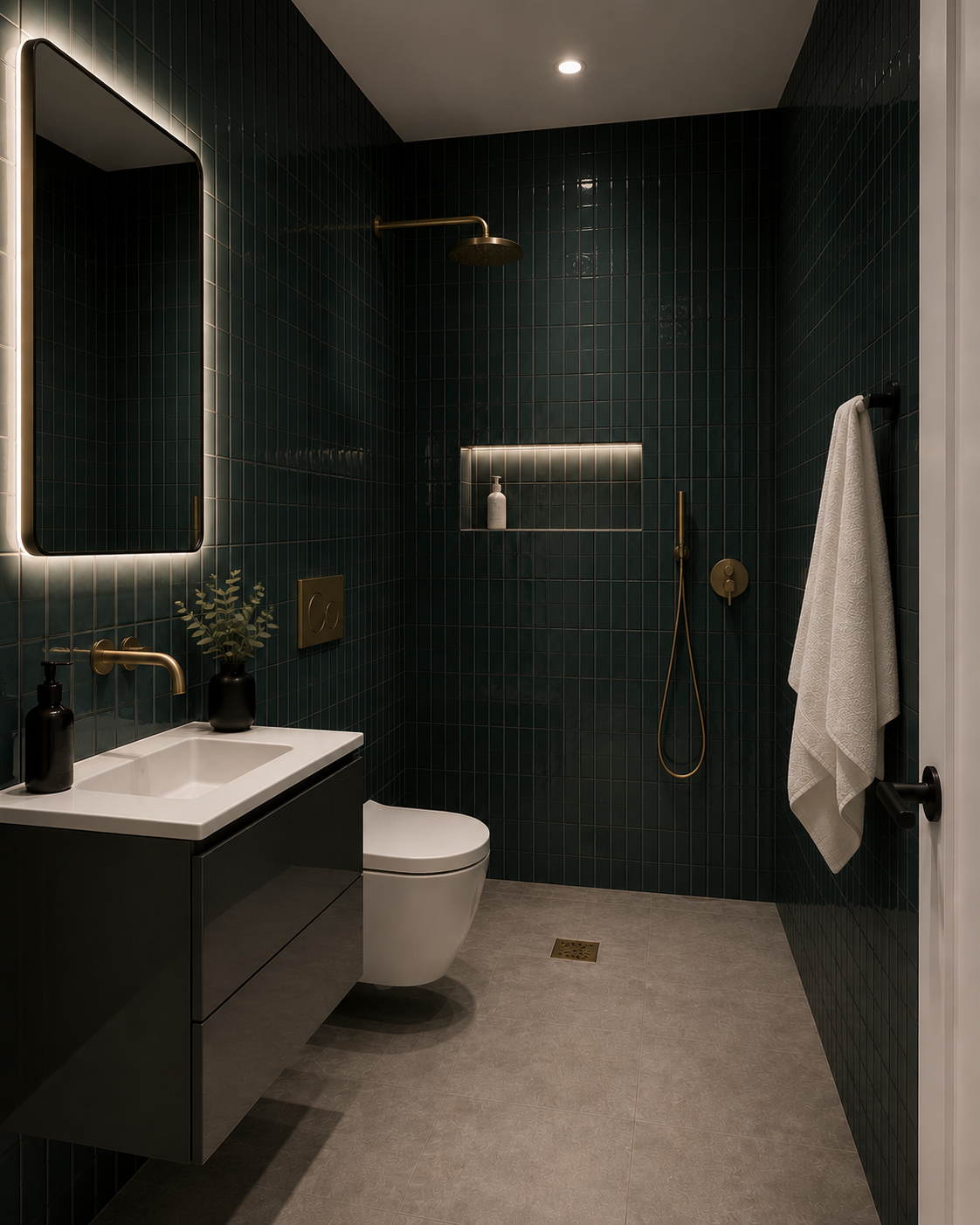
Modern wet room bathroom designed by virtual interior designer Joshua Jones of JJones Design Co.
Wet Room
A wet room is a fully waterproofed bathroom where the shower area is integrated into the overall space rather than separated by a traditional enclosure.
This design is common in parts of Europe and has become more popular in North America in recent years.
Pros:
Open and modern appearance
Excellent accessibility potential
Can make small bathrooms feel larger
Minimal visual barriers
Cons:
Requires extensive waterproofing
Construction costs are often higher
Moisture management becomes especially important
When designed properly, wet rooms can feel incredibly sophisticated. However, they require careful planning and are generally best suited for projects where the budget allows for proper waterproofing and drainage systems.
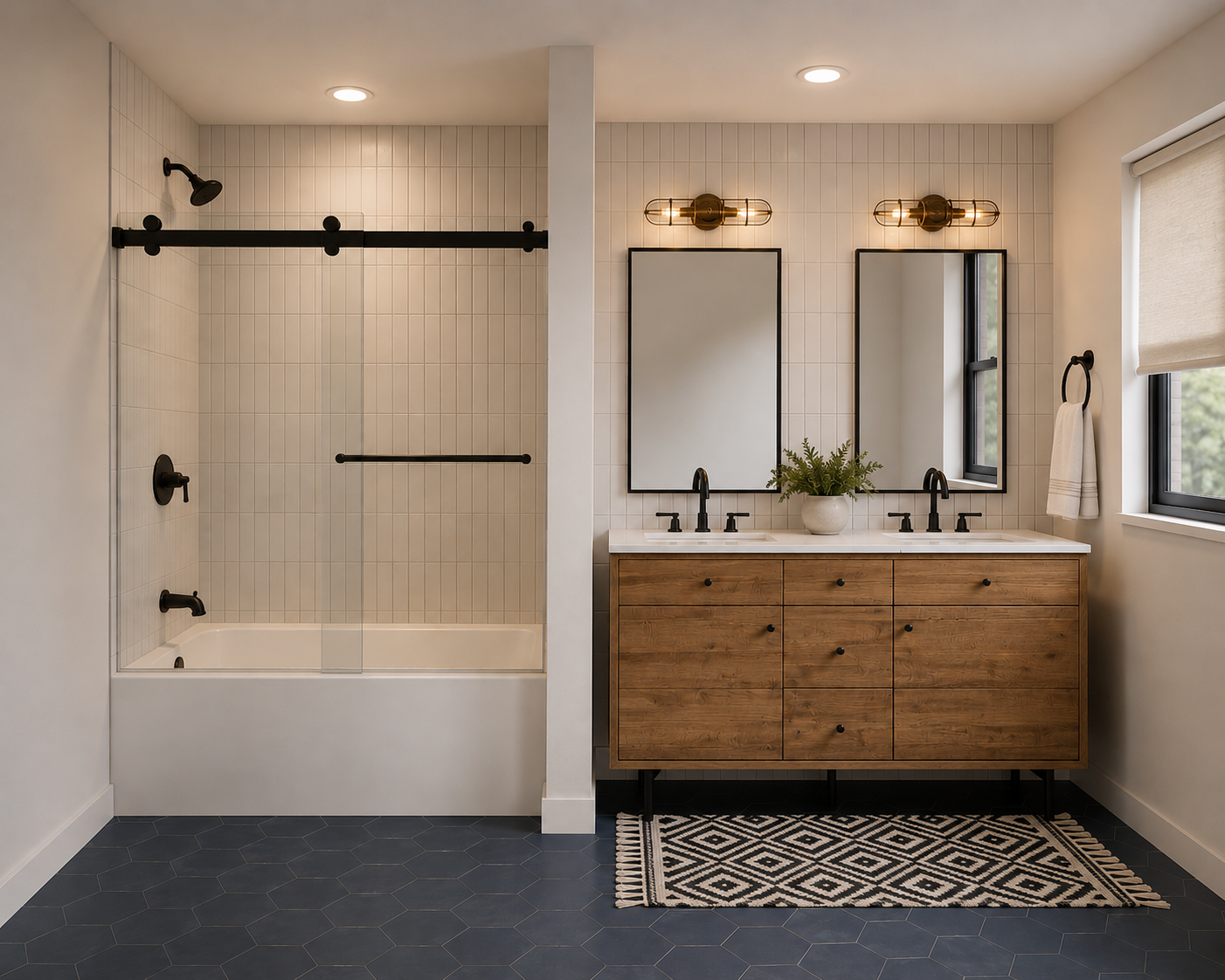
AI-generated 3D rendering of an industrial and California Casual-style guest bathroom designed by virtual interior designer Joshua Jones of JJones Design Co., featuring a tub and shower combination.
Tub and Shower Combination
The tub and shower combination remains a popular choice, particularly in family homes.
This design combines a bathtub and shower within the same enclosure, providing flexibility for different household needs.
Pros:
Offers both bathing and showering options
Practical for families with young children
Often more affordable than separate tub and shower installations
Works well in smaller bathrooms
Cons:
Less spacious than a dedicated shower
May feel less luxurious than separate shower and tub layouts
Accessibility can be more challenging than walk-in options
For many homeowners, a tub and shower combination remains the most practical solution. While social media often highlights large walk-in showers, everyday functionality should always be part of the decision-making process.
The best shower type is ultimately the one that fits your space, budget, lifestyle, and long-term goals. Understanding the strengths and limitations of each option can help you make a more informed decision before construction begins.
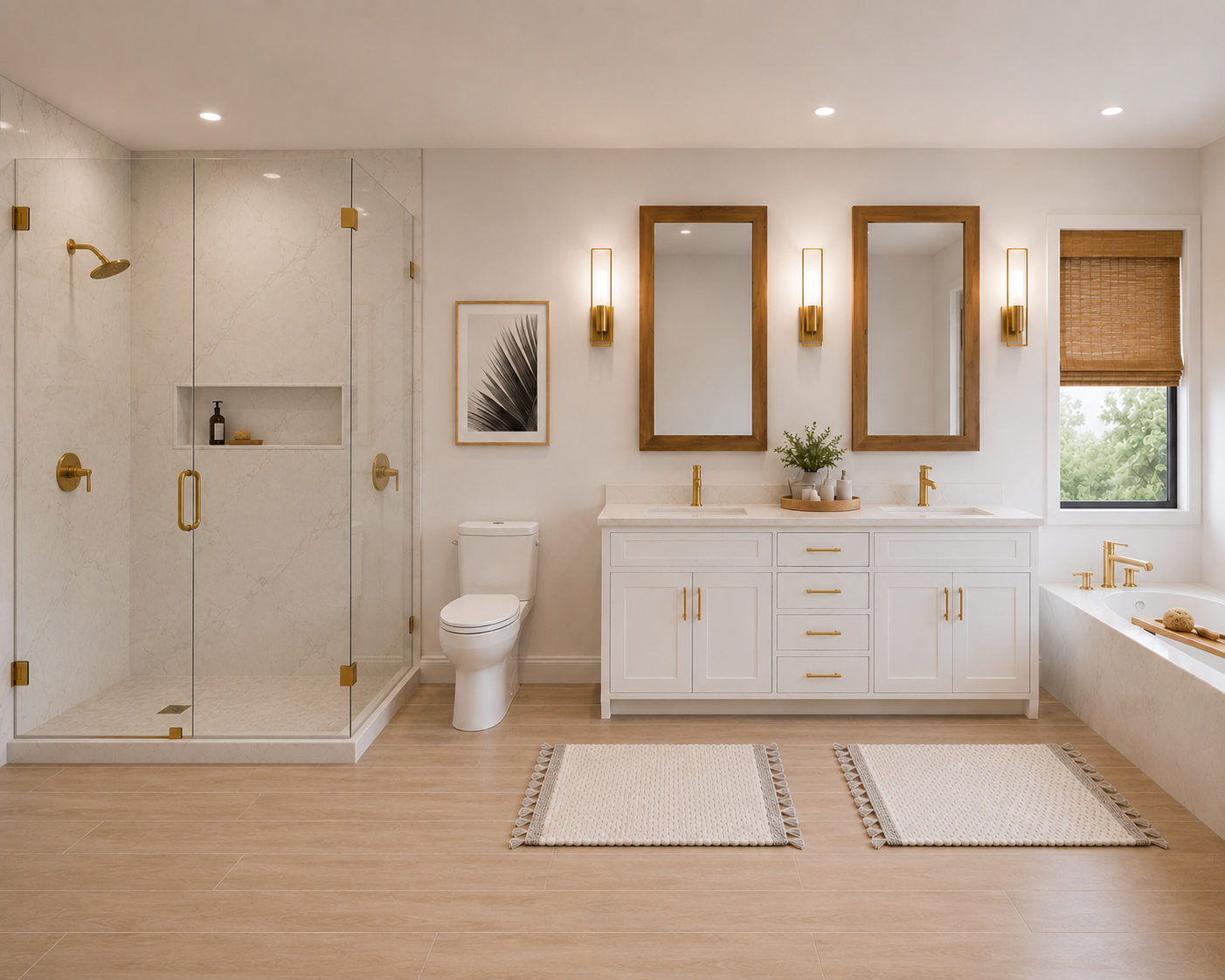
AI-generated 3D rendering of a modern organic-style primary bathroom designed by virtual interior designer Joshua Jones of JJones Design Co.
Choosing the Right Shower Layout
After selecting a shower type, the next step is determining the layout. A well-planned layout can improve comfort, functionality, and the overall experience of using the shower every day.
I've seen homeowners invest heavily in beautiful tile, premium fixtures, and custom glass only to discover later that the layout itself doesn't work particularly well. In many cases, thoughtful planning has a greater impact on the success of a shower than the finishes selected.
Think About Entry and Exit Points
The location of the shower entrance plays an important role in how the space functions.
Ideally, entering and exiting the shower should feel natural without creating awkward traffic patterns within the bathroom. The entry should also be positioned to help keep water contained within the shower area whenever possible.
For open shower designs, the location of the entry becomes even more important since there is often no door to prevent water from reaching the rest of the bathroom.
Shower Head Placement Matters
One of the most common layout mistakes I encounter is placing the shower head directly across from the shower entrance.
When this happens, homeowners often have to step into cold water while waiting for the shower to warm up. It can also increase the likelihood of water escaping through the entrance.
Whenever possible, I prefer layouts that allow easy access to the controls before stepping directly into the water stream. This simple adjustment can make the shower much more comfortable to use.
Plan Storage Early
Storage should never be treated as an afterthought.
Shampoo bottles, conditioner, body wash, razors, and other shower essentials need a dedicated place to live. Without proper planning, homeowners often end up relying on hanging baskets or cluttered shower shelves.
Built-in niches, recessed shelving, ledges, and other integrated storage solutions can help maintain a clean appearance while keeping frequently used items within easy reach.
Consider Seating Options
A built-in bench can add both comfort and functionality to a shower.
Some homeowners use benches for shaving, while others appreciate having a place to sit and relax. Benches can also provide convenient storage space for towels or shower products during use.
Not every shower requires a bench, but larger shower layouts often provide an opportunity to incorporate one without sacrificing valuable floor space.
Create a Sense of Openness
A shower does not need to be enormous to feel spacious.
Glass panels, thoughtful lighting, larger-format tile, and minimizing visual clutter can all contribute to a more open feeling. In many cases, strategic design decisions can make a shower feel larger than increasing the footprint alone.
This is especially important in smaller bathrooms where every square foot matters.
Think About Water Containment
One of the most overlooked aspects of shower planning is controlling where water goes.
A shower may look beautiful in a photo, but if water consistently escapes onto the bathroom floor, the design is not performing as intended.
The placement of shower heads, fixed glass panels, floor slopes, drains, and entrances all work together to keep water within the shower area. These details may not be as exciting as selecting tile or fixtures, but they can have a significant impact on long-term satisfaction.
A successful shower layout balances appearance, comfort, storage, and practicality. Taking the time to think through these details before construction begins can help create a shower that not only looks great but also functions well for years to come.
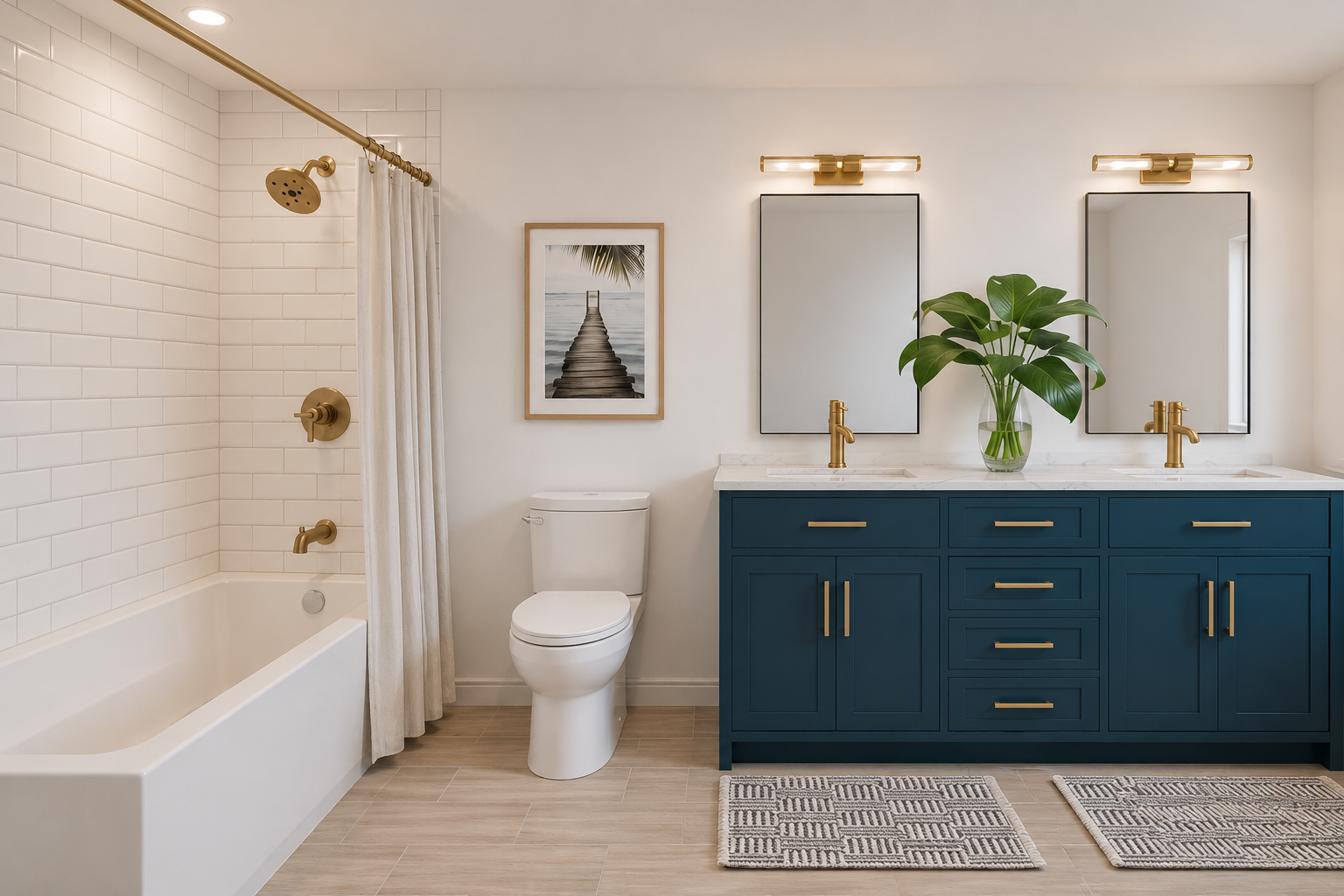
AI-generated 3D rendering of a California Casual-style guest bathroom designed by virtual interior designer Joshua Jones of JJones Design Co.
Shower Wall Materials
The materials you choose for your shower walls can have a significant impact on the appearance, maintenance requirements, and longevity of the space.
When homeowners begin planning a bathroom remodel, tile is often the first material that comes to mind. While tile remains the most common choice, it is certainly not the only option available today.
Before selecting a material, I encourage homeowners to consider not only how it looks but also how it will perform over time. Some materials require more maintenance than others, while some offer greater durability or easier cleaning.
Ceramic and Porcelain Tile
Ceramic and porcelain tile remain among the most popular shower wall materials, and for good reason.
Available in countless colors, patterns, sizes, and styles, tile offers tremendous design flexibility. Whether you prefer a modern bathroom, a traditional design, or something in between, there is likely a tile option that will complement your aesthetic.
Pros:
Wide range of styles and price points
Durable and water resistant
Suitable for virtually any design style
Readily available from many manufacturers
Cons:
Grout lines require maintenance
Installation can be labor intensive
Poor installation can lead to future issues
In my projects, porcelain tile is often the material I recommend most frequently because it offers an excellent balance of durability, versatility, and value.
Large-Format Porcelain Panels
Large-format porcelain panels have become increasingly popular in recent years, particularly in contemporary and luxury bathrooms.
These oversized panels can create a dramatic look while minimizing grout lines throughout the shower.
Pros:
Fewer grout lines
Clean and seamless appearance
Available in stone-inspired and modern designs
Easy-to-clean surfaces
Cons:
Higher material and installation costs
Requires experienced installers
Repairs can be more challenging if damage occurs
For homeowners who dislike cleaning grout lines, large-format porcelain panels can be an appealing option.
Slabs
Large slabs have become increasingly popular in bathroom design, particularly for homeowners seeking a dramatic, high-end look with minimal grout lines.
Depending on the project, slabs may be fabricated from materials such as quartz, porcelain, marble, quartzite, or other natural stones. Their large scale allows expansive surfaces to be covered with few seams, creating a clean and sophisticated appearance.
Pros:
Minimal grout lines
Creates a bold visual statement
Easy-to-clean surfaces
Can showcase beautiful veining and natural patterns
Works well in contemporary and luxury bathrooms
Cons:
Higher material and fabrication costs
Installation requires specialized expertise
Repairs can be more difficult than replacing individual tiles
Some natural stone slabs may require periodic sealing
Over the past several years, I've seen more homeowners gravitate toward slab showers because they offer both visual impact and easier maintenance. The continuous surface can make a shower feel larger and more refined while reducing the amount of grout that requires ongoing cleaning.
For homeowners who love dramatic veining or want their shower to serve as the focal point of the bathroom, slabs can be an excellent option.
Natural Stone
Natural stone can bring character and visual depth that is difficult to replicate with manufactured materials.
Popular options include marble, limestone, travertine, slate, and quartzite.
Pros:
Unique natural variation
Luxurious appearance
Timeless appeal
Adds texture and character
Cons:
Often requires sealing
Typically more expensive
Some stones are more porous than others
Additional maintenance may be required
Natural stone can be stunning when used thoughtfully, but it is important to understand the maintenance requirements before committing to the material.
Solid Surface Panels
Solid surface shower panels provide a sleek appearance with minimal seams and joints.
These materials are often chosen by homeowners looking for a low-maintenance alternative to traditional tile.
Pros:
Minimal grout or seams
Easy to clean
Contemporary appearance
Water resistant
Cons:
Fewer design options than tile
Higher material costs in some cases
Scratches may be visible depending on the finish
For homeowners prioritizing easy maintenance, solid surface panels can be worth exploring.
Waterproof Wall Panels
Waterproof wall panel systems have become increasingly popular for both new construction and renovation projects.
Available in a variety of finishes, these products can mimic tile, stone, wood, or other materials while reducing the number of joints and seams.
Pros:
Faster installation
Easy maintenance
Water resistant
Wide variety of styles
Cons:
Some products may appear less authentic than natural materials
Quality can vary significantly between manufacturers
Fewer customization options than tile
Mixing Materials
Not every shower needs to be constructed from a single material.
In fact, some of my favorite shower designs incorporate multiple materials to create visual interest. For example, a shower may feature large-format tile on most walls while using a decorative accent tile within a niche or on a feature wall.
The key is maintaining a sense of balance. Too many materials can make a shower feel busy, while a thoughtful combination can add depth and personality to the space.
Ultimately, the best shower wall material is the one that aligns with your design goals, maintenance preferences, and budget. By understanding the strengths and limitations of each option, you can make a more informed decision before construction begins.
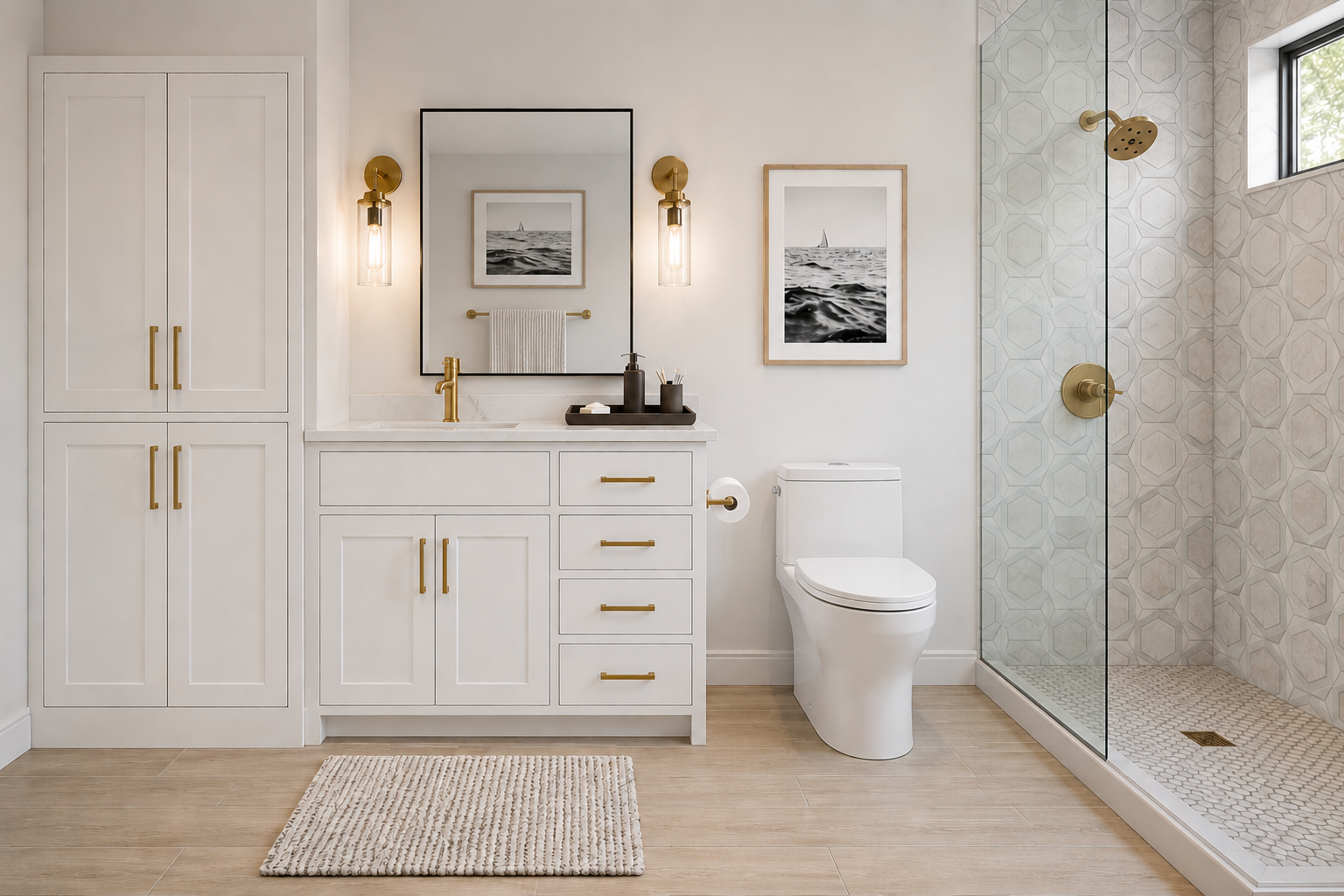
AI-generated 3D rendering of a modern coastal-style full bathroom designed by virtual interior designer Joshua Jones of JJones Design Co.
Shower Floor Materials
While shower walls often receive most of the attention during a bathroom remodel, the shower floor plays an equally important role in both appearance and functionality.
Unlike shower walls, shower floors must provide traction under wet conditions while also standing up to daily use. The right flooring material can improve safety, simplify maintenance, and enhance the overall design of the bathroom.
Porcelain Tile
Porcelain tile is one of the most popular choices for shower floors due to its durability, water resistance, and versatility.
Available in a wide range of colors, patterns, and sizes, porcelain tile can complement virtually any bathroom style.
Pros:
Highly durable
Water resistant
Available in countless styles
Easy to coordinate with shower walls
Cons:
Some finishes may become slippery when wet
Grout lines require maintenance
For shower floors, I typically recommend selecting a tile specifically rated for wet environments and choosing a finish that provides adequate slip resistance.
Mosaic Tile
Mosaic tile has long been a popular option for shower floors.
Because mosaic tiles are smaller, they naturally create more grout lines, which can improve traction underfoot. They also conform more easily to the slope required for proper drainage.
Pros:
Excellent traction
Works well with shower floor slopes
Available in a wide variety of styles and materials
Suitable for both traditional and contemporary bathrooms
Cons:
More grout lines to clean and maintain
Installation can be more labor intensive
Many homeowners assume larger tile is always better, but mosaic tile often remains one of the most practical solutions for shower floors.
Natural Stone
Natural stone can create a beautiful and distinctive shower floor.
Materials such as pebble stone, slate, marble, limestone, and travertine are commonly used in residential bathrooms.
Pros:
Unique appearance
Natural texture and variation
Adds character to the bathroom
Cons:
Some stones require sealing
Additional maintenance may be necessary
Certain polished stones can become slippery when wet
When considering natural stone, it is important to balance aesthetics with long-term maintenance expectations.
Pebble Tile
Pebble tile remains a popular choice for homeowners seeking a more natural or spa-inspired aesthetic.
Made from small rounded stones arranged in sheets, pebble flooring can add texture and visual interest to a shower.
Pros:
Distinctive appearance
Natural texture underfoot
Complements organic and spa-inspired designs
Cons:
More grout lines than many other flooring options
Cleaning may require additional effort
Some homeowners find certain pebble surfaces uncomfortable to stand on for extended periods
I always recommend walking on a sample before committing to pebble flooring. Some products are more comfortable than others, and personal preference plays a significant role.
Large-Format Tile
Large-format tile is becoming increasingly common on shower floors, particularly in luxury bathroom designs.
Advances in installation methods have made it easier to use larger tiles while still maintaining proper drainage.
Pros:
Fewer grout lines
Clean and contemporary appearance
Coordinates well with large-format wall tile
Cons:
Requires careful planning and installation
Not suitable for every shower configuration
May provide less traction depending on the finish
Can be more susceptible to cracking if the substrate is not properly prepared and supported
While large-format tile can create a beautiful, streamlined appearance, it should be selected with both drainage and safety in mind. Proper floor preparation and installation are especially important to help ensure long-term performance.
Prioritize Safety
No matter which material you choose, safety should always be part of the decision-making process.
A shower floor that looks beautiful but becomes slippery when wet can quickly become a problem. Pay close attention to slip resistance ratings, surface texture, and how the material feels underfoot.
This is especially important in households with children, older adults, or anyone with mobility concerns.
The best shower floor material balances appearance, comfort, durability, maintenance, and safety. Taking the time to evaluate all of these factors can help ensure your shower performs just as well as it looks.
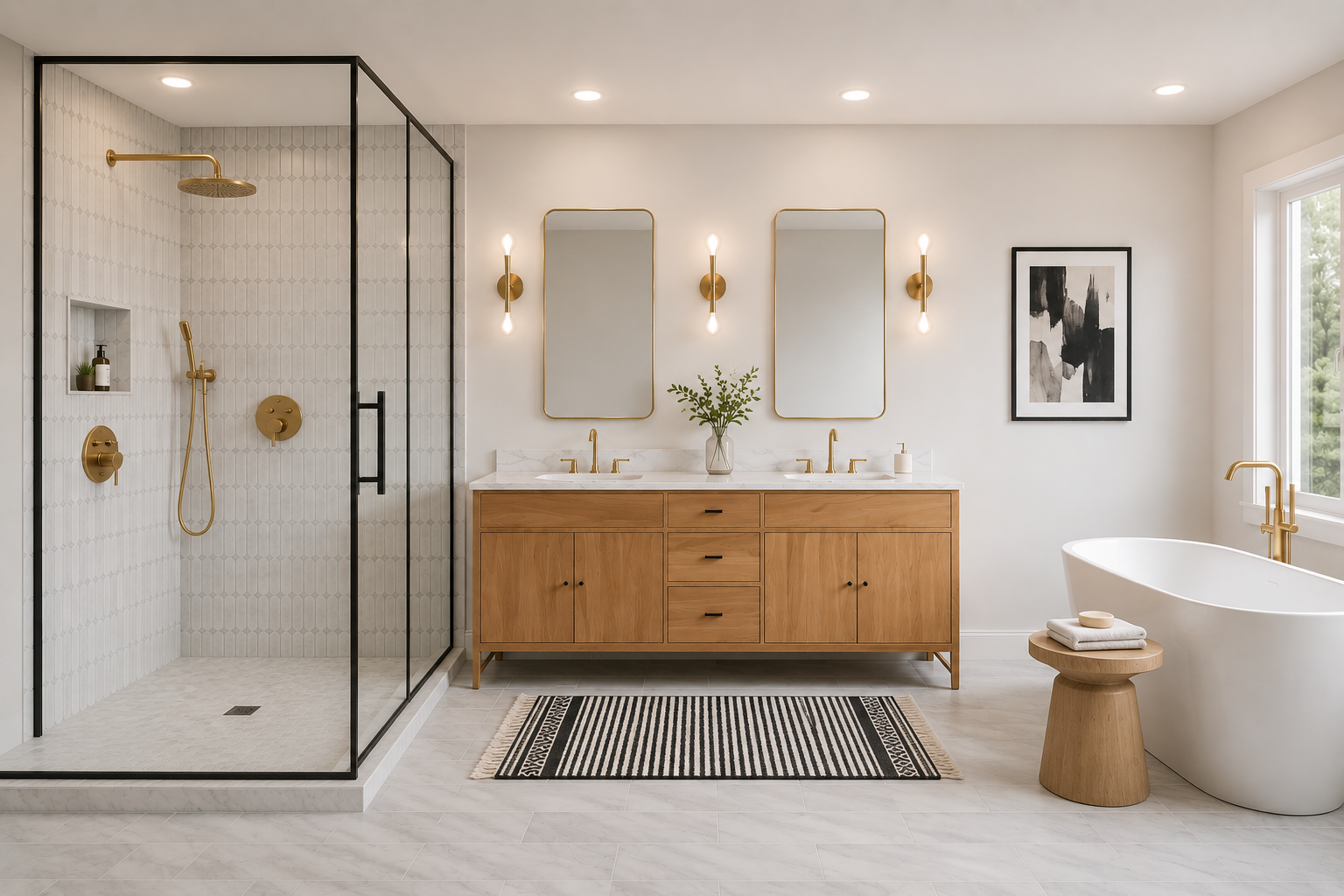
AI-generated 3D rendering of a Mid-Century Modern-style primary bathroom designed by virtual interior designer Joshua Jones of JJones Design Co.
Shower Doors and Enclosures
The type of shower enclosure you choose can have a significant impact on both the appearance and functionality of your bathroom.
While homeowners often focus on tile and fixtures, the enclosure plays an important role in water containment, maintenance, accessibility, and the overall feel of the space. In many cases, the enclosure can make a shower feel more open, more private, or more connected to the rest of the bathroom.
Frameless Glass Shower Doors
Frameless glass shower doors have become one of the most popular choices in modern bathroom design.
Constructed from thicker tempered glass without bulky metal framing, frameless enclosures provide a clean and streamlined appearance that allows other design elements to take center stage.
Pros:
Open and airy appearance
Showcases tile and other design features
Minimal visual obstruction
Works with a wide variety of design styles
Cons:
Typically more expensive than framed options
Glass requires regular cleaning
Installation must be precise
In my experience, frameless glass remains the most requested option among homeowners seeking a contemporary or luxury bathroom aesthetic.
Semi-Frameless Shower Doors
Semi-frameless shower doors offer a balance between the clean look of frameless glass and the structure of traditional framed systems.
These enclosures typically include limited metal framing around portions of the glass while maintaining a lighter visual appearance.
Pros:
More affordable than fully frameless systems
Cleaner appearance than framed enclosures
Available in a variety of styles
Cons:
More visible framing than frameless options
Additional hardware may require cleaning
For homeowners seeking a similar look to frameless glass while managing costs, semi-frameless doors can be an attractive compromise.
Framed Shower Doors
Framed shower doors feature metal framing around all glass panels and doors.
While they are often associated with older bathroom designs, modern framed systems are available in a variety of finishes and styles.
Pros:
Often more budget-friendly
Durable construction
Available in many configurations
Cons:
More visual weight
Frames can collect soap residue and moisture
May feel less open than frameless options
Depending on the overall design of the bathroom, a framed enclosure can still be a practical solution.
Fixed Glass Panels
Fixed glass panels have become increasingly popular in walk-in showers and larger shower rooms.
Rather than fully enclosing the shower, a stationary glass panel helps contain water while maintaining an open appearance.
Pros:
Open and modern aesthetic
Minimal hardware
Easier access
Allows more natural light to move through the space
Cons:
Requires careful planning for water containment
May not be suitable for every bathroom layout
Less privacy than fully enclosed options
Many of the shower rooms featured in luxury homes today utilize fixed glass panels because they create a spacious and spa-like atmosphere without making the shower feel enclosed.
Doorless Showers
Doorless showers eliminate the need for a traditional shower door altogether.
These designs rely on strategic layouts, glass panels, and proper drainage to keep water contained within the shower area.
Pros:
Seamless appearance
Easy access
Fewer components to clean and maintain
Creates a luxurious and contemporary feel
Cons:
Requires adequate space
Careful planning is necessary to prevent water from escaping
May feel cooler due to increased airflow
While many homeowners love the appearance of doorless showers, they are not appropriate for every bathroom. Proper layout planning is critical to their success.
Privacy Glass
For homeowners who want additional privacy without sacrificing natural light, privacy glass can be worth considering.
Options may include frosted, textured, patterned, or partially obscured glass.
Pros:
Increased privacy
Allows light to pass through
Available in a variety of styles
Cons:
May obscure decorative tile details
Some options can be more difficult to clean
Privacy glass is often used in shared bathrooms or situations where additional privacy is desired without making the space feel closed off.
Hardware and Finish Selections
The hardware used for shower doors and enclosures can have a surprisingly large impact on the overall appearance of the bathroom.
Popular finishes include:
Matte black
Brushed nickel
Chrome
Polished nickel
Brass
Bronze
I generally recommend coordinating shower hardware with the other plumbing fixtures throughout the bathroom to create a cohesive appearance.
Ultimately, the best shower enclosure balances appearance, maintenance, privacy, accessibility, and budget. By understanding the strengths and limitations of each option, you can choose a solution that complements both your shower design and your daily routine.
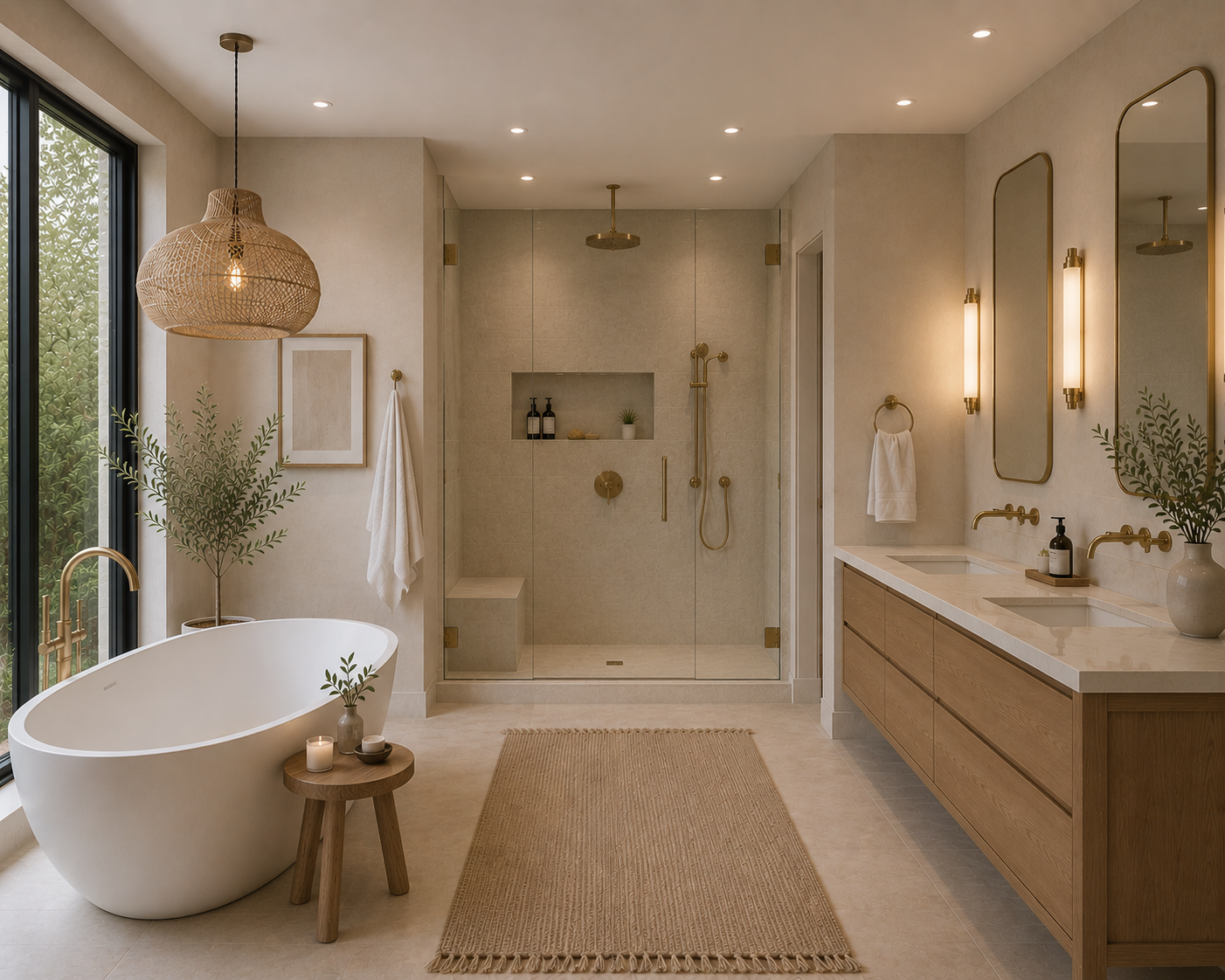
AI-generated 3D rendering of a luxury Scandinavian-style primary bathroom designed by virtual interior designer Joshua Jones of JJones Design Co.
Shower Features Worth Considering
Once you've selected the shower type, layout, materials, and enclosure, it's time to think about the features that can improve comfort, convenience, and the overall shower experience.
Not every shower needs every feature. In fact, one of the most common mistakes I see is homeowners trying to incorporate too many ideas into a single shower. The best results usually come from selecting features that align with how you actually use the space rather than adding upgrades simply because they're trending on social media.
Shower Niches
A shower niche is a recessed storage area built directly into the shower wall.
Niches provide a convenient place to store shampoo, conditioner, soap, and other essentials while maintaining a clean and organized appearance.
Pros:
Keeps products off the floor
Creates built-in storage
Can become a decorative design feature
Available in various sizes and configurations
Cons:
Requires careful planning during construction
Improper waterproofing can lead to future issues
Placement should be thoughtfully considered
One mistake I occasionally see is a niche being installed at an awkward height or directly within a feature tile pattern where it interrupts the overall design. Planning the niche early often produces a more polished result.
Built-In Benches
A shower bench can add both comfort and functionality.
While some homeowners initially associate benches with accessibility, they can be useful for a variety of reasons including shaving, relaxing, placing towels nearby, or simply providing a place to sit.
Pros:
Improves comfort
Adds functionality
Supports accessibility goals
Creates a more spa-like experience
Cons:
Requires additional space
Can make smaller showers feel crowded
Adds construction complexity
When the layout allows for it, a well-designed bench can become one of the most appreciated features in a shower.
Handheld Shower Heads
Handheld shower heads remain one of the most practical upgrades available.
Mounted on a slide bar or wall bracket, they provide flexibility that standard fixed shower heads cannot offer.
Pros:
Easier cleaning of the shower
Greater flexibility during use
Helpful for children, pets, and accessibility needs
Complements fixed shower heads
Cons:
Additional cost
More components to coordinate during installation
Even in luxury bathrooms with multiple shower features, I often recommend including a handheld fixture because of its everyday practicality.
Rain Shower Heads
Rain shower heads are designed to create a gentle, overhead showering experience.
Mounted from the ceiling or positioned high on the wall, they have become increasingly popular in contemporary bathrooms.
Pros:
Spa-inspired experience
Clean and modern appearance
Even water distribution
Cons:
May not provide enough pressure for some homeowners
Ceiling-mounted installations can increase costs
Not ideal as the only shower head for everyone
Many homeowners love the experience of a rain shower head, but I often recommend pairing it with a standard shower head or handheld fixture to provide greater flexibility.
Multiple Shower Heads and Body Sprays
Larger showers sometimes incorporate multiple shower heads, body sprays, or both.
These systems can create a more customized shower experience and are often found in luxury bathrooms.
Pros:
Enhanced comfort
Greater coverage
Luxurious experience
Can accommodate multiple users
Cons:
Higher installation costs
Increased water usage
More complex plumbing requirements
Before incorporating multiple spray zones, it is important to verify that your home's plumbing system can adequately support them.
Steam Showers
Steam showers transform a traditional shower into a personal spa experience.
These systems use a steam generator to fill the shower enclosure with warm steam.
Pros:
Spa-like atmosphere
Promotes relaxation
Can increase home appeal
Provides a unique shower experience
Cons:
Higher installation costs
Requires a fully enclosed shower
Additional maintenance requirements
More complex construction and ventilation needs
Steam showers are not for everyone, but homeowners who regularly use them often consider them one of their favorite bathroom upgrades.
Linear Drains
Linear drains have become increasingly popular in contemporary shower design.
Unlike traditional center drains, linear drains run along one edge of the shower floor and can simplify floor layouts.
Pros:
Clean, modern appearance
Works well with larger-format tile
Ideal for curbless shower designs
Allows for more streamlined floor slopes
Cons:
Higher cost than traditional drains
Requires careful planning and installation
Although most homeowners focus on visible design features, the drain can have a surprisingly large impact on both the appearance and functionality of the shower.
Heated Floors
While technically a bathroom feature rather than a shower feature, heated floors are often incorporated during bathroom renovations.
Stepping onto a warm floor after a shower can significantly improve comfort, especially during colder months.
Pros:
Increased comfort
Even heat distribution
Popular luxury upgrade
Cons:
Additional installation cost
More complex construction requirements
Many homeowners tell me that heated floors are one of those upgrades they weren't sure they needed until they experienced them.
The best shower features are the ones that improve your daily routine. Rather than focusing on every available upgrade, prioritize the features that will provide the greatest value and enjoyment for the way you actually use your bathroom.
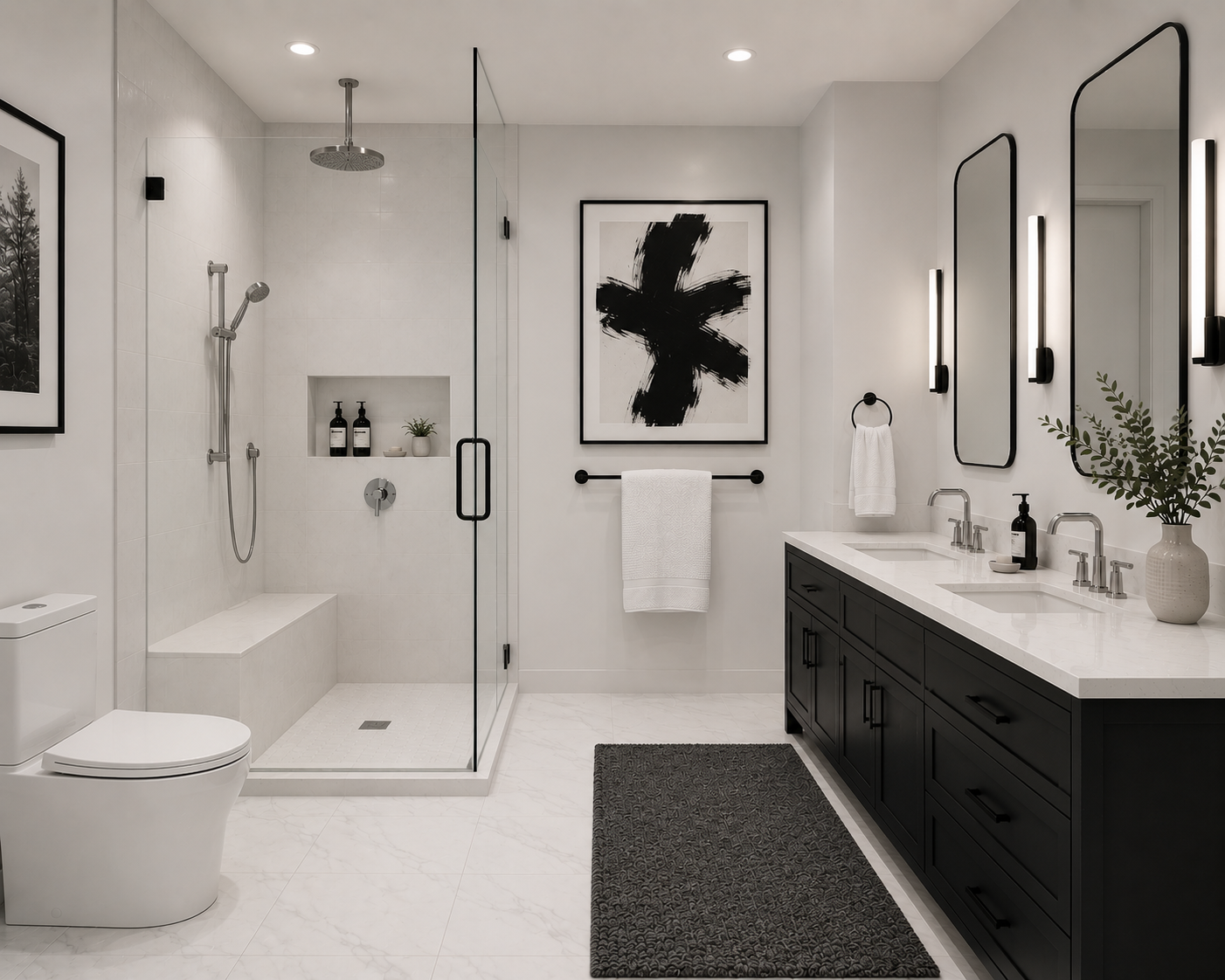
AI-generated 3D rendering of a modern black-and-white primary bathroom designed by virtual interior designer Joshua Jones of JJones Design Co.
Accessibility Considerations
Accessibility is often associated with aging in place or mobility challenges, but many accessible design features can improve comfort, convenience, and safety for people of all ages.
One thing I encourage homeowners to consider is that bathroom renovations are significant investments. While no one can predict future needs, incorporating certain accessibility features during a remodel is often far easier and less expensive than making major modifications later.
The goal is not necessarily to make a bathroom look clinical. Many accessibility features can be integrated seamlessly into the design while maintaining a stylish and cohesive appearance.
Curbless Shower Entries
Curbless showers eliminate the raised threshold commonly found in traditional shower designs.
Without a curb to step over, entering and exiting the shower becomes easier and safer while creating a cleaner visual transition throughout the bathroom.
Benefits:
Easier access
Reduced tripping hazards
Supports aging in place
Creates a more open appearance
Curbless showers have become increasingly popular because they combine accessibility with modern design.
Built-In Benches
A built-in bench can provide a comfortable place to sit while showering and may offer additional support when needed.
Even homeowners who do not currently require seated bathing often appreciate the added convenience a bench provides.
Benefits:
Increased comfort
Improved accessibility
Convenient for daily tasks such as shaving
Can enhance the overall shower experience
A bench can also be particularly helpful during pregnancy. As a pregnancy progresses, standing for extended periods may become less comfortable, and having a place to sit can make showering feel more relaxing and secure.
When space allows, a bench can be a valuable addition to many shower designs.
Handheld Shower Heads
Handheld shower heads are among the most versatile accessibility features available.
They offer greater flexibility than fixed shower heads and can make showering more comfortable for individuals with varying mobility levels.
Benefits:
Greater control during use
Easier cleaning of the shower
Improved flexibility
Supports a wide range of user needs
Handheld fixtures can also be especially useful during pregnancy, making it easier to rinse hard-to-reach areas as the body changes throughout different stages of pregnancy.
Because of their practicality, handheld fixtures are a feature I frequently recommend regardless of accessibility concerns.
Grab Bars
Grab bars can provide additional stability and support within the shower.
Today's grab bars are available in a variety of finishes and styles, making it easier to coordinate them with the overall bathroom design.
Benefits:
Additional support and stability
Improved safety
Available in decorative designs and finishes
For homeowners not ready to install grab bars immediately, it may still be worthwhile to reinforce the shower walls during construction so grab bars can be added later if needed.
Wider Openings
Larger shower openings can improve accessibility while also contributing to a more spacious appearance.
Wider entrances may be beneficial for homeowners using mobility aids, but they can also make the shower feel more inviting and easier to access for everyone.
Slip-Resistant Flooring
Safety should always be a consideration when selecting shower floor materials.
Textured surfaces, slip-resistant tile, and thoughtful material selection can help reduce the risk of slips and falls while maintaining the desired aesthetic.
This is one area where functionality should take priority over appearance.
Comfort Today and Tomorrow
One of the biggest misconceptions about accessible design is that it is only intended for older adults or people with mobility challenges.
In reality, many accessibility features simply make a bathroom easier and more comfortable to use. Features such as curbless entries, benches, handheld shower heads, and slip-resistant flooring can benefit nearly everyone, including individuals recovering from injuries, pregnant women, families with young children, and homeowners planning to remain in their homes for many years.
Thoughtful planning today can help create a shower that remains comfortable, functional, and welcoming for years to come.
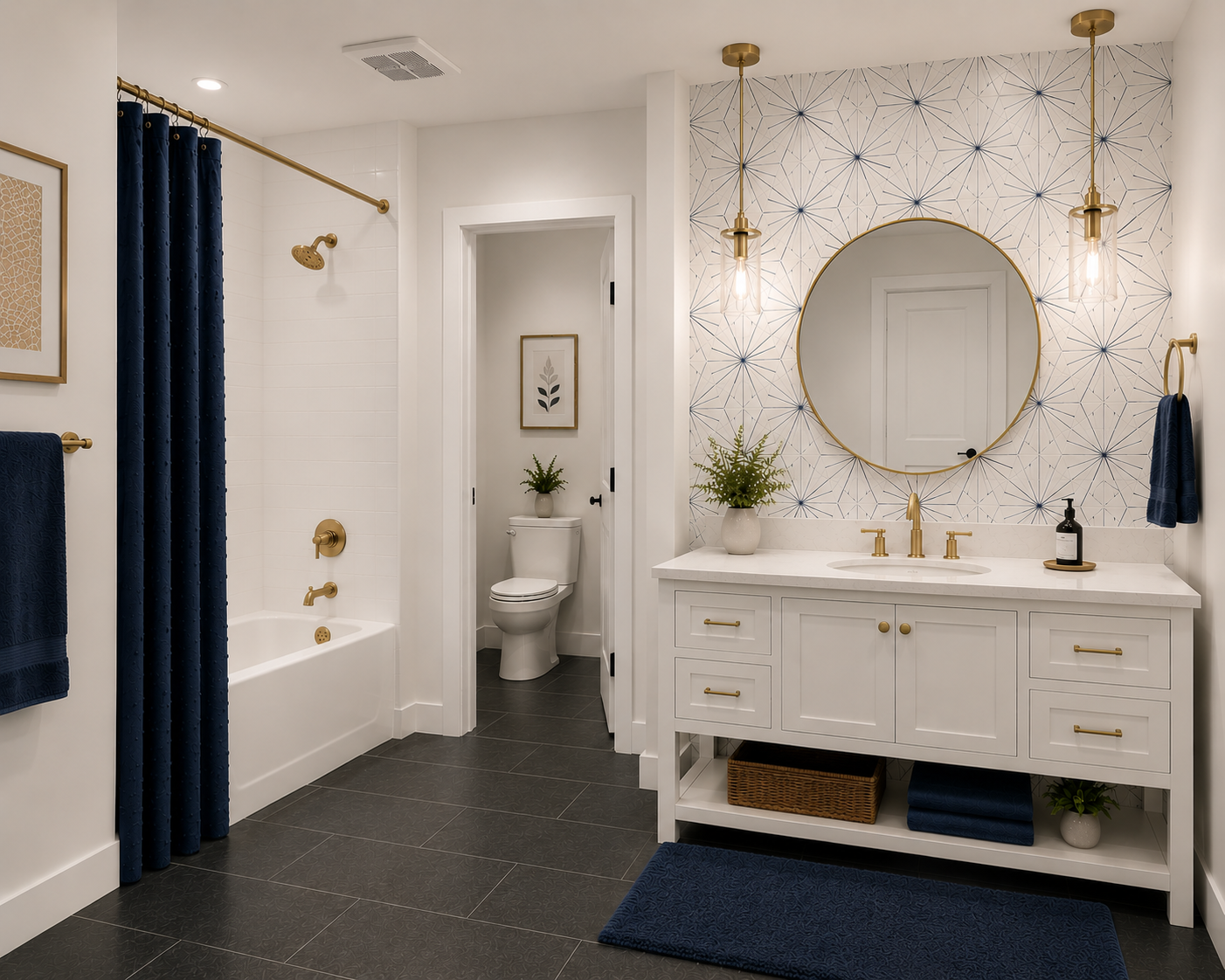
AI-generated 3D rendering of a mid-century glam full bathroom designed by virtual interior designer Joshua Jones of JJones Design Co.
Lighting and Ventilation
When homeowners imagine their future shower, they often think about tile, fixtures, glass, and finishes. Lighting and ventilation rarely generate the same excitement, yet they can have a major impact on how the shower looks, feels, and performs over time.
A beautifully designed shower can feel dark and uninviting if the lighting is inadequate. Likewise, even the most expensive materials can suffer if excess moisture is not properly managed.
Layer Your Lighting
One ceiling light in the middle of the bathroom is rarely enough to properly illuminate a shower.
Depending on the size and layout of the space, additional lighting may be needed to eliminate shadows and provide more even illumination.
Well-placed lighting can help highlight tile details, improve visibility, and create a more welcoming atmosphere.
Use Wet-Rated Fixtures
Any lighting installed directly within a shower should be specifically rated for wet locations.
These fixtures are designed to withstand moisture and humidity while helping maintain safety and performance over time.
Many homeowners are surprised to learn that not all bathroom-rated fixtures can be installed inside a shower. Understanding the difference between UL Damp and UL Wet ratings is important when selecting lighting for bathrooms, covered outdoor spaces, and other moisture-prone environments.
If you'd like to learn more, be sure to read my guide, UL Damp vs. UL Wet Rating: What's the Difference and Why It Matters?
This is not an area where homeowners should cut corners during a remodel.
Consider Natural Light
If your bathroom includes a window, skylight, or other source of natural light, take advantage of it whenever possible.
Natural light can make a shower feel larger, brighter, and more connected to the outdoors.
In some projects, I've found that natural light has a greater impact on how a bathroom feels than adding additional decorative finishes.
Of course, privacy should always be considered when incorporating windows into a shower area. Frosted glass, textured glass, or thoughtfully placed windows can often provide the best balance between privacy and daylight.
Don't Overlook Color Temperature
The color temperature of your lighting can influence how materials appear throughout the bathroom.
Lighting that is too cool may make the space feel sterile, while lighting that is too warm can alter how colors and finishes appear. The same tile can look dramatically different depending on the color temperature of the lighting surrounding it.
Choosing the right color temperature is one of the most overlooked aspects of bathroom lighting design. If you'd like a deeper explanation of how color temperature affects the appearance of your home, be sure to read my guide, Light Bulb Color Temperature: How to Choose the Right Lighting for Your Home.
I generally recommend selecting lighting that creates a comfortable and natural appearance while complementing the overall design of the bathroom.
Ventilation Matters More Than Many Homeowners Realize
Every shower generates moisture, and that moisture needs somewhere to go.
Without proper ventilation, excess humidity can contribute to mold, mildew, peeling paint, damaged finishes, and other maintenance issues over time.
Even bathrooms with windows often benefit from a properly sized exhaust fan.
Choose the Right Exhaust Fan
Not all exhaust fans perform equally.
The size of the bathroom, ceiling height, and shower configuration can all influence the amount of ventilation required.
A larger shower room, steam shower, or bathroom with high ceilings may require more ventilation than a smaller guest bathroom.
While exhaust fans are not particularly exciting to shop for, they are one of the hardest-working components in the entire bathroom.
Steam Showers Require Additional Planning
If you're incorporating a steam shower, ventilation becomes even more important.
Steam showers introduce significantly more moisture into the space and often require specialized planning to help manage humidity effectively.
Proper ventilation can help protect materials and improve the long-term performance of the bathroom.
Think Beyond Installation Day
One of the easiest mistakes homeowners make is evaluating a bathroom only by how it looks on installation day.
A well-designed shower should still perform beautifully years later.
Thoughtful lighting can improve the daily experience of using the shower, while proper ventilation helps protect the investment you've made in your bathroom. Together, these often-overlooked elements play a critical role in creating a shower that looks great and functions well for years to come.
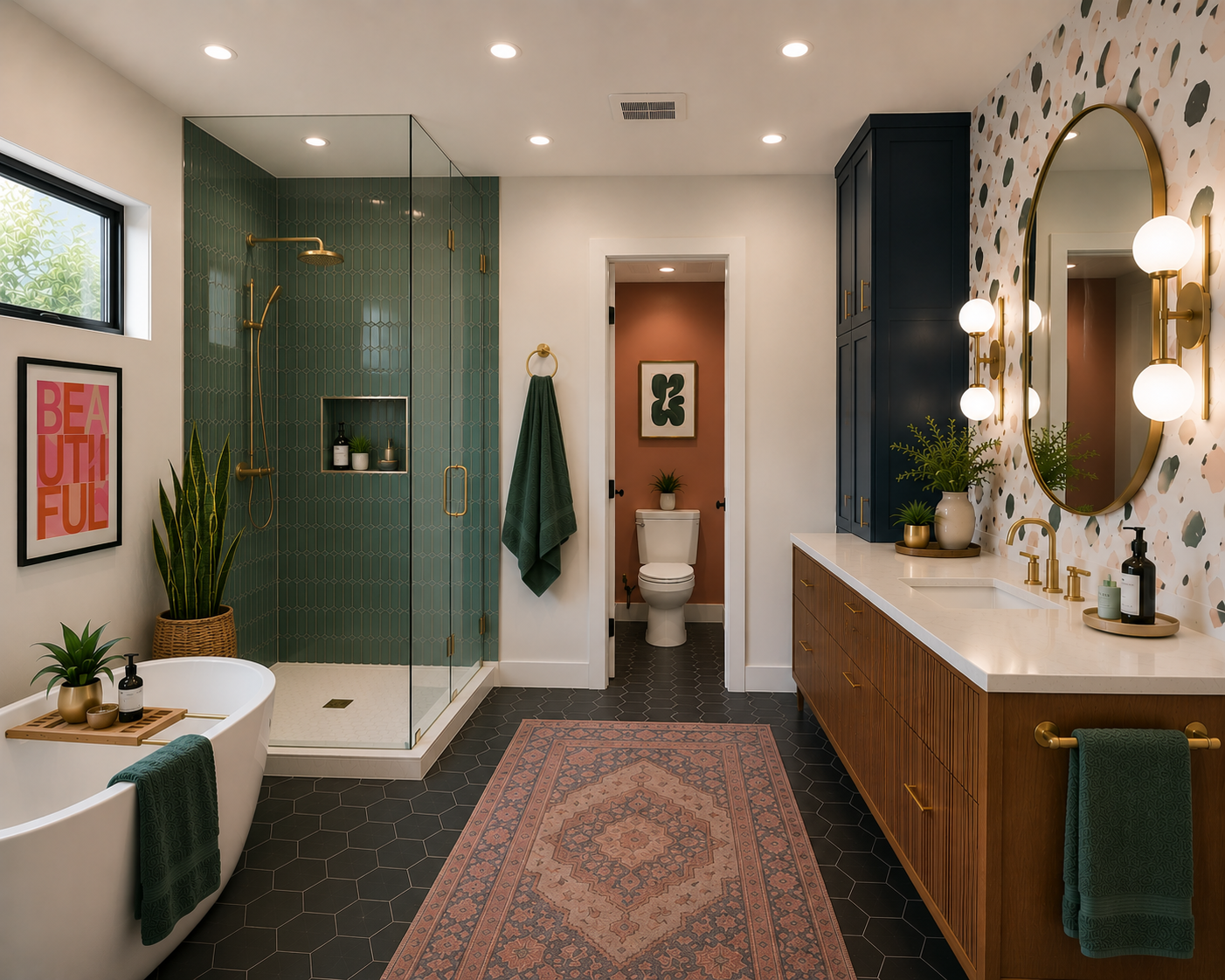
AI-generated 3D rendering of a modern eclectic primary bathroom designed by virtual interior designer Joshua Jones of JJones Design Co.
Common Shower Design Mistakes
A well-designed shower should look beautiful, function properly, and remain enjoyable to use for years to come. Unfortunately, some of the most expensive mistakes are often the result of decisions made early in the planning process.
Over the years, I've seen homeowners invest heavily in premium materials and luxury fixtures only to become frustrated by issues that could have been avoided with better planning. The following are some of the most common shower design mistakes I encounter.
Prioritizing Appearance Over Function
Beautiful tile and stylish fixtures can certainly elevate a bathroom, but appearance should never come at the expense of usability.
A shower that looks impressive in photos but is difficult to use on a daily basis will quickly lose its appeal.
Before selecting finishes, focus on the layout, storage, lighting, ventilation, and overall functionality of the space.
Forgetting About Storage
Many homeowners underestimate how much storage they need inside a shower.
Without niches, ledges, shelves, or other storage solutions, shampoo bottles and shower products often end up cluttering the floor or balancing awkwardly on narrow edges.
Planning storage early can help create a cleaner and more organized shower.
Choosing Slippery Flooring
Safety should always be a consideration when selecting shower floor materials.
Some beautiful materials can become surprisingly slippery when wet, increasing the risk of slips and falls.
Whenever possible, choose flooring materials and finishes that provide adequate traction while still supporting the overall design of the bathroom.
Poor Shower Head Placement
A poorly positioned shower head can make a shower uncomfortable to use and may contribute to water escaping outside the shower area.
One of the most common examples is placing the shower head directly across from the shower entrance, which often results in users stepping into cold water while waiting for the shower to warm up.
Thoughtful fixture placement can significantly improve the overall experience.
Ignoring Water Usage and Hot Water Capacity
When selecting shower heads, body sprays, rainfall fixtures, and other shower features, it is important to consider how much water the system will use.
Many homeowners focus on appearance and features without considering the impact on water consumption and hot water availability. Depending on the fixtures selected, a shower may use significantly more water than expected, which can increase utility costs and place greater demand on the home's water heater.
This becomes especially important in larger showers that incorporate multiple shower heads, body sprays, or other luxury features. If the water heater cannot keep up with demand, homeowners may find that hot water runs out more quickly than anticipated.
Some states have also adopted regulations that limit the flow rates of shower heads to help conserve water. California, for example, has some of the strictest water-efficiency requirements in the country due to ongoing drought concerns. As water conservation continues to receive greater attention, it would not be surprising to see additional states adopt similar standards in the future.
Before selecting shower fixtures, I recommend considering not only how they look but also how they will perform within your home's plumbing system and hot water capacity.
Ignoring Ventilation
Ventilation is one of the least exciting parts of a bathroom remodel, but it is also one of the most important.
Without proper ventilation, excess moisture can contribute to mold, mildew, peeling paint, damaged finishes, and other long-term issues.
A properly sized exhaust fan is often one of the smartest investments homeowners can make during a bathroom renovation.
Installing a Shower That Is Too Large
Many homeowners assume that bigger automatically means better.
While spacious showers can be wonderful, an oversized shower can sometimes feel less comfortable than a thoughtfully designed layout. Larger showers may also require additional heating, more extensive cleaning, and longer walks between fixtures.
In many cases, a well-planned shower feels more luxurious than a simply oversized one.
Following Trends Without Considering Longevity
Trends can be a great source of inspiration, but they should not be the sole reason for making major design decisions.
Bathroom renovations often represent a significant investment, and some highly specific trends may feel dated sooner than expected.
I encourage homeowners to focus on features and materials they genuinely love rather than making decisions based solely on current popularity.
Underestimating Maintenance Requirements
Every material requires some level of maintenance.
Before selecting tile, natural stone, slab materials, or specialty finishes, it is important to understand what will be required to keep them looking their best over time.
A material that looks stunning on installation day may become frustrating if its maintenance requirements do not align with your lifestyle.
Skipping Future Planning
It is easy to focus entirely on today's needs during a remodel, but thoughtful planning can help a bathroom remain functional for many years.
Features such as curbless entries, handheld shower heads, reinforced walls for future grab bars, and slip-resistant flooring can often be incorporated during construction with minimal impact on the overall design.
Planning ahead does not mean sacrificing style. In many cases, it simply means creating a bathroom that offers greater flexibility in the future.
The best shower designs strike a balance between beauty, comfort, practicality, and long-term performance. Avoiding these common mistakes can help create a shower that continues to serve your household well long after the renovation is complete.
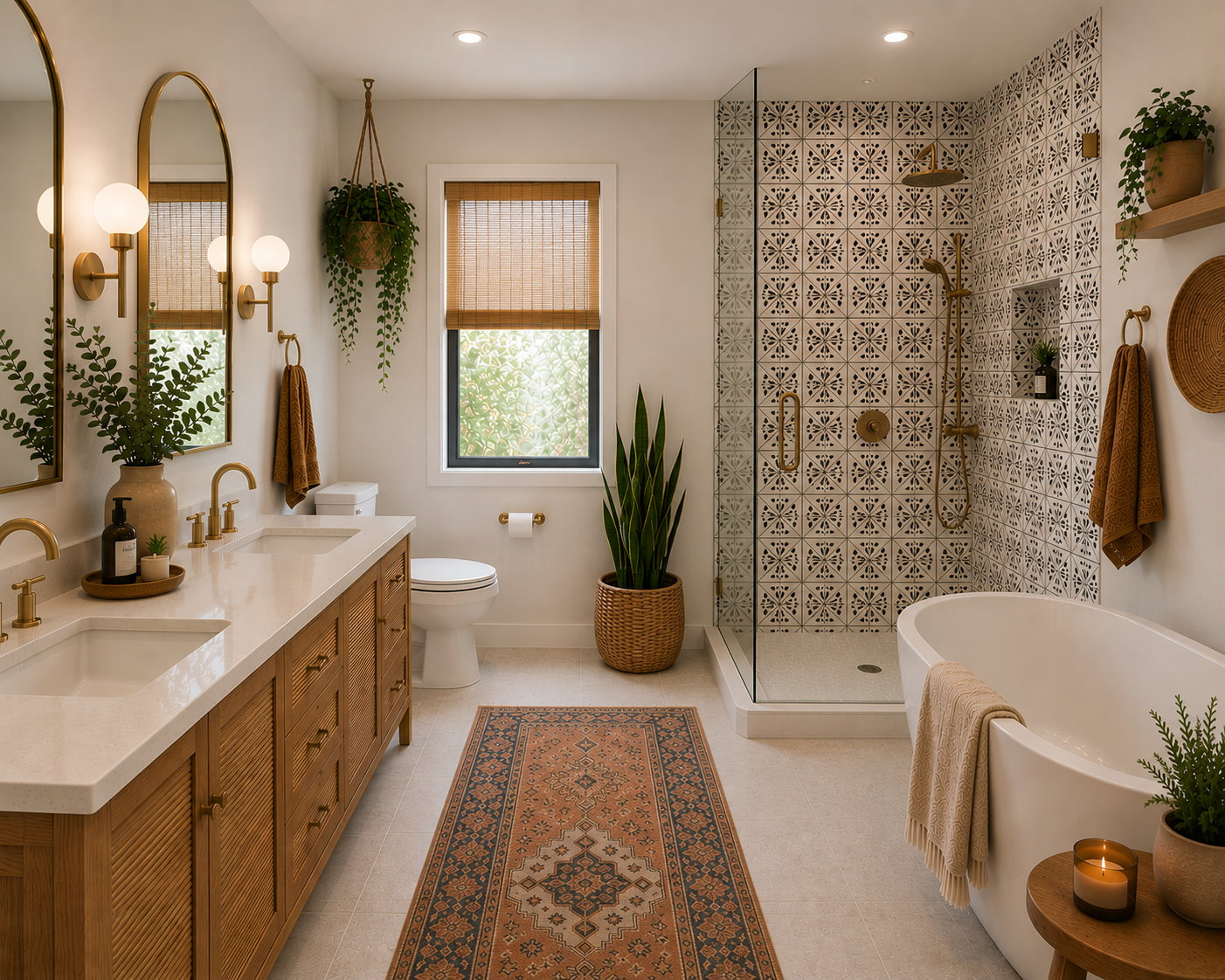
AI-generated 3D rendering of a modern boho primary bathroom designed by virtual interior designer Joshua Jones of JJones Design Co.
Frequently Asked Questions About Shower Design
What is the most popular shower style today?
Walk-in showers continue to be one of the most popular shower styles in both new construction and bathroom remodeling projects. Many homeowners appreciate their open appearance, flexibility, and ability to make a bathroom feel larger.
However, popularity should not be the deciding factor. The best shower style is the one that works for your space, budget, and lifestyle.
Are curbless showers worth it?
For many homeowners, yes.
Curbless showers offer a clean, modern appearance while improving accessibility and reducing tripping hazards. They can also make a bathroom feel larger by creating a seamless transition between the shower and the rest of the room.
That said, curbless showers require careful planning for drainage and waterproofing, so they may not be the right solution for every project.
What is the easiest shower wall material to maintain?
Large-format porcelain panels, slabs, and solid surface materials are often among the easiest shower wall materials to maintain because they have fewer grout lines than traditional tile installations.
While no material is completely maintenance-free, reducing grout lines can significantly reduce cleaning requirements.
Is a shower bench worth adding?
If space allows, many homeowners find that a bench adds both comfort and functionality.
Benches can be useful for shaving, relaxing, storing towels during use, supporting accessibility needs, or simply providing a place to sit. They can also be beneficial during pregnancy and for homeowners planning to age in place.
Should I choose a rainfall shower head?
Rainfall shower heads can create a relaxing, spa-like experience and are popular in many luxury bathrooms.
However, they may not provide the water pressure some homeowners prefer. For this reason, I often recommend pairing a rainfall shower head with a standard shower head or handheld fixture to provide greater flexibility.
What is the best flooring material for a shower?
There is no single best material for every shower.
Porcelain tile, mosaic tile, natural stone, and pebble flooring all have advantages and disadvantages. The right choice depends on your design goals, maintenance preferences, budget, and desired level of slip resistance.
How important is shower ventilation?
Proper ventilation is essential.
Without adequate ventilation, moisture can accumulate and contribute to mold, mildew, peeling paint, damaged finishes, and other maintenance concerns. A properly sized exhaust fan is one of the most important components of a successful bathroom design.
Should I include a niche in my shower?
In most cases, yes.
A thoughtfully designed niche provides convenient storage for shampoo, conditioner, soap, and other shower essentials while helping keep the shower organized. Planning the niche location early can also help it integrate more seamlessly into the overall tile layout.
Are doorless showers practical?
Doorless showers can be highly functional when properly designed.
The key is ensuring the layout, drainage, glass placement, and shower head locations work together to contain water. In smaller bathrooms or poorly planned layouts, a doorless shower may create challenges that outweigh its benefits.
How much should I budget for a new shower?
The cost of a new shower can vary dramatically depending on the size, materials, fixtures, plumbing requirements, and overall scope of the project.
A basic shower replacement may cost significantly less than a fully custom shower room with slab walls, multiple shower heads, steam capabilities, and custom glass.
Rather than focusing solely on a target number, I encourage homeowners to establish a realistic budget and prioritize the features that will have the greatest impact on their daily experience.
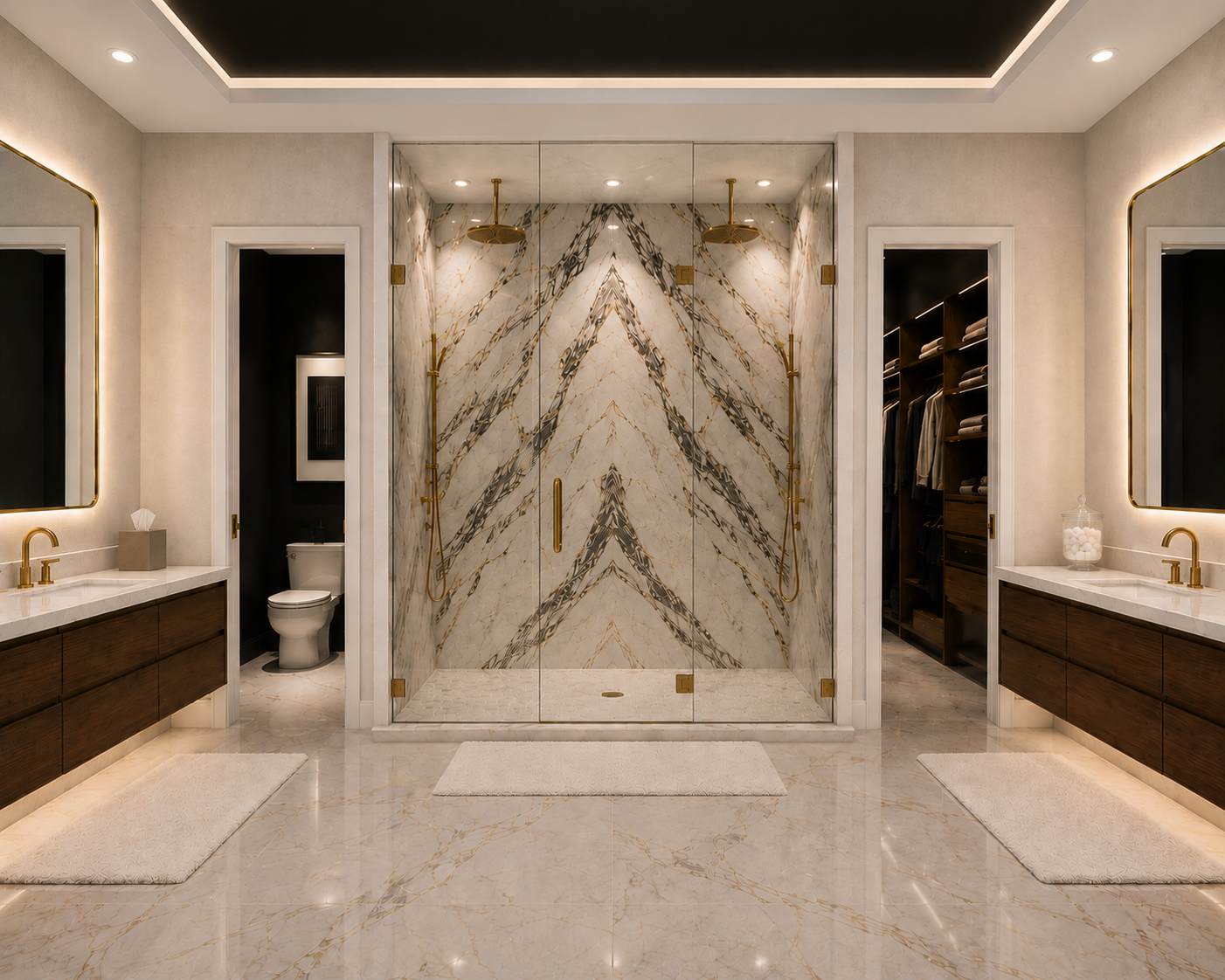
AI-generated 3D rendering of a luxury modern primary bathroom designed by virtual interior designer Joshua Jones of JJones Design Co.
Need Help Designing Your Bathroom?
Designing a shower involves much more than selecting tile and fixtures. The layout, materials, storage, lighting, ventilation, accessibility features, and overall bathroom design all work together to shape how the space looks, feels, and functions every day.
Over the years, I've found that some of the most successful bathroom renovations begin with thoughtful planning. When the shower is designed around the homeowner's lifestyle, priorities, and long-term goals, the result is often a space that remains enjoyable and functional for many years.
Whether you're remodeling a guest bathroom, updating a primary suite, planning a curbless shower, or designing a luxury shower room, making the right decisions early in the process can help prevent costly mistakes and create a bathroom that truly works for your household.
I've worked with homeowners across the United States and Canada on hundreds of virtual interior design projects, and one thing I've learned is that every bathroom presents its own unique challenges and opportunities. What works beautifully in one home may not be the right solution for another.
That's why I take the time to understand how my clients use their spaces before making recommendations. From space planning and material selections to fixture recommendations and detailed design concepts, my goal is to create a bathroom that reflects your style while supporting the way you live.
If you're planning a bathroom remodel and would like professional guidance, I'd love to help.
Learn more about my virtual interior design services or contact me to discuss your project.