What Light Bulb Color Is Best? Warm vs Cool Lighting Explained for Every Room
You can have the right furniture, the right layout, and even the perfect paint color—but if your lighting is off, the entire space can feel wrong.
I’ve seen this happen more times than people realize. A room looks great on paper, but once everything is in place, something still feels harsh, dull, or just uncomfortable to be in. Most people assume it’s the furniture or the color palette. But more often than not, it comes down to the lighting.
Light bulb color—also known as light temperature—has a huge impact on how a space looks and feels. It affects everything from how your finishes read to how relaxed or alert you feel in a room. And yet, it’s one of the most overlooked decisions in a home.
In this guide, I’ll break down the difference between warm and cool lighting, explain how light temperature actually works, and share how I approach it as a designer so each space feels right—not just looks right.
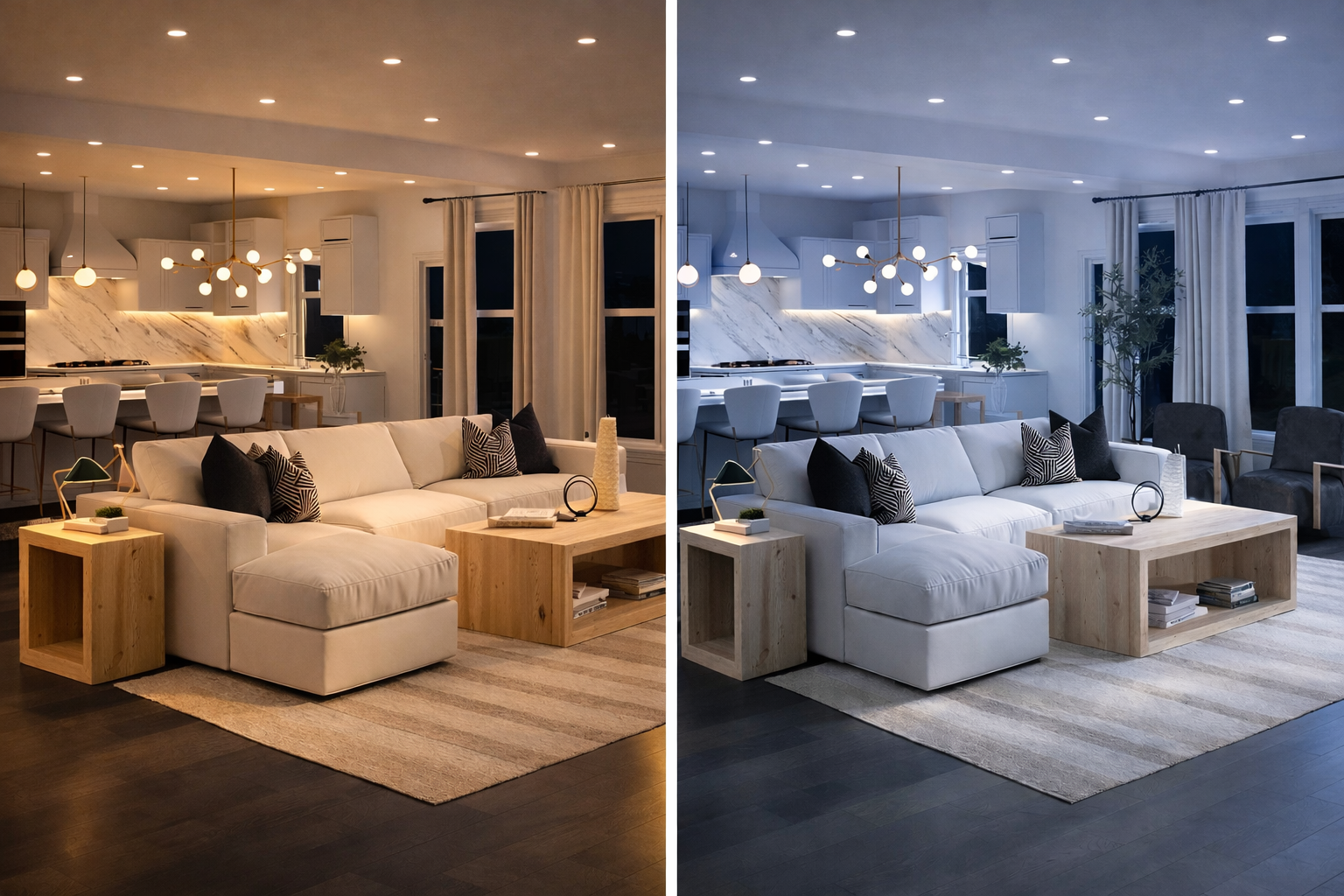
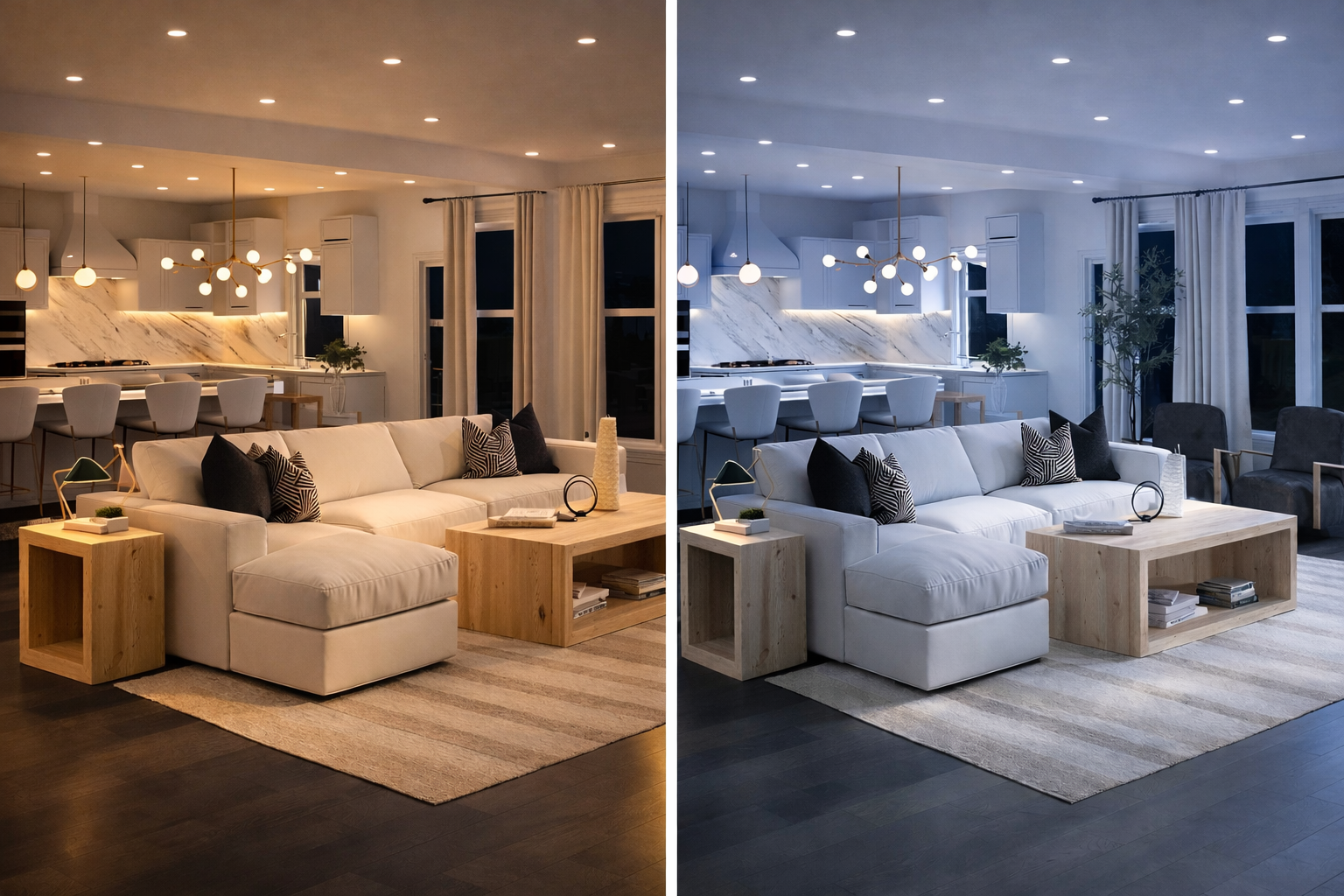
This living room was designed by Joshua Jones, with AI used to visualize both warm and cool lighting—showing how light temperature can completely change the feel of the same space.
What Is Light Temperature (and Why It Matters More Than You Think)
Light temperature refers to the color of the light a bulb gives off—not how hot it gets. This is where a lot of people get confused.
Some light appears warm and slightly yellow, while other light looks cooler or even slightly blue. That difference is what changes the entire feel of a room.
In design, this matters more than most people expect. Light temperature affects how colors show up, how materials read, and how comfortable a space feels to be in. The same paint color can look soft and inviting under warm light, then suddenly feel flat or cold under cooler lighting.
It also impacts how you feel in the space. Warmer lighting tends to feel more relaxing and calm, while cooler lighting feels brighter and more energizing. Neither is “wrong”—it just depends on how the room is meant to function.
Light temperature is measured using a scale called Kelvin (K). You don’t need to memorize the numbers, but having a general understanding helps you make better decisions when choosing bulbs.
I’ll break that down next so you can see how each range actually looks and where it works best.
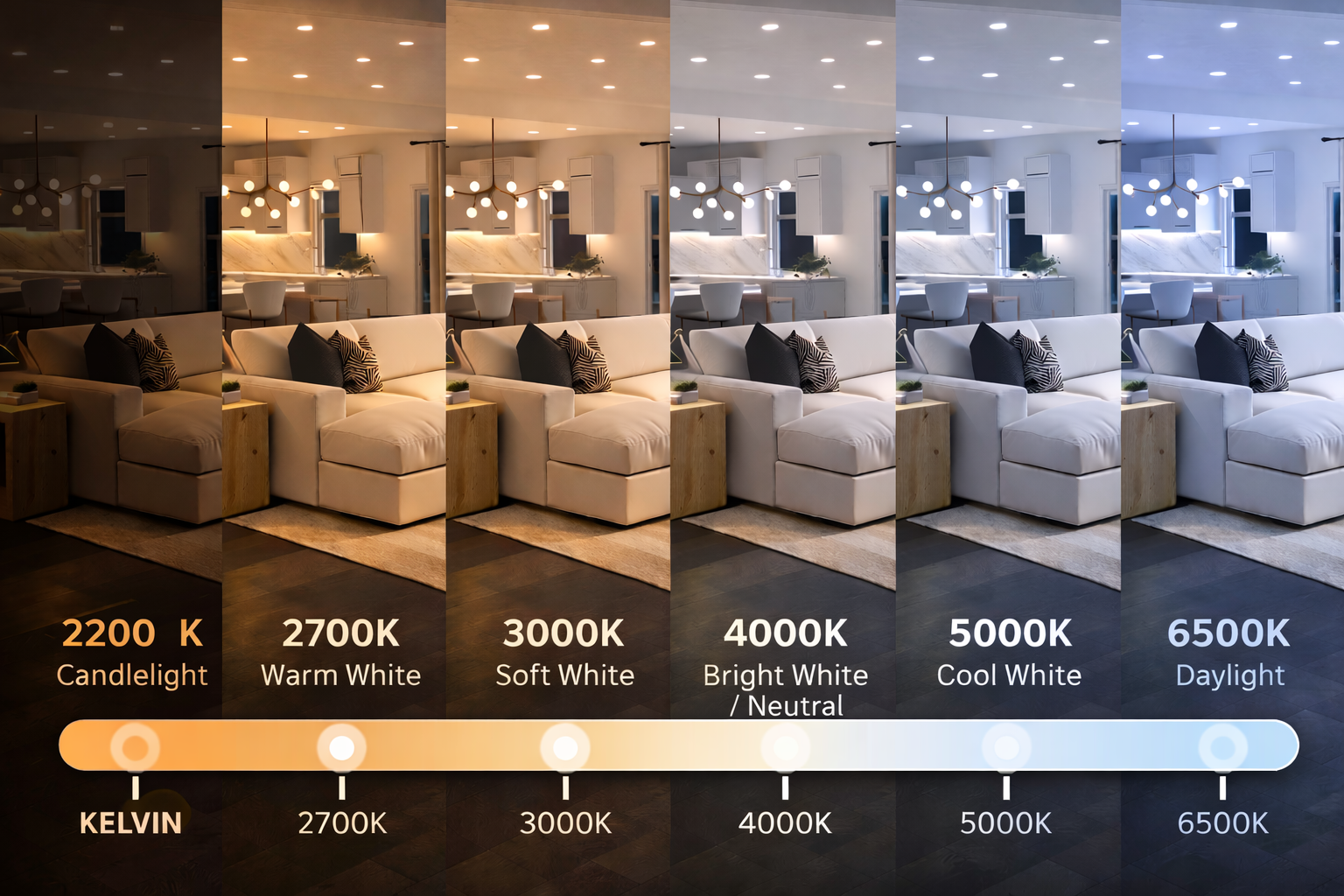
This living room was designed by Joshua Jones, with AI used to illustrate different Kelvin light temperatures—from warm candlelight to cool daylight—so you can clearly see how each level affects the look and feel of a space.
Understanding the Kelvin Scale (From Warm to Cool)
Light temperature is measured on the Kelvin (K) scale. This is what you’ll see on light bulb packaging, and it tells you whether the light will look warm, neutral, or cool.
Think of it as a spectrum—from soft, golden light to bright, blue-toned light. Each range creates a different mood and works better in certain areas of the home.
2200K–2700K: Warm Light (Soft White / Warm Glow)
This is the warmest range you’ll typically see in residential spaces. It gives off a soft, golden glow that feels cozy and relaxed.
This is what most people associate with a comfortable home. It’s flattering on skin tones, softens materials, and creates a more inviting atmosphere overall.
Where it works best:
Living rooms
Bedrooms
Dining rooms
Any space where you want to unwind
3000K–3500K: Neutral Warm (Warm White)
This range is a step up in brightness while still feeling comfortable. It’s less yellow than 2700K but not overly cool.
It strikes a balance between function and comfort, which is why it’s a popular choice in homes that lean slightly more modern.
Where it works best:
Kitchens
Hallways
Open-concept spaces
Bathrooms (depending on the look you want)
4000K–4500K: Cool White
This light is noticeably brighter and slightly cooler in tone. It gives a clean, crisp look, but it can start to feel harsh in residential settings if overused.
It’s more functional than atmospheric.
Where it works best:
Home offices
Garages
Laundry rooms
Task-heavy areas
5000K–6500K: Daylight
This is the coolest range, with a bright, blue-toned light that mimics daylight.
It creates strong contrast and high visibility, but in a home, it can easily feel too intense or clinical—especially in the evening.
Where it works best:
Workshops
Utility spaces
Very specific task lighting
Once you start noticing these differences, it becomes easier to understand why a space feels the way it does—and how to fix it.
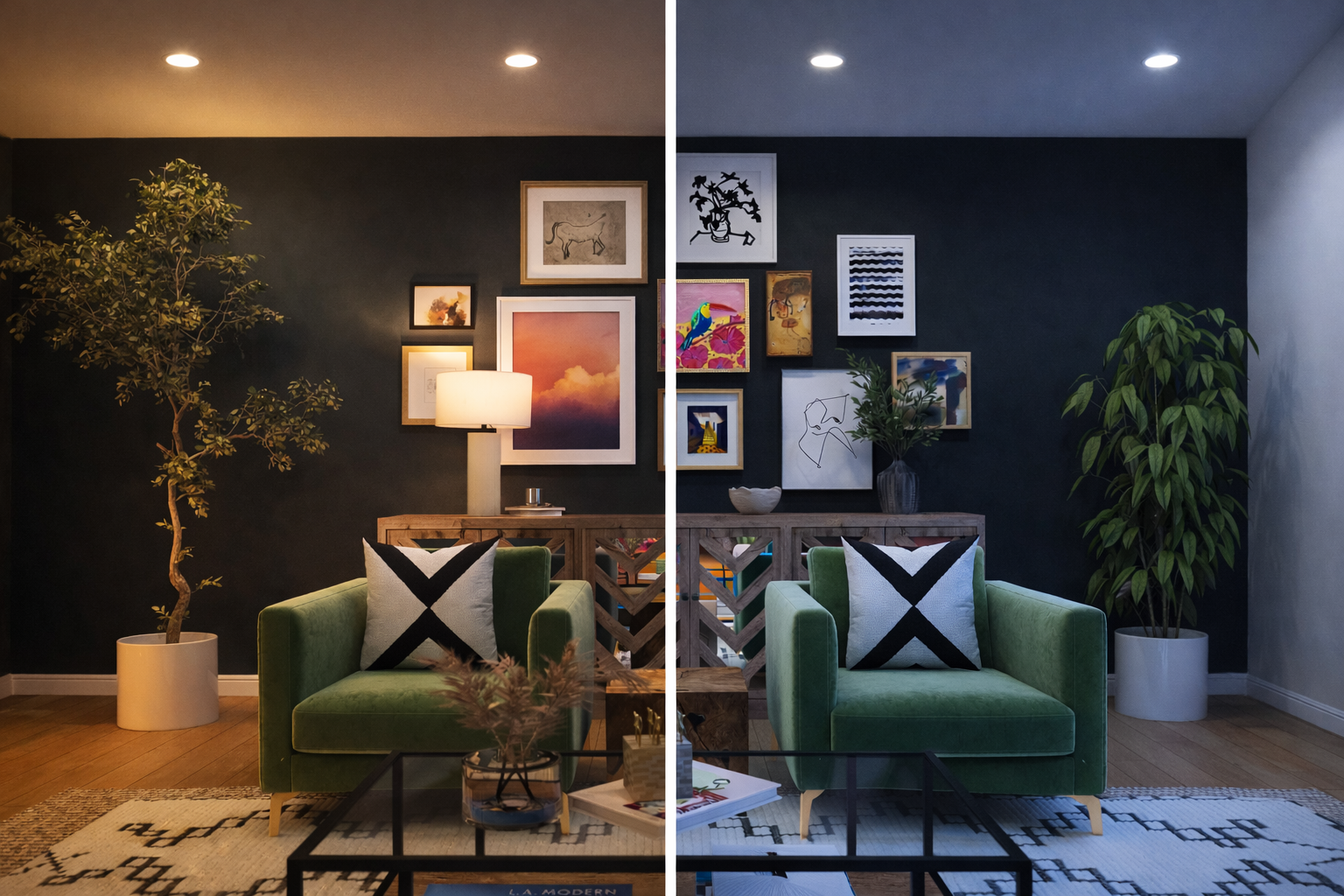
This living room was designed by Joshua Jones, with AI used to show warm and cool lighting at night—highlighting how light temperature changes the way colors, materials, and finishes are perceived.
Warm vs Cool Lighting: Pros and Cons
Once you understand the difference between warm and cool lighting, the next step is knowing when to use each—and when not to.
Warm Light – Pros
Warm lighting creates a softer, more relaxed atmosphere that most people naturally feel comfortable in. It’s easier on the eyes, especially in the evening, and it tends to make a space feel more inviting.
It also does a better job of flattering materials and finishes. Wood tones feel richer, fabrics look softer, and skin tones appear more natural.
Warm Light – Cons
If overused, warm lighting can start to feel too yellow or dim, especially in spaces that need more visibility. It’s not always the best choice for areas where you’re doing detailed tasks like cooking or working.
In some cases, it can also make a space feel slightly dated if everything leans too warm without any contrast.
Cool Light – Pros
Cooler lighting is brighter and sharper, which makes it ideal for tasks that require focus and clarity. It helps with visibility, especially in kitchens, workspaces, and areas where precision matters.
It also creates a cleaner, more modern look, which some people prefer—especially in minimal or contemporary interiors.
Cool Light – Cons
This is where a lot of homes go wrong.
Cool lighting can feel harsh and overly bright, especially in living spaces where you’re trying to relax. It can wash out warmth in materials and make a room feel less inviting.
For some people, prolonged exposure to cooler, blue-toned light can also lead to eye strain or headaches. It can feel overstimulating, especially at night when your body is naturally trying to wind down.
The goal isn’t to choose one and use it everywhere—it’s to understand how each one behaves so you can use it intentionally.
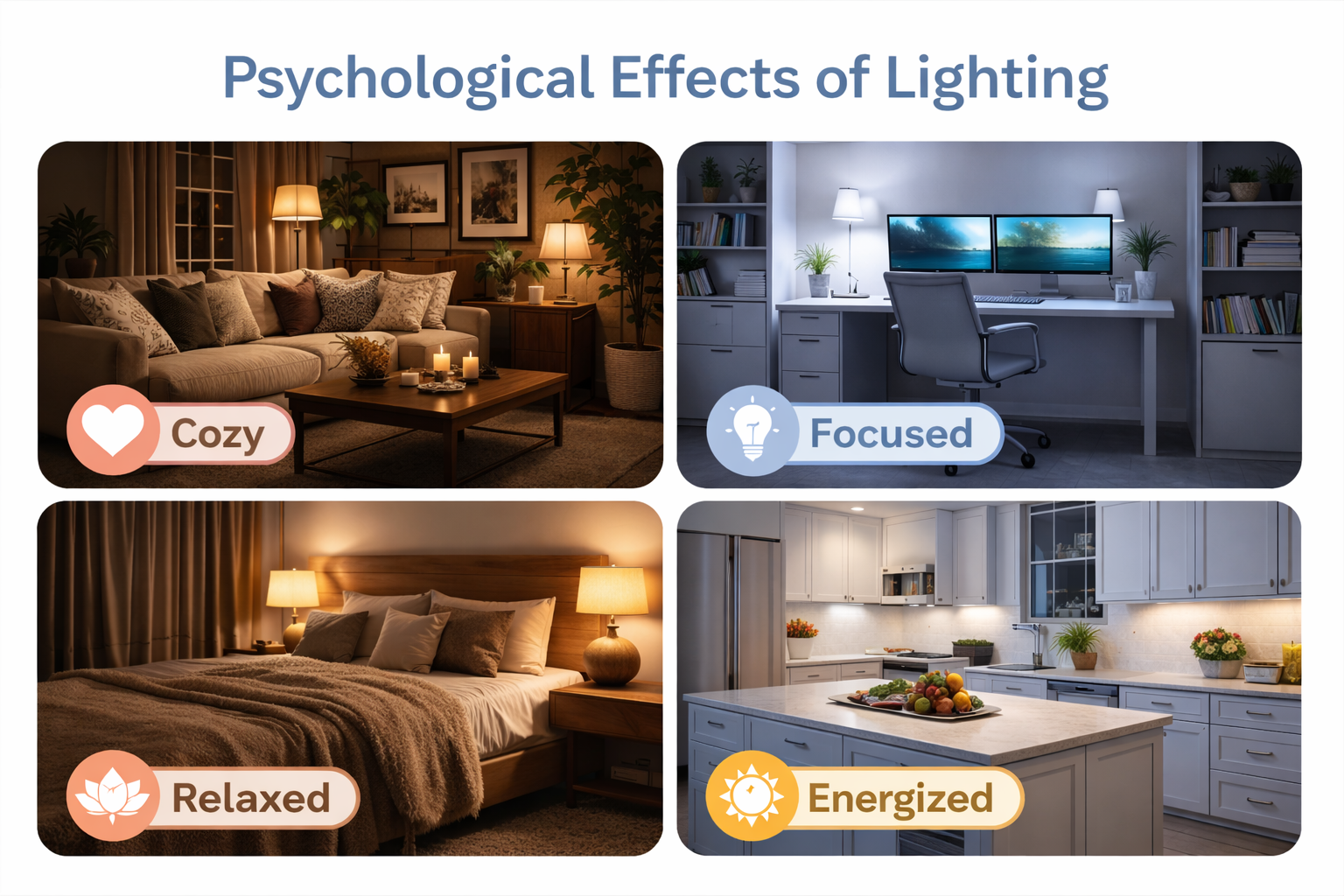
AI-generated images illustrating how lighting can influence mood—from cozy and relaxed to focused and energized—showing how light temperature subtly shapes how a space feels and functions.
The Psychological Effects of Light Temperature
Lighting doesn’t just change how a space looks—it changes how it feels to be in it.
Most people notice when something feels off in a room, but they can’t always explain why. Light temperature is often a big part of that.
Warm lighting tends to create a slower, more relaxed atmosphere. It signals to your brain that it’s time to wind down, which is why it works so well in living rooms and bedrooms. It softens the overall environment and makes a space feel more comfortable to settle into.
Cooler lighting does the opposite. It’s brighter and more stimulating, which can help with focus and productivity. That’s useful during the day or in task-driven spaces, but it can feel out of place in areas meant for relaxing.
This is where problems start to show up in real homes.
I’ve seen spaces where everything looks right—furniture, layout, color palette—but the room still doesn’t feel comfortable to spend time in. In many of those cases, the lighting was simply too cool for how the space was being used.
Some people are more sensitive to this than others. Cooler lighting, especially in the evening, can feel overly sharp or draining over time. Instead of helping you relax, it keeps the space feeling active when it shouldn’t. People often describe it as the room feeling “off” without realizing the lighting is the reason.
That doesn’t mean cool lighting is wrong—it just needs to match the purpose of the space.
As a designer, if a client tells me a room doesn’t feel right—even when everything looks good—lighting temperature is one of the first things I look at.
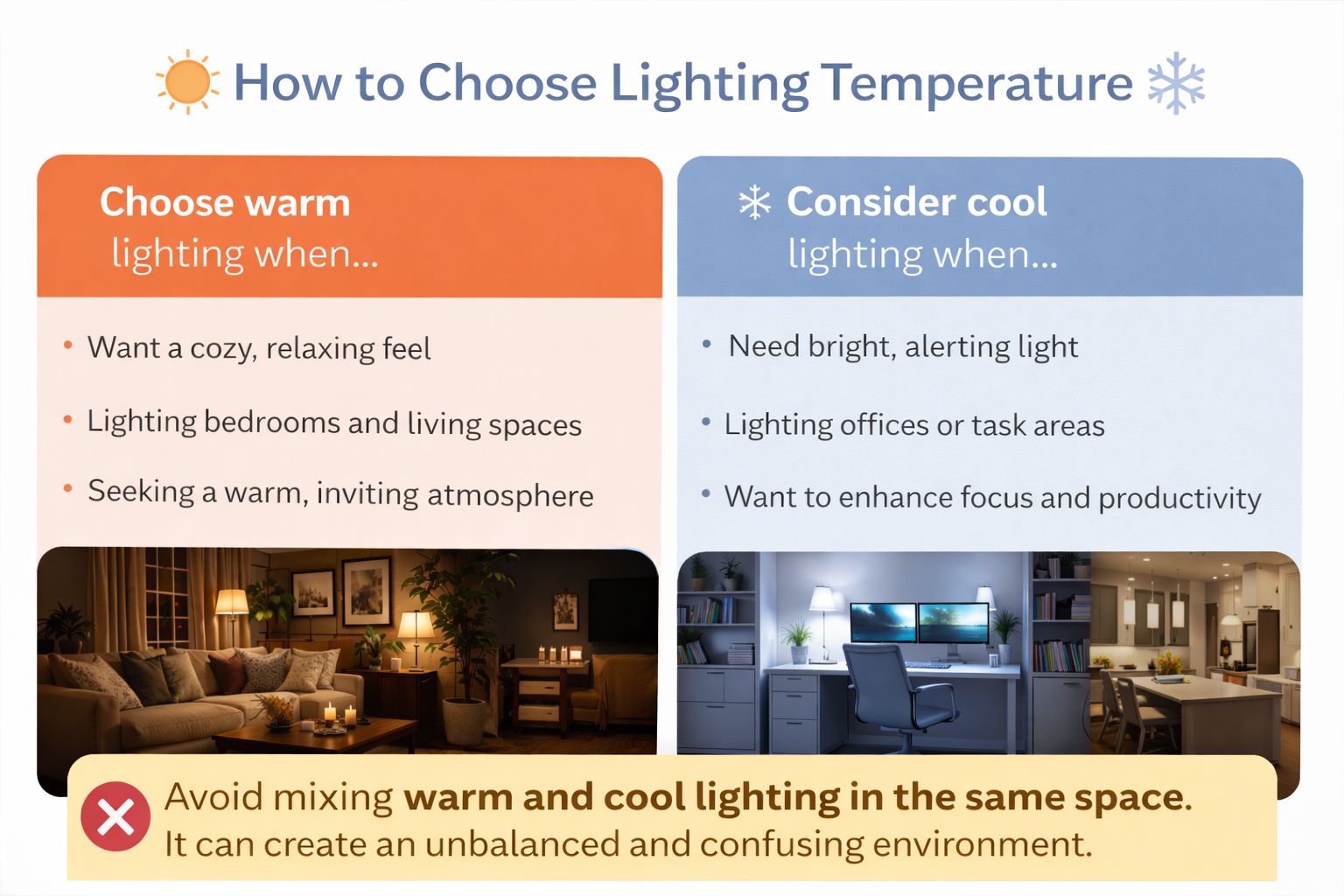
AI-generated infographic showing how to choose the right light bulb color for your space, with a clear comparison between warm and cool lighting and why mixing them in the same room can create an unbalanced feel.
How to Choose the Right Light Temperature for Each Room
Once you understand how light temperature works, the next step is applying it in a way that makes each space feel right.
The goal isn’t to use the same bulb everywhere—it’s to match the lighting to how the room is used.
Living Room
The living room is where you want to feel comfortable and relaxed, especially in the evening.
Warm lighting around 2700K works best here. It creates a softer, more inviting atmosphere and helps the space feel lived-in rather than overly bright or clinical.
Layered lighting also makes a big difference. Instead of relying on one overhead light, combine floor lamps, table lamps, and accent lighting to create a more balanced look.
Bedroom
The bedroom should feel calm and restful.
Stick with warm lighting in the 2200K–2700K range. Anything cooler can feel too stimulating, especially at night when you’re trying to wind down.
If you use bedside lamps, this is where warmer light really pays off—it’s easier on the eyes and creates a more relaxed environment before sleep.
Kitchen
The kitchen needs a balance between comfort and function.
This is where 2700K–3000K tends to work well. It keeps the space feeling warm but still gives you enough clarity for cooking and prep work.
If you have under-cabinet lighting or task lighting, you can go slightly cooler there for better visibility, while keeping the main lighting warmer so the space doesn’t feel too harsh overall.
Bathroom
Bathrooms can go either way depending on how you use the space.
Around 3000K is a safe, balanced choice. It provides enough clarity for grooming without feeling too cold.
If your bathroom leans more spa-like, you can go slightly warmer. If it’s more task-focused, a slightly cooler temperature can work—but avoid going too cool, as it can feel unflattering and overly stark.
Home Office
This is one place where cooler lighting makes sense.
A range around 3500K–4000K helps with focus and visibility, especially if you’re working for long periods. It keeps the space feeling bright and alert.
That said, it’s still important not to go too extreme. Lighting that’s too cool can become uncomfortable over time, so aim for clarity without harshness.
When lighting is chosen intentionally for each room, the entire home feels more cohesive and comfortable—without needing to change anything else.
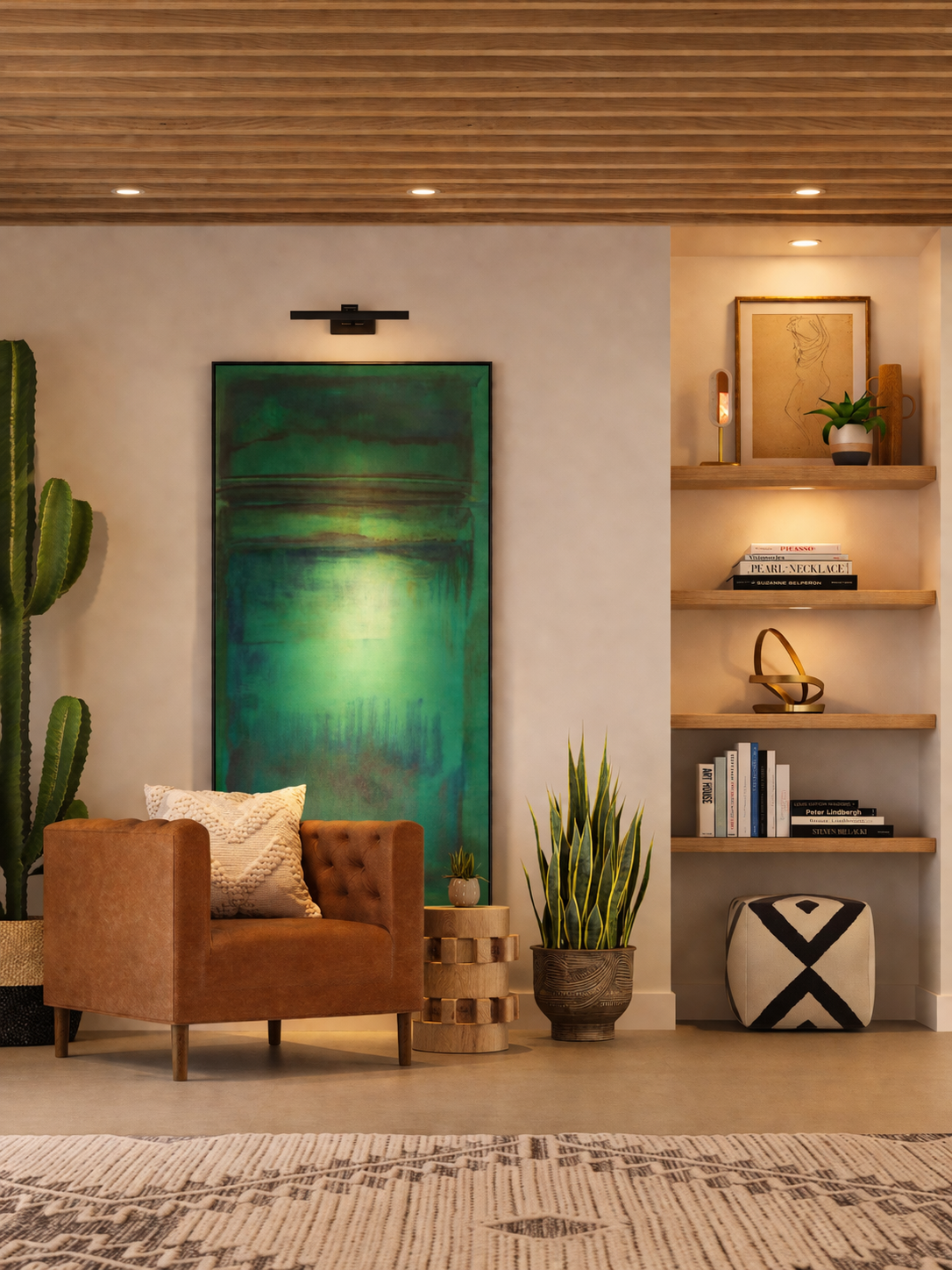
Designed by virtual interior designer Joshua Jones of JJones Design Co. This space highlights a layered lighting approach, combining an art light, recessed ceiling lighting, and ambient illumination to create a warm, balanced atmosphere after dark. (AI image)
Designer Insight: Why Lighting Temperature Can Make or Break a Space
Lighting is one of the fastest ways to make a well-designed space feel either elevated or completely off.
I’ve seen rooms where everything is technically “right”—furniture, layout, color palette—but the space still doesn’t feel good to be in. In many of those cases, the issue isn’t the design itself. It’s the lighting.
Light temperature directly affects how materials read. Wood tones can look rich and warm under the right lighting, then suddenly feel dull or washed out under the wrong one. Paint colors can shift more than people expect. Even textures lose depth when the lighting isn’t working with the space.
One of the most common issues I see—especially in commercial spaces or institutional settings—is mixing warm and cool bulbs in the same room. It throws everything off.
Instead of feeling balanced, the space starts to feel uneven. Your eyes are constantly adjusting between different light tones, which can make the environment feel uncomfortable over time. People don’t always know why it feels wrong—they just know it does.
This can even happen at home when a bulb burns out and gets replaced with whatever is available. Suddenly, one fixture looks different from the others, and the whole room feels slightly out of sync.
If a bulb needs to be replaced, it’s always worth taking a moment to match the same light temperature as the rest of the space. It keeps everything feeling consistent and cohesive.
As a general rule, consistency matters just as much as the temperature you choose. A well-lit space should feel intentional, not accidental.
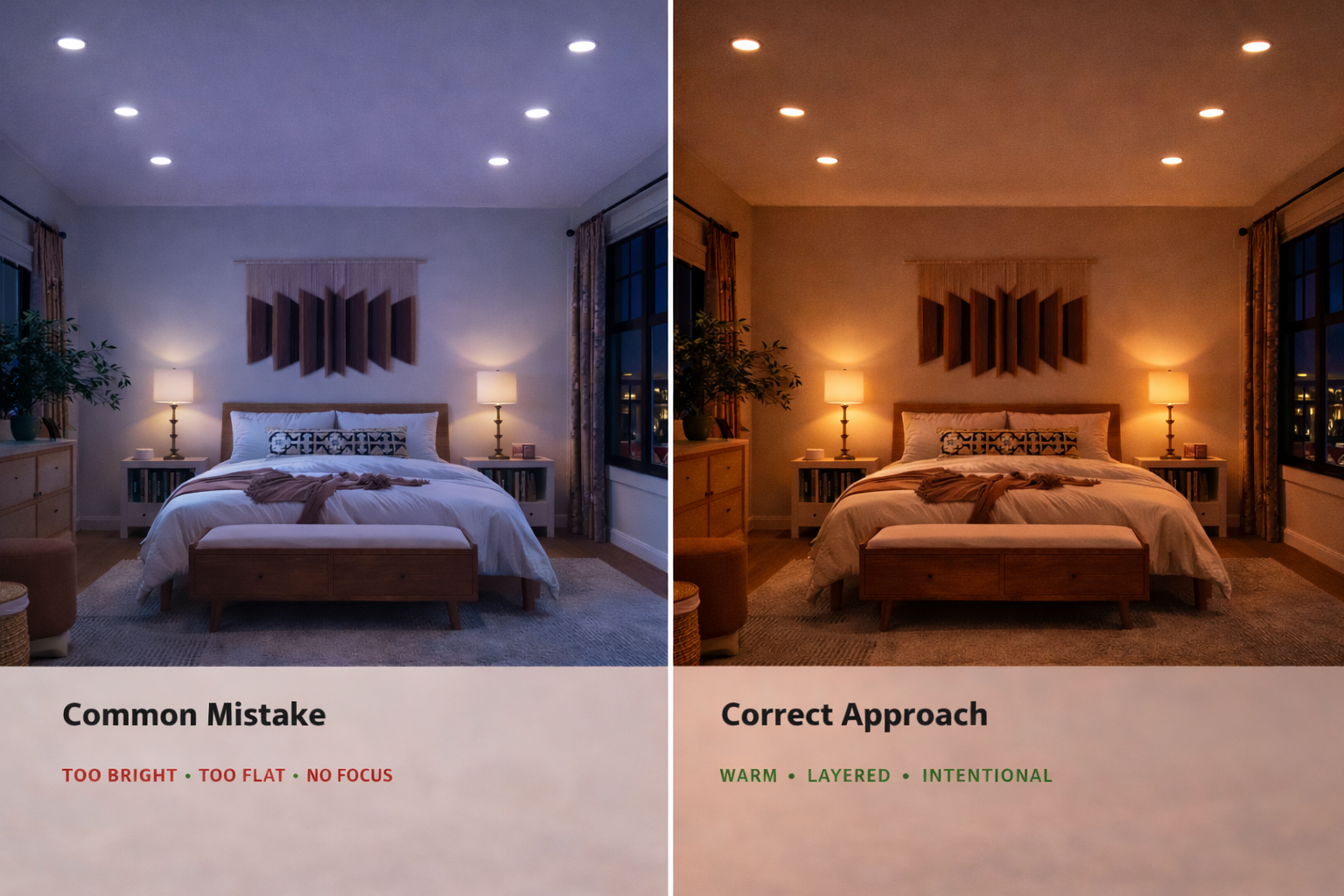
A comparison of lighting approaches in a primary bedroom, showing how cooler overhead lighting can feel flat, while warmer layered lighting creates a more inviting and balanced atmosphere. Designed by virtual interior designer Joshua Jones of JJones Design Co. (AI-enhanced image)
Common Lighting Mistakes to Avoid
Even with the right furniture and layout, a few lighting missteps can throw off the entire space. These are the ones I see most often.
Inconsistent Light Bulb Replacement
This is a subtle issue, but it can throw off a space more than people expect.
When a bulb burns out, it’s easy to replace it with whatever is available. The problem is that not all bulbs give off the same light—even if they look similar in the box.
One fixture ends up slightly warmer, another slightly cooler, and the room loses its visual consistency. It’s not always obvious at first, but over time the space can start to feel less cohesive.
A simple fix is to check the light temperature on the bulb packaging and match it to what’s already in the room. Keeping that consistency helps the space feel intentional and balanced.
Using Daylight Bulbs in Living Spaces
Daylight bulbs (5000K and above) are often marketed as “bright” or “clean,” which sounds appealing—but in most homes, they’re too intense.
In living rooms, bedrooms, and dining areas, this type of lighting can feel harsh and overly clinical, especially in the evening. It removes the sense of comfort that these spaces should have.
Choosing Bulbs Based on Brightness Alone
A lot of people focus only on how bright a bulb is (lumens) and overlook the color of the light.
You can have the perfect brightness, but if the temperature is wrong, the space still won’t feel right. Brightness and color need to work together, not separately.
Ignoring Dimmers
Dimmers give you flexibility, which is something fixed lighting can’t do.
The same room can feel completely different depending on the time of day. Being able to adjust the intensity of light helps you shift the mood without changing anything else in the space.
Treating Every Room the Same
Using the same light temperature throughout the entire home might seem like the easiest approach, but it doesn’t always give the best result.
Different rooms serve different purposes. A bedroom should feel calm and relaxed, while a home office needs to support focus. The lighting should reflect that.
Avoiding these mistakes alone can make a noticeable difference—often without changing anything else in the space.
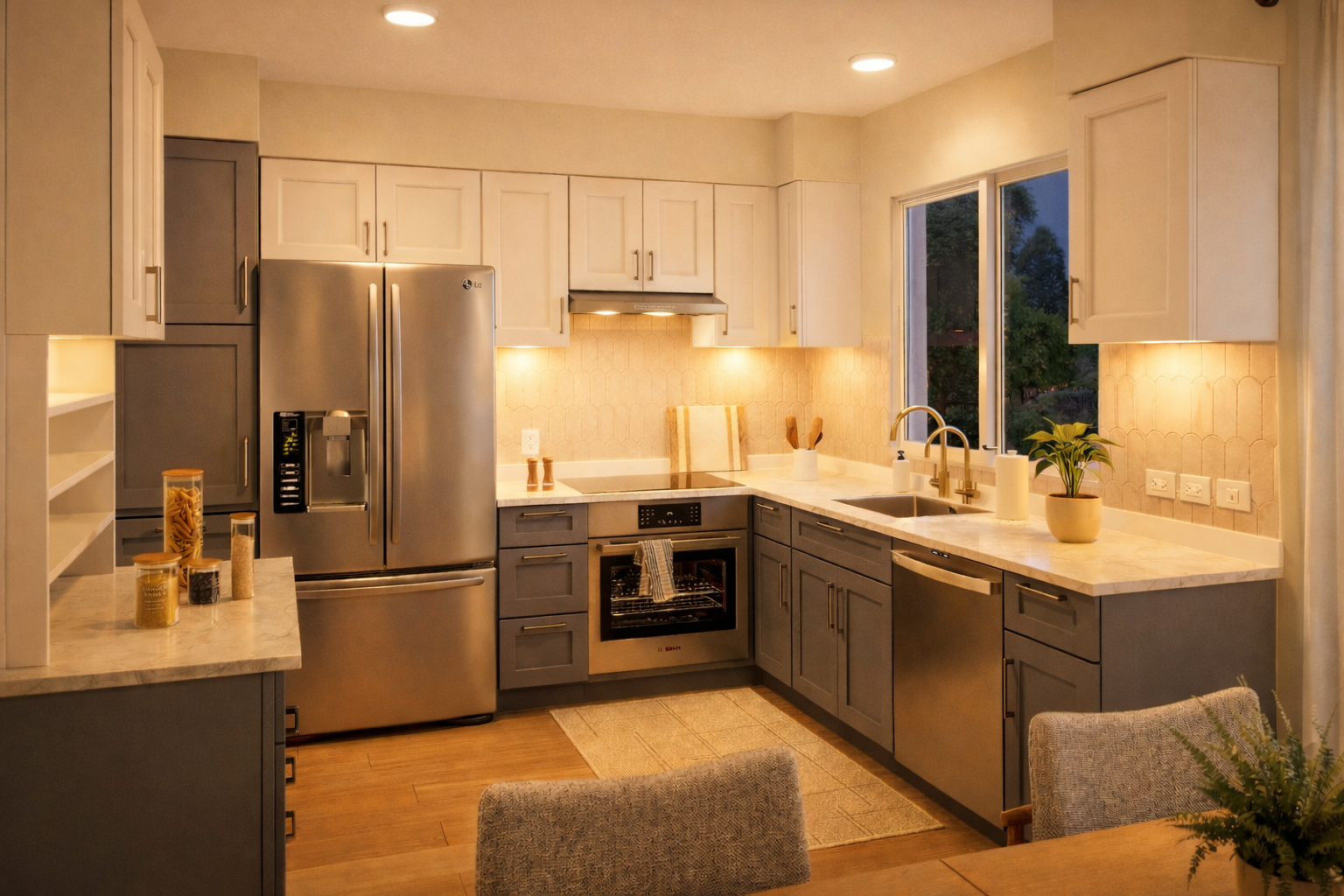
Scandinavian-style kitchen shown with properly balanced warm evening lighting, combining recessed ceiling lights and under-cabinet illumination to maintain brightness while creating a comfortable, inviting atmosphere. Designed by virtual interior designer Joshua Jones of JJones Design Co. (AI-enhanced image)
My Go-To Lighting Rule as a Designer
If I had to simplify everything into one approach, it would be this:
Start with warm lighting, then adjust only where needed.
In most homes, 2700K is a safe and reliable baseline. It creates a comfortable, inviting environment and works well across living rooms, bedrooms, and even many kitchens.
From there, I only shift slightly cooler when the function of the space calls for it—like a home office, task lighting in a kitchen, or certain bathroom setups.
What matters most is consistency. Once you choose a light temperature for a space, stick with it. That’s what keeps the room feeling cohesive and intentional.
Lighting isn’t just a finishing touch—it’s part of the foundation of how a space feels. When it’s done right, everything else in the room works better without needing to change anything else.
If your space still feels off even after adjusting lighting, it’s usually part of a bigger design issue involving layout, materials, and scale.