Ask Joshua: How Do I Make an Open Concept Space Feel Defined Without Walls?
Hi Joshua,
I have an open concept layout with my living room, dining area, and kitchen all in one space, but it feels like everything is just blending together. Nothing feels clearly defined, and I’m not sure how to fix it without adding walls. How can I make each area feel more intentional?
Thank you,
Ashley - Bothell, Washington
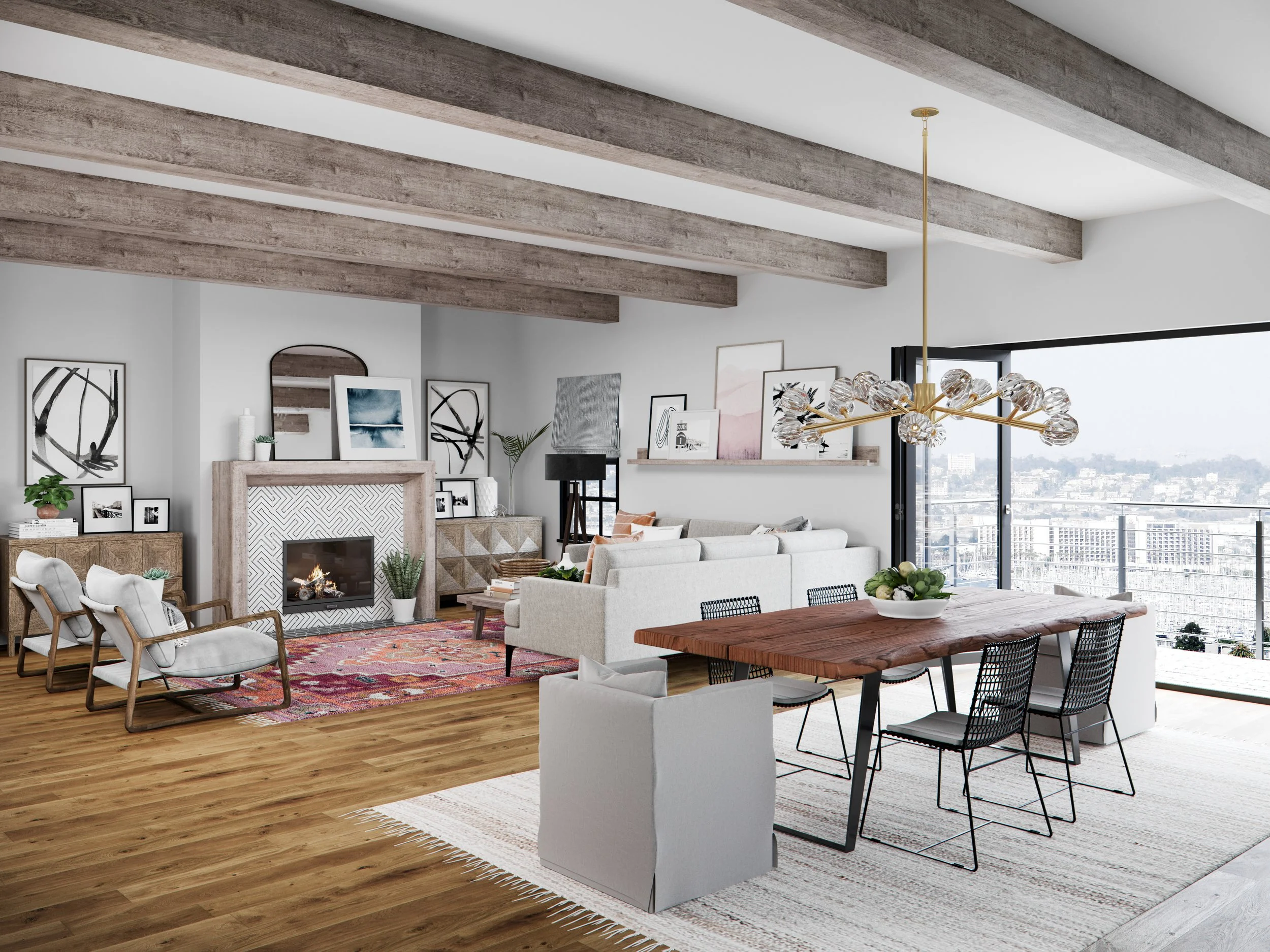
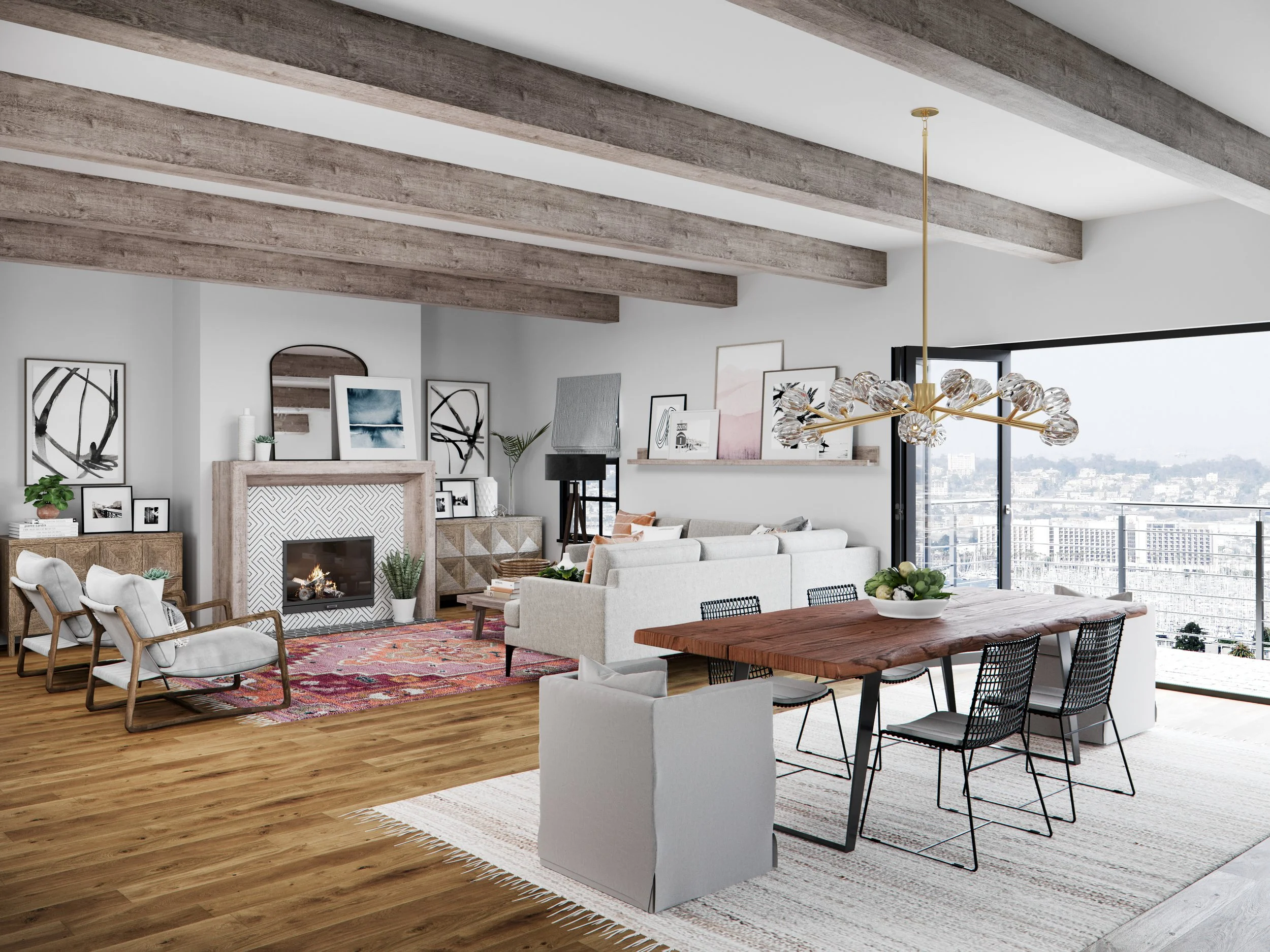
Open concept living and dining space designed by virtual interior designer Joshua Jones of JJones Design Co., featuring defined zones through rugs, furniture placement, and lighting.
Hi Ashley,
This is one of the most common challenges I see in open concept homes—and it’s exactly where a lot of spaces start to fall apart.
On paper, open layouts sound ideal. In reality, they require more intentional planning to work well. I’ve talked about this in more detail in my post on why open-concept homes are harder to design than they look, but the short version is this: without clear structure, everything starts to feel like one undefined space.
The goal isn’t to add walls—it’s to create visual boundaries so each area feels purposeful while still flowing together.
Here’s how I approach it as a designer:
Start with Area Rugs to Anchor Each Zone
One of the most effective ways to define a space is by using area rugs.
A rug immediately signals where one zone begins and ends. In a living area, it grounds the seating arrangement. In a dining area, it frames the table and chairs.
Without that anchor, furniture tends to float, which is usually why the space feels disconnected in the first place.
If you’re working with carpet or unsure how layering works, I break that down in Ask Joshua: Can You Put an Area Rug Over Carpet?, where I explain how to use rugs effectively without making the space feel bulky or awkward.
Use Furniture Placement to Create Natural Separation
Your furniture should do the work that walls normally would.
A sofa can act as a divider between the living and dining areas. Chairs can help form a conversation zone. A console table behind a sofa can reinforce that boundary without blocking the flow.
The key is to arrange furniture around function, not just push everything against the walls.
Define Each Area with Lighting
Lighting is one of the most overlooked tools in an open layout.
Each zone should have its own focal point:
A chandelier or pendant over the dining table
Layered lighting in the living area
Task lighting in the kitchen
This helps each space read as its own zone, even though everything is visually connected.
Use Layout and Scale to Create Structure
A lot of open concept spaces feel “off” because the layout and scale aren’t working together.
This is similar to what I cover in my guide on how to make a small room look bigger without knocking down walls—it’s not about adding more, it’s about placing things in a way that feels balanced and intentional.
When furniture is the right size and positioned correctly, the space naturally starts to organize itself.
Add Vertical Elements to Reinforce Each Zone
When you don’t have walls, you have to use vertical space more intentionally.
Artwork, mirrors, shelving, or even a subtle wall treatment can help define each area. A large piece of art above the sofa anchors the living room, while something similar in the dining area gives it its own identity.
If your space still feels like everything is blending together, it’s usually not because you need walls—it’s because the layout, scale, and visual anchors aren’t fully working yet.
Open concept homes can feel incredibly cohesive and well-designed, but only when each area has a clear purpose and structure.
If you’re struggling to figure out how to make your layout work, this is exactly the kind of thing I help clients solve through my virtual interior design services, where I create a clear plan for layout, furniture placement, and overall flow so everything feels intentional from the start.
Warmly,
Joshua
Have interior design related questions? You can ask Joshua here.