Banquette Seating Dimensions: The Complete Guide to Size, Spacing, and Comfort
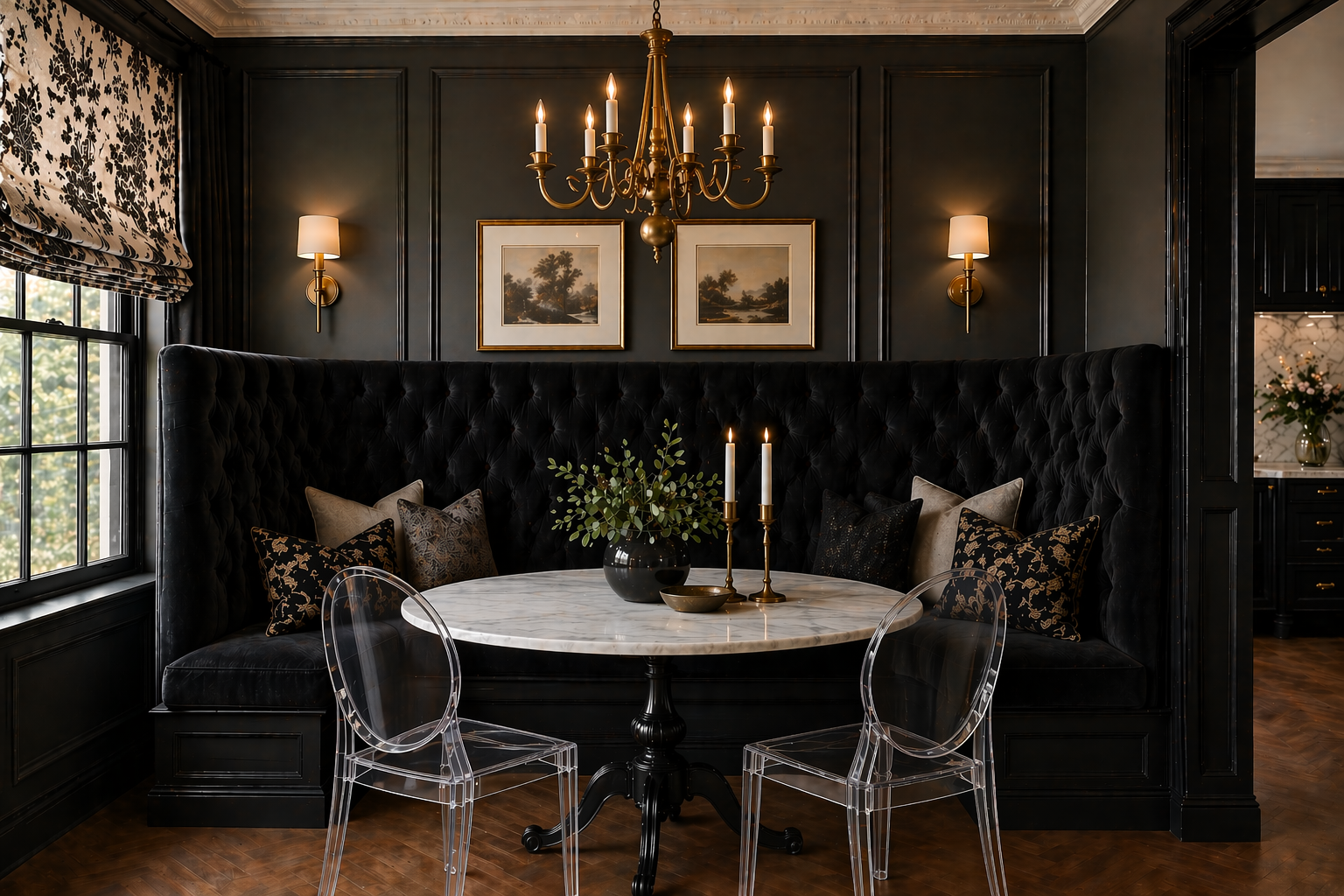
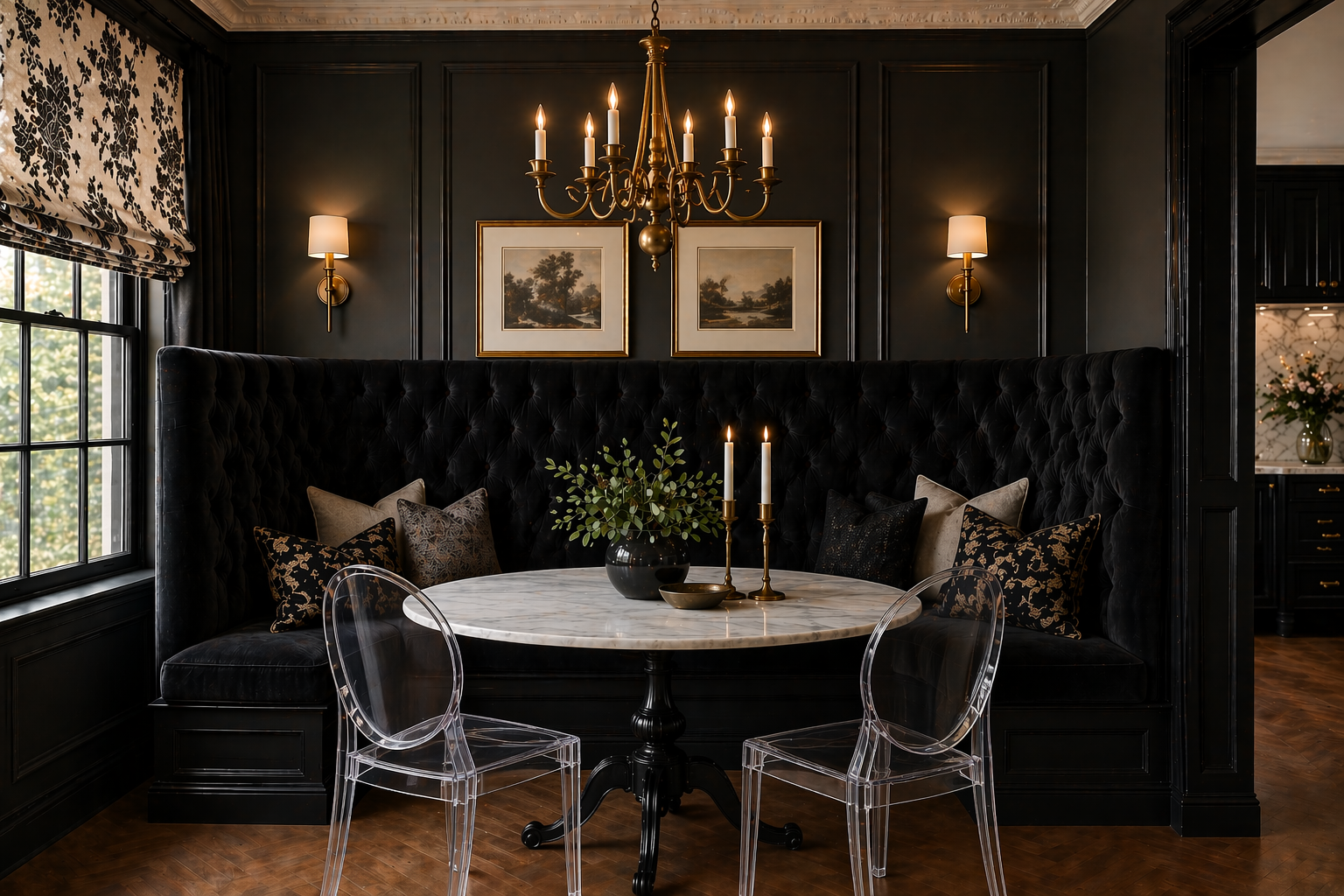
Modern Victorian banquette dining space. AI-generated image.
Banquette seating continues to be one of the most talked-about design features in dining spaces, and I’ve received quite a few follow-up questions after sharing my earlier post on banquette design tips.
Many of those questions weren’t about style or layout—they were about the details that are harder to figure out on your own. Things like how deep the seat should be, how far the table should sit from the banquette, or why a setup that looks great can still feel slightly off when you actually sit down.
I felt it would be helpful to create a more focused guide that breaks down the technical side of banquette design. This post is all about dimensions, spacing, and the small adjustments that make a big difference in how a banquette functions in everyday use.
If you’re planning a banquette or trying to troubleshoot one that doesn’t feel quite right, these are the guidelines I rely on when designing for real homes.
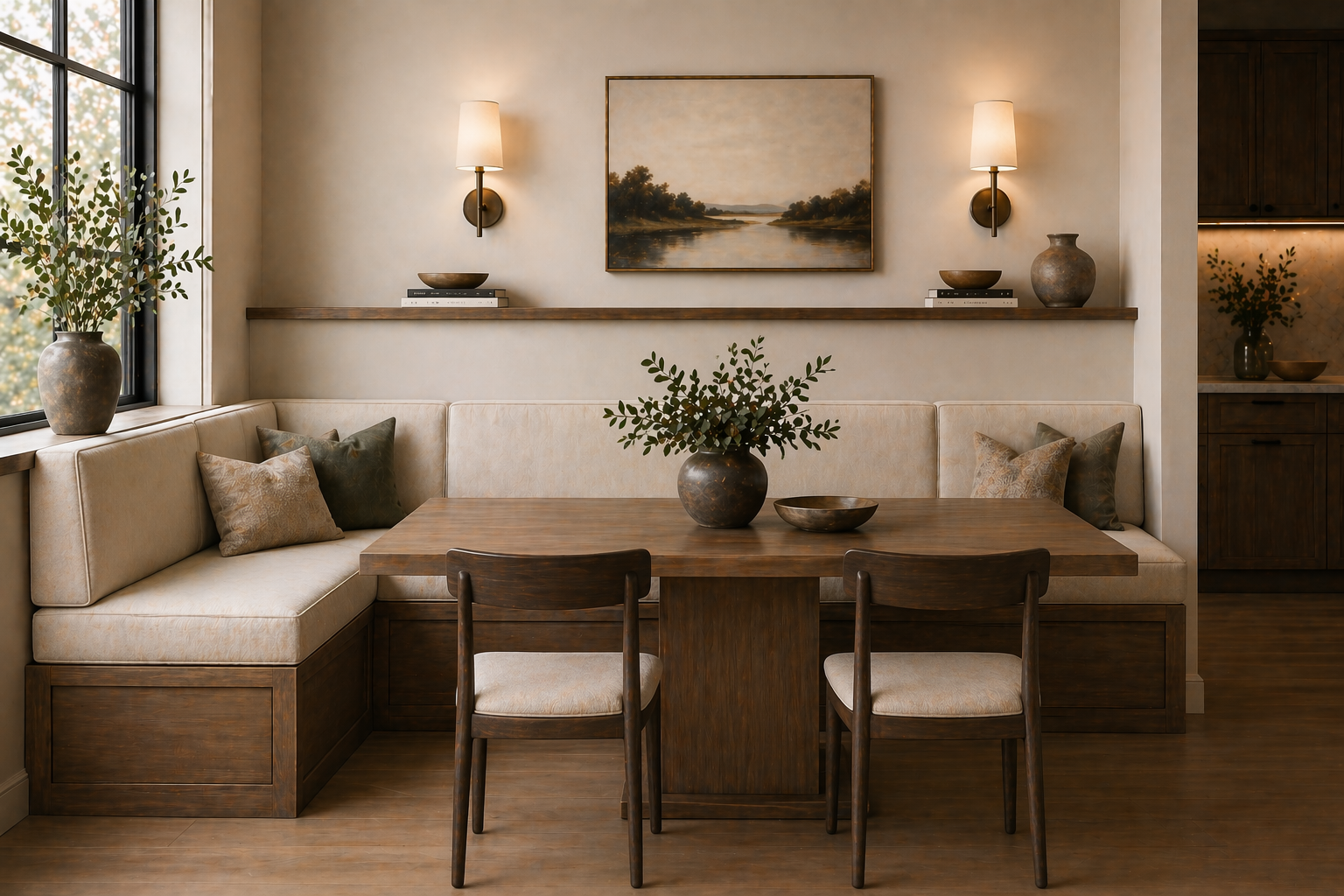
Modern farmhouse banquette dining nook. AI-generated image.
Standard Banquette Seat Dimensions
Getting the seat dimensions right is what makes the difference between a banquette that looks good and one that actually feels comfortable to use every day. These are the baseline measurements I rely on, with small adjustments depending on the space and how the seating will be used.
Seat Height
A comfortable banquette seat height typically falls between 17 and 19 inches, measured from the floor to the top of the cushion.
This works well with standard dining tables that are usually 28 to 30 inches high. Staying within this range keeps everything feeling proportionate and avoids that awkward “too low” or “too high” seating position.
If you’re adding a thicker cushion, make sure you’re factoring that into the total height. I’ve seen situations where the base was built correctly, but the final cushion pushed the seat higher than intended.
Seat Depth
A good seat depth usually lands between 18 and 22 inches, including the cushion.
Where you fall within that range depends on how the banquette will be used. If it’s meant for more upright dining, staying closer to 18 or 19 inches tends to feel more supportive. If you want a more relaxed, lounge-like feel, going deeper can work—but only if you’re also incorporating back cushions for support.
This is one of the easiest places to get it wrong. Too shallow feels restrictive, and too deep makes it hard to sit comfortably without leaning forward.
Back Height
For everyday comfort, the back height should be around 12 to 18 inches above the seat.
Lower backs can look clean and minimal, but they don’t always provide enough support for longer periods of sitting. If the banquette is part of a space that gets used daily, a slightly taller back usually feels more comfortable over time.
If you prefer a softer, more relaxed feel, adding taller back support cushions is a great option. This allows you to keep the built-in structure lower for a cleaner look while still improving comfort when seated.
Cushion Thickness
Most banquette cushions fall between 2 and 4 inches thick.
This detail has a bigger impact than people expect. Cushion thickness affects not only comfort, but also the final seat height and how the banquette lines up with the table.
A thicker cushion can soften the look and feel, but it needs to be accounted for early in the planning process so the proportions don’t end up feeling off.
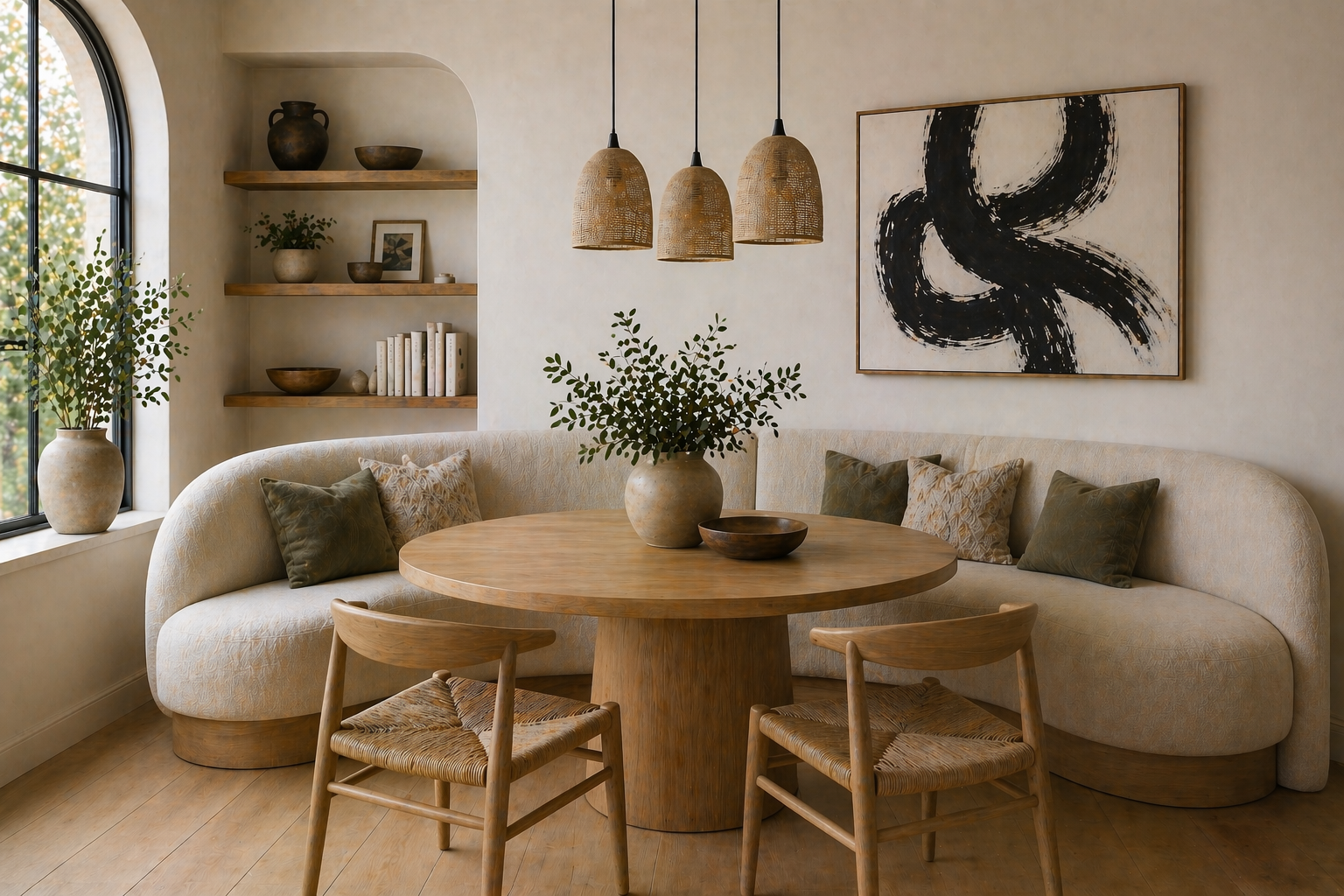
Modern organic banquette dining nook. AI-generated image.
Banquette Table Height and Spacing Guidelines
Once the seat dimensions are set, the next step is making sure the table works with the banquette, not against it. Even small misalignments here can make the seating feel uncomfortable, no matter how good everything looks.
Table Height
Most dining tables fall between 28 and 30 inches high, and this is the range I typically design around when planning a banquette.
When paired with a seat height of 17 to 19 inches, this creates a comfortable proportion that feels natural for dining. If the table is noticeably higher or lower than standard, the entire seating experience can feel off very quickly.
If you’re sourcing a table separately, it’s always worth double-checking the height before finalizing anything. A small difference on paper can feel much more noticeable in real use.
Distance from Seat to Table
A comfortable distance from the front edge of the banquette seat to the table is typically around 10 to 12 inches.
This gives enough room to sit comfortably without feeling too far away from the table surface. If the table is placed too close, it can feel cramped and restrictive. Too far, and people end up leaning forward while eating, which becomes uncomfortable over time.
This is one of those details that’s easy to overlook during planning but makes a big difference once everything is installed.
Knee and Leg Clearance
For comfortable seating, you’ll want approximately 12 to 15 inches of clearance from the top of the seat cushion to the underside of the table.
Anything less than that can start to feel tight, especially for taller individuals or longer meals. More clearance can feel more relaxed, but too much can throw off the overall proportion between the seat and table.
This is also where cushion thickness plays a role. A thicker cushion reduces available clearance, so it’s important to factor that in when finalizing your setup.
Why Table Base Style Still Matters
While dimensions are the priority, the table base still plays an important role in how comfortable and functional the setup feels.
Tables with pedestal bases or centered supports tend to work best with banquettes because they allow more flexibility for leg placement and make it easier to get in and out of the seating.
Tables with legs positioned at the corners or too close to the edges can limit access and create awkward seating positions, especially with fixed banquettes.
I go into more detail about this common mistake and how to avoid it in my banquette design tips post. And if you're looking for specific product recommendations, be sure to check out my Banquette Furniture Guide, where I've rounded up banquette benches along with round, square, rectangular, and oval dining tables that work well with banquette seating layouts.
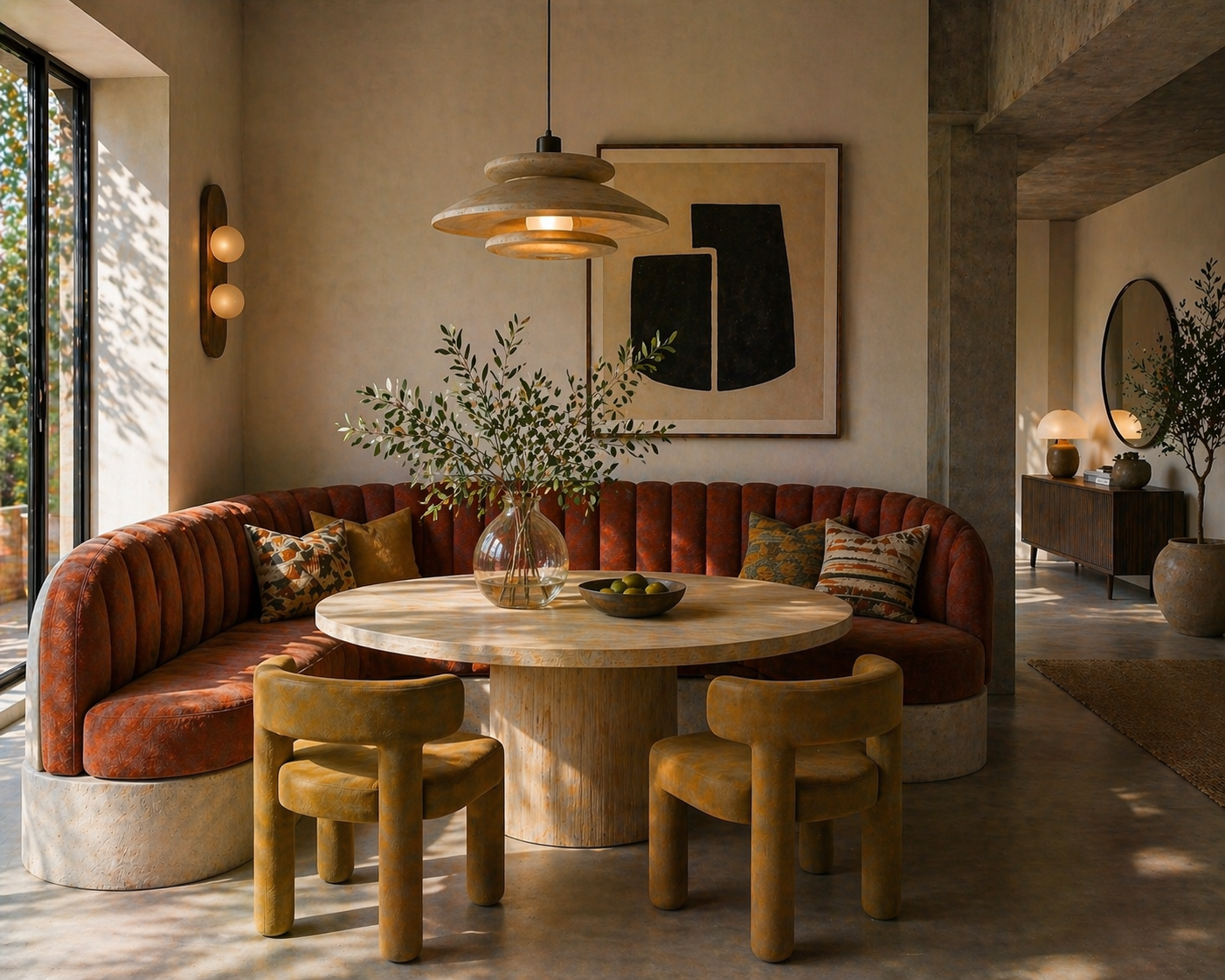
Modern Brutalist-inspired banquette dining nook in warm tones. AI-generated image.
How Much Space You Actually Need Around a Banquette
One of the most common issues I see with banquette layouts has nothing to do with the seat or the table—it’s the space around it. Even a well-designed banquette can feel cramped if there isn’t enough room to move comfortably.
Planning for proper clearance early on makes a big difference in how the space functions day to day.
Clearance Behind the Table (Walkway Space)
If your banquette faces outward into a walkway or open space, you’ll want to allow at least 36 inches of clearance from the edge of the table to the nearest wall or obstruction.
This gives enough room for someone to walk behind seated guests without constantly squeezing through. If the space allows, increasing that to 42 inches or more will feel noticeably more comfortable, especially in high-traffic areas.
Space for Entry and Exit
Unlike standard chairs, banquettes don’t move—so getting in and out of the seating needs to be considered from the start.
If your layout relies on entering from one open side, make sure there’s enough space for someone to slide in comfortably without bumping into walls, cabinetry, or nearby furniture.
In tighter layouts, even a few extra inches can make a big difference in how easy the banquette is to use.
Corner Banquettes vs. Straight Runs
Corner banquettes are a great way to maximize seating, but they do require a bit more thought when it comes to access.
With L-shaped layouts, the person sitting in the corner typically has the least flexibility, so it’s important to make sure the surrounding space doesn’t feel too tight. Straight banquettes, on the other hand, are often easier to access but may require more overall wall space.
Neither approach is better—it really comes down to how the space is used and how people will move through it.
Table Size and Proportion
The size of the table should feel balanced with the banquette and the surrounding space.
A table that’s too large can make the area feel crowded and limit movement, while one that’s too small can feel disconnected from the seating. This is especially important in smaller dining areas where every inch matters.
I always look at the full layout—seat depth, table size, and surrounding clearance—together rather than in isolation.
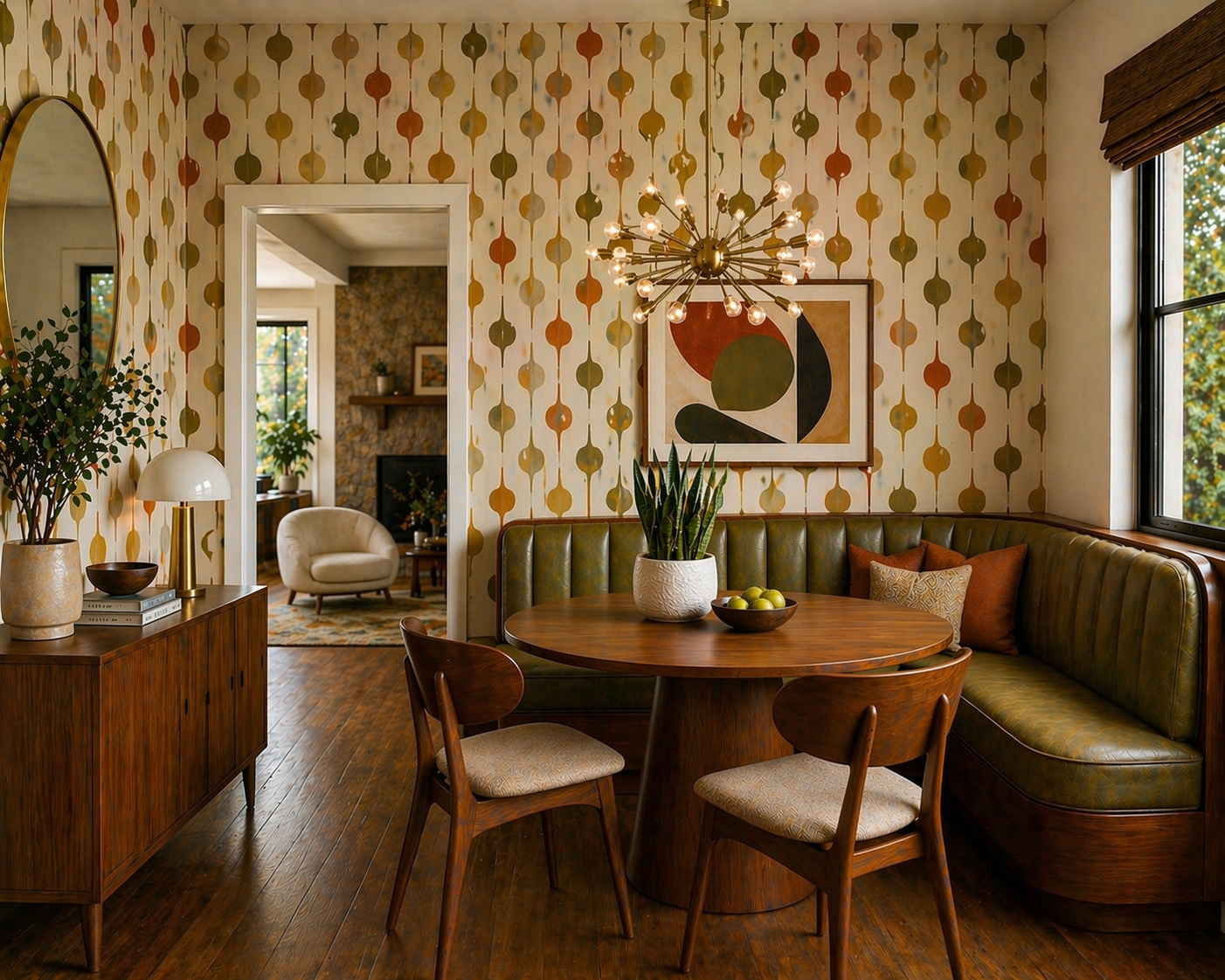
Retro mid-century banquette dining nook with wallpaper. AI-generated image.
Built-In vs. Freestanding Banquettes: How Dimensions Change
Not all banquettes are built the same, and the approach you take—built-in or freestanding—can affect the dimensions more than most people expect.
While the general guidelines still apply, the level of flexibility is very different between the two.
Built-In Banquettes
Built-in banquettes offer the most control when it comes to dimensions.
Because they’re custom-built for the space, you can fine-tune everything—from seat height and depth to how the banquette aligns with the table. This makes it easier to create a setup that feels balanced and comfortable, especially in tighter or more complex layouts.
Built-ins are also ideal for maximizing space. They can be designed to fit wall-to-wall, wrap around corners, or incorporate storage underneath, all while maintaining proper proportions.
The key here is planning ahead. Once a built-in is installed, there’s very little room for adjustment, so getting the dimensions right from the beginning is critical.
Freestanding Banquettes (or Benches)
Freestanding banquettes, including upholstered benches, offer more flexibility but come with limitations.
Since you’re working with standard furniture sizes, the seat height and depth may not perfectly align with your table. In some cases, you may need to adjust the table choice—or accept slight compromises in proportion.
On the positive side, freestanding options are easier to move, replace, or reconfigure over time. This makes them a good option if you’re not ready to commit to a built-in solution or if you expect the space to evolve.
Why the Difference Matters
The main difference comes down to precision versus flexibility.
Built-in banquettes allow you to design everything to fit exactly, which often results in a more seamless and tailored look. Freestanding options offer convenience and adaptability but require a bit more attention when pairing with a table and planning overall spacing.
Neither approach is better—it depends on your space, your priorities, and how permanent you want the solution to be.
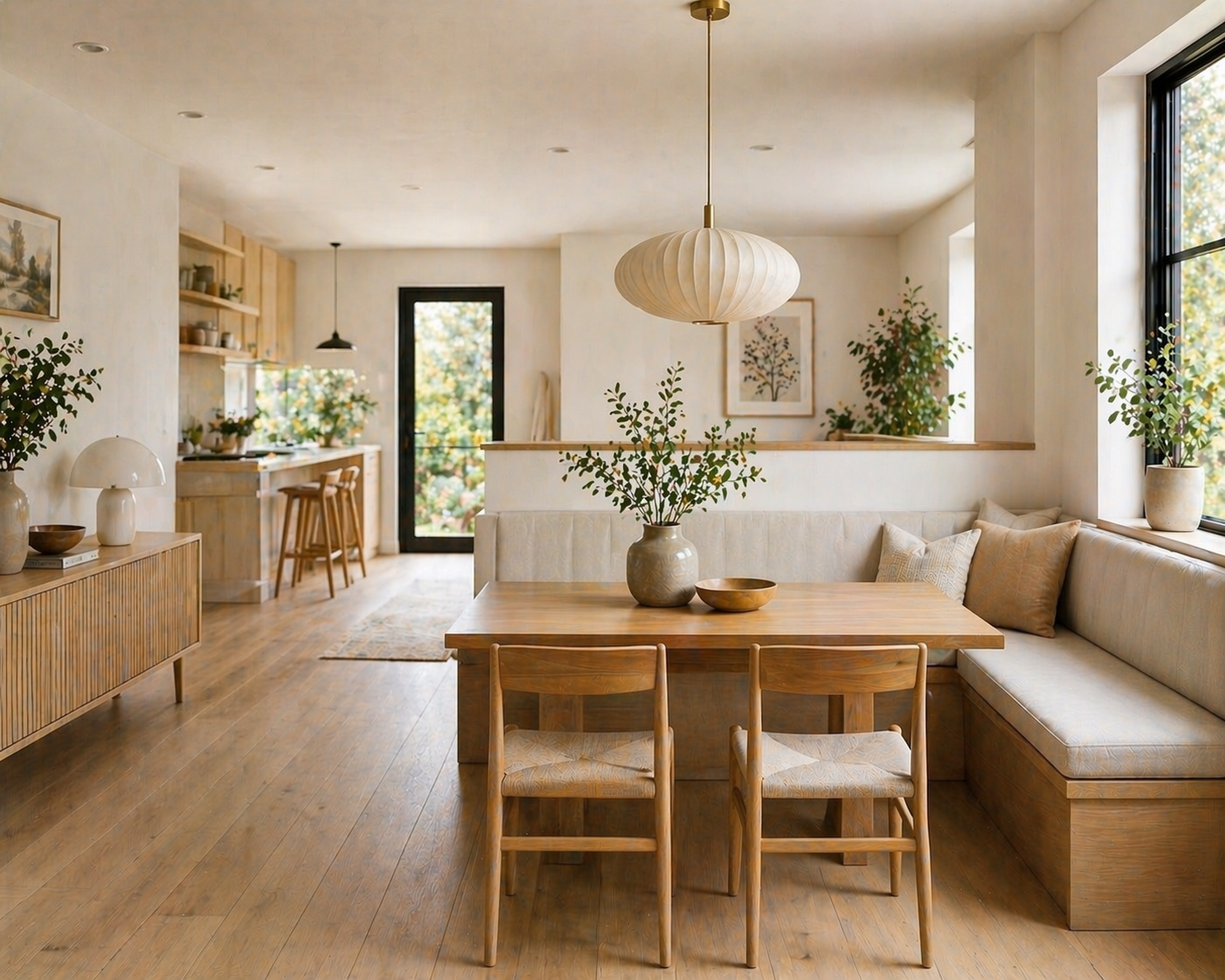
Scandinavian-style banquette in an open-concept dining space. AI-generated image.
How to Adjust Banquette Dimensions for Comfort
Standard dimensions are a great starting point, but not every banquette should follow the exact same measurements. Small adjustments can make a big difference depending on who’s using the space and how it’s used day to day.
This is where I usually fine-tune the design to make sure it actually feels comfortable, not just correct on paper.
Adjusting for Taller or Shorter Users
Not everyone experiences a space the same way, and seat height plays a big role in overall comfort.
For taller individuals, a slightly higher seat height within the standard range—or even just above it—can feel more natural. For shorter users, staying closer to the lower end of the range helps keep feet comfortably grounded.
These adjustments are subtle, but they can make the banquette feel much more intuitive to use.
Adding Back Cushions for Support
Back cushions are one of the easiest ways to improve comfort without changing the built-in structure.
If the seat depth runs on the deeper side, adding back cushions helps bring the seating position forward so it doesn’t feel too far from the table. It also provides better support for longer periods of sitting and creates a more relaxed feel overall.
This approach works especially well if you prefer a lower built-in back but still want that extra layer of comfort when seated.
Balancing Dining vs. Lounge Feel
Some banquettes are designed for quick, upright meals, while others are meant to feel more relaxed and lounge-like.
If you want a more formal dining experience, keeping the seat depth slightly shallower and the back more upright tends to work better. For a more casual, laid-back feel, a deeper seat with softer cushions can make the space feel more inviting.
The key is deciding how the space will be used most often and adjusting the dimensions to support that.
Working Within Tight Spaces
In smaller dining areas, it’s not always possible to follow ideal dimensions exactly.
When space is limited, I usually prioritize maintaining a comfortable seat height and table relationship first, then make small adjustments to depth or surrounding clearance as needed.
Even in tighter layouts, keeping the proportions balanced will make the banquette feel more intentional and easier to use.
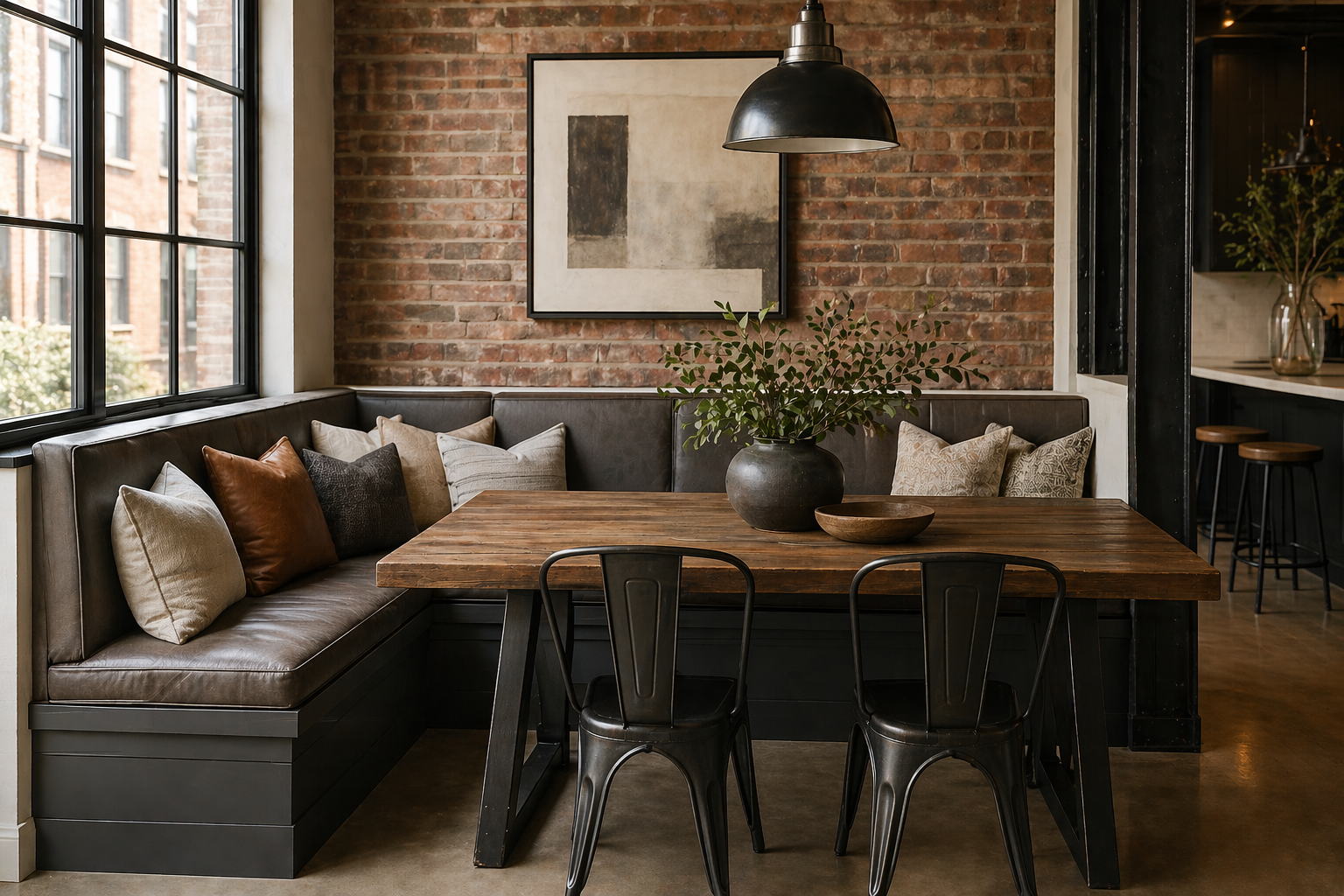
Industrial chic banquette dining nook. AI-generated image.
Bringing It All Together
Banquette seating can completely transform how a dining space looks and functions, but the details behind it matter more than most people expect.
When the dimensions and spacing are carefully considered, everything starts to feel effortless. The seating is comfortable, the table placement feels natural, and the space works the way it’s supposed to in everyday use.
If you’re planning a banquette and want to make sure everything is done right from the start, I offer Virtual Interior Design services where I help clients refine layouts, dimensions, and overall design direction based on their specific space.
And if you’re still exploring ideas or want to see more examples, you can revisit my original post on banquette design tips for additional guidance on layout, styling, and common mistakes to avoid: