Ask Joshua: Why Do My Walls Look Empty Even When I Hang Art?
Hi Joshua,
I’ve tried adding artwork to my walls, but my rooms still feel empty and unfinished. I’m not sure what I’m doing wrong. Do I need more art, or am I missing something?
Thanks,
Hannah - Arlington, Texas
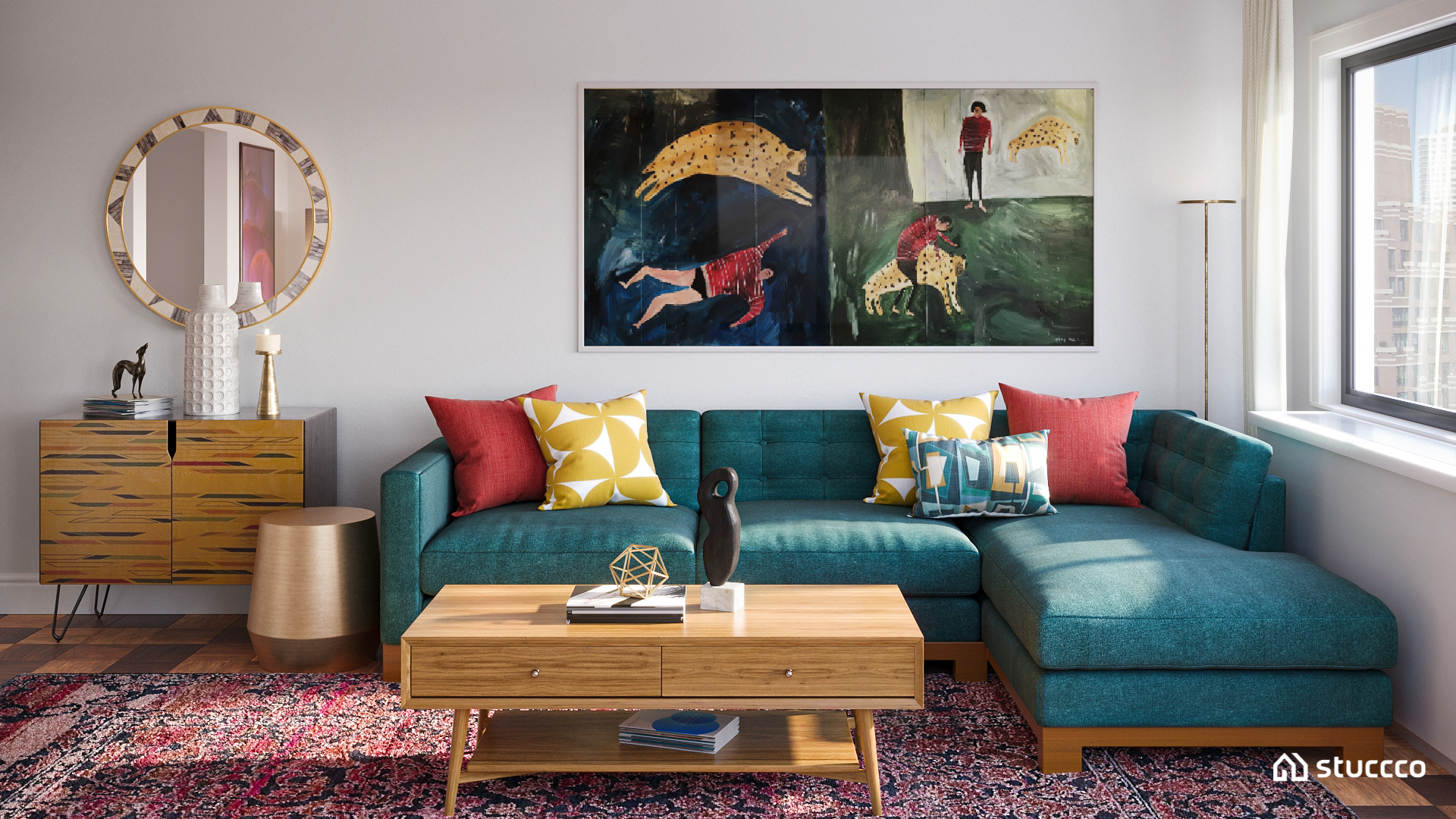
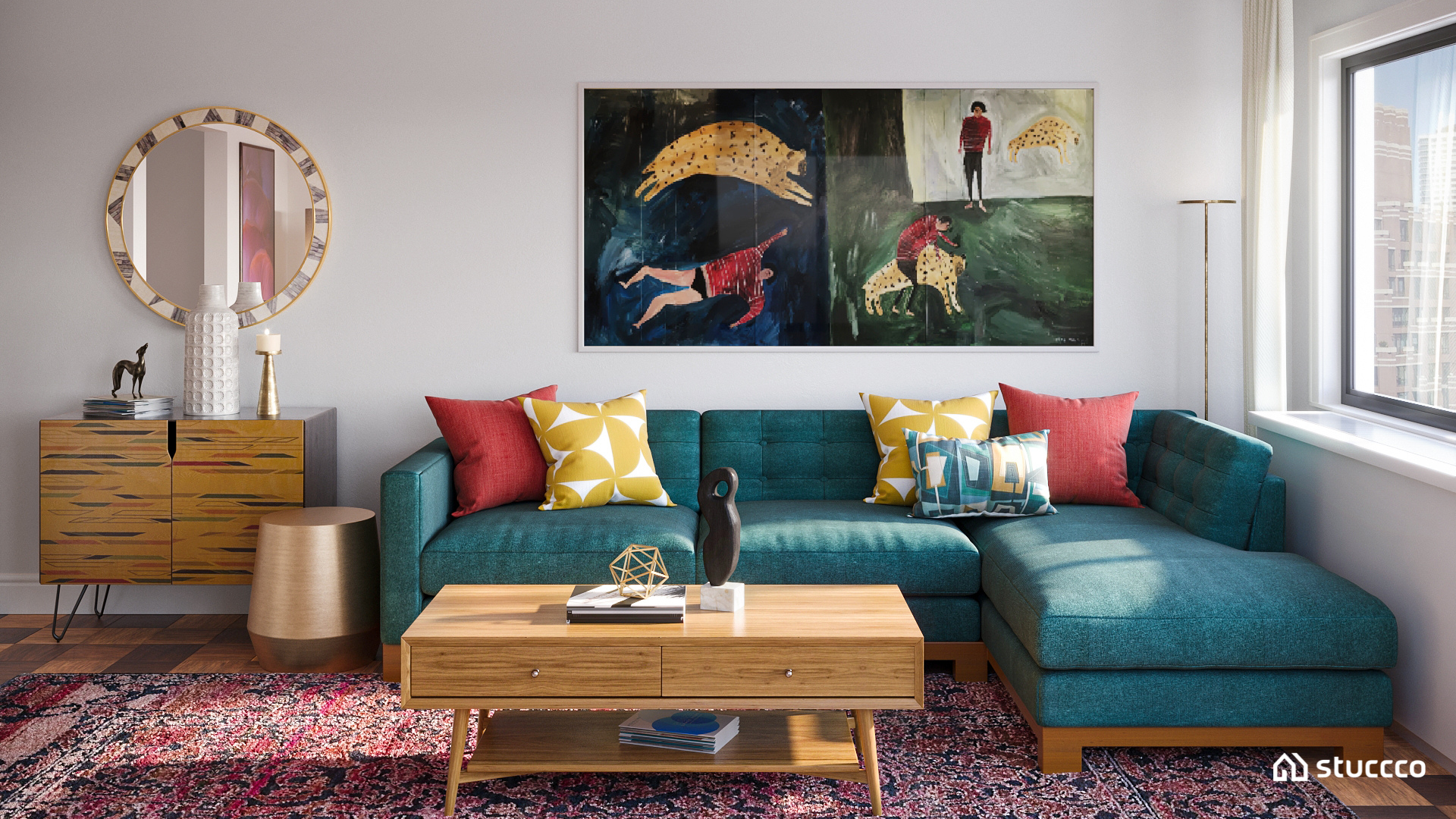
Mid-century modern living room designed by Joshua Jones, featuring large-scale artwork that properly anchors the wall and connects with the sofa below. 3D rendering created by Stuccco.
Hi Hannah,
This is one of those situations I see all the time—and the good news is, it’s usually not about needing more art. It’s about how the art is working with the space around it.
Here are the most common reasons your walls can still feel empty, even after you’ve hung artwork:
1. The Scale Is Too Small for the Wall
One of the biggest issues is scale. If the artwork is too small, it visually “floats” on the wall instead of anchoring the space.
A single small frame on a large wall will almost always feel underwhelming.
What to do instead:
Choose larger pieces, or
Group multiple pieces together to create a more substantial presence
2. The Placement Is Too High (or Too Low)
If artwork is hung too high, it disconnects from the furniture below it. If it’s too low, it can feel awkward and cramped.
Art should feel like it belongs to the room—not like it’s drifting.
A good rule:
Aim for the center of the artwork to sit around eye level
Or anchor it 6–10 inches above furniture like a sofa or console
If you’re unsure about exact placement, I’ve broken this down step-by-step in this guide:
→ How High Should You Hang Wall Art? A Designer’s Guide to Perfect Placement
3. There’s No Relationship to the Furniture
Art shouldn’t exist on its own—it should relate to what’s below it.
If your artwork is narrower than the sofa or console, the wall can still feel empty because the proportions don’t connect.
What works better:
Art that spans about 2/3 the width of the furniture
Or a gallery arrangement that fills that visual width
4. The Wall Needs More Than Just Art
Sometimes the issue isn’t the art—it’s that the wall needs layering.
Flat walls can feel empty even with artwork if there’s no depth or variation.
Consider adding:
A floor lamp
A plant
A console table or styling elements
This creates a fuller composition rather than relying on art alone.
5. The Art Lacks Contrast or Presence
If the artwork blends too much into the wall color, it won’t stand out.
This can make it feel like there’s “nothing there,” even when there is.
Look for:
Contrast in color, tone, or framing
Artwork that adds visual weight to the space
When a wall feels empty, it’s rarely about quantity—it’s about proportion, placement, and how everything works together.
If you’re still feeling stuck after trying these adjustments, this is exactly the kind of detail I help clients refine through my Online Interior Design Services, where we look at your space as a whole and make sure every element works together seamlessly.
Warmly,
Joshua
Have interior design related questions? You can ask Joshua here.