How Homes Have Changed Since the Pandemic (And What Homeowners Want Now)
Over the past few years, I’ve noticed a clear shift in how people think about their homes.
In a previous blog, I shared my thoughts during the early stages of the pandemic, when daily life—and the way we used our homes—changed almost overnight. At the time, many of those changes felt temporary. If you’re curious, you can read that original post here.
Now, six years later, it’s clear that many of those shifts have stayed with us.
Before the pandemic, most design decisions were driven by aesthetics, resale value, or following popular trends. But when people suddenly had to live, work, relax, and spend nearly all of their time at home, priorities changed quickly.
What started as a temporary adjustment has turned into something more permanent. Homeowners are now making decisions based on how their homes actually function day to day—not just how they look.
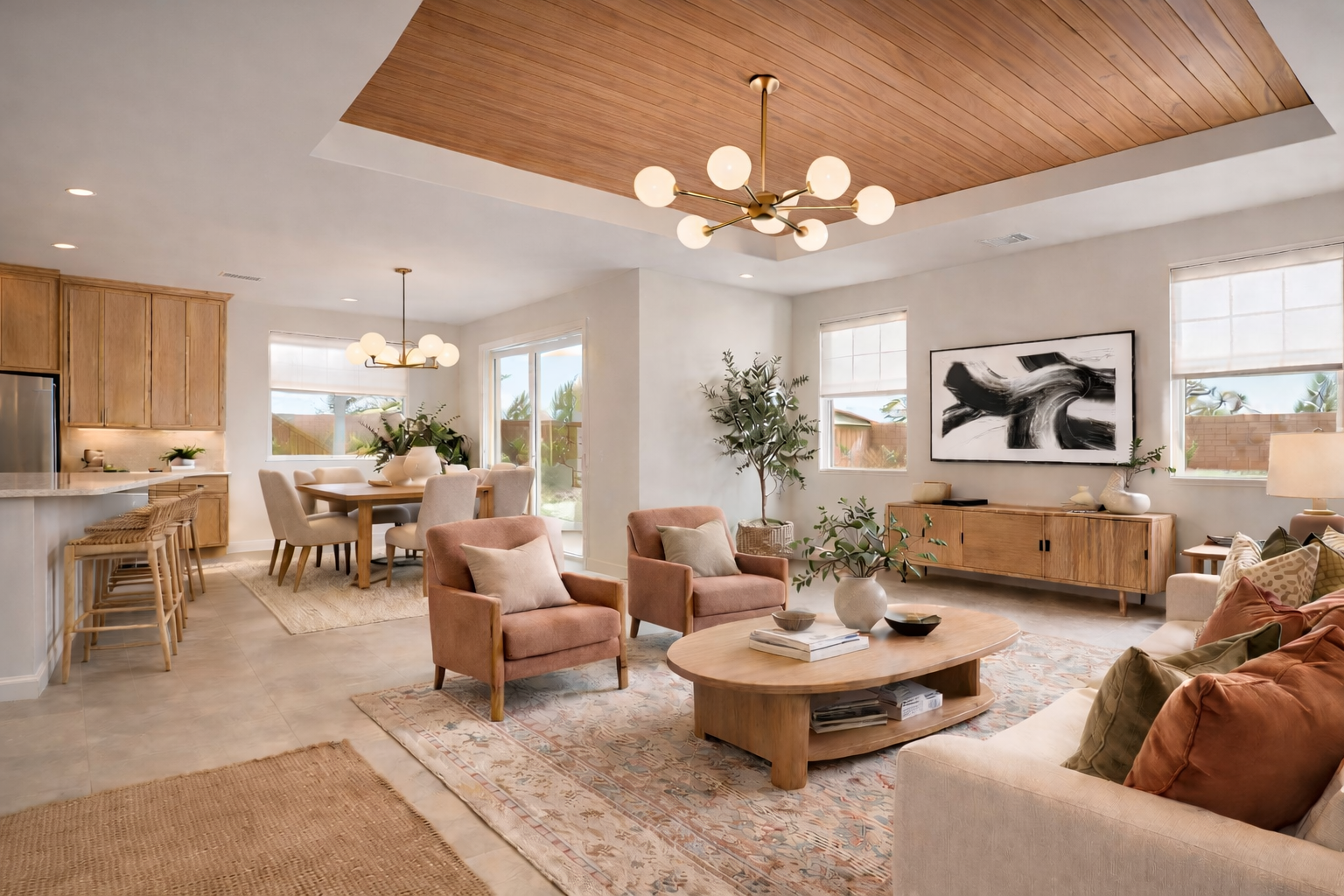
California casual style living room with warm natural light, layered textures, and relaxed seating, designed by virtual interior designer Joshua Jones of JJones Design Co.
Homes Became Multi-Functional
One of the biggest changes was how many roles a home suddenly needed to support.
Spaces that were once designed for a single purpose quickly had to adapt. Living rooms became offices, dining tables turned into workstations, and spare rooms were expected to function as gyms, classrooms, or a mix of everything.
While most children have since returned to school, the need for dedicated learning spaces hasn’t disappeared entirely. Some families continue to homeschool—whether by choice or due to concerns about school environments or education quality—while others still benefit from having flexible spaces that can support occasional at-home learning or quiet study.
As things became safer and people started gathering again, I also began to see a shift in how clients approached their main living areas. Many were motivated to update their spaces with entertaining in mind—creating layouts that felt more open, comfortable, and better suited for hosting family and friends.
Even now, that shift hasn’t fully reversed. Many people are still working remotely or in hybrid setups, which means homes need to support multiple uses without feeling cluttered or chaotic.
This has led to a greater focus on layout and how spaces are defined. Instead of everything blending together, homeowners are thinking more intentionally about how each area functions and how to make those transitions feel natural.
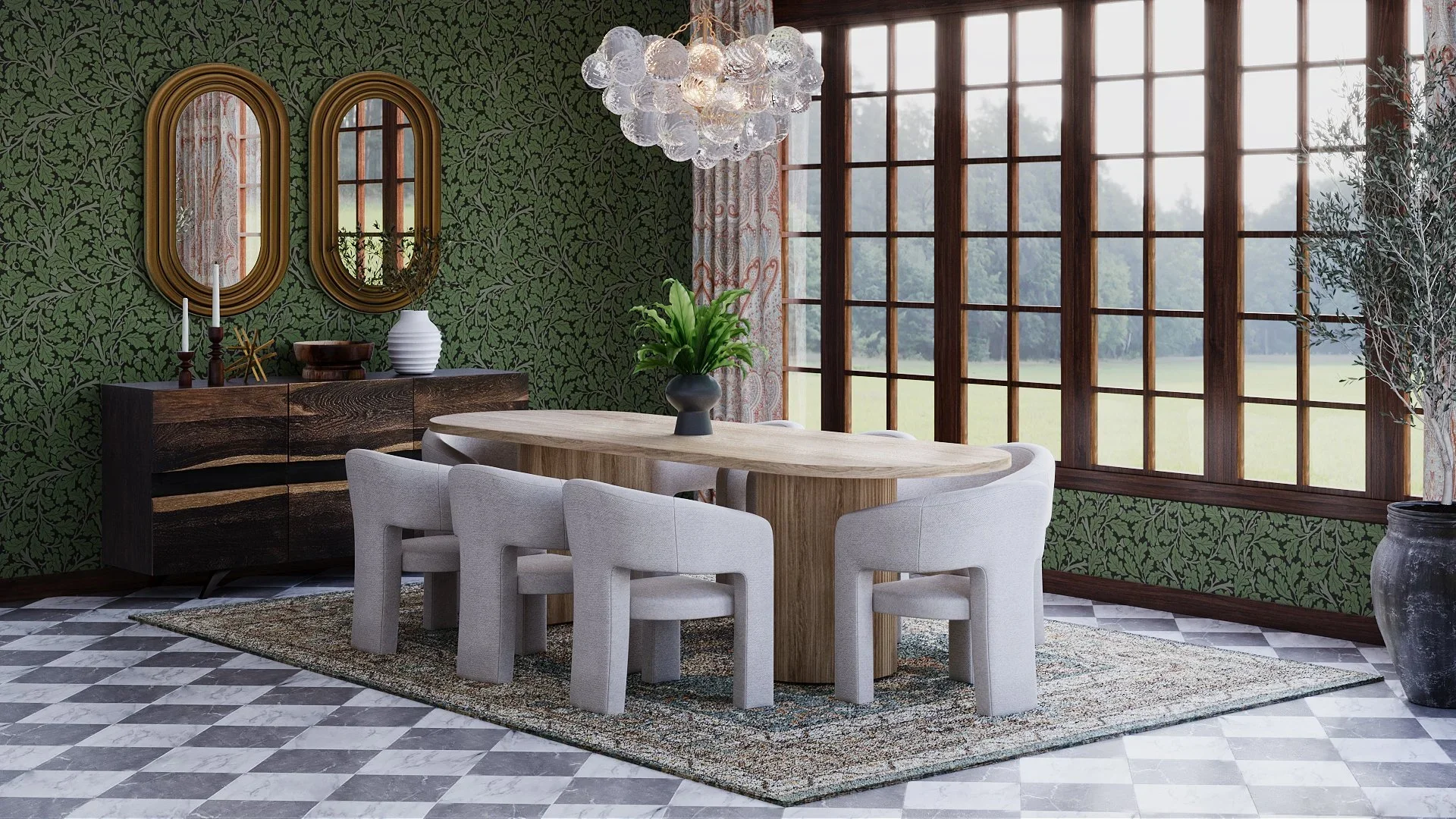
Modern organic and modern eclectic style dining room with sculptural wood table, textured wallpaper, and statement lighting, designed by virtual interior designer Joshua Jones of JJones Design Co.
The Shift Toward More Space
Another shift I’ve been seeing more often is people moving into larger homes.
For some, it’s their first time having extra rooms to work with. For others, it’s about finally having enough space to support their lifestyle—whether that’s working from home, hosting more often, or simply not feeling confined day to day.
I’ve worked with many clients who transitioned from smaller urban apartments or condos into significantly larger homes, only to realize that having more space doesn’t automatically make a home feel better. Without a clear plan, larger spaces can feel empty, disconnected, or harder to pull together.
I explored this more in detail in my post on upsizing, where I talk about why this shift is happening and what comes with it.
More square footage can open up a lot of possibilities—but it also requires more thoughtful planning to make sure everything feels cohesive and intentional.
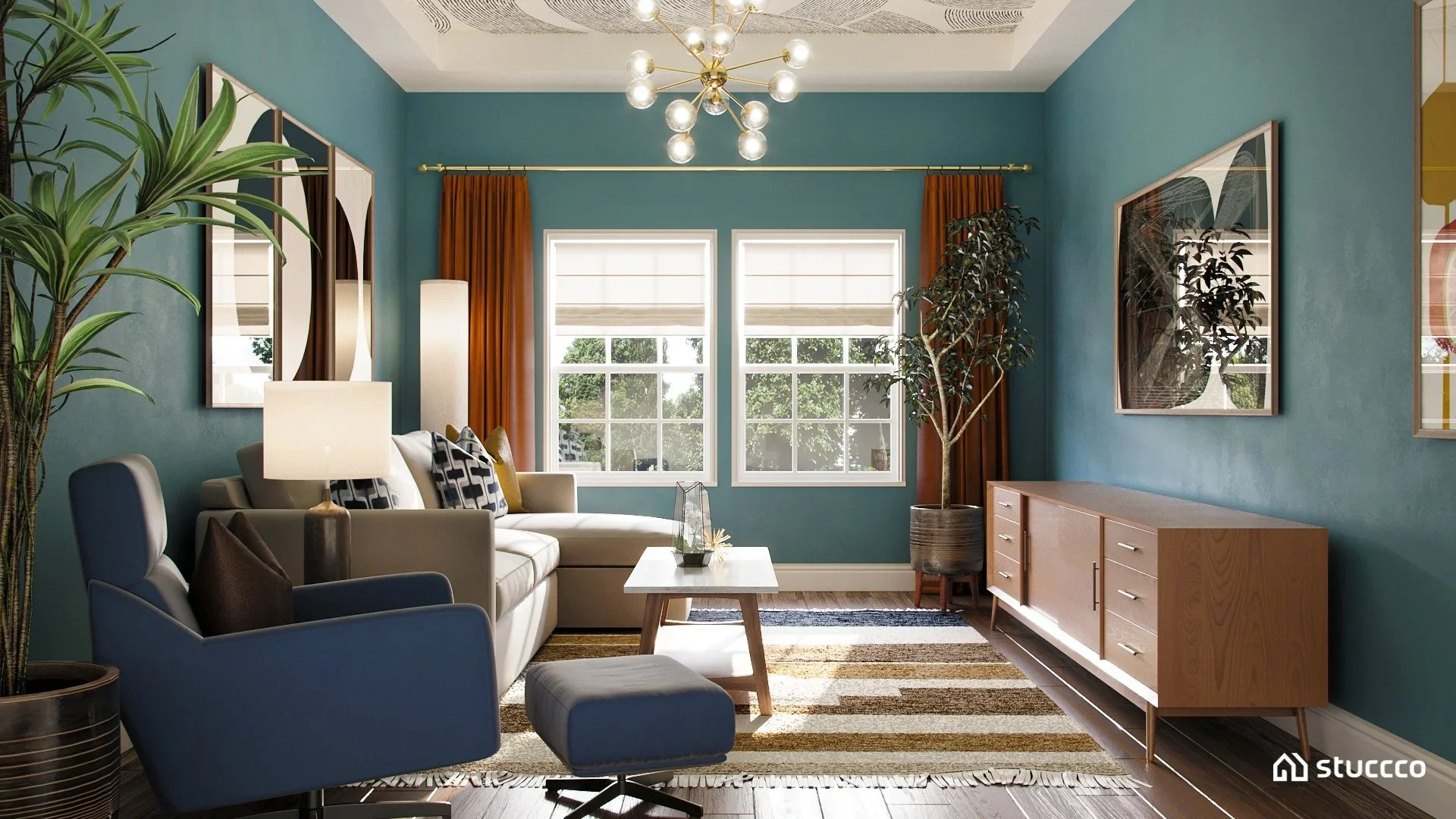
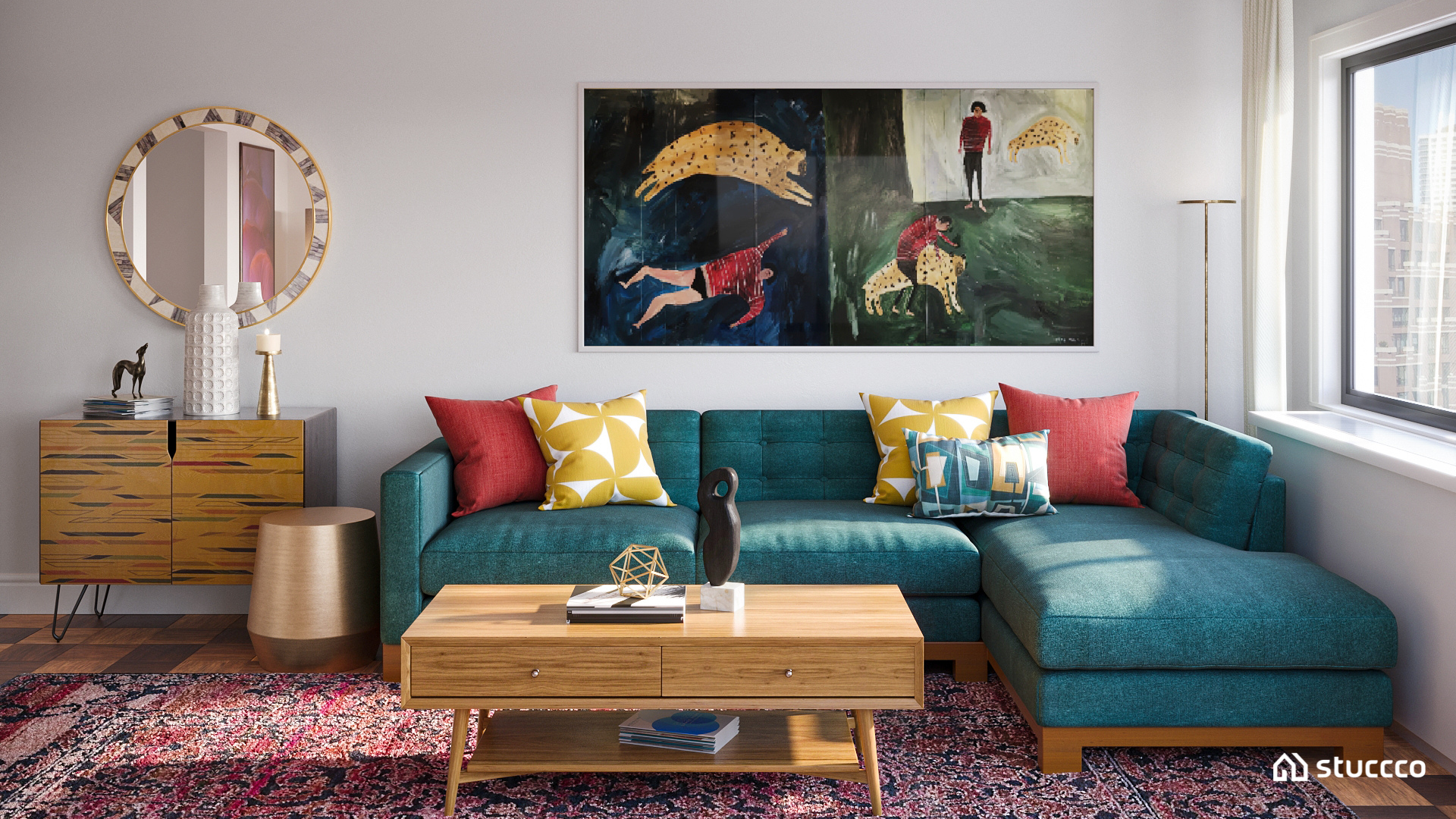
Mid-century modern glam style TV room with bold teal walls, warm wood furniture, and brass accents, designed by virtual interior designer Joshua Jones of JJones Design Co. 3D rendering by Stuccco.
The Return of Defined Spaces
At the same time, I’ve also seen a shift in how people think about open-concept living.
While open layouts are still popular, many homeowners are starting to appreciate having more defined spaces again. When everything is completely open, it can be harder to separate work, relaxation, and social time—especially when the home is being used for multiple purposes throughout the day.
If you’re trying to decide what layout works best for your home, I’ve shared a more detailed breakdown in my post comparing open concept vs traditional floor plans.
As a result, there’s been a growing interest in creating areas that feel more intentional and grounded, even within an open layout. This doesn’t necessarily mean closing everything off, but rather introducing subtle separation through furniture placement, architectural details, or layout planning.
One example of this is the return of the dining room. Not necessarily in a formal or traditional sense, but as a dedicated space for gathering, hosting, and stepping away from screens and daily distractions.
I shared more about this shift in my blog on the return of the dining room, where I’ve seen clients wanting spaces that feel purposeful rather than everything blending together.
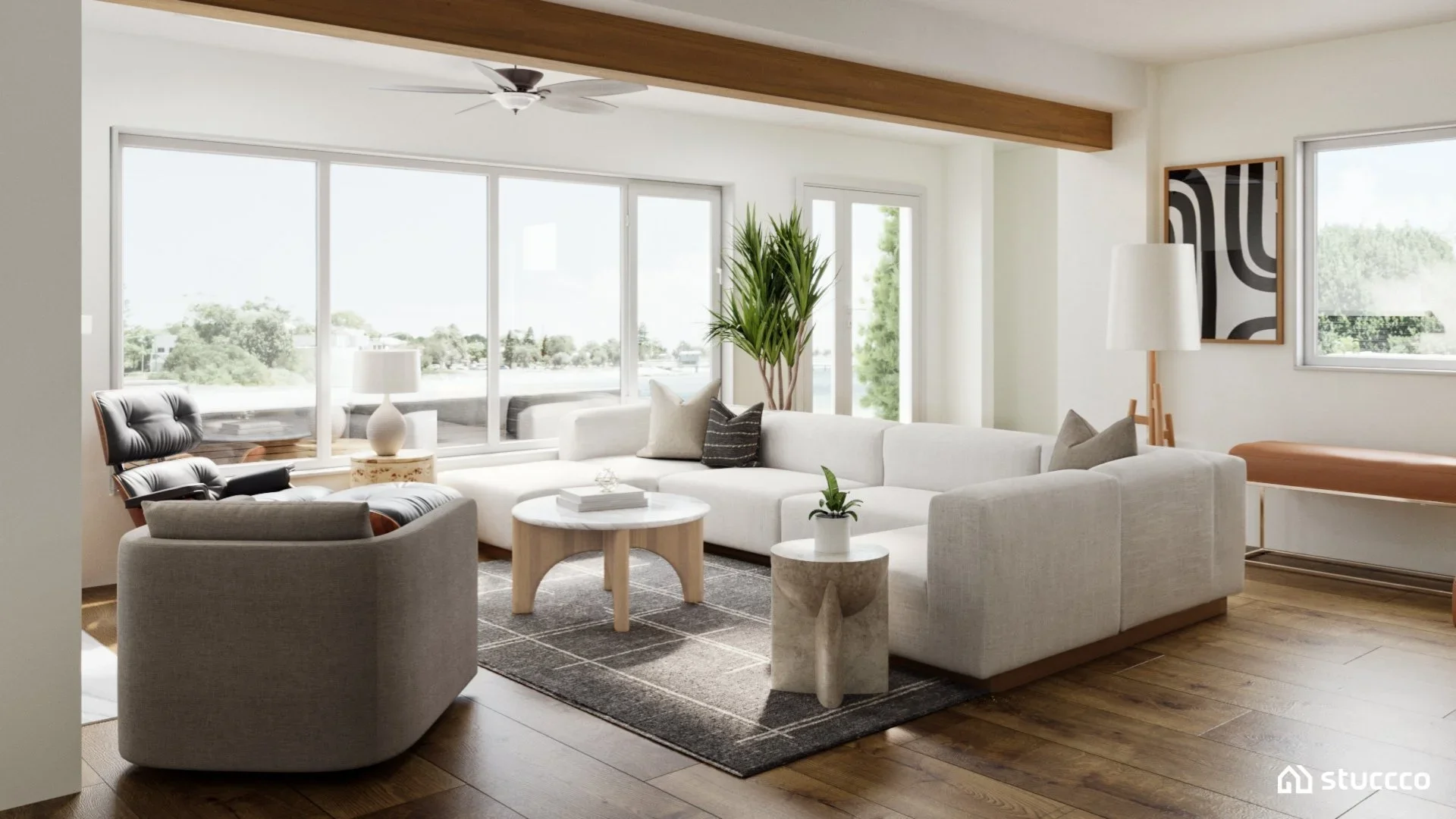
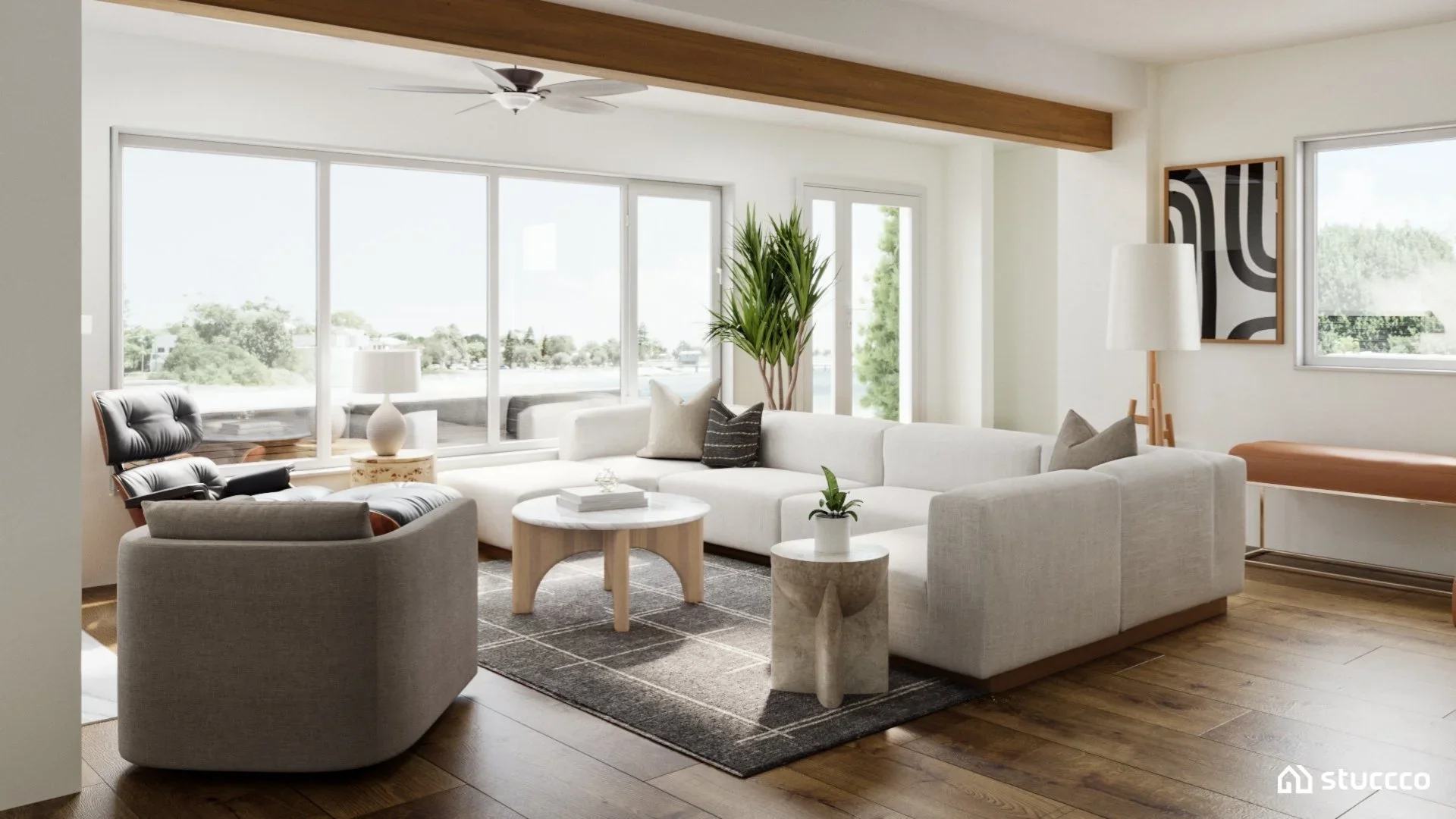
Modern organic living room with soft neutral tones, natural materials, and expansive windows, designed by virtual interior designer Joshua Jones of JJones Design Co. 3D rendering by Stuccco.
Comfort and Function Over Perfection
Another shift I’ve noticed is how people approach the overall look and feel of their homes.
There’s less focus on creating spaces that feel staged or overly polished, and more emphasis on comfort, practicality, and how a space actually supports everyday life.
That doesn’t mean design has taken a back seat—it just means the goal has changed.
People want homes that feel good to live in. Spaces that are comfortable, functional, and reflective of their lifestyle, rather than something that looks perfect but doesn’t hold up to daily use.
In my experience, this often leads to more thoughtful decisions around furniture, materials, and layout—choices that prioritize durability, comfort, and long-term livability without sacrificing style.
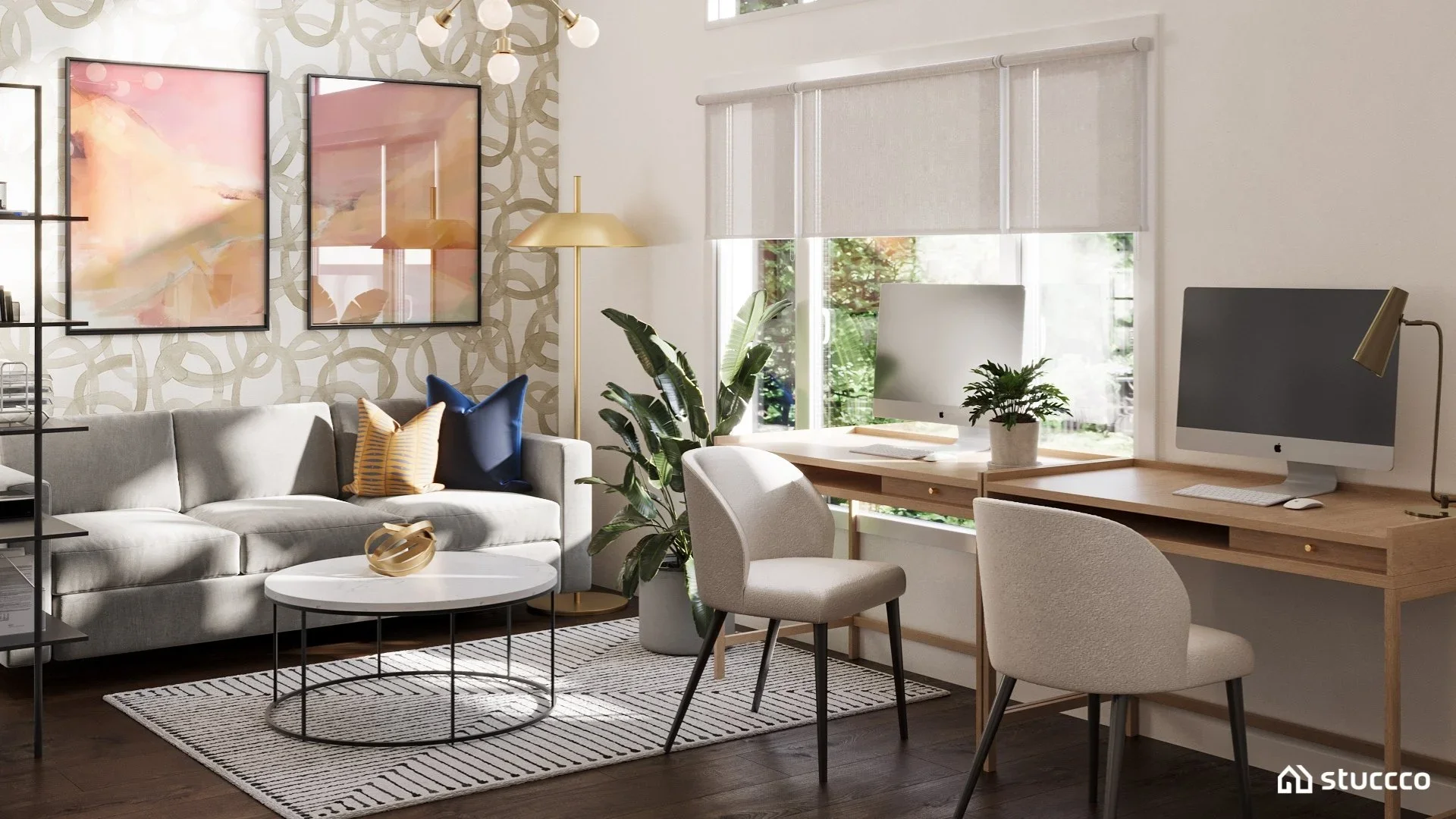
Mid-century modern home office with subtle boho touches, designed for two people with a dual desk setup and guest seating area, designed by virtual interior designer Joshua Jones of JJones Design Co. 3D rendering by Stuccco.
What Homeowners Expect Now
From what I’ve been seeing, homeowners today have a much clearer understanding of what they need from their homes—and it goes beyond just square footage or style.
There’s a stronger emphasis on how a home functions day to day, and whether it actually supports their routines, habits, and lifestyle.
In many cases, that means:
Spaces that serve a clear purpose rather than trying to do everything at once
Layouts that support both daily living and occasional entertaining
Enough room to feel comfortable, but not so much that areas go unused
A balance between openness and separation
Design choices that feel personal, not just trend-driven
These expectations are shaping how people approach not just decorating, but also renovations, remodels, and even the homes they choose to buy.
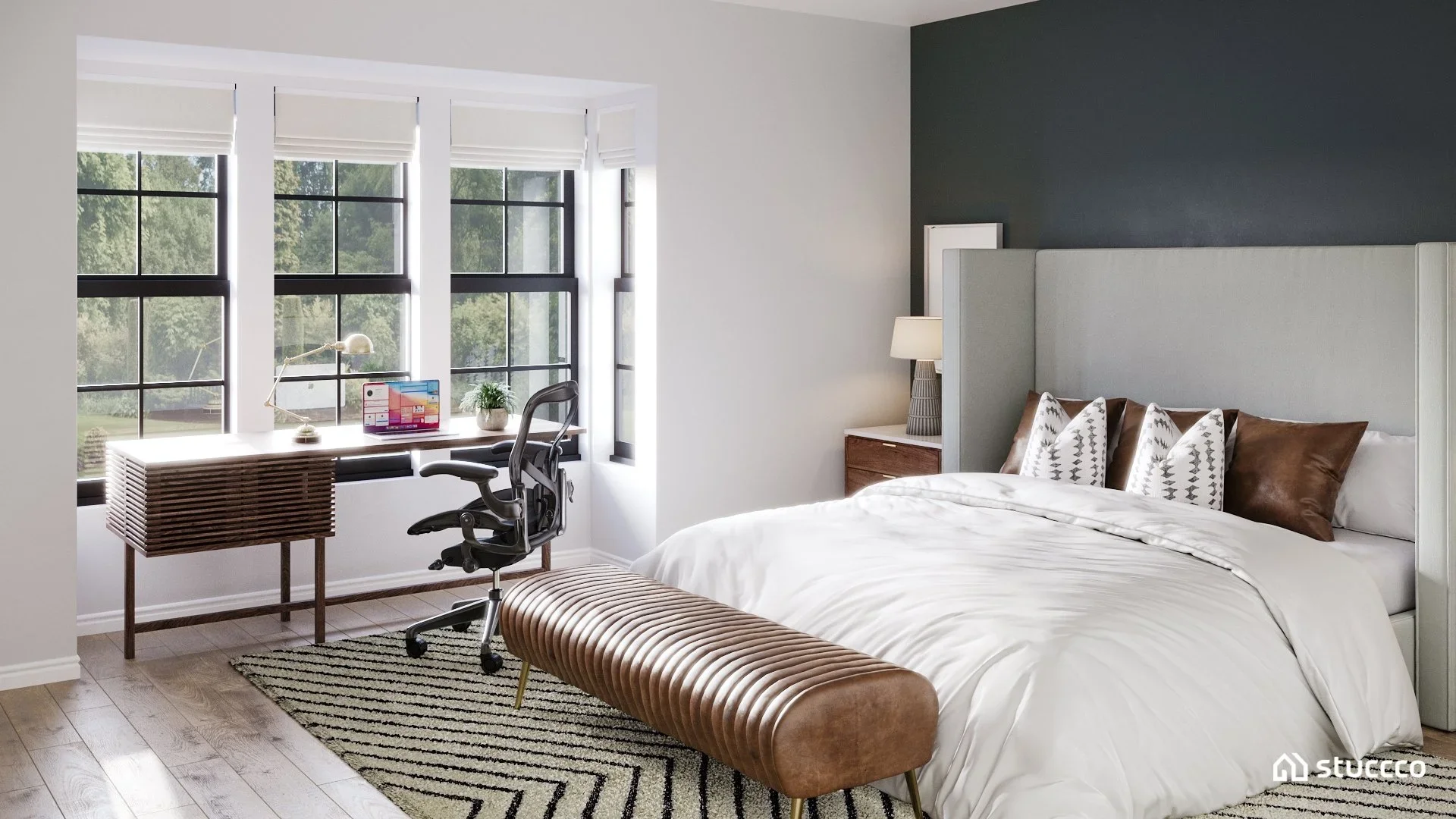
Modern masculine primary bedroom with an integrated workspace, combining comfort and function, designed by virtual interior designer Joshua Jones of JJones Design Co. 3D rendering by Stuccco.
What This Means for Your Home Today
Homes have changed—but not always in the ways people expected.
What started as temporary adjustments during the pandemic has settled into something more permanent. People are using their homes differently now, and in many cases, their spaces haven’t quite caught up.
If your home still feels a little off—or like it’s not working as well as it should—it’s usually not about needing all new furniture. More often, it comes down to layout, function, and how everything works together as a whole.
If your home still doesn’t feel quite right—or you’re trying to make it work for how you actually live now—this is exactly where a clear design plan makes a difference.