
Upsizing Your Home: Why More Homeowners Are Moving to Larger Spaces (And What It Means for Your Design)
Over the past decade, downsizing has been one of the most talked-about shifts in how people live. Whether driven by minimalism, empty nesting, or the appeal of tiny homes, many people have intentionally reduced their living footprint to simplify their lives.
But over the past few years, I’ve been noticing something different.
A growing number of homeowners are doing the exact opposite—they’re upsizing.
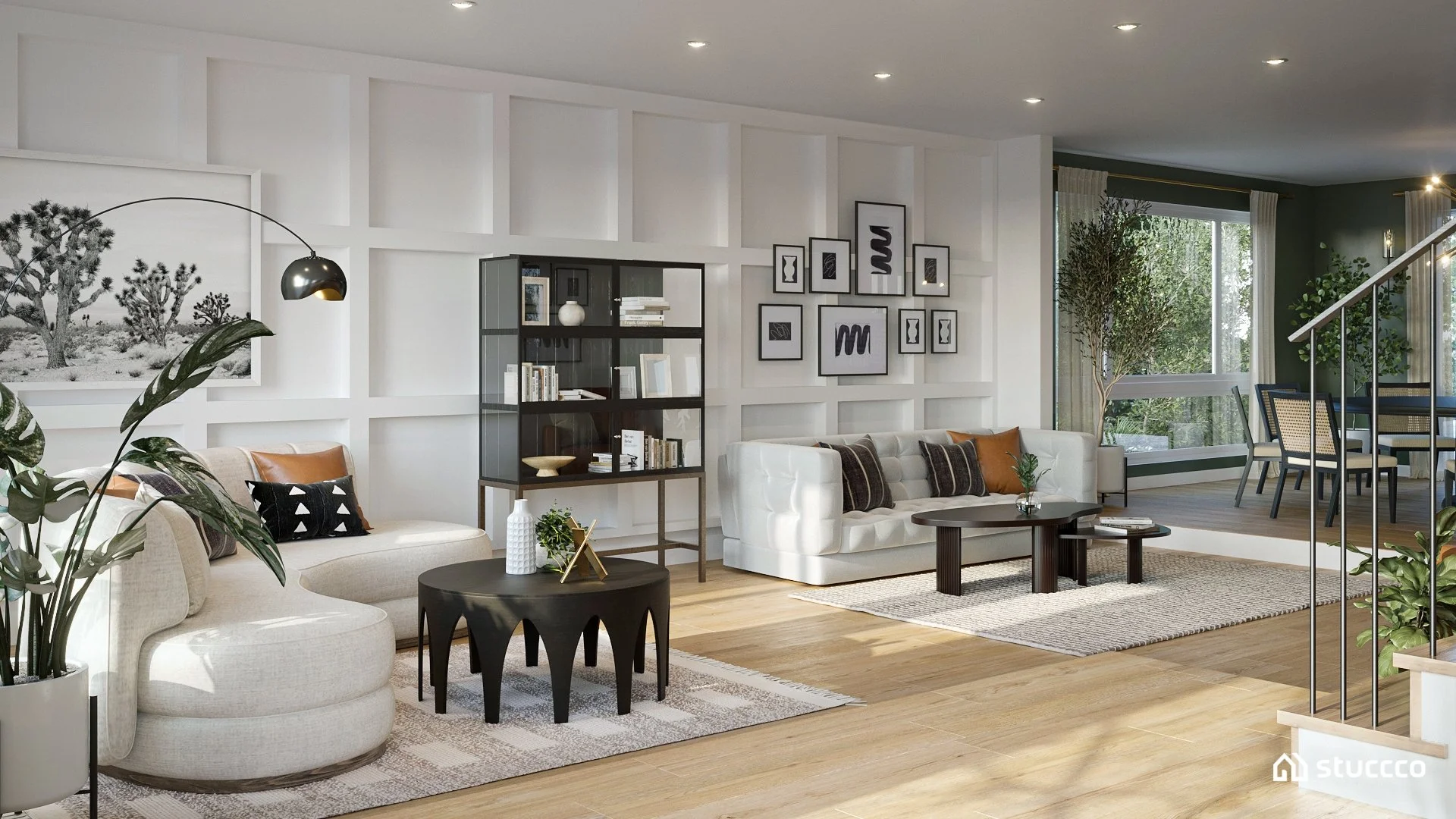
California casual living room with an open layout and layered seating, designed by virtual interior designer Joshua Jones of JJones Design Co. 3D rendering by Stuccco.
A Shift I’ve Been Seeing Firsthand
Through my work with clients, I’ve seen a noticeable increase in people purchasing larger homes, often for the first time. Many of them are coming from smaller urban apartments or condos and suddenly find themselves with significantly more space than they’re used to.
What’s especially interesting is that many of these clients don’t yet have the furniture or layout strategies to support the size of their new homes. The question isn’t just how to decorate—it’s how to live in a larger space intentionally.
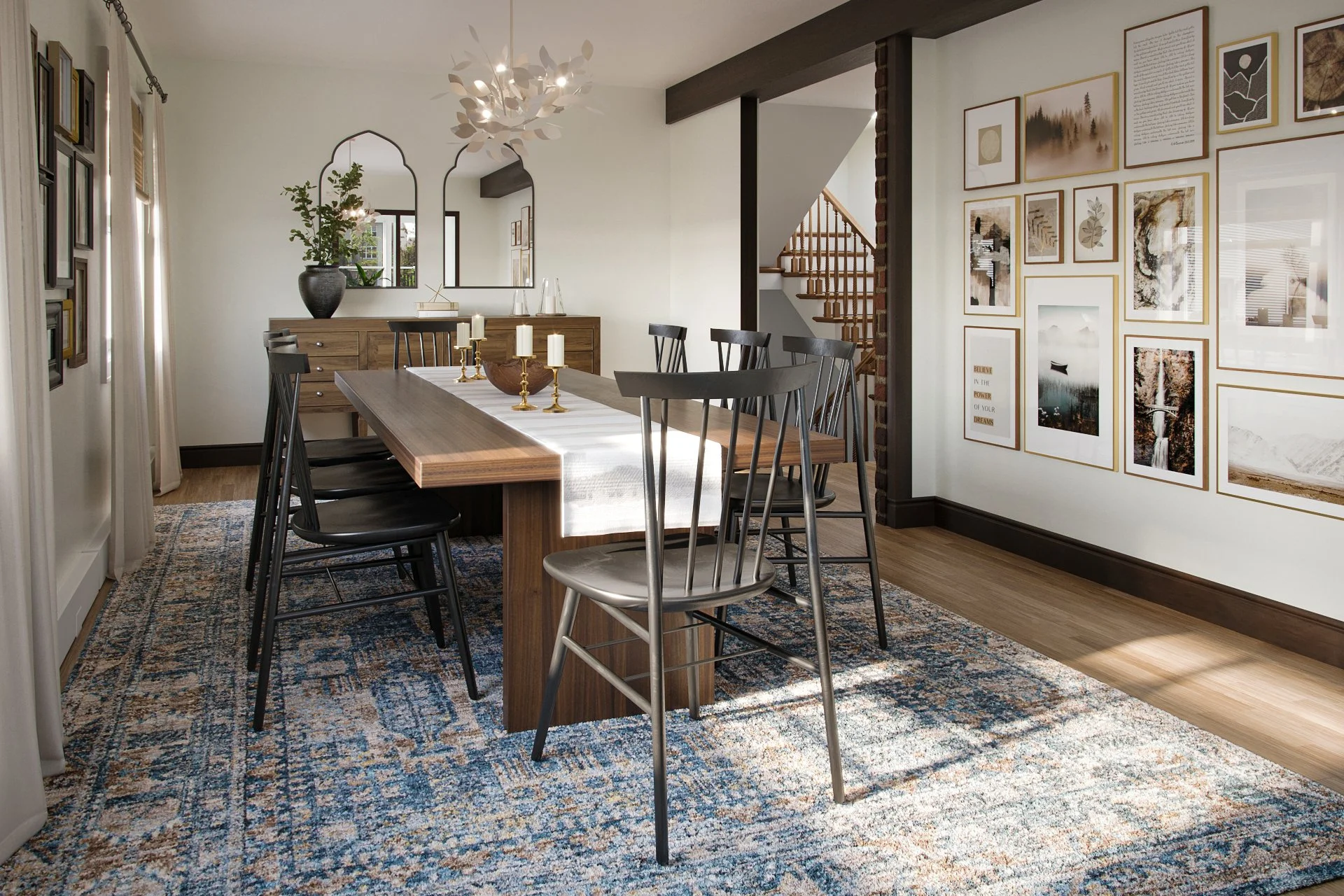
California farmhouse dining room with a long wood table, black spindle chairs, gallery wall, and statement chandelier, designed by virtual interior designer Joshua Jones of JJones Design Co.
What’s Driving the Move Toward Larger Homes
While upsizing isn’t a new concept, the reasons behind it have shifted.
The pandemic played a major role in reshaping how people view their homes. When homes became offices, gyms, classrooms, and living spaces all at once, the limitations of smaller spaces became more apparent.
At the same time, remote and hybrid work opened the door for people to move beyond expensive urban centers. Many began relocating to suburbs or smaller cities, where their budget could stretch much further—often allowing them to purchase homes two, three, or even four times larger than what they had before.
If you’re coming from a smaller space, you may also find it helpful to read my guide on how to make a small room look bigger without knocking down walls.
This wasn’t just about more space—it was about redefining what home needs to support.
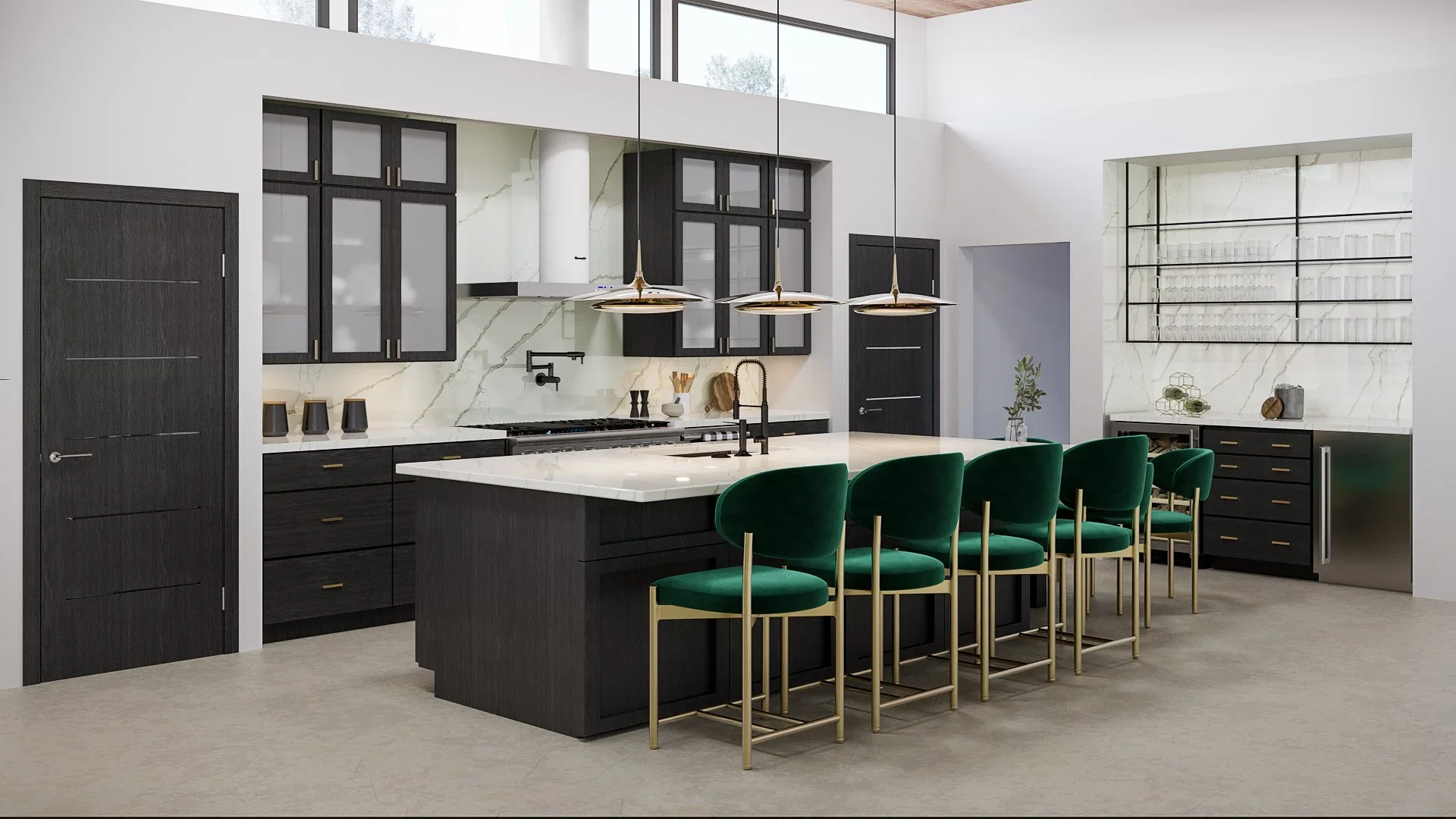
Mid-century modern and industrial style kitchen with a large island, green velvet barstools, and high ceilings, designed by virtual interior designer Joshua Jones of JJones Design Co.
More Space Isn’t Always the Solution
While the idea of having more square footage can be exciting, it also comes with its own set of challenges.
One of the biggest questions homeowners should ask themselves is:
Do I actually need this much space—and how will I use it?
Without a clear plan, larger homes can quickly feel:
underutilized
disconnected
or difficult to furnish cohesively
This is something I’ve seen come up often—especially for clients who are transitioning from smaller spaces and aren’t used to thinking about layout on a larger scale.
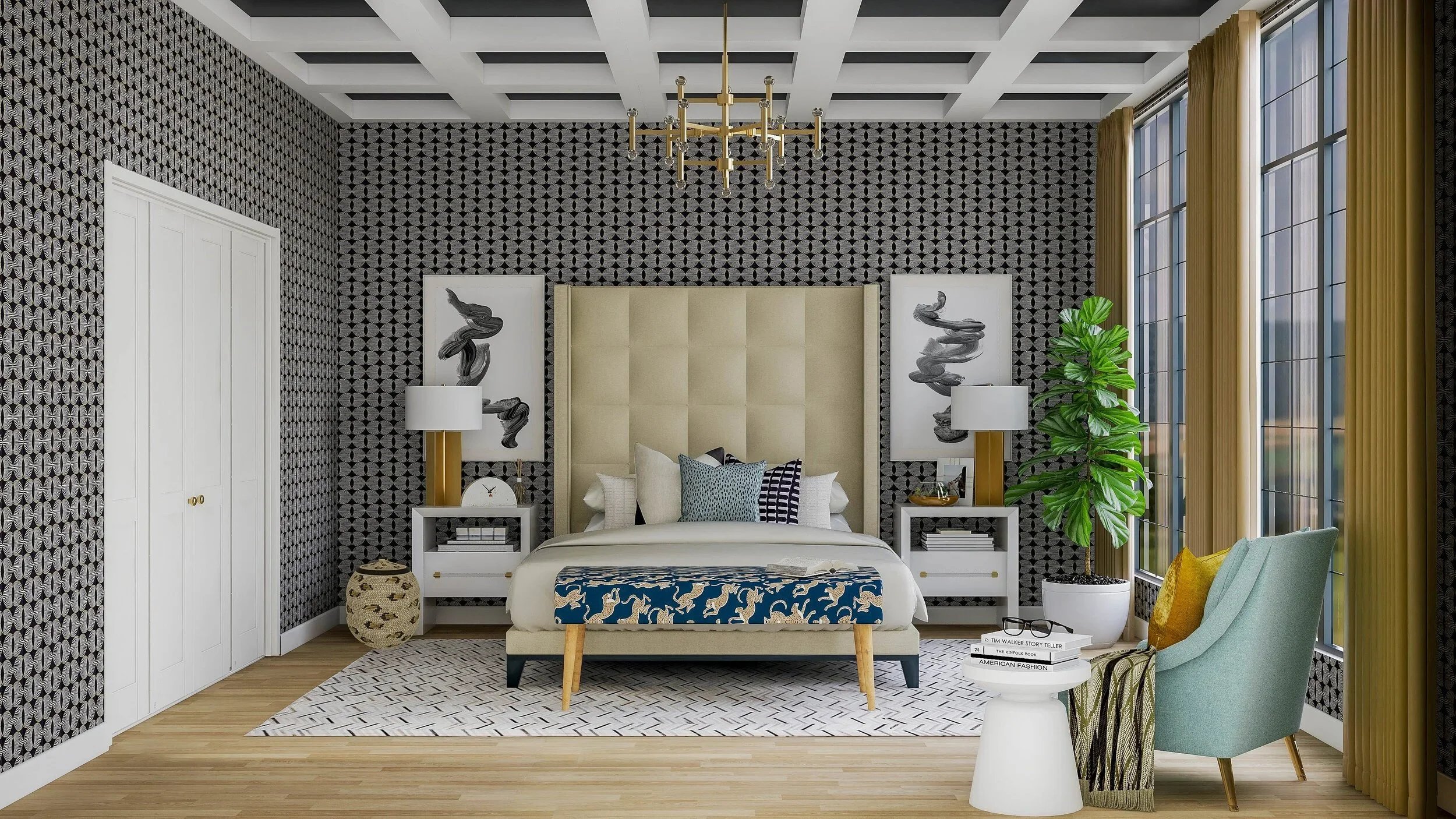
Modern eclectic primary bedroom with patterned walls, a tall upholstered bed, and coffered ceiling, designed by virtual interior designer Joshua Jones of JJones Design Co.
My Own Experience with Upsizing
I went through this myself when my partner, Jeffry, and I moved from San Francisco back to Seattle.
San Francisco is one of the most expensive real estate markets in the country, so when we moved, we were able to get a larger space while still paying less. Even a modest increase in square footage made a noticeable difference—extra storage, more breathing room, and a more comfortable day-to-day experience.
That said, even a slightly larger space requires more intentional planning to make it feel cohesive and functional.
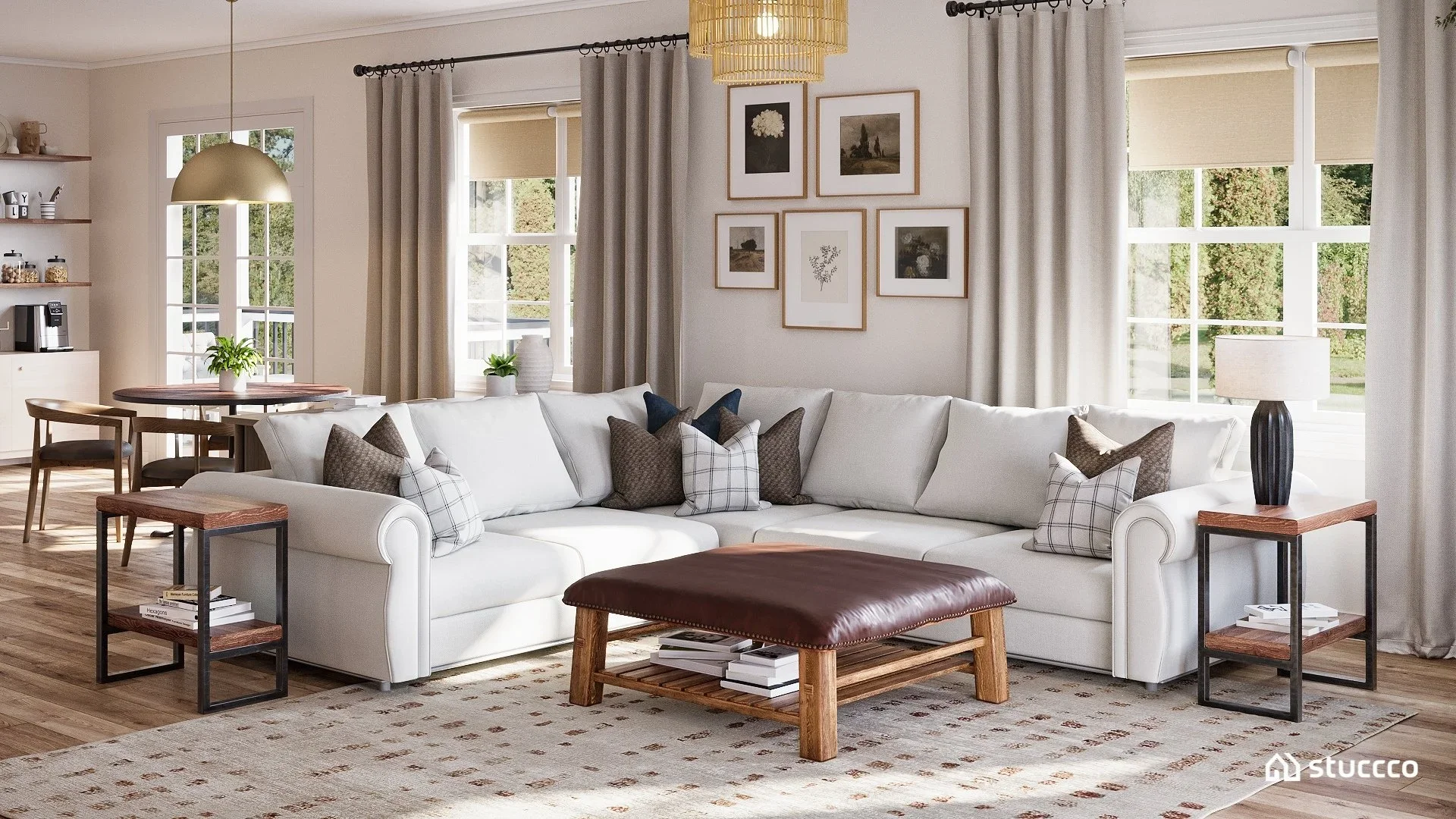
Eclectic rustic family room with a sectional sofa and breakfast nook behind, designed by virtual interior designer Joshua Jones of JJones Design Co. 3D rendering by Stuccco.
Designing for the Way You Actually Live
Upsizing isn’t inherently good or bad—it’s about how well your home supports your lifestyle.
A larger home can create opportunities for:
dedicated spaces (like formal dining rooms or home offices)
better flow and functionality
more comfortable hosting and gathering
But without thoughtful design, those same spaces can feel empty or disconnected.
The key is not just having more space—but knowing how to use it well.
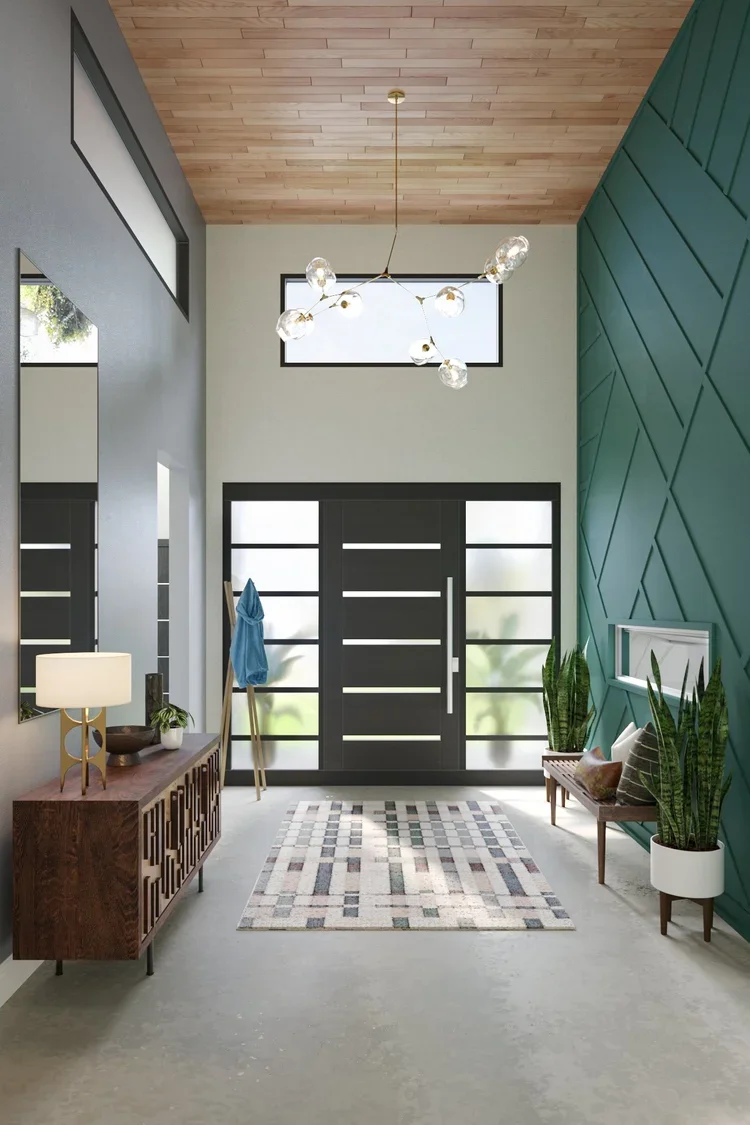
Mid-century modern and industrial style foyer with a double-height ceiling, wood ceiling detail, and statement lighting, designed by virtual interior designer Joshua Jones of JJones Design Co.
A Shift That’s Still Evolving
What started as a temporary shift during the pandemic has evolved into something more lasting. People are rethinking where they live, how much space they need, and what they want their homes to support.
Upsizing is no longer just about having more—it’s about living differently.
If you’ve recently moved into a larger home or are considering it, the most important step is making sure the space works for you—not the other way around. Through my virtual interior design and decorating services, I help clients create spaces that feel cohesive, functional, and aligned with how they actually live—whether that’s one room or an entire home. If you’re ready to bring clarity and direction to your space, you can explore my services to get started.