The Complete Guide to Window Treatments: Privacy, Light Control, Child Safety, Pet-Friendly Options & More
Window treatments are one of the most important design decisions you'll make for your home, yet they're often overlooked until the very end of a project. While furniture, paint colors, and lighting often get most of the attention, the right window treatments can dramatically improve a room's privacy, comfort, functionality, and overall appearance.
For me, window treatments have been part of my life for as long as I can remember. Growing up in Southern California, my mom worked as both an interior designer and window treatment specialist, while my dad installed window treatments for homeowners throughout the region. Long before I became an interior designer myself, I was exposed to both the creative and technical sides of window treatments and saw firsthand how the right solution could completely transform a space.
Today, one of the most common questions I receive from clients is, "What window treatment should I choose?" While many people initially focus on appearance, the conversation usually shifts to practical concerns. They want to know how much privacy they'll have, whether the treatment will block unwanted sunlight, how easy it will be to maintain, and whether it will be safe around children or durable enough for pets.
The truth is that there isn't a single window treatment that's right for every home. The best choice depends on how you use the room, the amount of natural light you receive, your privacy needs, your budget, and the people and pets who live there.
In this guide, I'll walk you through the most common types of window treatments, explain the advantages and disadvantages of each option, discuss privacy and light control, cover child-safe and pet-friendly solutions, and share recommendations based on years of experience working with homeowners.
Whether you're building a new home, remodeling a room, replacing outdated blinds, or simply looking for a better solution for your windows, this guide will help you make an informed decision and find the right window treatments for your lifestyle.
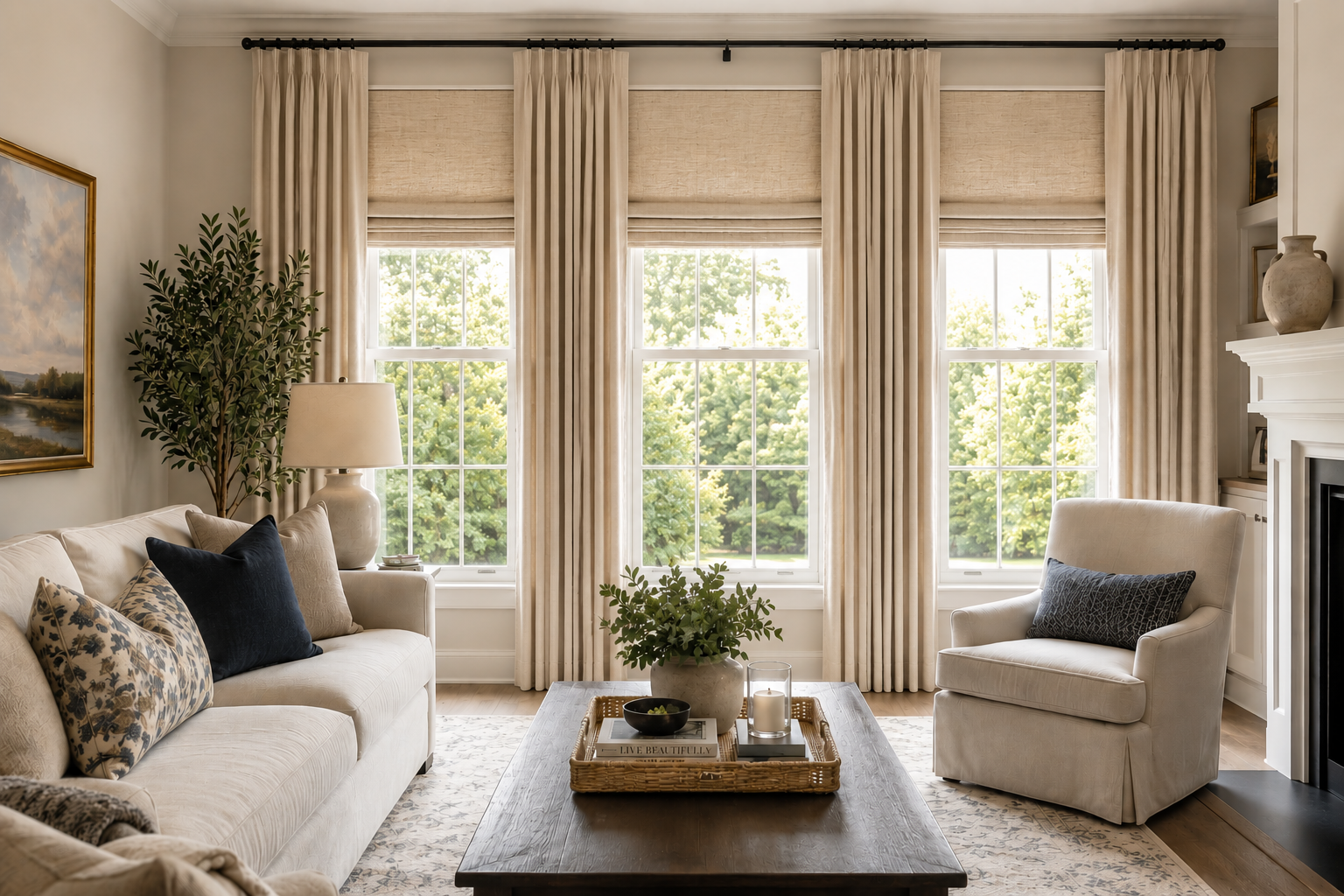
AI-generated image illustrating layered window treatments featuring Roman shades and drapery panels in a contemporary living room.
Types of Window Treatments: Understanding Your Options
Before deciding which window treatment is right for your home, it's important to understand the major categories available. Each option offers different levels of privacy, light control, maintenance, durability, and style.
While there is no single solution that's perfect for every room, understanding the strengths and limitations of each type will help narrow your options and make the selection process much easier.
Drapery
When most homeowners think of window treatments, drapery is usually the first thing that comes to mind. While many people use the terms curtains and drapes interchangeably, designers typically use the broader term drapery to describe fabric window treatments.
Drapery is one of the most versatile window treatment options because it can be tailored to suit almost any design style, from traditional and transitional homes to modern and contemporary interiors.
Depending on the fabric, lining, and construction, drapery can provide varying levels of privacy and light control. Sheer drapery helps soften natural light while maintaining an airy appearance, while lined or blackout drapery can significantly reduce light and increase privacy.
Drapery also serves an important decorative function. It can add color, texture, pattern, softness, and visual height to a room. When installed properly, drapery can make ceilings appear taller and windows appear larger than they actually are.
Best for: Living rooms, bedrooms, dining rooms, home offices, and homeowners who want both function and style.
If you're considering drapery for your home, be sure to read my Drapery Guidance article, where I cover everything from rod placement and panel widths to recommended drapery lengths for different rooms.
Blinds
Blinds consist of individual horizontal or vertical slats that can be tilted to control light and privacy throughout the day. Common materials include wood, faux wood, aluminum, and vinyl.
One of the biggest advantages of blinds is flexibility. Rather than fully opening or closing the window covering, you can adjust the angle of the slats to manage sunlight while still maintaining some privacy.
Blinds are often selected for their practicality and ease of maintenance. They tend to work well in spaces where moisture, cooking grease, or everyday wear and tear are concerns.
Best for: Kitchens, bathrooms, laundry rooms, and budget-conscious projects.
Shades
Unlike blinds, shades are made from a continuous piece of material that raises and lowers as a single unit. They are available in a wide range of styles including roller shades, Roman shades, woven wood shades, solar shades, and cellular shades.
Many homeowners choose shades because they provide a cleaner and more streamlined appearance than blinds. Depending on the style selected, shades can feel casual, traditional, contemporary, or highly customized.
Some shades focus primarily on light filtering and privacy, while others are designed for energy efficiency, UV protection, or room darkening.
Best for: Homeowners seeking a clean appearance, customizable light control, and a wide range of design options.
Shutters
Interior shutters are among the most durable and permanent window treatment solutions available. Typically custom-built for each window, shutters feature adjustable louvers that allow homeowners to control privacy and sunlight throughout the day.
Because shutters become part of the architecture of the home, they often add long-term value while providing a timeless appearance. They are particularly popular in traditional, coastal, Mediterranean, farmhouse, and Southern-inspired homes.
While shutters generally require a larger upfront investment, many homeowners appreciate their durability and low maintenance requirements.
Best for: Long-term homes, high-value properties, and homeowners seeking a built-in architectural look.
Layered Window Treatments
In many situations, the best solution isn't a single window treatment but a combination of two or more treatments working together.
For example, a woven wood shade paired with decorative drapery can provide privacy, light control, and added visual warmth. In a bedroom, blackout roller shades combined with drapery often offer more flexibility than either option alone.
Layering allows homeowners to address multiple needs at once while creating a more finished and intentional appearance.
In my experience, layered window treatments often provide the best balance of function and design, especially in rooms where privacy and light control are both important considerations.
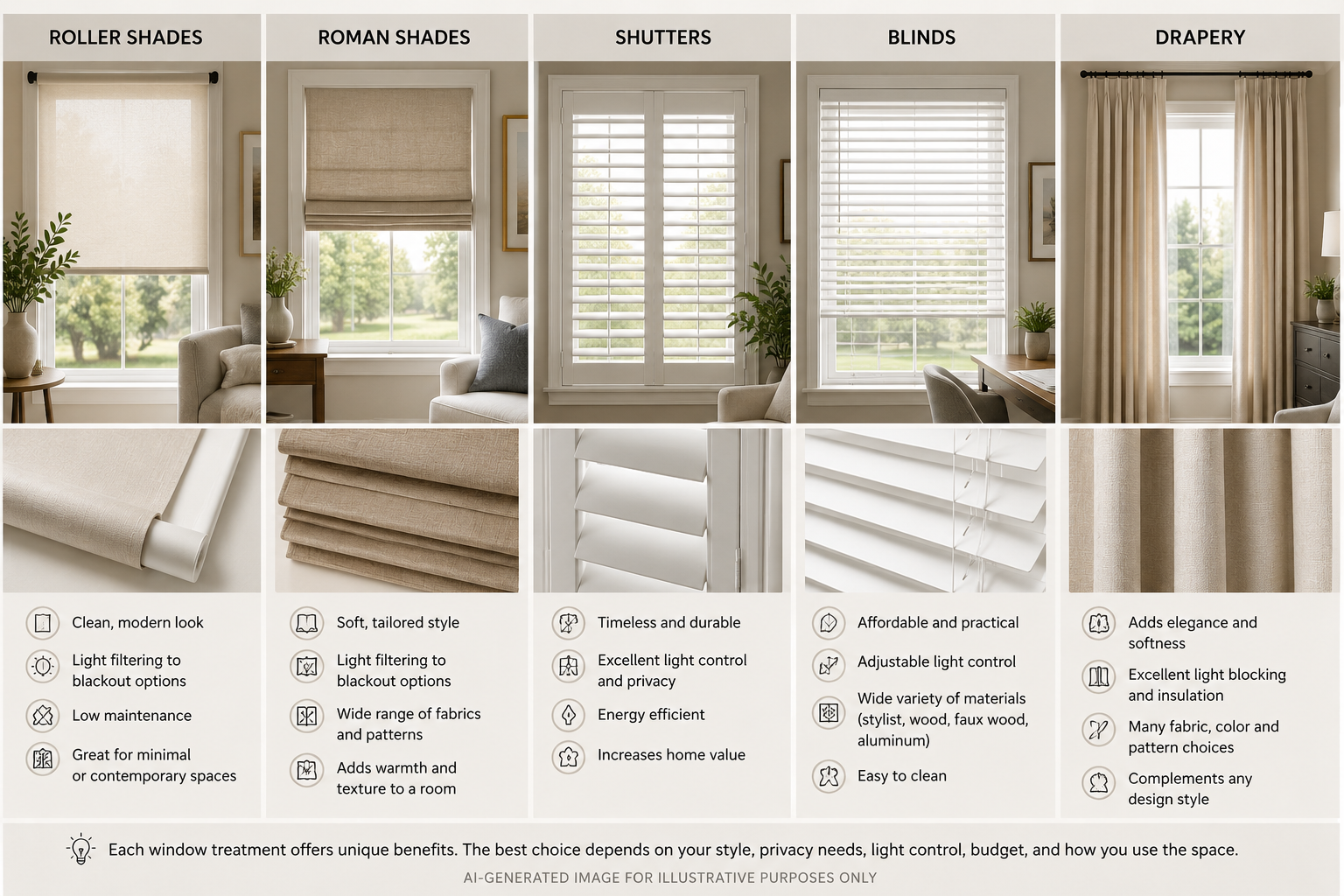
AI-generated comparison chart showing the most common types of window treatments, including roller shades, Roman shades, shutters, blinds, and drapery, and how they differ in privacy, light control, maintenance, and style.
Choosing Window Treatments Based on Privacy and Light Control
Privacy and light control are often the two biggest factors homeowners consider when selecting window treatments. While style is important, the right window treatment should also support how you use the room throughout the day.
For example, a bedroom typically requires much more privacy and light control than a dining room, while a home office may need protection from glare without completely blocking natural sunlight.
Understanding how different window treatments perform can help you narrow your options before focusing on aesthetics.
Best Window Treatments for Maximum Privacy
If privacy is your top priority, look for window treatments that completely cover the window and minimize visibility from the outside.
Some of the best options include:
Lined drapery
Blackout drapery
Roman shades with privacy lining
Roller shades
Cellular shades
Interior shutters
These options work particularly well in bedrooms, bathrooms, and street-facing rooms where homeowners want to limit visibility from neighbors or passersby.
Keep in mind that privacy needs often change throughout the day. A treatment that provides privacy at night may still allow visibility during daylight hours when interior lights are off.
Best Window Treatments for Natural Light
Many homeowners want privacy without sacrificing natural light. Fortunately, several window treatments can help achieve both goals.
Some of my favorite options include:
Sheer drapery
Solar shades
Light-filtering roller shades
Light-filtering cellular shades
Woven wood shades with privacy liners
These options help soften harsh sunlight while maintaining a bright and welcoming atmosphere.
In living rooms, dining rooms, and home offices, preserving natural light often creates a more comfortable and visually appealing environment than completely darkening the space.
Best Window Treatments for Room Darkening
Certain rooms benefit from reducing sunlight as much as possible.
Bedrooms, nurseries, media rooms, and some home offices often require greater control over incoming light.
Popular room-darkening solutions include:
Blackout drapery
Blackout roller shades
Blackout Roman shades
Cellular shades with blackout liners
Layered window treatments combining shades and drapery
For homeowners who are sensitive to light or work overnight schedules, layered window treatments often provide the most effective results.
Balancing Privacy and Light Control
One of the biggest mistakes I see homeowners make is focusing exclusively on privacy or exclusively on natural light.
The best window treatments often provide a balance between the two.
For example, sheer drapery paired with roller shades allows homeowners to enjoy filtered daylight while adding privacy when needed. Likewise, woven wood shades combined with drapery can create a warm, layered look while improving both privacy and light management.
Before selecting a window treatment, think about how the room functions throughout the day. A solution that works beautifully in a formal dining room may not provide enough privacy for a primary bedroom or enough flexibility for a busy home office.
In many cases, choosing a layered approach provides the greatest versatility and allows homeowners to adapt the room to different activities and lighting conditions.
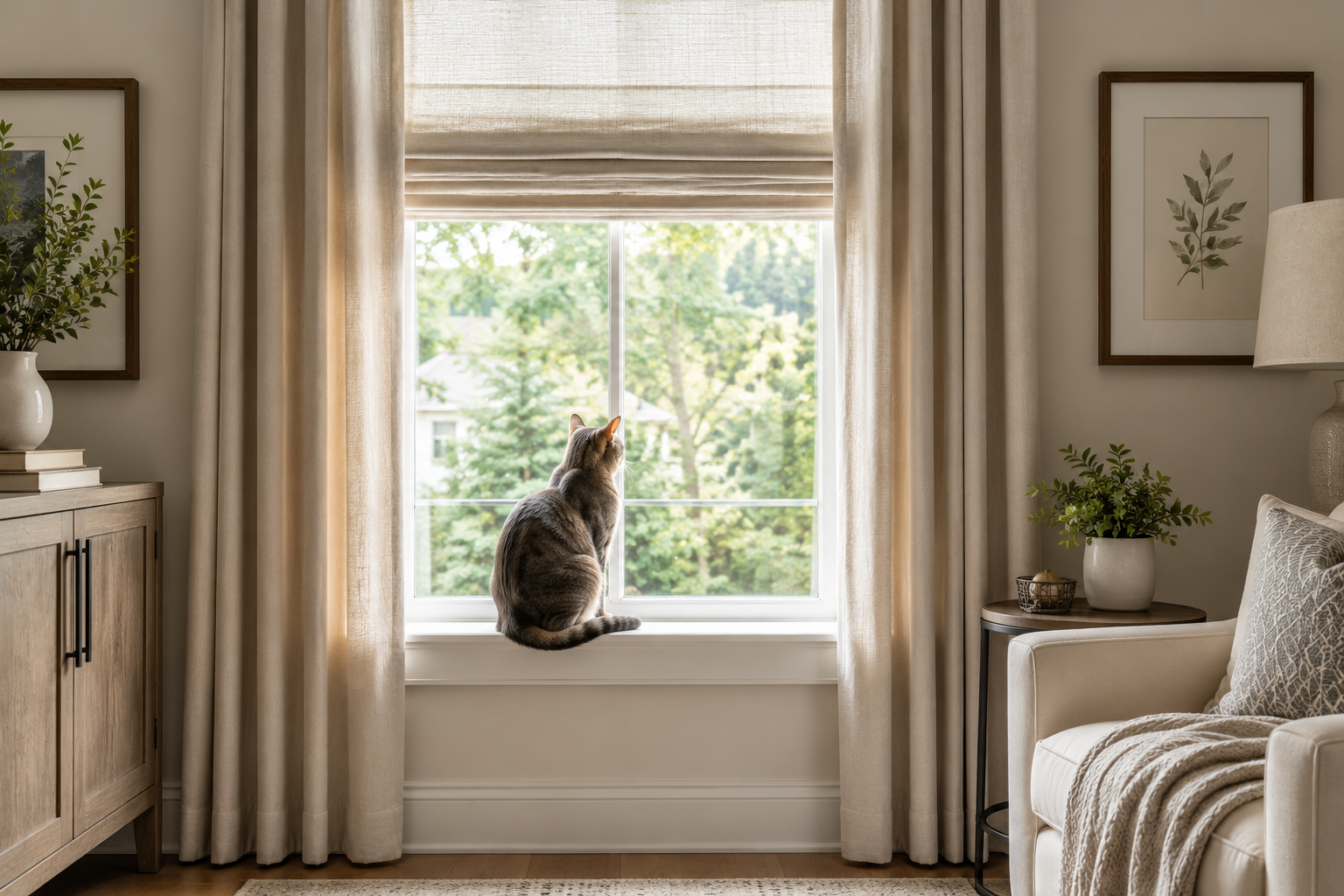
AI-generated image of a cat sitting on a window sill, illustrating why pet behavior should be considered when selecting window treatments for your home.
Child-Safe and Pet-Friendly Window Treatments
As a designer, I've learned that the best window treatment isn't always the most beautiful option. It also needs to work for the people who live in the home.
If you have young children or pets, safety and durability should be part of the decision-making process from the beginning. A window treatment that looks great in a showroom may not hold up well to climbing cats, curious dogs, or children who love pulling on cords.
Fortunately, there are plenty of attractive options that can help create a safer and more functional home.
Child-Safe Window Treatments
For households with young children, cordless window treatments are generally the safest option.
Traditional cords can create potential strangulation hazards, which is why many manufacturers have shifted toward cordless and motorized designs in recent years.
Some of the best child-friendly options include:
Cordless roller shades
Cordless cellular shades
Cordless Roman shades
Motorized shades
Plantation shutters
These options eliminate or significantly reduce accessible cords while still providing excellent privacy and light control.
If you already have existing window treatments with cords, consider installing approved safety devices that keep cords secured and out of reach.
Pet-Friendly Window Treatments
As both a designer and pet owner, I've learned that pets often have very different opinions about window treatments than their owners.
One of the biggest concerns is cords. Cats, in particular, seem to view dangling cords as toys. One of my own cats loves to play with window treatment cords and will repeatedly pull on them whenever given the opportunity. For that reason alone, I strongly recommend cordless window treatments whenever possible.
Another common issue is visibility. Most pets enjoy looking outside, whether they're watching birds, squirrels, passing dogs, or simply keeping an eye on the neighborhood. Unfortunately, that curiosity can sometimes lead to damaged window treatments.
In my experience, blinds are often one of the least pet-friendly options available. I've seen pets bend slats, break them entirely, and even pull blinds out of the window. One dog I encountered managed to remove the blinds completely and drag them around the property. While blinds can work well in certain situations, they generally aren't my first recommendation for households with active pets.
Shutters can be more durable than blinds, but they aren't immune to damage either. Years ago, my dog broke one of our shutters while trying to look outside. Cats can create their own challenges by pushing shutter louvers open, which may defeat the privacy you were hoping to achieve.
For many pet owners, cordless roller shades, cordless cellular shades, and motorized shades tend to be among the most practical solutions. These options eliminate accessible cords, are generally more difficult for pets to damage, and provide a cleaner appearance when raised or lowered.
If you prefer drapery, fabric selection can make a significant difference. In my experience, plush velvet drapery tends to be one of the more pet-friendly options because many cats don't enjoy the texture and are less likely to climb it compared to loosely woven fabrics or materials with a noticeable texture.
That said, cats are incredibly resourceful when it comes to windows. One of my own cats loves watching the outdoors and has figured out how to pull drapery panels open so he can get a better view outside. If your cat enjoys birdwatching or monitoring neighborhood activity, don't be surprised if they find creative ways to interact with your window treatments.
At the end of the day, the best pet-friendly window treatment depends on your specific pet. A senior dog that spends most of the day napping will have very different needs than an energetic puppy or a cat that treats every window as an observation deck.
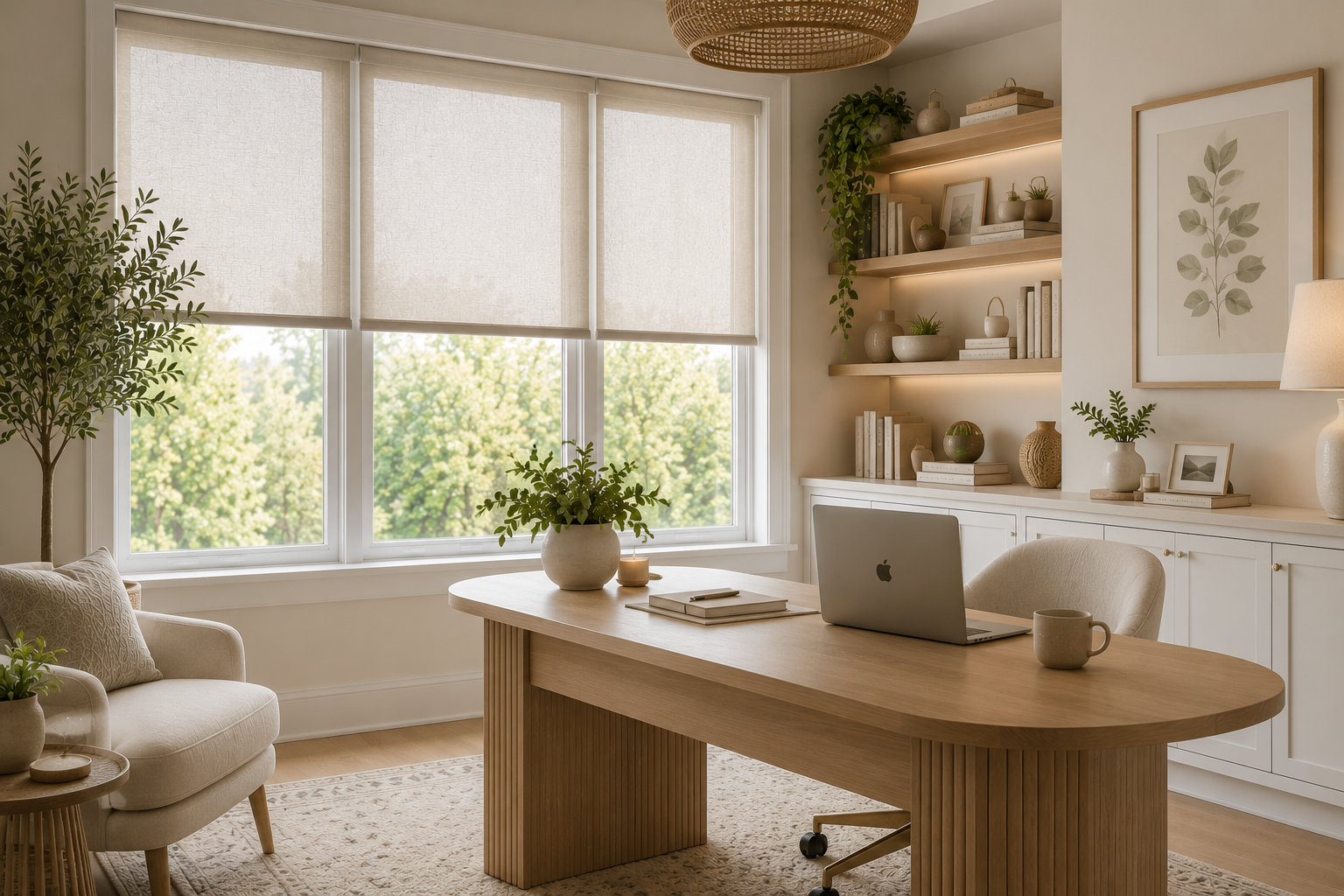
AI-generated modern organic home office featuring light-filtering roller shades that help reduce screen glare while maintaining natural light and outdoor views.
Best Window Treatments by Room
Not every room has the same requirements when it comes to privacy, light control, durability, and style. A window treatment that works beautifully in a formal dining room may not be the best choice for a bathroom, kitchen, or bedroom.
When helping clients select window treatments, I always start by looking at how the room is used on a daily basis.
Living Room
Living rooms often benefit from a balance of privacy and natural light. Most homeowners want the space to feel bright and welcoming during the day while maintaining privacy in the evening.
Some of my favorite options for living rooms include:
Drapery panels
Roller shades
Roman shades
Woven wood shades
Layered window treatments
Layering shades with decorative drapery is often an excellent solution because it allows you to adjust privacy and sunlight throughout the day while adding warmth and visual interest to the room.
Bedroom
Bedrooms typically require the greatest level of privacy and light control.
If you are sensitive to light, work night shifts, or simply enjoy sleeping in on weekends, blackout window treatments can make a significant difference in sleep quality.
Popular bedroom solutions include:
Blackout drapery
Blackout roller shades
Blackout Roman shades
Cellular shades with blackout liners
Layered window treatments
For maximum flexibility, I often recommend combining blackout shades with decorative drapery.
Dining Room
Dining rooms generally require less privacy and light control than bedrooms, which allows for greater flexibility.
Many homeowners prefer treatments that add softness and character without making the room feel dark.
Some popular choices include:
Drapery
Roman shades
Woven wood shades
Interior shutters
Because dining rooms are used primarily during specific times of day, decorative impact often becomes a larger consideration than complete privacy.
Kitchen
Kitchens benefit from window treatments that are easy to maintain and can withstand everyday exposure to moisture, cooking residue, and frequent use.
For that reason, simpler solutions are often the most practical.
Some of my preferred options include:
Roller shades
Faux wood blinds
Interior shutters
Solar shades
Heavy fabric treatments are generally less practical in kitchens because they tend to collect odors, grease, and dust over time.
Bathroom
Privacy is usually the top priority in bathrooms.
At the same time, many homeowners still want to preserve natural light whenever possible.
Good bathroom options include:
Privacy roller shades
Cellular shades
Interior shutters
Frosted window film used alongside window treatments
Moisture resistance should also be considered, particularly in bathrooms with showers, tubs, and limited ventilation.
Home Office
Since many people now work from home, managing glare has become an important consideration.
Direct sunlight on computer screens can create discomfort and make it difficult to work efficiently.
Some of my favorite home office solutions include:
Solar shades
Roller shades
Roman shades
Layered window treatments
The goal is usually to reduce glare while still allowing enough natural light to create a comfortable working environment.
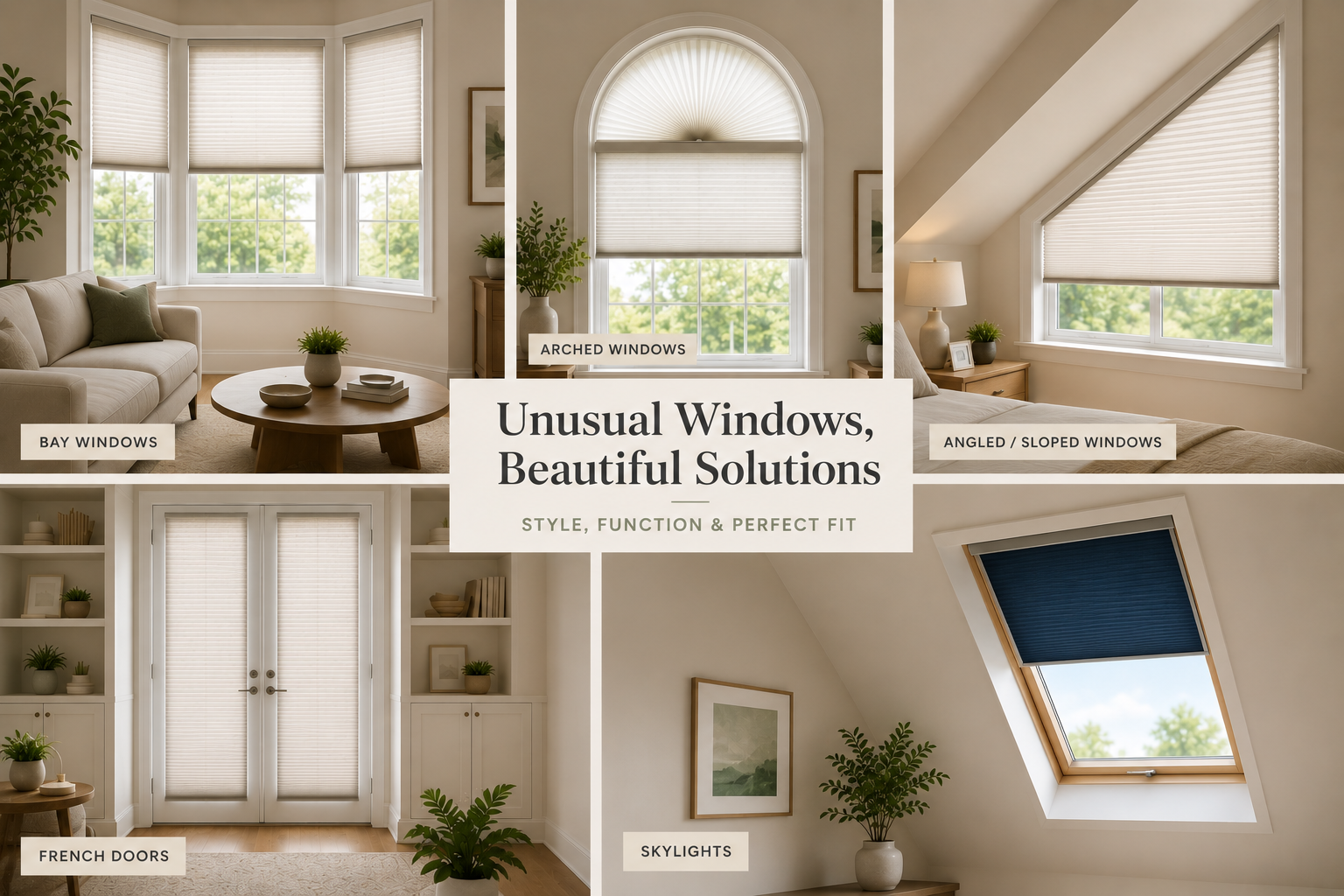
AI-generated collage showcasing window treatment solutions for bay windows, arched windows, angled windows, French doors, and skylights, demonstrating how custom treatments can address a variety of architectural challenges.
Window Treatments for Unusual Windows
Standard rectangular windows are usually straightforward to cover, but not every home is that simple. Over the years, I've worked with homeowners who needed solutions for bay windows, tall windows, angled windows, arched windows, and other challenging situations.
The good news is that almost every window can be treated successfully. The key is understanding the limitations of the space and selecting a solution that works with the window rather than fighting against it.
Bay Windows
Bay windows can be beautiful architectural features, but they often create challenges when it comes to privacy, light control, and installation.
One of the biggest decisions is whether to treat each window individually or create the appearance of a unified window treatment across the entire bay.
Depending on the room and the desired look, successful solutions may include:
Roman shades
Roller shades
Cellular shades
Drapery
A combination of shades and drapery
When incorporating drapery, I often recommend four panels rather than just a pair of panels at the outer edges of the bay window. Typically, this includes one panel at each outside edge and one panel between the center and side windows.
This approach usually creates a more balanced and custom appearance while helping frame the architecture of the bay window itself. It also adds softness and visual weight that can make the entire window feature feel more intentional and finished.
The best approach often depends on whether the bay window includes a window seat, dining nook, or primary seating area. For additional tips and layout recommendations, read my article Ask Joshua: What Are the Best Window Treatments for Bay Windows?
Tall Windows and Two-Story Spaces
Large windows can bring incredible natural light into a home, but they also create unique challenges.
Privacy, glare, heat gain, and maintenance become increasingly important as window heights increase.
For tall windows, I often recommend solutions such as:
Motorized shades
Solar shades
Floor-to-ceiling drapery
Layered window treatments
Motorization can be especially helpful when windows are difficult to reach. While manually operated treatments may work initially, homeowners often stop using them when daily operation becomes inconvenient.
If you're trying to decide between shades, drapery, or motorized solutions for oversized windows, read my article Ask Joshua: What Are the Best Window Treatments for Tall Windows? for additional design tips and recommendations.
Angled Windows
Angled windows can be among the most difficult windows to treat because standard products aren't always designed to accommodate unusual shapes.
In many cases, custom solutions may be required.
Some common approaches include:
Custom shutters
Specialty shades
Stationary drapery panels
Leaving the angled portion uncovered while treating the lower window
The right solution depends on the amount of privacy needed, the shape of the window, and the overall design goals for the room.
If you're dealing with this type of window, be sure to read my guide on design solutions for angled window treatments, where I explore several approaches in greater detail.
Arched Windows
Arched windows add architectural interest and character to a home, but they often leave homeowners wondering whether they should be covered at all.
In some situations, leaving the arch exposed can highlight the architecture and allow additional natural light into the room. In other cases, privacy or light control may justify a custom treatment.
Popular solutions include:
Arched shutters
Specialty shades
Drapery installed below the arch
Stationary decorative panels
The best choice depends on whether preserving the architectural feature or increasing functionality is the primary goal.
When Custom Window Treatments Make Sense
While many standard windows can be treated with ready-made products, unusual windows often benefit from custom solutions.
Custom window treatments generally provide:
Better fit
Improved functionality
Greater design flexibility
More professional results
Although custom treatments require a larger investment, they can often solve problems that off-the-shelf products simply cannot address.
When working with unusual windows, I typically encourage homeowners to focus on function first and aesthetics second. Once the practical challenges are solved, the design decisions become much easier.
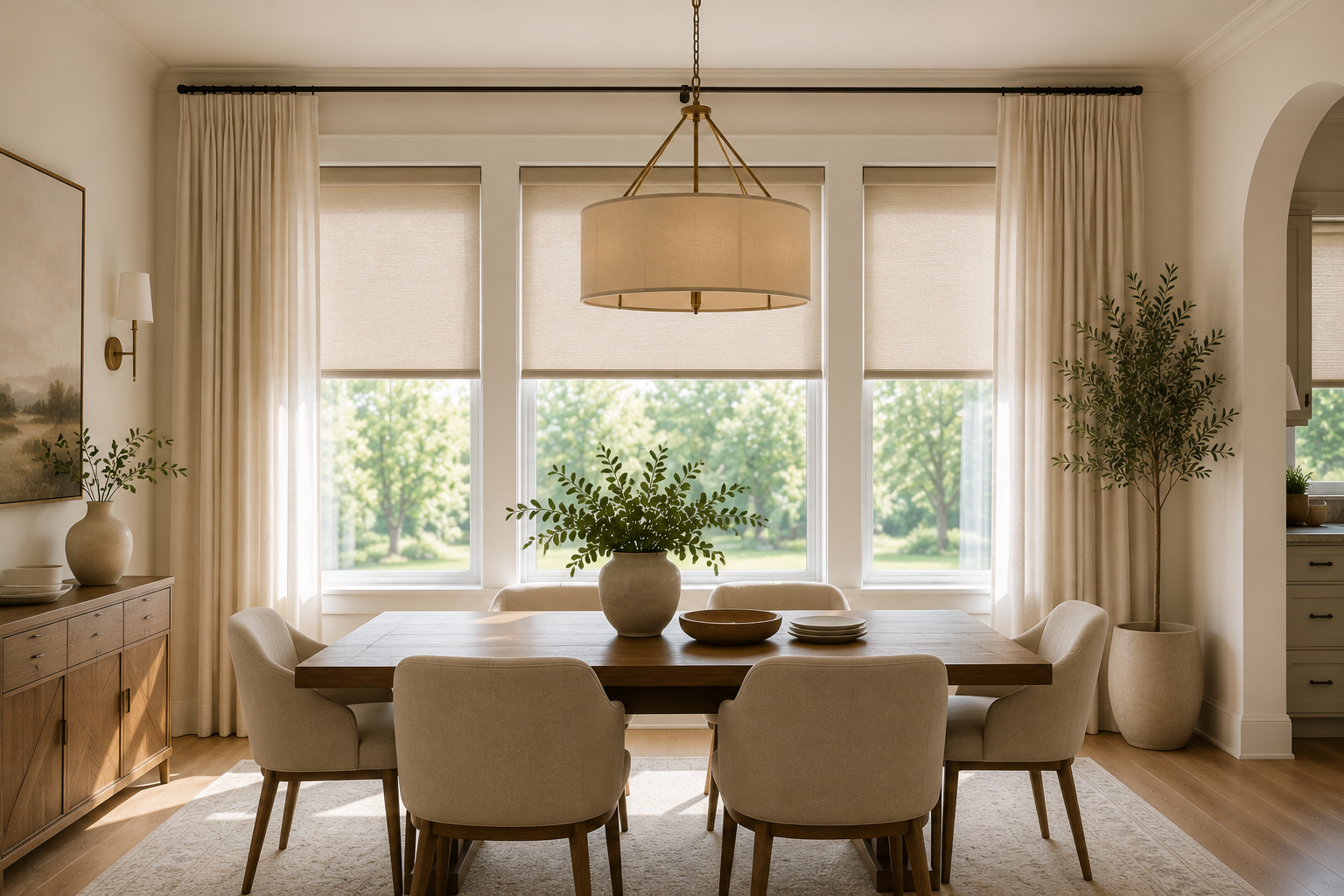
AI-generated dining room featuring layered window treatments with light-filtering roller shades and floor-to-ceiling drapery panels, demonstrating a popular custom window treatment solution that balances privacy, light control, and style.
How Much Do Window Treatments Cost?
One of the most common questions homeowners ask is how much they should expect to spend on window treatments.
Unfortunately, there isn't a simple answer because costs vary significantly depending on the type of window treatment, the size of the window, whether the product is custom or ready-made, and the level of installation required.
In general, window treatments can range from relatively affordable off-the-shelf solutions to fully customized installations that become a significant investment.
Budget-Friendly Options
If you're furnishing a home on a limited budget, there are several attractive options available without spending thousands of dollars.
Some of the most affordable window treatments include:
Ready-made roller shades
Ready-made cellular shades
Basic blinds
Ready-made drapery panels
These products are widely available and can often provide good functionality at a lower price point.
However, it's important to remember that lower-cost products may have fewer customization options and may not always provide the best fit for unusual windows.
Mid-Range Options
Many homeowners find themselves somewhere in the middle.
They want a polished, customized appearance without investing in fully custom window treatments throughout the home.
Common mid-range solutions include:
Higher-quality shades
Woven wood shades
Roman shades
Semi-custom drapery
Layered window treatments
These options often offer a good balance between appearance, functionality, and cost.
Premium and Custom Window Treatments
Custom window treatments generally represent the highest investment category.
Examples include:
Custom drapery
Motorized shades
Plantation shutters
Specialty treatments for unusual windows
Whole-home custom installations
While custom products require a larger budget, they also provide greater flexibility in sizing, materials, colors, fabrics, and functionality.
Custom solutions can be especially valuable when dealing with oversized windows, unusual window shapes, or rooms where a tailored appearance is important.
Don't Forget Installation Costs
Many homeowners focus exclusively on the cost of the product itself and forget to budget for installation.
Professional installation may include:
Measuring
Mounting hardware
Motorization setup
Programming smart-home integration
Specialty installations for difficult windows
Proper installation can make a tremendous difference in both appearance and functionality.
My Advice on Budgeting for Window Treatments
If your budget is limited, I generally recommend prioritizing the rooms you use most often.
For example, homeowners may choose to invest in custom treatments for the living room, dining room, and primary bedroom while using more budget-friendly options in secondary bedrooms or utility spaces.
This approach allows you to create the greatest visual impact while keeping overall costs under control.
Window treatments are one of those investments that can influence both the appearance and functionality of a home every day. Choosing the right solution for your budget is often more important than simply choosing the least expensive option available.
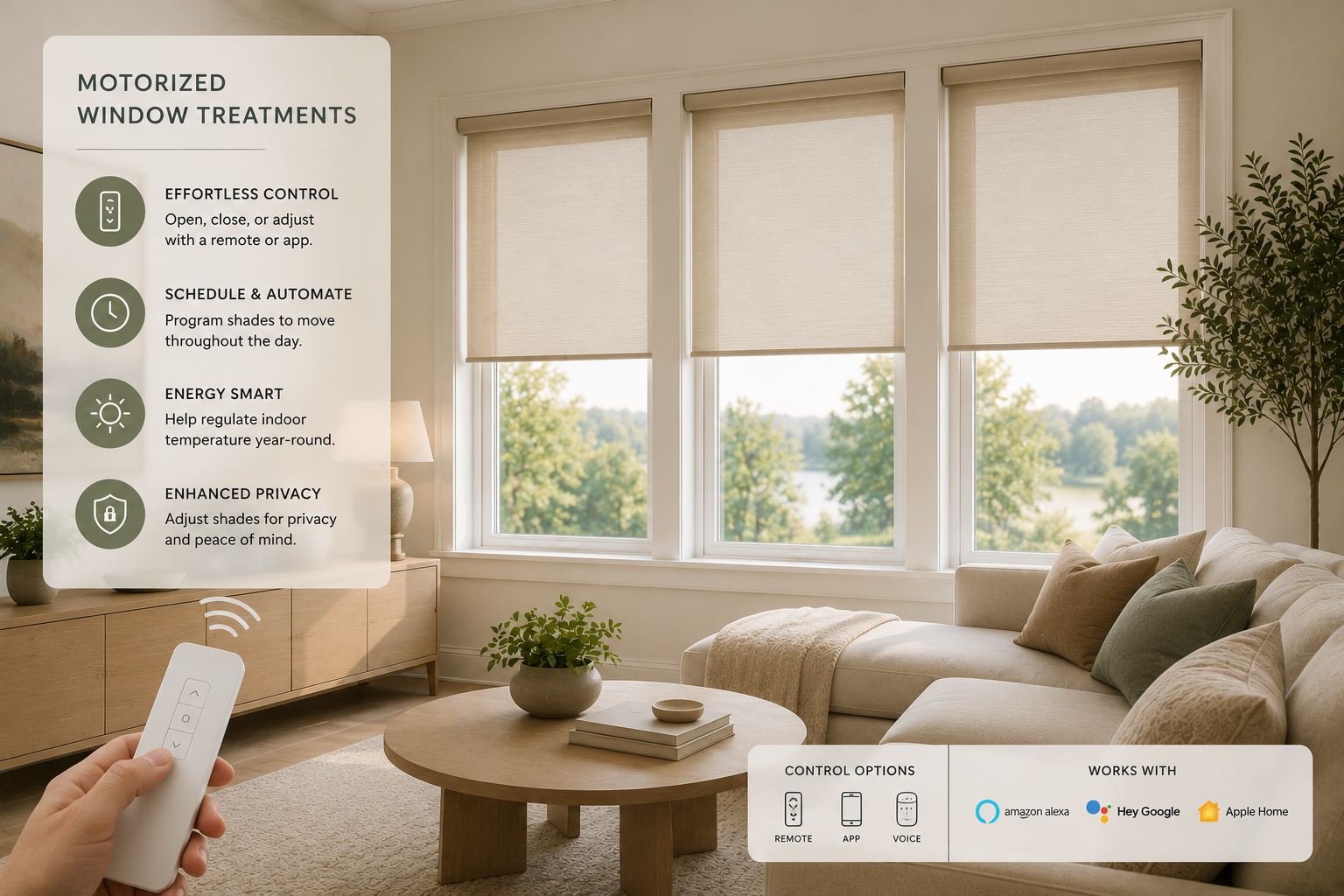
AI-generated living room featuring motorized roller shades controlled by a remote, illustrating the convenience, privacy, energy efficiency, and smart-home integration offered by automated window treatments.
Motorized Window Treatments: Are They Worth It?
Not long ago, motorized window treatments were considered a luxury feature reserved for high-end homes. Today, they have become much more common and accessible, making them a realistic option for many homeowners.
Whether motorized window treatments are worth the investment depends on your lifestyle, budget, and the type of windows you're covering.
Benefits of Motorized Window Treatments
One of the biggest advantages of motorization is convenience.
With the push of a button, smartphone app, remote control, or voice assistant, you can raise and lower window treatments without manually operating cords or chains.
This can be especially useful for:
Tall windows
Two-story great rooms
Hard-to-reach windows
Large banks of windows
Homes with multiple window treatments in a single room
Instead of adjusting each window individually, multiple shades can often be controlled simultaneously.
Improved Child Safety
Motorized window treatments eliminate exposed cords, making them one of the safest options available for households with young children.
For parents concerned about cord safety, motorization can provide peace of mind while maintaining a clean and uncluttered appearance.
A Great Option for Pet Owners
Motorized shades can also be beneficial in homes with pets.
Since there are no dangling cords to tempt curious cats or playful dogs, many of the common issues associated with traditional window treatments can be reduced or eliminated.
For households with pets that enjoy looking outside throughout the day, motorized shades can also make it easier to adjust privacy and sunlight levels as needed.
Energy Efficiency and Comfort
Many homeowners don't realize that motorization can help improve energy efficiency.
Automated schedules can be programmed to lower shades during the hottest parts of the day, helping reduce solar heat gain and making rooms more comfortable.
Likewise, shades can be opened during cooler months to take advantage of natural sunlight and passive solar warmth.
Potential Drawbacks
The biggest disadvantage of motorized window treatments is cost.
Motorization adds expense beyond the cost of the window treatment itself, particularly when covering multiple windows throughout an entire home.
Homeowners should also consider:
Battery replacement or charging requirements
Smart-home compatibility
Professional installation costs
Additional programming or setup fees
While these considerations aren't necessarily deal-breakers, they should be part of the budgeting process.
My Take on Motorized Window Treatments
I don't believe every window in a home needs to be motorized.
However, there are certain situations where motorization is absolutely worth considering.
If you have tall windows, hard-to-reach windows, young children, mobility limitations, or simply want greater convenience, motorized window treatments can be a worthwhile investment.
For many homeowners, I find that motorizing a few key windows often provides the best balance between functionality and budget.
Like most design decisions, the goal isn't necessarily to choose the most expensive option. It's to choose the option that best supports how you live in your home every day.
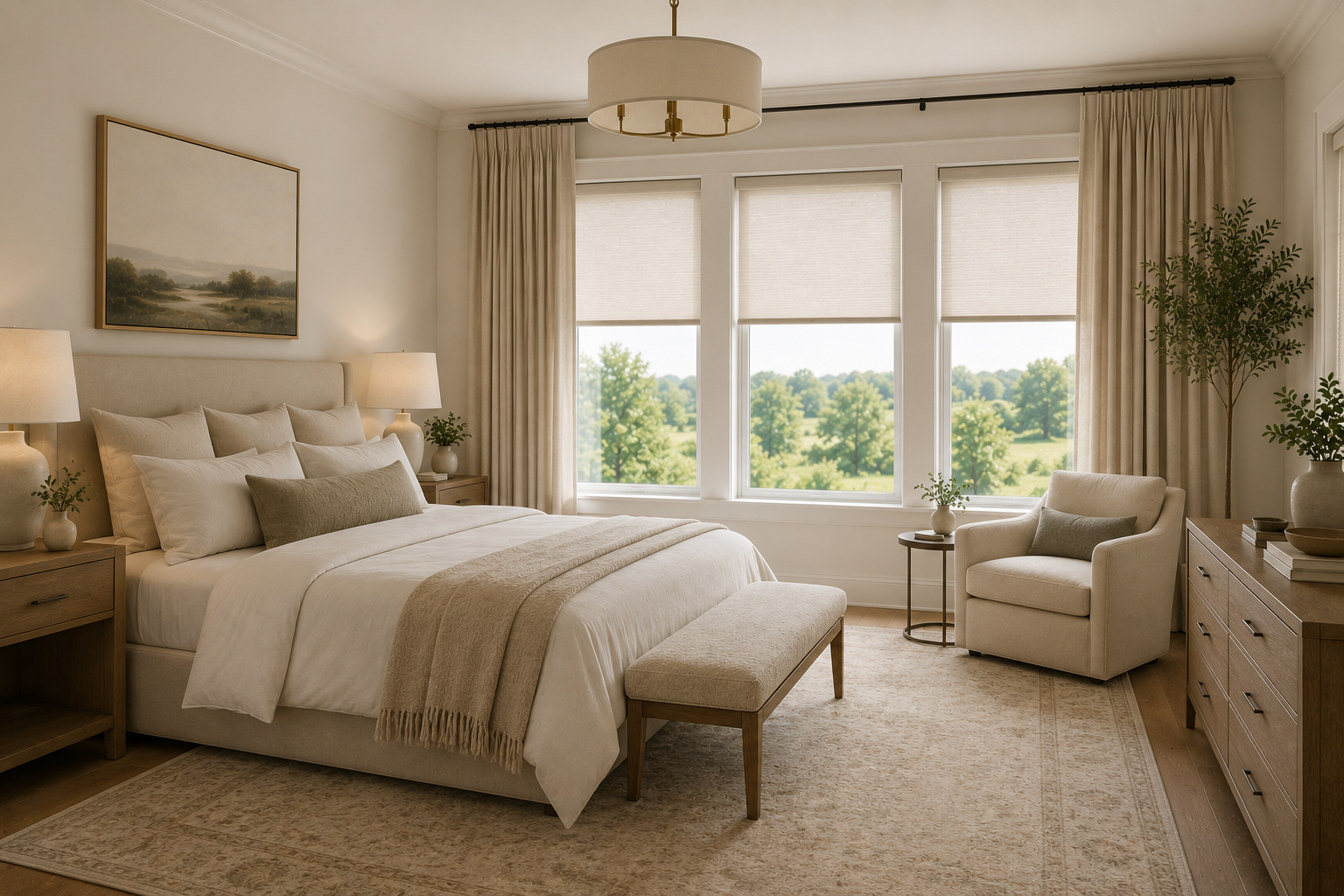
AI-generated primary bedroom featuring layered window treatments with light-filtering roller shades and floor-to-ceiling drapery panels, demonstrating a timeless approach to privacy, light control, and bedroom comfort.
Common Window Treatment Mistakes to Avoid
Even the most beautiful window treatment can fall short if it isn't selected or installed correctly. Over the years, I've seen homeowners make many of the same mistakes repeatedly, often resulting in window treatments that don't function well or fail to achieve the look they were hoping for.
Most of these mistakes are surprisingly easy to avoid once you know what to look for.
Choosing Style Before Function
One of the most common mistakes is selecting a window treatment based solely on appearance.
A product may look beautiful in a showroom or online photo, but that doesn't mean it's the right choice for your home.
Before focusing on colors, fabrics, or finishes, consider how the room will actually be used. Privacy, light control, maintenance, child safety, and pet-friendliness should all be part of the decision-making process.
The most successful window treatments balance both beauty and functionality.
Forgetting About Furniture Placement
Window treatments don't exist in isolation.
Before making final selections, consider how nearby furniture will interact with the window treatment.
For example:
A bed may affect drapery placement.
A sofa may limit access to shades.
A dining banquette may influence how treatments operate.
A desk may create glare concerns that require additional light control.
Taking the entire room into account usually leads to better long-term results.
Not Considering Video Calls and Screen Glare
With more people working remotely than ever before, window treatments now affect much more than privacy and light control.
One mistake I see homeowners make is choosing blinds for windows that sit directly behind their desk or video call setup. While blinds can provide privacy and adjustable light control, they often create harsh backlighting that makes it difficult for others to see you clearly during video meetings.
In some situations, sunlight filtering through the slats can also create distracting shadows and uneven lighting across your face.
If you regularly participate in Zoom, Microsoft Teams, Google Meet, or other video calls, consider how your window treatments will affect both screen glare and camera lighting. In many home offices, solar shades, roller shades, or other light-filtering options can create a more balanced lighting environment while still allowing natural daylight into the room.
Before selecting a window treatment for a home office, I recommend sitting at your desk throughout different times of the day to observe how sunlight moves through the space. A solution that looks great may not always function well during a video call.
Overlooking Child and Pet Considerations
Many homeowners don't think about children or pets until after the window treatments are installed.
Corded treatments, delicate fabrics, and fragile materials may create challenges in busy households.
If children or pets are part of the home, it's often easier and less expensive to account for those needs during the selection process rather than replacing treatments later.
Treating Every Window Exactly the Same
Consistency throughout a home can be important, but that doesn't mean every room requires identical window treatments.
A bedroom often has different privacy needs than a living room. A home office may require glare control that isn't necessary in a dining room.
Instead of forcing every room to use the same solution, focus on creating a cohesive overall look while allowing each room to function properly.
Ignoring How the Room Is Actually Used
One of the biggest mistakes homeowners make is assuming every room has the same requirements.
A primary bedroom may need blackout shades for better sleep. A home office may benefit from solar shades that reduce glare without blocking natural light. A dining room may prioritize aesthetics, while a bathroom typically prioritizes privacy.
Before selecting a window treatment, think about how the room is used on a daily basis. The best solution is often the one that supports the activities taking place in that space.
Choosing a Window Treatment That's Difficult to Operate
A window treatment only works if you actually use it.
I've seen homeowners install treatments on tall windows, windows over staircases, or other hard-to-reach locations only to discover they rarely adjust them because doing so is inconvenient.
In these situations, motorized shades are often worth considering. A window treatment that is easy to operate is far more likely to be used consistently than one that requires extra effort every day.
Blocking a Beautiful View
Many homeowners focus so much on privacy that they forget why they loved the window in the first place.
A beautiful water view, mountain view, garden, or city skyline can become one of the most valuable design features in a home.
When selecting window treatments, think about how often you'll want to enjoy the view. The goal is usually to manage privacy and sunlight while preserving the connection to the outdoors whenever possible.
Not Considering Future Needs
Window treatments are an investment that homeowners typically keep for many years.
When making a selection, think beyond your immediate needs.
Will children eventually be using the room?
Could mobility become a consideration in the future?
Will you want additional privacy later?
Are you planning to add smart-home technology?
A little long-term planning can help ensure your window treatments continue serving your needs well into the future.
My Final Advice
Many drapery-related mistakes involve rod placement, panel width, and drapery length, which is why I've dedicated an entire article to drapery guidance and installation recommendations.
The best window treatments aren't necessarily the most expensive ones. They're the ones that support your lifestyle, function properly, and complement the architecture of your home.
Taking the time to think through privacy, light control, maintenance, children, pets, and daily use will almost always lead to a better result than choosing a window treatment based on appearance alone.
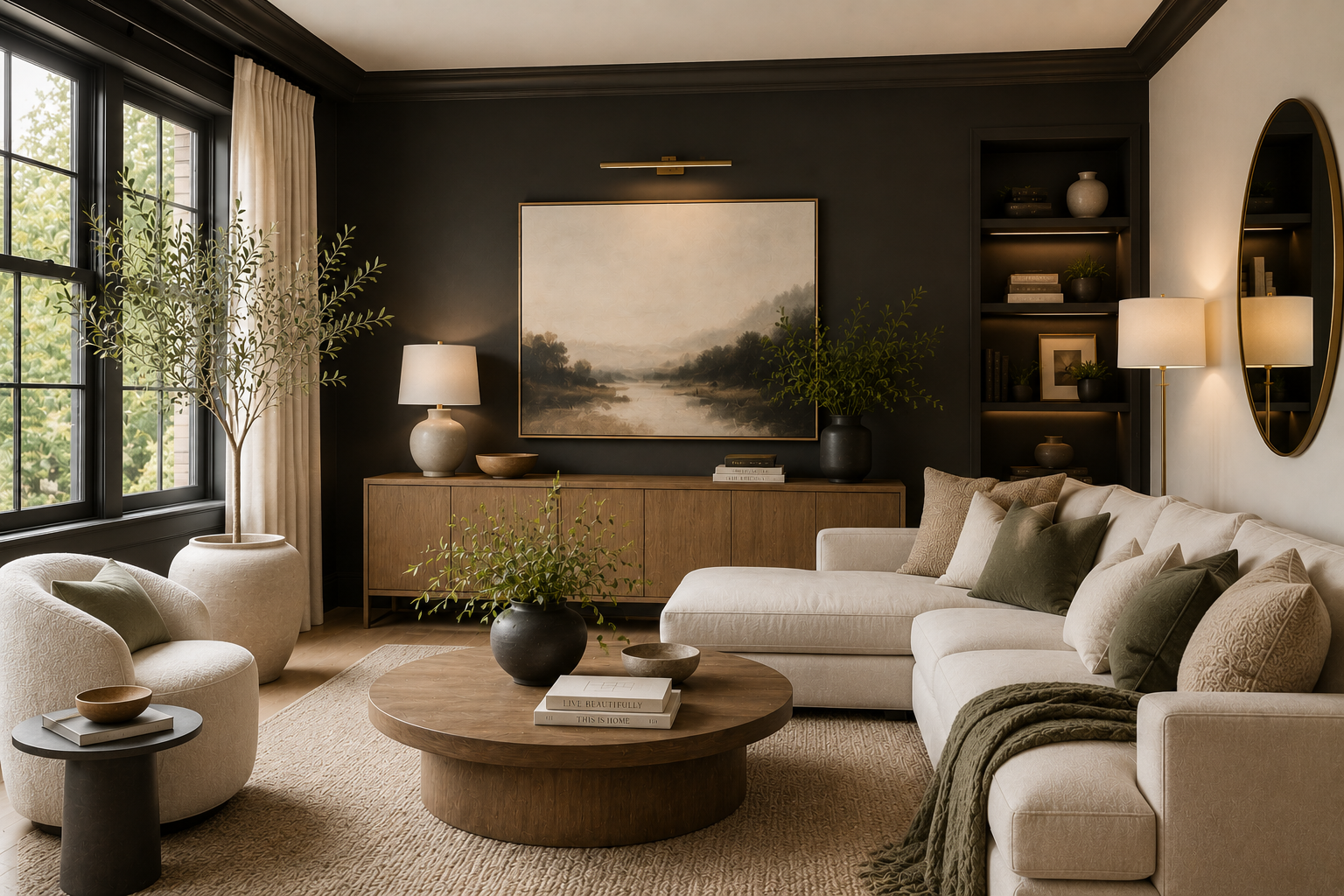
AI-generated living room featuring floor-to-ceiling drapery panels and layered window treatments, demonstrating how properly selected window coverings can enhance privacy, light control, and the overall design of a space.
Frequently Asked Questions About Window Treatments
What is the difference between blinds and shades?
Blinds use individual slats that can be tilted to control light and privacy, while shades are made from a continuous piece of material that raises and lowers as a single unit. Shades typically offer a cleaner appearance, while blinds provide more flexibility when adjusting sunlight throughout the day.
What are the best window treatments for privacy?
The best window treatments for privacy typically include blackout drapery, roller shades, Roman shades with privacy liners, cellular shades, and interior shutters. The right option depends on the room, the amount of natural light desired, and how much visibility needs to be blocked.
What are the best window treatments for bedrooms?
Bedrooms generally benefit from window treatments that provide both privacy and light control. Blackout drapery, blackout roller shades, blackout Roman shades, and layered window treatments are among the most popular choices.
What are the most pet-friendly window treatments?
Cordless roller shades, cordless cellular shades, and motorized shades are often among the most pet-friendly options. They eliminate accessible cords and tend to withstand daily wear better than many other window treatments.
What are the safest window treatments for children?
Cordless shades, motorized shades, and shutters are generally considered some of the safest options for homes with young children because they eliminate or reduce exposed cords.
Should window treatments match throughout the house?
Not necessarily. While maintaining a cohesive appearance throughout the home is important, different rooms often have different functional requirements. Bedrooms, bathrooms, living rooms, and home offices may each benefit from different window treatment solutions.
Are shutters worth the investment?
For many homeowners, yes. Shutters are durable, timeless, and often become part of the home's architecture. While they typically require a larger upfront investment, they can provide long-term value and require relatively little maintenance.
Should drapery touch the floor?
In most cases, yes. Floor-length drapery generally creates a more polished and intentional appearance than drapery that stops above the floor. However, the ideal length depends on the style of the room and the homeowner's preferences.
What window treatments work best for bay windows?
Bay windows often work well with Roman shades, roller shades, cellular shades, drapery, or a combination of shades and drapery. The best solution depends on the layout of the bay window and how the space is used.
What window treatments work best for tall windows?
Tall windows often benefit from motorized shades, solar shades, floor-to-ceiling drapery, or layered window treatments. Ease of operation should be an important consideration when selecting treatments for oversized windows.
Can I combine shades and drapery?
Absolutely. Layering shades and drapery is one of my favorite approaches because it provides greater flexibility for privacy, light control, insulation, and style. It also creates a more finished and custom appearance.
Are motorized shades worth it?
Motorized shades can be a worthwhile investment for tall windows, hard-to-reach windows, households with young children, or homeowners who value convenience. They also eliminate exposed cords and can integrate with many smart-home systems.
How much should I budget for window treatments?
Window treatment costs vary widely depending on the product, window size, level of customization, and installation requirements. Some homeowners spend a few hundred dollars per room, while fully customized installations can cost several thousand dollars or more.
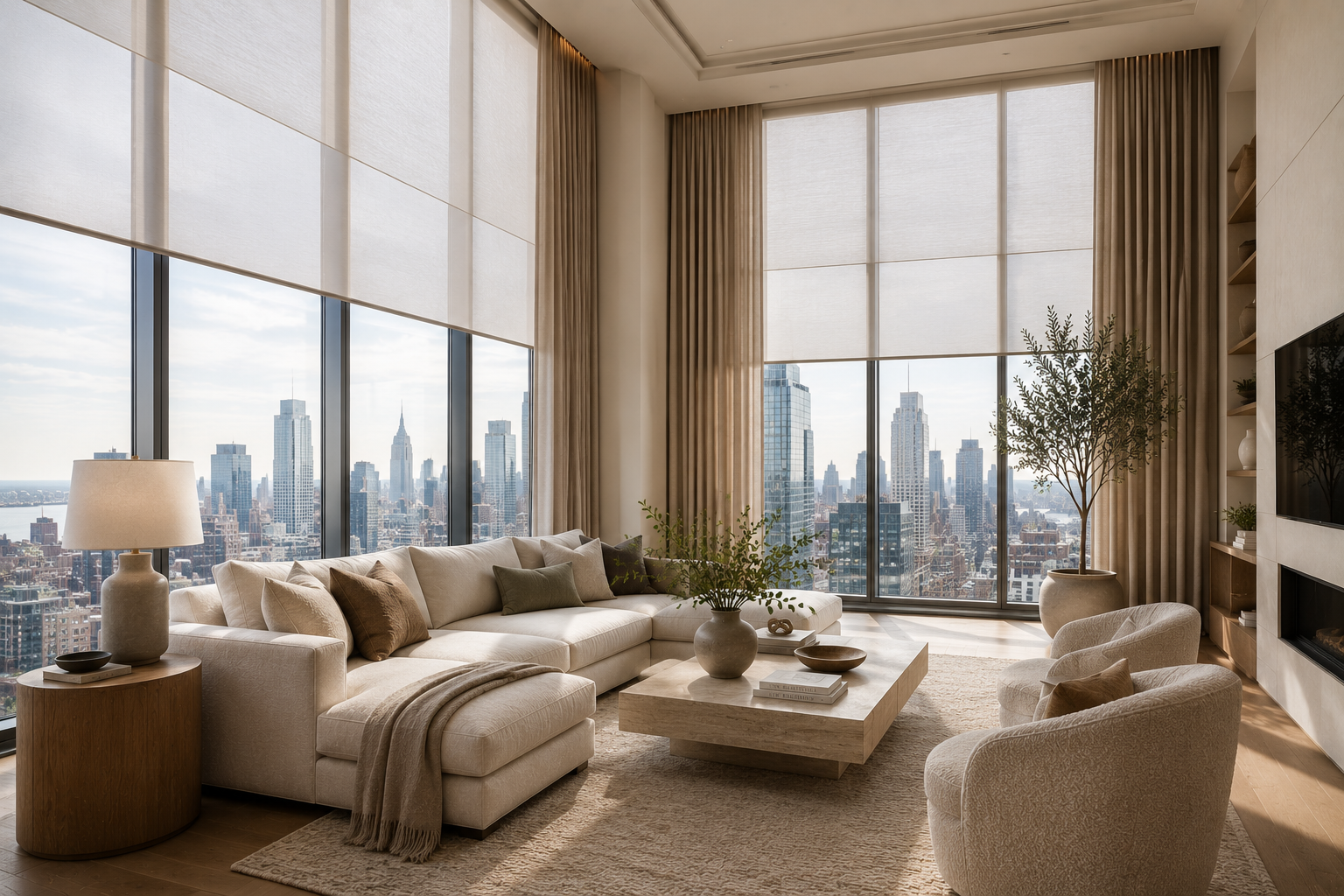
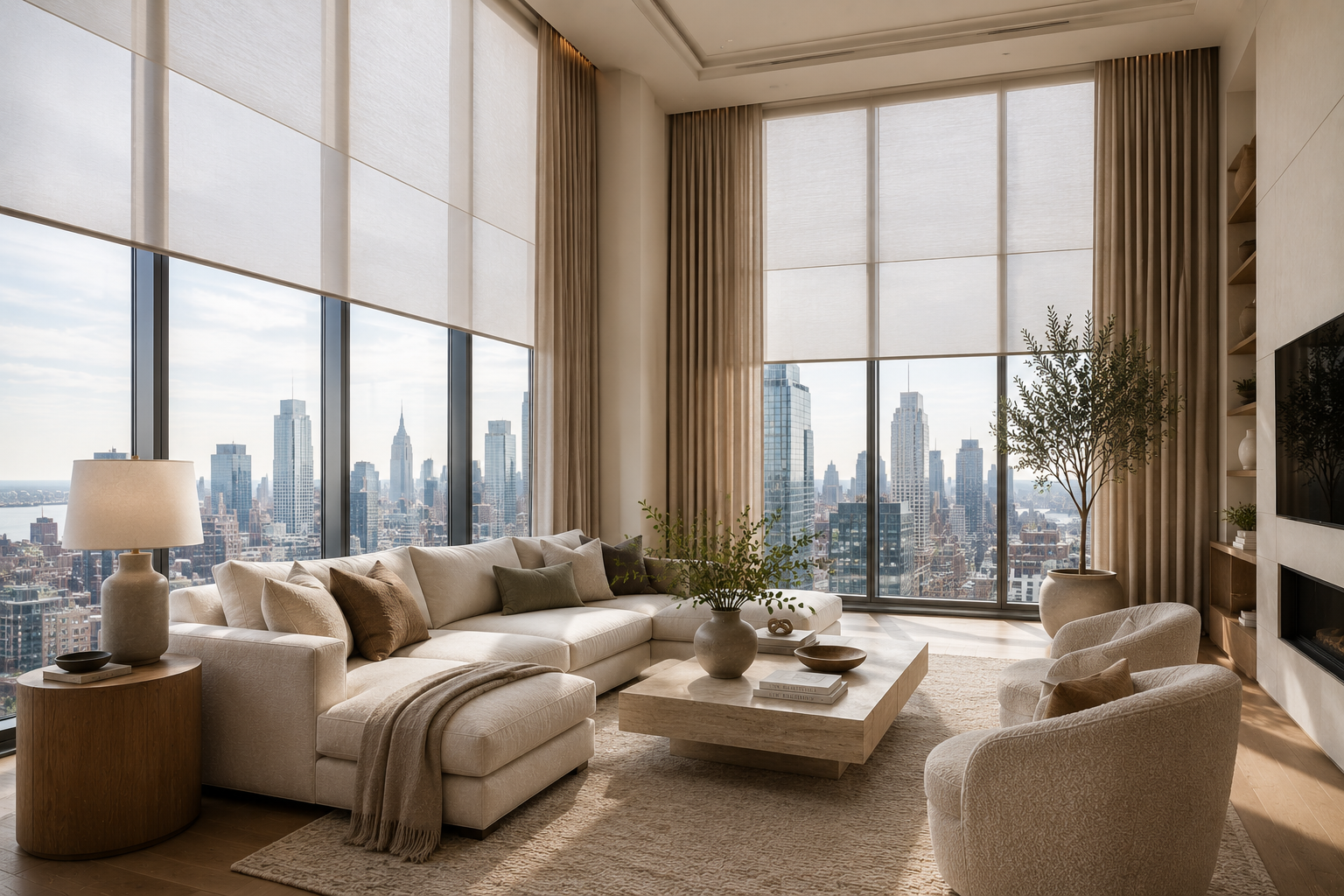
AI-generated high-rise living room featuring floor-to-ceiling drapery panels and light-filtering roller shades, demonstrating how layered window treatments can provide privacy, light control, and a polished designer look for tall windows.
Choosing the Right Window Treatments for Your Home
After growing up around the window treatment industry, watching my parents work in the field, and helping hundreds of homeowners over the years, I've learned that selecting window treatments is rarely about finding a single perfect solution.
The best choice depends on how you live, how you use the room, your privacy needs, your budget, and whether children or pets are part of the household.
If you're looking for a simple starting point, here are some of the recommendations I make most often:
Best overall versatility: Layered window treatments
Best for privacy: Blackout shades or blackout drapery
Best for bedrooms: Layered blackout shades and drapery
Best for home offices: Solar shades or light-filtering roller shades
Best for households with pets: Cordless shades or motorized shades
Best for households with young children: Cordless or motorized window treatments
Best for tall windows: Motorized shades
Best long-term investment: Interior shutters
Best option for preserving views: Solar shades
Window treatments should do more than simply cover a window. They should make your home more comfortable, functional, and enjoyable to live in every day.
Whether you're trying to improve privacy, reduce glare in a home office, create a better sleeping environment, accommodate children or pets, or simply add the finishing touch to a room, the right window treatment can have a significant impact on how a space looks and feels.
Take the time to evaluate how each room functions, think about your long-term needs, and choose solutions that support your lifestyle rather than simply following trends.
If you're feeling overwhelmed by the number of options available, you're not alone. Choosing window treatments involves much more than selecting a fabric or shade style. Privacy, light control, child safety, pet-friendliness, window size, room function, and color coordination all play important roles in the decision-making process.
As part of my virtual interior design services, I regularly help homeowners select window treatments that complement their home's architecture, furnishings, color palette, and lifestyle. Whether you're furnishing a single room or an entire home, professional guidance can help eliminate the guesswork and ensure the finished result feels both beautiful and functional.
The most successful window treatments are the ones that look beautiful, function well, and continue meeting your needs for years to come.