The Complete Guide to Drapery Headers: Which Style Is Right for Your Home?
When most homeowners shop for drapery, they tend to focus on the fabric, color, pattern, and length. While those details certainly matter, there's another important design decision that often gets overlooked: the drapery header.
The drapery header is the top portion of the panel that attaches to the rod or track system. It plays a major role in how the fabric hangs, how easily the panels open and close, and the overall look of the finished window treatment.
From tailored pleats and modern ripple folds to casual tie tops and rod pockets, each header style creates a different appearance and serves a different purpose. Some styles feel more formal, while others create a relaxed, laid-back look. Some are designed for daily use, while others work best as decorative side panels.
If you've ever found yourself wondering what the difference is between pinch pleat, Euro pleat, ripple fold, or grommet drapery, you're in the right place. In this guide, I'll walk you through the most common drapery header styles, explain their pros and cons, and help you determine which option may be the best fit for your home.
Before choosing a drapery header, it's important to understand the basics of window treatments, including privacy, light control, and functionality. If you're still deciding whether drapery is the right solution for your windows, I recommend reading my Complete Guide to Window Treatments first.
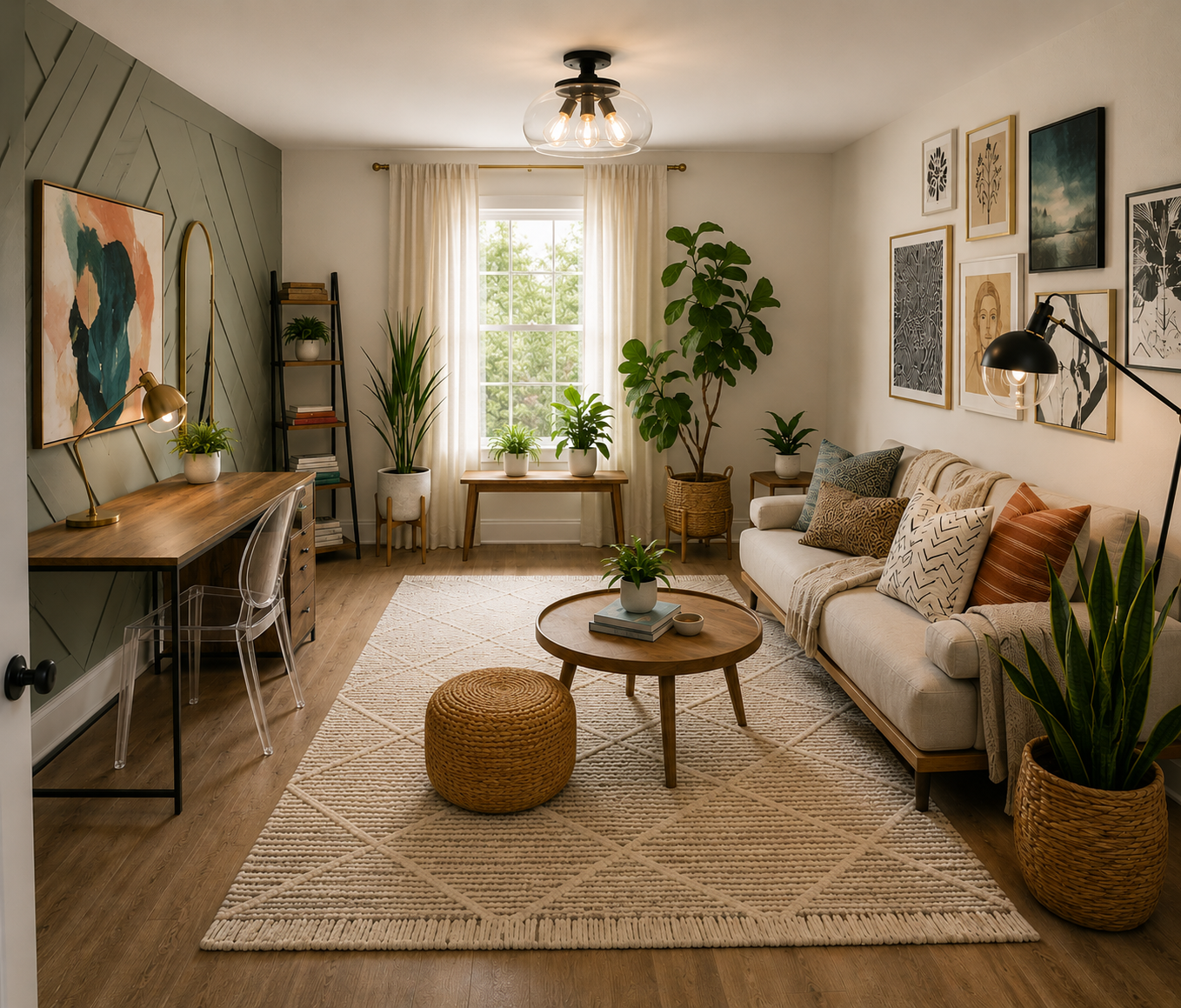
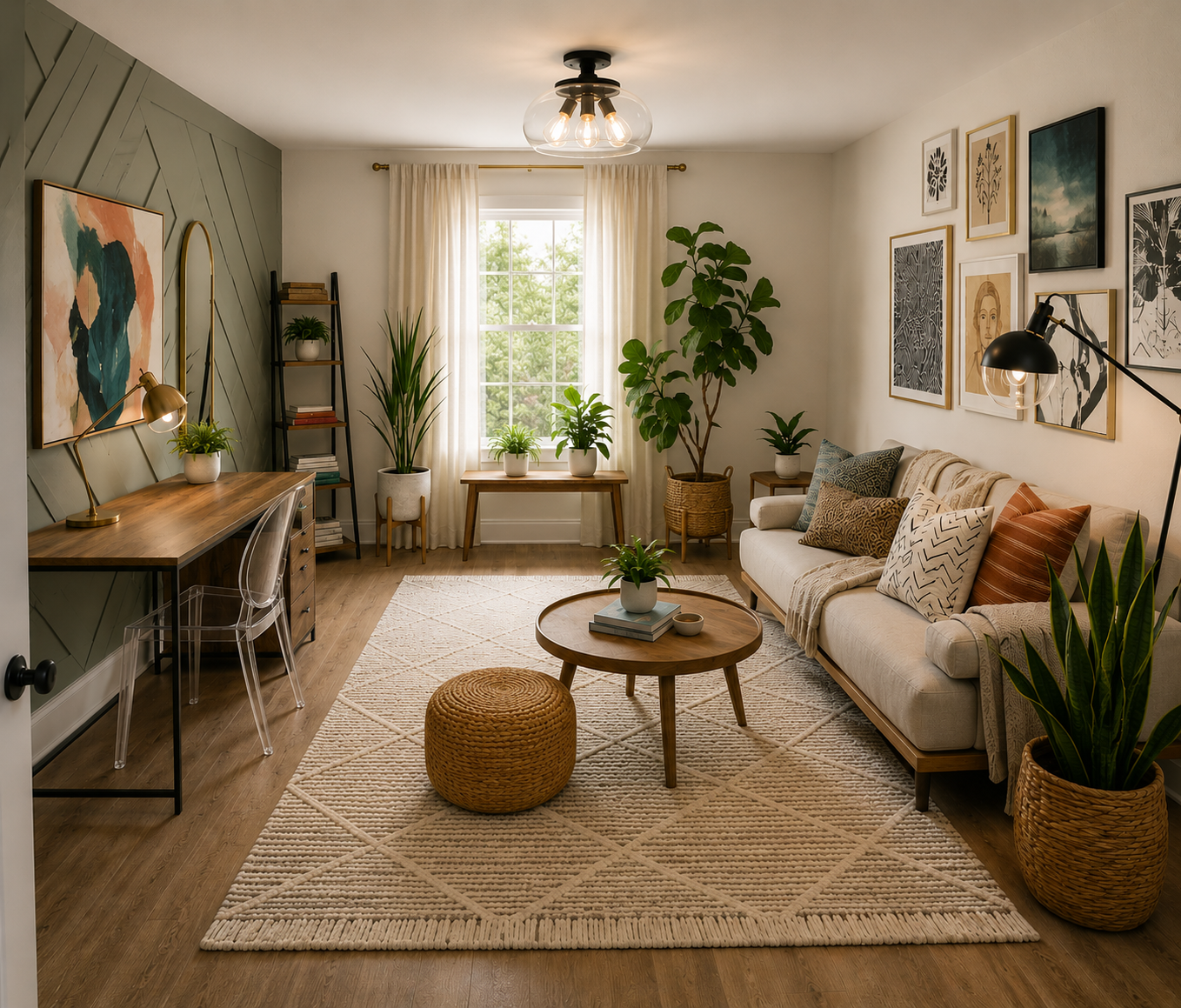
AI rendering of a design concept created by virtual interior designer Joshua Jones of JJones Design Co. The drapery header may seem like a small detail, but it can have a significant impact on the overall look and functionality of a space.
What Is a Drapery Header?
A drapery header refers to the top portion of a drapery panel that connects to the rod or track system. While it may seem like a small detail, the header plays a significant role in both the appearance and functionality of your window treatments.
The header determines how the fabric folds, how much fullness the drapery has, and how easily the panels move when opening and closing them. It can also influence whether a space feels formal, relaxed, traditional, or modern.
For example, a ripple fold header creates smooth, consistent waves that work well in contemporary interiors, while a pinch pleat header creates a more tailored and structured appearance often associated with traditional and transitional spaces.
Some header styles require specialized hardware, while others can be hung directly on a standard drapery rod. Certain styles are designed for everyday use, while others are better suited for decorative side panels that remain stationary.
Understanding the differences between header styles can help you select a window treatment that not only complements your home's design style but also functions well for your daily needs.
If you're still deciding how high or wide your drapery should be installed, be sure to read my Drapery Guidance article for additional planning tips.
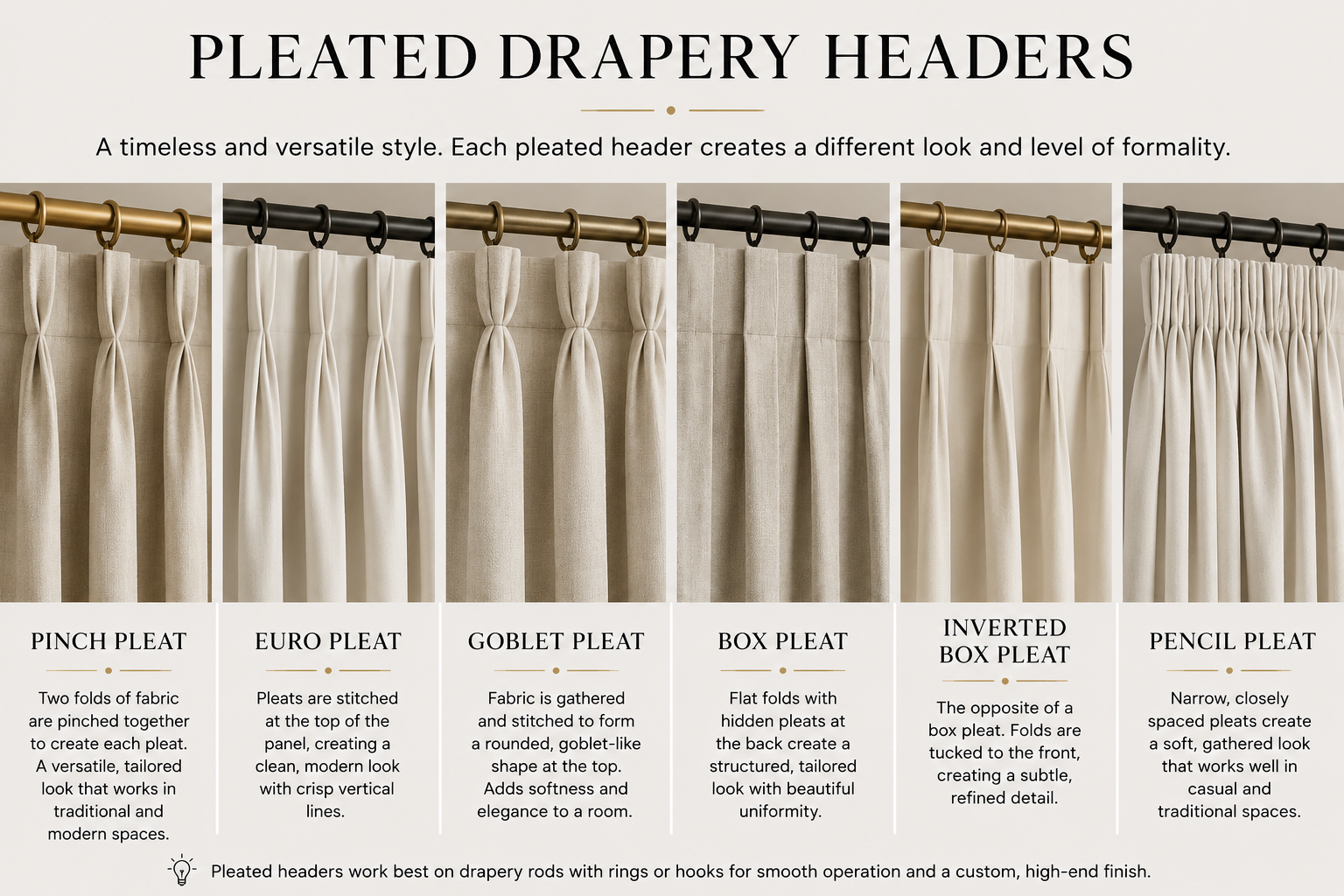
AI-generated infographic illustrating the most common pleated drapery header styles, including pinch pleat, Euro pleat, goblet pleat, box pleat, inverted box pleat, and pencil pleat.
Pleated Drapery Headers
Pleated drapery headers are among the most popular and timeless window treatment styles available. These headers are created by gathering and sewing the fabric into structured folds, creating a tailored appearance and helping the drapery hang in consistent, uniform pleats.
Because of their polished look, pleated headers are commonly used in living rooms, dining rooms, bedrooms, and other spaces where homeowners want a more refined appearance. Depending on the specific style, pleated headers can complement everything from traditional and transitional homes to modern and contemporary interiors.
Another advantage of pleated drapery is that many styles stack neatly when opened, allowing more natural light to enter the room and maximizing the view outside.
Within the pleated drapery family, you'll find several distinct header styles, each offering its own look, level of formality, and functionality.
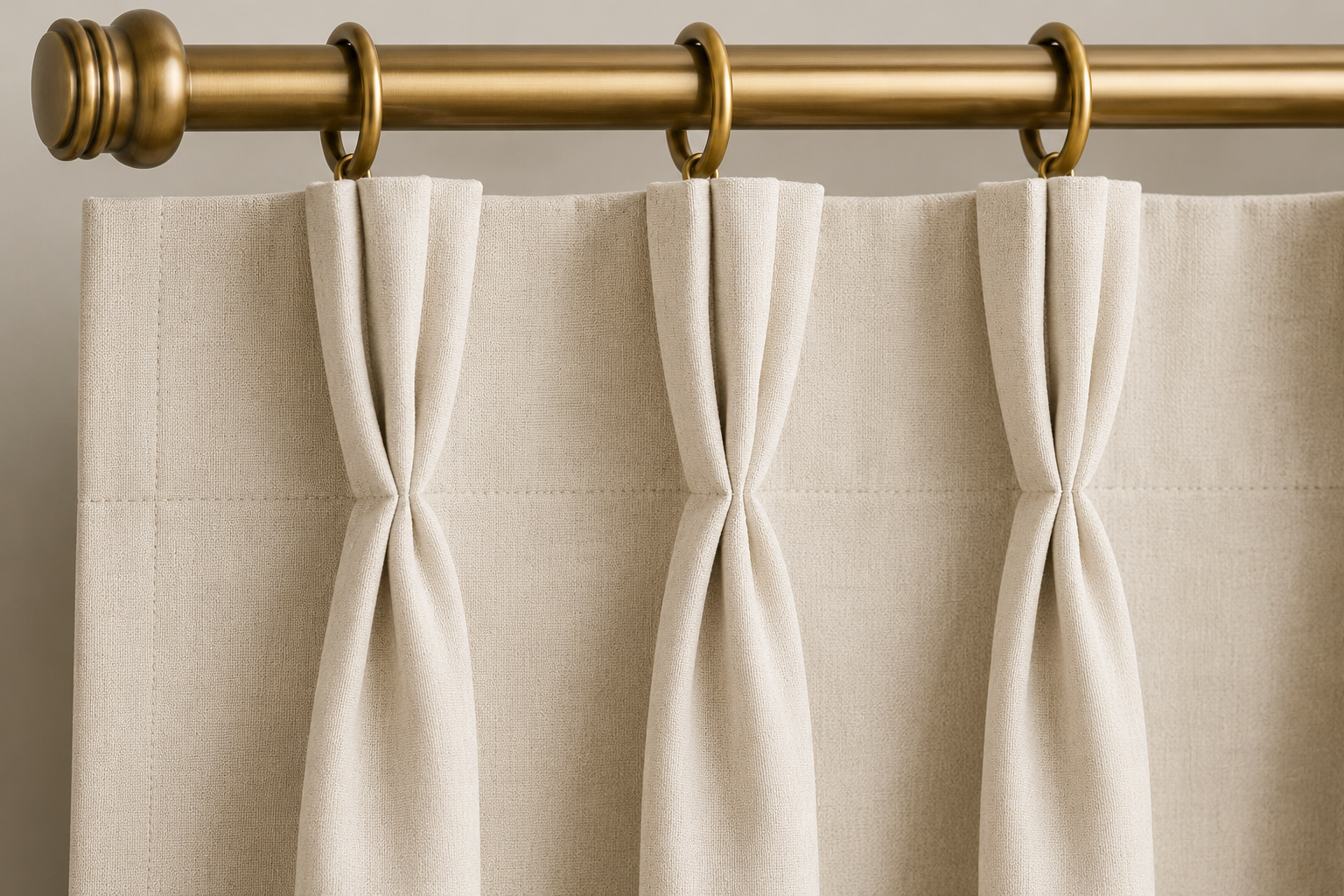
AI rendering illustrating a pinch pleat drapery header. Pinch pleat drapery remains one of the most popular and timeless header styles due to its tailored appearance and versatility across a wide range of interior design styles.
Pinch Pleat Drapery
What Is Pinch Pleat Drapery?
Pinch pleat drapery is one of the most recognizable and traditional drapery header styles. It is created by gathering fabric into evenly spaced pleats that are pinched together near the top of the panel. Depending on the design, the pleats may be sewn into groups of two, three, or more folds, creating a structured and tailored appearance.
Pinch pleat drapery is available in several variations, including double pinch pleat and triple pinch pleat styles. Double pinch pleats feature two fabric folds per pleat, while triple pinch pleats feature three folds, creating a fuller and often more formal appearance.
Pinch pleat drapery is typically mounted using drapery pins and rings or a traverse rod, allowing the panels to open and close with ease.
Best For
Traditional interiors
Transitional interiors
Formal living rooms
Dining rooms
Bedrooms
Homes with classic architectural details
Pros
Creates a tailored and structured appearance
Offers consistent folds across the entire panel
Stacks back neatly when opened
Works well with a wide variety of fabrics
Provides a timeless look that has remained popular for decades
Cons
Typically requires more fabric than some simpler header styles
Can be more expensive than casual drapery options
May feel too formal for some modern or minimalist interiors
Usually requires drapery pins, rings, or specialized hardware
Design Considerations
Pinch pleat drapery works particularly well in homes where a more traditional or refined look is desired. The structured pleats help showcase luxurious fabrics and create a finished appearance that complements a wide range of design styles.
Because pinch pleat drapery maintains its shape well, it is often used for functional drapery panels that are opened and closed regularly.
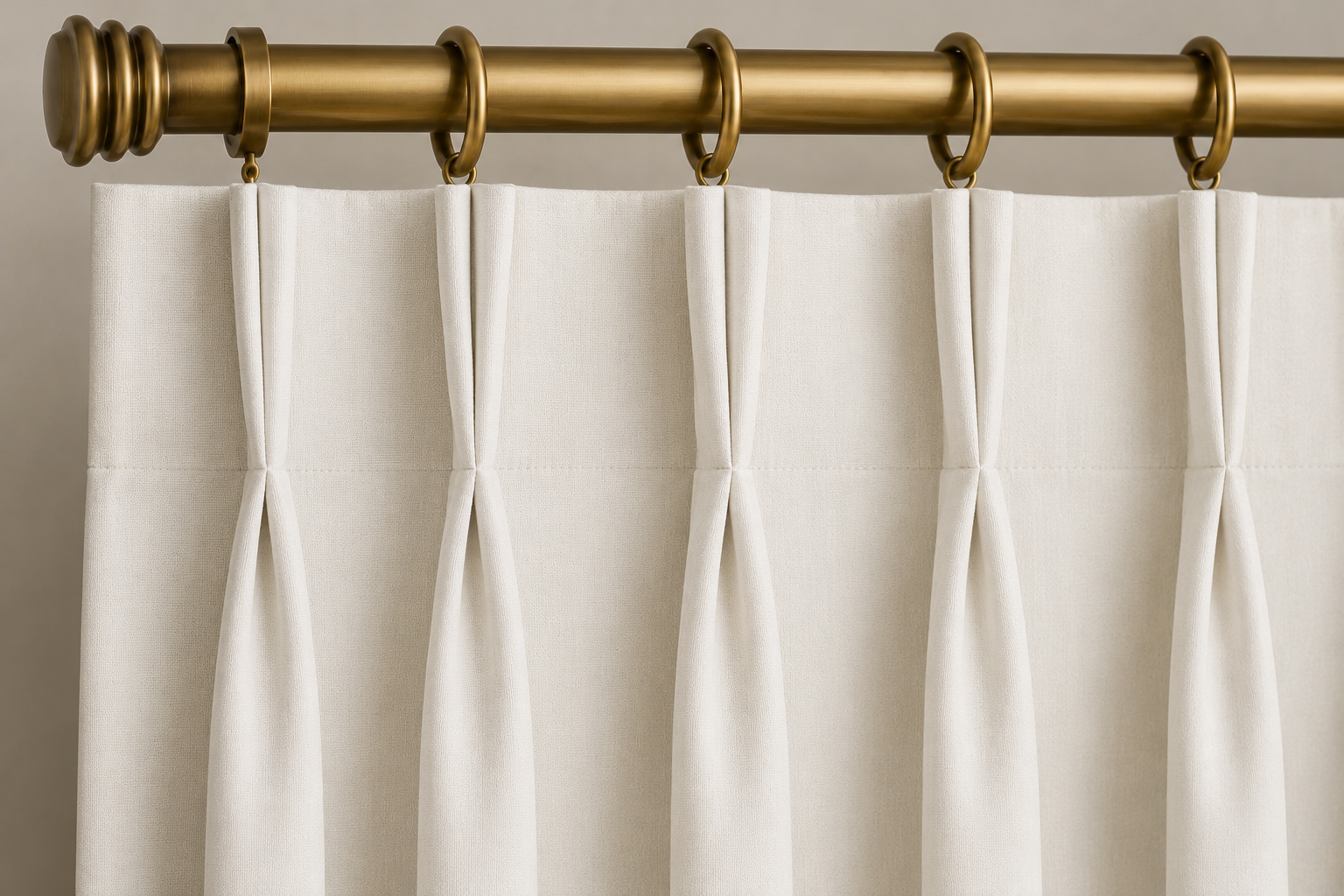
AI rendering illustrating a Euro pleat (tailored pleat) drapery header. The pleats are sewn at the very top of the panel, creating a clean, streamlined appearance that has become increasingly popular in contemporary, transitional, and Modern Organic interiors.
Euro Pleat Drapery (Tailored Pleat)
What Is Euro Pleat Drapery?
Euro pleat drapery, sometimes referred to as tailored pleat drapery, features pleats that are pinched and sewn at the very top of the panel rather than several inches below the header. This creates a cleaner, more streamlined appearance compared to traditional pinch pleat drapery.
The result is a tailored look that feels slightly less formal while still maintaining the structured folds that many homeowners appreciate. Euro pleat drapery has become increasingly popular in modern, contemporary, Scandinavian, and transitional interiors because of its simple yet refined appearance.
Like pinch pleat drapery, Euro pleat panels are typically installed using drapery pins and rings or a traverse rod.
Best For
Contemporary interiors
Modern Organic interiors
Scandinavian interiors
Transitional interiors
Living rooms
Bedrooms
Dining rooms
Pros
Creates a clean and tailored appearance
Provides consistent, uniform folds
Stacks back neatly when opened
Works well with a wide variety of fabrics
Complements both modern and traditional spaces
Cons
Typically requires more fabric than simpler header styles
Often costs more than casual drapery styles
Requires drapery pins, rings, or specialized hardware
May not suit homeowners seeking a more relaxed or informal look
Design Considerations
Euro pleat drapery is often selected by homeowners who want the polished appearance of pleated drapery without the more traditional look associated with pinch pleats. The pleats remain structured, but the higher placement creates a cleaner profile that works particularly well in modern homes.
Because of its versatility, Euro pleat drapery can easily transition between design styles, making it a popular choice for homeowners who want a timeless window treatment that will continue to work as furnishings and décor evolve over time.
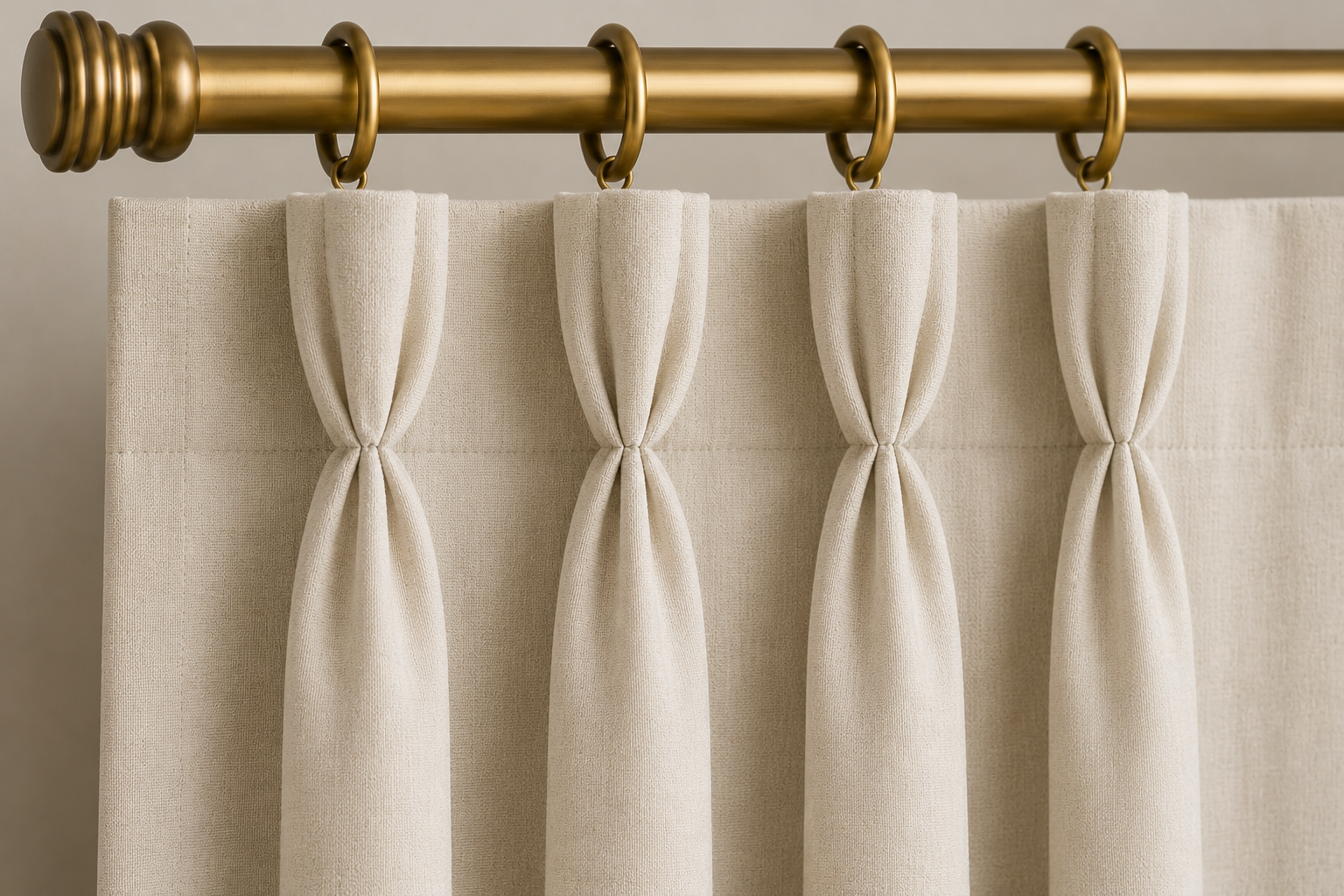
AI rendering illustrating a goblet pleat drapery header. Named for its goblet-like shape, this decorative header style is often associated with formal interiors and luxury window treatment designs.
Goblet Pleat Drapery
What Is Goblet Pleat Drapery?
Goblet pleat drapery is a decorative header style named after its resemblance to the shape of a goblet or wine glass. The fabric is folded and sewn into rounded pleats at the top of the panel, creating a more formal and ornamental appearance than many other drapery styles.
Because of their structured shape, goblet pleats are often supported with interlining or additional reinforcement to help the pleats maintain their form over time.
Best For
Traditional interiors
Formal living rooms
Formal dining rooms
Historic homes
Luxury interiors
Pros
Creates a dramatic and elegant appearance
Adds visual interest to the top of the drapery panel
Works well with luxurious fabrics
Makes a strong decorative statement
Cons
Often requires more fabric than other header styles
Typically costs more due to the additional fabrication involved
May feel too formal for many contemporary homes
The structured pleats can require additional maintenance to retain their shape
Design Considerations
Goblet pleat drapery is often selected when the drapery itself is intended to serve as a decorative focal point within the room. The distinctive shape of the pleats draws attention upward and can enhance the sense of formality within a space.
While goblet pleats remain a beautiful option for certain interiors, they are generally less common today than pinch pleat, Euro pleat, or ripple fold drapery. Homeowners considering this style should ensure it complements the overall architecture and furnishings of the room, as the formal appearance may not suit every design aesthetic.
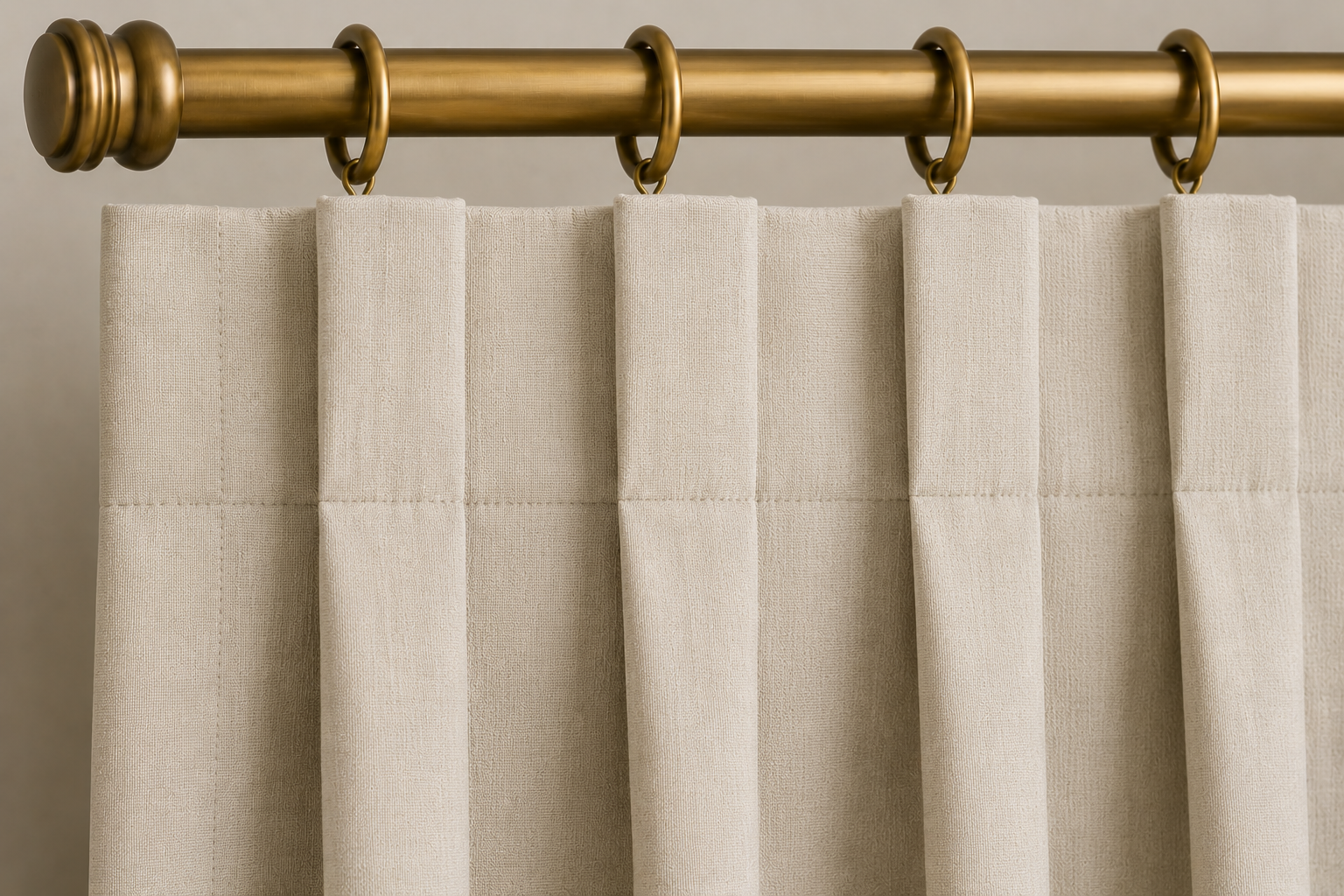
AI rendering illustrating a box pleat drapery header. Known for its structured, architectural appearance, box pleat drapery is often used in traditional, transitional, and contemporary interiors where clean lines and symmetry are desired.
Box Pleat Drapery
What Is Box Pleat Drapery?
Box pleat drapery features evenly spaced pleats that are folded toward each other and sewn into place, creating a clean, structured appearance across the top of the panel. Unlike pinch pleat drapery, where the fabric is gathered and pinched together, box pleats create a flatter and more geometric look.
This header style is known for its crisp lines and symmetrical appearance, making it a popular choice for homeowners seeking a tailored window treatment without the more traditional look associated with pinch pleats.
Best For
Transitional interiors
Contemporary interiors
Traditional interiors
Formal living rooms
Dining rooms
Home offices
Pros
Creates a clean and organized appearance
Offers a structured and tailored look
Complements a wide range of design styles
Provides consistent folds across the panel
Works well with both patterned and solid fabrics
Cons
Typically requires more fabric than some casual header styles
Can be more expensive than rod pocket or tab top drapery
May feel too structured for homeowners seeking a relaxed appearance
Usually requires specialized fabrication
Design Considerations
Box pleat drapery is often chosen for its balanced appearance and architectural feel. The crisp folds create visual order without drawing as much attention to the header itself, allowing the fabric and overall window treatment design to remain the focus.
This style works particularly well in spaces where a clean, tailored look is desired. Depending on the fabric selection and hardware, box pleat drapery can feel either traditional or surprisingly contemporary, making it one of the more versatile pleated header styles available.
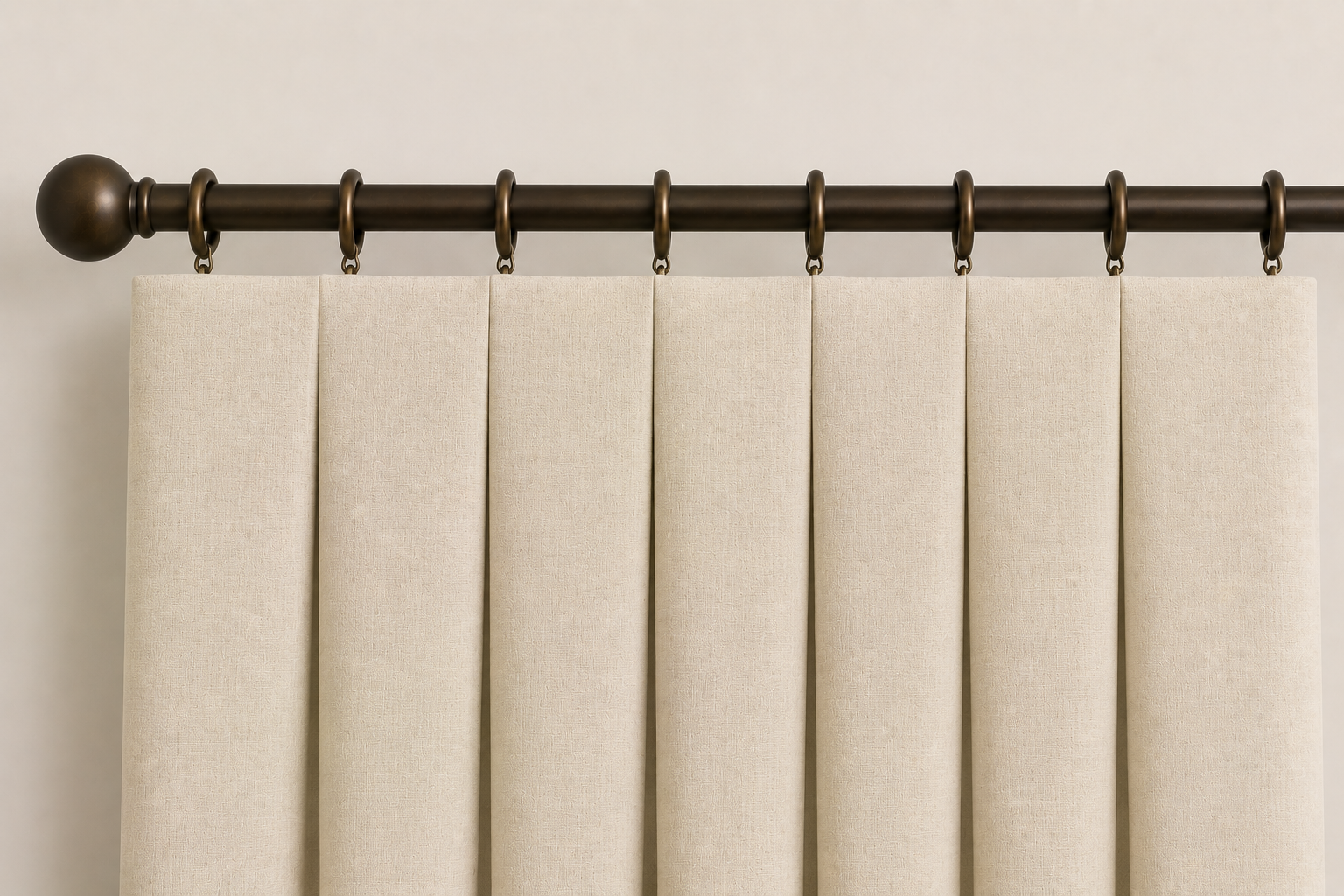
AI rendering illustrating an inverted box pleat drapery header. The pleats are folded toward the back of the panel, creating a clean, tailored appearance with subtle architectural structure.
Inverted Box Pleat Drapery
What Is Inverted Box Pleat Drapery?
Inverted box pleat drapery is similar to standard box pleat drapery, but the folds are reversed. Instead of the fabric folding outward at the front of the panel, the pleat is tucked inward, creating a cleaner and more streamlined appearance across the header.
This subtle difference gives inverted box pleat drapery a more contemporary feel while still maintaining the structured look associated with pleated window treatments. The pleats create uniform folds and help the drapery hang neatly from top to bottom.
Best For
Contemporary interiors
Modern interiors
Transitional interiors
Home offices
Living rooms
Dining rooms
Pros
Creates a clean and streamlined appearance
Offers a tailored look without appearing overly formal
Provides consistent folds across the panel
Works well with a variety of fabric types
Complements both modern and transitional spaces
Cons
Typically requires custom fabrication
Can be more expensive than casual header styles
Requires additional fabric compared to simpler header options
May not provide the decorative detail some homeowners prefer
Design Considerations
Inverted box pleat drapery is a good choice for homeowners who appreciate the structure of pleated drapery but prefer a more understated appearance. Because the pleats are tucked inward, the header feels less decorative and allows the fabric itself to take center stage.
This style pairs particularly well with clean-lined furnishings and interiors that emphasize simplicity and balance. Depending on the fabric and hardware selection, inverted box pleat drapery can easily transition between contemporary, transitional, and even some traditional spaces.
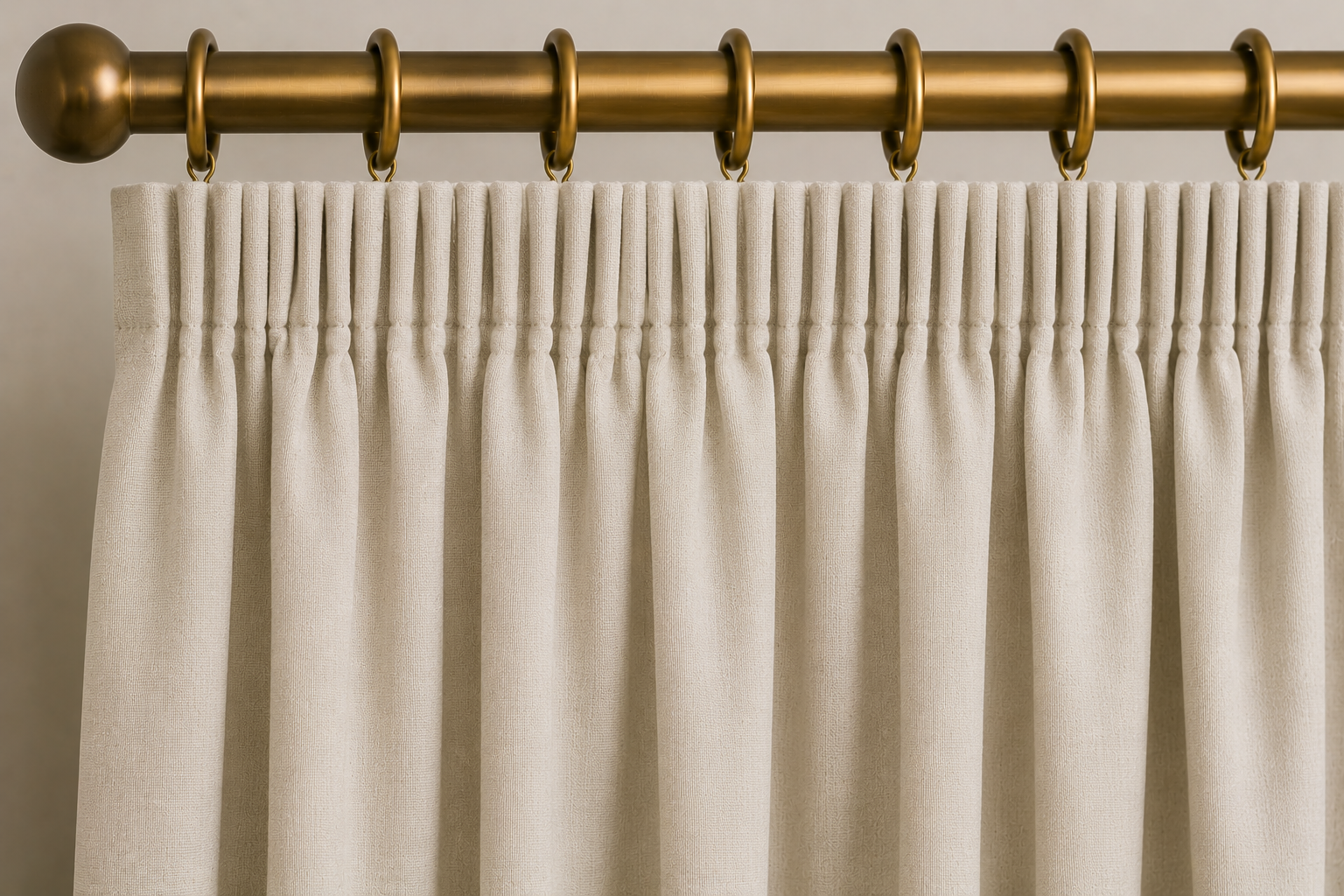
AI rendering illustrating a pencil pleat drapery header. Named for its tightly gathered folds that resemble a row of pencils, this classic header style creates a soft, traditional appearance and remains a popular choice for both custom and ready-made drapery panels.
Pencil Pleat Drapery
What Is Pencil Pleat Drapery?
Pencil pleat drapery is a header style that features a series of narrow, closely spaced folds across the top of the panel. The pleats resemble a row of pencils standing side by side, which is how this style earned its name.
The pleats are created using a gathering tape sewn into the back of the drapery panel. By pulling the cords within the tape, the fabric gathers into evenly spaced folds. The amount of fullness can often be adjusted depending on the desired look.
Pencil pleat drapery is particularly popular in the United Kingdom and Europe, although it can also be found in North America.
Best For
Traditional interiors
Transitional interiors
Cottage-style homes
Guest bedrooms
Casual living spaces
Pros
Creates soft, uniform folds
Works with a variety of rod and track systems
Adjustable fullness allows for customization
Widely available in ready-made drapery panels
Suitable for both decorative and functional drapery
Cons
Pleats may lose their shape over time if not maintained
Can appear less tailored than some custom pleated styles
Gathering tape may require occasional adjustment
May not provide the clean, structured appearance some homeowners prefer
Design Considerations
Pencil pleat drapery offers a balance between structure and softness. The smaller pleats create a traditional appearance without feeling overly formal, making this style a versatile option for many homes.
Because the fullness can be adjusted, homeowners have some flexibility in determining how relaxed or gathered the finished drapery will appear. This adaptability has contributed to the style's long-standing popularity in both custom and ready-made window treatments.
When selecting pencil pleat drapery, it is important to consider the weight of the fabric, as heavier materials may require more support to maintain even folds and smooth operation.
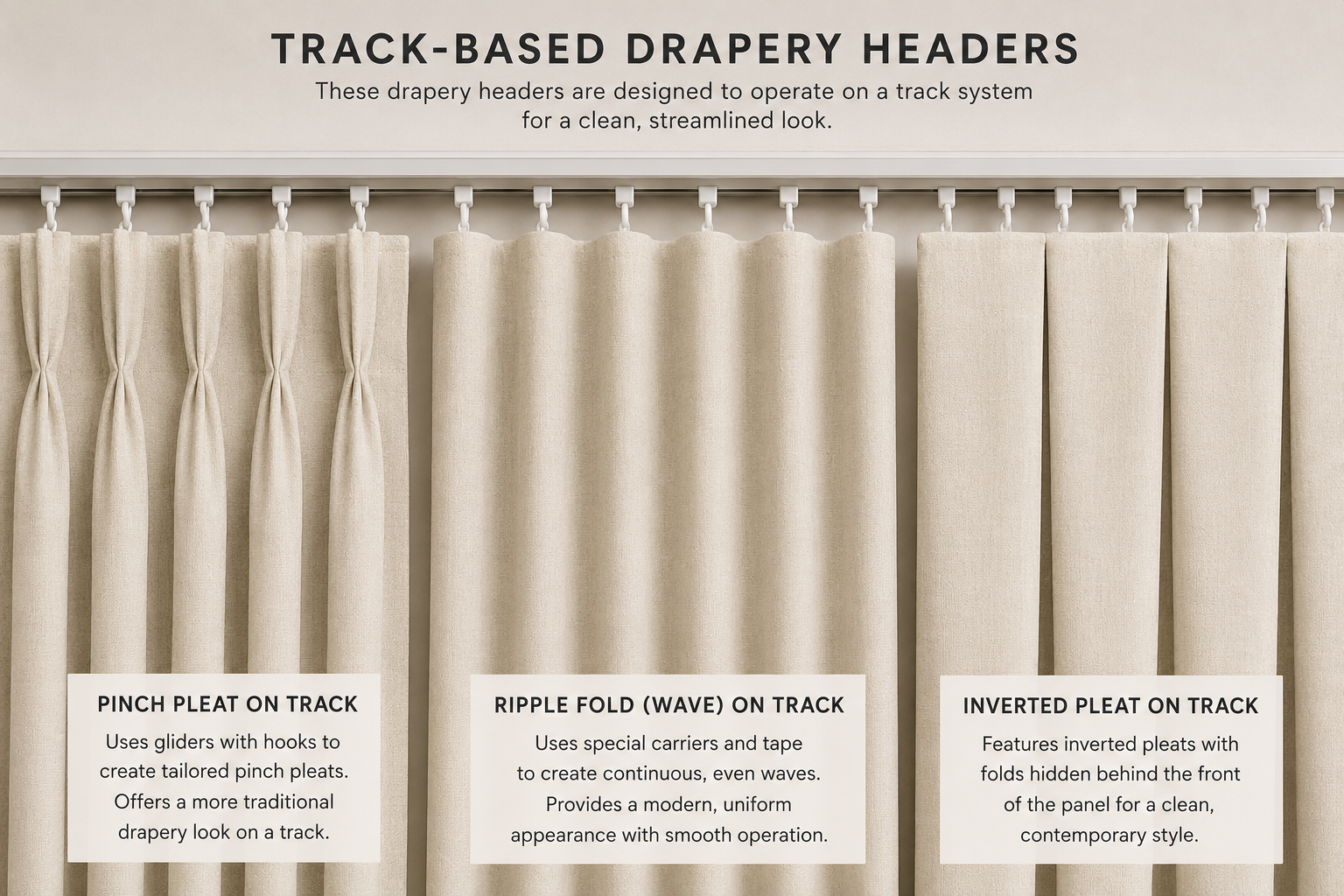
AI-generated infographic comparing common track-based drapery header styles, including pinch pleat on track, ripple fold (wave) on track, and inverted pleat on track. Track systems offer a clean, streamlined alternative to decorative drapery rods.
Track-Based Drapery Headers
While many drapery styles are designed to hang from decorative rods, track-based drapery headers operate using a specialized track system mounted to the wall or ceiling. These systems are designed to help the panels glide smoothly while maintaining consistent folds across the entire width of the drapery.
Track-based systems are often selected for their clean appearance, ease of operation, and ability to accommodate large windows, sliding glass doors, and floor-to-ceiling installations. Because the hardware is typically less visible than a decorative rod, the focus remains on the fabric and the overall shape of the drapery.
Among track-based header styles, ripple fold drapery has become one of the most popular options for modern homes due to its sleek appearance and functionality.
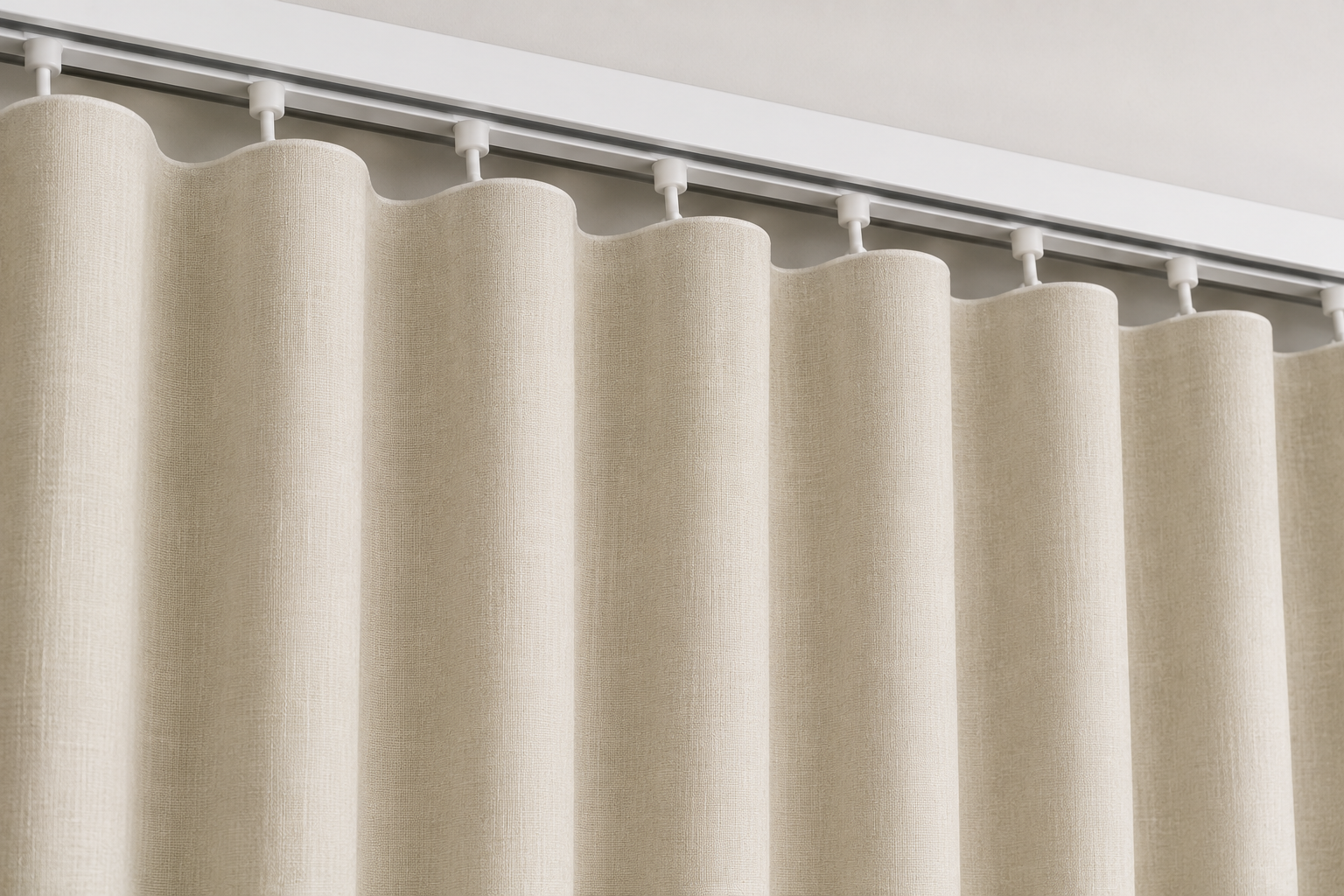
AI rendering illustrating a ripple fold (wave fold) drapery header. This streamlined track-based system creates continuous, uniform waves that make it a popular choice for contemporary interiors, large windows, and sliding glass doors.
Ripple Fold Drapery (Wave Fold Drapery)
What Is Ripple Fold Drapery?
Ripple fold drapery, sometimes referred to as wave fold drapery, is a header style that creates smooth, continuous waves across the entire width of the fabric. Unlike pleated drapery, which forms individual folds at specific intervals, ripple fold drapery maintains a consistent wave pattern from one end of the panel to the other.
This style is installed using a specialized track system and carriers that help maintain uniform spacing between each fold. The result is a clean, streamlined appearance that has become increasingly popular in contemporary residential and commercial interiors.
Best For
Contemporary interiors
Modern interiors
Minimalist interiors
Floor-to-ceiling windows
Sliding glass doors
Large window walls
Pros
Creates smooth, consistent folds
Operates easily and glides smoothly along the track
Offers a clean and streamlined appearance
Works exceptionally well on large windows and doors
Can make a room feel more modern and sophisticated
Cons
Requires a specialized track system
Typically costs more than basic rod-mounted options
Less decorative than some pleated styles
Decorative rods generally cannot be used
Design Considerations
Ripple fold drapery is often selected when homeowners want a clean, uncluttered appearance. The continuous wave pattern creates visual consistency and allows the fabric to become the focal point rather than the header itself.
Because of its smooth operation and ability to span large openings, ripple fold drapery is commonly used for expansive windows, sliding glass doors, and floor-to-ceiling installations. The style pairs particularly well with contemporary architecture and interiors that emphasize simple lines and minimal visual clutter.
Homeowners considering ripple fold drapery should plan for a track system from the beginning, as the header is specifically designed to operate with this type of hardware.
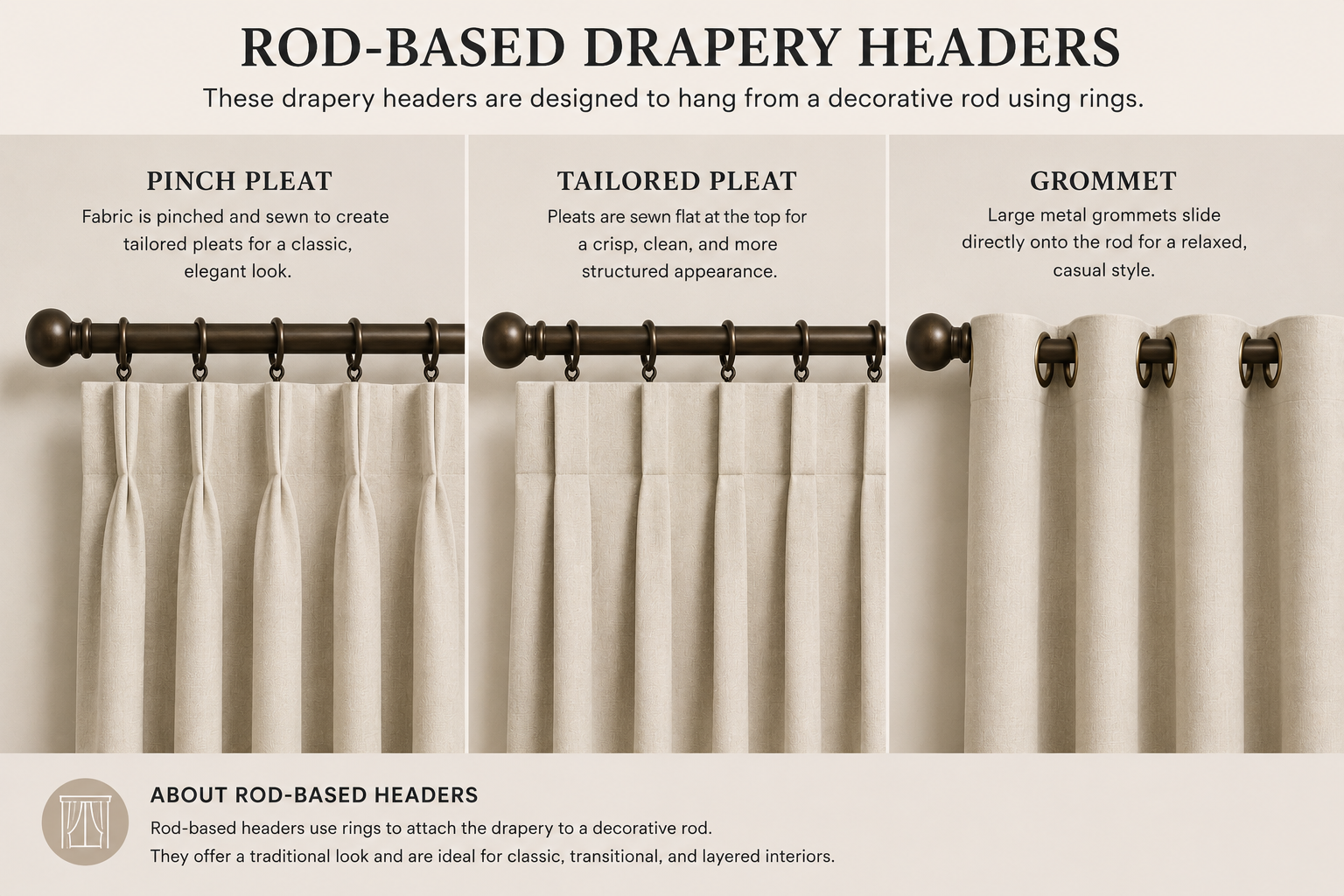
AI-generated infographic comparing common rod-based drapery header styles. Decorative rods and rings remain one of the most popular ways to hang drapery, offering both functional support and an opportunity to showcase decorative hardware.
Rod-Based Drapery Headers
Rod-based drapery headers are among the most common window treatment styles found in homes today. As the name suggests, these headers are designed to hang directly from a decorative drapery rod rather than a specialized track system.
Many rod-based headers are readily available through home décor retailers and can be easier to install than some custom drapery systems. Depending on the specific header style, they can create looks that range from casual and relaxed to clean and tailored.
One important consideration is functionality. While some rod-based headers glide relatively easily along the rod, others can be more difficult to open and close on a daily basis. For this reason, it is helpful to consider not only how the drapery will look, but also how often it will be used.
The following rod-based header styles are among the most common options available to homeowners.
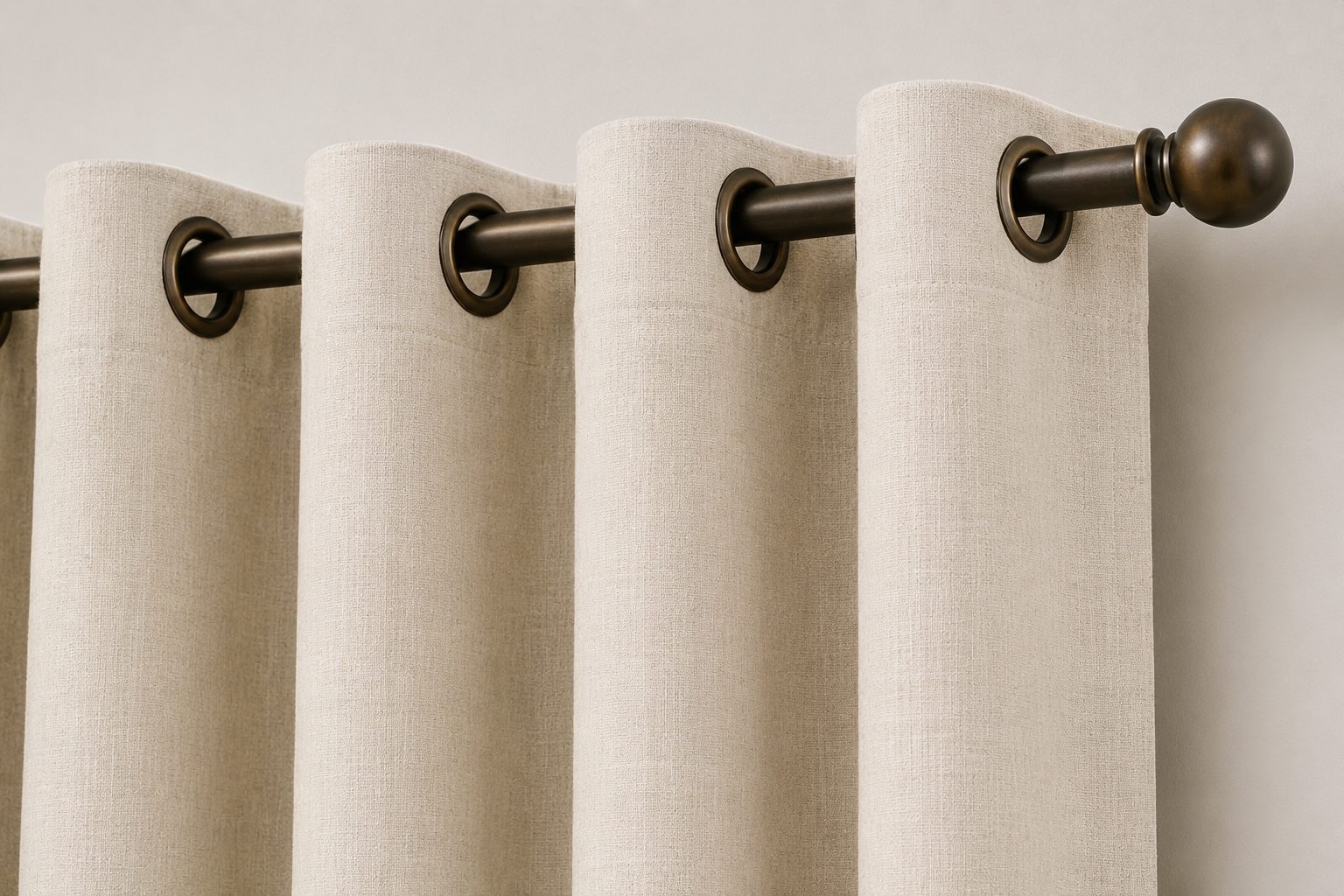
AI rendering illustrating a grommet drapery header. Large metal grommets slide directly onto the drapery rod, creating soft, uniform folds and a relaxed, contemporary appearance.
Grommet Drapery
What Is Grommet Drapery?
Grommet drapery features large metal rings, known as grommets, that are built directly into the top of the drapery panel. The decorative rod passes through these openings, creating a series of soft, uniform folds as the fabric hangs.
Because the rod is exposed and becomes part of the overall design, grommet drapery is often paired with decorative hardware that complements the room's style.
Best For
Casual interiors
Contemporary interiors
Bedrooms
Family rooms
Rental properties
Budget-conscious projects
Pros
Easy to install
Slides smoothly along the rod
Readily available from many retailers
Creates consistent folds
Often more affordable than custom drapery styles
Cons
The metal grommets remain visible at all times
Limited customization compared to many custom header styles
May not suit highly traditional or formal interiors
The exposed hardware becomes a prominent design element
Design Considerations
Grommet drapery offers a simple and functional solution for many homeowners. The built-in rings allow the panels to move easily across the rod, making this style a practical choice for windows that are opened and closed frequently.
Because the hardware remains visible, it is important to select a rod and finish that complement the overall design of the room. Homeowners should also keep in mind that the grommets create fixed folds, which can limit the ability to achieve certain custom drapery looks.
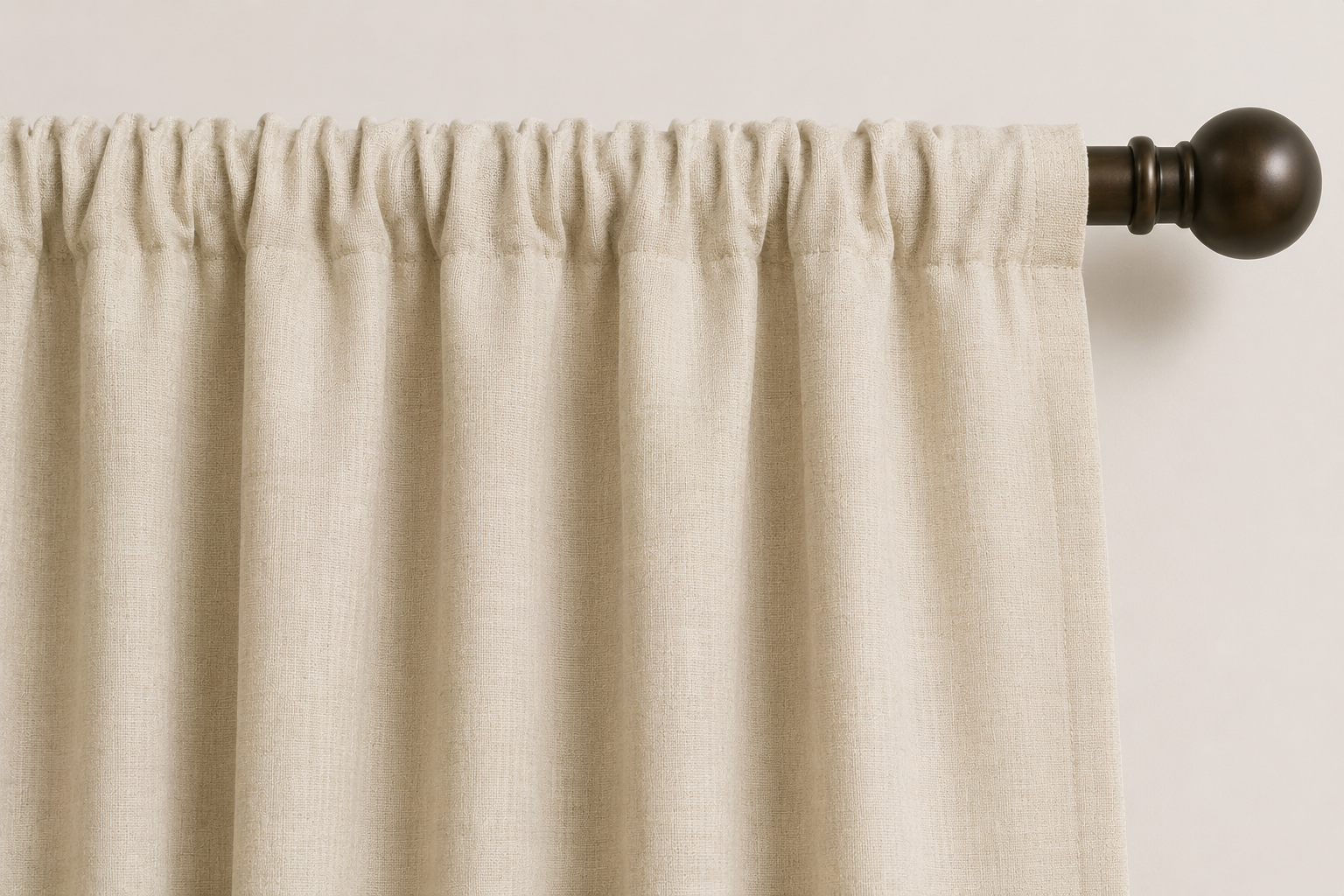
AI rendering illustrating a rod pocket drapery header. This casual header style uses a sewn pocket that slides directly onto the rod, creating soft gathers across the top of the panel.
Rod Pocket Drapery
What Is Rod Pocket Drapery?
Rod pocket drapery is one of the oldest and most widely recognized drapery header styles. It features a sewn pocket along the top of the panel through which the drapery rod is inserted. Once installed, the fabric gathers naturally along the rod, creating a soft and relaxed appearance.
Because the rod passes directly through the fabric pocket, the hardware is largely concealed from view, allowing the drapery itself to take center stage.
Best For
Traditional interiors
Cottage-style homes
Farmhouse interiors
Decorative side panels
Guest rooms
Spaces where the drapery remains mostly stationary
Pros
Simple and straightforward design
Conceals much of the drapery rod
Widely available from retailers
Often one of the most affordable header styles
Creates a soft and relaxed appearance
Cons
Can be difficult to open and close regularly
Fabric may bunch or drag along the rod
Does not create uniform folds like many pleated styles
May not be ideal for large or heavy drapery panels
Design Considerations
Rod pocket drapery is often used in situations where the panels serve a decorative purpose rather than being opened and closed daily. Because the fabric gathers directly on the rod, movement can be less smooth than with other header styles.
This style works particularly well in bedrooms, guest rooms, and other spaces where homeowners want a softer, more traditional appearance. For frequently used windows, however, it is important to consider whether ease of operation will be a priority before selecting a rod pocket header.
Many homeowners don't realize that rod pocket drapery can also be used with curtain rings and drapery pins. This approach can create a more tailored appearance while allowing the panels to move more easily along the rod. It can be a good solution for homeowners who like the versatility of rod pocket panels but prefer a slightly more polished look.
Homeowners who appreciate a casual and understated look may find rod pocket drapery to be an attractive option, especially when paired with lightweight fabrics and simple hardware.
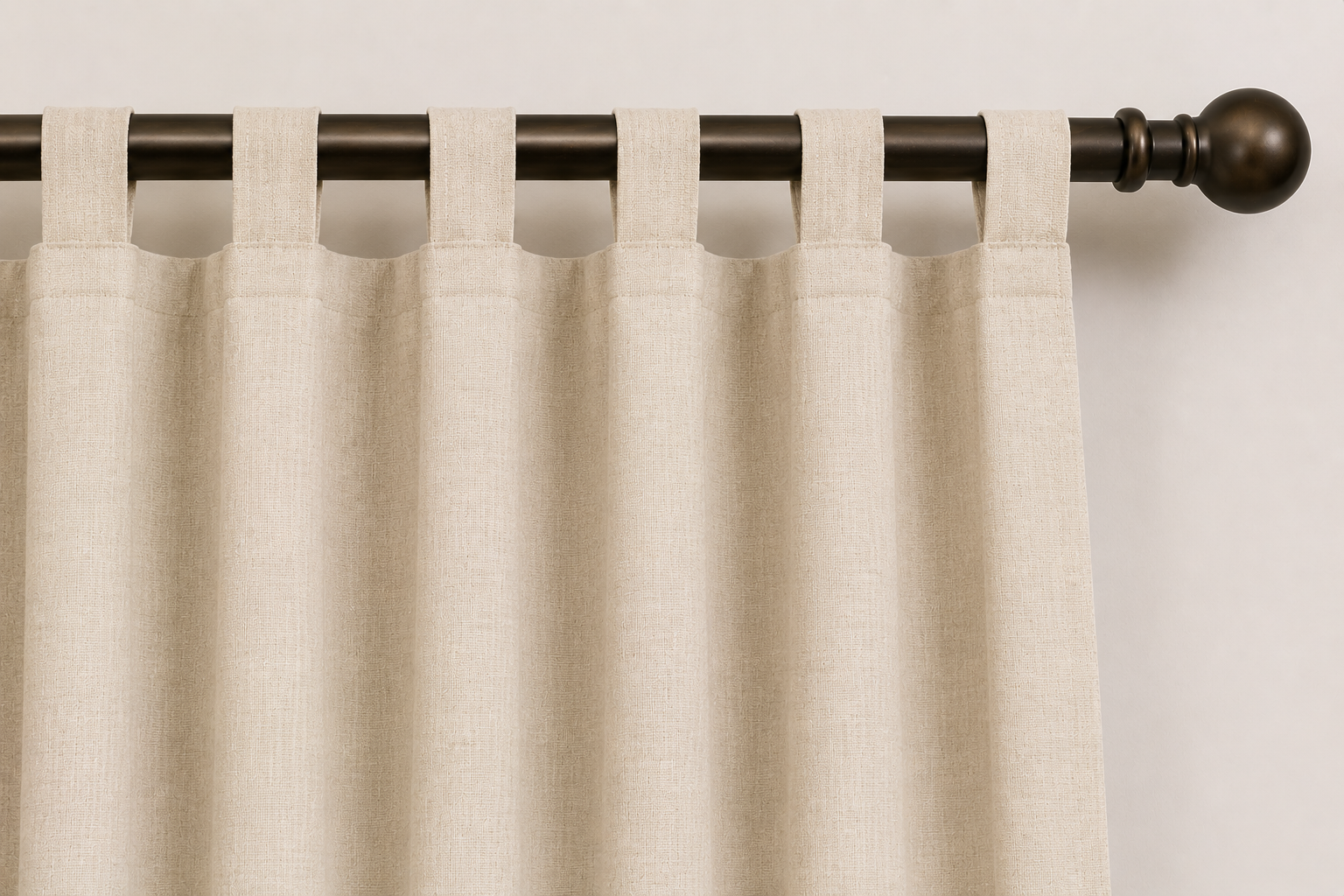
AI rendering illustrating a tab top drapery header. Fabric loops sewn directly into the top of the panel create a relaxed, casual look that is often associated with cottage, coastal, farmhouse, and bohemian interiors.
Tab Top Drapery
What Is Tab Top Drapery?
Tab top drapery features fabric loops, commonly referred to as tabs, sewn directly onto the top of the drapery panel. The decorative rod passes through these loops, allowing the tabs to remain fully visible once installed.
Unlike some header styles that conceal the hardware, tab top drapery intentionally showcases both the tabs and the rod as part of the overall design. This creates a casual and relaxed appearance that works well in a variety of informal settings.
Best For
Coastal interiors
Cottage-style homes
Farmhouse interiors
Casual living spaces
Sunrooms
Guest bedrooms
Pros
Creates a relaxed and informal appearance
Allows decorative rods to remain visible
Easy to install
Widely available through many retailers
Works well with lightweight fabrics
Cons
Can be difficult to open and close frequently
Tabs may wear over time with regular use
Creates a more casual appearance than many pleated styles
May not be suitable for formal interiors
Can be less practical for large or heavy drapery panels
Design Considerations
Tab top drapery is often selected for its laid-back appearance and decorative charm. Because the tabs remain visible, they become an important design feature that contributes to the overall look of the window treatment.
This style is typically best suited for windows where the drapery remains mostly stationary. Frequent opening and closing can place additional stress on the tabs and may cause the fabric to bunch along the rod.
Homeowners should also consider the scale of the room and the weight of the fabric when selecting tab top drapery. Lightweight materials generally work best, helping the tabs maintain their shape while creating soft, natural folds throughout the panel.
For homeowners seeking a casual and approachable look, tab top drapery can be an attractive option that adds texture and visual interest to a space.
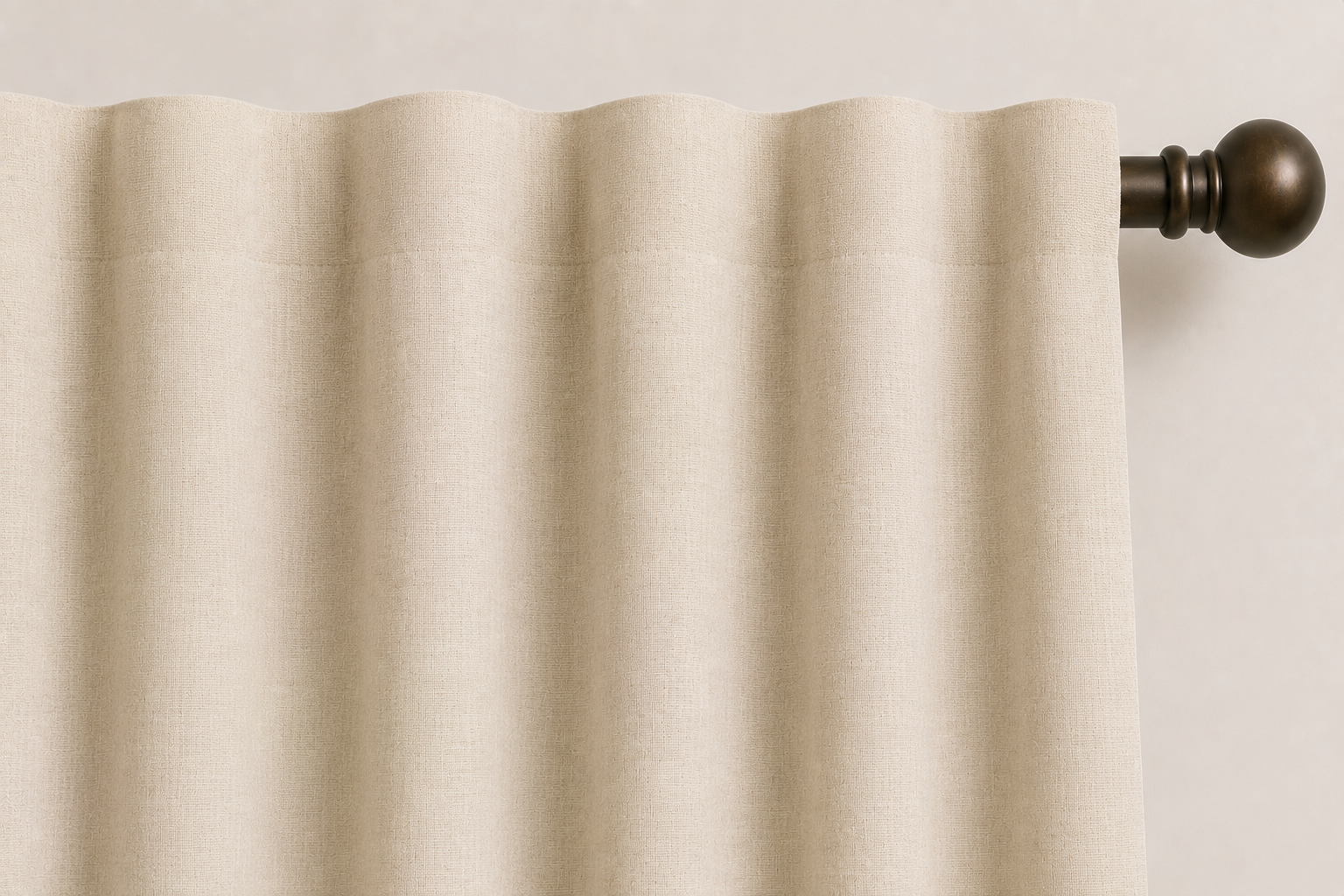
AI rendering illustrating a back tab drapery header. Hidden tabs behind the panel create soft, even folds while keeping the hardware less visible, offering a cleaner appearance than traditional tab top drapery.
Back Tab Drapery
What Is Back Tab Drapery?
Back tab drapery features fabric loops sewn onto the back of the drapery panel rather than the front. The decorative rod passes through these hidden tabs, allowing the drapery to hang in soft, uniform folds while concealing much of the hardware from view.
Because the tabs are hidden behind the panel, back tab drapery offers a cleaner appearance than tab top drapery while still maintaining a relaxed feel. Many homeowners view it as a middle ground between casual rod pocket drapery and more tailored pleated styles.
Best For
Transitional interiors
Coastal interiors
Farmhouse interiors
Cottage-style homes
Bedrooms
Living rooms
Pros
Creates soft, uniform folds
Conceals much of the drapery rod
Provides a cleaner appearance than tab top drapery
Easy to install
Works well with a variety of design styles
Cons
Can be difficult to open and close regularly
Hidden tabs may not slide smoothly on all rods
Not ideal for very heavy fabrics
May not provide the structured appearance of pleated drapery
Design Considerations
Back tab drapery is often chosen by homeowners who want a softer appearance without exposing the tabs or as much hardware as tab top drapery. The hidden tabs create more consistent folds while allowing the fabric to remain the primary focus.
Like rod pocket and tab top drapery, back tab panels are generally best suited for windows where the drapery is not opened and closed constantly throughout the day. For heavily used windows, homeowners may want to consider header styles that glide more easily.
Back tab drapery can work well across a variety of design styles, making it one of the more versatile casual header options. Depending on the fabric selection, it can feel relaxed and informal or slightly more tailored and refined.
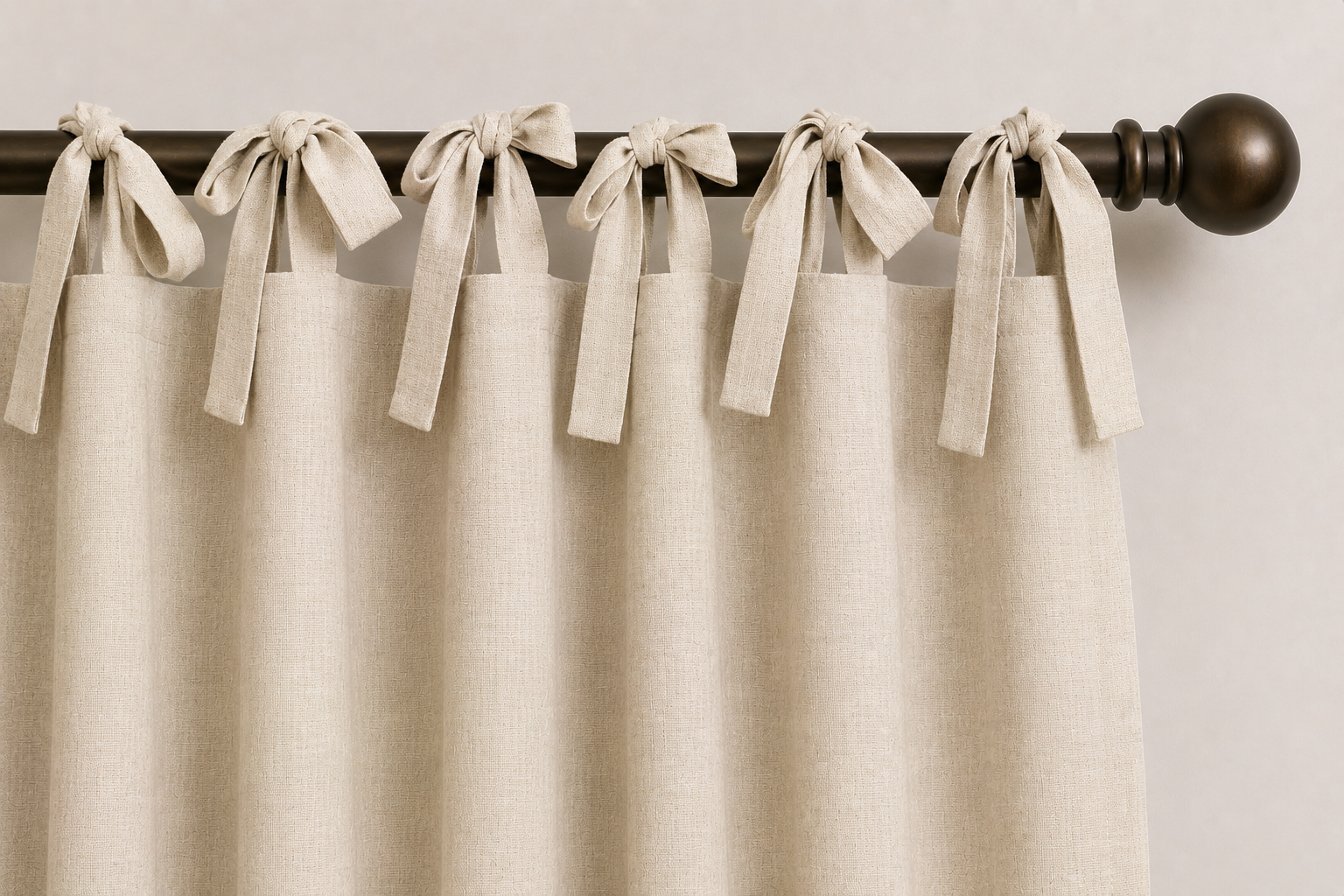
AI rendering illustrating a tie top drapery header. Fabric ties are knotted directly around the rod, creating a relaxed, decorative look that is especially popular in cottage, farmhouse, coastal, and bohemian interiors.
Tie Top Drapery
What Is Tie Top Drapery?
Tie top drapery features fabric ties attached to the top of the panel that are knotted or tied directly around the drapery rod. Unlike other header styles that use sewn pockets, tabs, pleats, or hardware, tie top drapery relies on these visible fabric ties to support the panel.
The ties become a decorative element of the window treatment, creating a relaxed and casual appearance. Depending on the fabric and the way the ties are styled, tie top drapery can feel playful, romantic, rustic, coastal, or bohemian.
Best For
Bohemian interiors
Cottage-style homes
Coastal interiors
Farmhouse interiors
Casual bedrooms
Sunrooms
Children's rooms
Pros
Creates a relaxed and decorative appearance
Adds texture and visual interest to the window treatment
Allows decorative rods to remain visible
Easy to install
Works well with lightweight fabrics
Cons
Can be time-consuming to install and adjust
Not ideal for frequent opening and closing
Ties may loosen or require occasional adjustment
Less practical for large or heavy drapery panels
May not suit formal or highly tailored interiors
Design Considerations
Tie top drapery is often selected when homeowners want the window treatment to contribute to the room's overall character and charm. The visible ties create a handcrafted appearance that feels more casual than many other header styles. This relaxed aesthetic makes tie top drapery particularly popular in bohemian, cottage, and coastal-inspired interiors where softness and personality are embraced.
Because the ties support the weight of the panel, lightweight to medium-weight fabrics generally perform best. Heavier fabrics can place additional strain on the ties and may affect how the drapery hangs over time.
Homeowners should also consider how often the drapery will be operated. Since each tie is individually secured to the rod, tie top drapery is generally best suited for decorative applications or windows that do not require frequent opening and closing.
For spaces where a relaxed, informal atmosphere is desired, tie top drapery can provide a distinctive look that feels approachable and inviting.
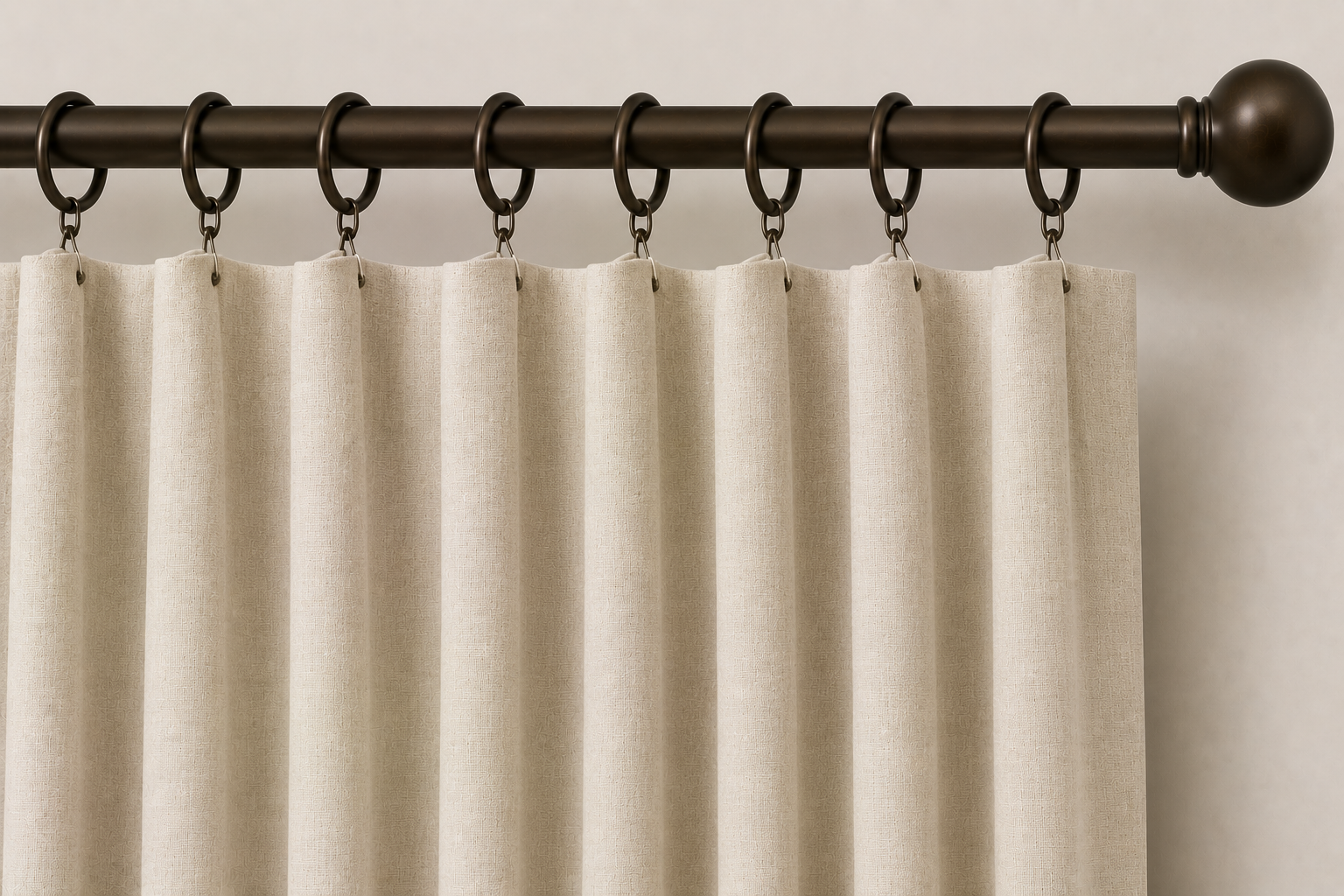
AI rendering illustrating ring top drapery. Decorative rings with side clips attach to the panel, allowing the fabric to hang below the rings while showcasing the decorative hardware.
Ring Top Drapery
What Is Ring Top Drapery?
Ring top drapery is a header style that uses decorative curtain rings to attach the drapery panel to the rod. Depending on the design, the rings may connect to drapery pins, sewn tabs, or clip rings that grip the fabric directly.
Unlike grommet drapery, where the rings are built into the panel itself, ring top drapery uses separate hardware that remains fully visible once installed. This allows homeowners to easily customize the look of the drapery by selecting different ring finishes, sizes, and styles.
Ring top drapery is commonly used in both casual and tailored interiors because it can be adapted to a wide variety of fabrics and design aesthetics.
Best For
Traditional interiors
Transitional interiors
Farmhouse interiors
Coastal interiors
Contemporary interiors
Living rooms
Bedrooms
Pros
Allows decorative hardware to become part of the design
Slides more easily than many rod pocket, tab top, and back tab styles
Works with a wide variety of drapery fabrics
Offers flexibility in hardware finishes and styles
Can create either a casual or tailored appearance depending on the installation method
Cons
Decorative rings remain visible at all times
Additional hardware increases the overall cost
Clip rings may not provide as polished an appearance as drapery pins
Some ring systems can create noise when opening and closing the panels
Design Considerations
Ring top drapery is one of the most versatile header options available because the overall appearance can vary significantly depending on the hardware and installation method selected.
For example, drapery panels attached with clip rings often create a more casual and relaxed look, while drapery pins paired with decorative rings can result in a more tailored and refined appearance. This flexibility allows homeowners to customize the window treatment to better suit their home's design style.
Ring top drapery is also a practical option for windows that are opened and closed regularly, as the rings generally glide more smoothly than many fabric-on-rod header styles. Homeowners who want decorative hardware to remain visible while maintaining good functionality may find ring top drapery to be an excellent choice.
Drapery Header Comparison Table
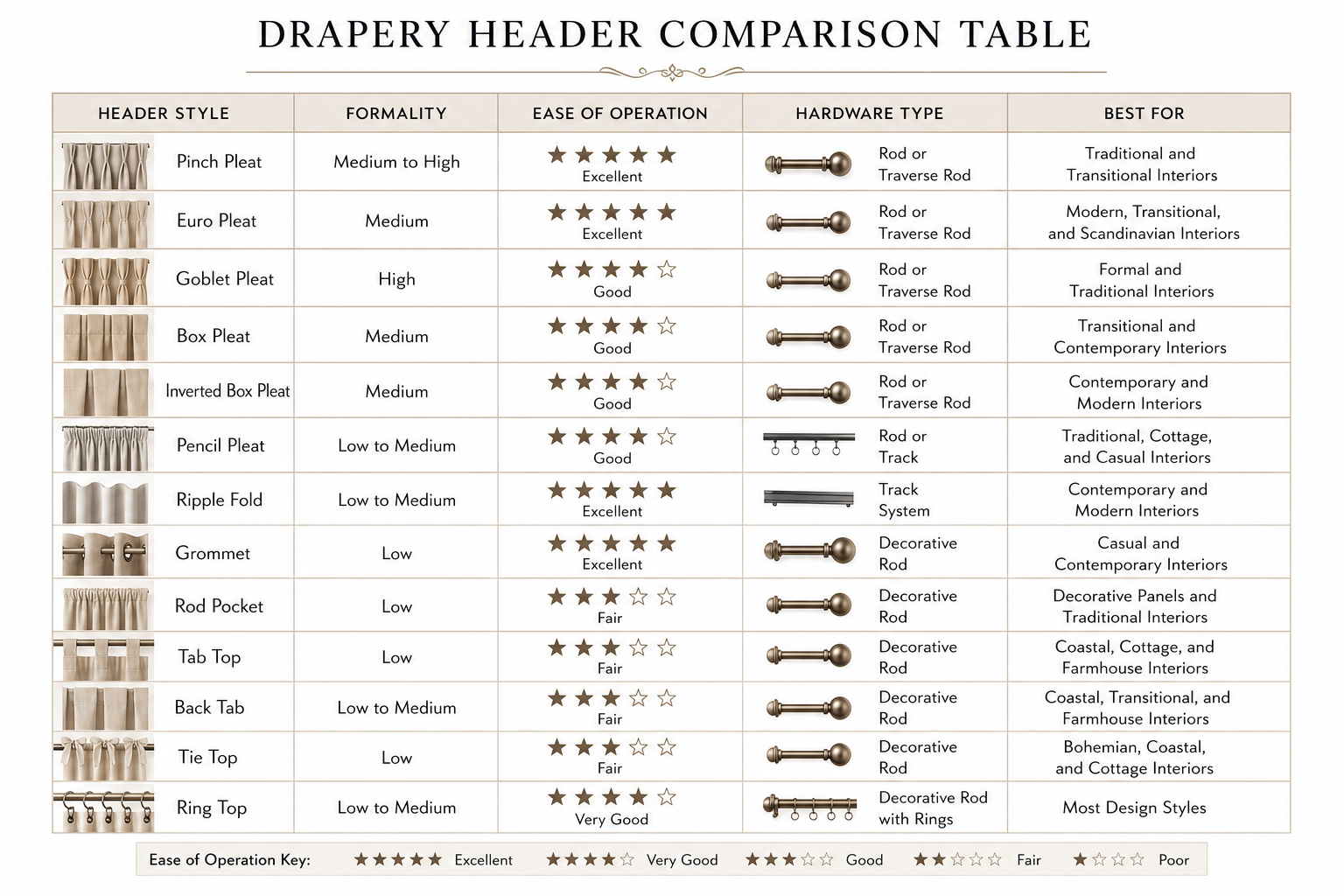
AI-generated infographic comparing the most common drapery header styles, including their formality, ease of operation, hardware requirements, and ideal applications.
As you can see, no single drapery header is right for every home. The best option depends on your design style, how often you'll open and close the drapery, the type of hardware you plan to use, and the overall look you're trying to achieve.
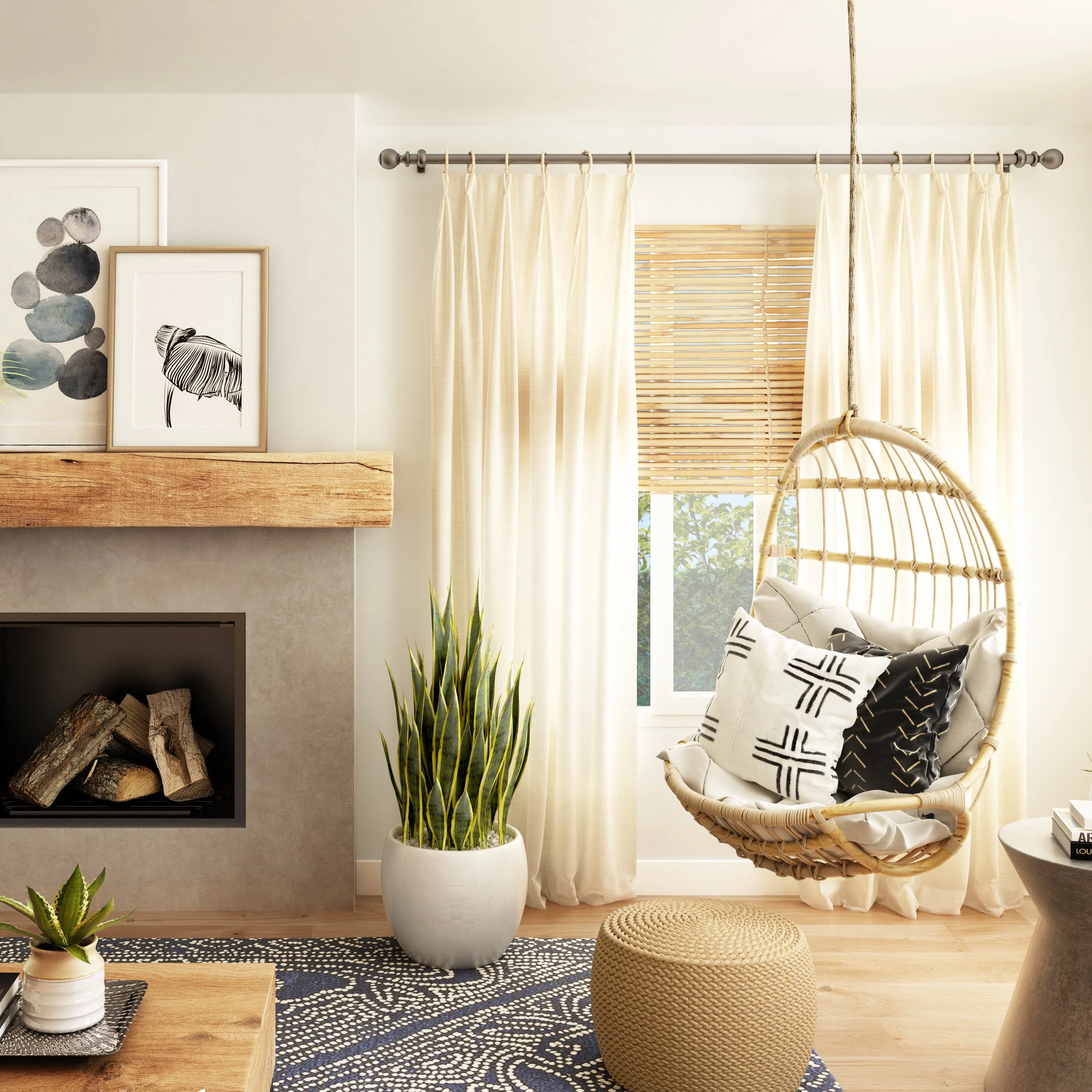
Different drapery header styles can influence the overall character of a room. 3D rendering of a California Casual living room designed by virtual interior designer Joshua Jones of JJones Design Co.
How to Choose the Right Drapery Header for Your Home
With so many drapery header styles available, selecting the right option can feel overwhelming. While there is no single header that works best for every home, understanding your priorities can help narrow down the choices.
Here are a few factors to consider before making your decision.
Consider Your Design Style
The drapery header should complement the overall style of your home.
For example, pinch pleat, goblet pleat, and pencil pleat drapery are often associated with more traditional interiors. Euro pleat and inverted box pleat styles can work well in transitional and contemporary spaces, while ripple fold drapery is frequently used in modern and minimalist interiors.
If your home leans toward a coastal, cottage, farmhouse, or bohemian aesthetic, casual styles such as rod pocket, tab top, back tab, or tie top drapery may be worth considering.
Consider How Often You'll Open and Close the Drapery
Some header styles are better suited for daily use than others.
If the drapery will be opened and closed regularly for privacy, light control, or access to a patio door, ease of operation should be a priority. Styles such as ripple fold, pinch pleat, Euro pleat, grommet, and ring top drapery generally operate more smoothly than rod pocket, tab top, back tab, or tie top styles.
For decorative side panels that remain mostly stationary, ease of operation may be less important.
Consider Your Hardware
Not all drapery headers work with the same hardware.
Some styles are designed for decorative rods, while others require specialized track systems. Ripple fold drapery, for example, operates on a track, while rod pocket, tab top, back tab, tie top, grommet, and ring top styles are typically mounted on decorative rods.
Understanding your hardware options early in the planning process can help prevent costly changes later.
Consider the Level of Formality
The drapery header can influence how formal or relaxed a room feels.
Structured styles such as goblet pleat, pinch pleat, and box pleat drapery often create a more tailored appearance. Casual styles such as tie top and tab top drapery tend to feel more relaxed and informal.
Neither approach is right or wrong—the best choice depends on the atmosphere you want to create within the space.
Consider Your Budget
Some drapery headers require additional fabric, labor, hardware, or specialized fabrication, which can increase the overall cost of the window treatment.
Simpler styles are often available as ready-made panels, while more tailored options are frequently custom fabricated. Understanding your budget before shopping can help you focus on the options that align with your project goals.
Don't Forget About Functionality
While appearance is important, functionality should not be overlooked.
Think about how the room is used, how often the drapery will be operated, whether privacy is needed, and how much natural light enters the space. The most successful window treatments balance both form and function, creating a solution that looks beautiful while supporting your daily lifestyle.
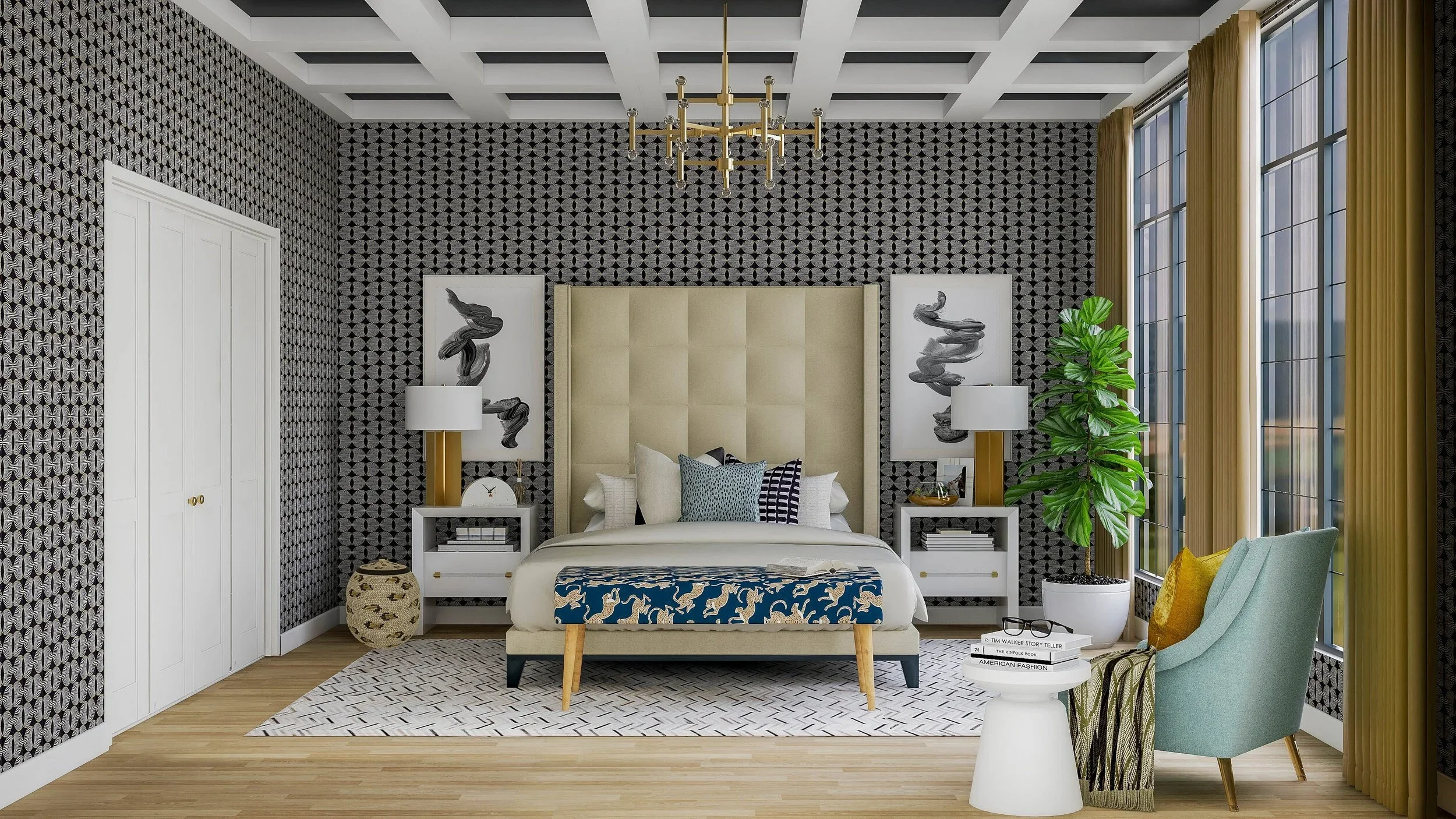
Drapery can influence everything from privacy and light control to the overall style of a room. 3D rendering of a modern eclectic bedroom designed by virtual interior designer Joshua Jones of JJones Design Co.
Frequently Asked Questions About Drapery Headers
What is a drapery header?
A drapery header is the top portion of a drapery panel that attaches to a rod or track system. The header determines how the fabric hangs, how the folds are formed, and how the drapery operates.
What is the difference between pinch pleat and Euro pleat drapery?
Both styles create structured folds, but the placement of the pleats is different. Pinch pleat drapery is pinched and sewn several inches below the top of the panel, while Euro pleat drapery is pinched and sewn at the very top. This gives Euro pleat drapery a slightly cleaner and more streamlined appearance.
What is the difference between box pleat and inverted box pleat drapery?
Box pleat drapery features pleats that fold outward at the front of the panel, creating a structured and architectural appearance. Inverted box pleat drapery reverses the fold, tucking the pleat inward for a cleaner and more understated look.
Which drapery header is best for modern homes?
There is no single answer, as it depends on the overall design of the home. However, ripple fold, Euro pleat, and inverted box pleat drapery are commonly used in contemporary and modern interiors because of their clean lines and streamlined appearance.
Which drapery header is easiest to open and close?
Ripple fold drapery is often considered one of the easiest styles to operate because it is designed to glide along a track system. Pinch pleat, Euro pleat, grommet, and ring top drapery also tend to operate smoothly when installed properly.
Which drapery header works best for decorative side panels?
Rod pocket, tab top, back tab, and tie top drapery are frequently used for decorative side panels because they create attractive folds and are often left stationary.
Do all drapery headers require special hardware?
No. Some drapery headers can be installed on standard decorative rods, while others require specialized hardware. For example, ripple fold drapery requires a track system, while rod pocket, tab top, back tab, tie top, grommet, and ring top drapery typically work with decorative rods.
Which drapery header is the most formal?
Goblet pleat drapery is generally considered one of the most formal header styles due to its decorative shape and traditional appearance. Pinch pleat and box pleat drapery can also create a more formal look depending on the fabric and overall design.
Can I change the header style of my existing drapery?
In some cases, yes. A workroom or sewing professional may be able to modify certain drapery panels. However, the feasibility depends on the existing construction of the panel, the amount of available fabric, and the desired new header style.
Which drapery header is best?
There is no universally "best" drapery header. The right choice depends on your design style, functionality needs, hardware preferences, budget, and how you want the finished window treatment to look and perform within your home.
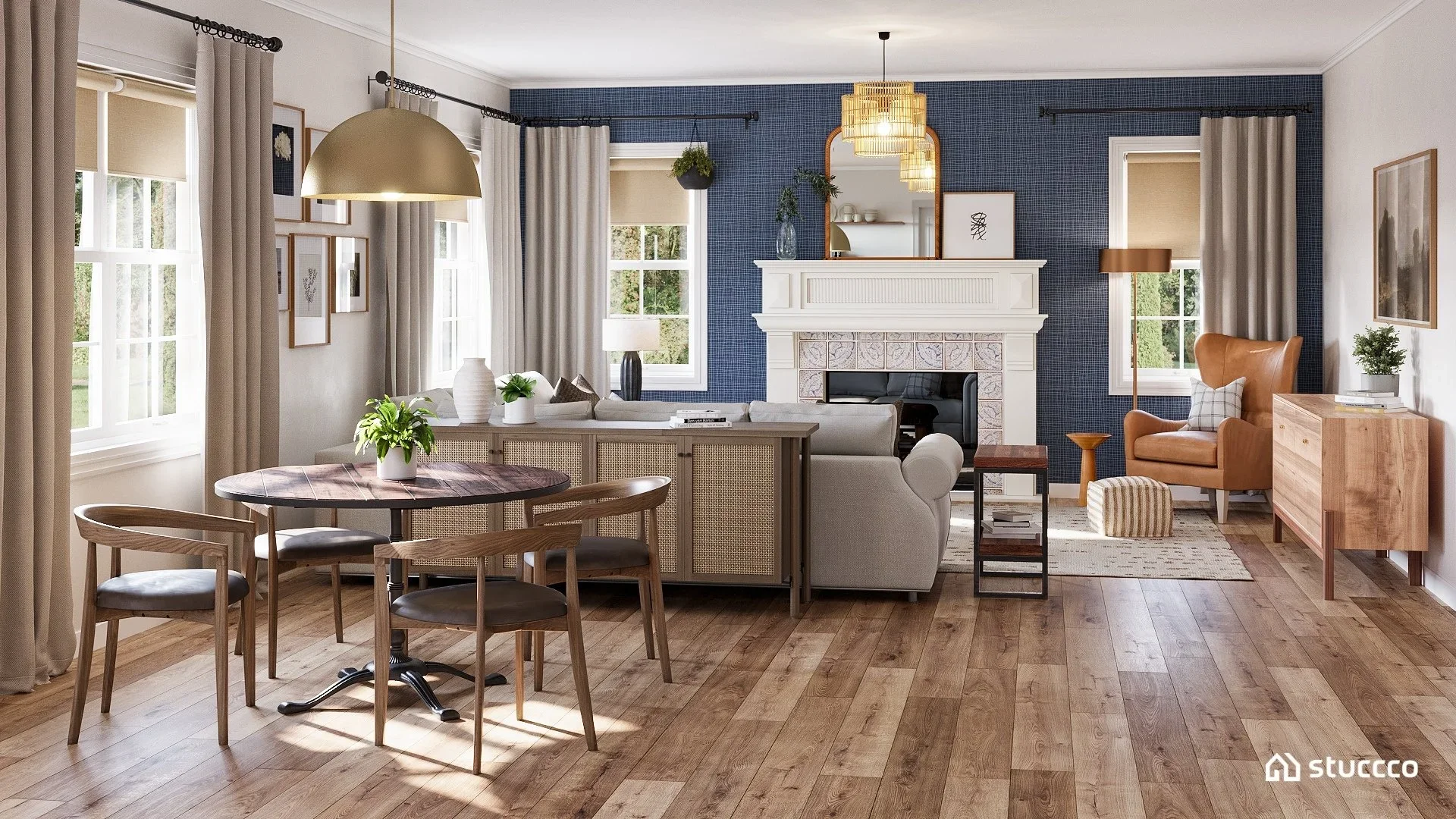
The right drapery header is just one piece of creating a well-designed home. 3D rendering of an eclectic living room designed by virtual interior designer Joshua Jones of JJones Design Co.
Choosing the Right Drapery Header for Your Home
The drapery header you choose may seem like a small detail, but it can have a significant impact on the appearance, functionality, and overall style of your window treatments.
From the tailored folds of pinch pleat and Euro pleat drapery to the clean lines of ripple fold and the relaxed charm of tie top panels, each header style offers its own unique advantages. The best choice ultimately depends on your home's design style, how the drapery will be used, the type of hardware you prefer, and the overall look you want to achieve.
As you compare your options, remember that there is no one-size-fits-all solution. A header style that works beautifully in a formal dining room may not be the best fit for a casual coastal bedroom, and a decorative side panel may have different requirements than drapery that is opened and closed every day.
By understanding the differences between each drapery header style, you'll be better equipped to select a window treatment that not only looks beautiful but also functions well for your lifestyle and your home.
If you're planning a window treatment project and need help selecting the right drapery style, fabric, hardware, or overall design approach, I'd be happy to help through my virtual interior design services.