Earthquake-Proof Your Home: A Designer’s Guide to Safer, Smarter Interiors
Growing up in Southern California means earthquakes were simply part of life. Most were small tremors, the kind you learn to shrug off, but some left a lasting mark. I still remember missing the Northridge earthquake by just one day—I had been in Los Angeles the day before it struck in 1994, while I was living in San Diego at the time. Seeing the damage afterward made an impression I’ve never forgotten. Over the years, I’ve experienced my share of minor and moderate quakes throughout Southern California and San Francisco, each one reinforcing the same truth: earthquakes are unpredictable, but how we prepare our homes doesn’t have to be. In earthquake country, creating a safer, smarter home isn’t just about design—it’s about protecting the spaces we live in and the people we love.
In this guide, I’m sharing practical, design-forward ways to earthquake-proof your home—simple upgrades that help prevent damage, reduce hazards, and keep your space feeling beautiful and intentional. From securing furniture and artwork to avoiding common decor risks, these designer-approved tips will help you create a safer interior without sacrificing style.

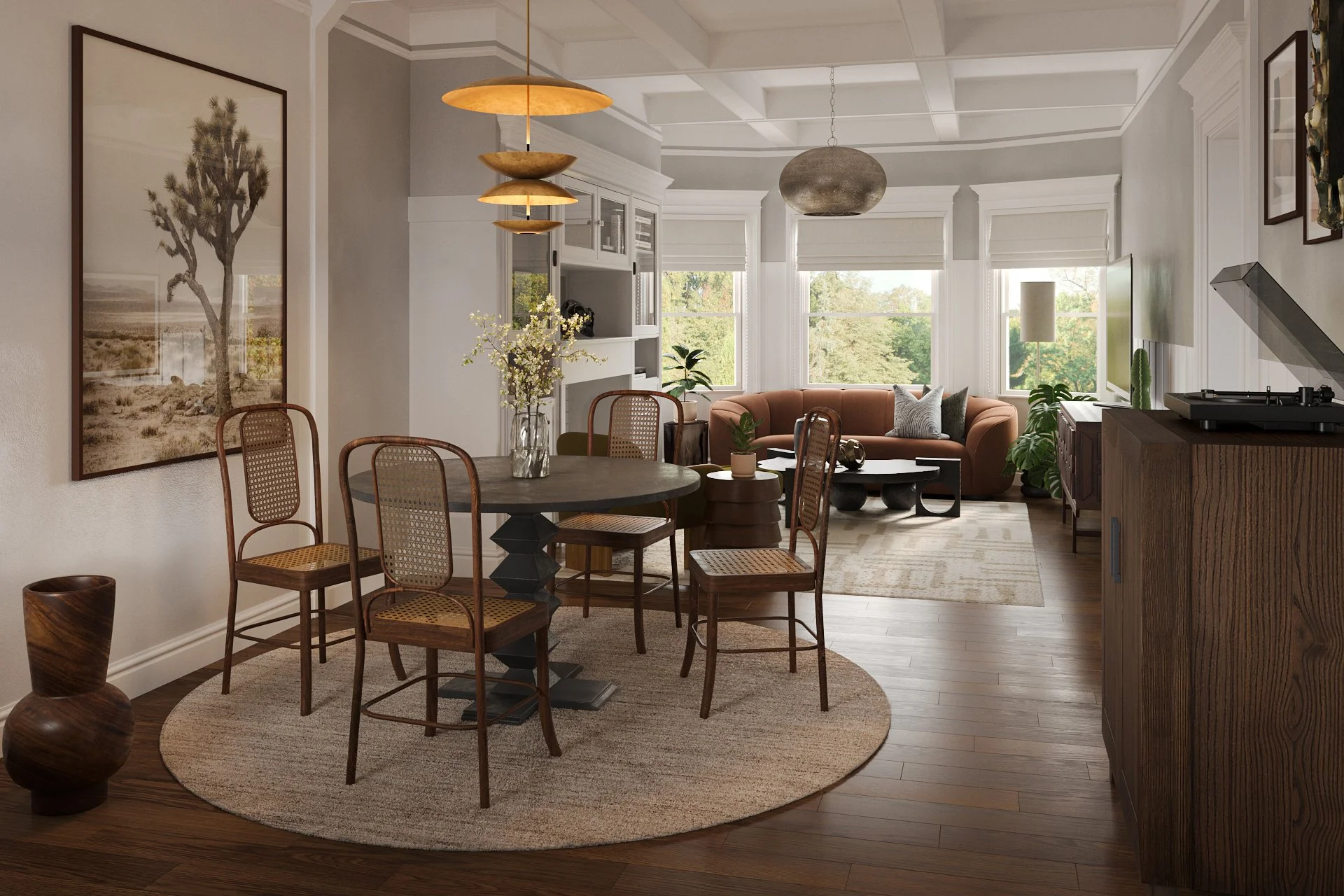
Cozy eclectic open-concept living and dining area designed by virtual interior designer Joshua Jones of JJones Design Co. This photorealistic 3D rendering was created by Stuccco and highlights one of Joshua’s past design projects.
1. Secure Large Furniture
When it comes to earthquake safety, large furniture pieces are often the biggest hidden hazards in a home. Dressers, bookshelves, cabinets, and tall storage units can easily tip during strong shaking—especially if they’re top-heavy or packed with items. Even a moderate quake can shift these pieces far enough to cause damage or injury. The good news is that securing them is simple and doesn’t require sacrificing style or rearranging your entire home.
Start by anchoring any tall or heavy furniture to the wall using anti-tip kits or furniture straps. These inexpensive hardware sets are designed to keep furniture stable during shaking, and they’re usually hidden behind the piece once installed. If you’re renting and can’t drill into the walls, consider using wide, low-profile furniture that distributes weight more evenly or positioning tall pieces away from beds, sofas, and high-traffic areas.
Another simple but effective upgrade is adding felt pads under the legs of your furniture. While most people use felt pads to protect floors, they also play a subtle but important role during an earthquake: they help slow the movement of furniture by adding just enough friction to reduce sliding. This won’t replace the need for anchors, but it acts as an extra layer of protection—especially for lighter pieces that aren’t practical to strap to the wall.
As a designer, I always encourage clients to think about furniture placement strategically—not just for aesthetics but also for safety. Keeping the heaviest items lower, balancing the weight on shelves, and avoiding overloading the top areas of cabinets can make a surprising difference. A few thoughtful adjustments can transform your furniture layout from a potential hazard into a safer, more confident space.

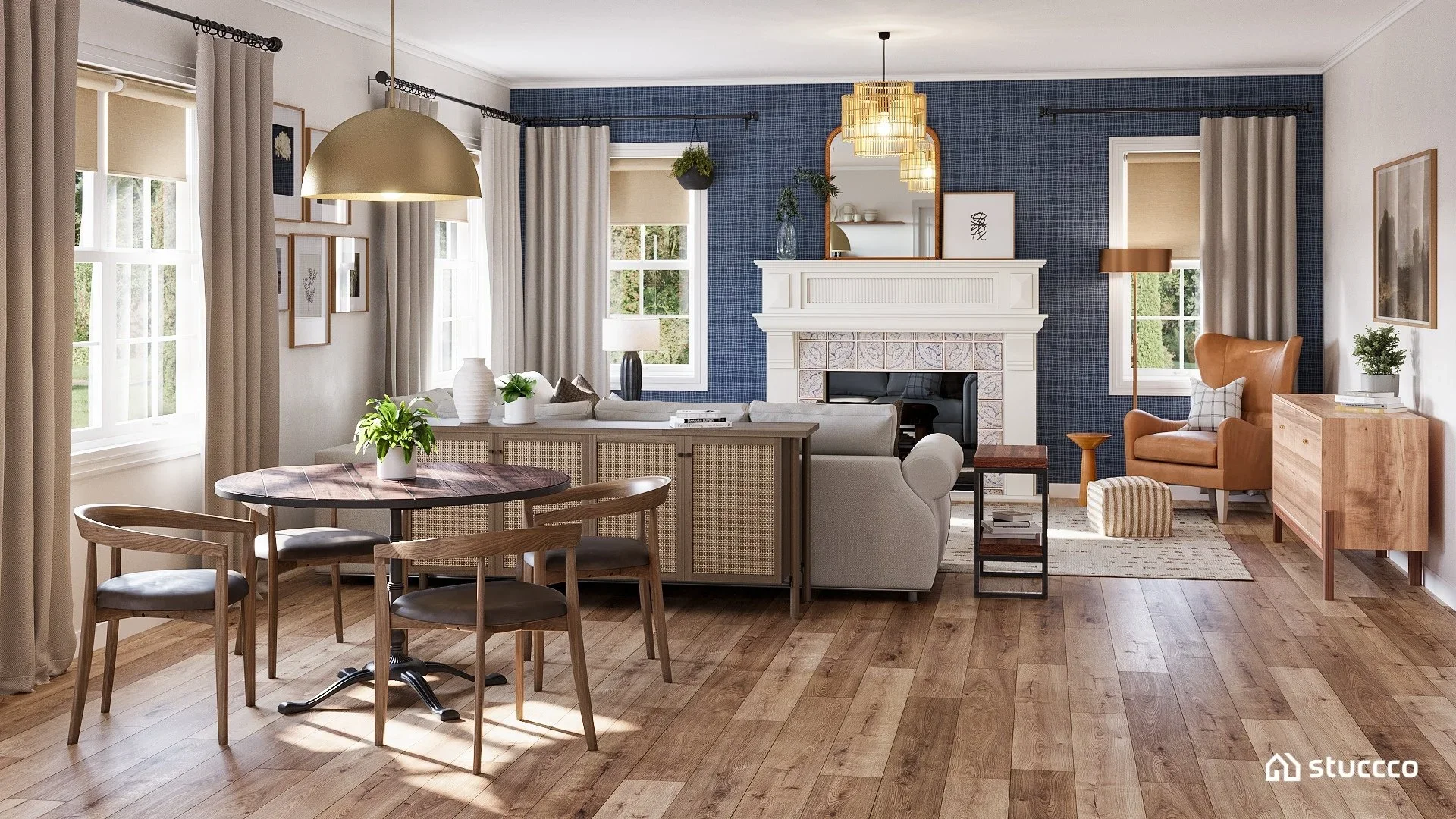
Colorful mid-century modern family room designed by virtual interior designer Joshua Jones of JJones Design Co. This photorealistic 3D rendering was created by Stuccco and highlights one of Joshua’s past design projects.
2. Secure Your TV
Flat-screen TVs are one of the most overlooked earthquake hazards in the home. They’re lightweight enough to tip but heavy enough to cause significant injury or damage if they fall. A moderate quake can easily send an unsecured TV sliding off a console—or even crashing to the floor. The good news is that securing your TV doesn’t have to interfere with your design aesthetic.
The safest option is to wall-mount your TV using a high-quality bracket that’s installed directly into wall studs. This not only keeps the TV firmly in place during shaking but also gives your living room a clean, streamlined look. If the idea of exposed cords bothers you, there are plenty of cable-hiding solutions, from in-wall cord kits to sleek surface-mounted covers that blend into the wall.
If wall-mounting isn’t an option—whether you’re renting or simply prefer a media console—use TV anti-tip straps. These discreet straps attach to the back of the TV and anchor it to either the wall or the console itself. They’re barely visible and help keep the TV stable if shaking begins. You can also add non-slip mats or rubber pads beneath the TV base for extra grip and movement resistance.
When designing or styling media areas for clients, I always factor in earthquake safety alongside aesthetics. Securing your TV is one of the simplest, most effective steps you can take to make your home safer—and it’s completely achievable without compromising the look and feel of your space.
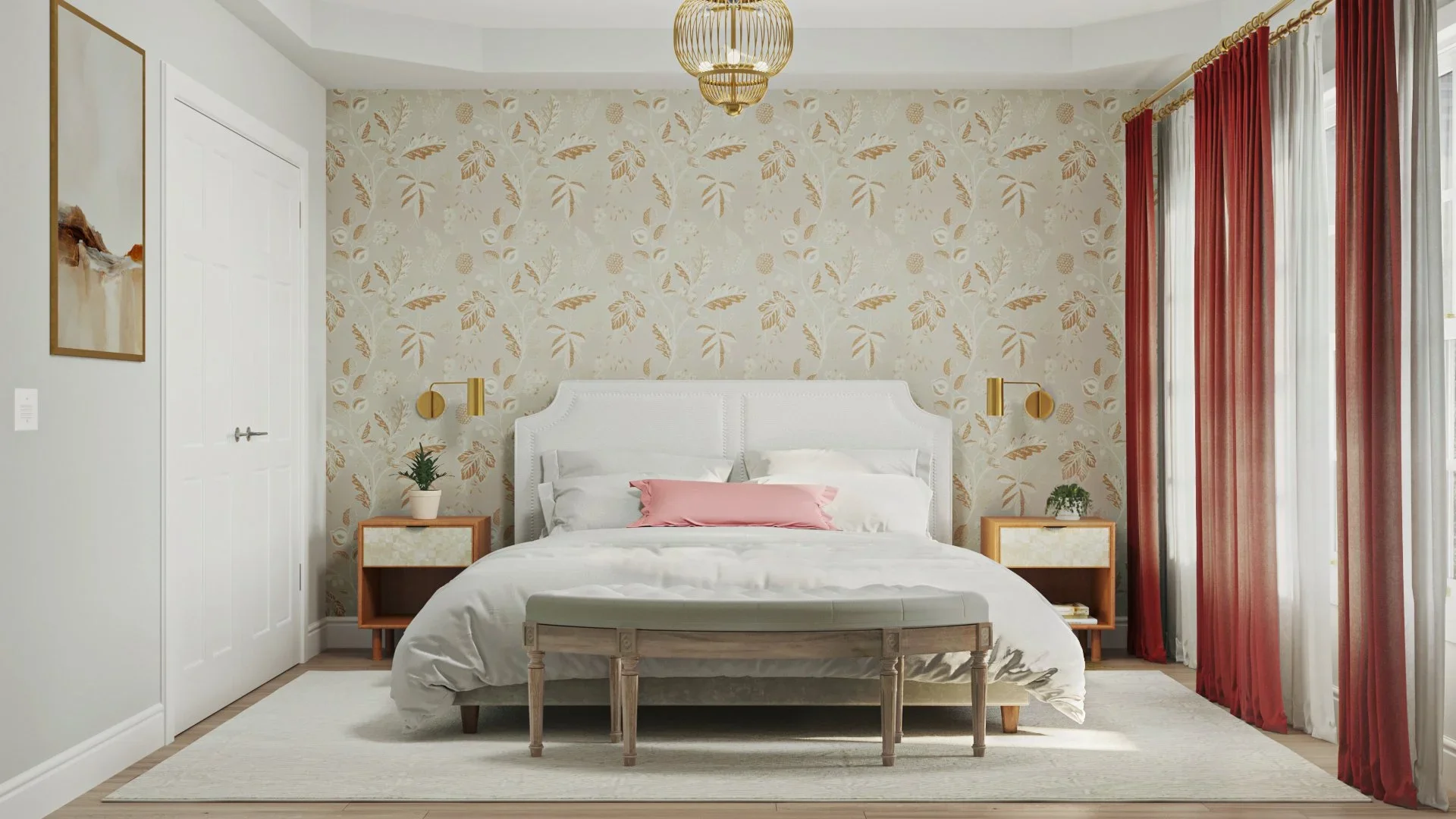
Mix of Scandinavian and Parisian style primary bedroom designed by virtual interior designer Joshua Jones of JJones Design Co. This photorealistic 3D rendering showcases one of Joshua’s past design projects.
3. What to Avoid: High-Risk Decor Choices
Earthquake-proofing isn’t only about what you secure—it’s also about knowing which design choices to avoid altogether. Some decor decisions look great on Pinterest but can become real hazards during a strong shake. The goal isn’t to restrict your creativity, but to make thoughtful choices that keep your home both beautiful and safer in quake-prone areas.
One of the biggest risks is installing shelves directly above the bed. Floating shelves, artwork ledges, or decorative wall cubes may seem like a stylish way to fill empty space, but even well-mounted pieces can become dangerous if they shift or fall during an earthquake. It’s better to keep the wall above beds, cribs, and frequently used seating areas free of heavy items. Instead, focus on soft decor—like wall hangings, woven textiles, or lightweight art prints—that pose minimal risk.
Another thing to avoid is relying on tall, narrow, or top-heavy furniture that isn’t anchored. Bookcases with a small footprint, stacked storage cubes, or towering floor mirrors can topple quickly, especially if their weight isn’t evenly distributed. If you love the look of a tall piece, just make sure it’s secured and avoid placing anything heavy on the upper shelves.
Lastly, steer clear of displaying heavy objects up high—like ceramic vases, sculptures, or planters on the top of cabinets or shelves. During shaking, these items can become projectiles. Instead, use that high-up space for lightweight baskets, soft greenery, or decor pieces that won’t cause harm if they fall.
Avoiding these high-risk choices doesn’t limit your design style—it simply ensures your home is thoughtfully curated with both beauty and safety in mind.
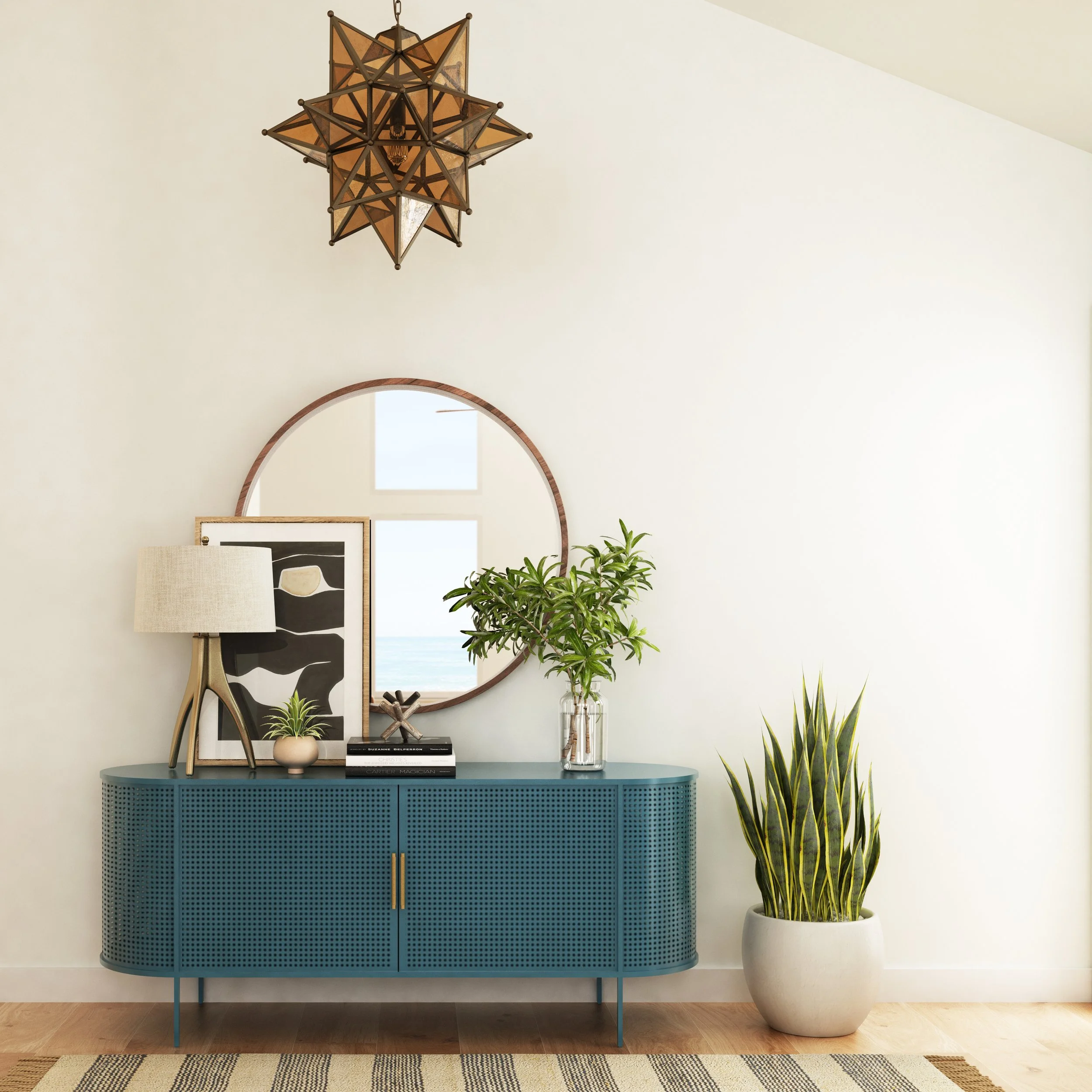
California casual style beach house foyer designed by virtual interior designer Joshua Jones of JJones Design Co. This rendering highlights one of Joshua’s past design projects.
4. Prevent Items from Falling Off Surfaces
Even if your furniture is secured, the items sitting on top of it can still become hazards during an earthquake. Decorative objects, electronics, ceramics, plants, and everyday essentials can slide, topple, or shatter when the shaking starts. The goal here isn’t to eliminate your decor—it’s to make small adjustments that keep everything in place without changing the look and feel of your home.
One of the most effective tools you can use is museum putty. This soft, removable adhesive is a go-to for professional stylists and collectors because it keeps items stable while remaining completely invisible. It works beautifully for securing vases, sculptures, candles, and decorative bowls on shelves or consoles. A small amount placed under the base is all you need to prevent sliding or tipping.
For shelves, drawers, and cabinets, consider adding non-slip liners. These grippy mats provide friction that helps keep items from shifting around, especially in kitchens and bathrooms. They’re also great for keeping shelf decor steady in living rooms and offices. Best of all, they’re inexpensive, easy to trim to size, and completely hidden once installed.
If you have plants or heavier objects displayed on consoles or sideboards, switching to lower, wider vessels can make a huge difference in stability. You can also use discreet rubber pads under planters or tech items like speakers to reduce sliding during movement. For open shelving, grouping items in decorative trays not only creates a tidy, curated look but also helps keep objects contained and less likely to fall.
These simple, behind-the-scenes upgrades go a long way toward preventing damage and creating a home that feels secure and thoughtfully designed—even in quake country.

Scandinavian Farmhouse style dining room designed by virtual interior designer Joshua Jones of JJones Design Co. This rendering highlights one of Joshua’s past design projects.
5. Protect Artwork and Framed Photos from Falling or Tilting
Artwork and framed photos add personality and warmth to a home, but they’re also some of the first items to shift or fall during an earthquake. A strong shake can send frames swinging, tilting, or even tumbling—especially if they’re hung with basic nails or lightweight hooks. The goal is to keep your walls beautifully styled while making sure everything stays put when the ground moves.
Start by using earthquake-resistant picture hooks, which are designed to hold frames more securely during sudden movement. These hooks have a deeper, curved shape that helps prevent the wire from slipping off, even if the frame sways back and forth. They’re a small upgrade that makes a noticeable difference, especially for heavier pieces.
To keep frames from tilting or shifting, you can add a bit of extra support behind the artwork. A simple method I personally use is applying blue painter’s tape to the back of the frame and pressing it onto the wall. It’s gentle enough not to damage paint but strong enough to help keep the frame aligned and reduce movement during minor shaking. It’s an easy, invisible trick that works surprisingly well.
For even more stability, consider pairing this with removable Velcro strips or museum gel on the bottom corners of the frame. These options help keep artwork flush against the wall and prevent frames from lifting upward and off the hook during stronger quakes.
If you're hanging artwork above a sofa or console, make sure it’s properly secured and consider avoiding glass fronts when possible. Acrylic glazing is a safer alternative—it looks like glass but won’t shatter. And remember to keep heavy or oversized artwork out of high-risk areas like above beds or frequently used seating.
With the right hardware and a few thoughtful adjustments, you can display your favorite artwork confidently—keeping your home stylish, secure, and ready for the unexpected.

California casual style kitchen designed by virtual interior designer Joshua Jones of JJones Design Co. This rendering highlights one of Joshua’s past design projects.
6. Reduce Gas-Related Risks with Safer Stove Options
One of the biggest concerns many homeowners have during an earthquake is the risk of a gas leak. A strong quake can shift appliances, damage gas lines, or cause small leaks that go unnoticed until they become serious. While securing your gas stove and installing an automatic shutoff valve are important steps, there’s another long-term solution to consider—especially if you’re planning a remodel or looking to upgrade your kitchen.
Switching to an electric or induction stove can significantly reduce the risk of gas-related issues during and after an earthquake. Induction cooktops, in particular, have become extremely popular in recent years. They’re not only safer, but they offer precise temperature control, energy efficiency, and a sleek, modern look that blends beautifully into almost any kitchen style.
Induction cooktops also stay cool to the touch, which makes them safer for families with children or pets. If you enjoy a minimal, streamlined kitchen aesthetic, their smooth glass surface is a design upgrade as well as a functional one. And because they don’t rely on gas lines, there’s no risk of a leak if the stove shifts slightly during shaking.
If replacing your stove isn’t practical right now, you can still take steps to reduce gas-related risks. Make sure your stove is properly secured with anti-tip brackets and keep the surrounding area free of items that could fall and potentially damage the connection. It’s also worth looking into a seismic gas shutoff valve, which automatically interrupts gas flow during a major quake.
Whether you choose to upgrade your appliances or make smaller adjustments, these steps can help create a kitchen that’s both safer and beautifully designed—something you can feel confident about every day, not just when an earthquake strikes.

Luxury Modern Organic style foyer designed by virtual interior designer Joshua Jones of JJones Design Co. This photorealistic 3D rendering was created by Stuccco.
Creating a Safer Home, One Detail at a Time
Earthquakes may be unpredictable, but preparing your home for them doesn’t have to feel overwhelming. A few thoughtful updates—anchoring furniture, securing your TV, avoiding high-risk decor choices, and stabilizing artwork and everyday items—can make a meaningful difference in both safety and peace of mind. Even simple upgrades, like adding museum putty or installing earthquake-resistant hooks, help create a home that’s better protected without changing the look and feel you’ve worked hard to create.
For anyone living in quake-prone areas, these small steps add up. And if you’re planning a remodel or looking to update your kitchen, considering safer appliance choices like induction or electric stoves can further reduce long-term risks. The goal isn’t to make your home feel rigid or overly cautious—it’s to design a space that’s beautiful, livable, and prepared for the realities of where you live.
At the end of the day, creating a safer interior is simply another layer of thoughtful design. When safety and style work together, your home becomes a place you can truly feel secure in—no matter what the ground decides to do.
This blog post includes affiliate links. If you click on one of these links and make a purchase, I may receive a small commission at no additional cost to you. I only share products that I genuinely believe can help you create a beautiful and functional home. Thank you for supporting my content.