How to Design a Gender-Neutral Nursery That Grows With Your Child
Designing a nursery is one of those moments where emotions and practicality collide. It’s easy to get pulled into themes, colors, and all the “must-have” items—but the reality is, this is a space that will change quickly. What works for a newborn often feels outdated just a couple of years later.
That’s where a gender-neutral nursery can be a smart starting point—but only if it’s done thoughtfully. It’s not just about avoiding pink or blue. It’s about creating a space that feels calm, cohesive, and flexible enough to evolve as your child grows.
In my work as a designer, I always encourage clients to think beyond the baby stage. The goal isn’t to design a nursery you’ll love for a year—it’s to create a foundation that can transition naturally into a toddler room and beyond, without starting over from scratch.
In this guide, I’ll walk through how to design a gender-neutral nursery that feels intentional, elevated, and built to last—so you’re not redoing the entire room in a few years.
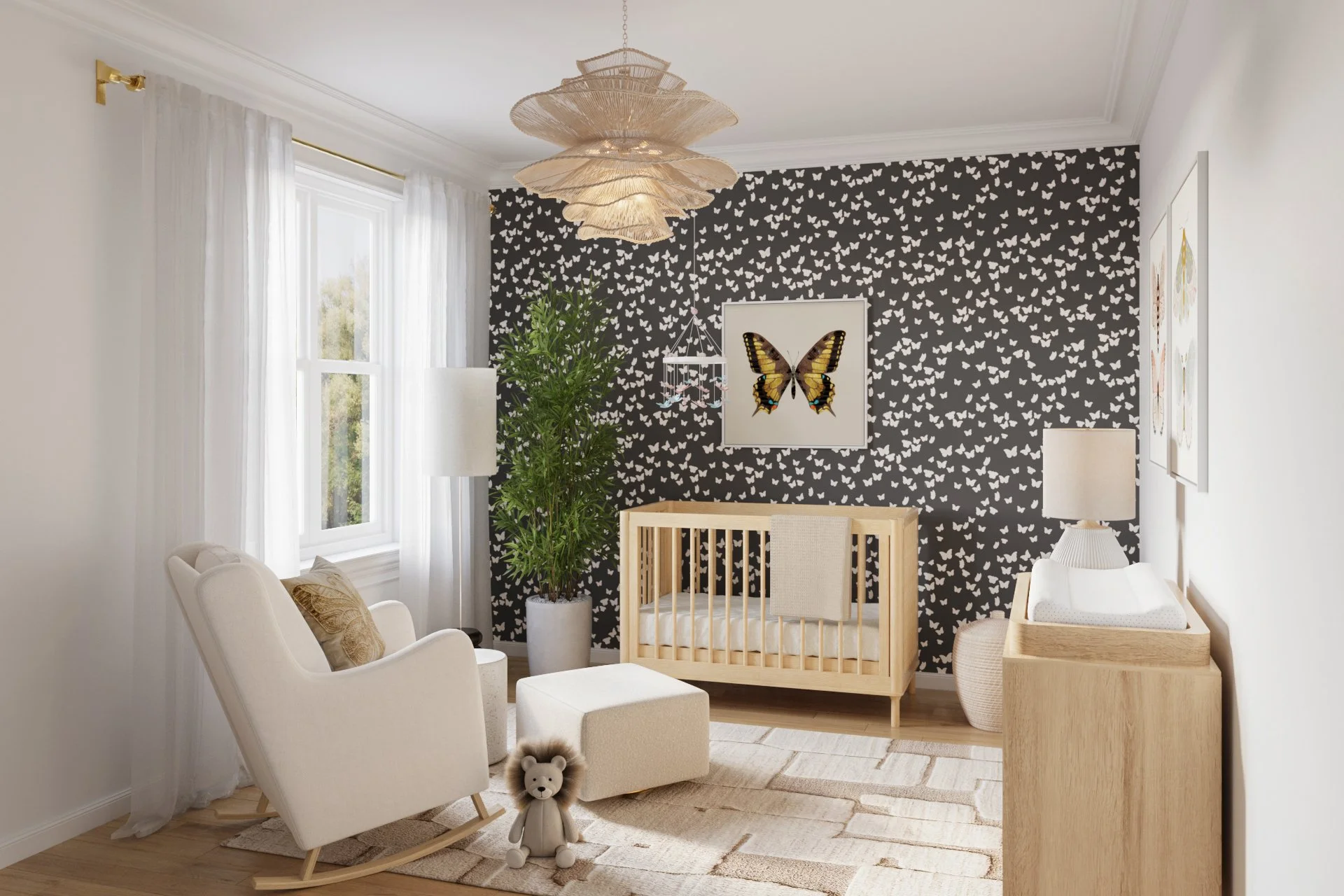
Scandinavian-style gender-neutral nursery designed by virtual interior designer Joshua Jones of JJones Design Co., featuring natural wood furniture, soft neutral tones, and a bold butterfly accent wall that can evolve with your child over time.
Start with a Flexible, Layered Color Palette
One of the biggest misconceptions about gender-neutral nurseries is that they have to feel plain or limited. In reality, the most successful spaces start with a layered, neutral foundation that allows the room to evolve over time without feeling like it needs a full redesign.
Instead of relying on trend-driven colors or overly themed palettes, focus on tones that feel grounded and adaptable. Soft whites, warm beiges, muted greens, and gentle earth tones create a calm backdrop that works just as well for a newborn as it does for a growing child. These colors also tend to complement the rest of the home, which helps the nursery feel like a natural extension of your overall design—not a separate, temporary space.
From there, you can introduce subtle depth through texture and contrast. Think natural wood finishes, linen textiles, woven elements, or a slightly darker accent tone to anchor the room. This approach keeps the space visually interesting without locking you into a specific look that may feel too young later on.
If you want to bring in personality, do it in ways that are easy to update. Artwork, pillows, small decor pieces, or even a removable wallpaper can shift the mood of the room over time without requiring major changes. This is especially helpful as your child develops their own preferences.
The goal here is simple: build a color palette that feels intentional now, but flexible enough to grow with the space. When the foundation is right, everything else becomes easier to adjust later on.
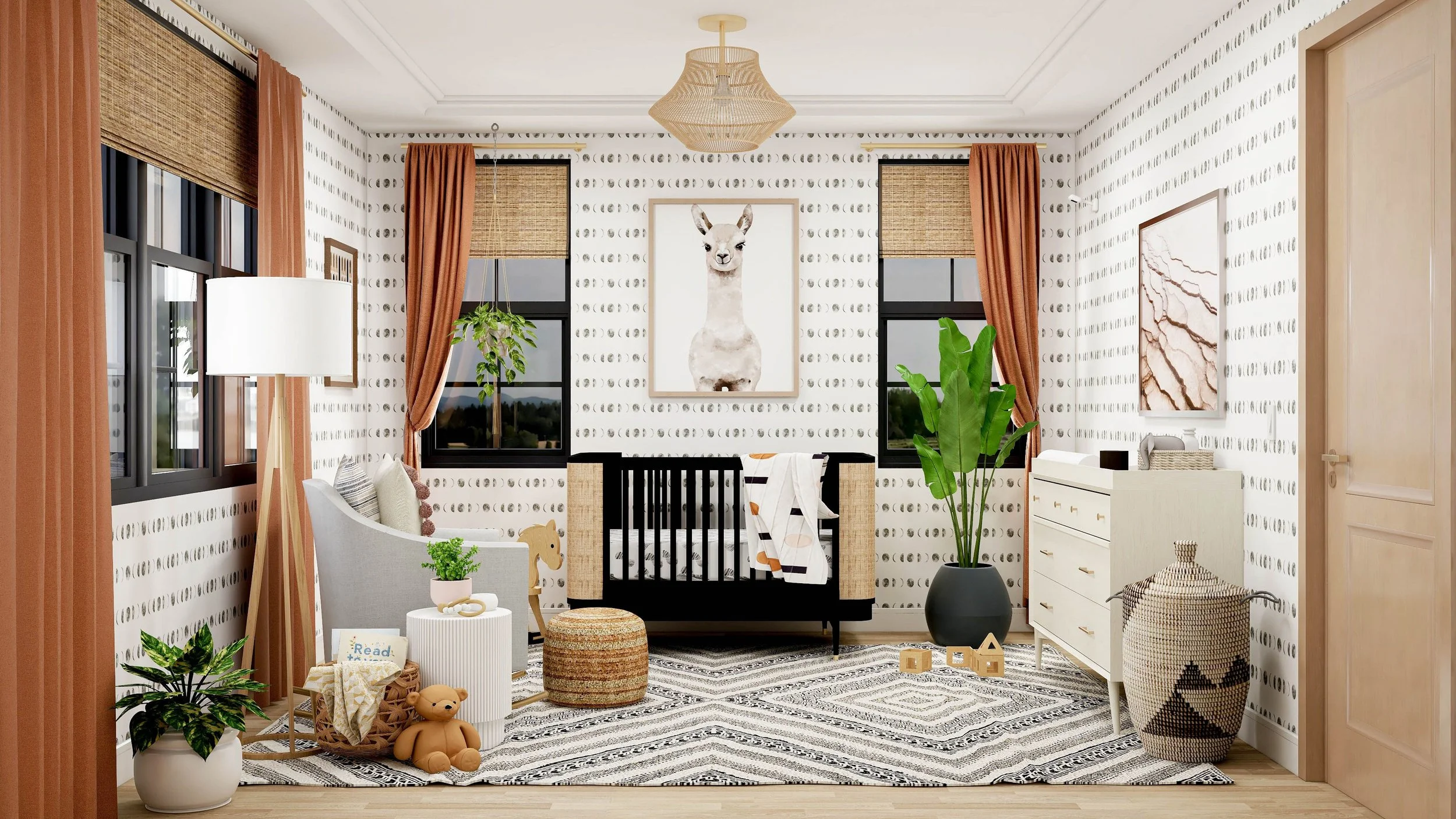
Boho-style gender-neutral nursery designed by virtual interior designer Joshua Jones of JJones Design Co., featuring warm earth tones, layered textiles, natural materials, and a relaxed, inviting atmosphere that can evolve over time.
Choose Furniture That Adapts Over Time
If there’s one place where smart decisions make the biggest impact, it’s furniture. A lot of nursery setups are designed for a very short phase of life, which is why so many rooms end up being completely redone within a few years.
A more thoughtful approach is to choose pieces that can transition with your child instead of being replaced.
Start with the crib. Many modern cribs are designed to convert into toddler beds and even full-size beds over time. While not every conversion option is worth the investment, choosing a well-made crib with a simple, timeless design gives you flexibility down the road without locking you into a very specific look.
The same idea applies to storage. A changing table might feel essential at first, but in most cases, a well-proportioned dresser with a changing tray on top will serve you far longer. Once the nursery phase passes, you can remove the tray and continue using the piece as standard storage without disrupting the room.
Seating is another area where it pays to think ahead. Instead of choosing a bulky, nursery-specific glider that may not fit anywhere else later, look for a comfortable accent chair with clean lines. It will still function perfectly for feeding and quiet moments, but it can easily transition into a living room, bedroom, or reading corner in the future.
As the room evolves, pieces like a small bookshelf, side table, or storage bench can also adapt to new needs—whether that’s toys, books, or eventually school-related items.
The goal isn’t to avoid buying new things altogether. It’s to be intentional about where you invest so the core pieces of the room continue to work over time. When furniture is chosen with flexibility in mind, you’re not starting over—you’re simply building on what’s already there.
As your child grows, these same principles carry into the next stage—designing a bedroom that continues to adapt over time. That transition is just as important, and I’ve broken it down further in child bedroom design that grows with your child.
Eventually, that same space will need to evolve again into something more mature. If you’re thinking ahead, this guide on how to transition a teen bedroom into a young adult space walks through what that next phase looks like.
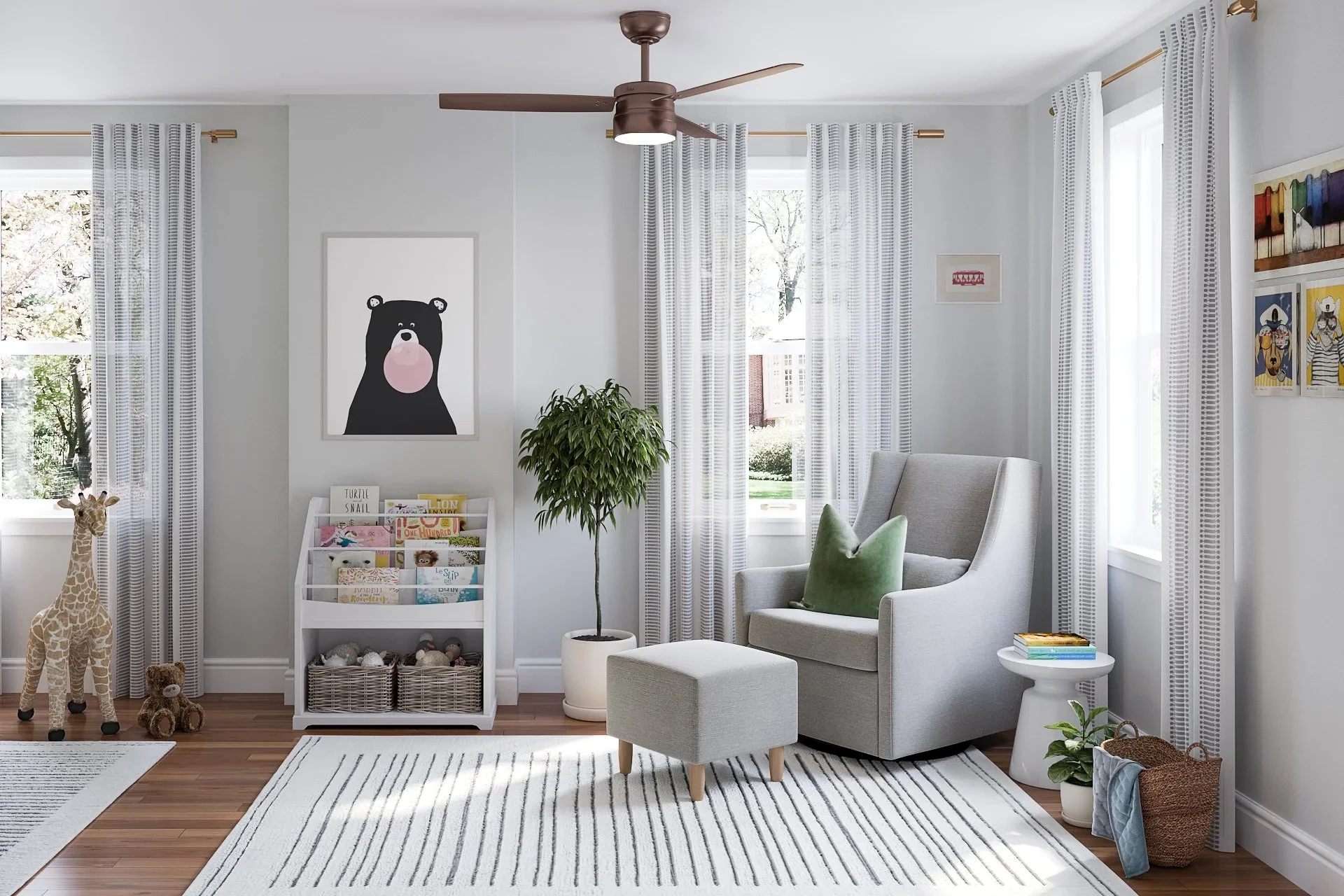
Contemporary-style gender-neutral nursery designed by virtual interior designer Joshua Jones of JJones Design Co., featuring soft neutral tones, clean lines, and a comfortable reading corner that can adapt as your child grows.
Plan a Layout That Works Now—and Later
A well-designed nursery isn’t just about what you put in the room—it’s how the room functions day to day. And this is where a lot of spaces fall short. They’re designed for how the room looks in photos, not how it actually works over time.
In the early stages, the layout should support ease and comfort. That usually means keeping key pieces—like the crib, changing area, and seating—within a practical flow so everything feels intuitive during daily routines. Simple things like having a surface nearby for essentials, or enough clearance to move comfortably around the crib, make a bigger difference than most people expect.
But just as important is thinking a few steps ahead.
As your child grows, the way the room is used will shift. Floor space becomes more valuable for play. Storage needs increase. Eventually, the room may need to accommodate a larger bed or a small desk area. If the initial layout is too tight or overly fixed, these transitions can feel awkward and forced.
This is why I always recommend leaving a bit of breathing room in the layout from the start. Avoid overfilling the space with furniture, even if it feels tempting to include everything at once. A more open, flexible layout gives you the ability to adapt the room naturally as needs change.
It also helps to think in terms of zones, even in a smaller room. A sleeping area, a storage zone, and a flexible open area can coexist without feeling crowded when the layout is planned intentionally. Over time, those zones can shift in purpose without requiring a full redesign.
At the end of the day, a good layout should feel effortless now—but still make sense a few years from now. When that foundation is in place, the room can evolve without losing its balance.
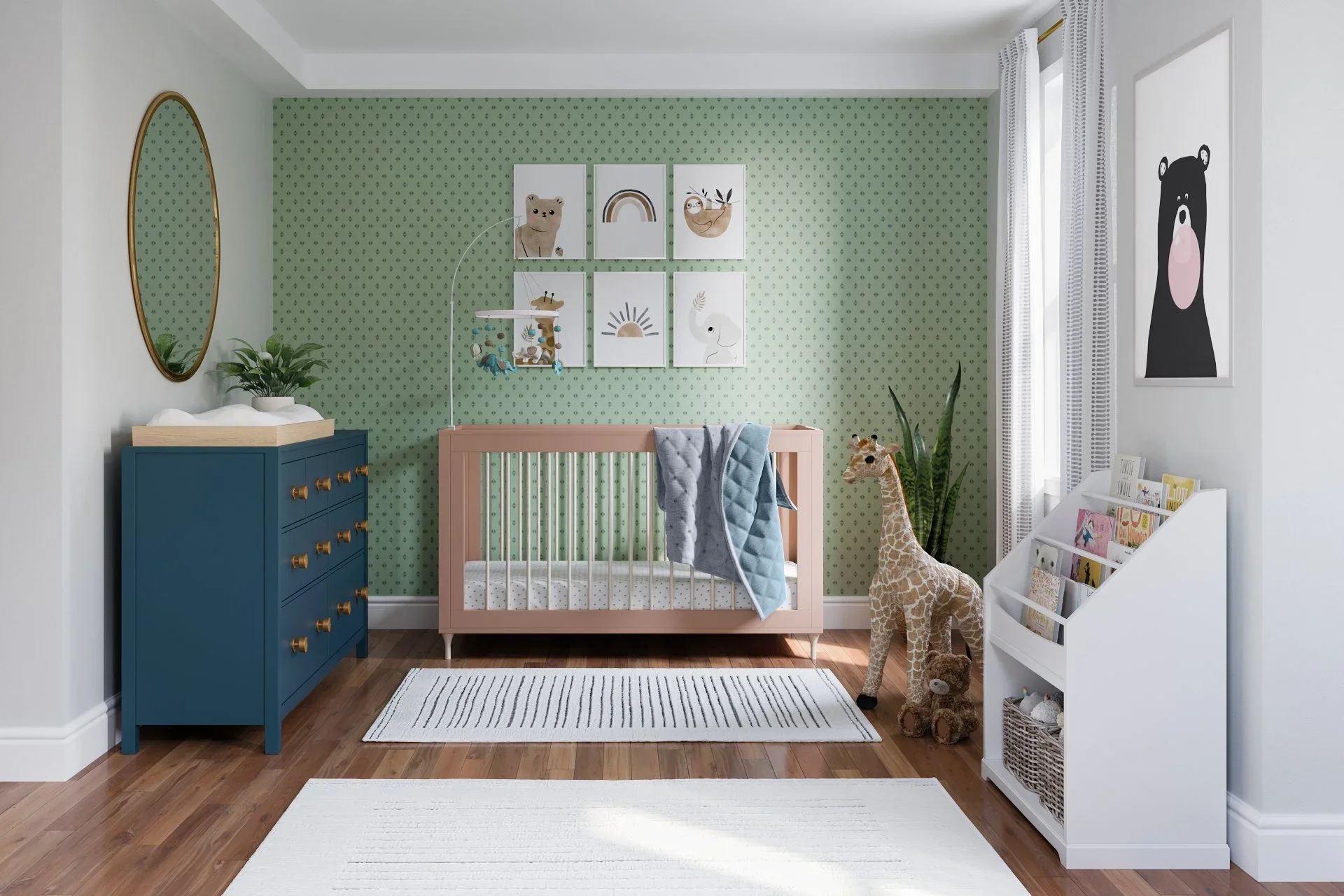
Contemporary-style gender-neutral nursery designed by virtual interior designer Joshua Jones of JJones Design Co., featuring a soft green accent wall, modern crib, and functional layout that balances storage and everyday use.
Avoid Over-Theming (and Design Something That Lasts)
It’s tempting to design a nursery around a theme. Whether it’s animals, storybook characters, or a specific color concept, these ideas can feel fun and exciting in the moment. The challenge is that they rarely age well—and often lead to a full redesign much sooner than expected.
A more lasting approach is to treat the nursery like any other well-designed room in your home. Instead of building everything around a theme, focus on creating a cohesive foundation with a clear sense of style. This keeps the space feeling elevated and allows it to evolve naturally over time.
That doesn’t mean the room has to feel serious or lacking personality. You can still bring in playful elements—but the key is how you use them. Artwork, soft furnishings, small decor pieces, or even a single accent wall can introduce character without overwhelming the space. These are also the easiest elements to update later as your child’s interests change.
For example, instead of committing to a full themed room, you might incorporate subtle nature-inspired artwork, a few patterned textiles, or a statement piece that adds visual interest without defining the entire space. As your child grows, those layers can shift without affecting the overall design.
This approach also helps the room feel more connected to the rest of your home. Rather than standing out as a temporary, overly themed space, the nursery becomes part of a larger design story—something that feels intentional from the beginning.
In the long run, avoiding over-theming isn’t about limiting creativity. It’s about making smarter design decisions that give you flexibility, save money, and keep the room feeling relevant well beyond the nursery stage.
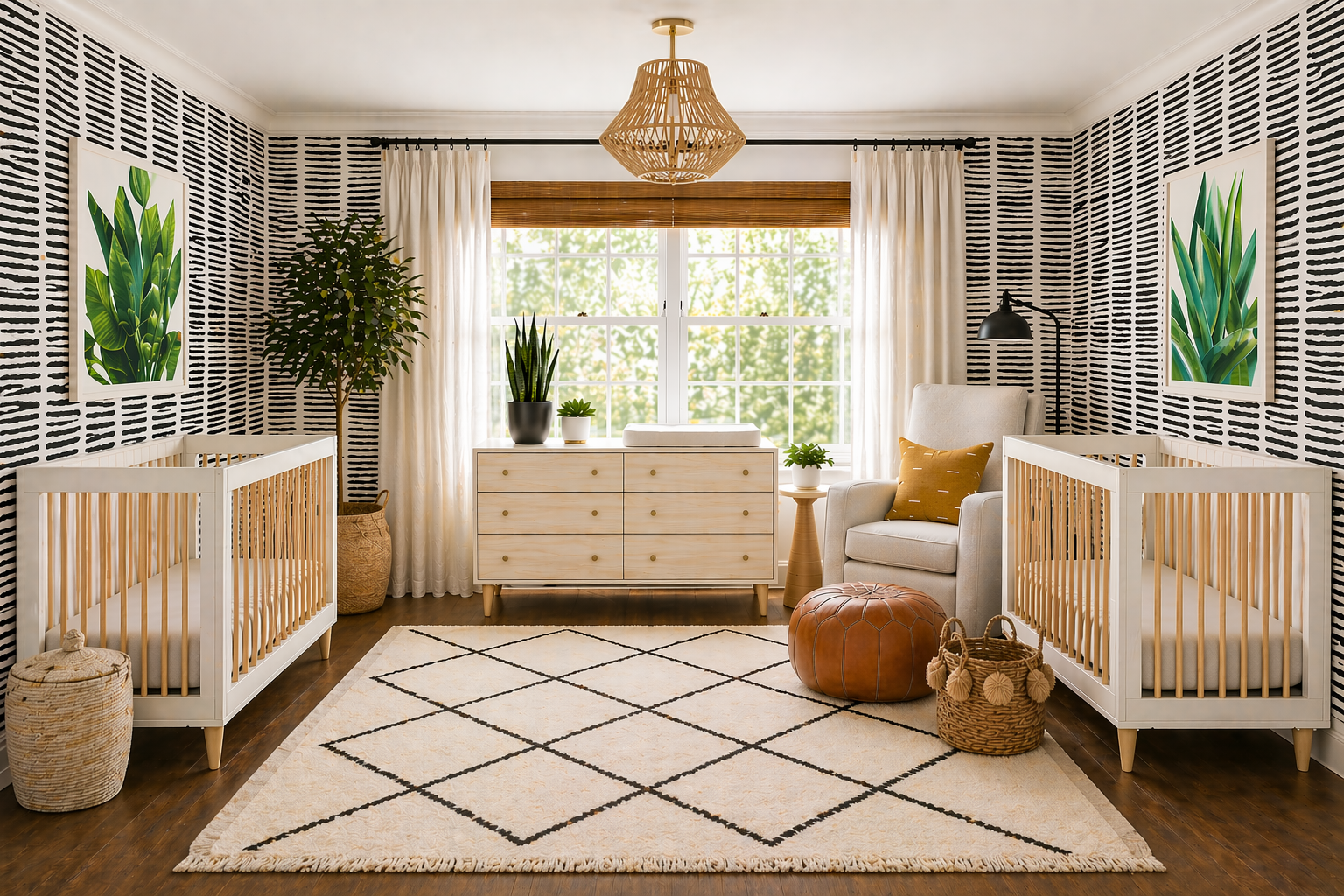
Modern boho-style twin nursery designed by virtual interior designer Joshua Jones of JJones Design Co., featuring a symmetrical layout with dual cribs, natural textures, and a calming neutral palette centered around a large window. This 3D visualization was created using AI based on my original 2D design concept.
What to Invest In (and Where You Can Save)
Designing a nursery doesn’t mean you need to spend heavily across the board. In fact, one of the smartest things you can do is be intentional about where your budget goes—especially in a room that will naturally evolve over time.
Start with the pieces that will have the longest lifespan. A well-made crib (especially one that converts), a durable dresser, and a comfortable, versatile chair are worth investing in. These are the items that get daily use and, when chosen well, can transition with the room for years. Quality matters here—not just for durability, but for how the space feels overall.
Storage is another area that deserves attention early on. As simple as it sounds, having functional, well-planned storage makes a noticeable difference in how the room operates day to day. Built-in solutions aren’t always necessary, but thoughtful pieces that maximize space and reduce clutter are always a worthwhile investment.
On the other hand, there are areas where you can be more flexible. Decor, smaller accessories, and trend-driven items don’t need to be permanent or expensive. These are the elements that naturally change over time, so it makes more sense to keep them approachable and easy to update.
Textiles are another category where balance matters. A quality rug or well-made window treatments can anchor the room and last for years, while smaller items like pillows or throws can be swapped out as needed to refresh the space.
The goal isn’t to overspend—it’s to spend with intention. When you invest in the right foundational pieces and stay flexible with the rest, you create a nursery that feels complete now without locking yourself into decisions that won’t work later.
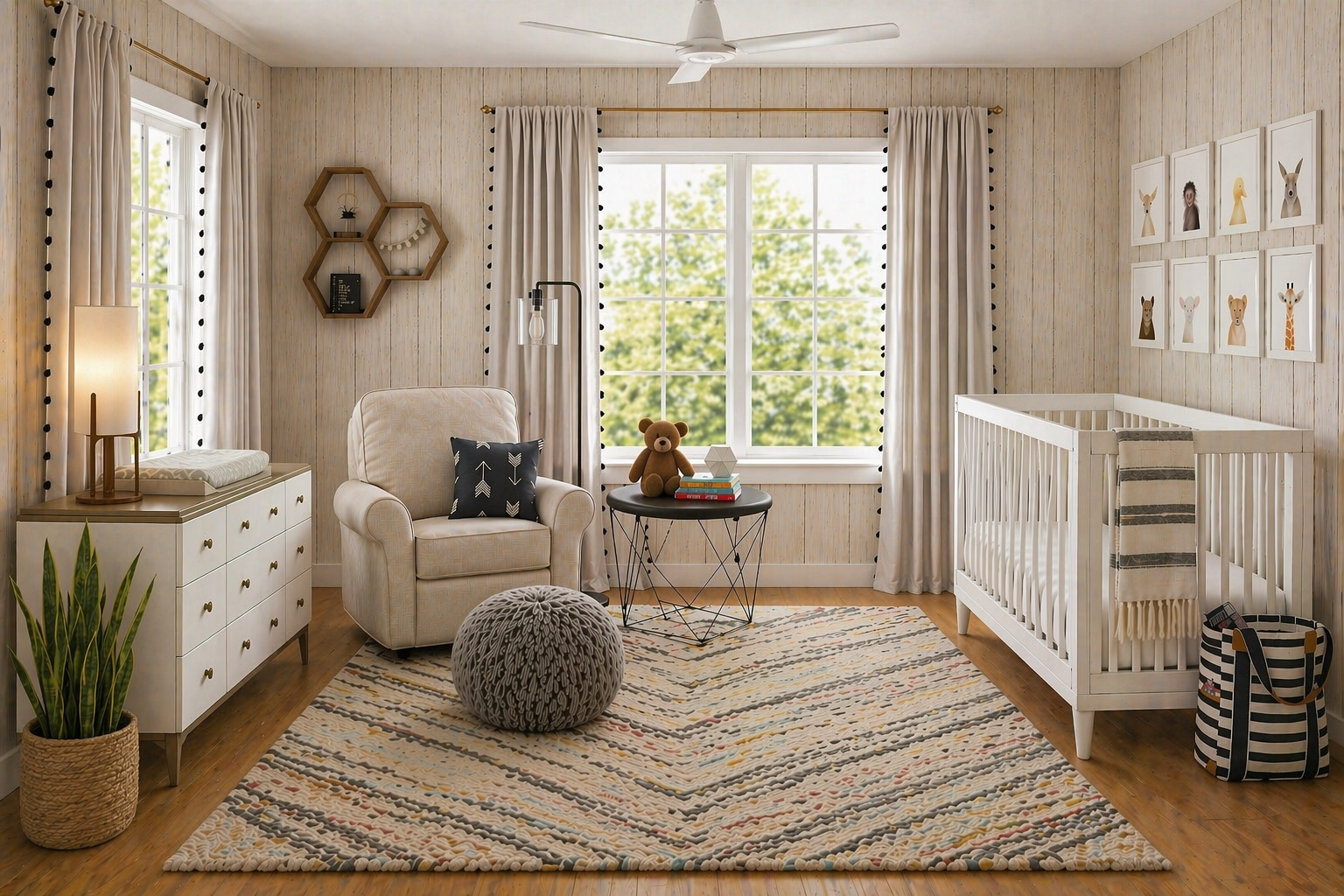
Modern neutral nursery designed by virtual interior designer Joshua Jones of JJones Design Co., featuring a cozy reading corner, large window layout, and layered textures that create a calm, functional space for everyday living. This 3D visualization was created using AI based on my original 2D design concept.
Designing a Nursery That Actually Lasts
When you step back and look at the bigger picture, a well-designed nursery isn’t defined by any one element. It’s the combination of thoughtful choices—color, furniture, layout, and restraint—that allows the space to evolve without feeling like it needs to be constantly redesigned.
A gender-neutral approach makes that transition easier, but the real value comes from how the room is planned from the beginning. When the foundation is flexible, updates over time become simple. A crib transitions into a bed. Storage adapts to new needs. Decorative layers shift as your child develops their own personality. The room grows without losing its sense of balance.
Just as importantly, the nursery should feel connected to the rest of your home. When materials, tones, and overall style are consistent, the space doesn’t feel temporary or separate—it feels intentional. This is what allows the room to remain relevant, even as its function changes.
At the end of the day, designing a nursery this way isn’t about limiting creativity. It’s about making decisions that work harder for you over time. Instead of starting over every few years, you’re building on a strong foundation that continues to support your needs.
If you’re planning a nursery—or any space that needs to evolve over time—this kind of long-term thinking can make a significant difference. Explore my virtual interior design services here to see how I help clients create spaces that are both beautiful and built to last.