
How to Keep a Real Christmas Tree Fresh Longer (And Your Wreaths & Garlands Too)
A real Christmas tree always looks beautiful the day you bring it home. The problem is, a lot of them don’t stay that way for long.
Needles start dropping, branches dry out, and before you know it, the tree you were excited about a week ago is already looking tired. The same thing can happen with fresh wreaths and garlands if they’re not cared for properly.
Most of the time, it’s not the tree—it’s a few small things that get overlooked. Where you place it, how often it gets water, and even how your home is heated all play a bigger role than people realize.
The good news is, keeping your tree, wreaths, and garlands fresh isn’t complicated once you know what actually matters. A few simple adjustments can make a noticeable difference in how long everything lasts—and how good it continues to look throughout the season.
If you’re planning your overall holiday setup, you might also enjoy my guide to different Christmas decor styles.
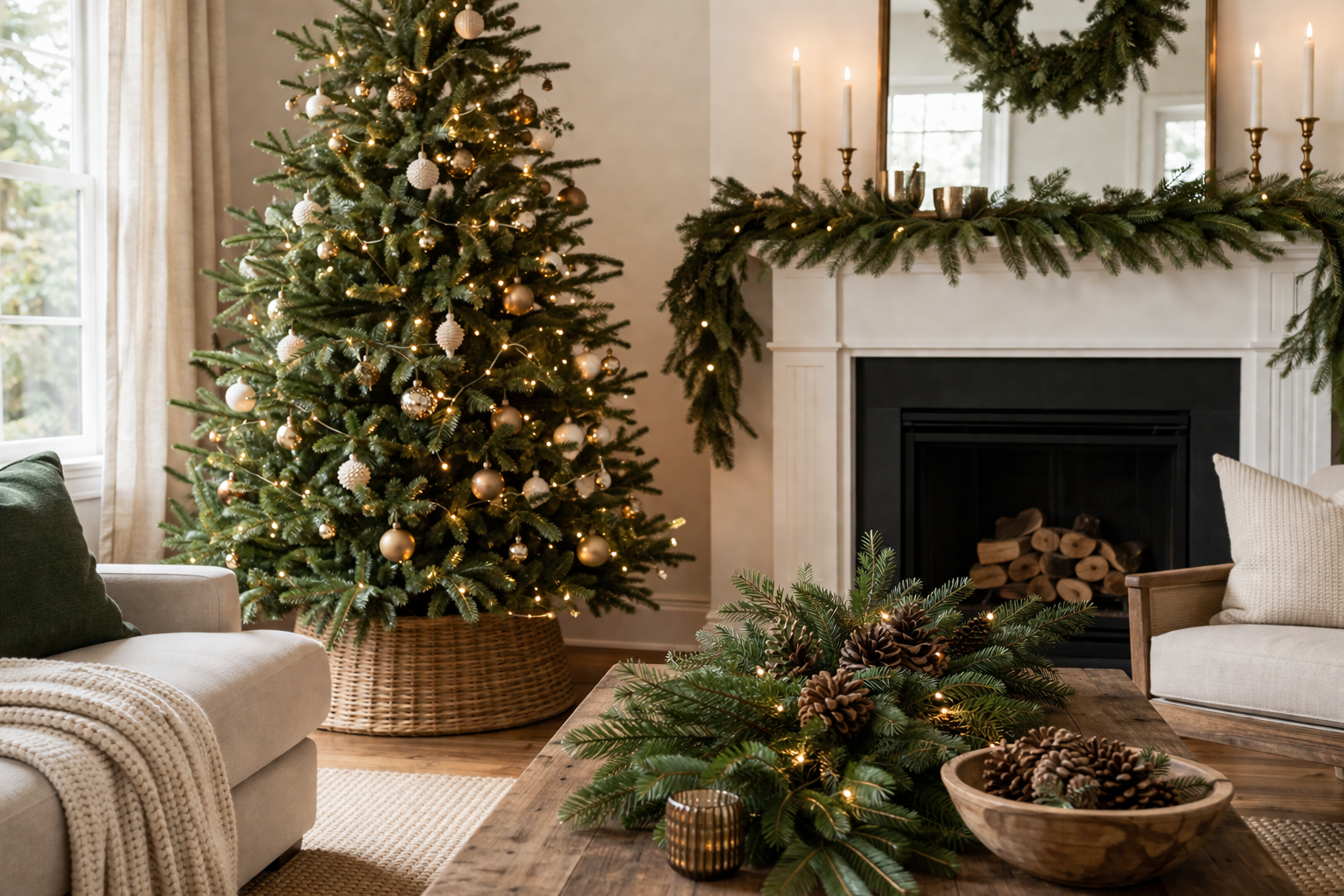
Real Christmas tree styled in a warm, neutral living room with fresh greenery and soft holiday lighting (AI-generated image)
Start with a Fresh Cut (Before It Even Goes Up)
If you’re buying a real tree, the first step actually happens before you even bring it inside.
A freshly cut trunk absorbs water much more effectively. If the tree has been sitting for a while, the sap at the base can seal over, making it harder for the tree to take in water once it’s in the stand.
Most tree lots will make a fresh cut for you, but if not, it’s worth trimming a small slice off the bottom yourself before setting it up.
It’s a simple step, but it sets the foundation for everything that comes next.

Decorated Christmas tree with layered ornaments and a classic topper styled behind the sofa in an open-concept living and dining space (AI-generated image)
Where You Place Your Tree Matters More Than You Think
One of the biggest reasons a real Christmas tree dries out too quickly has nothing to do with the tree itself—it’s where it’s placed.
Most people already know to keep a tree away from direct heat sources like fireplaces, radiators, and heating vents. But in reality, placement is often decided based on how the room looks, not how the tree will hold up over time.
If your tree is sitting right next to a heat vent or in direct sunlight for part of the day, it’s going to dry out much faster—no matter how often you water it. Warm, dry air pulls moisture from the needles, which is what leads to that brittle, shedding look.
That doesn’t mean you have to push your tree into an awkward corner just to keep it alive. It’s about finding a balance. Look for a spot that still works visually in the room but isn’t directly exposed to constant heat or sun. Even shifting it a couple of feet away from a vent or window can make a noticeable difference.
If you’re trying to make everything work visually without sacrificing function, this might help.
The same idea applies to wreaths and garlands. Hanging them on a front door that gets full afternoon sun or placing them near a heat source indoors will shorten their lifespan significantly.
If you want your greenery to last, placement isn’t just a design decision—it’s part of the care.
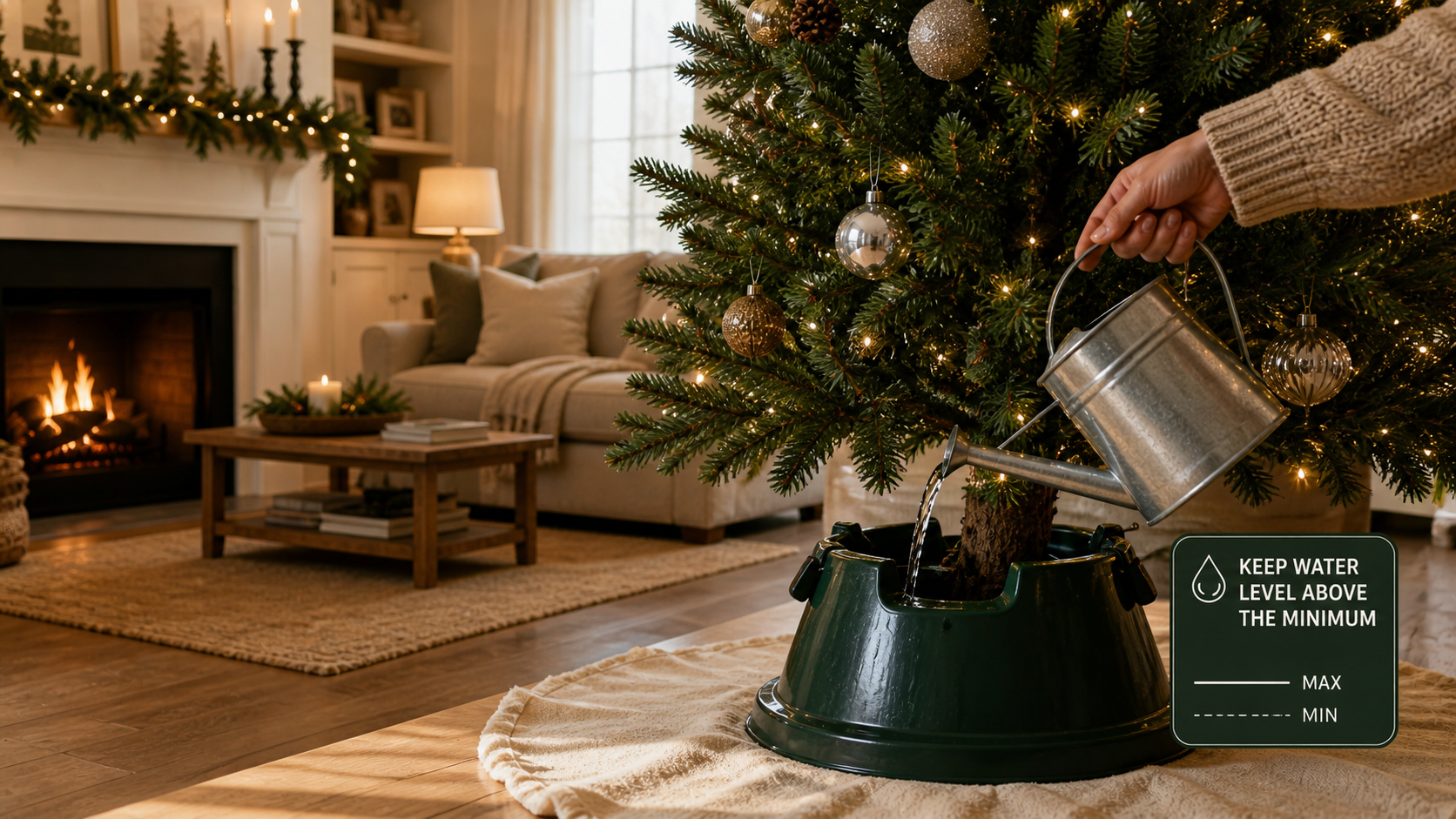
Watering a real Christmas tree to keep the base fully submerged and prevent it from drying out too quickly (AI-generated image)
Don’t Let the Water Run Low
Watering is where most people either get it right—or completely miss it.
A real Christmas tree can go through more water than you’d expect, especially in the first few days. The most important thing is to keep the base of the trunk submerged at all times.
If the base dries out even once, the tree can seal itself and stop drinking. That’s when trees dry out fast.
Check the water level daily, especially early on. It’s a quick habit that makes a big difference in how long your tree stays fresh.
You don’t need additives, sugar, or special mixes. Plain water does the job just fine.
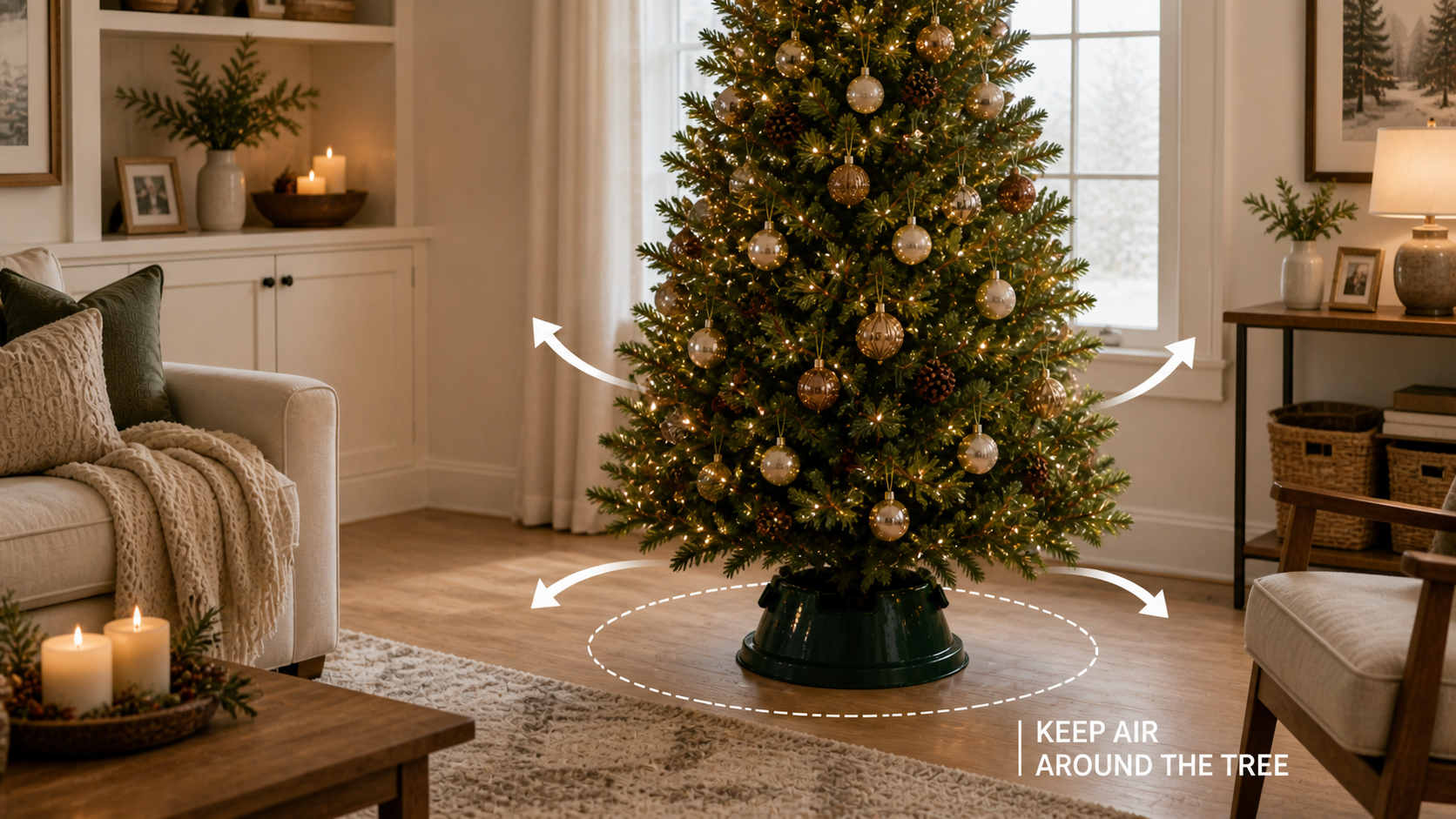
Christmas tree placed with proper spacing to allow airflow and help prevent it from drying out too quickly (AI-generated image)
Keep the Air Around It in Mind
Indoor air during the holidays tends to be dry, especially with heating systems running constantly.
That dry air pulls moisture from your tree, wreaths, and garlands, which speeds up the drying process.
If your home runs particularly dry, a humidifier can help—but even small adjustments matter. Keeping greenery away from direct airflow (like vents or fans) and avoiding overly warm rooms can slow down moisture loss.
It’s not about creating perfect conditions. It’s about avoiding the worst ones.

Festive living room featuring a garland centerpiece with a glass hurricane candle, paired with a decorated wreath and layered holiday greenery (AI-generated image)
Caring for Wreaths and Garlands (It’s a Little Different)
Wreaths and garlands don’t have a water source like a tree, so they need a slightly different approach.
The main thing here is moisture. Lightly misting them every couple of days can help keep them from drying out too quickly, especially if they’re indoors.
Placement still matters just as much. Keep them away from heat sources and direct sunlight whenever possible.
If you’re using them outdoors, they’ll typically last longer in cooler, shaded areas compared to spots that get strong sun exposure.
If you’re also decorating with extra ornaments this season, take a look at creative ways to use them beyond the tree
A Simple Way to Keep Everything Looking Good Longer
You don’t need to overthink this.
Most of the time, keeping your greenery fresh comes down to three things:
starting with a fresh cut
keeping it properly watered
and placing it in a spot that isn’t working against you
Once those are in place, everything else becomes much easier.
A Different Way to Think About It
Keeping a real Christmas tree, wreath, or garland fresh isn’t about constant maintenance—it’s about setting things up the right way from the beginning.
When placement, water, and airflow are working in your favor, you don’t have to fight to keep things looking good. They just last longer, with less effort.
And that’s really the goal. Not just a tree that survives the season—but one that still looks good by the time you’re ready to take it down.