
Mid-Century Modern Style Guide: What It Is and How to Use It Today
Mid-century modern design is one of the most recognizable styles out there, but it’s also one of the most misunderstood. A lot of spaces try to capture the look and end up feeling either too retro or completely disconnected.
The issue usually isn’t the style itself—it’s how it’s applied. Mid-century modern was never meant to feel like a time capsule. It was designed to be functional, approachable, and easy to live in, which is exactly why it still works so well today.
In this guide, I’m breaking down what mid-century modern design actually is, what defines it, and how to use it in a way that feels current instead of dated. If you’re drawn to clean lines, warm wood tones, and furniture that feels intentional without being overdesigned, this is a style worth getting right.
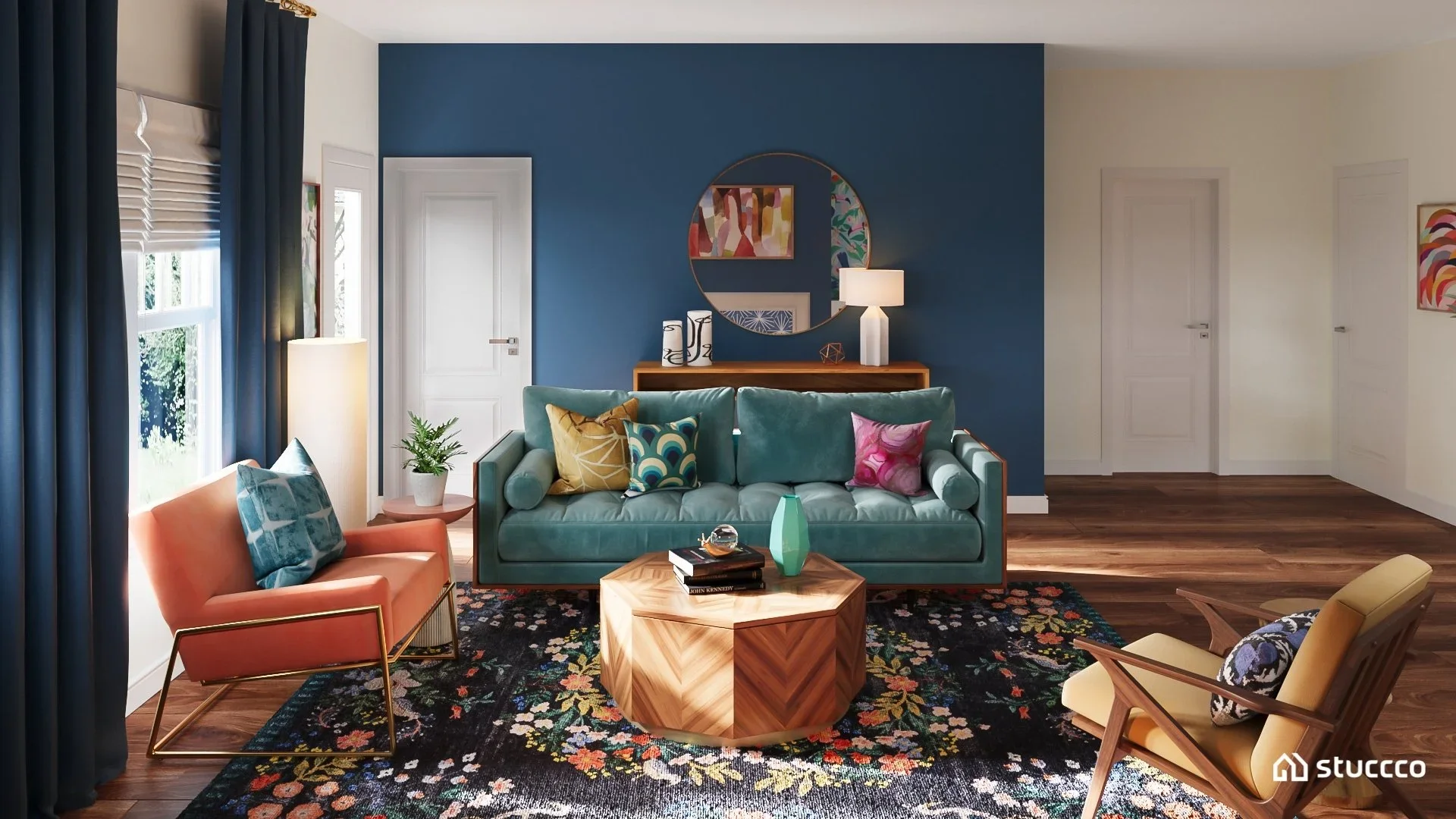
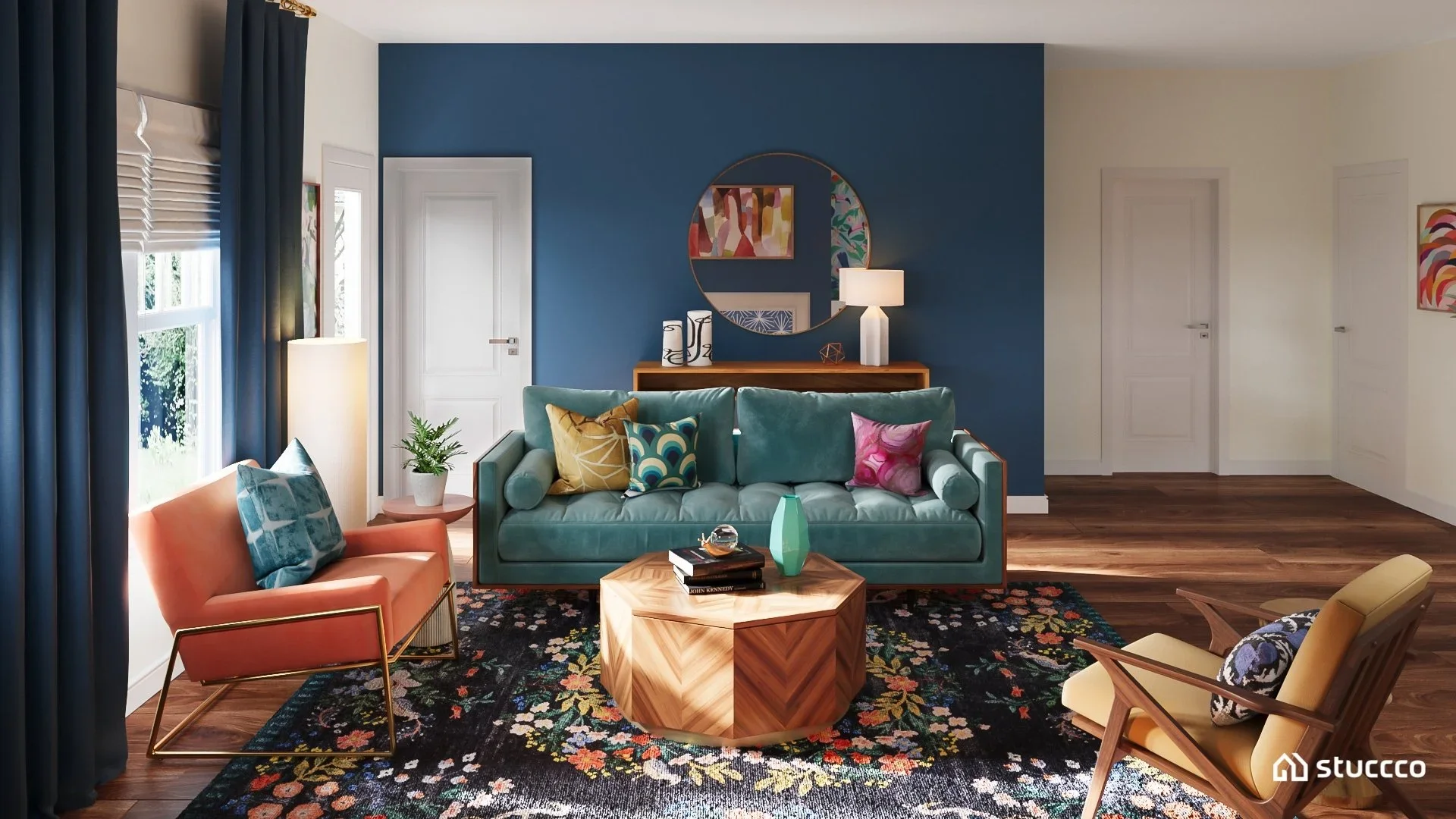
Mid-century modern living room designed by virtual interior designer Joshua Jones of JJones Design Co., featuring bold color, sculptural furniture, and a layered, contemporary interpretation of the style. 3D rendering by Stuccco.
What Mid-Century Modern Really Is
Mid-century modern design developed roughly between the 1940s and 1960s, shaped by a shift toward simpler living and more practical homes after World War II. Instead of focusing on ornate details, designers leaned into clean lines, organic forms, and materials that felt both modern and accessible.
At its core, the style is built on a few key ideas:
Function comes first
Forms are simple but intentional
Materials are honest and often left exposed
Design should feel comfortable, not formal
You’ll see this thinking reflected in the work of designers like Charles and Ray Eames, Eero Saarinen, and George Nelson, who focused on creating furniture and spaces that were both practical and visually distinct.
What makes mid-century modern different from other styles is that it doesn’t rely on decoration to stand out. The shape of the furniture, the proportions, and the materials do most of the work.
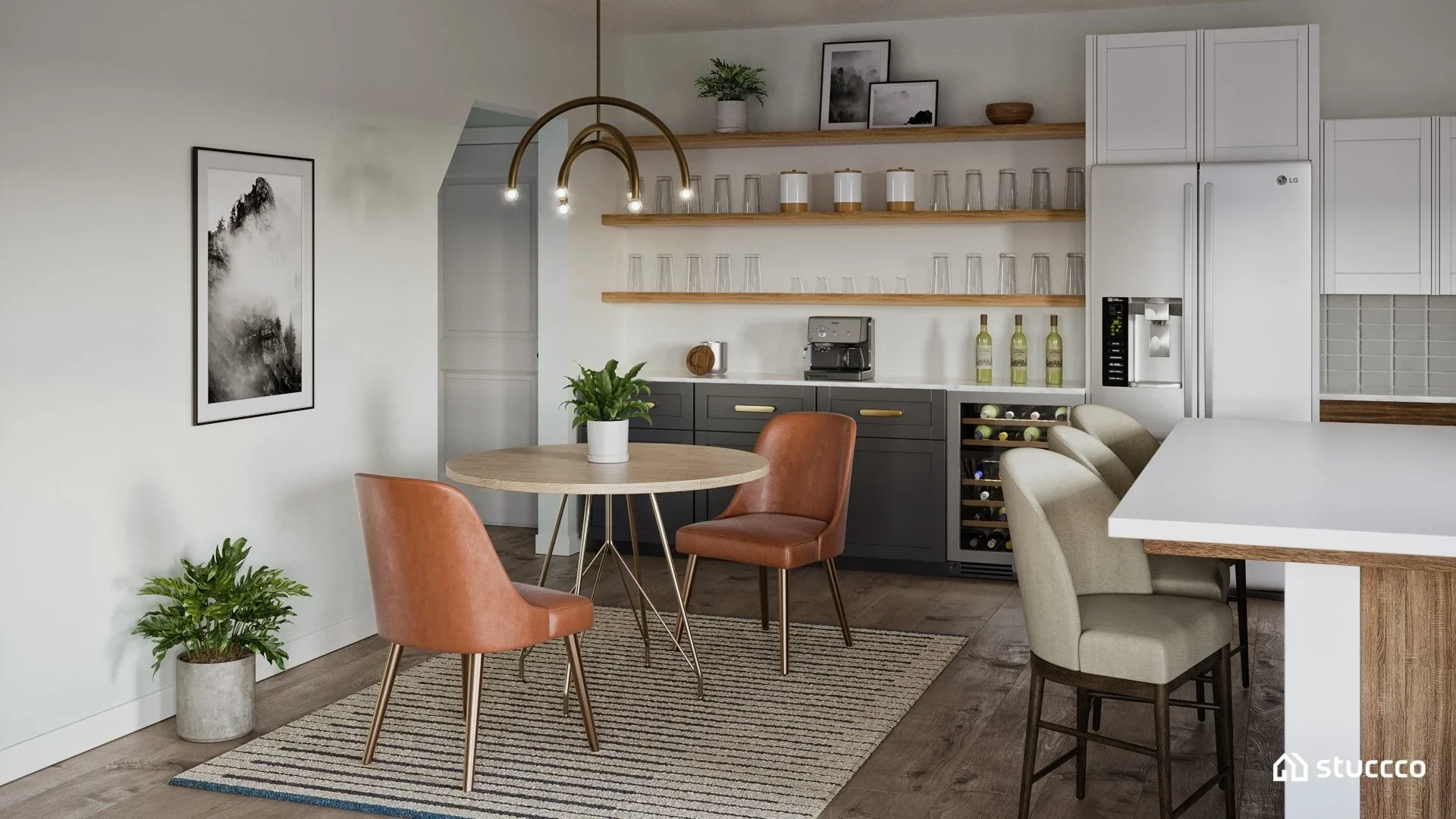
Mid-century modern dining space designed by virtual interior designer Joshua Jones of JJones Design Co., featuring warm wood tones, leather seating, and a clean, functional layout. 3D rendering by Stuccco.
Why Mid-Century Modern Still Works Today
Mid-century modern hasn’t stuck around by accident. It works because the principles behind it still make sense.
The furniture is scaled well for everyday living. The layouts tend to feel open without being oversized. And the materials—especially wood, leather, and metal—age well over time instead of feeling disposable.
It also adapts easily. You can lean more classic if you want something closer to the original look, or you can mix it with other styles to make it feel more current.
That flexibility is what keeps it relevant. You’re not locked into a specific decade—you’re working with a foundation that can shift depending on how you use it.
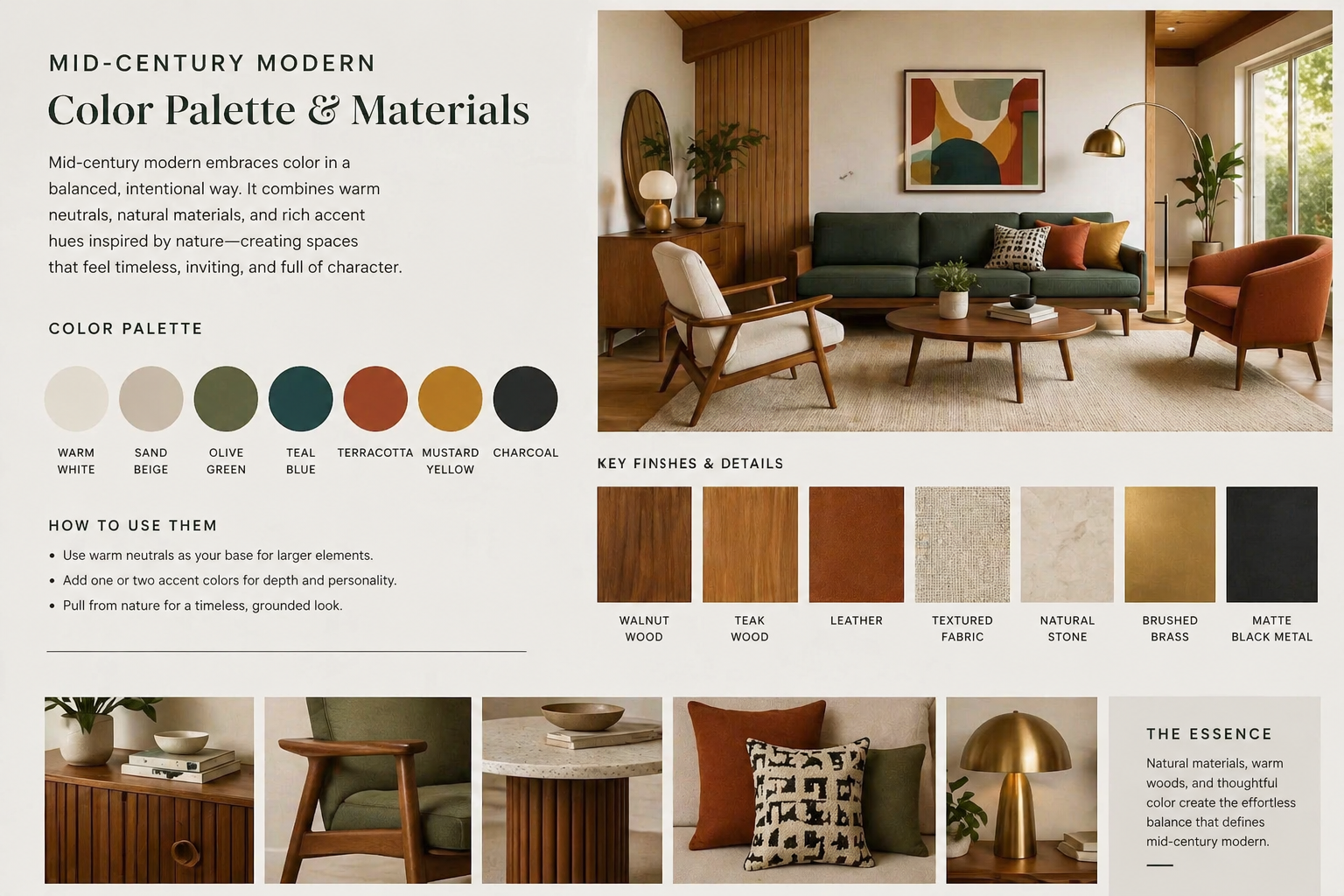
A visual breakdown of mid-century modern color and material choices, highlighting how warmth, contrast, and natural finishes come together to define the style. (AI-generated image)
Key Elements That Define the Look
Mid-century modern design is easy to recognize, but getting it right comes down to understanding the details—not just copying the general vibe.
Furniture with Purposeful Form
Mid-century furniture is defined by its shape. You’ll see clean lines, soft curves, and silhouettes that feel light rather than bulky.
Common characteristics include:
Tapered legs
Low profiles
Sculptural forms
Minimal ornamentation
The key is that the furniture stands on its own. It doesn’t need heavy styling to feel complete.
Wood Tones That Carry the Space
Wood plays a major role in mid-century interiors, but not just any wood tone will work.
You’ll typically see:
Walnut (rich, deep brown)
Teak (warm, slightly golden tone)
Oak (used more selectively in modern interpretations)
These tones add warmth and contrast, especially against lighter walls or upholstery. Going too light or too cool with wood can strip away the character that makes the style feel grounded.
A Color Palette That Adds Personality
This is where a lot of people get it wrong.
Mid-century modern isn’t a neutral-only style. It uses color, but in a controlled and intentional way.
You’ll often see:
Mustard yellow
Olive green
Burnt orange
Deep blue
Warm neutrals as a base
The palette should feel cohesive, not scattered. A few strong colors used well will always work better than trying to include everything at once.
Materials That Feel Authentic
Mid-century design leans into materials that feel real and durable. Nothing feels overly polished or artificial.
Common materials include:
Wood (often the focal point)
Leather
Metal (especially black or brass)
Glass accents
The goal is balance. Too much of one material can make the space feel heavy, while mixing them thoughtfully keeps things visually interesting.
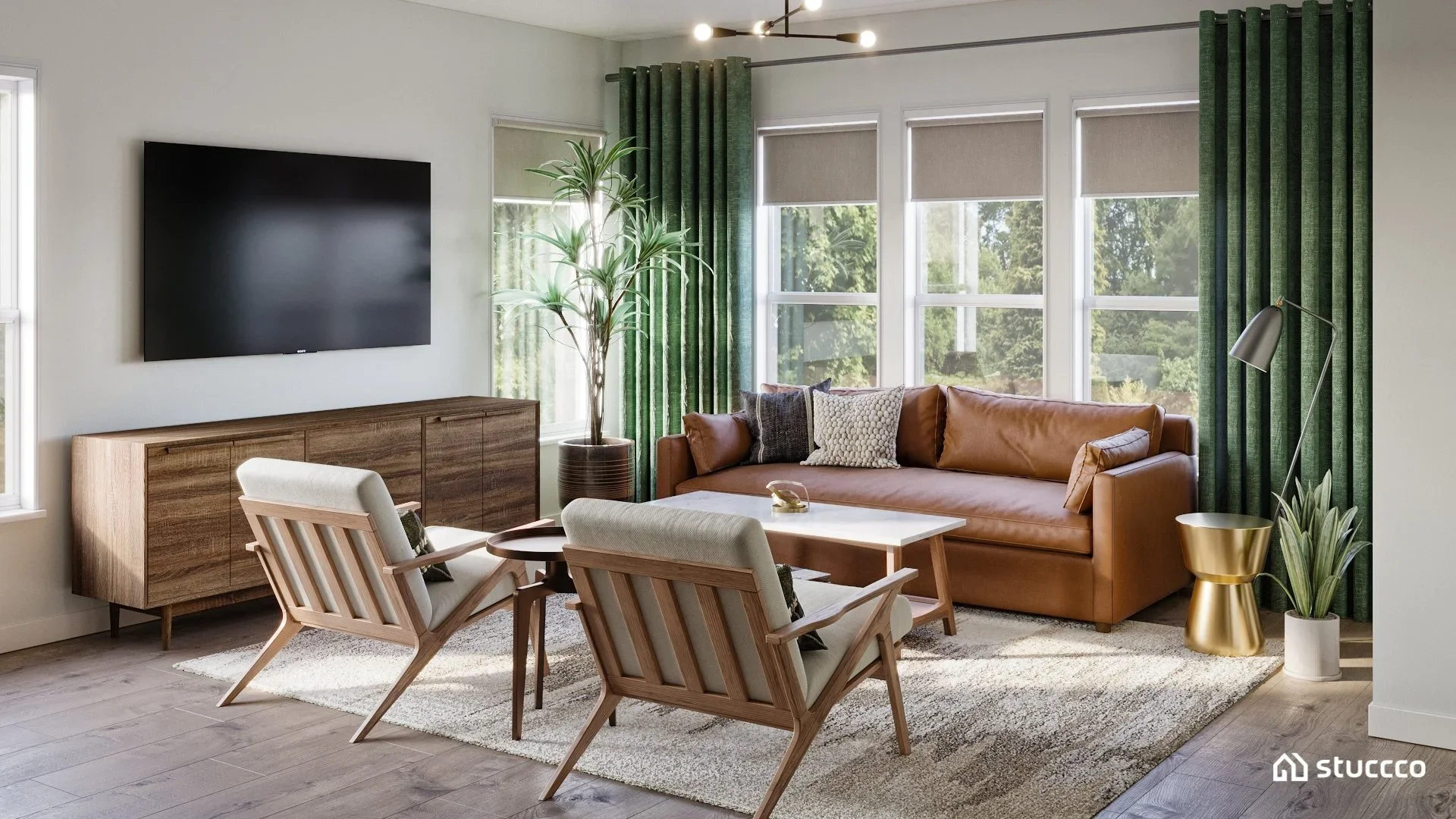
Mid-century modern living room designed by virtual interior designer Joshua Jones of JJones Design Co., featuring warm wood tones, a leather sofa, and a clean, functional layout. 3D rendering by Stuccco.
How Mid-Century Modern Shows Up in Real Spaces
Understanding the elements is one thing. Seeing how they come together in actual rooms is where mid-century modern starts to make sense.
Living Rooms
A mid-century modern living room usually centers around a few well-chosen pieces rather than filling the space.
You’ll often see:
A low-profile sofa with clean lines
A wood or mixed-material coffee table
Accent chairs with sculptural shapes
A mix of textures to soften the look
The layout should feel open and easy to move through, not crowded. Negative space plays an important role here—it gives the furniture room to stand out.
Lighting also carries a lot of weight in these spaces. Floor lamps, table lamps, and statement fixtures are often used to create layers rather than relying on a single overhead source.
If you’re trying to get lighting right in a space like this, this guide on choosing the right light bulb color for every room breaks it down in a practical way.
Dining Areas
Dining spaces tend to be simple but intentional, with a focus on form and proportion.
You’ll typically see:
A wood dining table (often walnut or teak)
Chairs with distinct silhouettes
A single statement light fixture above the table
This is one area where lighting really defines the space. The right fixture can anchor the table and give the room a clear focal point without needing much else.
Bedrooms
Mid-century modern bedrooms feel calm, but not minimal in the same way Scandinavian spaces do.
They often include:
A low-profile bed with a wood frame
Nightstands that match in tone, not necessarily design
Warm lighting instead of bright overheads
Textiles that add softness without overpowering the space
The balance here is important. Too many bold pieces can make the room feel busy, while too few can make it feel unfinished.
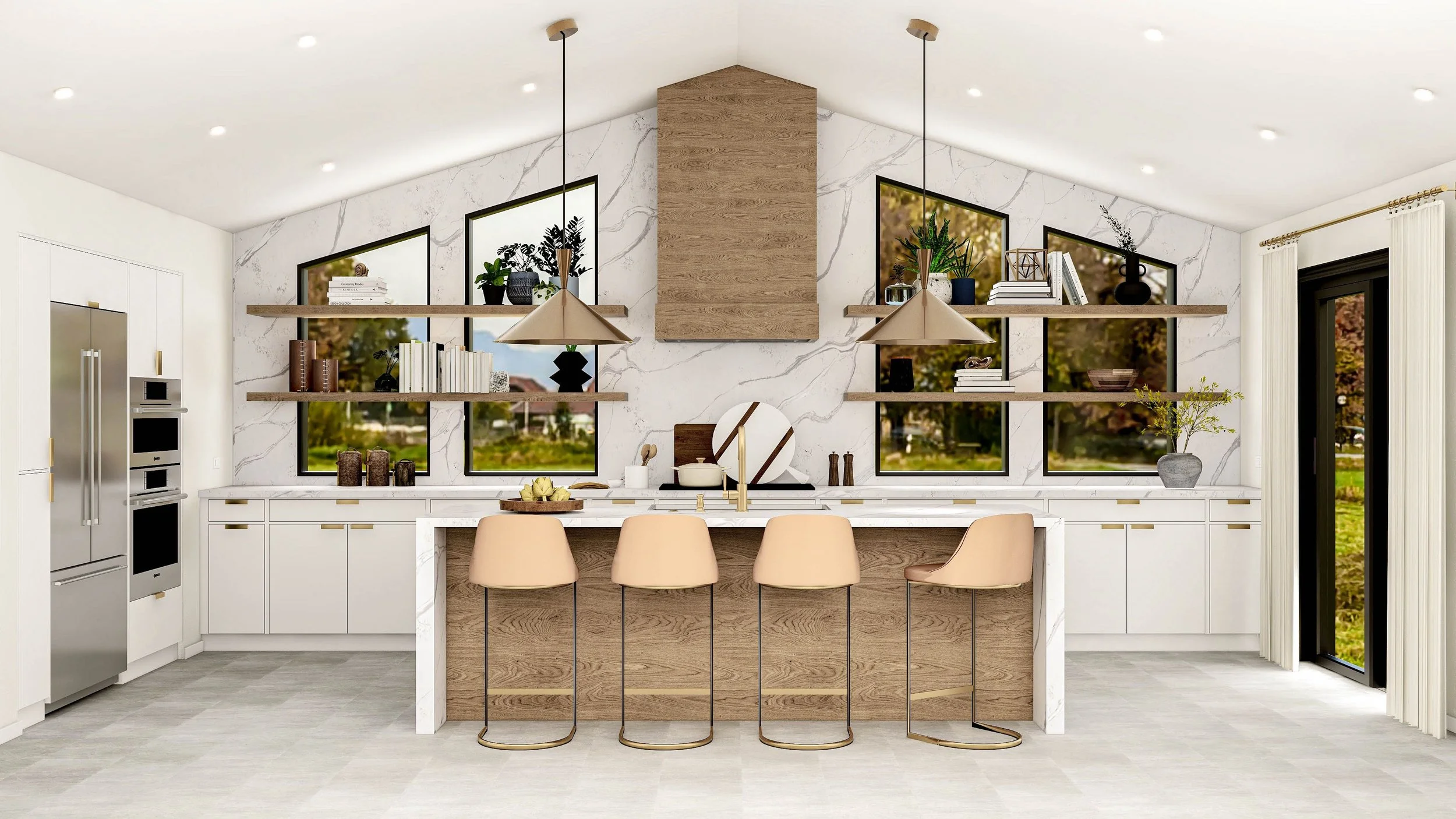
Sleek mid-century modern kitchen designed by virtual interior designer Joshua Jones of JJones Design Co., featuring clean lines, warm wood accents, and a refined, architectural approach to the style.
Common Mistakes to Avoid
Mid-century modern looks simple, but it’s easy to get wrong if you focus on the surface instead of the structure.
Going Too “Retro Showroom”
This is one of the most common mistakes I see in client projects. People try to recreate the style exactly as it looked decades ago, and the result ends up feeling staged or outdated.
Mid-century modern was never meant to feel frozen in time. It works best when it’s mixed with current elements so the space feels lived-in and relevant.
Mixing the Wrong Wood Tones
Wood is a defining feature of this style, but not all wood tones work together.
Pairing cool-toned woods with warm walnut or teak can throw off the entire space. The palette should feel cohesive, even if you’re mixing finishes.
When in doubt, stay within a similar undertone and vary the depth instead of the temperature.
Ignoring Scale and Proportion
Mid-century furniture tends to have lower profiles, which can create problems if the rest of the room doesn’t match.
Oversized sofas, bulky tables, or heavy case goods can quickly overpower the space and take away from the clean, balanced look the style is known for.
Proportion matters more than people expect here. Even a well-designed piece can feel out of place if it’s not scaled correctly.
Treating It Like a Neutral Style
A lot of people strip the color out completely, thinking it will make the space feel more modern.
It usually has the opposite effect.
Without color, mid-century modern loses a big part of its identity. Even subtle tones—like olive, mustard, or deep blue—can bring the space back to life without making it feel busy.
Overlooking Lighting as a Design Feature
Lighting in mid-century spaces isn’t just functional—it’s part of the design.
Relying only on recessed lighting or basic fixtures flattens the entire room. Sculptural fixtures, warm light, and layered sources are what give the space depth and character.
Just as important is the quality of light itself. Cooler tones can make the space feel harsh and take away from the warmth of wood and color that defines mid-century design. Warmer light helps bring everything together and makes the space feel more inviting.
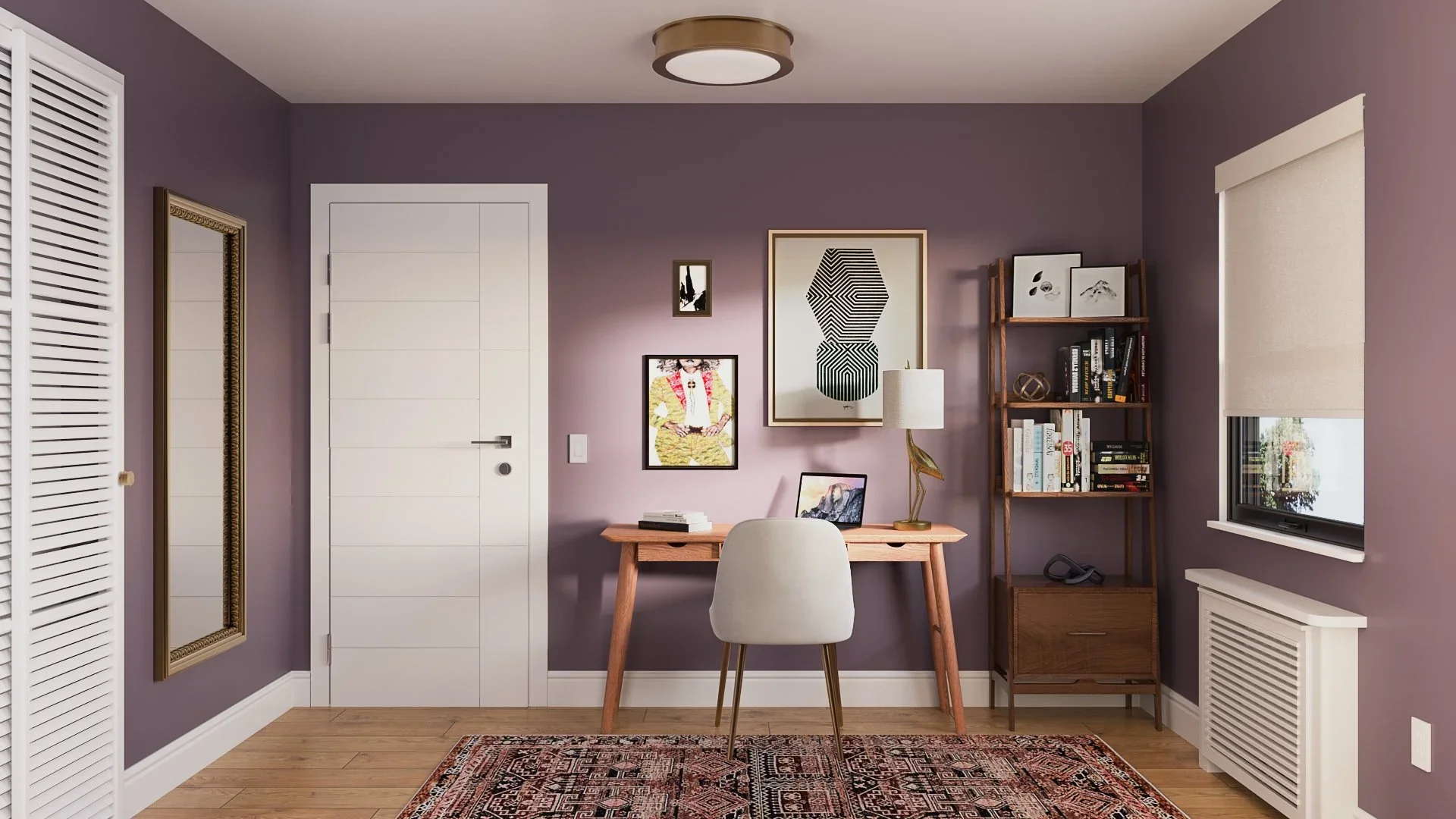
Mid-century modern home office designed by virtual interior designer Joshua Jones of JJones Design Co., featuring warm wood tones, clean lines, and a balanced mix of color and functionality.
How to Actually Get the Look Right
If you want mid-century modern to feel intentional instead of staged, it comes down to making a few smart decisions and not overcomplicating the process.
Start with the foundation. Focus on one or two key furniture pieces that define the space, like a well-proportioned sofa or a dining table with strong lines. From there, build around those pieces instead of trying to design everything at once.
Keep your materials consistent. Stick to a core wood tone—like walnut or teak—and layer in materials like leather, metal, or glass to create contrast without making the space feel busy.
Be intentional with color. You don’t need a lot of it, but you do need enough to give the space personality. A single accent color used well will always look more refined than trying to include multiple competing tones.
Pay attention to scale. Mid-century interiors work because everything feels balanced. If one piece is too large or too heavy, it can throw off the entire room.
And don’t forget lighting. This is where a lot of spaces fall short. Mid-century design relies on layered lighting to create depth, so think beyond overhead fixtures and include floor lamps or sculptural pieces that contribute to the overall look.
That said, this is also where many people get stuck. The balance between clean lines, warm materials, and the right amount of color can be harder to achieve than it looks—especially when you’re trying to avoid making the space feel either too minimal or overly styled.
If you’re trying to get that balance right in your own home, you can explore my Virtual Interior Design Services to see how I help clients create spaces that feel both intentional and easy to live in.
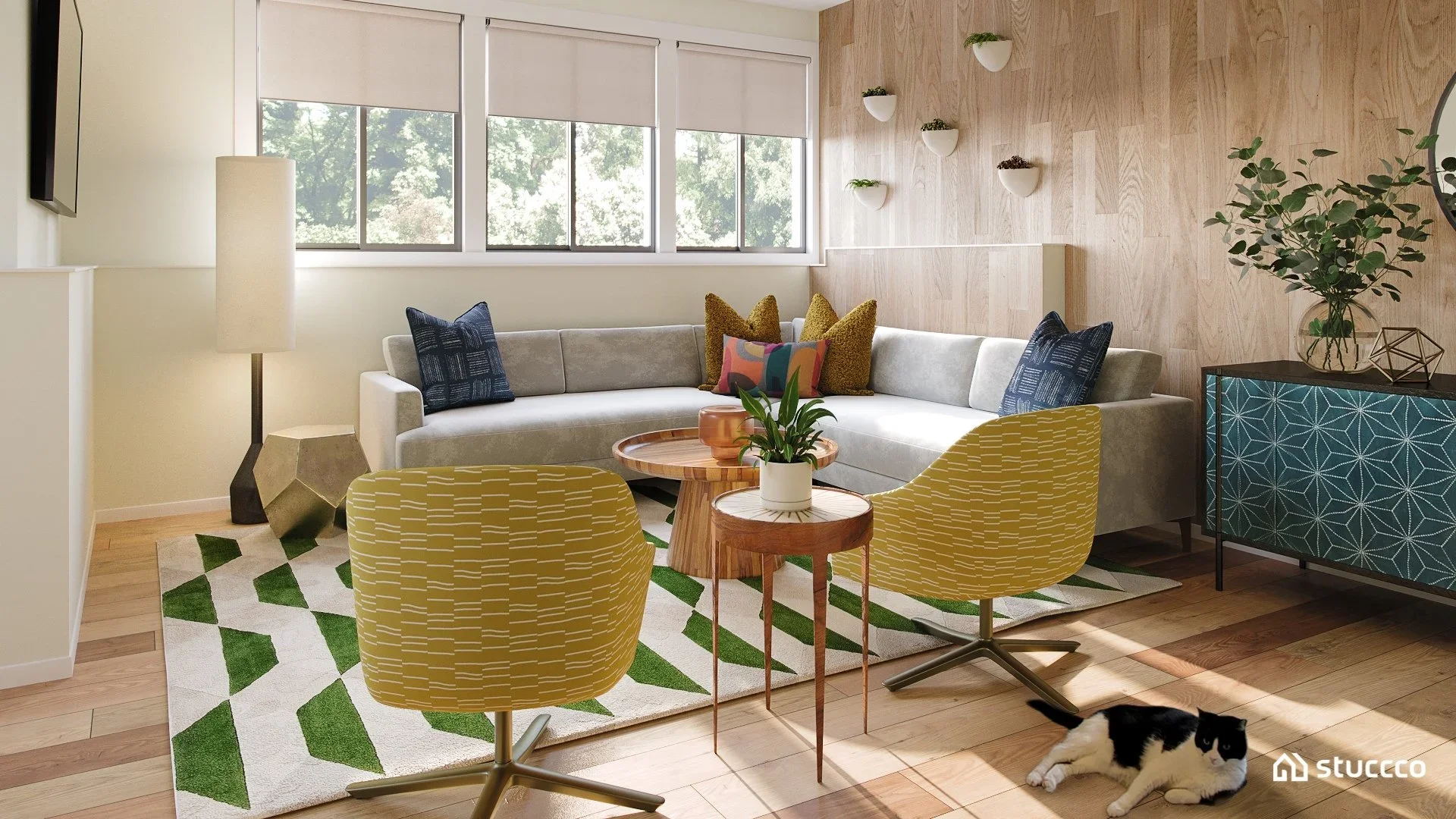
Mid-century modern basement family room designed by virtual interior designer Joshua Jones of JJones Design Co., featuring warm wood tones, playful pattern, and a relaxed, livable approach to the style. 3D rendering by Stuccco.
Where Mid-Century Modern Fits Today
Mid-century modern still works because it doesn’t rely on trends. The core ideas—function, simplicity, and well-made materials—translate easily into how people want to live now.
What’s changed is how the style is used.
Instead of designing an entire home around it, most spaces today take a more balanced approach. Mid-century pieces are often mixed with other styles to keep things from feeling too themed or predictable.
You might see it paired with:
Contemporary elements for a cleaner, more updated look
Organic materials to soften the sharper lines
Subtle contrast through color or texture to keep the space from feeling flat
This is where the style feels the most natural. It becomes part of the overall design instead of the entire identity of the space.
Mid-century modern gives you a strong foundation, but it doesn’t limit you. When it’s done well, it creates spaces that feel thoughtful, comfortable, and easy to live in without trying too hard.

