
From Pinterest to Reality: How I Translate Design Inspiration Into a Cohesive Room
Editor’s Note (Updated 2026): This post has been fully rewritten to reflect my current design approach and process. The comments below are from the original 2018 version and may reference earlier content.
You’ve probably saved dozens of beautiful rooms on Pinterest or Instagram—spaces that instantly caught your attention and made you think, “I want my home to feel like this.”
But when it comes time to bring that same look into your own space, something doesn’t quite translate. The layout feels off. The colors don’t look the same. Or the room just doesn’t come together the way you expected.
That’s because inspiration photos aren’t meant to be copied exactly—they need to be interpreted.
As a virtual interior designer, a big part of my job is taking those inspiration images and translating them into something that actually works in real life—your layout, your lighting, your lifestyle, and your budget. What looks effortless in a photo is usually the result of many intentional decisions behind the scenes.
In this post, I’ll walk you through how I approach design inspiration and turn it into a cohesive, livable space.
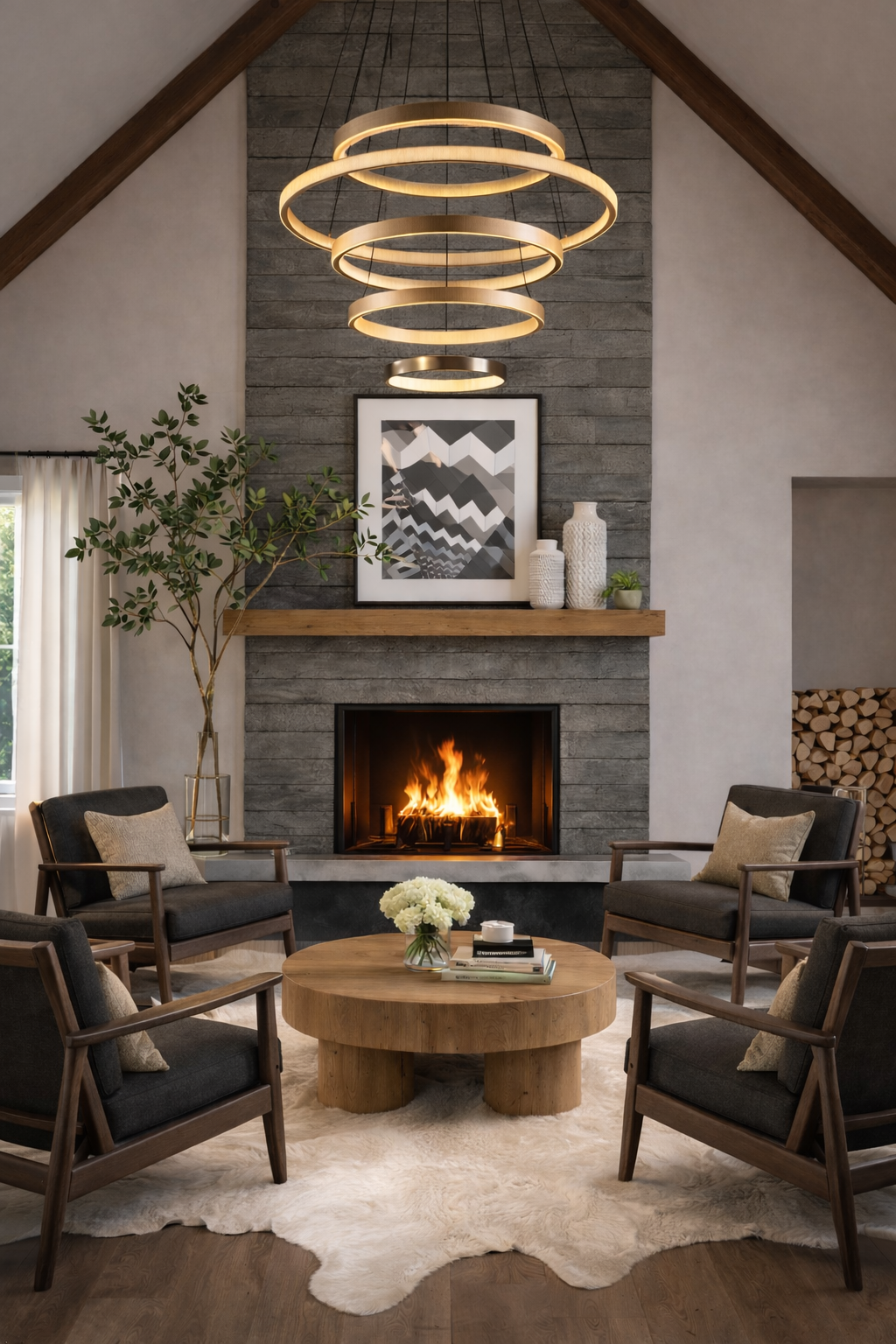
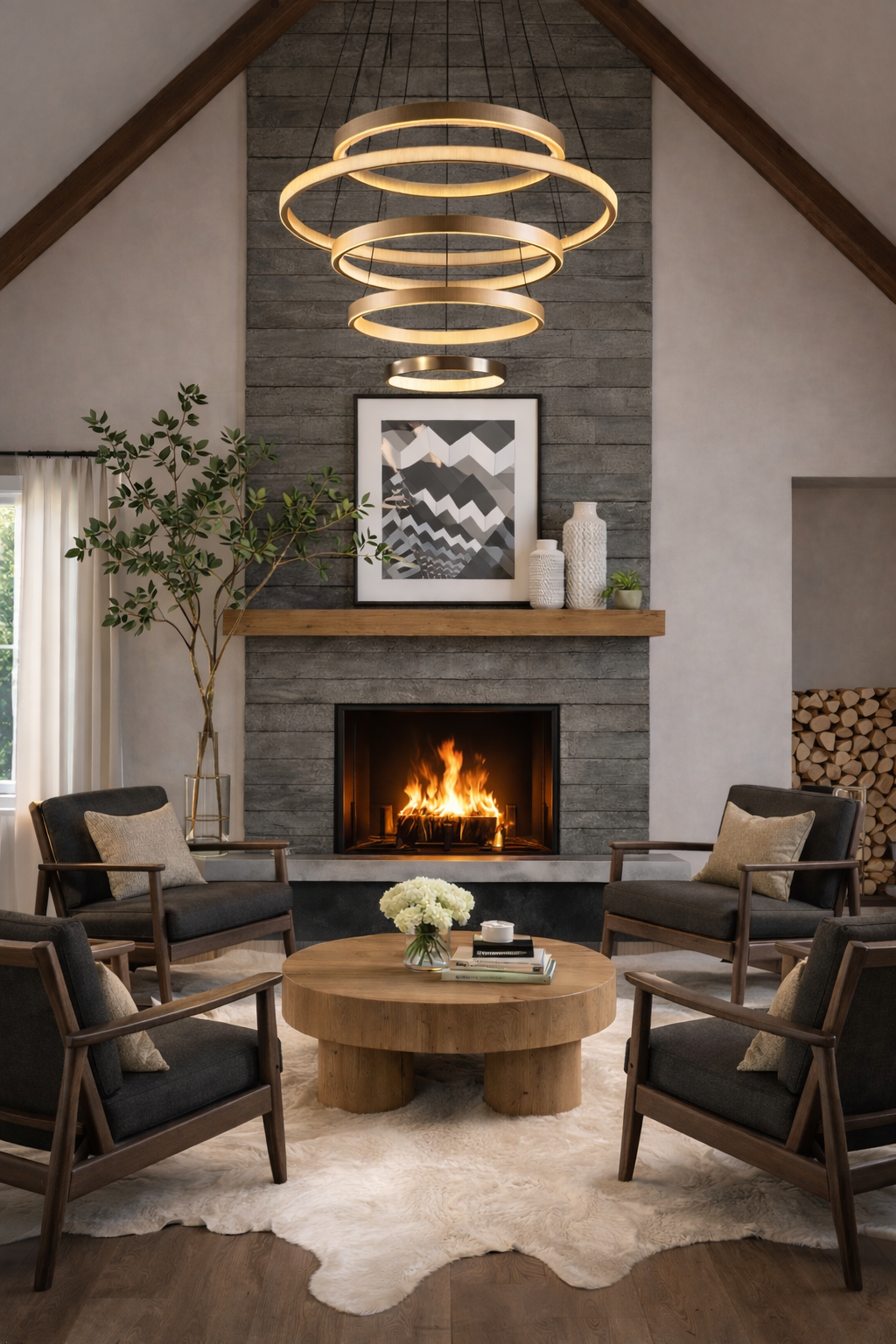
Modern lodge living room design featuring an A-frame fireplace, halo ring chandelier, and off-white cowhide rug, designed by Joshua Jones of JJones Design Co. (AI rendering)
Why Inspiration Photos Don’t Always Work in Real Life
One of the biggest misconceptions about design inspiration is that you can recreate a space exactly as you see it online. On the surface, it seems simple—find a look you love, buy similar pieces, and put it all together.
In reality, it rarely works that way.
Every inspiration photo is created under very specific conditions. The room size, ceiling height, natural light, and even the camera angle all play a role in how the space looks. What feels bright and airy in a photo might feel completely different in a smaller room or a space with limited natural light.
There’s also the issue of scale. Furniture that looks perfectly proportioned in an image might be too large or too small once placed in a real room. This is one of the most common reasons why a space can feel “off” even when all the individual pieces look great on their own.
Materials and finishes are another factor. A fabric, wood tone, or paint color can appear very different depending on lighting conditions and surrounding elements. What works beautifully in one setting doesn’t always translate the same way somewhere else.
And then there’s lifestyle. Many inspiration photos are styled for visual impact, not everyday living. The layout might not support how you actually use your space, whether that’s entertaining, relaxing, working, or managing a busy household.
This is why design isn’t about copying a photo—it’s about understanding what makes that space work, and then adapting those elements in a way that feels natural and functional in your own home.
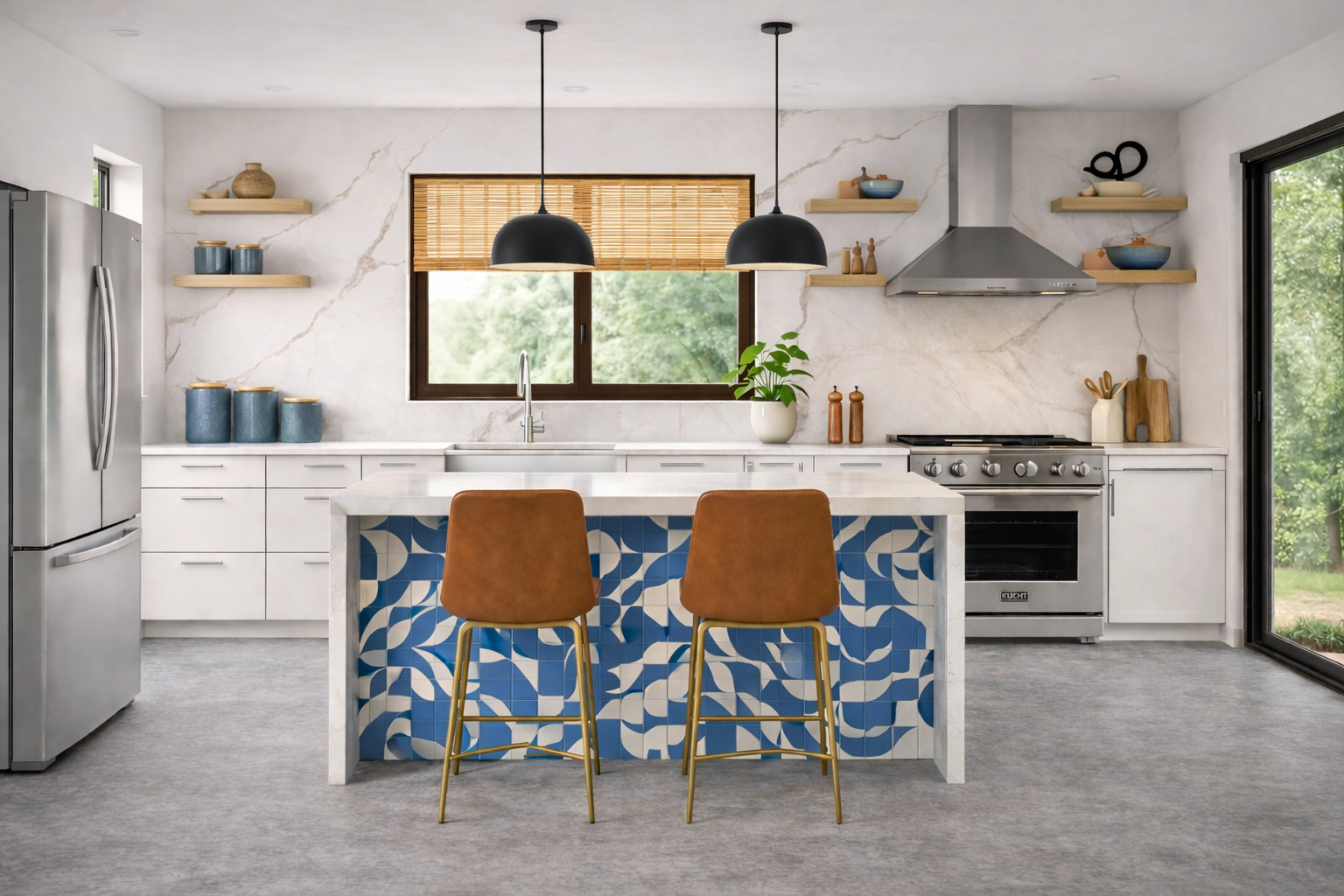
A California casual kitchen concept balancing clean lines with warmth, designed by Joshua Jones of JJones Design Co. (AI rendering)
How I Interpret Design Inspiration (My Process)
When a client shares inspiration photos with me as part of my virtual interior design services, I’m not looking to recreate the space piece by piece.Instead, I’m breaking it down to understand what’s actually driving the look—and how to translate that into a room that works for them.
Here’s how I approach it:
1. Identify the Core Elements
The first thing I look at is the overall feeling of the space. Is it calm and minimal? Warm and layered? Clean and modern with contrast?
From there, I break it down into key components—color palette, materials, shapes, and style direction. Sometimes clients are drawn to a space because of one dominant feature, like a warm wood tone or a soft neutral palette, but they may not realize what’s actually catching their eye.
Once those core elements are clear, it becomes much easier to build a cohesive direction rather than guessing or mixing too many ideas at once.
2. Analyze Layout and Scale
Next, I look at how the space is put together.
An inspiration photo might show a large sectional, oversized artwork, or wide-open spacing—but that doesn’t mean those proportions will work in every room. I take into account the actual dimensions of the client’s space and adjust accordingly.
This step is where function and flow come into play. The goal is to create a layout that not only looks balanced but also feels comfortable to move through and use every day.
3. Translate Materials and Finishes
This is where inspiration starts to become reality.
Not every material shown in a photo is practical, available, or within budget. A high-end fabric, custom cabinetry, or specialty finish might need to be reinterpreted using more accessible options that still achieve a similar look and feel.
I focus on finding the right balance—maintaining the essence of the design while making sure everything is realistic and cohesive within the space.
4. Adapt It to Real Life
This is the part that often gets overlooked.
A beautiful room still needs to support how you live. Whether that means accommodating pets, creating durable surfaces, adding storage, or making the space feel more relaxed and livable, these adjustments are what make a design truly work.
The end result shouldn’t feel like a staged photo—it should feel like a space that naturally fits into your day-to-day life while still reflecting the inspiration you loved in the first place.
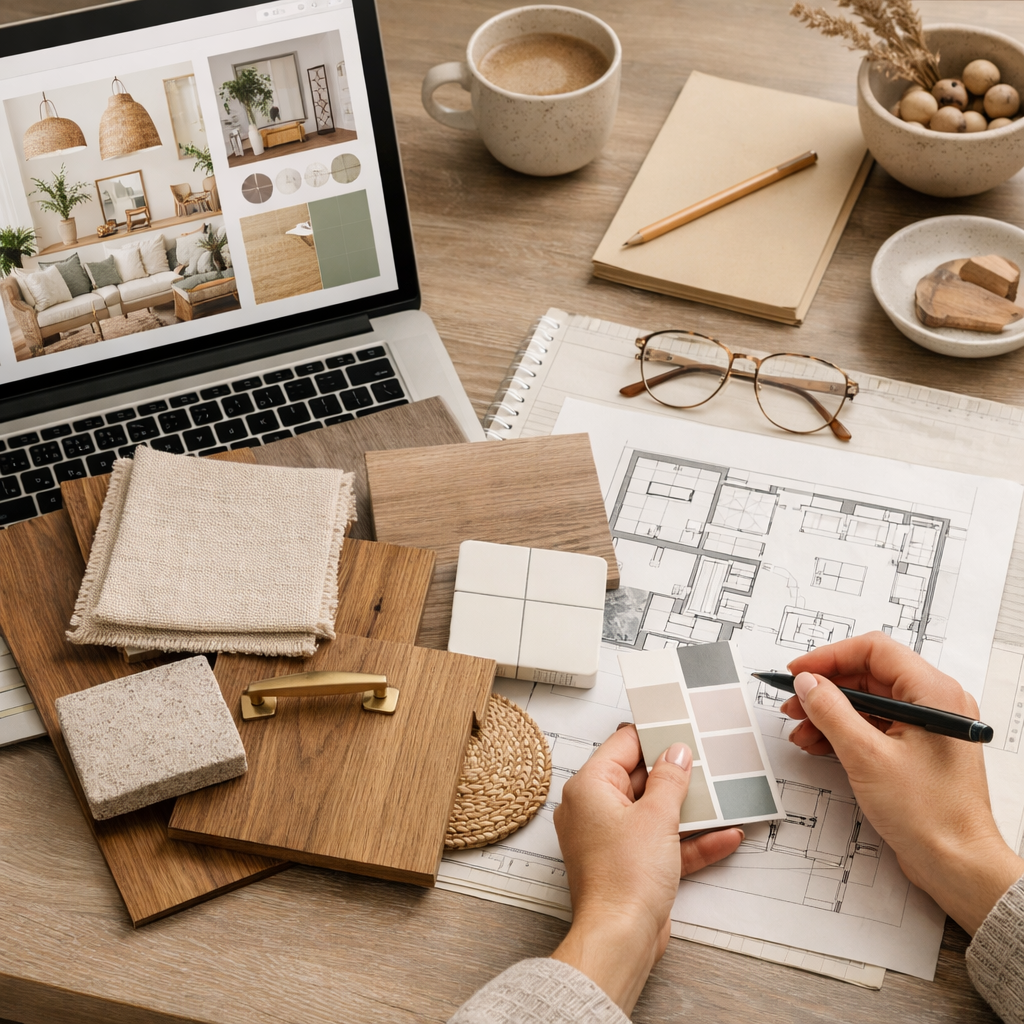
Behind the scenes of how I translate inspiration into a cohesive design plan, from concept to material selections. (AI rendering)
Common Mistakes People Make with Inspiration Photos
It’s easy to fall in love with a beautiful space online—but translating that into a real room comes with a few common pitfalls. I see these come up all the time, especially when someone is trying to piece everything together on their own.
Trying to Copy the Room Exactly
This is probably the most common mistake.
An inspiration photo might look perfect as-is, but it was created for a specific space with its own proportions, lighting, and layout. Trying to duplicate it exactly—down to the furniture and placement—usually leads to frustration when it doesn’t look or feel the same.
What works better is understanding why the space works, then building from that foundation.
Ignoring Scale and Proportion
A room can have all the “right” pieces and still feel off if the scale isn’t right.
For example, a sofa that’s too large can overwhelm a space, while artwork that’s too small can feel disconnected. Inspiration photos often feature ideal proportions, but those don’t automatically translate to every room.
Getting the scale right is what makes a space feel balanced and intentional.
Mixing Too Many Different Styles
It’s natural to save a variety of inspiration photos—but when those styles start to conflict, the end result can feel disjointed.
A clean, minimal space doesn’t always blend well with something more ornate or heavily layered unless it’s done very intentionally. Without a clear direction, it’s easy to end up with a mix that doesn’t quite come together.
Overlooking Lighting Conditions
Lighting has a huge impact on how a room looks and feels.
A space filled with natural light will show colors, textures, and finishes very differently than a room with limited light. This is why a paint color or fabric that looked perfect in a photo can feel completely different in your own home.
Focusing Only on Individual Pieces
It’s easy to get caught up in finding the exact sofa, chair, or light fixture from a photo.
But a well-designed space isn’t about one standout piece—it’s about how everything works together. When the focus stays on individual items instead of the overall composition, the room can feel incomplete.
Avoiding these mistakes doesn’t mean you need to stop using inspiration photos—it just means approaching them a little differently. When used the right way, they’re still one of the most powerful tools for shaping a clear design direction.
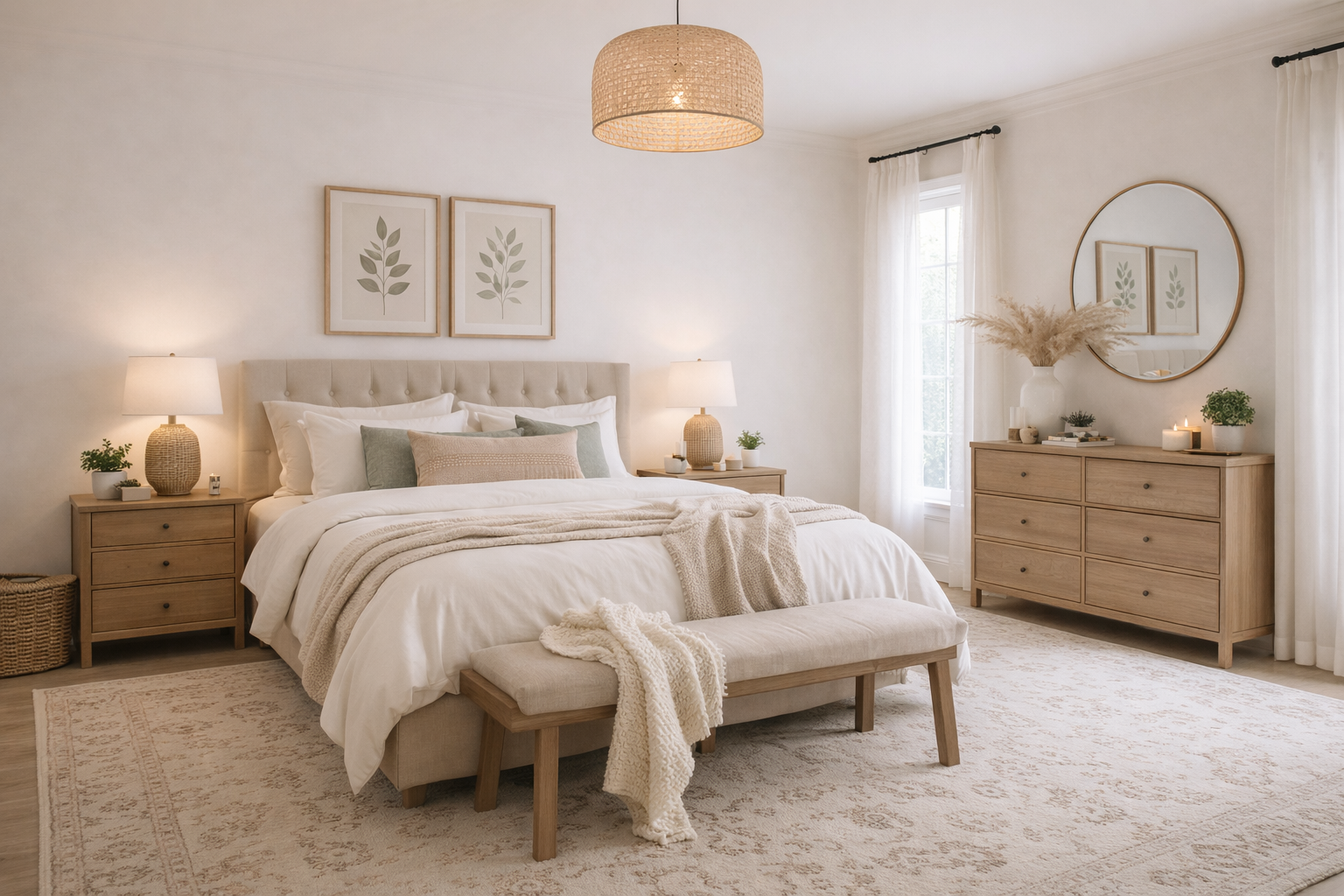
A calm, layered bedroom designed with soft neutrals, natural textures, and balanced symmetry to create a relaxed, cohesive retreat. (AI image)
Bringing It All Together
Design inspiration is a great starting point—but it’s only one part of the process.
What makes a space actually work is how those ideas are translated to fit your home. The layout, scale, materials, and how you live in the space all need to be considered together. Without that, even the most beautiful inspiration can fall flat in real life.
The goal isn’t to recreate a photo—it’s to understand what drew you to it in the first place and then build a space around those elements in a way that feels natural and cohesive.
If you’ve ever found yourself stuck trying to make everything come together, you’re not alone. It’s a common challenge—and it’s also where a more thoughtful approach makes all the difference.
This is the same approach I use in my virtual interior design work—helping clients turn inspiration into spaces that feel complete, functional, and personal.
