Types of Area Rugs: Pros, Cons, and How to Choose the Right One
When I help clients choose an area rug through my virtual interior design services, one of the first things I ask is how they use the room. In a busy entryway, the rug needs to handle daily foot traffic and whatever comes in on shoes and paws. In a dining room, I think about how easily chairs will slide over it and how much work it’ll take to clean up crumbs and spills. In a bedroom, I might put more emphasis on how the rug feels under bare feet.
The fiber, construction, and pile height all play a role in how a rug feels, how it wears, and how easy it is to care for. Understanding those differences makes it easier to choose a rug you love the look of and can live with every day.
This is a longer guide because I want you to understand what you’re buying and how it’ll hold up in your home. I’ll walk you through the pros and cons of the most common types of area rugs, from hand-knotted wool to flatweaves and machine-washable options. I’ll share where I’d use each one, what I’d check before ordering, and where I’d shop. Feel free to skip ahead to the rug types you’re considering.
If you’re still figuring out what size will work in your room, start with my Rug Size Guide so you know what dimensions to look for as you shop.
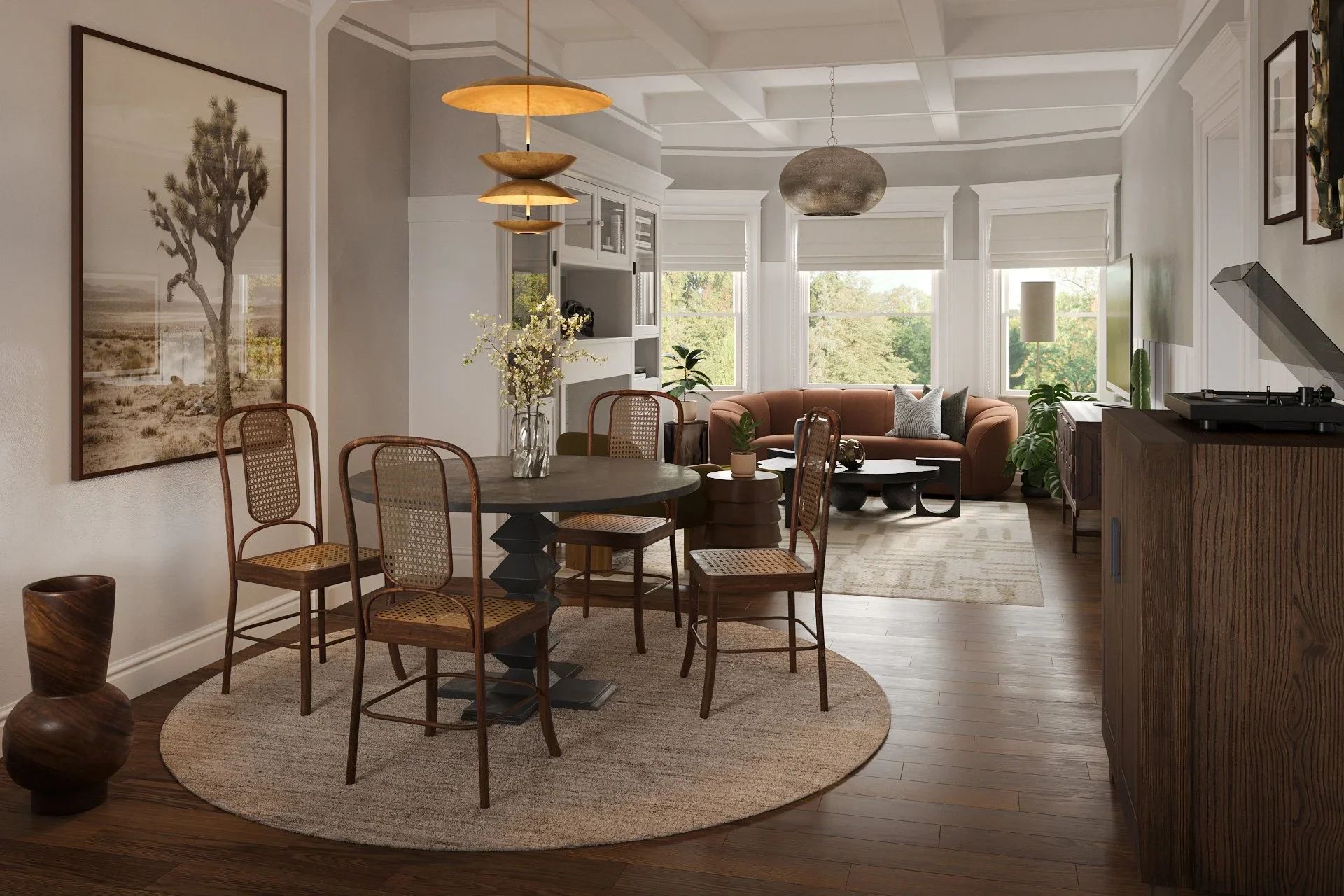
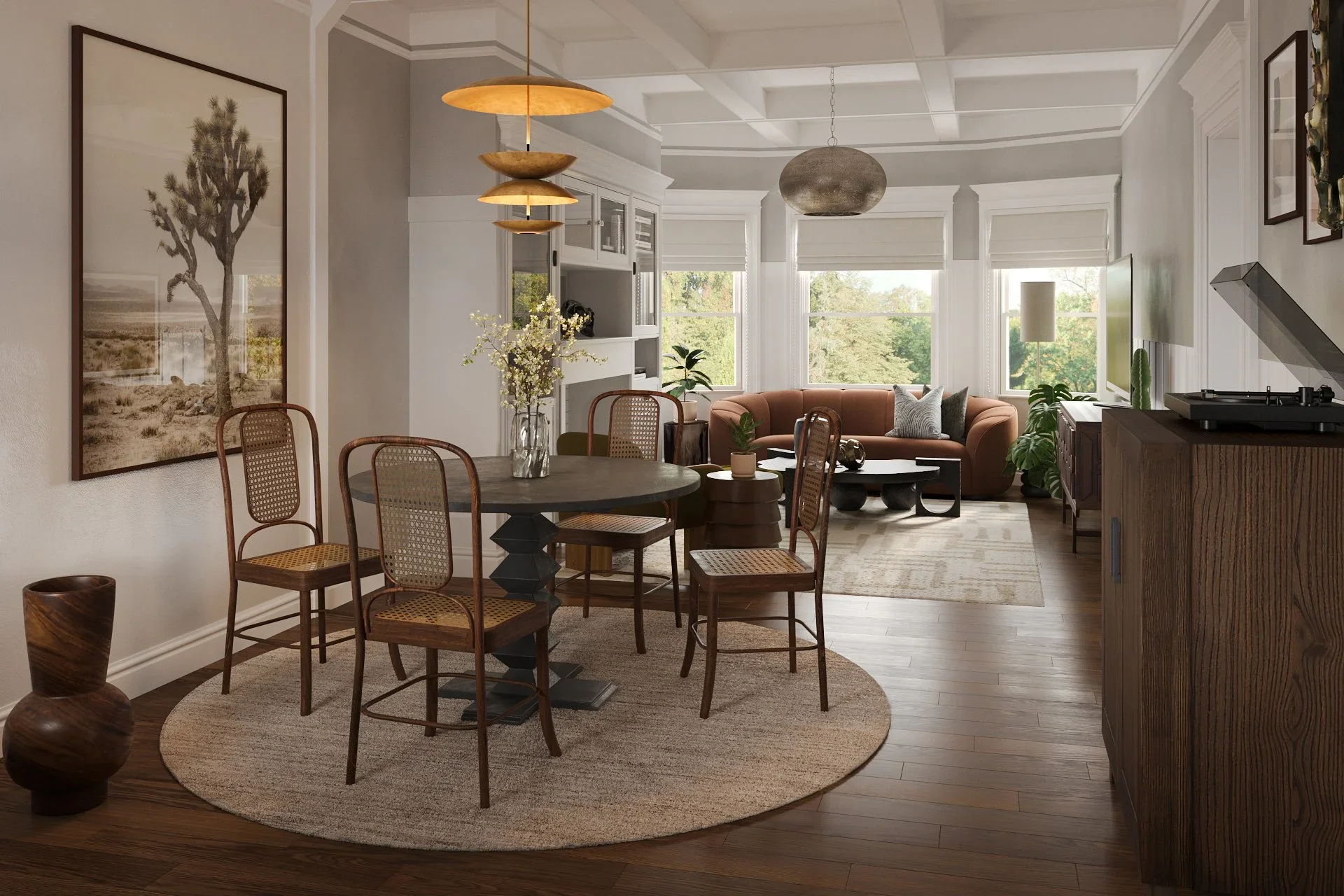
A round, textured rug echoes the shape of the dining table, while a rectangular patterned rug defines the adjoining seating area. This photorealistic 3D rendering shows a Modern Brutalism dining and living room designed by virtual interior designer Joshua Jones of JJones Design Co.
Types of Area Rugs by Construction
When you’re shopping for an area rug, look for the word construction in the product details. It tells you how the rug was made. Two wool rugs can feel quite different underfoot if one is hand-tufted with a plush pile and the other is flatwoven. I look at the construction and the fiber together before deciding whether a rug makes sense for a room.
Hand-Knotted Rugs
A hand-knotted rug is made by tying individual knots onto the threads of a loom, row by row. Those knots form the pile, which is the raised surface you feel underfoot.
Pros — This method can produce intricate patterns, and a well-made hand-knotted rug can last for years with proper care.
Cons — The labor involved usually makes it more expensive. Cleaning needs depend on the fiber, so check the care instructions before buying.
Where I’d use one — I’d consider a hand-knotted wool rug for a living room where I want the rug to anchor the design and expect to keep it for a long time.
Hand-Tufted Rugs
A hand-tufted rug is made by pushing yarn through a fabric foundation with a tufting tool. The yarn is typically secured with adhesive and covered with a secondary backing.
Pros — Hand-tufted rugs can have a plush feel or a sculpted pattern, often at a lower price than a comparable hand-knotted rug.
Cons — Some shed, especially when new. The backing is part of the construction, so check the care instructions before soaking or deep-cleaning it.
Where I’d use one — I’d look at a hand-tufted rug for a bedroom or sitting room where softness matters.
Flatweave Rugs
A flatweave rug is made by interlacing yarns to create a flat surface without a raised pile. Kilims and dhurries are two examples you’ll see while shopping.
Pros — The thin profile is useful where you need door clearance or want chairs to move easily. Some flatweaves are reversible.
Cons — They usually feel firmer underfoot than pile rugs, and lighter ones can shift without a suitable rug pad.
Where I’d use one — I’d consider a flatweave for a dining room, hallway, or entryway. For a dining room, I’d also check how easy the specific fiber is to clean.
Hand-Loomed Rugs
“Hand-loomed” means the rug was woven by hand on a loom. That label can appear on both flatwoven rugs and rugs with a raised pile, so check the product details to see what kind of surface you’re getting.
Pros — You can find a range of textures, from thin, understated weaves to softer pile rugs.
Cons — The label alone gives you limited information about how the rug will feel or wear. Look at the fiber, pile height, and backing before you order.
Where I’d use one — I’d consider a textured hand-loomed rug for a living room where I want some depth without introducing another bold pattern.
Hand-Hooked Rugs
A hand-hooked rug is made by pulling yarn through a backing with a hook, leaving small loops on the surface. Those loops give the rug its texture.
Pros — The looped surface adds dimension and can bring out the details in a pattern.
Cons — Raised loops can snag. I’d look closely at the surface if you have pets whose claws tend to catch on textiles.
Where I’d use one — I’d consider one for a bedroom or reading nook where the texture can stand out.
Power-Loomed Rugs
A power-loomed rug is woven by machine. You’ll see this construction across a wide range of styles and prices, from thin patterned rugs to plush designs.
Pros — There’s a wide selection of sizes, patterns, and price points, which helps when you need a specific size or want to stay within a budget.
Cons — The feel and care requirements vary by product. Check the fiber, backing, and cleaning instructions, especially if you’re shopping for a room that gets daily spills or heavy foot traffic.
Where I’d use one — I’d consider a low-pile power-loomed rug for a busy family room or dining room if the care instructions suit the household.
Braided Rugs
Braided rugs are made by joining lengths of braided yarn or fabric. You’ll often see them in oval and round shapes, and some are reversible.
Pros — The braid adds texture, and an oval or round shape can soften a room with a lot of straight lines.
Cons — A thicker braid can feel uneven underfoot or catch a door. Cleaning needs vary with the material.
Where I’d use one — I’d consider one for a casual sitting area or bedroom. In an entryway, I’d measure the clearance under the door first.
A Quick Note on Pile Height
Pile height describes how high the rug’s surface fibers rise above its foundation. A low-pile rug can make sense under a dining table where chairs move often. A medium-pile rug can add some softness in a living room. A high-pile or shag rug can feel inviting beside a bed, where you’re less likely to deal with crumbs or chairs dragging across it.
If a door swings over the rug, check the total thickness of the rug and pad together. That’s the measurement that matters for clearance.
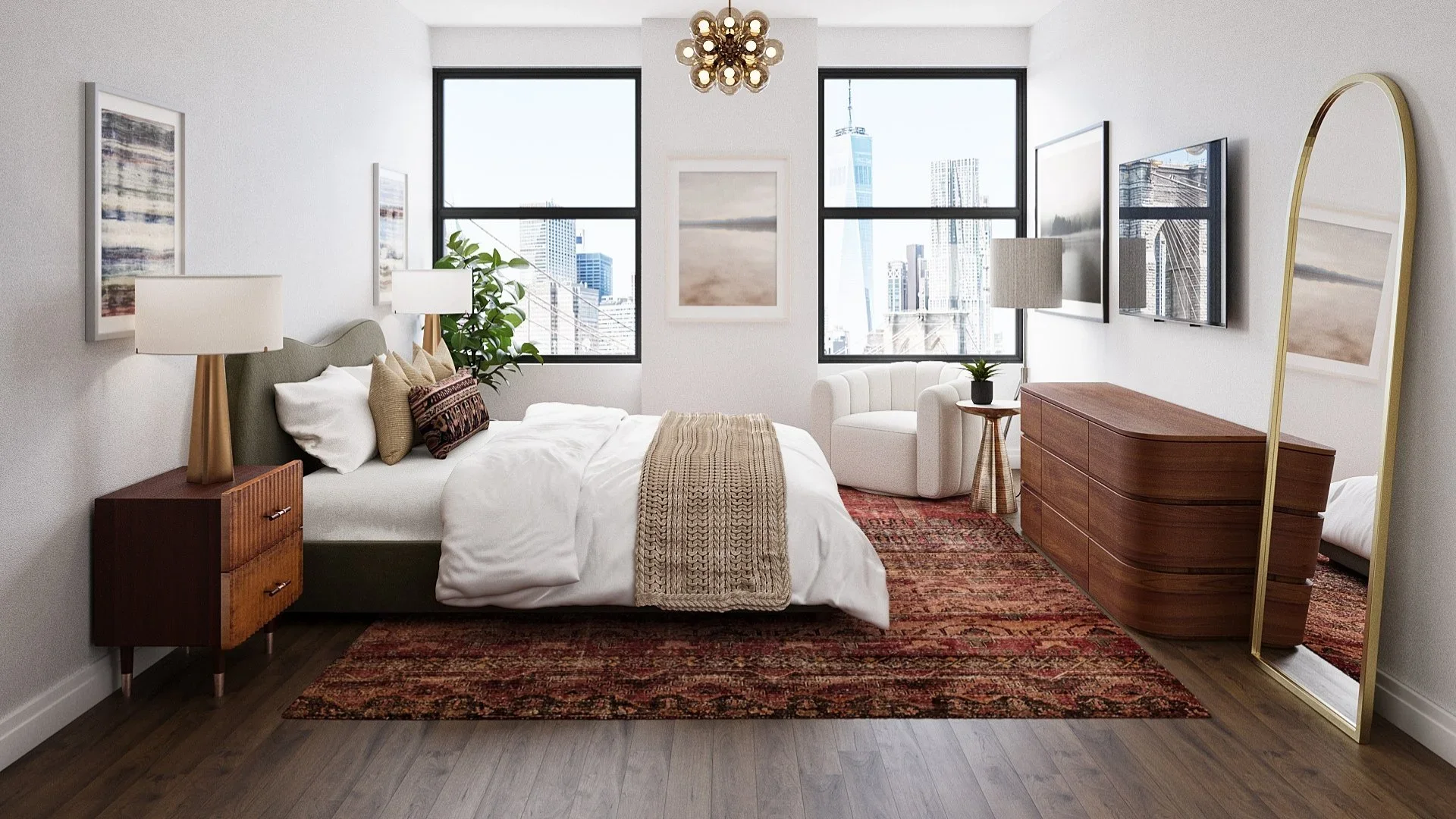
A rust-red, vintage-inspired area rug extends beyond the bed, bringing warmth to this modern eclectic primary bedroom in a luxury high-rise apartment. This photorealistic 3D rendering shows a client project designed by virtual interior designer Joshua Jones of JJones Design Co.
Types of Area Rugs by Material
Once you understand how a rug is made, look at what it’s made of. The fiber affects how the rug feels underfoot and how you’ll care for it. A large jute rug can add the texture I want in a living room, but I’d think twice about using that same rug under a dining table where spills are a regular part of life.
Wool Rugs
Wool is one of the first materials I consider when a client wants a rug that feels comfortable underfoot and can handle everyday use. It works across a range of styles, from colorful hand-knotted rugs to simple, textured flatweaves.
Pros — Wool can feel soft and springy, and a well-made wool rug can hold up well in a room that gets daily foot traffic.
Cons — Some wool rugs shed, especially when new. Wool also calls for care with heat, scrubbing, and cleaning products, so check the instructions for the specific rug.
Where I’d use one — A living room or bedroom where I want warmth and texture. For a busy living room, I’d pay particular attention to how densely the rug is made.
Cotton Rugs
Cotton is common in casual flatweaves, small accent rugs, and some washable designs. I like it when I want a rug that’s easy to pick up and move.
Pros — Cotton rugs can feel soft and lightweight. Some are machine-washable.
Cons — A lightweight weave can shift underfoot, and I’d be selective about using one where it will take heavy wear. Check the care label before putting it in the washer.
Where I’d use one — A guest bedroom or a small kitchen area where I can easily lift the rug for cleaning.
Jute, Sisal, and Seagrass Rugs
I reach for these plant fibers when I want the weave itself to add interest to a room. They can look similar in a small product photo, but each feels different underfoot.
Jute is often softer than sisal, with a chunky weave that gives a room a relaxed feel. Moisture and spills can leave marks, so I’d use it in a dry living room or bedroom.
Sisal feels firm and textured. I like it for a hallway or living room where I want the weave to stand out, though it can feel coarse on bare feet and is sensitive to spills.
Seagrass typically feels smoother than sisal and has natural variation in color. It’s still firm and needs care around moisture, so I’d consider it for a dry sitting room where softness is less important.
Silk and Viscose Rugs
Silk and viscose both have a sheen that can make the same rug look lighter or darker depending on where you’re standing. Silk is a natural fiber, while viscose is a manufactured fiber made from cellulose. If you see terms like “art silk” or “silk-like” in a product description, check the fiber content to see what you’re buying.
Pros — Both can give a rug a smooth feel and bring out highlights in the pattern.
Cons — Silk typically calls for professional cleaning, and viscose is sensitive to moisture. I’d be cautious about either in a room where frequent spills are likely.
Where I’d use one — A quieter bedroom or sitting room where I want a little sheen and the rug will see lighter use.
Polyester, Polypropylene, and Nylon Rugs
These synthetic fibers give you a wide range of options, from soft bedroom rugs to indoor-outdoor designs.
Polyester can feel soft and comes in a wide range of colors and patterns. If I’m choosing one for a busy room, I check the pile, backing, and cleaning instructions for that specific rug.
Polypropylene, also called olefin, is a practical option for many easy-care rugs. I’d look for it when shopping for a dining rug or a patio rug. For a patio, check that the manufacturer specifically rates the rug for outdoor use.
Nylon is resilient under repeated foot traffic, so I’d consider it for a busy hallway or family room. Check the care label and any stain-resistance claims for the particular rug you’re considering.
Blended-Fiber Rugs
If a label says wool blend, I look for the percentages and the names of the other fibers. A wool rug with viscose accents may have the sheen I’m looking for, but those accents still matter when it’s time to clean a spill. I also check the backing and follow the care instructions for the finished rug. If the listing gives me very little detail and the rug is going somewhere busy, I’ll ask for a swatch or more information before ordering.
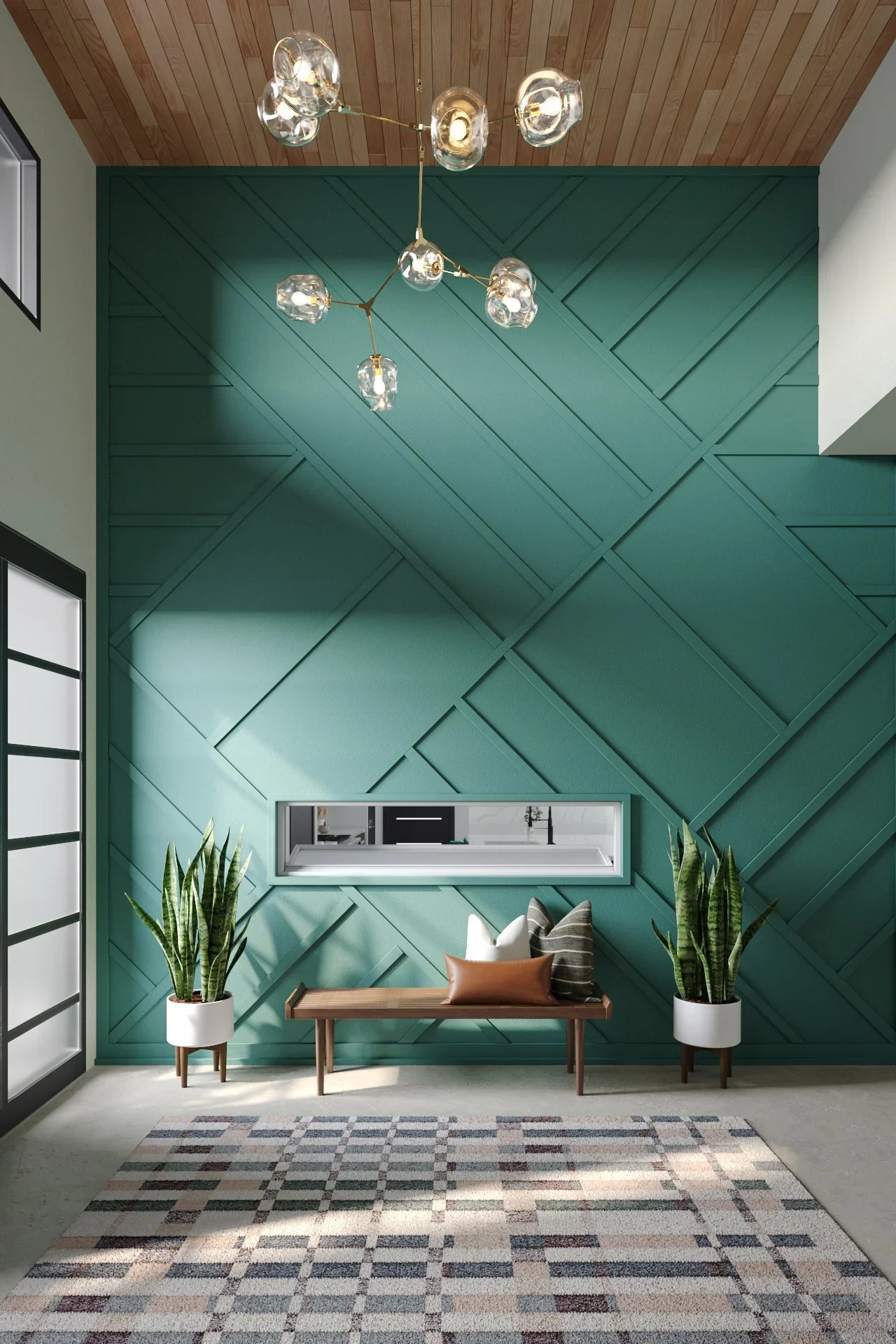
A geometric area rug picks up the angular lines of the custom teal feature wall in this mid-century modern foyer. This photorealistic 3D rendering shows a foyer designed by virtual interior designer Joshua Jones of JJones Design Co., including the wall’s raised geometric trim.
How to Choose an Area Rug for Your Space
When I’m narrowing down rugs for a client, I think about what will be hardest on the rug in that particular room. It might be muddy paws by the front door, dining chairs moving over the same spot every day, or afternoon sun on a patio. That usually helps me narrow the options faster than starting with color or pattern.
Machine-Washable Rugs for Busy Homes
I often look at machine-washable rugs for clients with kids, pets, or rooms where spills are part of everyday life. Before ordering one, check which part goes in the washer, what capacity you’ll need for the size you want, and how the rug should be dried. I’d look at the care instructions for the exact size, especially if you’re shopping for an 8-by-10-foot rug or larger,
Here are three places I’d shop for washable area rugs.
Ruggable — I’ve recommended Ruggable to clients for years. Its two-piece system has a removable, washable cover and a separate rug pad. I’d look here if I wanted a patterned rug for a busy room and liked the idea of lifting just the cover for washing.
Boutique Rugs — I’d browse its one-piece machine-washable rugs if I wanted something I could lift and wash as a single piece. A smaller rug or runner is a good place to start if you expect to wash it regularly.
Woolable by Lorena Canals — This is where I’d look if I wanted the texture and feel of wool in a washable rug. Check the washing instructions for the design and size you’re considering, since the care requirements can vary.
If you’re shopping for a home with kids and pets, I talk more about what I’d look for in Ask Joshua: Choosing a Practical and Easy-to-Clean Rug.
Indoor-Outdoor Rugs for Patios and Busy Indoor Spaces
I consider indoor-outdoor rugs for patios, covered porches, and sometimes indoor spaces that see a lot of dirt or spills. On a patio, start with how exposed the space is. A covered porch and a deck that gets direct sun and rain all day put different demands on a rug.
Polypropylene is one material I’d look at for outdoor use. I’d check that the specific rug is rated for the conditions it’ll be in and that I’m comfortable with how it feels underfoot. Indoors, I’m more likely to use one in a mudroom or near a back door than beside a bed, where softness matters more to me.
Vintage and Antique Rugs
I like using a vintage rug when I want a room to have a pattern or color palette that feels a little less predictable. When you’re shopping online, ask for photos of the front and back, close-ups of the edges, and the actual measurements. If the listing mentions repairs, ask where they are and request a photo.
I’m often happy with some fading or uneven color if I like the overall look. I pay closer attention to thin spots, damaged edges, and repairs in areas that will get daily foot traffic.
What I’d Look for in Dining Rooms, Entryways, and Bedrooms
Dining room — I’d start with a flatweave or a low-pile rug so chairs can slide easily. If you eat there every day, check how you’d clean up a spill before settling on a fiber.
Entryway — Measure the clearance under the door, including room for the pad. For an entry that sees wet shoes and muddy paws, I’d look for an easy-care rug in a pattern that can live with a little dirt between cleanings.
Bedroom — Think about where your feet actually land when you get out of bed. I’d prioritize a rug that feels comfortable barefoot and place it so you get that benefit every morning.
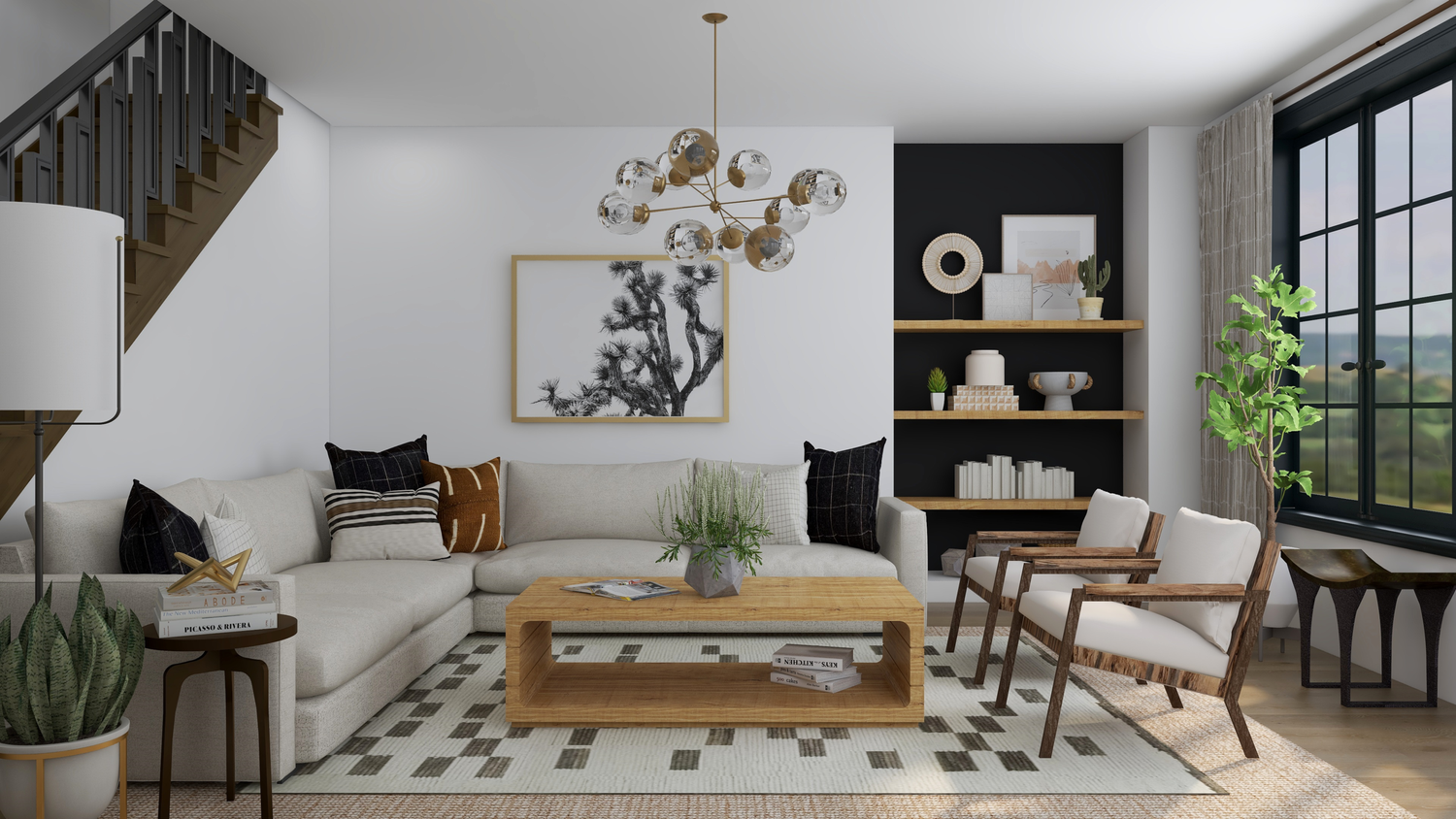
A cream rug with a geometric pattern sits over a larger woven rug, framing the seating area and adding texture to this luxury Scandinavian living room. This photorealistic 3D rendering shows a space designed by virtual interior designer Joshua Jones of JJones Design Co.
What to Check Before You Buy an Area Rug
When I’ve narrowed a rug search down to a couple of favorites, I go back to the details that are easy to miss in a product photo. Here’s what I’d check before placing an order.
Confirm the actual dimensions. Use painter’s tape to mark the rug’s outline on the floor. Walk around the room, pull out the dining chairs, or open any door that swings over the rug. If you’re between sizes, my Rug Size Guide walks through what I look for in each room.
Check the fiber and construction. Look for the exact fiber content, how the rug is made, and what’s on the back. If you’re ordering online and a swatch is available, take a look at it in the room during the day and with your lamps on.
Picture your usual cleanup. Read the care instructions and think about the mess you’re most likely to deal with, whether that’s crumbs, muddy paw prints, or a spilled drink. If the rug is machine-washable, double-check the washer capacity for the size you’re buying.
Choose a pad that works with your flooring. Think about whether you need more grip, more cushioning, or a thin pad to keep the rug clear of a door. I explain what I’d choose for different situations in Ask Joshua: Do I Really Need a Rug Pad.
Check the return policy. Before ordering a large rug, find out whether you’ll need to pay for return shipping and whether the size or color you’ve selected is final sale.
If you’re torn between two rugs you love, picture an ordinary day in the room. The one that feels good when you walk across it, works with the furniture you already have, and fits the way you clean is usually the one I’d choose.
Affiliate Disclosure - This post contains affiliate links. If you make a purchase through one of these links, I may earn a commission at no extra cost to you. I choose the brands and products I share based on what I’d consider for my own design projects and what I think could work well in your home. Your support helps me continue creating free design guides and sharing practical advice through JJones Design Co. Thank you for reading and supporting my work.