
Ask Joshua: How Do I Decorate a Small, Awkward Foyer?
Hi Joshua,
My home has a small, awkward foyer that opens directly into the living room. There aren’t any full walls defining the entryway, other than a partial wall beside the staircase.
I would like to create a functional entryway where I can keep my keys, mail, and shoes, but it also needs to look stylish because it is visible from the living room. How can I decorate and define this small foyer without making the entrance feel crowded?
Please help!
Thank you,
Jenn - Long Beach, California
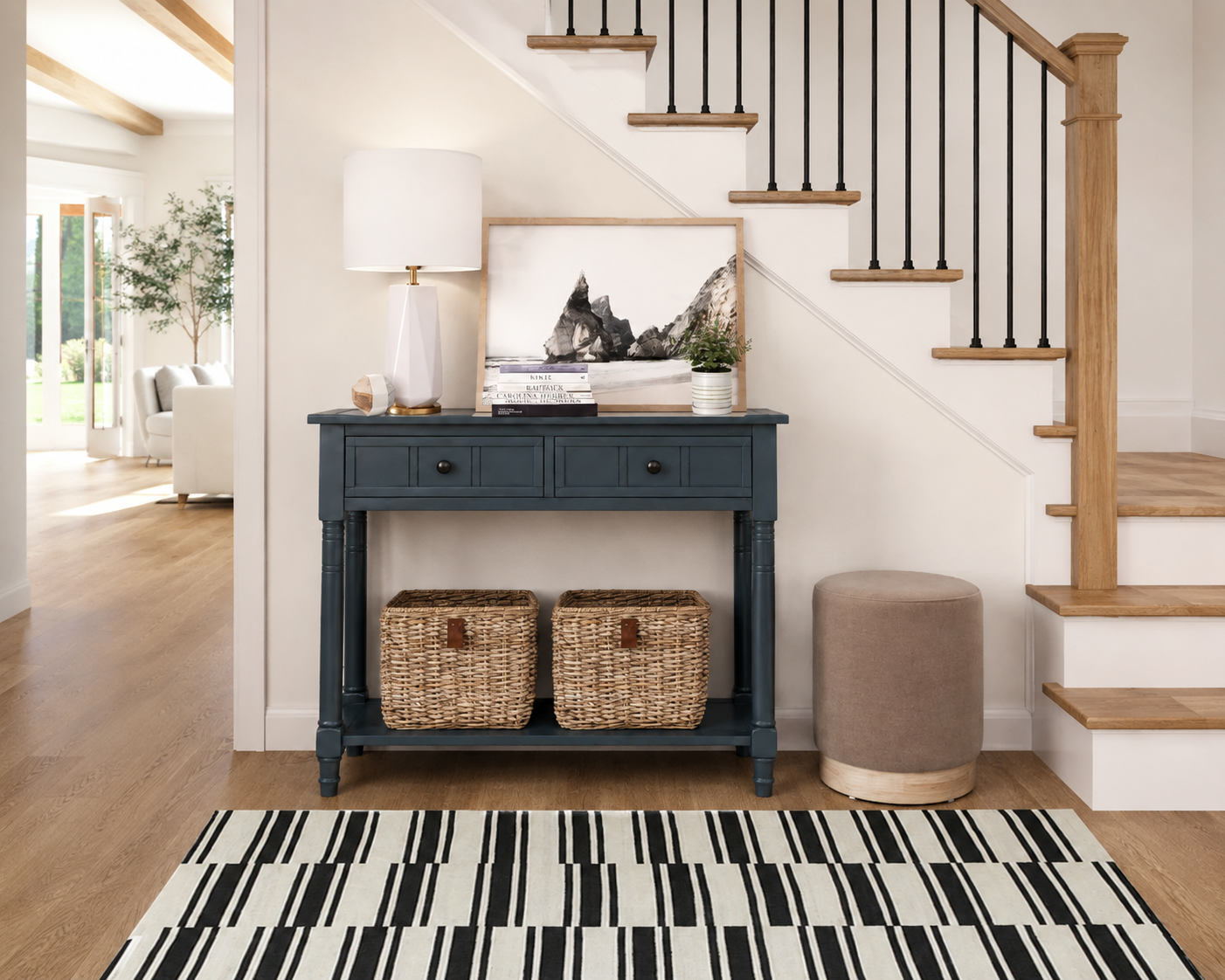
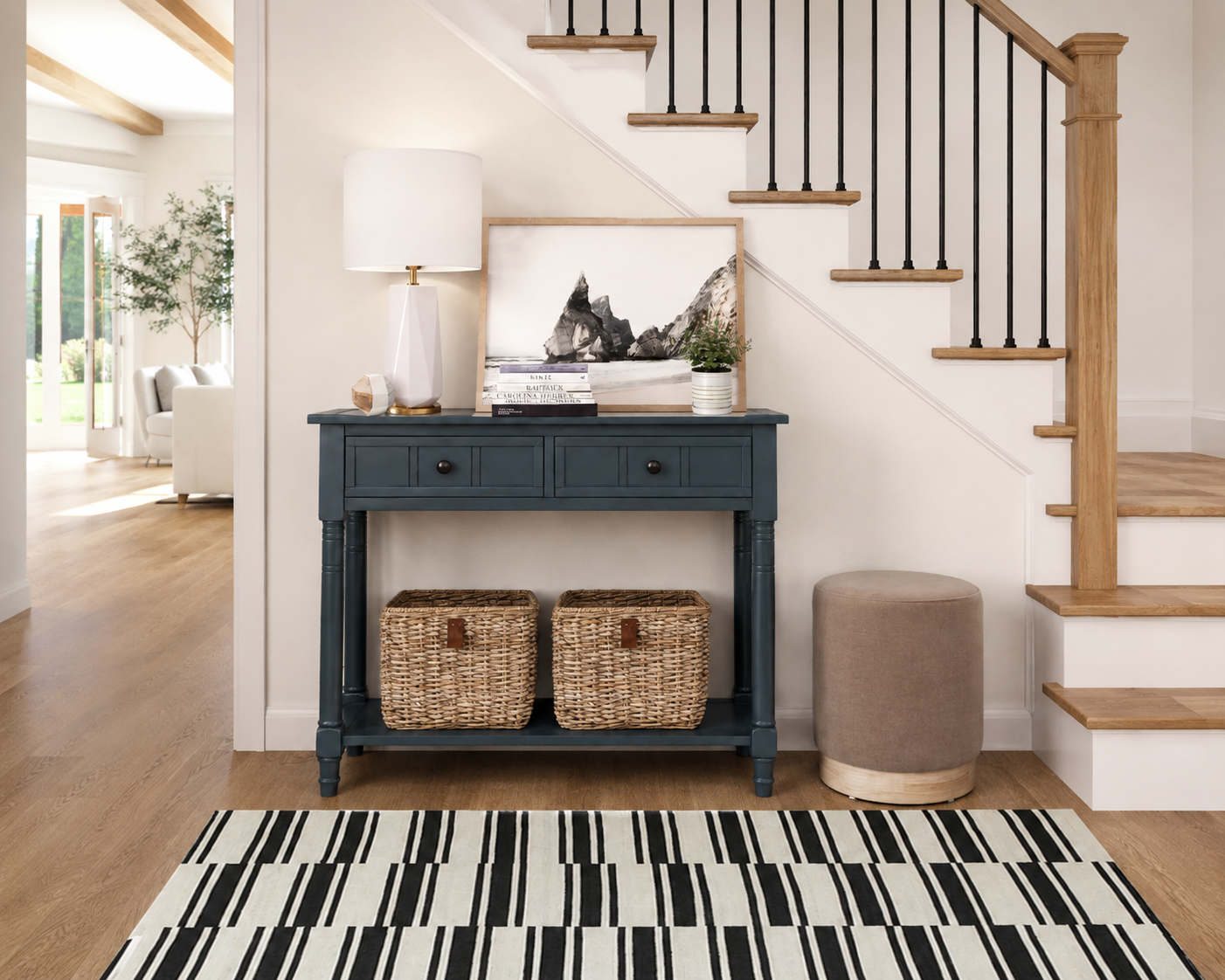
Small foyer with a dark blue console table, woven storage baskets, an ottoman, and a staircase, designed by virtual interior designer Joshua Jones of JJones Design Co. AI-generated rendering based on Joshua’s original mood board and past design work.
Hi Jenn,
An entryway doesn’t need to be surrounded by full walls to feel like a defined and functional part of your home. When a small foyer opens directly into the living room, the goal is to create a clear landing area without adding furniture that interrupts the natural path into the house.
Before selecting anything, pay attention to the way the front door opens and how people move from the entrance into the living room or toward the staircase. Keeping that path open should be your first priority. Once you understand how much space you can comfortably use, you can create a practical entryway with a few carefully selected pieces.
Start With a Console Table or Storage Cabinet
A console table can visually establish where the foyer begins, even when there isn’t a full wall separating it from the living room. If the partial wall beside the staircase is wide enough, it may provide a natural location for one.
Since your foyer is small, look for a narrow console that doesn’t extend too far into the walkway. A depth of approximately 10 to 14 inches often works well in a compact entryway, but the right size will depend on your available space and door clearance.
A console with drawers gives you a designated place for keys, mail, sunglasses, and other small items that can easily create clutter. If you need more storage, consider a shallow cabinet with doors instead. Closed storage can help the foyer look organized, particularly because it is visible from your living room.
If there isn’t enough room for a traditional console, a wall-mounted shelf can provide a small landing surface without taking up valuable floor space.
Create a Place for Shoes
Baskets placed beneath an open console can provide accessible shoe storage while keeping footwear from spreading into the living room. Choose baskets that fit comfortably beneath the table without extending into the walkway.
A closed shoe-storage cabinet is another option when floor space allows. These cabinets are typically shallower than standard storage furniture, making them useful in narrow foyers.
Whichever option you choose, avoid trying to store every pair of shoes in the entryway. Keeping only the shoes you wear most frequently near the door will make the space easier to maintain.
Add Seating Only If Space Allows
A small ottoman, stool, or bench can provide a convenient place to sit while putting on or removing shoes. A lightweight stool can be tucked beneath a console when it isn’t being used, which makes it especially practical for a compact foyer.
However, seating should not come at the expense of comfortable circulation. If adding an ottoman makes the entrance feel crowded or creates an obstacle near the stairs, skip it. A clear and functional walkway is more valuable than trying to include every traditional entryway element.
Define the Foyer Visually
Because your foyer doesn’t have full walls, you can use decorative elements to make it feel distinct from the living room.
A mirror or piece of artwork above the console creates a focal point and helps the furniture feel intentional. A mirror is particularly helpful near an entrance because it gives you a convenient place to check your appearance before leaving and can reflect light into a small foyer.
You can also use an entryway rug to visually define the area. Make sure it is appropriately scaled, lies flat, and does not interfere with the front door. The rug should feel connected to the colors and style of the living room since both spaces are visible at the same time.
Lighting can provide another layer of definition. A table lamp on the console adds warmth and creates a welcoming glow in the evening. If the console is too small for a lamp, consider a wall sconce or a decorative ceiling fixture that helps establish the foyer as its own area.
Coordinate the Foyer With the Living Room
Since your entryway is visible from the living room, it should complement the adjoining space without matching it exactly. Repeat one or two colors, finishes, or materials from the living room to create a visual connection.
For example, if your living room includes warm wood, black metal, or blue accents, you could repeat one of those elements in the console, mirror, rug, or accessories. This will make the foyer feel like a thoughtful introduction to the rest of your home rather than a separate area competing for attention.
Keep the styling on top of the console relatively simple. A lamp, small tray for keys, decorative object, and vase or plant may be all you need. Leaving some open surface space will help the small foyer feel calm rather than crowded.
The AI-generated rendering above is based on the original mood board I created for this foyer. It illustrates how these elements can work together in a finished space. The console drawers provide concealed storage for keys and mail, while the baskets underneath offer a place for shoes. The ottoman adds convenient seating, and the lamp, artwork, and accessories give the entryway a finished look.
You don’t need walls to create a foyer. By establishing a clear landing area, choosing furniture with a shallow footprint, and visually connecting the entryway to the living room, you can make this awkward entrance feel both functional and intentionally designed.
Warmly,
Joshua
Have interior design related questions? You can ask Joshua here.

