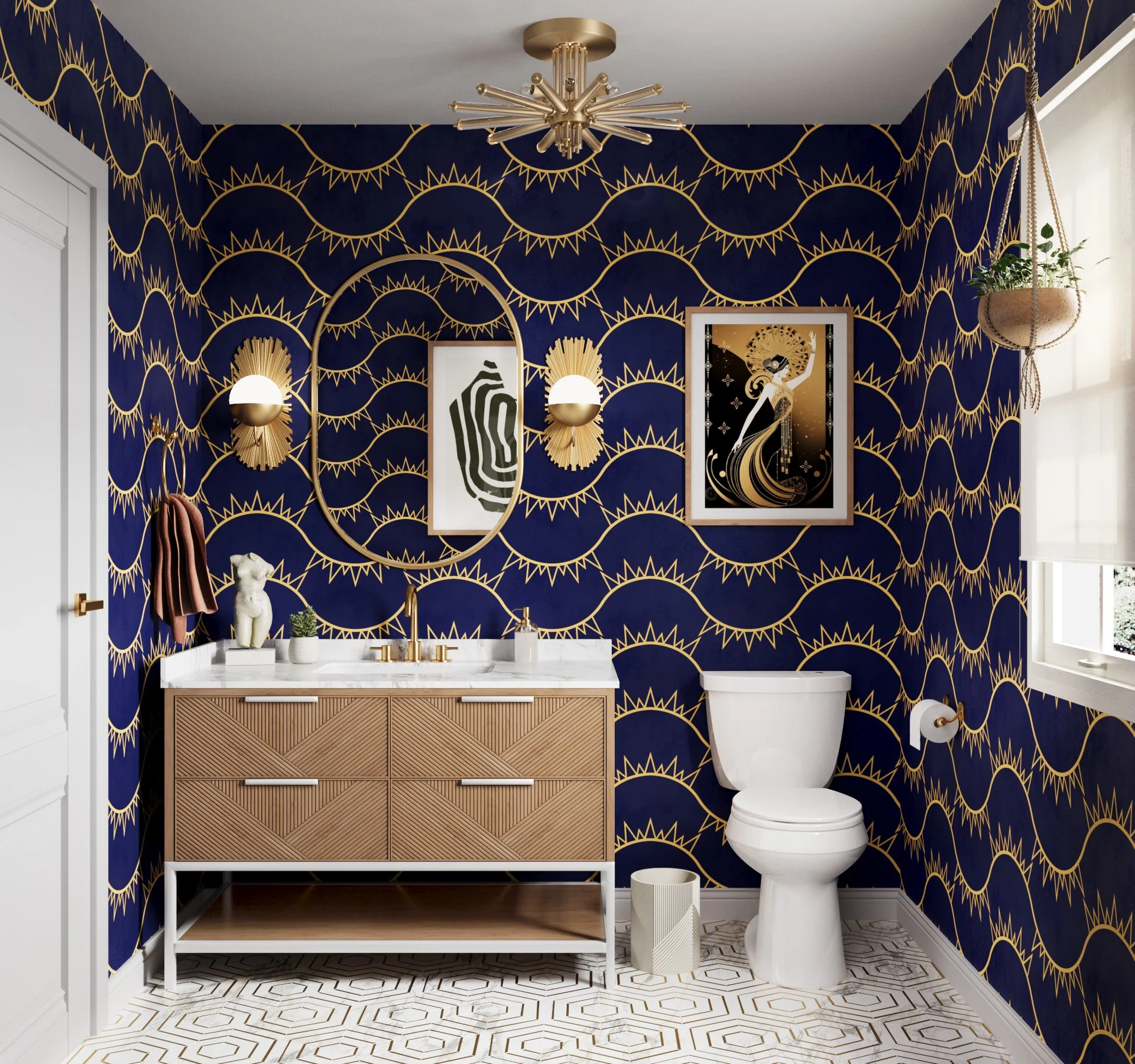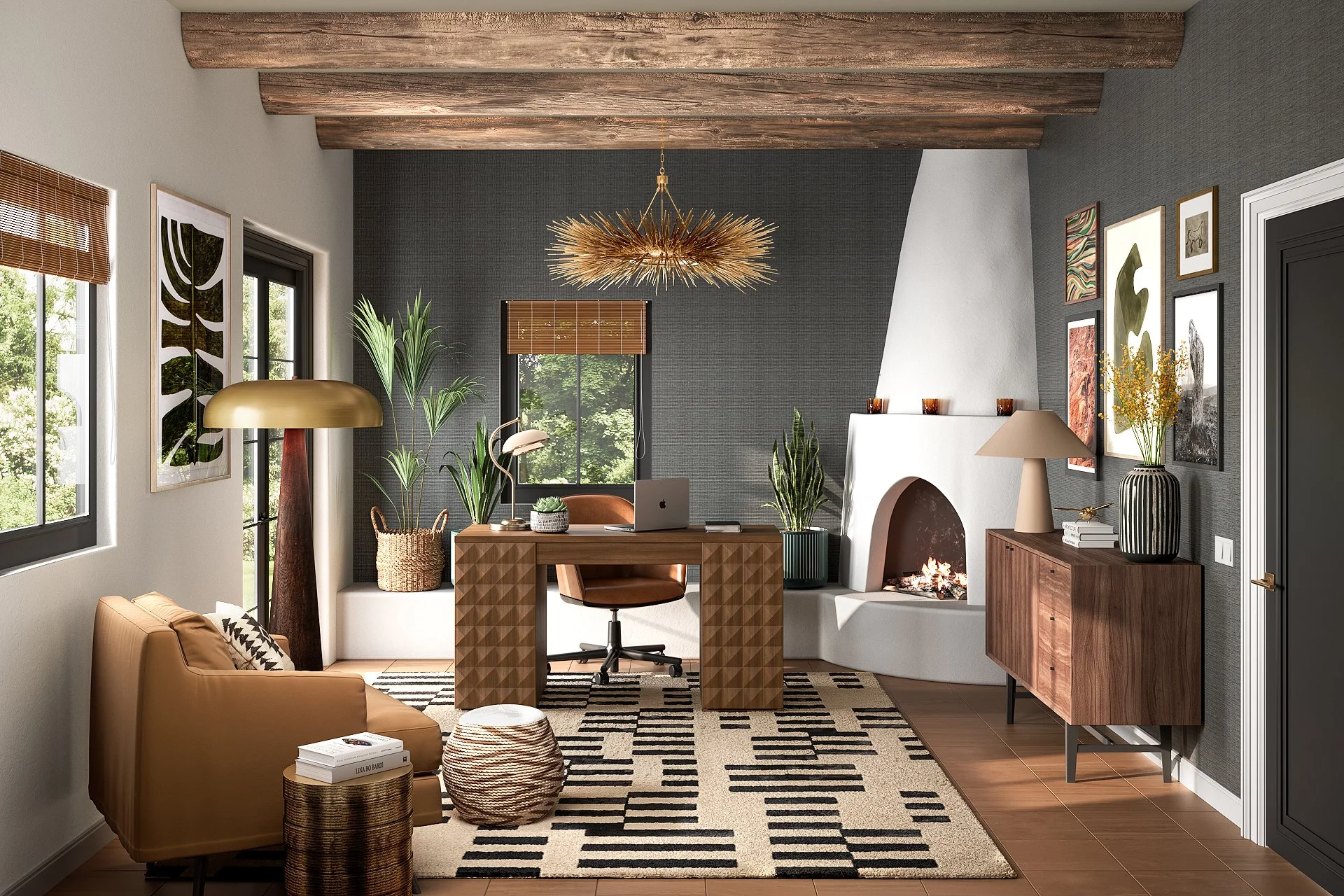
How to Choose the Right Paint Finish for Every Room in Your Home
When most people plan to paint a room, the first thing they think about is color. But there’s another decision that plays an important role in how a space looks and performs over time: the paint finish.
Paint finishes—often called paint sheens—affect how light interacts with the surface of the wall, how durable the paint is, and how easy it will be to clean. Some finishes create a soft, subtle look that helps hide imperfections, while others offer greater durability for spaces that experience daily activity.
In my work as a virtual interior designer, paint selection is something I help clients with regularly. While many clients come to me looking for guidance on choosing the right color, we also talk about the type of finish that will work best for their space. When I work with clients through my virtual interior design services, I help them choose paint colors and finishes that not only look beautiful but also hold up well based on how each room is used. The right paint finish can make a noticeable difference in how a room performs over time, especially in busy areas of the home.
Many homeowners spend a lot of time choosing the right color but feel uncertain when it comes to selecting the finish. The best option often depends on the room itself, how much daily activity the space sees, and whether the walls need to handle things like fingerprints, scuffs, or everyday wear.
In this guide, we’ll look at the most common paint finishes—from flat to high gloss—and where each one works best. I’ll also share practical considerations for open-concept layouts and high-traffic homes so you can choose a finish that looks good and holds up well in everyday life.
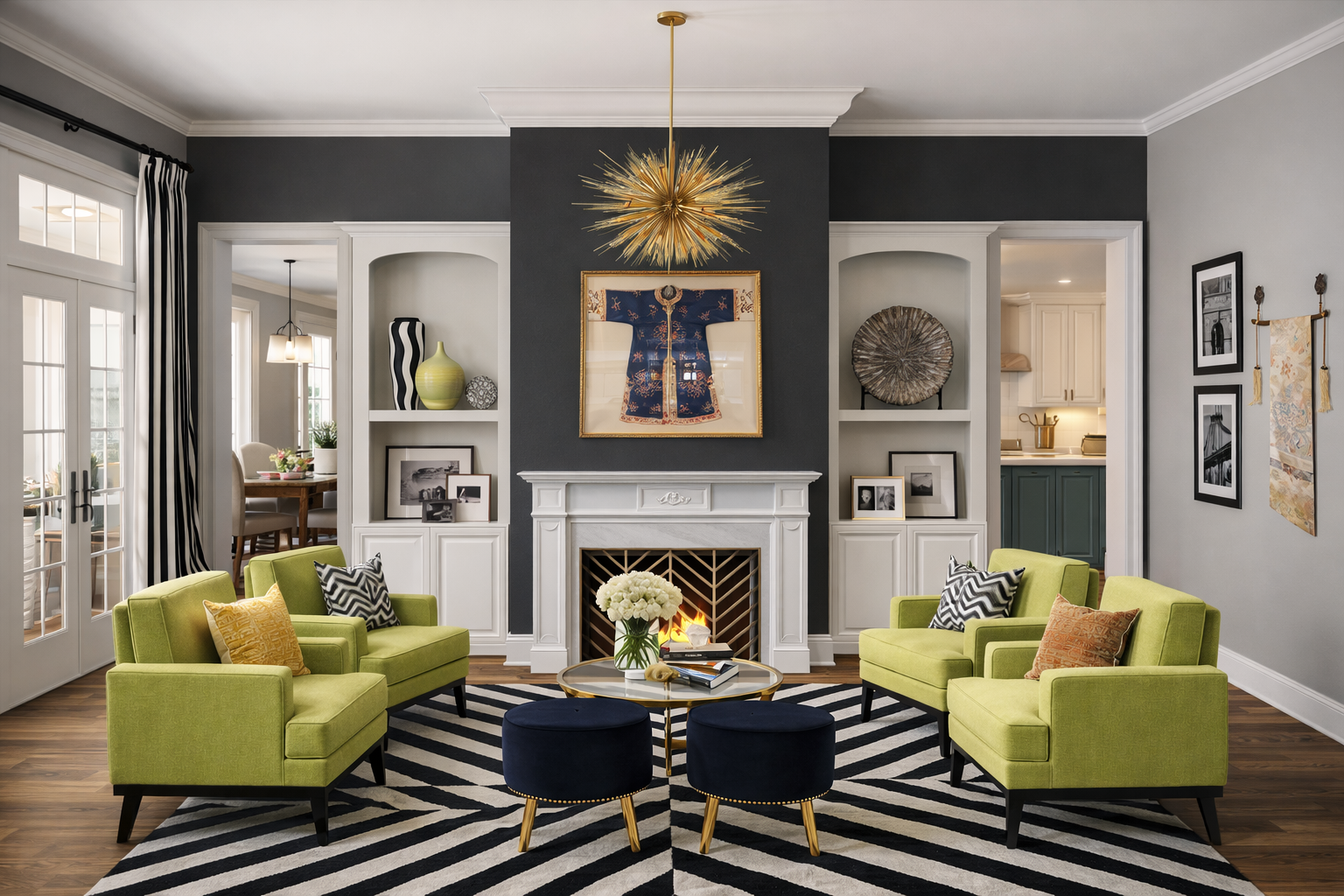
Photorealistic AI rendering based on a living room design by virtual interior designer Joshua Jones of JJones Design Co., illustrating how paint finish and color can shape the overall look of a space.
What Are Paint Finishes (or Paint Sheens)?
Paint finishes—often referred to as paint sheens—describe how much light reflects off the surface of painted walls. The level of sheen ranges from very low reflection, which creates a soft and muted appearance, to high reflection that produces a smooth, polished look.
The finish you choose does more than affect appearance. It also influences how durable the paint is, how easily it can be cleaned, and how much it highlights imperfections on the wall surface. Lower-sheen finishes tend to create a softer look and help disguise minor wall flaws, while higher-sheen finishes are generally more durable and easier to wipe clean.
Most residential paints fall within a spectrum of finishes that range from flat or matte on the low end to semi-gloss and high gloss on the more reflective end. Each finish serves a different purpose depending on the type of room, how much traffic the area receives, and how the space is used.
Understanding these differences can make it much easier to choose a finish that not only looks good but also holds up well in everyday life. In the sections below, we’ll take a closer look at the most common paint finishes and where they tend to work best in a home.
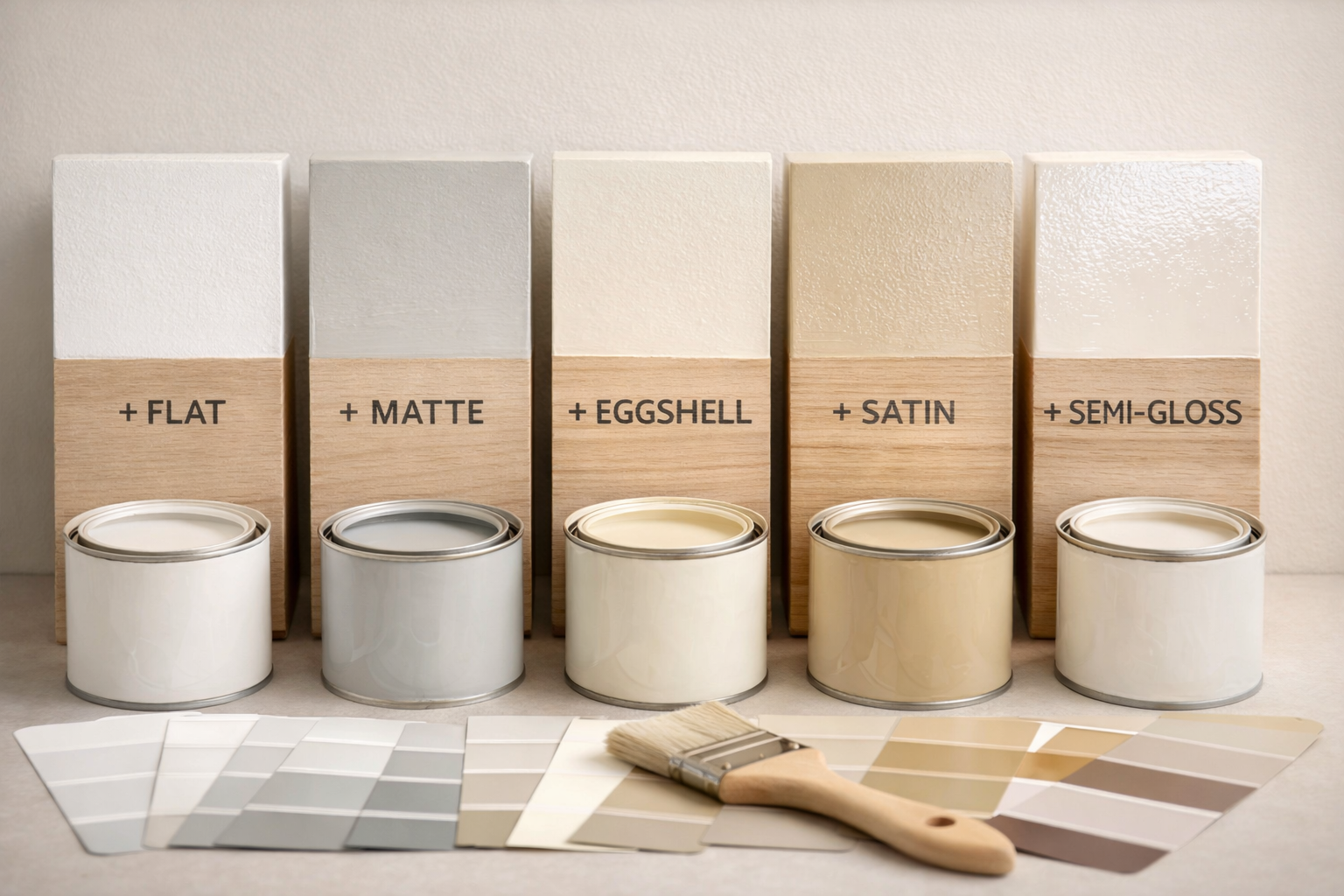
AI-generated illustration showing common interior paint finishes including flat, matte, eggshell, satin, and semi-gloss, each demonstrating different levels of sheen.
The Main Types of Paint Finishes
Paint finishes fall along a spectrum from very low sheen to highly reflective. Each type offers a different balance of appearance, durability, and maintenance. Understanding these differences can help you choose a finish that not only looks right for the space but also performs well over time.
Flat Finish
Flat paint has little to no sheen, giving walls a soft and velvety appearance. Because it reflects very little light, it does an excellent job of hiding minor imperfections such as uneven drywall, patchwork, or small dents.
However, flat paint is typically the least durable option. It can be more difficult to clean, and scrubbing may remove some of the paint or leave visible marks. For that reason, it is most commonly used in areas that experience minimal contact.
Flat finishes are often used on ceilings or in low-traffic spaces where durability is less of a concern.
Matte Finish
Matte paint is very similar to flat paint but offers slightly better durability. It still provides a soft, non-reflective appearance while being somewhat easier to maintain.
Many homeowners like matte finishes because they create a smooth, modern look without drawing attention to wall imperfections. Matte paint can work well in bedrooms, formal living rooms, or other areas where walls are less likely to be touched frequently.
Eggshell Finish
Eggshell is one of the most commonly used finishes for interior walls. It has a subtle sheen that reflects a small amount of light, giving walls a smooth and refined look without appearing shiny.
Compared to flat or matte finishes, eggshell paint is more durable and easier to clean. This balance makes it a practical choice for many spaces throughout the home.
Eggshell is often used in living rooms, dining rooms, hallways, and other areas where walls may occasionally need to be wiped down.
Satin Finish
Satin paint has a slightly higher sheen than eggshell and offers increased durability. It creates a soft glow on walls while providing a surface that can be cleaned more easily.
Because of its durability, satin finishes are often used in kitchens, bathrooms, and high-traffic areas where walls may need frequent cleaning. It’s also a good option for family rooms or children’s spaces where fingerprints or marks are more common.
Semi-Gloss Finish
Semi-gloss paint has a noticeable shine and is known for its durability. It resists moisture well and can withstand regular cleaning without damaging the surface.
This finish is commonly used on trim, doors, baseboards, and cabinetry. The slight shine helps highlight architectural details and makes surfaces easier to maintain.
High-Gloss Finish
High-gloss paint is the most reflective finish available. It creates a polished, almost glass-like surface that can be very durable and easy to clean.
Because it reflects so much light, high-gloss paint also highlights imperfections in the surface beneath it. Walls or surfaces need to be well-prepared for the finish to look its best.
High-gloss finishes are often used on furniture, cabinets, or accent details rather than large wall surfaces. When used thoughtfully, they can create a dramatic and sophisticated effect in a space.
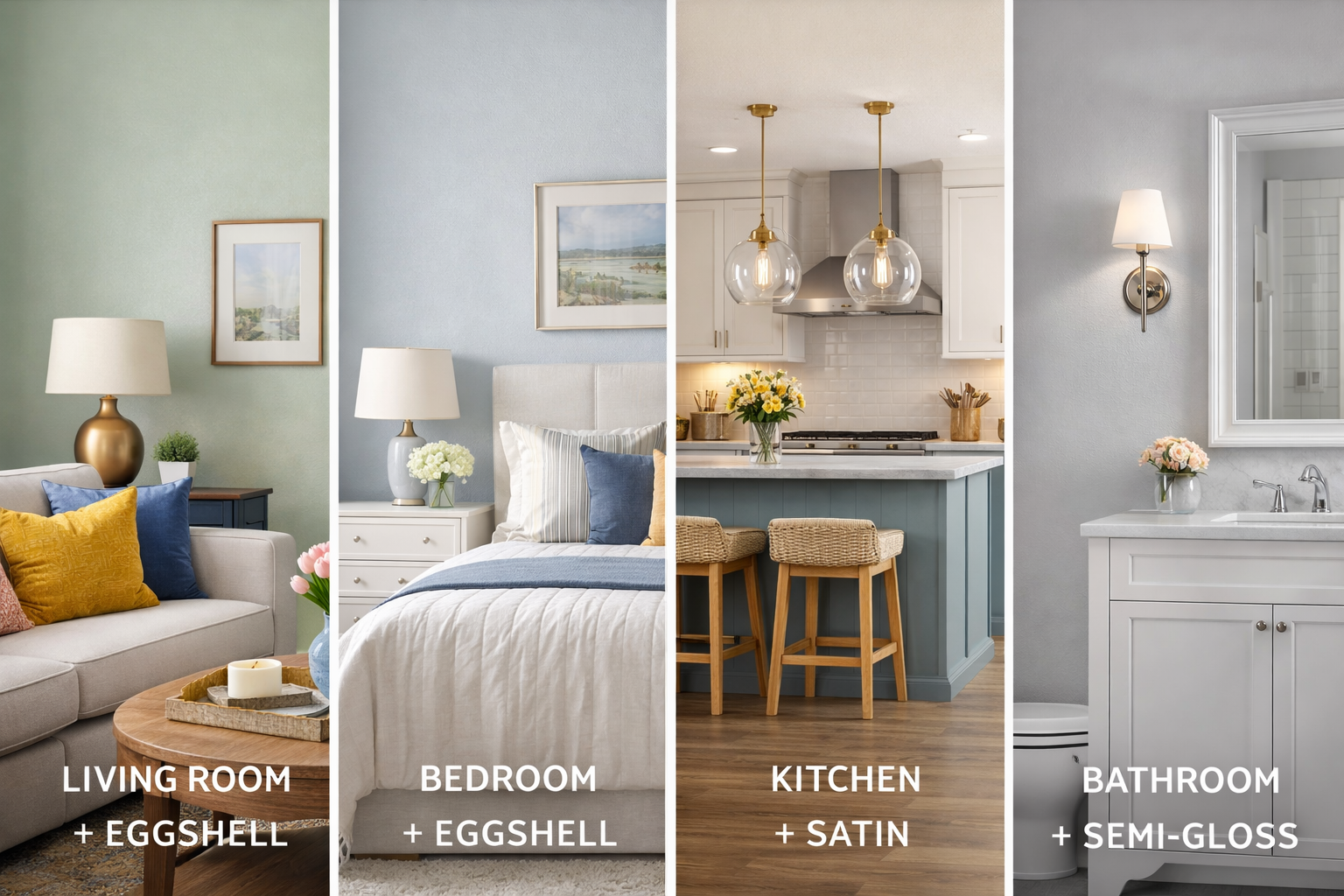
AI-generated illustration showing recommended paint finishes for different rooms in a home, including eggshell for living rooms and bedrooms, satin for kitchens, and semi-gloss for bathrooms.
Best Paint Finishes for Each Room
Different rooms in a home experience different levels of activity, moisture, and wear. Choosing the right paint finish for each space can help walls look better and last longer. Below is a practical guide to finishes that tend to work best depending on how a room is used.
Living Room
Living rooms are typically moderate-traffic spaces where appearance matters just as much as durability. Many designers choose eggshell or matte finishes for living room walls because they provide a soft look while still offering enough durability for occasional cleaning. Paint finish can also influence how light moves around a room. In smaller living spaces, the right finish can subtly help reflect light and make the space feel more open. If you're working with a compact space, you may also find these tips helpful on how to make a small room look bigger without knocking down walls.
These finishes create a smooth surface that reflects a small amount of light without making the walls appear shiny.
Dining Room
Dining rooms usually experience less daily activity than family rooms or kitchens, which allows for slightly softer finishes. Matte or eggshell paint often works well here, creating an elegant and refined look while still allowing the walls to be wiped down if needed.
In formal dining rooms especially, the subtle finish helps keep the focus on furniture, lighting, and decor rather than wall shine.
Bedrooms
Bedrooms are generally low-traffic spaces, which makes matte or eggshell finishes a good choice for most walls. These finishes create a calm and comfortable look while helping hide minor wall imperfections.
For children’s bedrooms or spaces where walls may need occasional cleaning, eggshell can be a more practical option.
Kitchen
Kitchens experience frequent activity, moisture, and occasional splashes. Because of this, walls often benefit from a more durable finish.
Satin finishes are commonly used in kitchens because they hold up well to cleaning while still maintaining a relatively soft appearance. In areas where extra durability is needed, such as near cooking or food preparation zones, semi-gloss may also be used.
Bathroom
Bathrooms deal with humidity and moisture, which means durability is especially important.
Satin or semi-gloss finishes are often recommended for bathroom walls because they resist moisture better and are easier to clean. These finishes also help prevent paint from wearing down in areas exposed to frequent humidity.
Hallways and High-Traffic Areas
Hallways, stairways, and entryways tend to receive the most contact throughout a home. These areas often experience fingerprints, scuffs, and everyday wear.
For these spaces, eggshell or satin finishes tend to work best because they offer greater durability and can be cleaned more easily than lower-sheen paints.
Ceilings
Ceilings are typically painted with flat paint. The low sheen helps reduce glare from lighting and does a good job of hiding minor surface imperfections.
Because ceilings are rarely touched, durability is usually less important than achieving a smooth and even appearance.
Trim, Doors, and Cabinets
Trim, baseboards, doors, and cabinetry benefit from finishes that are both durable and easy to clean.
Semi-gloss paint is one of the most common choices for these surfaces. Its slight shine highlights architectural details while providing a surface that can handle regular cleaning and wear.
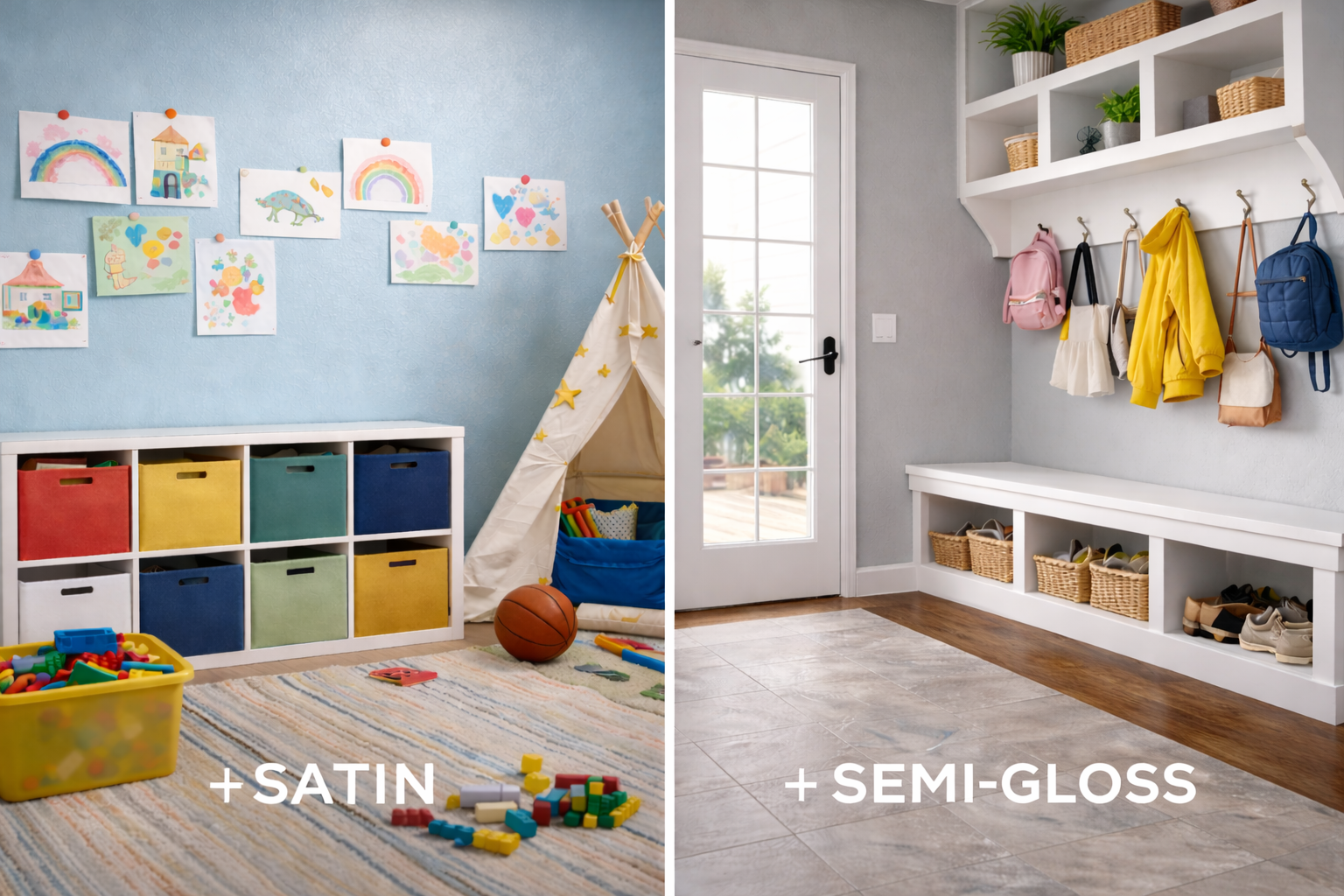
AI-generated illustration comparing paint finishes for high-traffic areas, showing satin walls in a playroom-style space and semi-gloss walls in a mudroom designed for durability and easy cleaning.
Best Paint Finishes for Homes With Kids and High-Traffic Areas
Homes with young children, pets, or busy households often require a bit more consideration when selecting paint finishes. Walls in these environments tend to experience more fingerprints, scuffs, and the occasional crayon drawing, so durability becomes especially important.
While lower-sheen paints like flat or matte can create a beautiful soft look, they are usually more difficult to clean. In homes where walls may need frequent wiping, these finishes can show marks more easily and may require touch-ups over time.
For many families, eggshell or satin finishes offer a more practical balance between appearance and durability. These finishes provide enough protection to allow light cleaning without damaging the paint surface, while still maintaining a relatively subtle look on the walls.
In particular, eggshell finishes often work well in areas such as living rooms, family rooms, and children’s bedrooms where walls may need occasional cleaning. Satin finishes are slightly more durable and can be a good choice for spaces that see heavier activity, such as playrooms, hallways, and stairways.
If you have young children or pets at home, choosing a finish that allows for easy maintenance can make everyday life much simpler. Being able to gently wipe away fingerprints, marks, or small messes without worrying about damaging the paint can help keep walls looking fresh for much longer.
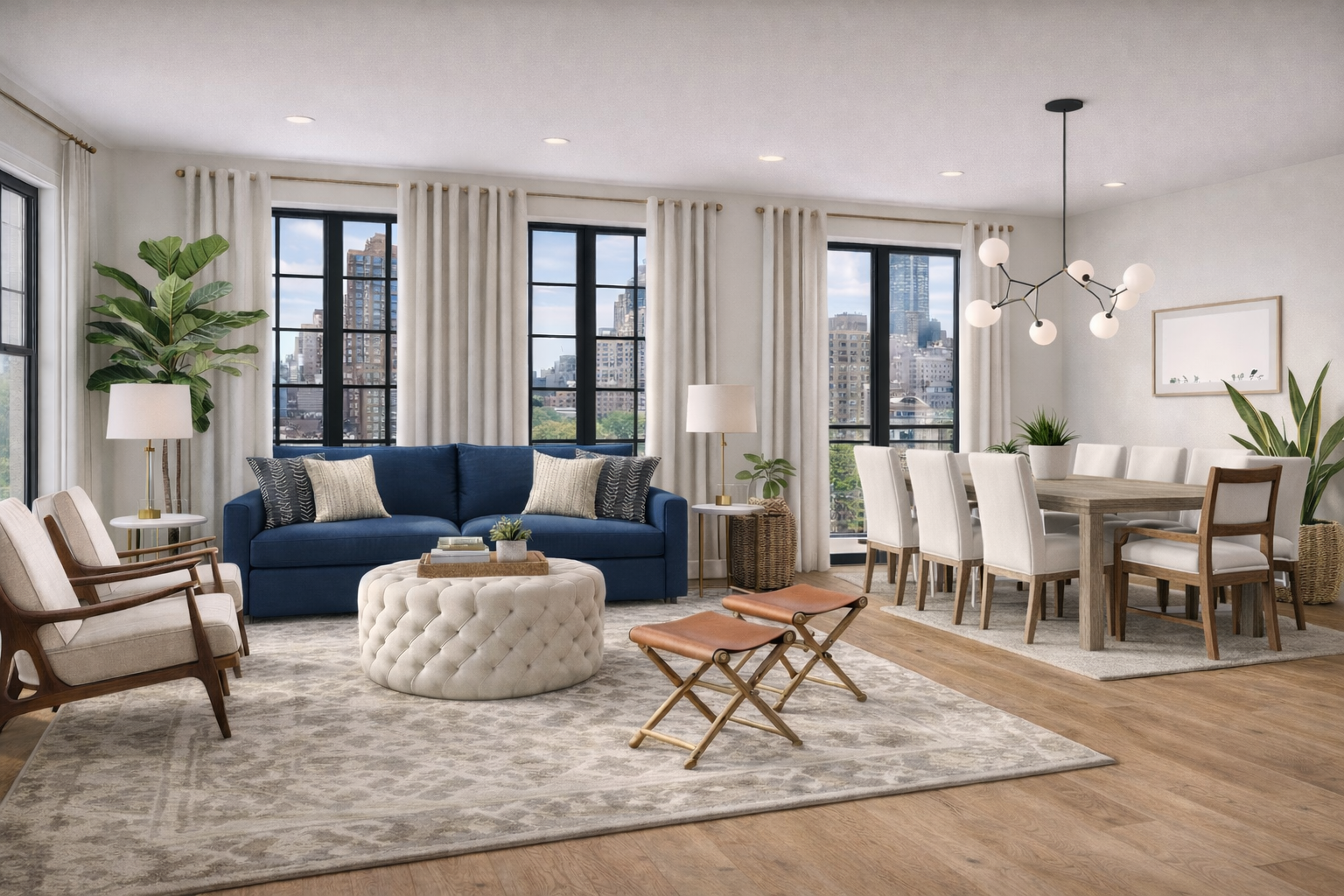
AI-generated photorealistic rendering of a New York City apartment designed in a California Casual style, showing an open-concept living and dining area with coordinated paint finishes for a cohesive look.
Choosing Paint Finishes for Open-Concept Homes
Open-concept layouts have become increasingly common in modern homes, often combining the living room, dining area, and kitchen into one continuous space. While this layout creates a more open and connected feel, it can also make paint decisions a little more complicated—especially when different rooms traditionally call for different paint finishes.
In a traditional home layout, it’s common to use one finish in the living room and a more durable finish in the kitchen. But when those spaces are visually connected without walls separating them, switching finishes too abruptly can sometimes create an inconsistent look.
In many open-concept homes, keeping the same paint finish across connected wall surfaces tends to create a more cohesive appearance. Eggshell finishes are often a popular choice because they provide a good balance between durability and a soft look on the walls. They are durable enough for most living spaces while still maintaining a subtle finish that works well across large areas.
In spaces where the kitchen is part of the open layout, some homeowners prefer using satin paint throughout the entire open space for added durability, especially if cooking areas are close to living areas. This can make cleaning easier while maintaining visual consistency across the room.
Even in open-concept spaces, it’s still common to use different finishes for trim, doors, and cabinetry. Semi-gloss paint is often used for these elements because it highlights architectural details and stands up well to daily use.
The key is to think about the space as one continuous environment. Choosing finishes that work well together helps create a seamless look while still ensuring the walls can handle the level of activity the space receives.
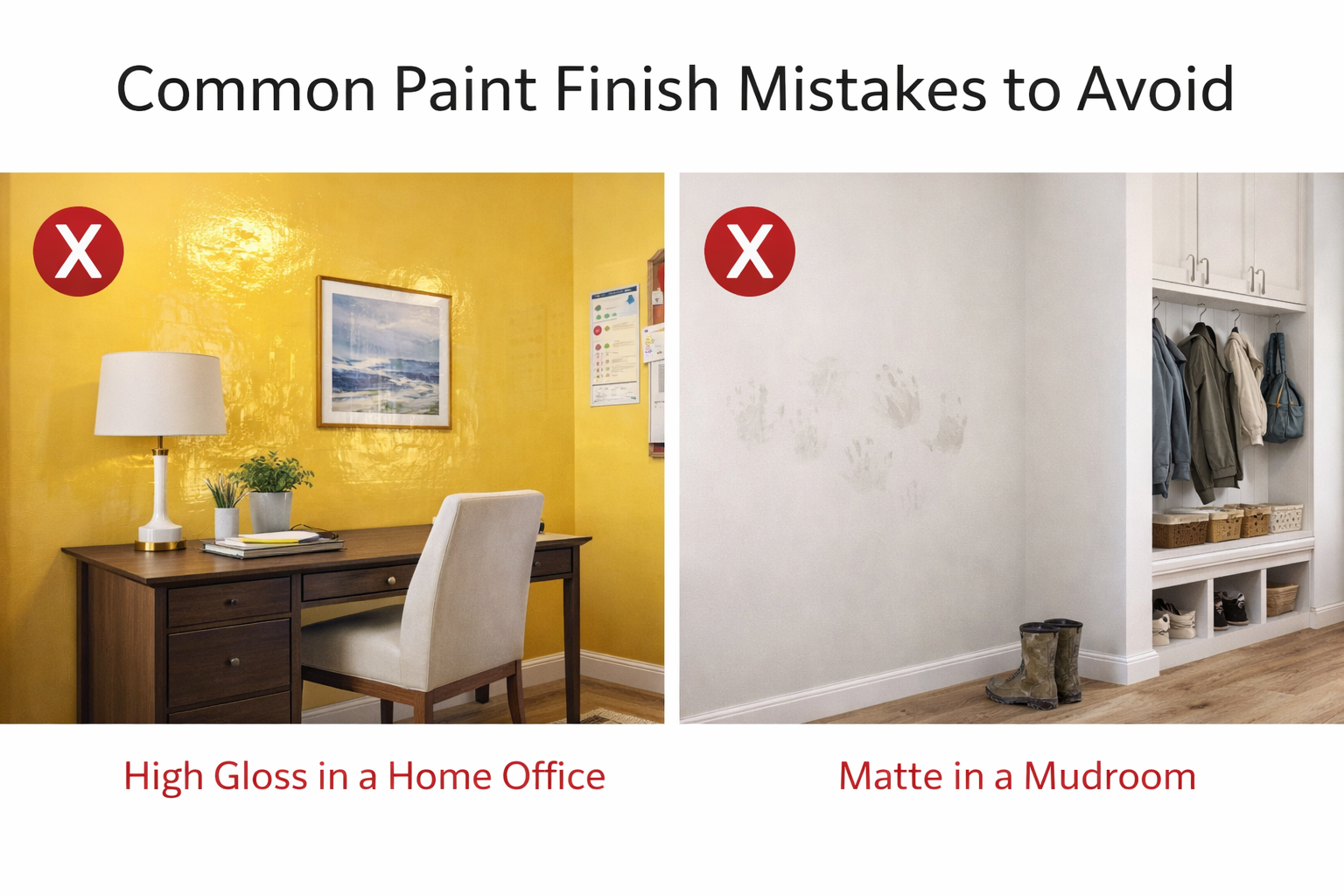
AI-generated comparison illustrating common paint finish mistakes, showing how high-gloss paint can create harsh reflections on walls and how matte paint can easily show stains and marks in high-traffic areas.
Common Paint Finish Mistakes to Avoid
Choosing the right paint finish can make a noticeable difference in how a room looks and how well the walls hold up over time. However, there are a few common mistakes homeowners often make when selecting paint finishes. Being aware of these issues can help prevent frustration later.
Using Flat Paint in High-Traffic Areas
Flat paint can create a beautiful, soft appearance, but it is not always the best choice for spaces that see frequent use. In hallways, family rooms, or children’s bedrooms, flat finishes can show fingerprints, scuffs, and marks more easily and may be difficult to clean without affecting the surface.
In these situations, eggshell or satin finishes usually offer a better balance between durability and appearance.
Using High-Gloss Paint on Imperfect Walls
High-gloss finishes reflect a significant amount of light. While this can create a striking and polished look, it also means that any surface imperfections—such as uneven drywall, patchwork, or small dents—can become more noticeable.
Unless the surface is very smooth and well-prepared, high-gloss finishes are usually better suited for trim, doors, cabinets, or decorative elements rather than large wall areas.
Mixing Too Many Paint Finishes in One Space
In some homes, especially open layouts, using too many different paint finishes on adjacent walls can create a disjointed look. For example, switching from matte in one part of the room to satin in another section of the same open space can sometimes be noticeable depending on lighting.
Keeping a consistent finish across connected wall surfaces often creates a more cohesive appearance.
Ignoring Lighting Conditions
Lighting can affect how a paint finish appears on the wall. Rooms with strong natural light may reveal sheen more easily, while darker rooms may soften the effect of reflective finishes.
Testing a paint sample in the room and observing how it looks at different times of the day can help prevent surprises once the entire space is painted.
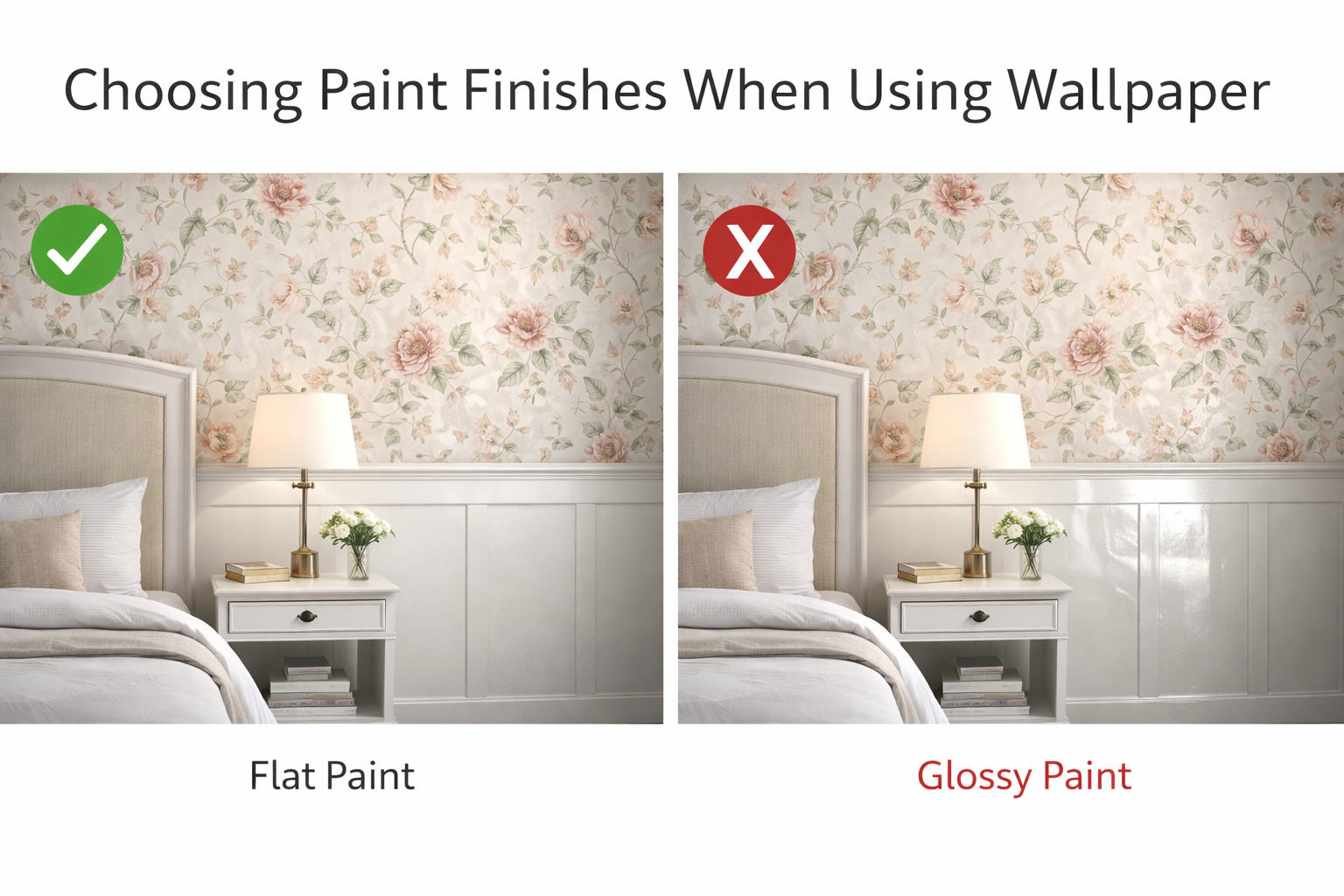
AI-generated comparison showing how paint finish choices affect wallpaper installations, illustrating flat paint as the better base surface compared to glossy paint.
Choosing Paint Finishes When Using Wallpaper
Wallpaper can add texture, pattern, and visual interest to a room, but it’s important to consider how the surrounding painted walls will interact with it. The paint finish you choose can influence whether the wallpaper stands out as a focal point or competes visually with the rest of the space.
In many cases, matte or eggshell finishes work best alongside wallpaper. These finishes create a softer surface that allows the wallpaper to remain the main visual feature without adding extra shine to nearby walls. A lower-sheen finish also helps prevent light reflections from distracting from the wallpaper’s pattern or texture.
Higher-sheen finishes such as satin or semi-gloss can sometimes draw attention away from wallpaper, particularly if the wallpaper has a matte or textured surface. Because of this, those finishes are typically better used on trim, doors, or cabinetry rather than the surrounding walls.
If you plan to install wallpaper on a wall that has been recently painted, timing is also important. Fresh paint needs time to fully cure before wallpaper is applied. Many professionals recommend waiting at least four months before installing wallpaper over newly painted surfaces. This allows the paint to fully dry and harden, which can make wallpaper easier to remove in the future if the space is updated later on.
Taking both finish and timing into consideration can help ensure that painted walls and wallpaper work together harmoniously while also making future changes easier to manage.
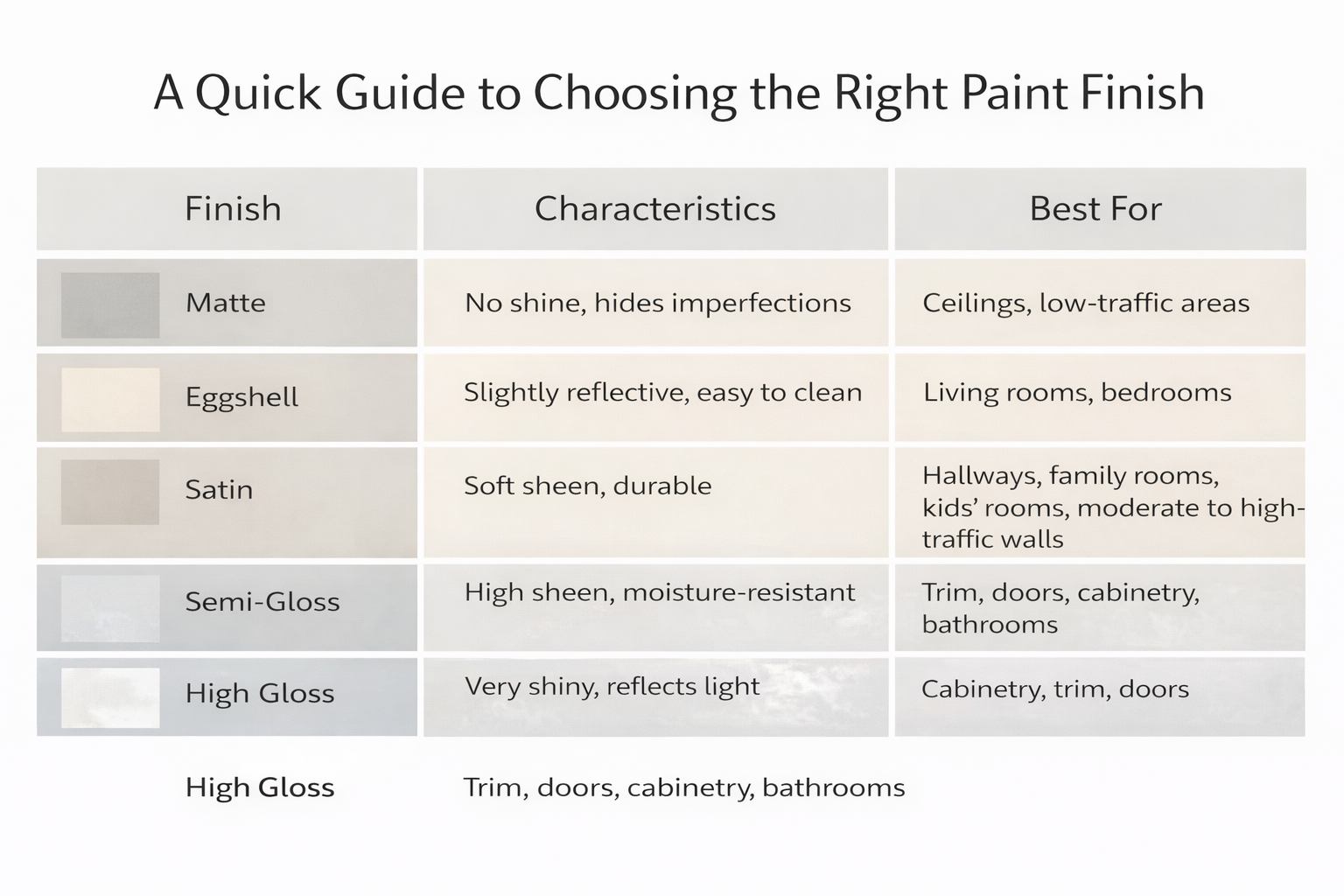
AI-generated infographic providing a quick reference guide to common paint finishes—matte, eggshell, satin, semi-gloss, and high gloss—and where each finish works best in a home.
A Quick Guide to Choosing the Right Paint Finish
With several paint finishes available, it can sometimes feel overwhelming to decide which one works best for each space. While every home is a little different, a simple rule of thumb can make the decision process much easier.
In most homes, the goal is to balance appearance with durability. Lower-sheen finishes tend to create a softer look and help hide imperfections, while higher-sheen finishes are typically more durable and easier to clean.
Here is a simple guide many homeowners find helpful when planning their paint finishes:
Ceilings: Flat
Flat paint is commonly used for ceilings because it minimizes light reflection and helps hide small surface imperfections.
Living Rooms and Dining Rooms: Matte or Eggshell
These finishes provide a soft, elegant appearance while still allowing for occasional cleaning.
Bedrooms: Matte or Eggshell
Bedrooms are usually low-traffic areas, so softer finishes often work well and create a calm atmosphere.
Kitchens: Satin or Semi-Gloss
These finishes are more durable and easier to clean, which is helpful in spaces where cooking and food preparation take place.
Bathrooms: Satin or Semi-Gloss
Because bathrooms experience humidity and moisture, more durable finishes help protect the walls.
Hallways and High-Traffic Areas: Eggshell or Satin
These finishes strike a balance between durability and appearance, making them practical for busy areas of the home.
Trim, Doors, and Cabinets: Semi-Gloss
Semi-gloss paint is commonly used on these surfaces because it holds up well to cleaning and highlights architectural details.
Selecting the right paint finish can make a noticeable difference in how a room looks and how well the walls hold up over time. By understanding how each finish performs and where it works best, homeowners can make choices that support both the design of the space and the way it is used every day.