How to Keep Your Home Cool Without Sacrificing Style
When temperatures start to rise, most people focus on cooling their homes as quickly as possible—often without thinking about how those choices affect the overall look and feel of their space. Bulky fans, heavy blackout curtains, or overly bright lighting can solve one problem while creating another.
The challenge is finding ways to stay comfortable without compromising the design you’ve worked hard to create. A well-designed home should feel just as good in the summer as it does any other time of year—light, breathable, and easy to live in.
As a designer, I approach cooling differently. It’s not about quick fixes, but about making thoughtful adjustments that improve airflow, soften heat, and maintain a clean, cohesive look throughout the home.
Here are the strategies I use to keep a space cool—without sacrificing style.
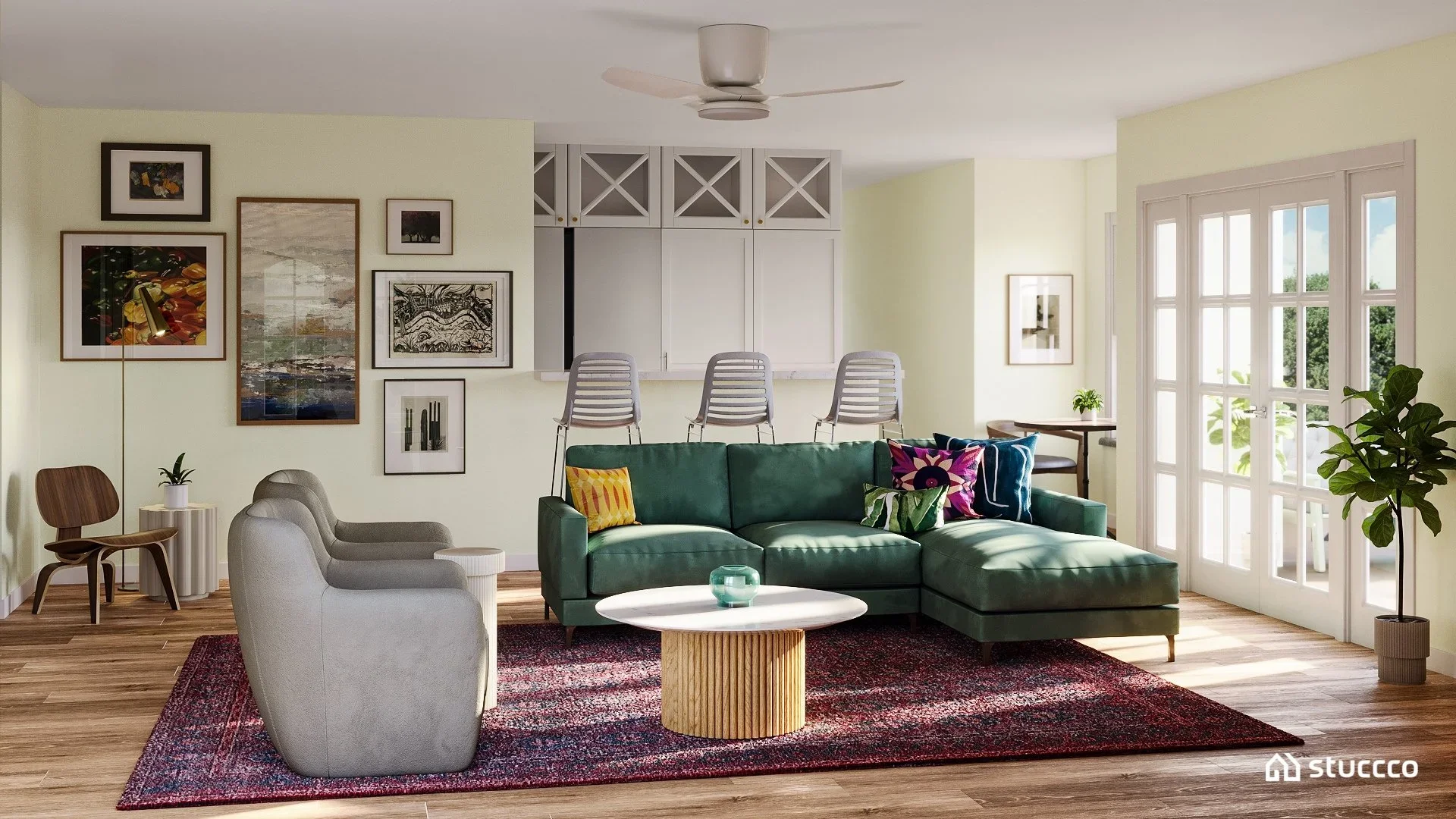
Mid-century modern family room with natural light, green sectional, layered seating, and ceiling fan. Designed by virtual interior designer Joshua Jones of JJones Design Co. 3D rendering created by Stuccco.
Let Air Move First (Ceiling Fans & Airflow)
Before layering in anything else, I always look at airflow. It’s one of the simplest ways to make a space feel more comfortable, and when done right, it doesn’t interfere with the design at all.
A well-placed ceiling fan can make a noticeable difference, especially in rooms that tend to trap heat. The key is choosing one that feels integrated into the space instead of standing out as a functional add-on.
In more minimal interiors, I lean toward fans with clean lines, simple blade shapes, and finishes that relate back to the rest of the room. Light wood tones, matte white, or even a soft black can all work—it just depends on how everything else is coming together.
Placement matters just as much. Centering the fan within the room or aligning it with key elements like a seating area helps it feel intentional rather than random. It should look like it was part of the design from the beginning.
If you’re considering a ceiling fan but want something that actually fits a modern space, I’ve shared my favorite Scandinavian-style options here.
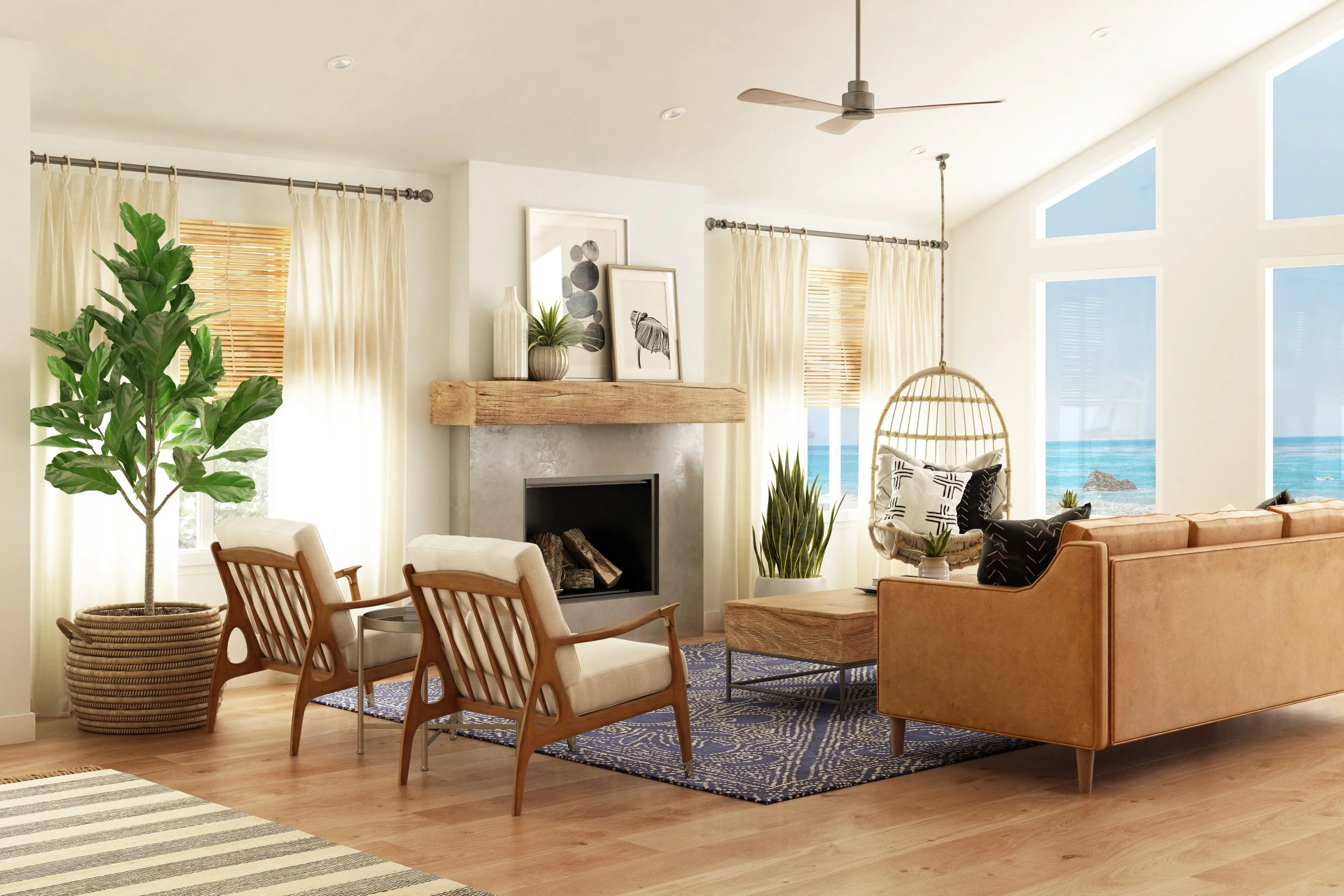
California Casual beach house living room with natural light, warm wood tones, and ceiling fan. Designed by virtual interior designer Joshua Jones of JJones Design Co.
Control Sunlight Without Blocking It
Sunlight is one of the biggest contributors to heat inside a home, but it’s also something you don’t want to lose completely. The goal isn’t to block it out—it’s to soften it.
Heavy blackout curtains can make a room feel closed off during the day, especially in spaces that are meant to feel light and open. Instead, I usually lean toward sheer or light-filtering window treatments that reduce glare while still letting natural light come through.
In rooms that get strong afternoon sun, layering can make a big difference. A combination of sheers with a secondary option—like a roller shade or linen drapery—gives you flexibility depending on the time of day. If you’re unsure how to approach this, I’ve put together a simple drapery guide here.
Another option I often recommend—especially for spaces with a lot of sun exposure—is adding a sun-protection screen to the windows. Think of it like sunglasses for your home. It helps reduce heat and glare while still allowing natural light to come through, so the space stays bright without feeling overheated.
Material choice matters here as well. Lighter fabrics help maintain that airy feel, while darker or heavier materials tend to trap heat and visually weigh the room down.
Choosing the right window treatment can make a noticeable difference—not just in how a room looks, but how it handles light and heat throughout the day.
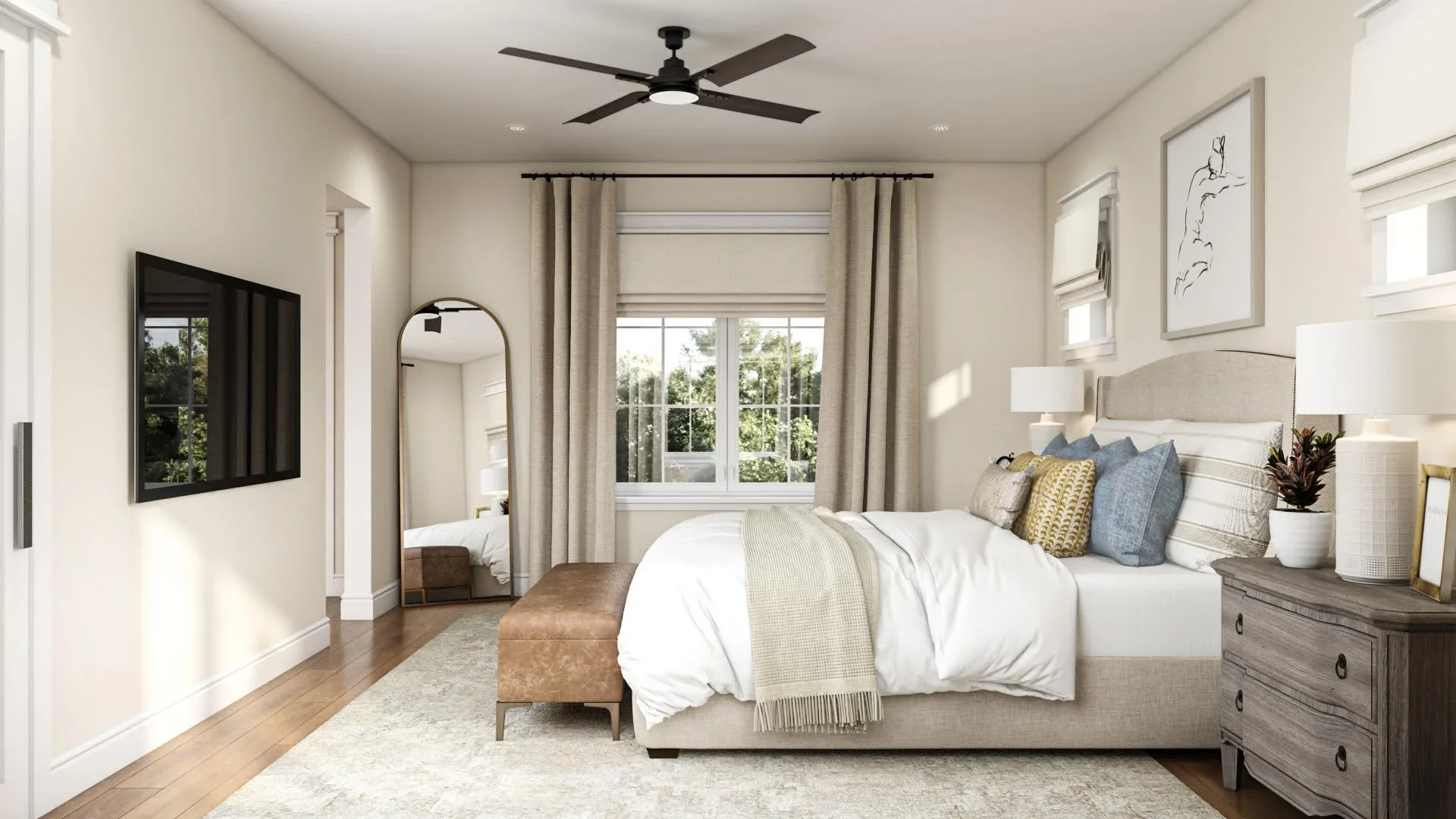
Transitional primary bedroom with soft neutral palette, layered textiles, and ceiling fan. Designed by virtual interior designer Joshua Jones of JJones Design Co.
Rethink Materials for Summer
One of the easiest ways to make a home feel cooler is by paying attention to what you’re surrounded by every day. Materials hold heat differently, and small changes here can have a noticeable impact on comfort.
Heavier textiles—like thick rugs, velvet upholstery, or dense bedding—tend to trap warmth and make a space feel more closed in during the warmer months. You don’t have to remove everything, but lightening things up can go a long way.
I often switch to more breathable materials in the summer. Linen and cotton are great options because they feel lighter, allow better airflow, and naturally create a more relaxed look. Even something as simple as changing pillow covers or layering a lighter throw can shift the feel of the room.
Rugs are another place to rethink things. If you’re using something thick or plush, consider swapping it for a flatter weave or a more breathable material. It helps the space feel less insulated and more open.
The goal isn’t to redesign the entire room—it’s to make small adjustments that help the space feel easier and more comfortable to live in as the temperature changes.
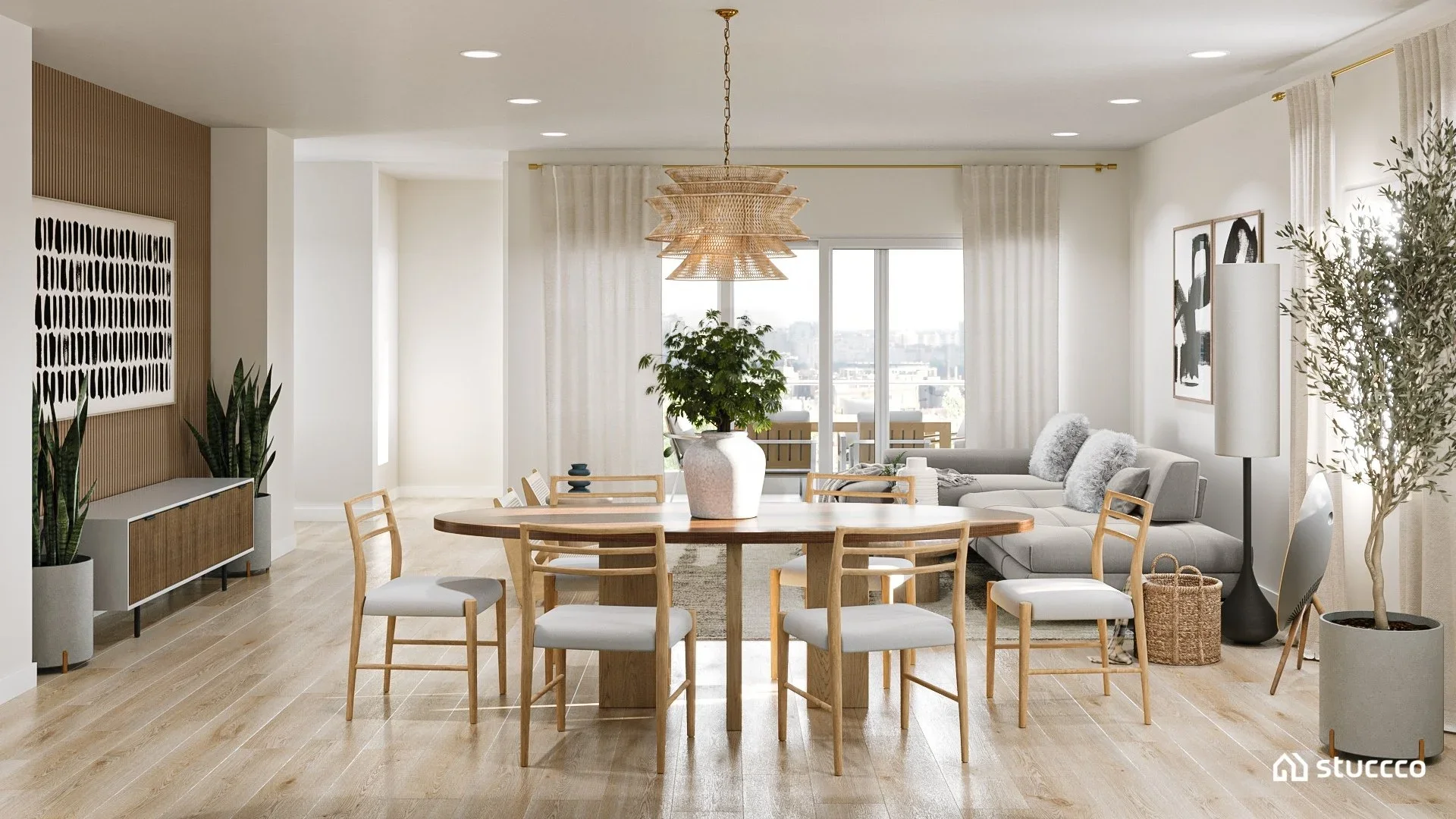
Japandi-style open concept dining and living room with natural materials, soft neutral palette, and layered textures. Designed by virtual interior designer Joshua Jones of JJones Design Co. 3D rendering created by Stuccco.
Color and Lighting Choices That Affect How a Space Feels
Temperature isn’t just physical—it’s also visual. The colors and lighting you use can influence how warm or cool a space feels, even if the actual temperature doesn’t change.
Wall color plays a bigger role than most people expect. Lighter tones—like soft whites, warm neutrals, or muted grays—tend to reflect light and keep a space feeling open and airy. Darker colors can still work, but they naturally absorb more light and can make a room feel heavier, especially in the summer months.
Flooring has a similar effect. Dark hardwood floors can sometimes make a space feel warmer and more enclosed, while lighter wood tones help reflect light and keep things feeling brighter. If changing flooring isn’t realistic, layering in lighter rugs can help balance it out.
Lighting is another piece that often gets overlooked. Bulbs that are too cool can make a space feel harsh, while overly warm lighting can feel heavy in the summer. I usually aim for a soft, balanced light that keeps the room comfortable without adding visual heat.
If you’re unsure what light temperature works best in different spaces, I’ve broken it down here.
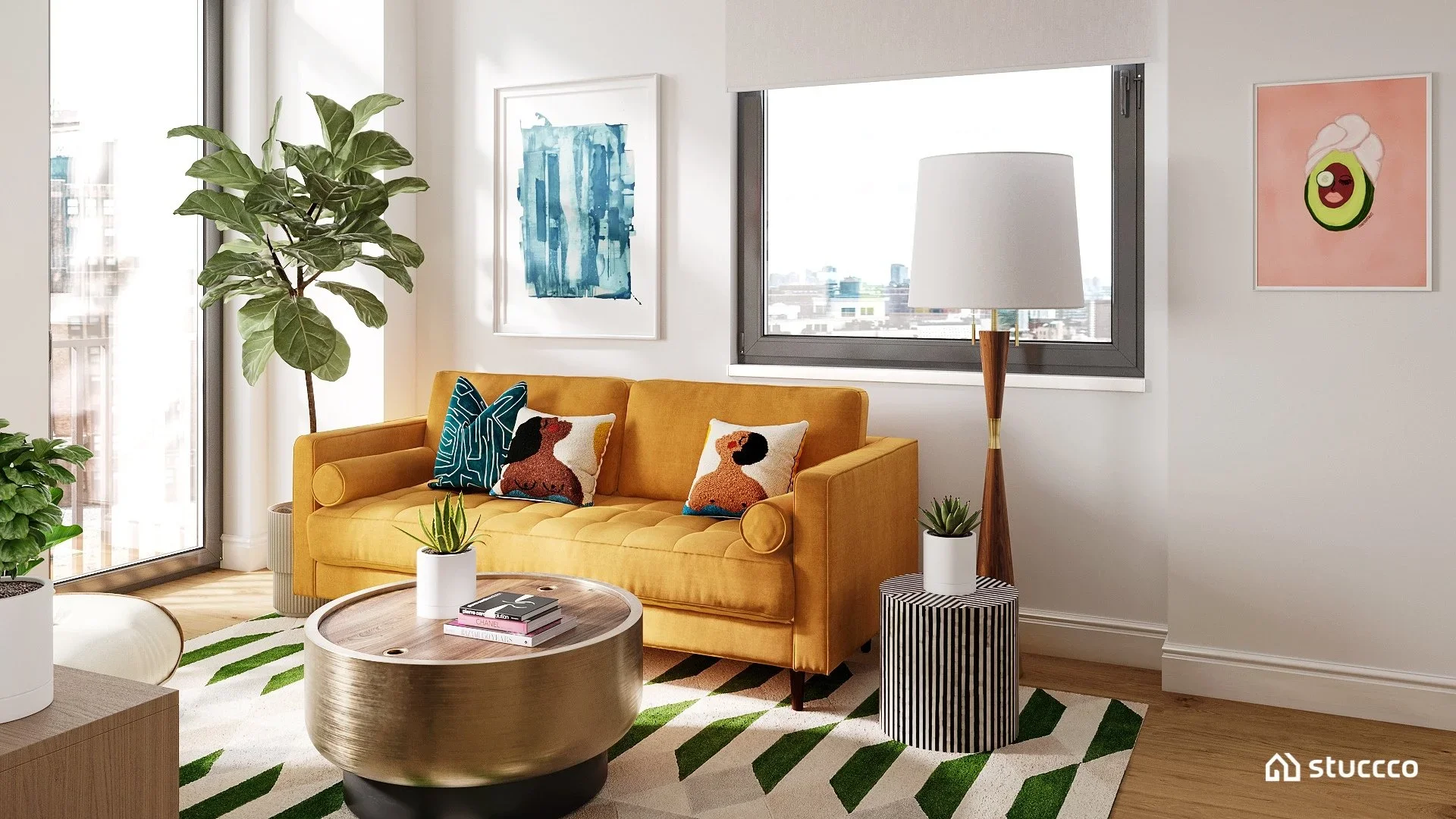
Modern eclectic small living room with bold color, layered textures, and natural light. Designed by virtual interior designer Joshua Jones of JJones Design Co. 3D rendering created by Stuccco.
Small Layout Shifts That Make a Big Difference
Sometimes it’s not about adding anything new—it’s about adjusting what’s already there. How a room is arranged can affect how air moves and how heat builds up throughout the day.
I always look for ways to keep pathways open, especially between windows and doorways. Even small changes—like shifting a chair or pulling furniture slightly away from a wall—can help air circulate more freely.
It’s also worth taking a step back and editing the space a bit. Too many layered pieces can make a room feel heavier, both visually and physically. Clearing a few surfaces or simplifying a corner can make the whole space feel lighter and easier to move through.
If you’re working with a smaller room, spacing becomes even more important. Giving key pieces a little more breathing room can make a noticeable difference without changing the overall layout.
These adjustments are subtle, but they add up. When everything is working together—airflow, light, and materials—the space naturally feels more comfortable without losing its sense of design.
If you’re trying to figure out how to bring all of these elements together in your own home, this is something I help clients with through my virtual interior design services.