Kitchen Countertop Materials Compared: Pros, Cons, and What to Know Before You Choose
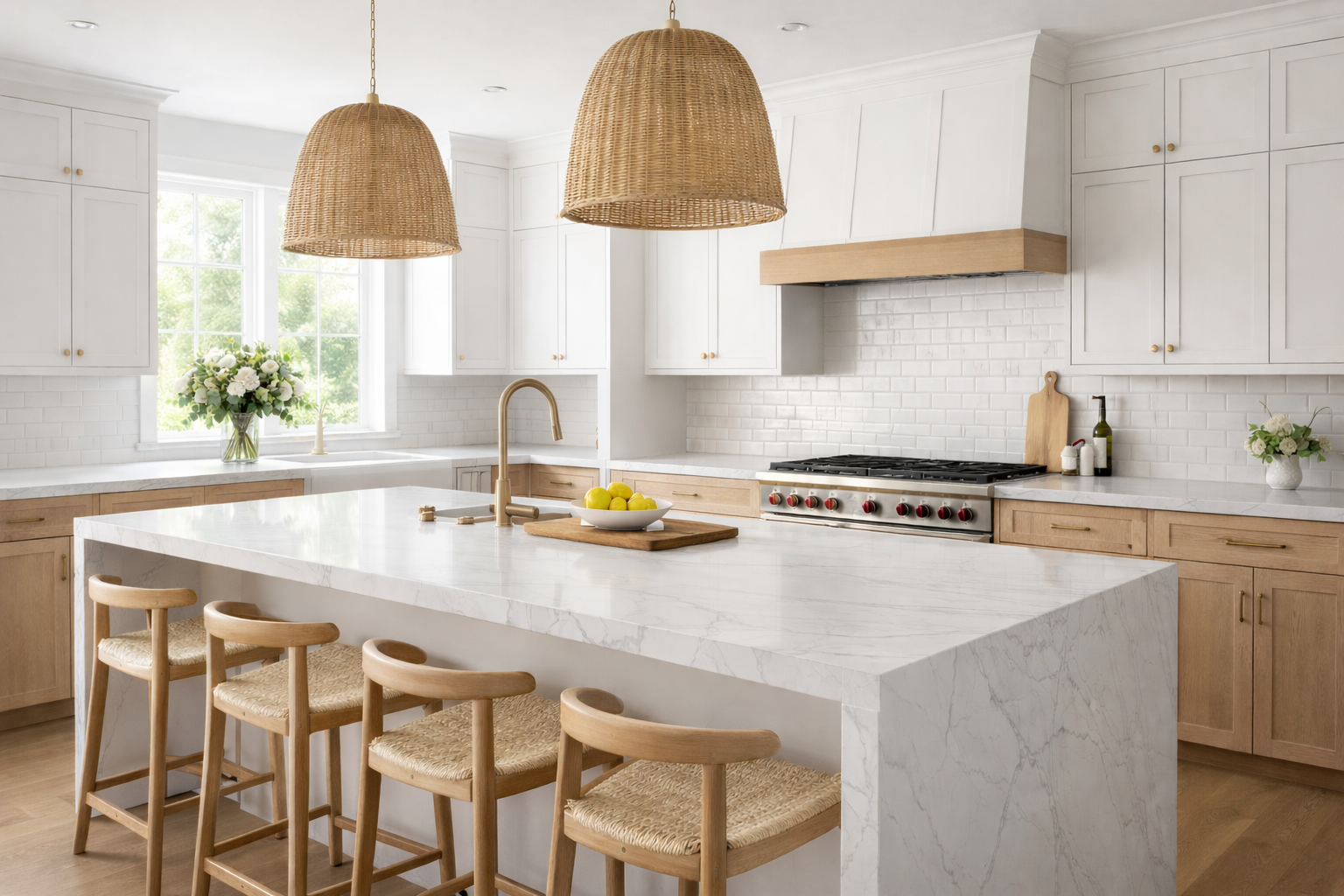
Example of a modern organic kitchen design using quartzite countertops. AI-generated image.
Why Choosing the Right Kitchen Countertop Matters
Choosing a kitchen countertop isn’t just about looks—it’s a long-term decision that affects how your kitchen functions, ages, and holds its value over time. With so many materials on the market today, it’s easy to feel overwhelmed by marketing claims, trending finishes, and conflicting advice.
From quartz and granite to quartzite, wood, tile, and newer porcelain surfaces, each countertop material comes with its own set of advantages and trade-offs. Some are praised for durability but can feel cold or manufactured. Others offer natural beauty but require ongoing maintenance that many homeowners don’t expect. What works perfectly for one household may be frustrating for another.
This guide breaks down the most common kitchen countertop materials, comparing the pros, cons, and practical considerations that matter most before you commit. Rather than pushing trends or “one-size-fits-all” recommendations, the goal is to help you understand how each option performs in real kitchens—so you can choose a countertop that fits your lifestyle, design preferences, and long-term expectations.
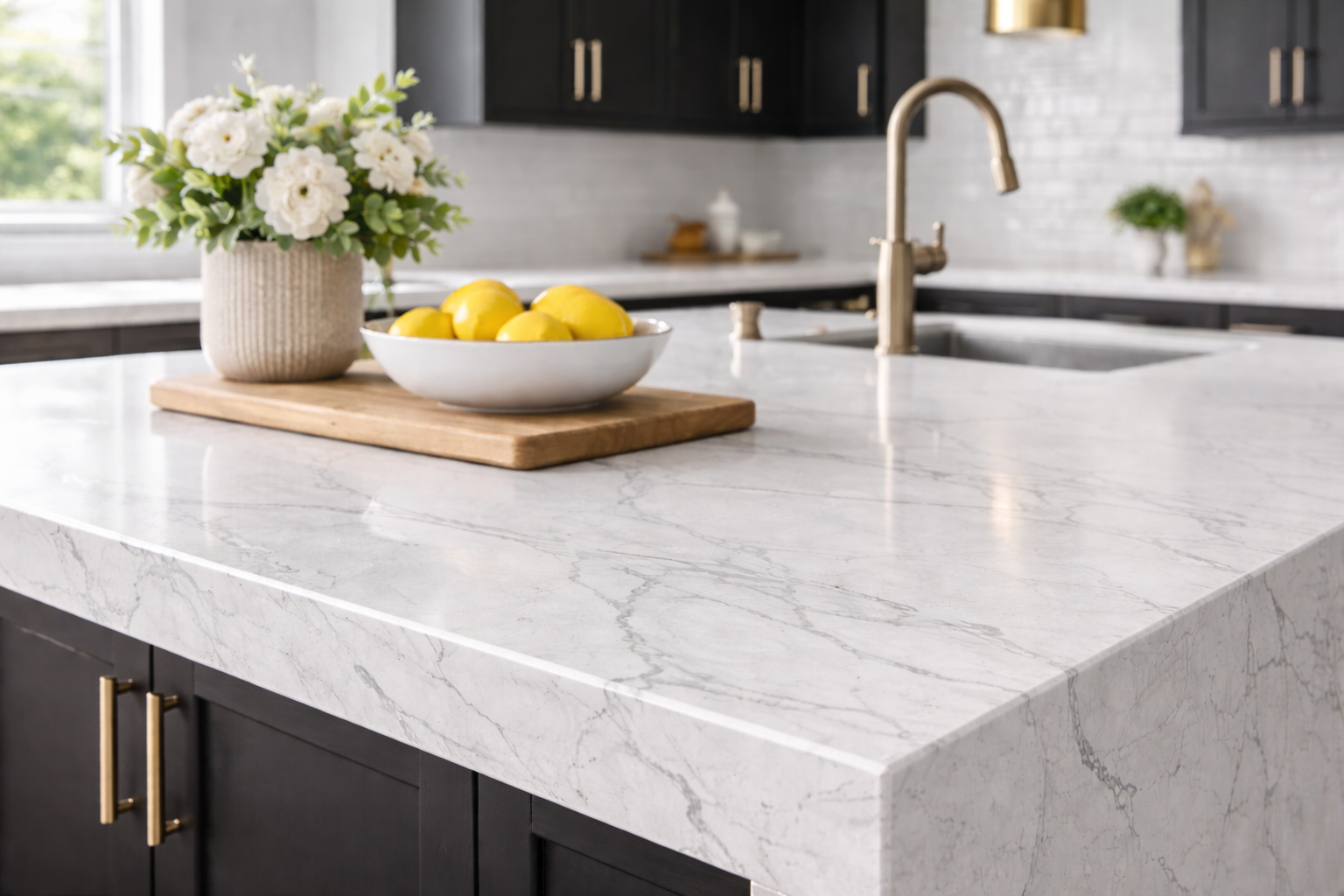
Close-up view of a modern black kitchen showcasing a white marble-like quartz countertop. AI-generated image.
Quartz Countertops
What it is
Quartz countertops are engineered surfaces made from crushed natural quartz combined with resins and pigments. Unlike natural stone, quartz slabs are manufactured to deliver consistent colors and patterns, which is a major reason they’re so popular in modern kitchens.
Pros
Non-porous surface that resists staining
No sealing required
Durable and resistant to chips and cracks
Consistent color and pattern options
Wide range of styles, including marble-like designs
Cons
Can be damaged by high heat
Not recommended for outdoor kitchens due to UV sensitivity
Lacks the natural variation found in real stone
Lighter colors can discolor if spills are left sitting too long
Best for
Busy households that want low maintenance
Modern and contemporary kitchen designs
Homeowners who prefer a clean, uniform look
Kitchens where ease of care is a priority
Designer reality check
Quartz is often marketed as “maintenance-free,” but that description can be misleading. While it’s easier to care for than many natural stones, it’s not indestructible. Heat protection is essential, and lighter colors near cooktops or coffee stations can stain or discolor over time if spills aren’t wiped up promptly. It’s also important to note that using quartz slabs as a backsplash behind a gas cooktop is not recommended. Prolonged exposure to high heat and open flames can cause discoloration, cracking, or resin breakdown, significantly shortening the lifespan of the material. For backsplash areas directly behind gas burners, heat-resistant options such as tile, natural stone, or metal are a safer and longer-lasting choice.
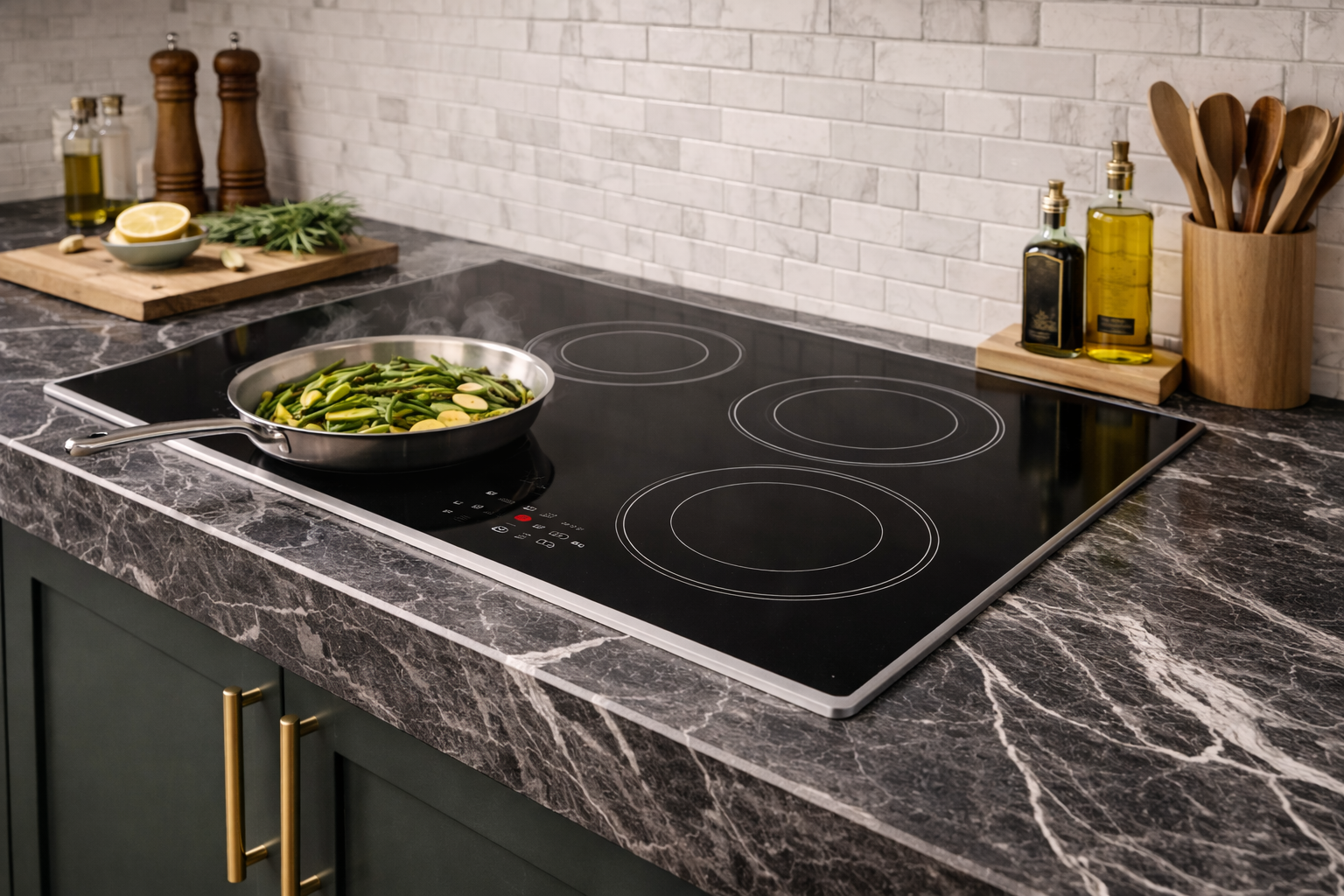
Close-up example of a quartzite countertop paired with a modern induction cooktop. AI-generated image.
Quartzite Countertops
What it is
Quartzite is a natural stone formed when sandstone is exposed to intense heat and pressure. It’s often confused with quartz, but the two materials are very different. Quartzite is a quarried natural stone, while quartz is engineered. Quartzite is prized for its organic beauty and is frequently chosen as a marble alternative because of its light color and natural veining.
Pros
Natural stone with unique veining and movement
Extremely hard and durable
More heat-resistant than quartz
Suitable for kitchens that see heavy use
Often resembles marble with improved durability
Cons
Requires sealing to help prevent staining
More expensive than many other countertop materials
Natural variation makes slab selection critical
Color and veining can vary noticeably from slab to slab
Mislabeling in showrooms can lead to confusion
Best for
Homeowners who love the character of natural stone
Kitchens where heat resistance is a priority
Design-forward spaces where uniqueness is valued
Those comfortable with regular maintenance and sealing
Designer reality check
Quartzite is often marketed as a worry-free marble alternative, but that description can be misleading. While it’s harder and more heat-resistant than marble, it’s still a natural stone that requires sealing and thoughtful care. One important consideration is slab variation—each quartzite slab can have slightly different color tones and veining, even within the same stone name. In large installations, such as oversized kitchen islands or long countertop runs, this variation can result in visible differences once installed. For some homeowners, this organic variation is part of the appeal; for others, it can be frustrating. Viewing and approving slabs in person—and planning layout carefully—is essential to avoid disappointment.
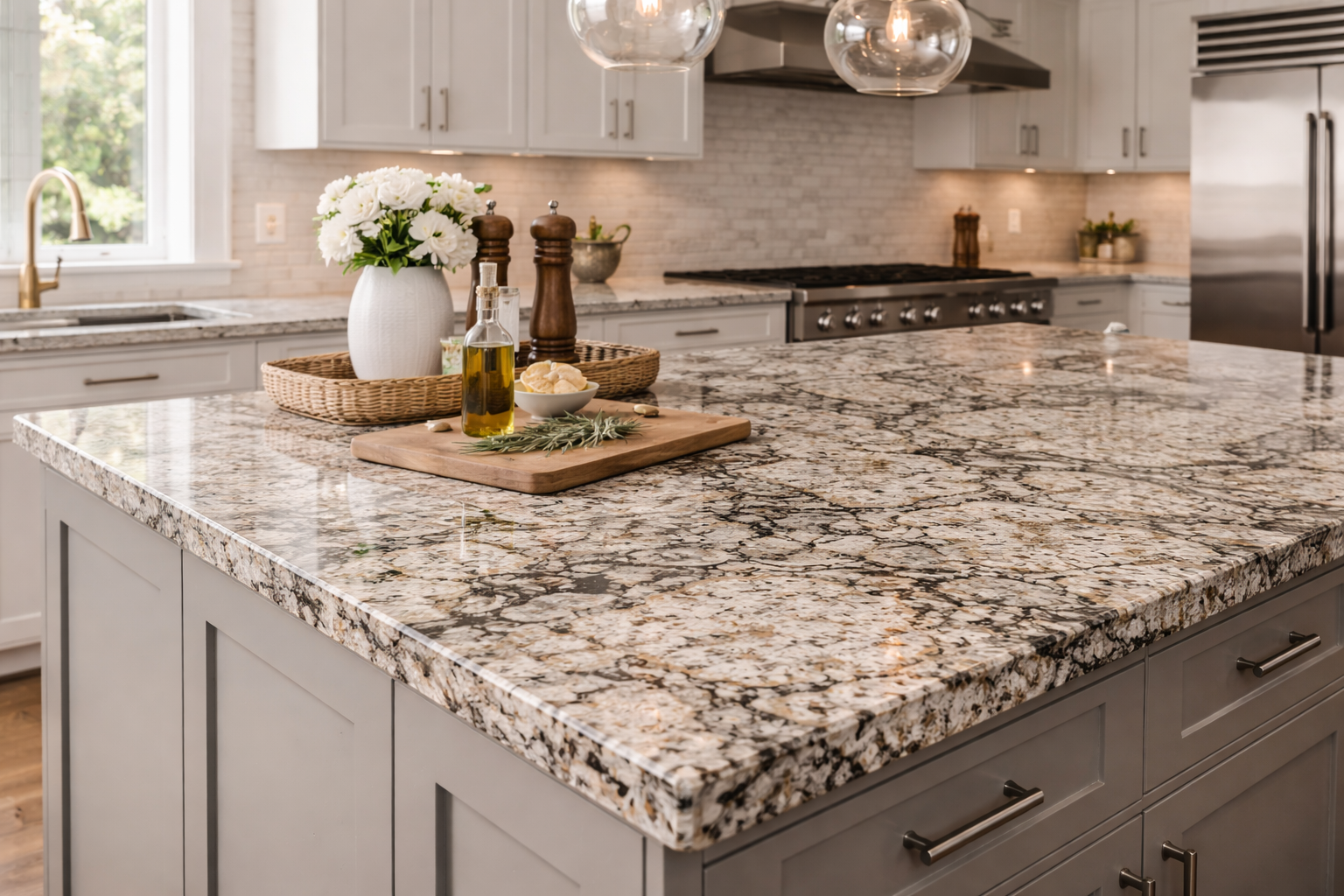
Example of a transitional kitchen design featuring granite countertops. AI-generated image.
Granite Countertops
What it is
Granite is a natural stone formed from cooled magma and quarried in large slabs. Each slab is unique, with natural variations in color, pattern, and mineral composition. Granite has been a popular kitchen countertop choice for decades due to its durability and classic appeal.
Pros
Natural stone with one-of-a-kind patterns
Highly durable and resistant to heat
Strong surface suitable for everyday kitchen use
Wide range of colors and movement
Generally adds resale appeal
Cons
Requires sealing to prevent staining
Natural variation can make slab matching challenging
Can chip or crack if subjected to heavy impact
Some patterns feel visually busy in modern kitchens
Best for
Homeowners who want a durable natural stone
Kitchens where heat resistance is important
Transitional and traditional kitchen styles
Those comfortable with occasional sealing and maintenance
Designer reality check
Granite has a reputation for being “bulletproof,” but that can oversimplify things. While it’s very durable and heat-resistant, it’s still a natural stone that needs sealing to protect against staining. Slab variation is also a real consideration—two slabs labeled the same can look noticeably different once installed, especially in larger kitchens or long runs. Choosing and approving slabs in person, and planning how seams and pattern movement will flow, makes a significant difference in how polished the final result feels.
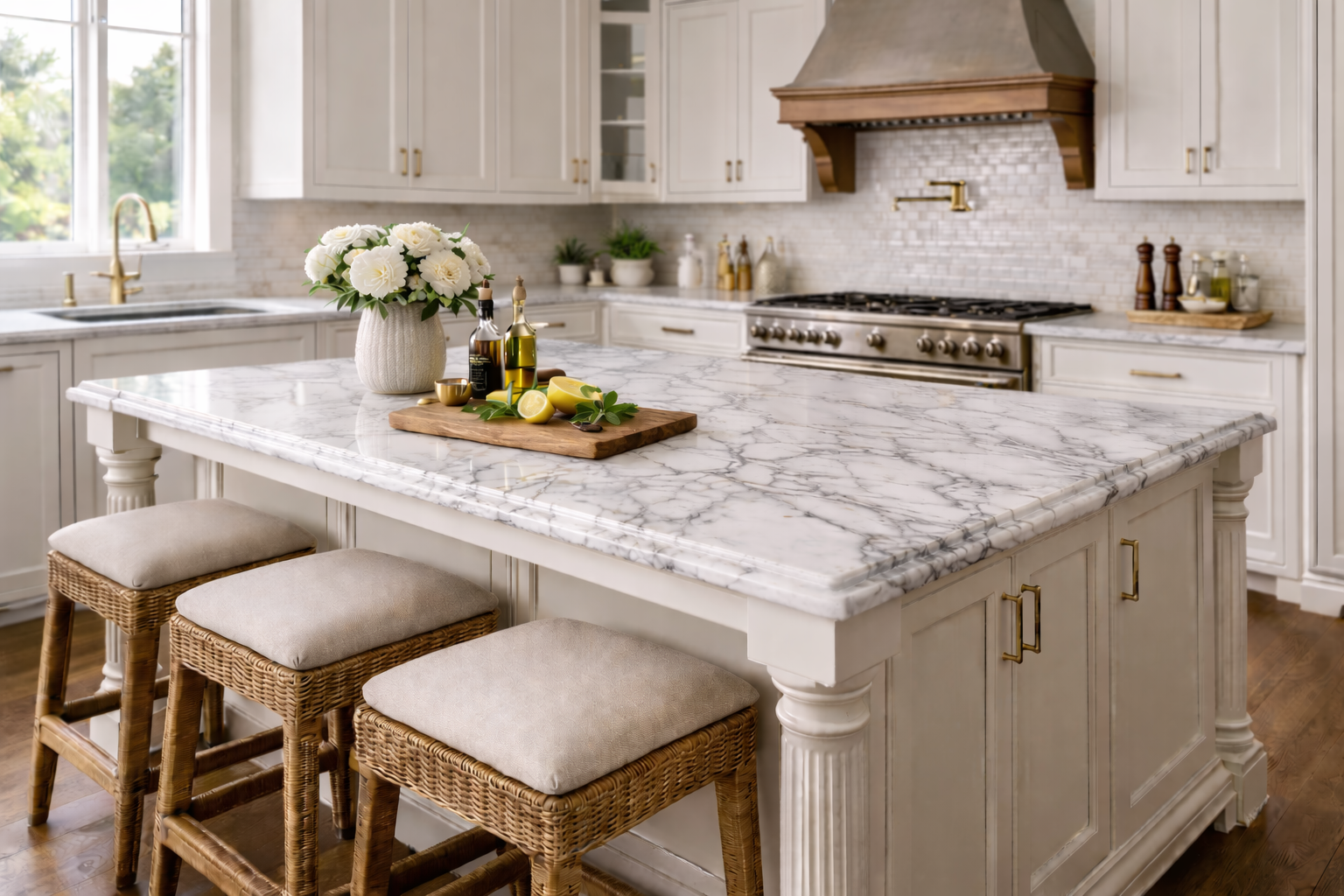
Classic vintage kitchen featuring a white marble island with gray veining. AI-generated image.
Marble Countertops
What it is
Marble is a natural stone formed from limestone under heat and pressure. It’s known for its soft veining, depth, and timeless beauty, and it has been used in kitchens for centuries. Despite its elegance, marble is one of the more high-maintenance and fragile countertop options available.
Pros
Timeless, high-end appearance
Natural veining that adds depth and character
Stays cool to the touch, ideal for baking
Elevates the perceived value and design of a kitchen
Each slab is truly one of a kind
Cons
Highly porous and prone to staining
Susceptible to etching from acidic substances
Softer than many other stones and more vulnerable to cracking
Requires regular sealing and careful maintenance
Scratches and surface damage show easily
Best for
Homeowners who prioritize aesthetics over durability
Kitchens with lighter daily use
Baking enthusiasts who appreciate a cool work surface
Those comfortable with visible wear and natural aging
Designer reality check
Marble requires a realistic mindset. Beyond staining and etching, it can crack if subjected to heavy impact, improper support, or structural stress, especially around sink cutouts, cooktops, or long unsupported spans. Installation quality matters just as much as daily care. Marble works best for homeowners who appreciate its beauty and accept its fragility as part of the trade-off. If durability and worry-free use are priorities, marble is likely to become a source of frustration rather than joy.
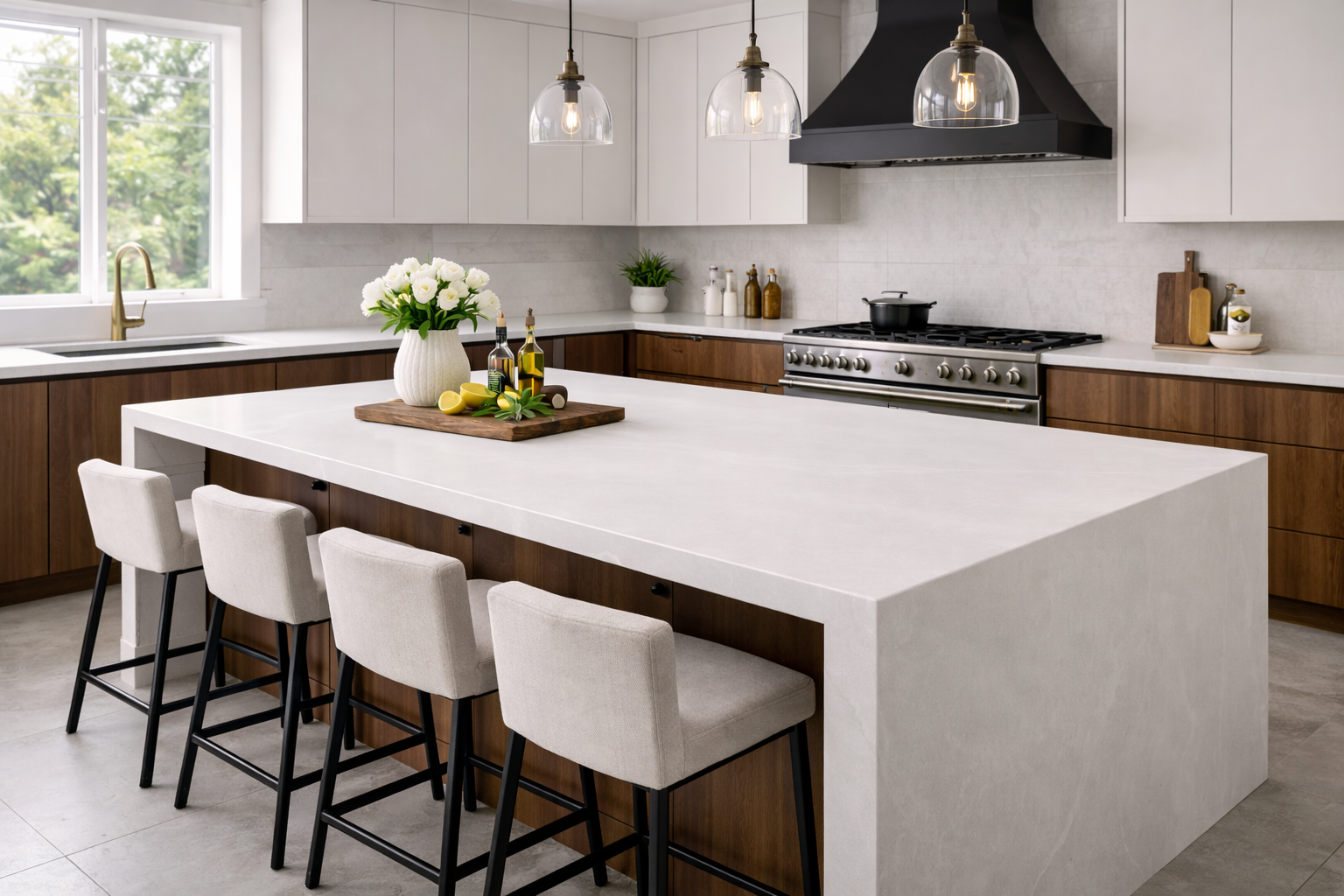
Example of a modern kitchen design using porcelain or sintered stone countertops. AI-generated image.
Porcelain & Sintered Stone Countertops
What it is
Porcelain and sintered stone countertops are manufactured surfaces made by compressing natural materials under extreme heat and pressure. The result is an ultra-dense slab that mimics the look of natural stone while offering exceptional performance. These materials are sometimes marketed under various brand names, which can add to the confusion.
Pros
Extremely heat-resistant and fire-safe
Non-porous surface that resists staining
UV-resistant and suitable for outdoor kitchens
Thin profile options for a modern look
Resistant to scratches, etching, and chemicals
Cons
Can be brittle and prone to chipping at edges
Limited repair options if damage occurs
Fewer fabricators experienced with installation
Can feel visually flat compared to natural stone
Higher material and fabrication costs
Best for
Modern and contemporary kitchen designs
Kitchens where heat resistance is critical
Indoor-outdoor kitchen applications
Homeowners seeking a low-maintenance surface
Designer reality check
Porcelain and sintered stone offer impressive performance, but they’re not foolproof. While the surface itself is extremely hard, the material can be brittle, meaning edges and corners are vulnerable to chipping if impacted. Proper fabrication, edge detailing, and experienced installation are essential. When done well, these countertops can be incredibly durable and low maintenance—but poor handling or inexperienced installers can quickly turn a premium material into a costly headache.
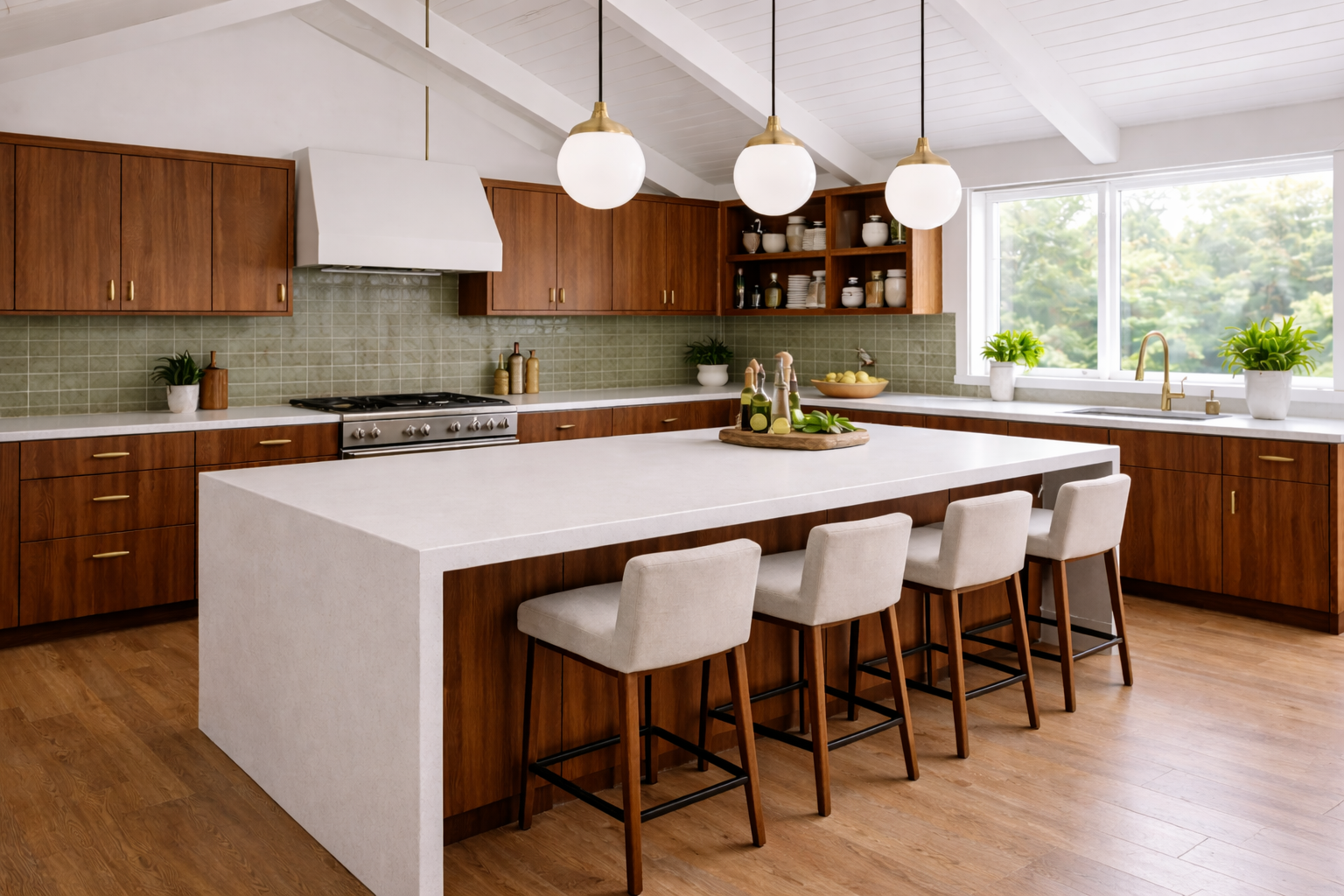
Mid-century modern kitchen example featuring solid surface countertops. AI-generated image.
Solid Surface Countertops
What it is
Solid surface countertops are man-made materials typically composed of acrylic or polyester resins combined with mineral fillers. Unlike stone slabs, solid surface countertops are fabricated seamlessly, which allows for integrated sinks and smooth, continuous surfaces.
Pros
Non-porous and resistant to staining
Seamless appearance with minimal visible joints
Integrated sinks and backsplashes are possible
Minor scratches can often be sanded or repaired
Softer, warmer feel compared to stone
Cons
Not heat-resistant—hot pans can cause damage
More prone to scratching than stone surfaces
Can discolor over time, especially in lighter colors
Lacks the depth and variation of natural stone
Lower perceived value in high-end kitchens
Best for
Homeowners who want a seamless, easy-to-clean surface
Contemporary or minimalist kitchen designs
Kitchens with moderate daily use
Those who prefer repairable surfaces over natural variation
Designer reality check
Solid surface countertops are practical and forgiving, but they come with limitations. Heat damage is a real concern, and the material can scratch more easily than stone. While minor surface damage can often be repaired, solid surface doesn’t deliver the same visual richness or long-term prestige as natural stone or newer engineered options. It works best for homeowners who value functionality and simplicity over statement-making materials.
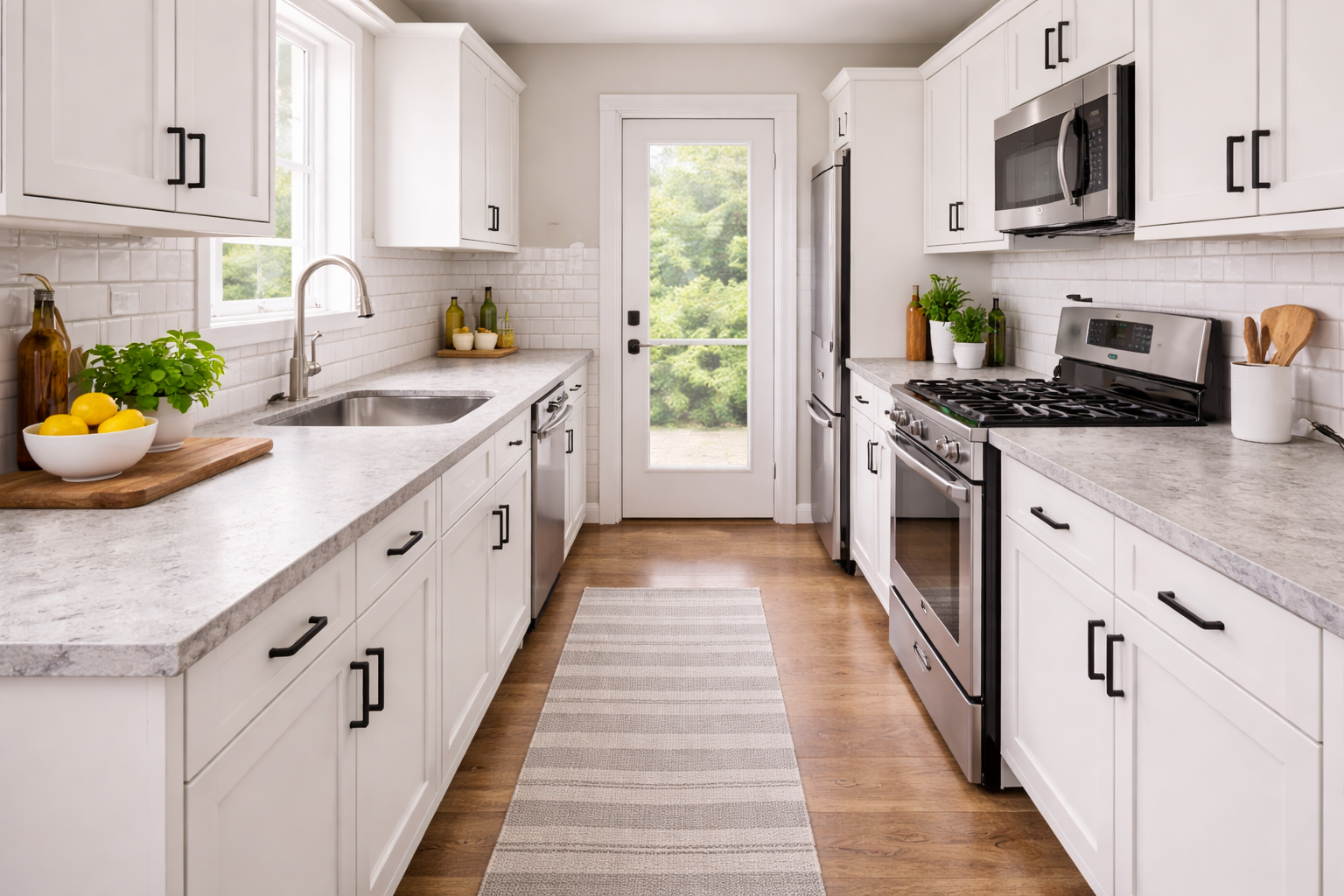
Simple galley kitchen example featuring laminate countertops. AI-generated image.
Laminate Countertops
What it is
Laminate countertops are made from layers of paper or fabric bonded with resin and fused to a particleboard or MDF core. Modern laminate has come a long way from its early reputation, with improved patterns that mimic stone and wood at a much lower cost.
Pros
One of the most affordable countertop options
Wide variety of colors and patterns
Lightweight and relatively easy to install
No sealing required
Budget-friendly for large kitchens or rental properties
Cons
Vulnerable to heat damage
Can scratch, chip, or peel over time
Water damage is a risk if seams fail
Cannot be refinished once damaged
Lower durability and resale perception
Best for
Budget-conscious renovations
Rental properties or secondary homes
Kitchens with light to moderate use
Homeowners prioritizing cost over longevity
Designer reality check
Laminate has improved visually, but performance limitations still exist. Heat and moisture are its biggest enemies—once the surface is damaged or water reaches the core, repairs are rarely successful. While laminate can be a practical short-term or budget-friendly solution, it’s not a long-term investment material. For homeowners planning to stay put or looking to maximize resale value, laminate often feels like a compromise rather than a solution.
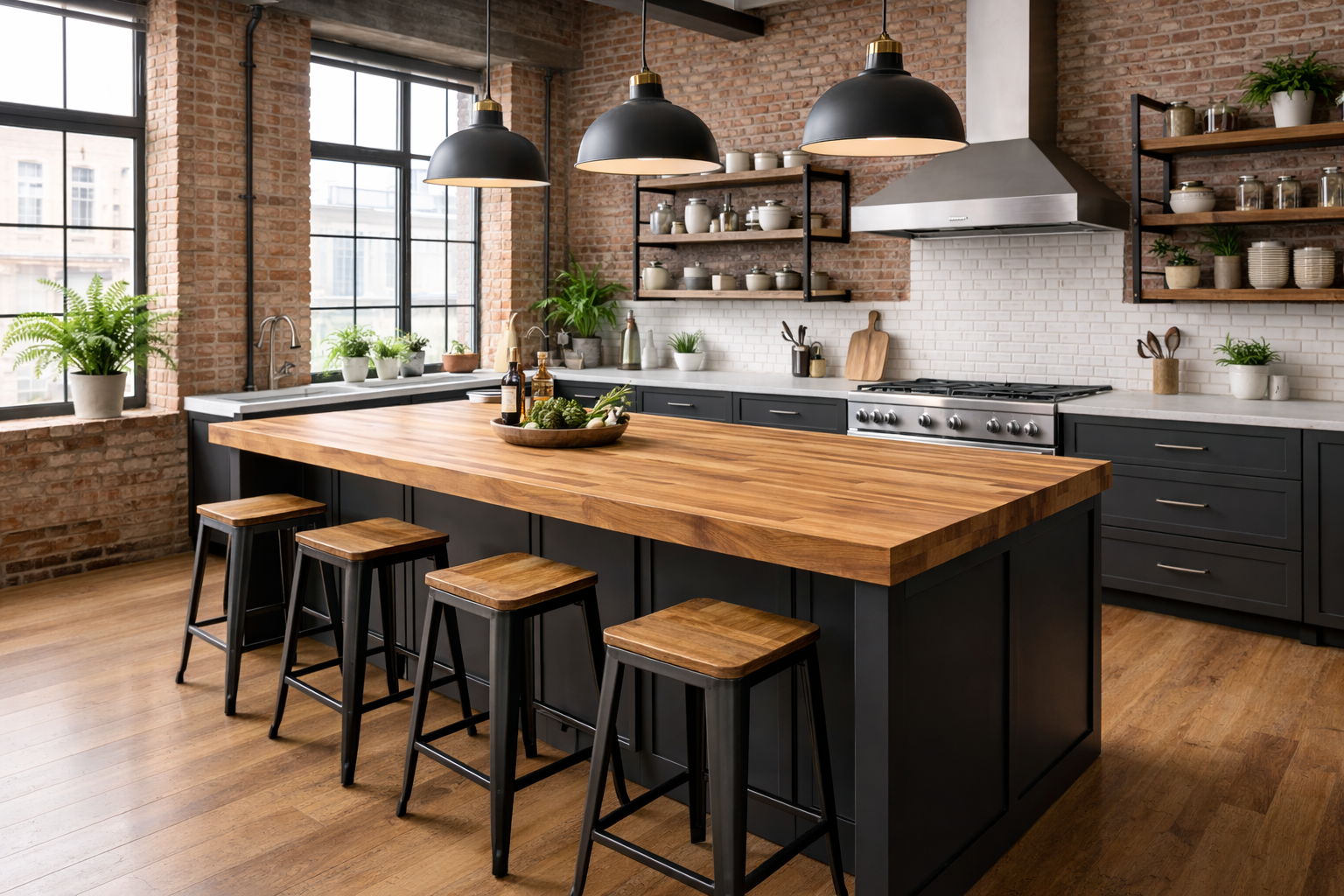
Industrial-style loft kitchen featuring a butcher block wood island countertop. AI-generated image.
Wood & Butcher Block Countertops
What it is
Wood and butcher block countertops are made from solid wood pieces or strips that are bonded together. Common wood species include maple, oak, walnut, and birch. These countertops are valued for their warmth, natural character, and ability to soften modern or minimalist kitchens.
Pros
Warm, natural appearance that adds character
Softer surface that’s comfortable for food prep
Can be sanded and refinished over time
Works well as an accent material, especially on islands
Pairs nicely with modern, farmhouse, and Scandinavian styles
Cons
Requires regular oiling and maintenance
Vulnerable to water damage and staining
Can scratch, dent, or burn
Not ideal around sinks or dishwashers
Movement from humidity and temperature changes
Best for
Homeowners who appreciate natural materials
Kitchens where warmth and texture are desired
Island countertops or secondary prep areas
Those willing to commit to routine maintenance
Designer reality check
Wood countertops bring undeniable warmth, but they’re not low maintenance. Water exposure is the biggest challenge—areas near sinks and dishwashers are especially vulnerable. Regular oiling is essential to prevent drying and cracking, and visible wear is inevitable over time. Used strategically, wood can be beautiful and functional. Used everywhere without realistic expectations, it can quickly become frustrating.
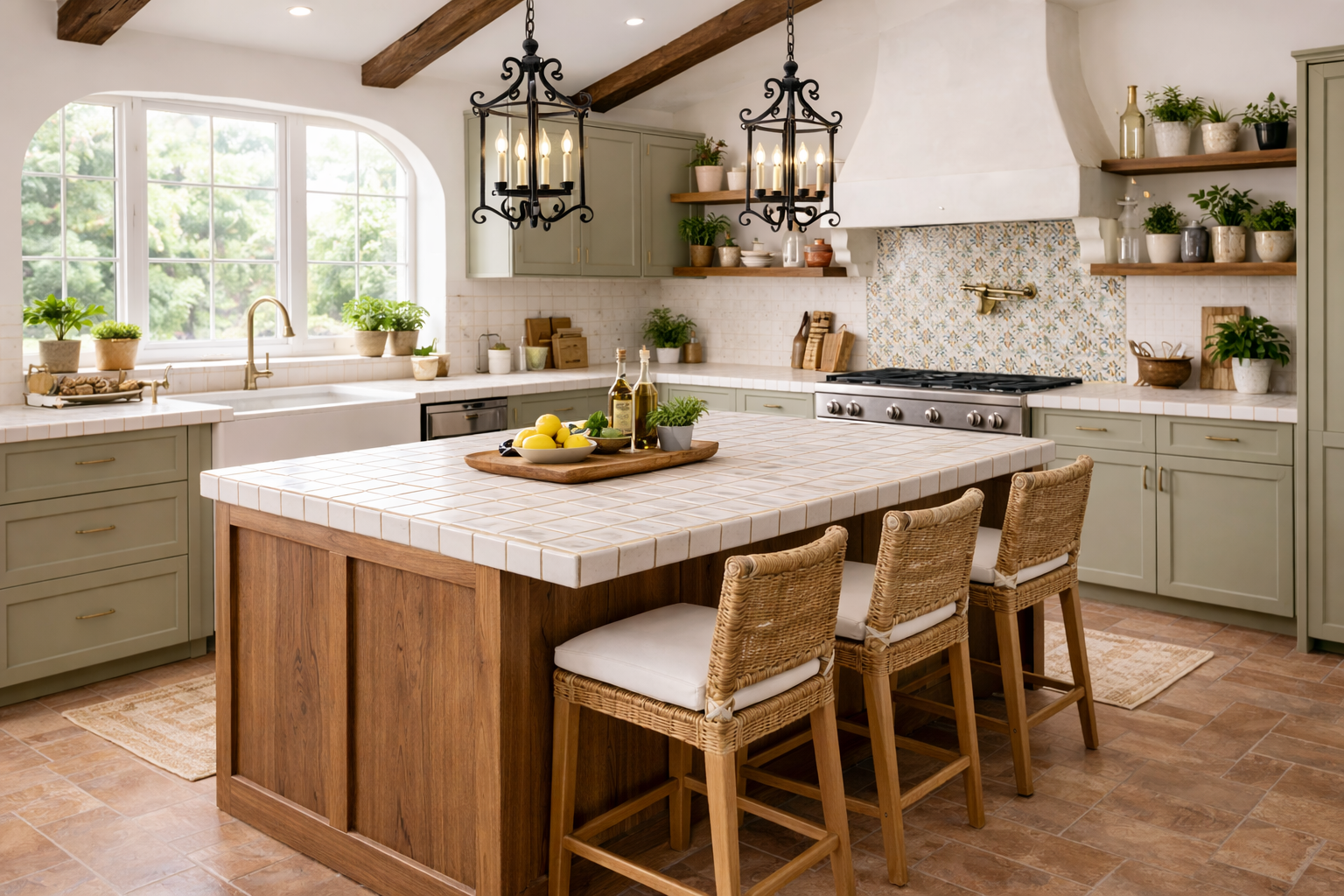
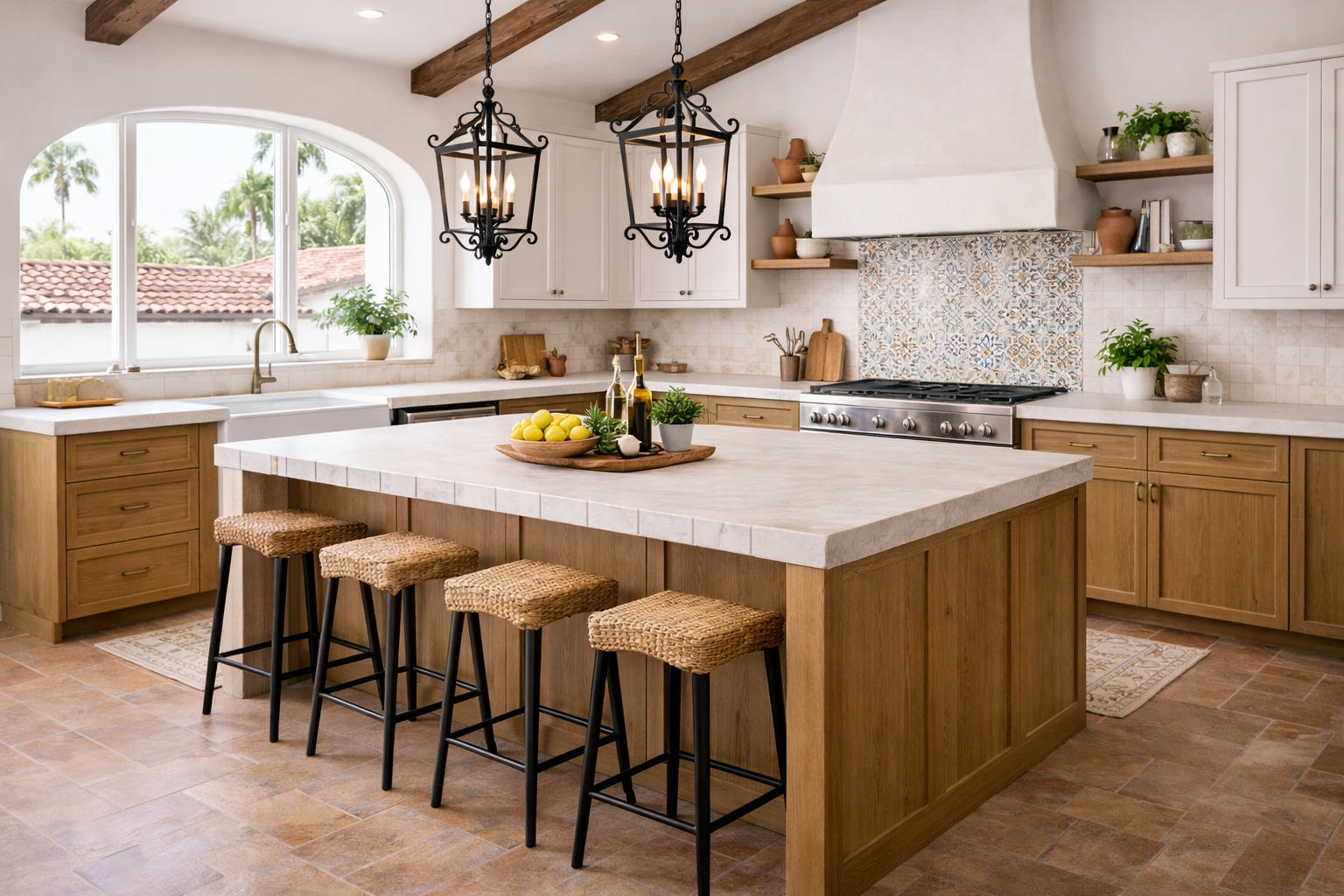
Mediterranean-style kitchen example showing how tile countertops can feel warm and timeless when paired with the right materials. AI-generated image.
Tile Countertops (With Grout)
What it is
Tile countertops are created by installing individual ceramic, porcelain, or stone tiles over a substrate, with grout lines between each tile. Once a common choice in older homes, tile countertops are now typically considered for budget renovations or very specific design styles.
Pros
Lower material cost compared to slab countertops
Wide range of tile styles, colors, and patterns
Heat-resistant surface
Individual tiles can be replaced if damaged
Can work for certain vintage or Mediterranean-inspired kitchens
Cons
Grout lines stain easily and require frequent maintenance
Uneven surface makes food preparation more difficult
Grout can harbor dirt and bacteria
Tiles can chip or crack over time
Often viewed as outdated in modern kitchens
Can negatively impact resale value
Best for
Budget-conscious renovations
DIY-friendly projects
Secondary spaces like pantries or laundry rooms
Homeowners who plan to replace countertops in the future
Designer reality check
While tile countertops can be cost-effective, they rarely add value in today’s resale market. Many buyers see grout countertops as a future renovation rather than an asset, which can affect perceived home value and buyer interest. Combined with ongoing grout maintenance and an uneven surface, tile countertops tend to make more sense in secondary spaces or short-term solutions rather than primary kitchen countertops intended to maximize resale appeal.
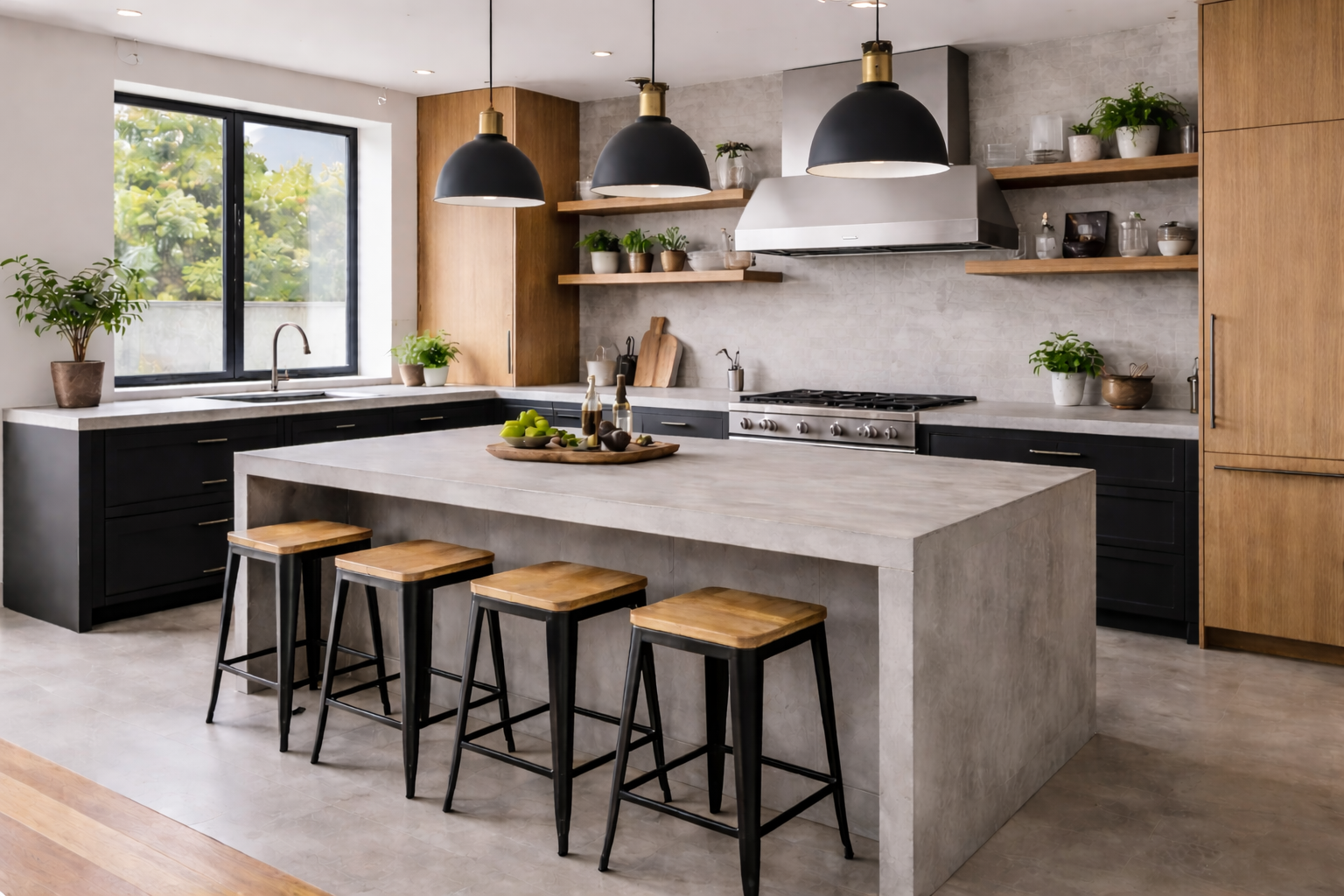
Architectural kitchen example highlighting concrete countertops as a bold, design-forward option. AI-generated image.
Concrete Countertops (A Niche Option)
What it is
Concrete countertops are custom-made surfaces created from a cement-based mix that is poured, cured, and finished either on-site or in a fabrication facility. Because they’re made to order, concrete countertops offer a high level of customization in color, thickness, and edge detail.
Pros
Fully customizable in shape, color, and finish
Works well in industrial and modern designs
Heat-resistant surface
Can be cast to include integrated sinks or drainboards
Creates a bold, architectural statement
Cons
Prone to cracking, even with reinforcement
Requires sealing and ongoing maintenance
Heavy weight may require structural support
Long fabrication and installation timelines
Limited appeal for resale
Best for
Design-forward or industrial-style kitchens
Homeowners seeking a one-of-a-kind look
Kitchens with lighter daily use
Those comfortable with visible wear and imperfections
Designer reality check
Concrete countertops are often chosen for their raw, architectural look, but they’re not a practical fit for most kitchens. Hairline cracks are common and should be expected rather than avoided. Sealing helps with staining but doesn’t eliminate maintenance concerns, and the material’s niche appeal can work against resale value. Concrete works best when homeowners embrace its imperfections and understand that its visual impact comes with trade-offs.
How to Choose the Best Countertop for Your Kitchen
With so many countertop options available, there’s no single “best” material—only the one that makes the most sense for your lifestyle, priorities, and long-term plans. Before committing to a specific surface, it helps to step back and evaluate a few key factors.
Consider how you use your kitchen
If your kitchen sees heavy daily use, durability and maintenance should take priority over appearance alone. Households that cook frequently, entertain often, or have children may benefit from low-maintenance surfaces like quartz or porcelain. If your kitchen is more of a visual centerpiece than a workhorse, natural stone options like marble or quartzite may feel worth the extra care.
Be honest about maintenance tolerance
Every countertop requires some level of care—but not everyone wants to think about sealing, wiping spills immediately, or avoiding certain cleaners. If low effort is important to you, non-porous materials are often the safest choice. If you appreciate natural materials and are comfortable with visible wear, higher-maintenance options can be rewarding rather than stressful.
Balance budget with long-term value
Upfront cost doesn’t always tell the full story. Some lower-cost materials may need to be replaced sooner or negatively impact resale value, while more expensive options can offer longevity and buyer appeal. Thinking long-term—especially if resale is part of the plan—can help avoid costly regrets later.
Think about resale expectations
Even if you’re not planning to sell soon, countertops play a major role in how a kitchen is perceived. Materials like granite, quartz, and porcelain tend to be widely accepted by buyers, while niche or dated options may be viewed as renovation projects rather than selling points.
Match the material to your design style
Countertops should complement the overall design of your kitchen, not fight it. Clean, consistent materials work well in modern spaces, while natural variation can enhance traditional, transitional, or organic designs. Seeing full slabs and samples in the context of your space makes a significant difference.
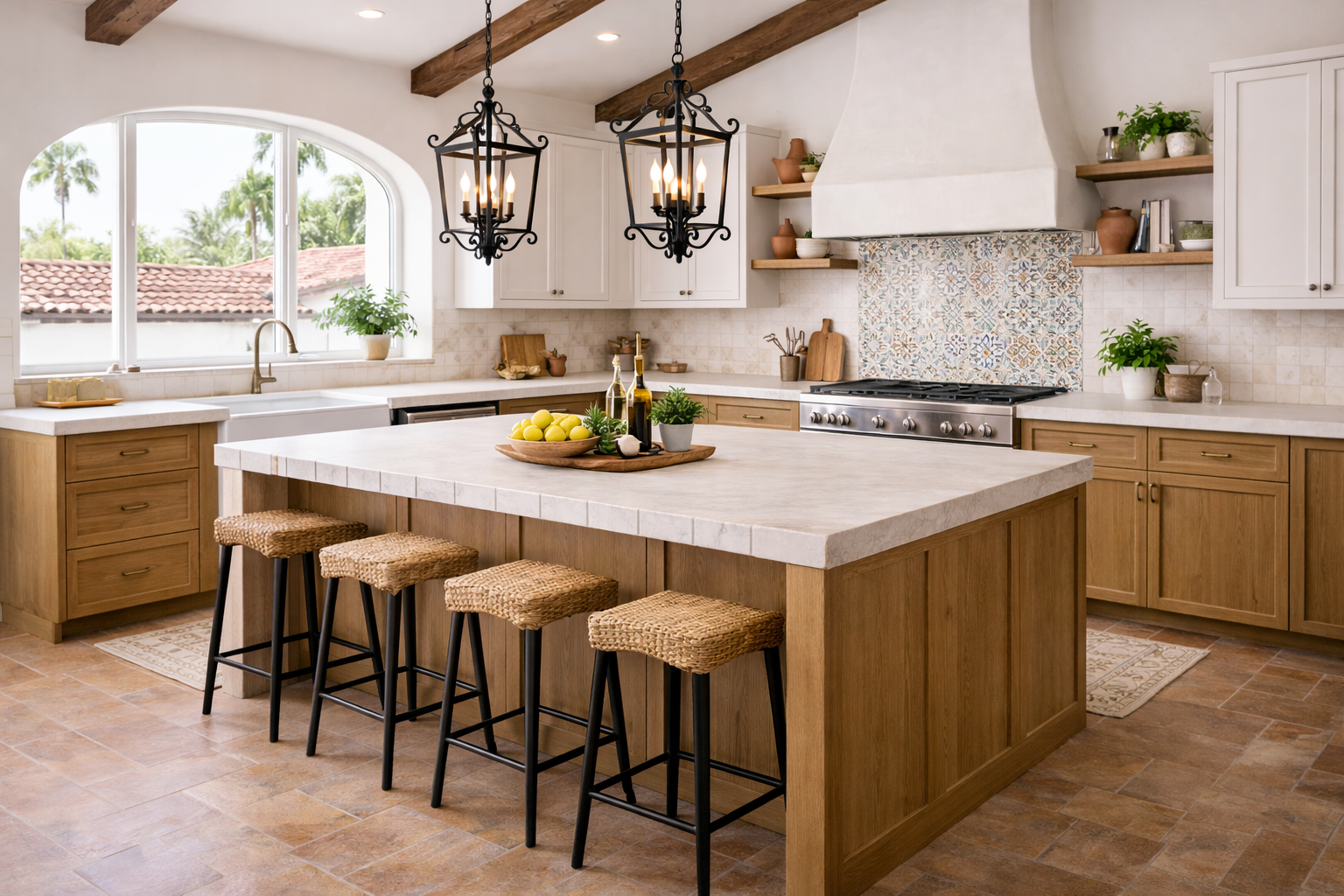
Santa Barbara–style Spanish kitchen showcasing a warm, timeless mix of natural wood and white cabinetry. AI-generated image.
Choosing a Countertop That Works for You
Kitchen countertops play a larger role than many homeowners expect. They affect how a kitchen functions day to day, how it ages over time, and how it’s perceived by future buyers. While trends come and go, the right countertop choice is the one that aligns with your lifestyle, maintenance comfort level, and long-term plans.
Each material comes with trade-offs. Some prioritize durability and ease of care, while others offer unmatched beauty at the cost of ongoing maintenance. Understanding these differences—before installation—helps avoid disappointment and expensive changes later.
Rather than chasing what’s popular or widely marketed, focusing on how you actually use your kitchen leads to better decisions. When expectations match performance, the result is a kitchen that feels intentional, functional, and enjoyable to live in for years to come.
If you’re feeling stuck choosing the right countertop—or trying to balance materials, layout, and long-term value—I offer virtual interior design services to help guide those decisions with clarity and confidence. Whether you’re planning a full kitchen remodel or simply weighing countertop options, I can help you think through what will work best for your space, lifestyle, and goals before costly choices are made.