
Scandinavian Design Explained: History, Colors, and How to Get the Look Right
Scandinavian design gets talked about a lot, but it’s often misunderstood. People tend to think it’s just white walls, light wood, and minimal furniture—but there’s a deeper philosophy behind it that makes the style feel calm, intentional, and livable.
In this guide, I’m breaking down what Scandinavian design actually is, where it came from, and how to apply it in a way that feels elevated instead of flat or unfinished. If you’re trying to create a home that feels clean, warm, and functional at the same time, this is a style worth understanding properly.
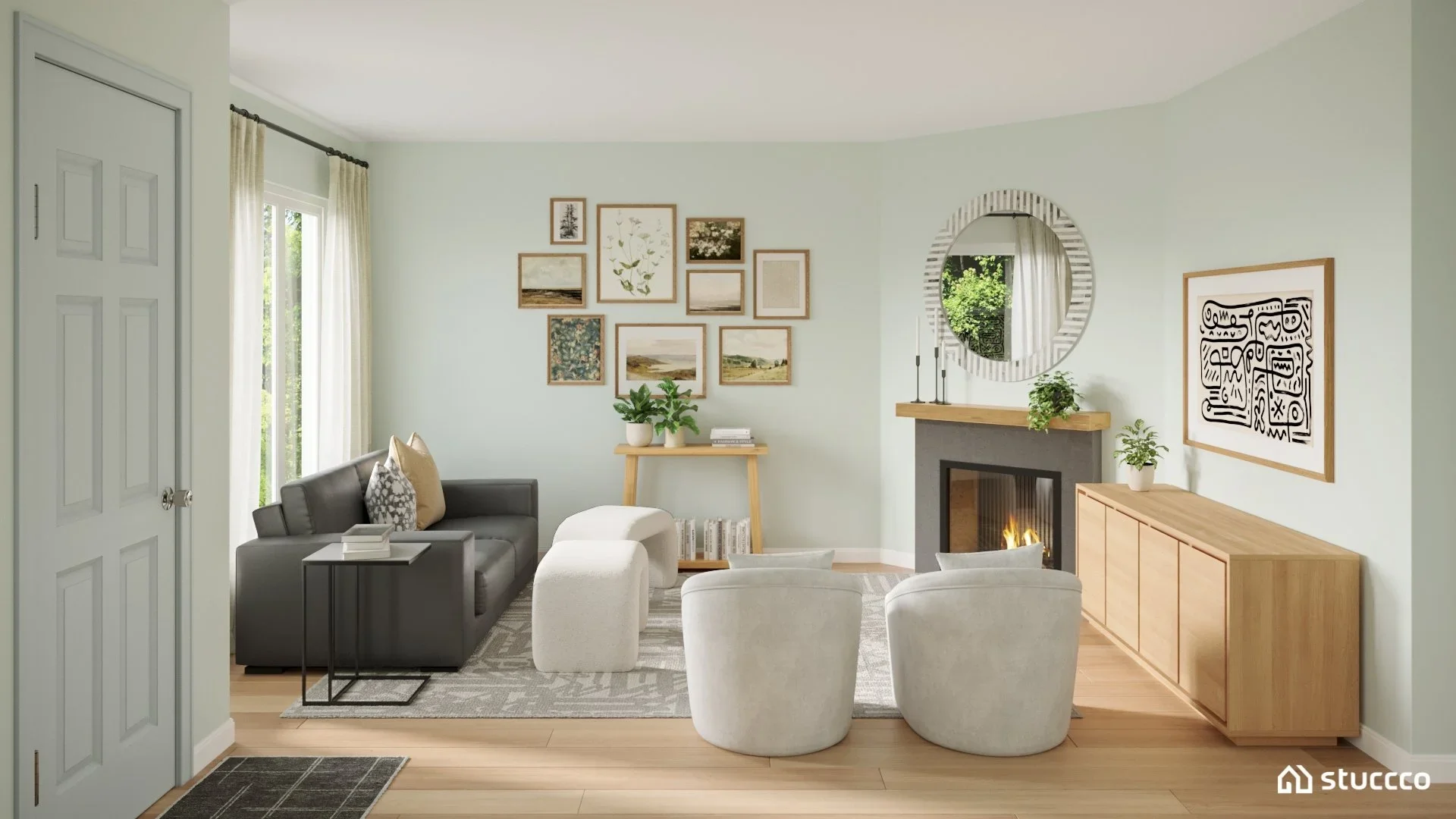
Scandinavian living room designed by virtual interior designer Joshua Jones of JJones Design Co., featuring soft neutrals, natural wood tones, and a calm, balanced layout. 3D rendering by Stuccco.
What Scandinavian Design Really Means
Scandinavian design comes from countries like Sweden, Denmark, and Norway, where long winters and limited daylight shaped how people think about their homes.
At its core, the style is about:
Simplicity without feeling empty
Function without sacrificing beauty
Comfort without excess
This is where the idea of “less, but better” really comes into play. Every piece in a Scandinavian space is meant to serve a purpose, but it’s also chosen carefully so the space still feels warm and inviting.
You’ll often see this philosophy reflected in the work of designers like Arne Jacobsen, Alvar Aalto, and Hans Wegner, who focused on craftsmanship, clean lines, and human-centered design.
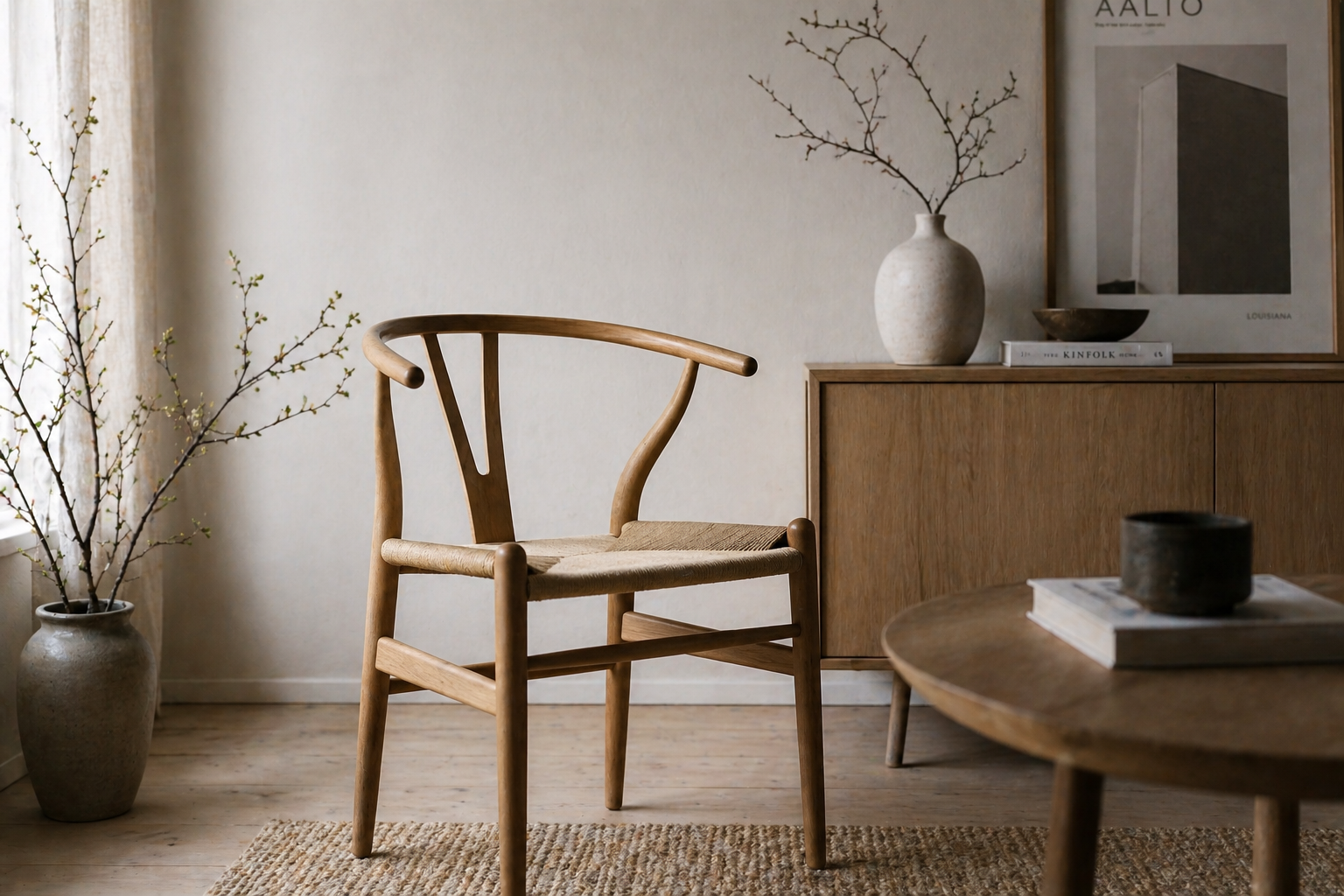
Wishbone chair in a Scandinavian-style interior with natural wood tones and soft neutral textures, generated using AI to illustrate timeless Nordic design principles.
A Quick Look at the History
Scandinavian design gained global attention in the mid-20th century, especially after World War II, when there was a strong focus on making well-designed products accessible to more people.
Instead of creating luxury-only design, Scandinavian designers leaned into:
Affordable materials
Practical construction
Timeless forms
That’s why many pieces from that era still feel relevant today. The goal was never to chase trends—it was to create spaces that simply work well over time.
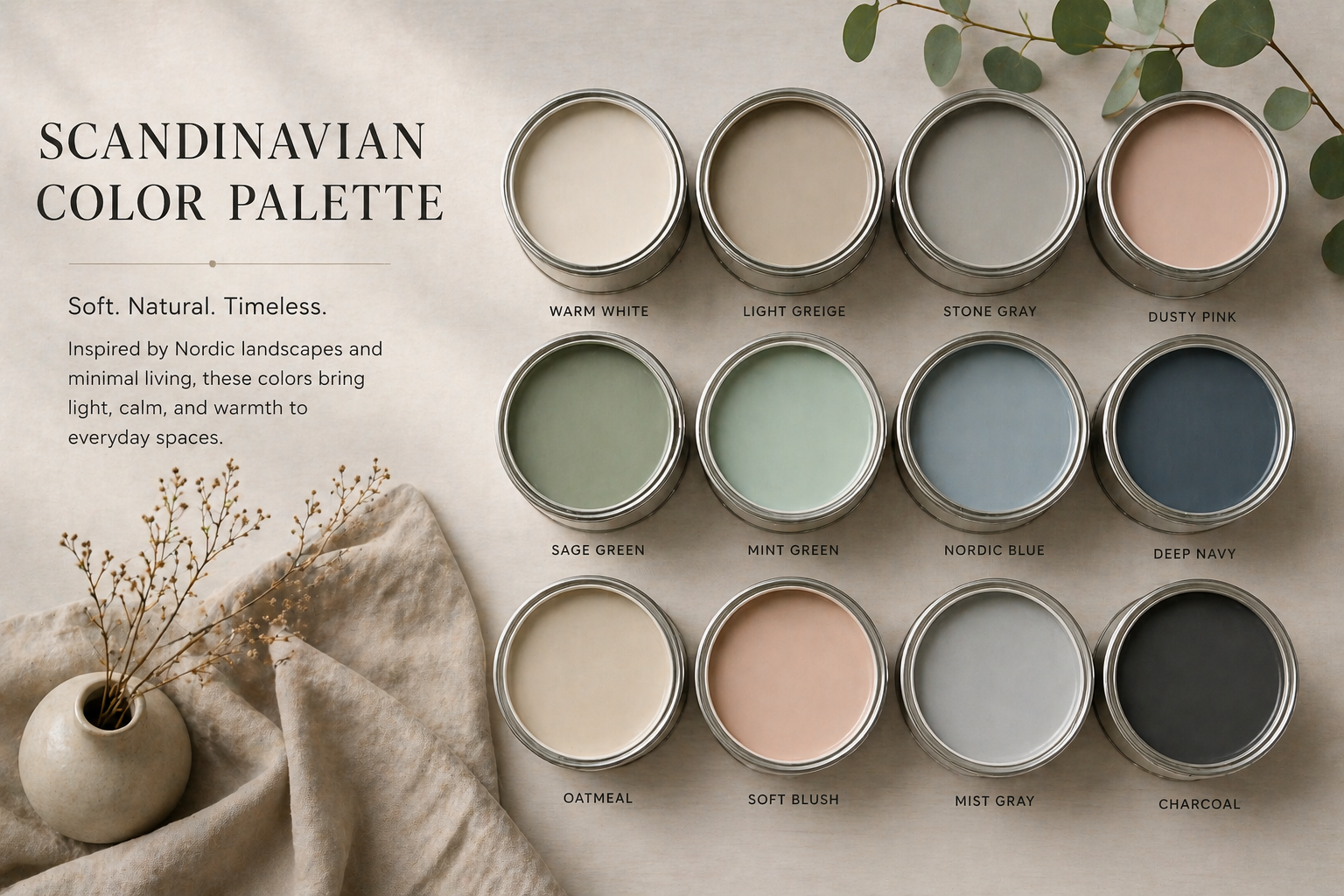
Scandinavian color palette featuring warm neutrals, sage and mint greens, soft blues, and blush tones displayed on paint can lids, generated using AI to illustrate a balanced Nordic-inspired color scheme.
The Scandinavian Color Palette
One of the most recognizable parts of Scandinavian design is the color palette, but it’s not just about using white.
It’s about creating a light, balanced environment that reflects and maximizes natural light.
Base Colors
Soft whites
Warm neutrals
Light greys
These tones help brighten spaces, especially in darker seasons.
Natural Accents
Light to medium wood tones
Soft beige and sand tones
Muted greens and earthy hues
These bring warmth so the space doesn’t feel cold or sterile.
Contrast (Used Carefully)
Black accents
Charcoal tones
Occasional deeper colors
Contrast is used intentionally—just enough to ground the space without overpowering it.
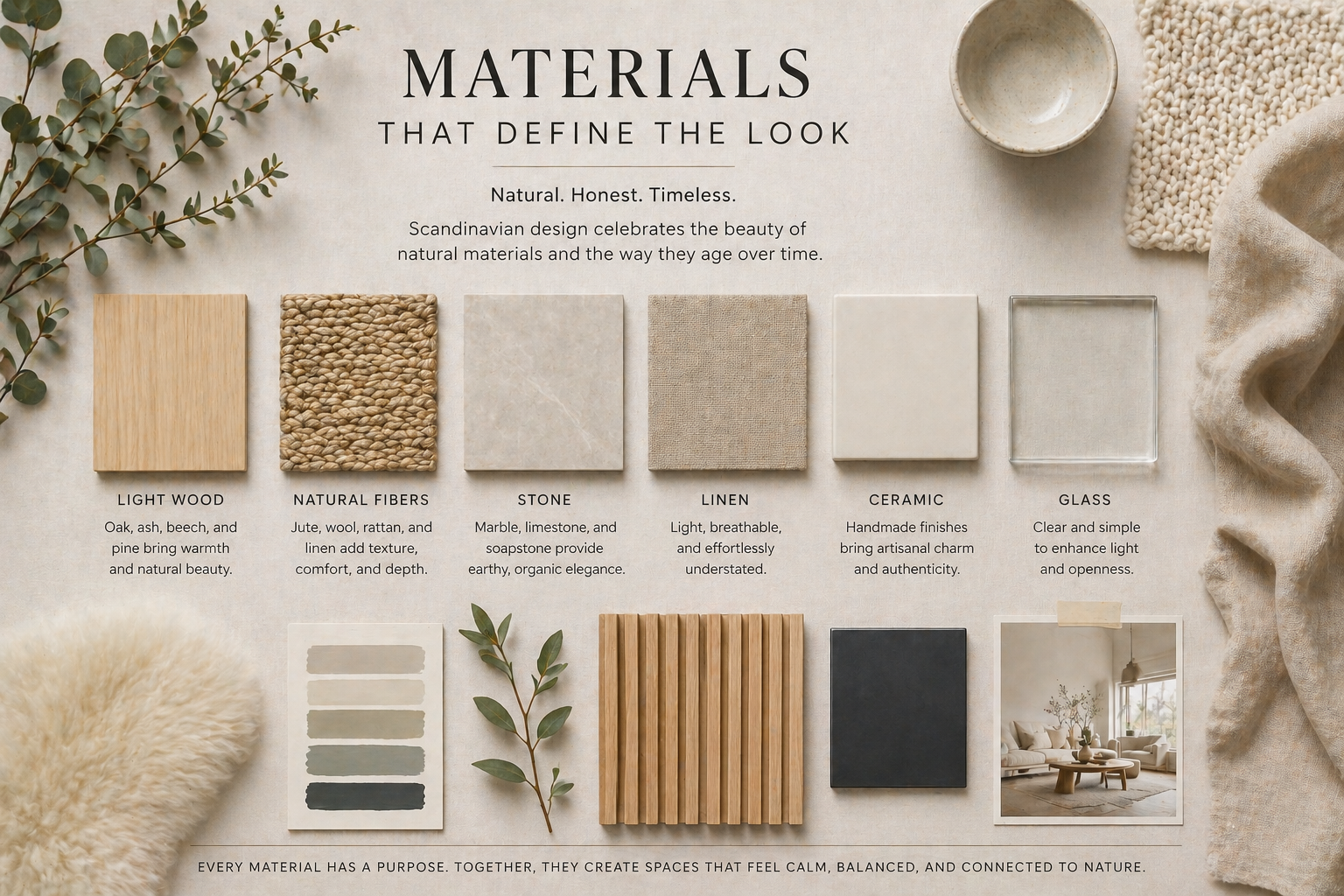
Scandinavian materials mood board featuring natural wood, linen, stone, ceramics, and woven textures, generated using AI to illustrate the layered, tactile foundation of Nordic interior design.
Materials That Define the Look
Materials do a lot of the heavy lifting in Scandinavian interiors. Since the palette is restrained, texture and quality matter even more.
You’ll typically see:
Natural wood (oak, ash, birch)
Linen and cotton textiles
Wool and layered fabrics
Leather accents
The goal is to create a space that feels tactile and comfortable, not flat.
Natural elements play a big role here, and that often includes greenery. Plants help soften clean lines and bring life into a neutral space, but they don’t have to be all real to be effective. A thoughtful mix of both can still feel elevated and intentional—if you’re unsure how to strike that balance, this guide on mixing real and faux plants in home decor breaks it down in a way that keeps the overall look cohesive.
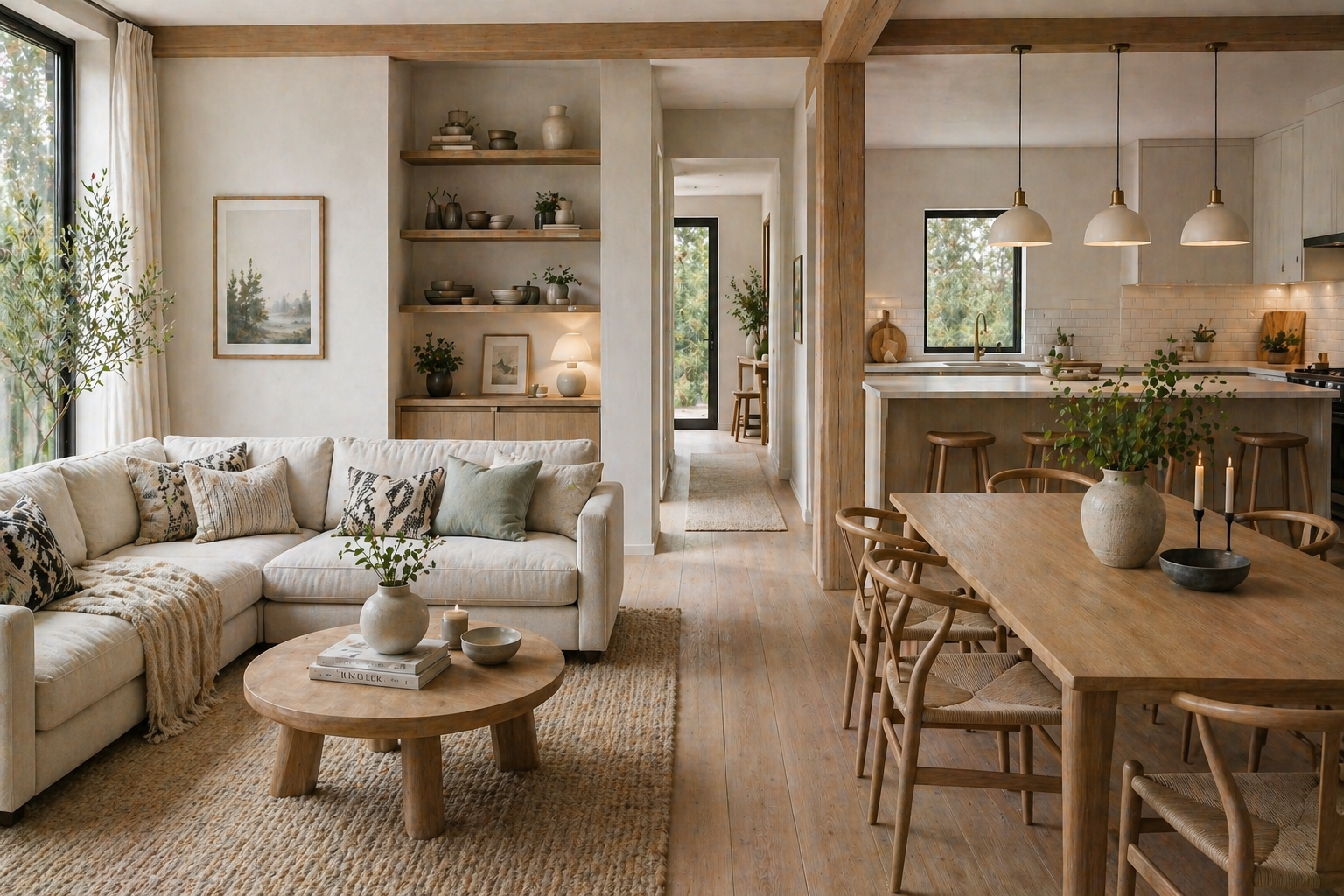
Open-concept Scandinavian living and dining space featuring natural wood tones, Nordic-patterned textiles, and layered lighting, generated using AI to illustrate a warm and functional minimalist layout.
How Scandinavian Design Shows Up in Real Spaces
This is where a lot of people get it wrong—they focus on aesthetics without thinking about how the space actually functions.
Living Rooms
A Scandinavian living room feels open and uncluttered, but not empty. You’ll often see:
A well-proportioned sofa
A simple coffee table
Soft lighting instead of harsh overhead fixtures
Textiles layered in a subtle way
The space should feel relaxed and usable, not staged.
Dining Areas
Dining spaces tend to be simple but intentional:
Clean-lined tables
Comfortable, well-designed chairs
Minimal decor
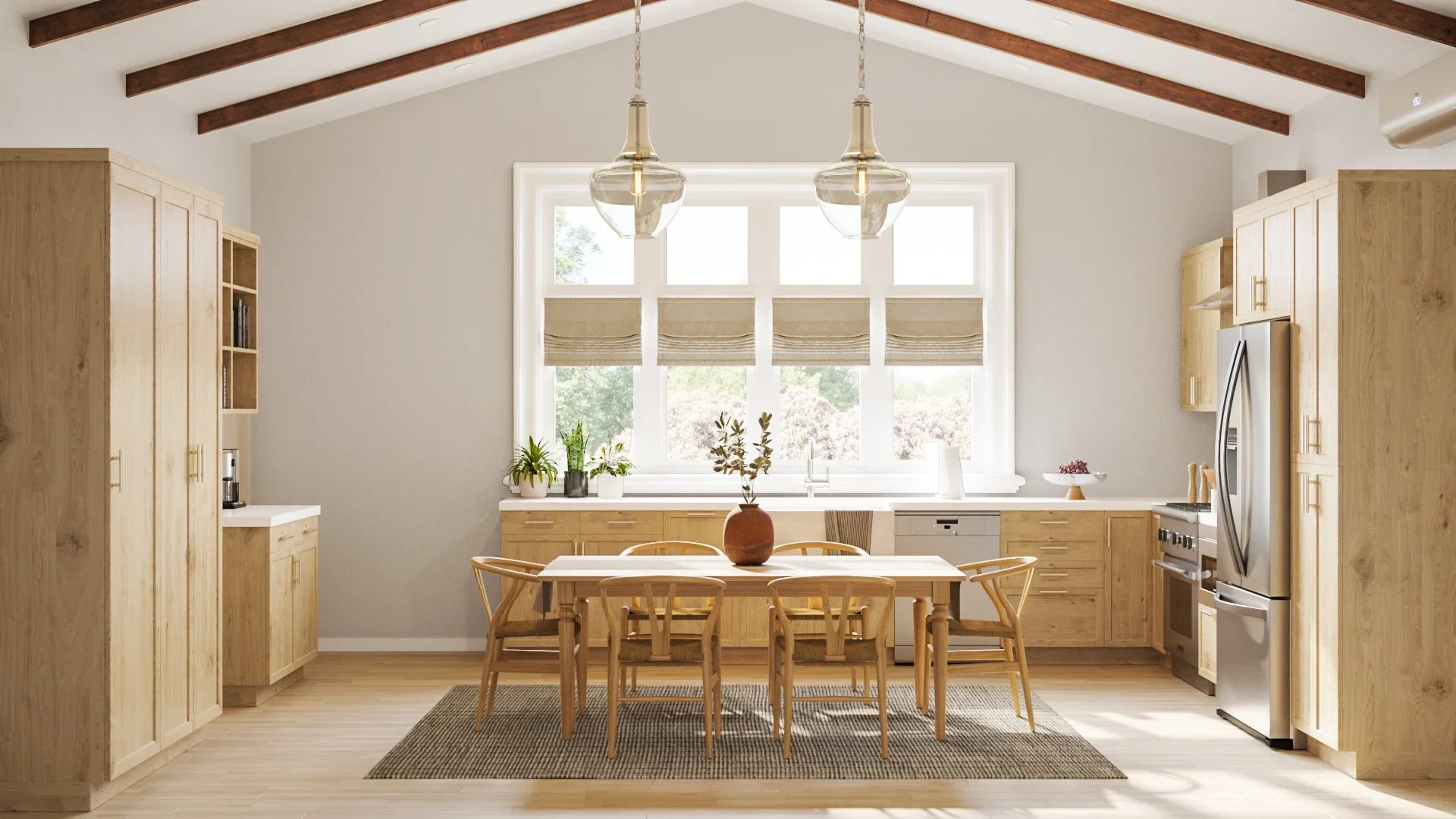
Lighting plays a big role here, often with a single statement fixture that anchors the table.
Bedrooms
Scandinavian bedrooms are some of the most calming spaces you can create.
They usually focus on:
Soft, neutral bedding
Minimal furniture
Warm lighting
Subtle texture instead of bold patterns
It’s about creating a space that helps you unwind, not one that feels overly styled.
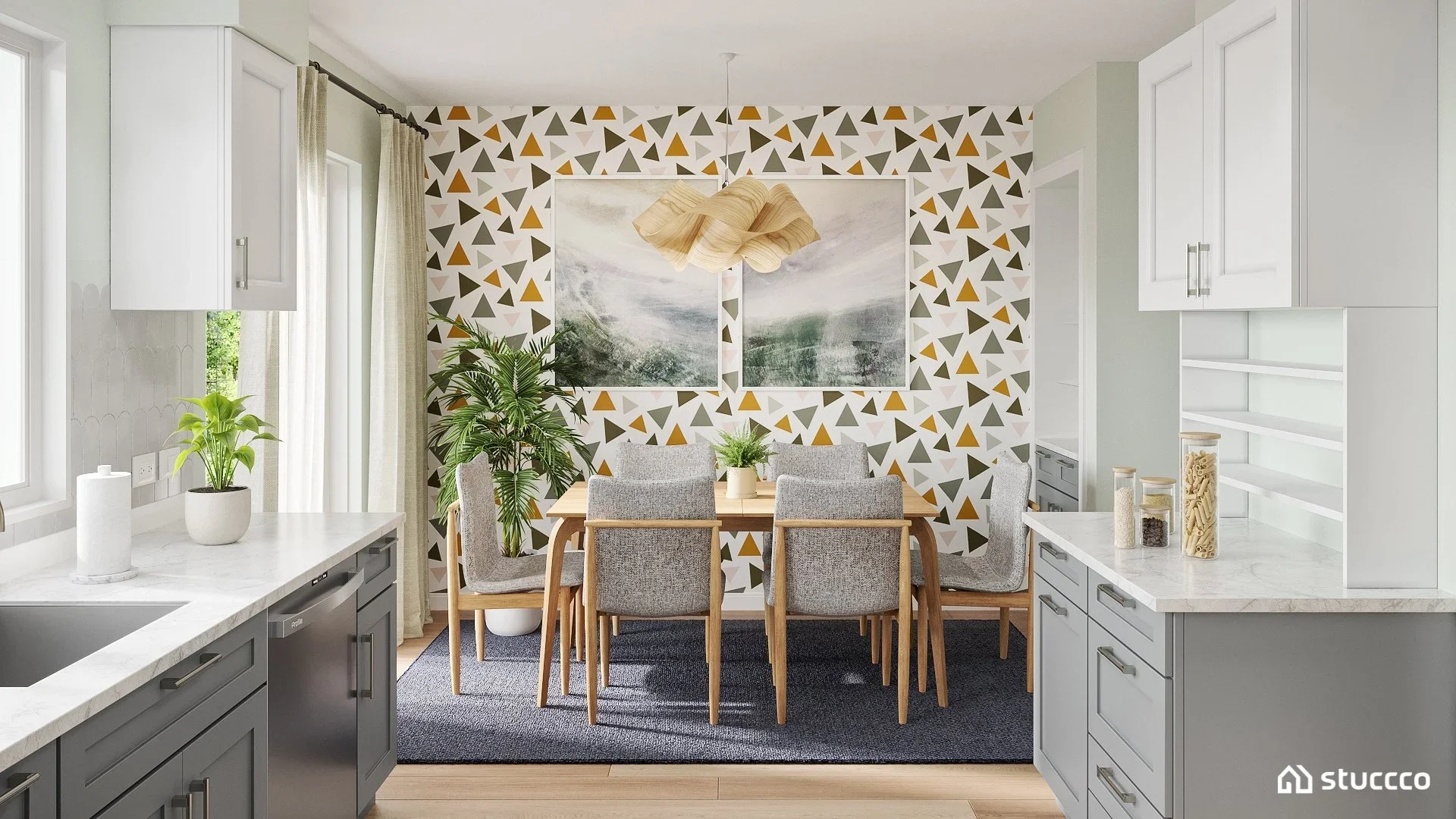
Scandinavian dining room and kitchen designed by virtual interior designer Joshua Jones of JJones Design Co., featuring light wood tones, soft neutrals, and a subtle use of pattern for added visual interest. 3D rendering by Stuccco.
Common Mistakes to Avoid
This is where Scandinavian design often falls apart.
Making It Too Minimal
This is one of the most common mistakes I see in client projects. People try to simplify a space but end up removing too much, which makes the room feel cold and unfinished instead of calm and intentional.
Scandinavian design isn’t about having less for the sake of it—it’s about choosing the right pieces and layering them in a way that still feels warm and livable.
Ignoring Lighting
Lighting is critical. Relying only on overhead lights will completely change how the space feels—and not in a good way.
A well-designed Scandinavian space uses layered lighting to create warmth and depth, especially during darker months. That includes a mix of table lamps, floor lamps, and thoughtfully selected fixtures that soften the overall atmosphere. Even something as simple as choosing the right ceiling fixture can make a noticeable difference—if you’re not sure where to start, this guide on Scandinavian ceiling fans for modern and minimalist homes breaks down options that actually fit the look without feeling out of place.
Just as important is the color of the light itself. Cool-toned bulbs can make a space feel harsh and sterile, which works against everything Scandinavian design is trying to achieve. Warmer light creates a softer, more inviting environment that complements natural materials and neutral palettes. If you’re unsure what works best, this guide on choosing the right light bulb color for every room breaks it down in a practical, easy-to-understand way.
Using Only White
White is part of the palette, but it shouldn’t be the entire story. Without contrast and texture, it falls flat.
Choosing Style Over Comfort
If a chair looks good but isn’t comfortable, it doesn’t belong in a Scandinavian space. Function always comes first.
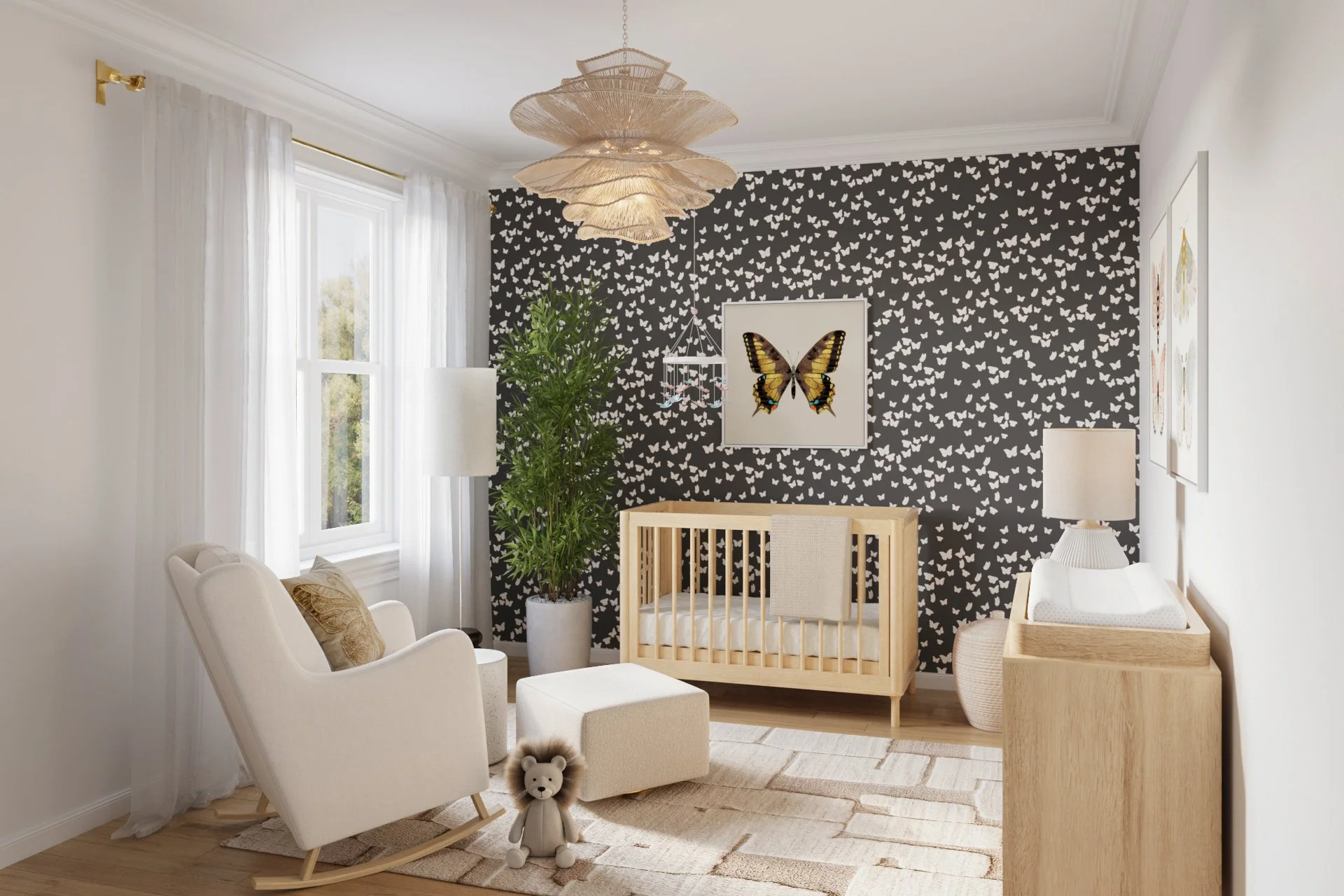
Scandinavian nursery designed by virtual interior designer Joshua Jones of JJones Design Co., featuring soft neutrals, natural wood, and a playful yet balanced use of pattern.
How to Actually Get the Look Right
If you want to apply Scandinavian design in your own home, focus on these fundamentals:
Start with a neutral base
Layer in natural materials
Keep furniture purposeful and well-scaled
Use lighting to create warmth
Add just enough contrast to ground the space
And most importantly, don’t rush it. Scandinavian interiors feel effortless because they’re edited over time—not filled all at once.
That said, this is also where many people get stuck. The balance between minimal and warm can be harder to achieve than it looks, especially when you’re trying to avoid a space feeling too empty or too cold. If you’re trying to get that balance right in your own home, you can explore my Virtual Interior Design Services to see how I help clients create spaces that feel both intentional and livable.
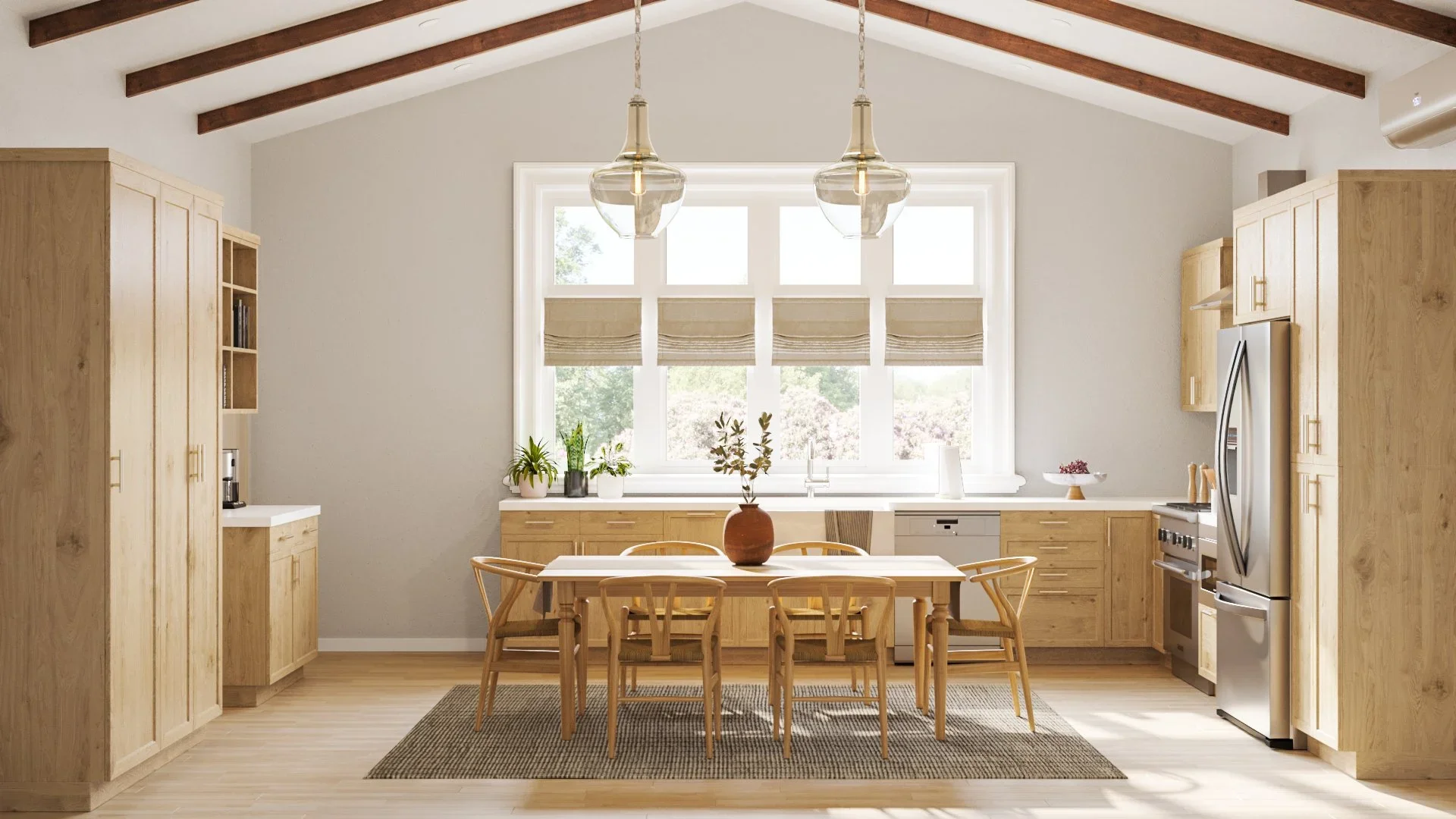
Scandinavian kitchen and dining area designed by virtual interior designer Joshua Jones of JJones Design Co., showcasing a clean, open-concept layout with natural materials and balanced simplicity.
Where Scandinavian Design Fits Today
Scandinavian design has stayed relevant because it adapts easily. It works well on its own, but it also blends with other styles like modern organic, Japandi, and even more eclectic spaces.
That flexibility is part of what makes it so appealing. It gives you a strong foundation without locking you into a rigid look.
If you’re aiming for a home that feels calm, functional, and timeless, Scandinavian design is one of the most reliable directions you can take.

