Should I Hire a Designer for My New Build — or Just Use the Builder’s Options?
If you’re building a new home, one of the first decisions you’ll face—often earlier than expected—is how much design help you actually need. Most builders offer a range of design options, from flooring and cabinetry to lighting and finishes, all presented as part of a streamlined, one-stop process. For many homeowners, this feels reassuring. The choices are laid out, decisions are guided, and it seems like everything is covered.
But as the build moves forward, a common question starts to surface: Is relying on the builder’s design options enough, or should I hire an interior designer too?
This isn’t a question of right or wrong, or luxury versus budget. It’s about understanding what each option is designed to do—and where their responsibilities begin and end. I’ve worked with homeowners who were perfectly happy using builder options alone, and others who wished they had brought in a designer much earlier in the process. The difference usually comes down to how personal the home is meant to be, how long the owners plan to live there, and how much thought they want to put into how the space functions day to day.
Before deciding which route makes sense for your new build, it helps to clearly understand what builder design options offer, what they don’t, and when additional design support can make a meaningful difference.
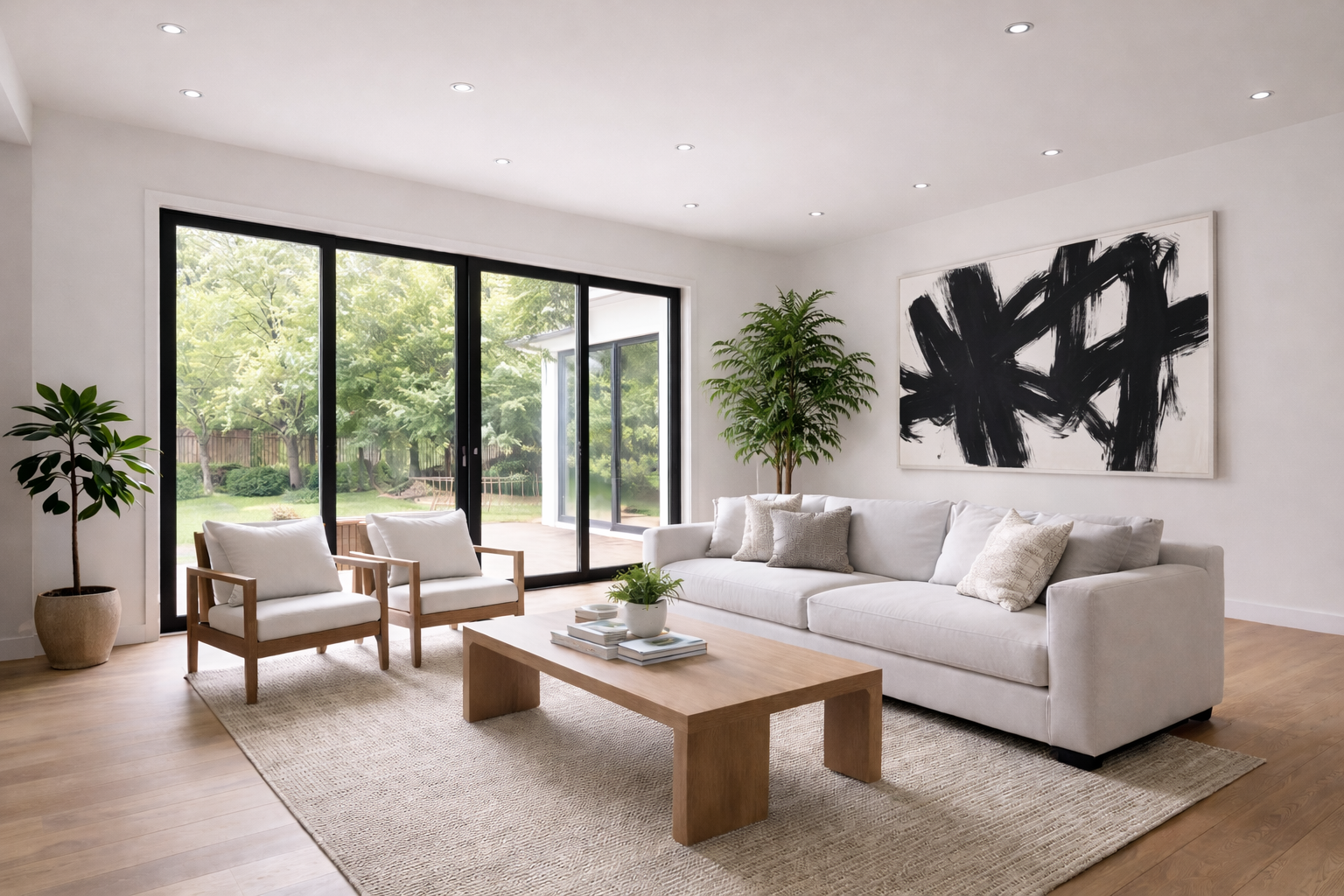
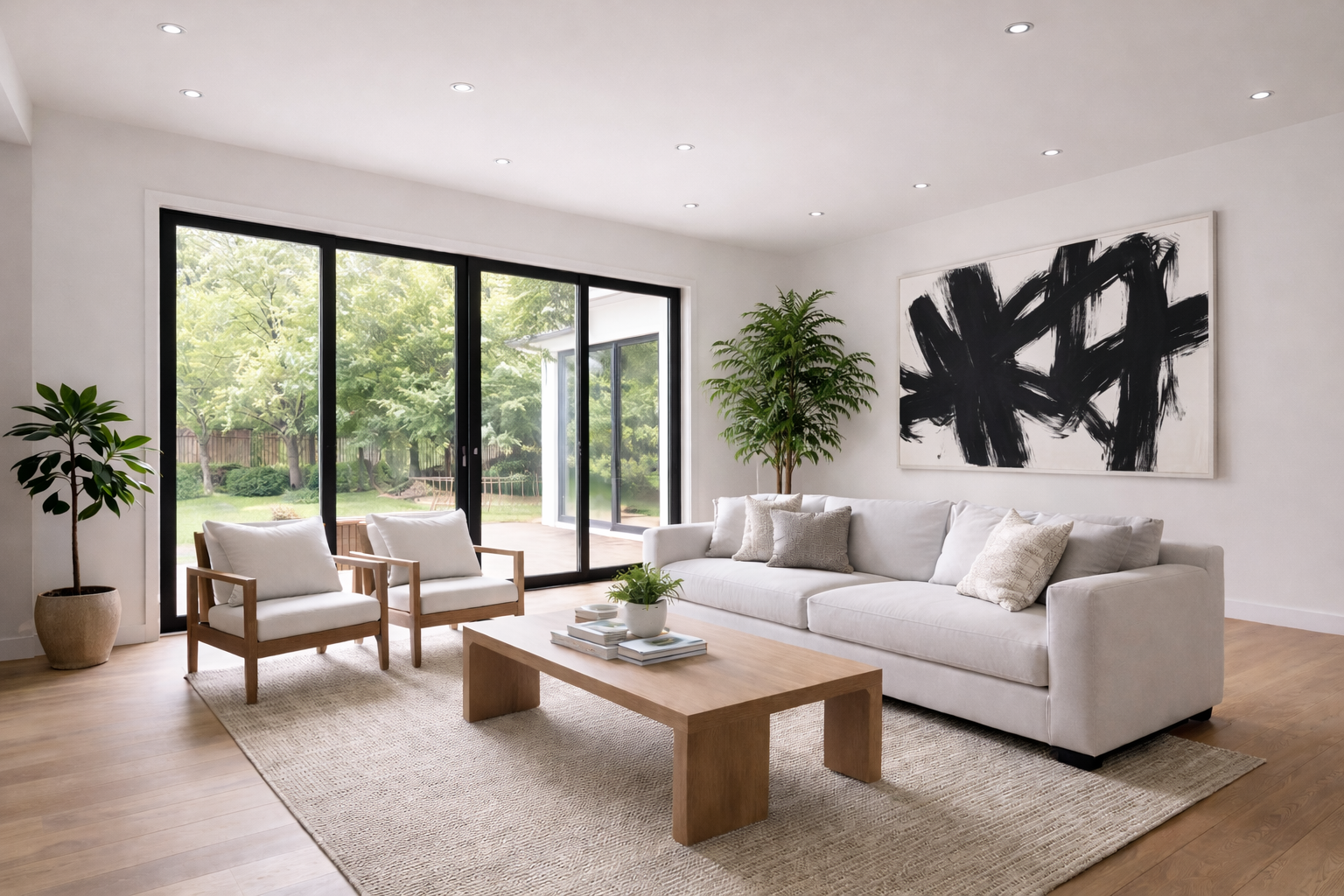
A calm, modern living room used to illustrate design decisions in new construction. Image generated using AI for conceptual and editorial purposes.
What Builder Design Options Are Designed to Do
Builder design options are created to make the construction process more efficient and predictable—for both the builder and the homeowner. They exist to help projects move forward on schedule, reduce costly delays, and limit decision fatigue during an already overwhelming process.
From the builder’s perspective, these options are about standardization and risk management. The materials, finishes, and fixtures offered have already been vetted for availability, durability, code compliance, and ease of installation. Using preselected options allows builders to coordinate trades more easily, avoid unexpected substitutions, and keep labor costs under control.
For homeowners, builder options offer convenience and structure. Instead of starting from scratch, you’re guided through a curated selection of finishes that are known to work within the construction timeline. This can be especially helpful for buyers who want a straightforward process or who feel unsure about making too many design decisions at once.
Builder design packages are also typically structured to support resale-safe choices. Many options lean toward neutral colors, widely accepted finishes, and layouts that appeal to a broad range of future buyers. That approach makes sense from a marketability standpoint and can be a good fit for homes built with resale or rental in mind.
Where builder options truly excel is in helping homeowners make foundational selections—things like flooring types, cabinet styles, countertop materials, and basic lighting packages—without slowing down construction. They’re designed to keep the build moving smoothly, not to explore every possible design direction.
Understanding this purpose is important, because builder design options are not meant to be comprehensive interior design services. They are a system built for efficiency, consistency, and construction success—not for tailoring a home around how you live, furnish, and use each space long term.
Where Builder Options Often Fall Short
Builder design options are efficient, but they are not designed to address how a home will function once construction is complete and real life moves in. This is where many homeowners begin to notice limitations—often after decisions feel locked in.
One common gap is whole-home cohesion. Builder options are typically selected room by room or category by category. While individual choices may look fine on their own, they’re not always considered as part of a larger, connected design story. Flooring, cabinetry, wall colors, and finishes can end up feeling slightly disconnected once everything comes together.
Another area where builder options can fall short is furniture planning and layout. Builders focus on structural elements—walls, windows, doors, and utilities—but they rarely account for how furniture will actually fit and function within those spaces. This can lead to rooms that technically meet square-footage expectations but feel awkward or limiting once furnished.
Lighting design is another frequent issue. Builder packages often include lighting that meets code requirements and provides general illumination, but they rarely address layered lighting—such as task lighting, accent lighting, or how light supports daily routines. Homeowners often realize later that additional lighting is needed, which can be more costly to add after construction is finished.
There’s also limited attention given to how the home will be used day to day. Storage needs, traffic flow, sightlines, and lifestyle habits are highly personal, yet builder options are designed to work for the average homeowner. Without deeper planning, small frustrations—like insufficient storage, poorly placed switches, or awkward circulation paths—can add up over time.
Finally, builder options are typically tied to fixed catalogs and approved vendors. While this keeps the process moving, it can restrict creativity and customization. Homeowners who want a more tailored look or specific materials may find themselves compromising simply because alternatives fall outside the builder’s system.
None of these limitations mean builder options are “bad.” They simply reflect what those options are designed to prioritize: efficiency and consistency during construction. Understanding where they stop helps homeowners decide whether additional design guidance would be useful before the build progresses too far.
What an Interior Designer Brings to a New Build
An interior designer’s role in a new build is less about choosing finishes and more about planning how the home will actually function once construction is complete. When involved early, a designer looks at the space holistically—considering how rooms relate to one another, how furniture will be arranged, and how daily routines will unfold within the layout.
One of the biggest advantages of working with a designer during a new build is thinking ahead before walls are finalized. Designers often help identify opportunities to adjust layouts, window placement, door swings, or built-in elements in ways that support how the homeowner plans to live in the space. These are the kinds of changes that are much easier—and more cost-effective—to address before construction is finished.
Designers also bring a whole-home perspective that extends beyond individual selections. Rather than choosing finishes in isolation, they consider how materials, colors, and textures will flow throughout the house. This helps create a sense of cohesion that feels intentional rather than assembled from a series of separate decisions.
Another key contribution is furniture and space planning. Designers think in terms of scale, proportion, and circulation, helping ensure that rooms are sized and shaped to comfortably accommodate furniture, storage, and movement. This can prevent common frustrations like oversized furniture blocking walkways or rooms that feel visually unbalanced once furnished.
Lighting is another area where designers add value. Beyond meeting code requirements, designers plan lighting to support specific activities—reading, cooking, working, entertaining—and to enhance the atmosphere of the home. This often includes layered lighting strategies that are difficult to retrofit after construction.
Perhaps most importantly, a designer serves as an advocate for the homeowner’s lifestyle. Builders manage construction logistics; designers focus on livability. That doesn’t mean every project requires one, but when a home is meant to be lived in long term, that additional layer of planning can make a meaningful difference.
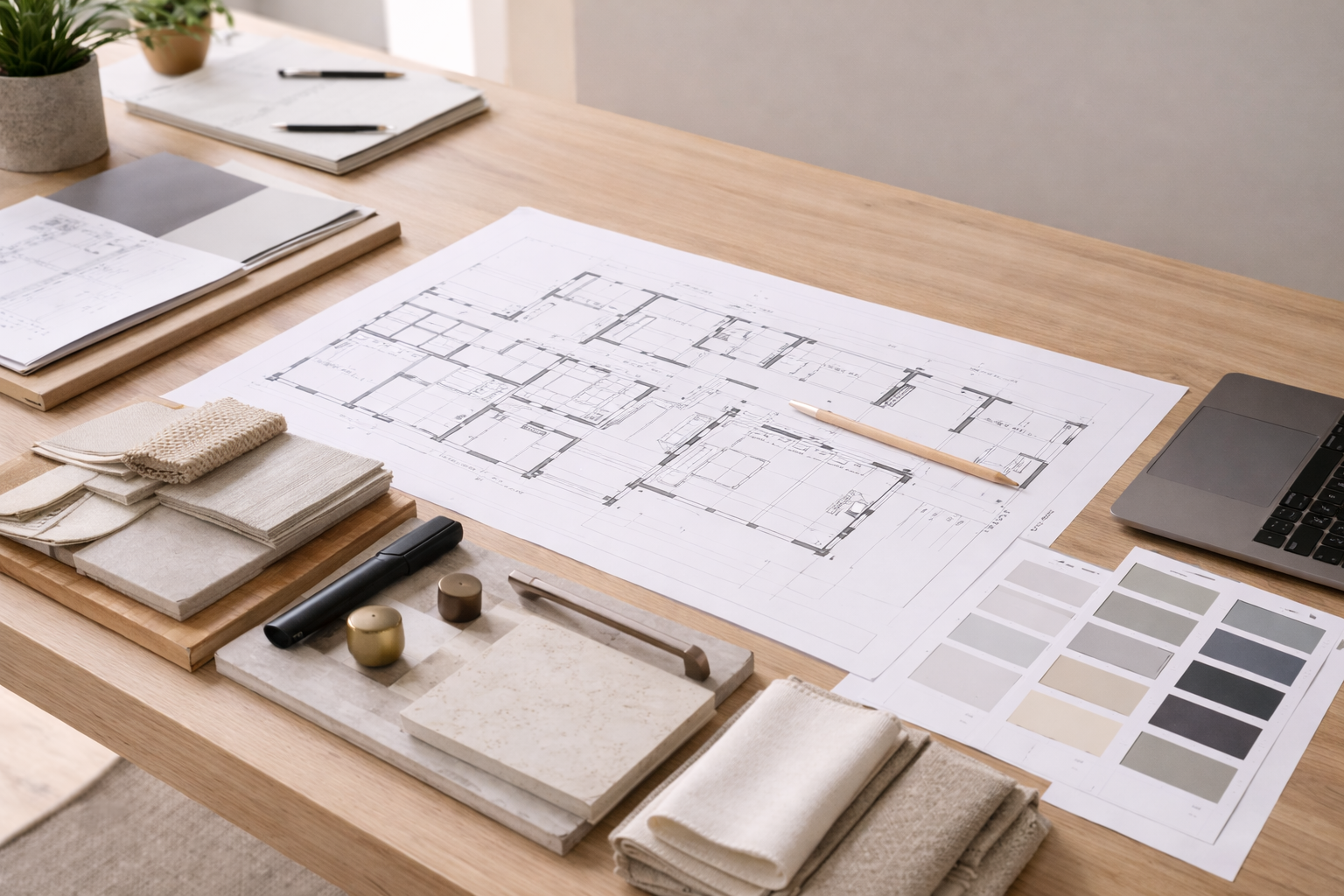
A conceptual design workspace illustrating early planning decisions in a new build. Image generated using AI for editorial and illustrative purposes.
When Builder Options Are Enough
In many cases, builder design options are more than sufficient, and choosing not to hire an interior designer can be a perfectly reasonable decision. Not every new build requires the same level of customization or long-term planning.
Builder options often work well for straightforward floor plans where rooms are clearly defined and furniture layouts are relatively intuitive. When the home follows a familiar layout and doesn’t require complex spatial decisions, the standard options provided by the builder can meet most functional needs.
They can also be a good fit for budget-conscious projects. If keeping costs predictable is a top priority, builder packages offer clarity upfront and help avoid unexpected expenses during construction. For homeowners who are comfortable making conservative, resale-friendly choices, this approach can reduce both stress and financial risk.
Homes built with resale or rental in mind often benefit from builder options alone. Neutral finishes, durable materials, and broadly appealing selections tend to align well with future market expectations. In these cases, investing heavily in personalization may not provide a meaningful return.
Builder options may also be enough for homeowners who enjoy a guided, structured decision-making process. Some people prefer having limited, pre-approved choices rather than navigating countless options. If the selections offered feel aligned with your taste and lifestyle, there may be little reason to complicate the process further.
Finally, for projects where the homeowner plans to add personal touches later through furnishings and décor, builder options can provide a solid, flexible foundation. Artwork, furniture, textiles, and accessories can go a long way in shaping the character of a home without altering the underlying structure.
Choosing builder options alone isn’t about settling—it’s about recognizing when a streamlined approach aligns with the goals of the project. Understanding this helps homeowners make confident decisions without feeling like they’ve overlooked something essential.
When Hiring a Designer Early Makes Sense
While builder options work well in many situations, there are certain scenarios where bringing in an interior designer early in the process can be especially beneficial. This is less about upgrading finishes and more about reducing friction and regret later on.
Hiring a designer often makes sense for custom or semi-custom homes, where there is more flexibility in layout, detailing, and material selection. When choices aren’t limited to a predefined catalog, a designer can help guide decisions so the home feels intentional rather than pieced together.
It’s also worth considering a designer if the home is intended to be a long-term personal residence. When homeowners plan to live in a space for many years, small functional issues—awkward layouts, limited storage, or lighting shortcomings—tend to become more noticeable over time. Addressing these details early can significantly improve daily comfort and usability.
Designers can be particularly helpful for complex floor plans or open-concept spaces, where furniture placement, circulation, and sightlines aren’t immediately obvious. In these cases, early space planning can prevent rooms from feeling underutilized or difficult to furnish once construction is complete.
Another situation where a designer adds value is when homeowners want a cohesive look that extends beyond finishes. This includes thinking through how furniture, window treatments, lighting, and architectural details will work together. Without that broader planning, homeowners may find themselves revisiting design decisions long after move-in.
Finally, hiring a designer early can be beneficial for those who prefer fewer decisions later. While it may seem counterintuitive, planning more upfront often reduces last-minute changes, rushed choices, and costly adjustments during or after construction.
In these scenarios, a designer doesn’t replace the builder’s process—they complement it. Their role is to focus on livability, flow, and long-term satisfaction, helping ensure the home works as well in everyday life as it does on paper.
Is Hiring a Designer Worth the Cost for a New Build?
Cost is often the deciding factor when homeowners consider hiring an interior designer for a new build. On the surface, it can feel like an added expense layered onto an already significant investment. Whether it’s worth it depends less on the number itself and more on what that cost helps prevent or improve.
In many cases, design fees are not about upgrading materials, but about making better decisions earlier. Adjusting layouts, refining lighting plans, and planning furniture placement during the design phase can help avoid changes that are far more expensive once construction is complete. Even small revisions—moving an outlet, resizing a window, or rethinking built-in storage—can be costly after the fact.
That said, hiring a designer doesn’t automatically guarantee savings. For projects with limited scope, tight budgets, or straightforward goals, the financial return may be minimal. If the builder’s options already align well with the homeowner’s needs and expectations, the added cost of a designer may not provide enough additional value to justify the expense.
Where design fees tend to feel most worthwhile is when they help homeowners avoid living with long-term compromises. Issues like poorly planned lighting, awkward furniture layouts, or insufficient storage may not stand out during construction, but they can affect comfort and satisfaction for years. In those cases, the cost of design support is often offset by fewer regrets and fewer changes down the line.
It’s also important to remember that working with a designer doesn’t have to be all-or-nothing. Some homeowners choose to hire a designer for specific phases—such as space planning or lighting design—rather than full-service involvement. This can be a practical way to get targeted guidance while keeping costs under control.
Ultimately, whether hiring a designer is worth the cost depends on the complexity of the project, how personal the home is meant to be, and how much value the homeowner places on long-term livability.
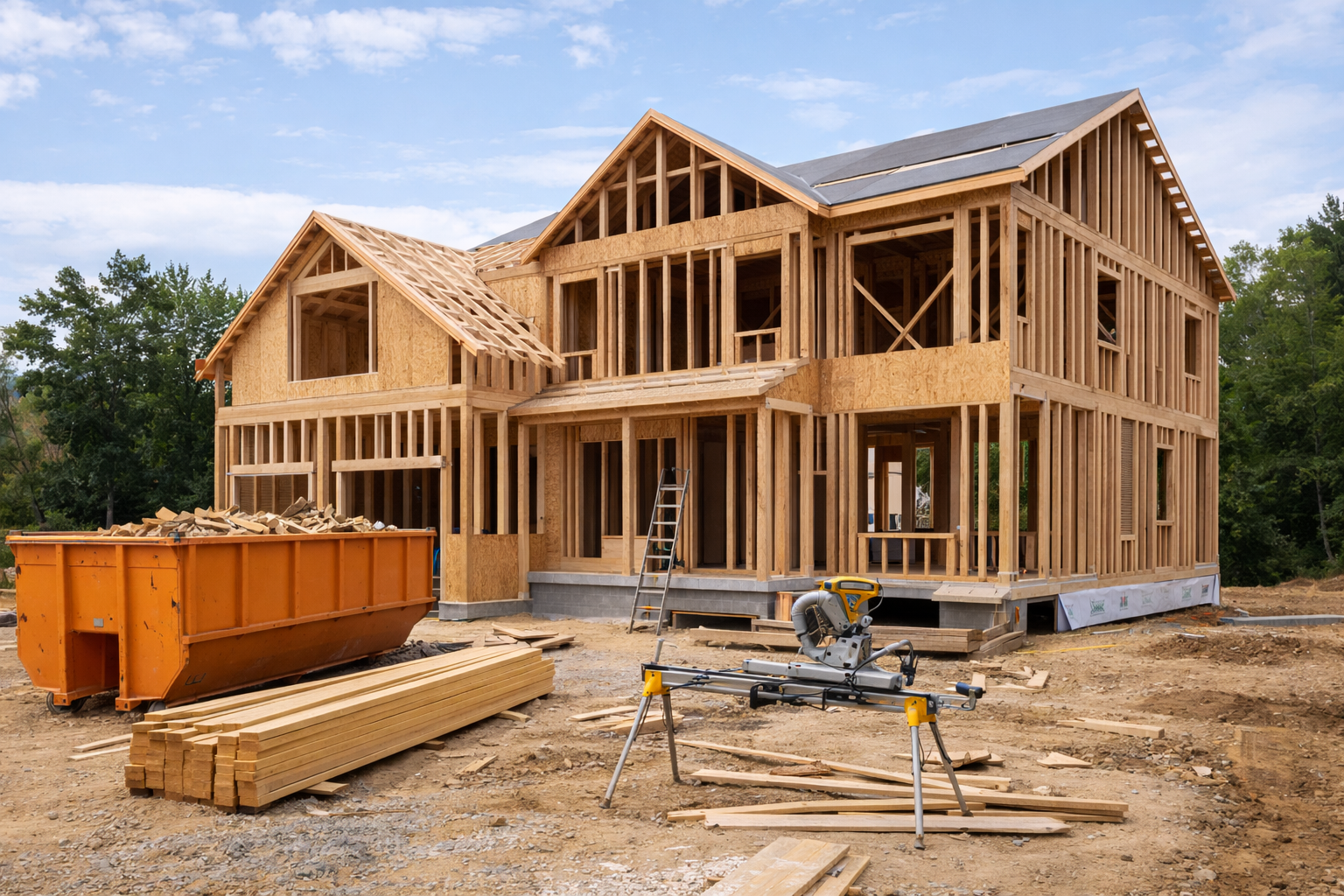
A new home under construction, illustrating the stage where early design and planning decisions have long-term impact. Image generated using AI for editorial and illustrative purposes.
A More Thoughtful Way to Decide What’s Right for Your New Build
Deciding whether to hire an interior designer for a new build or rely on a builder’s design options isn’t about making the “right” choice—it’s about making the choice that aligns with how you plan to live in the home.
Builder options are designed to provide structure, efficiency, and predictability during construction, and for many homeowners, they offer exactly what’s needed. An interior designer, on the other hand, brings a broader perspective focused on livability, long-term comfort, and how the home functions beyond the build itself.
Neither approach is inherently better than the other. What matters most is understanding what each option is designed to do—and recognizing where their responsibilities begin and end. When homeowners make that distinction early, they tend to feel more confident in their decisions and less likely to second-guess them later.
If you’re unsure which path makes sense for your project, that uncertainty alone is often a sign to slow down and ask a few more questions before moving forward. Whether you choose builder options, a designer, or a combination of both, clarity—not urgency—leads to better outcomes.