Size Does Matter - for rugs
Choosing the right rug size is one of the most overlooked design decisions — and one of the most important. A rug that’s too small can make a room feel awkward, unfinished, or visually disconnected, no matter how beautiful the furniture is. On the other hand, the right rug size instantly grounds a space, defines the layout, and makes everything feel intentional.
If you’ve ever wondered how big a rug should be for a living room, dining room, or bedroom, you’re not alone. Rug sizing rules aren’t always intuitive, and many people default to smaller rugs thinking they’re playing it safe — when in reality, sizing up almost always looks better.
In this guide, I’m breaking down practical rug size guidelines for the most common rooms in the home. Using clear visuals and real-world furniture layouts, you’ll see exactly how area rugs should sit in relation to sofas, tables, and beds — and how the right proportions can completely change the feel of a space.
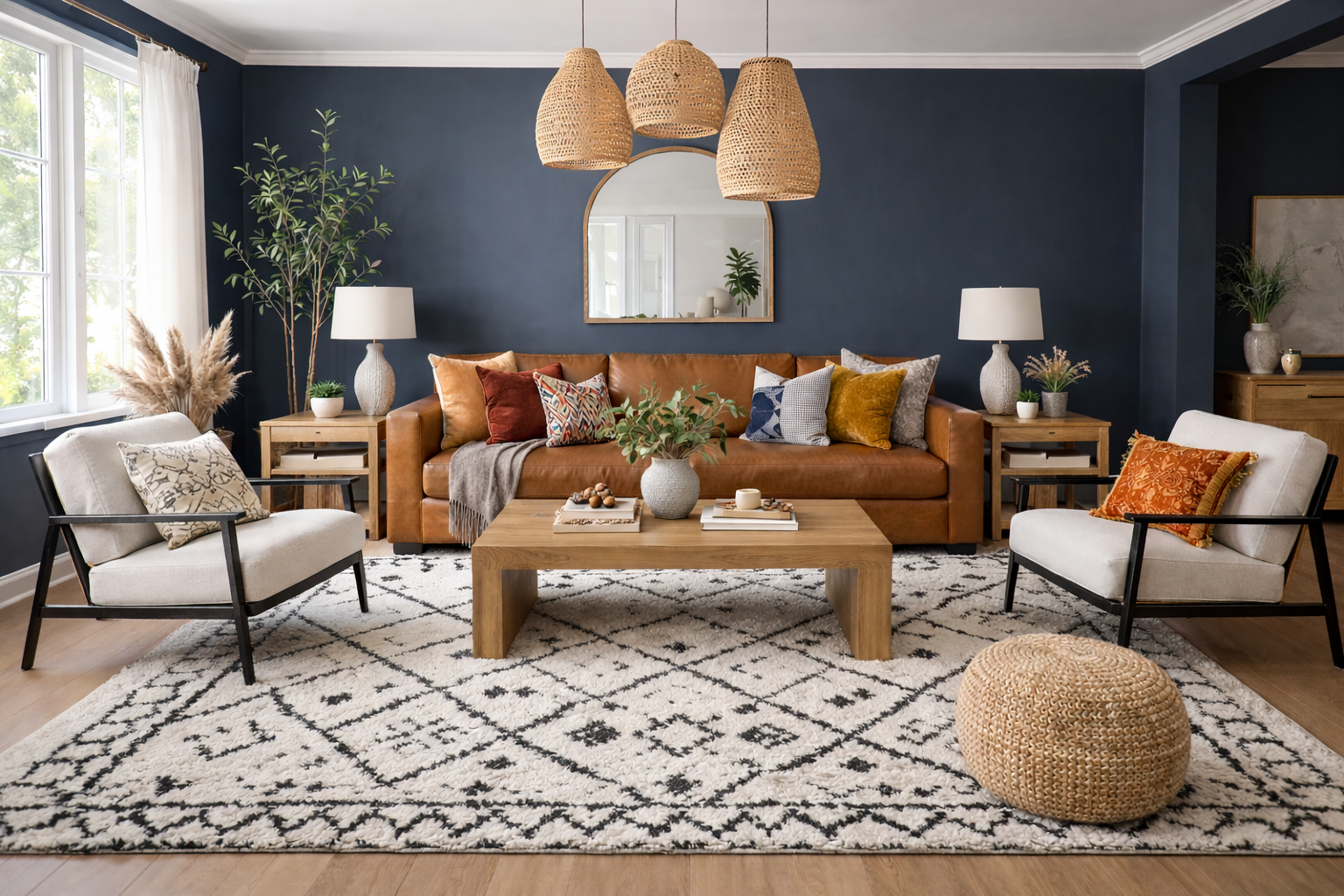
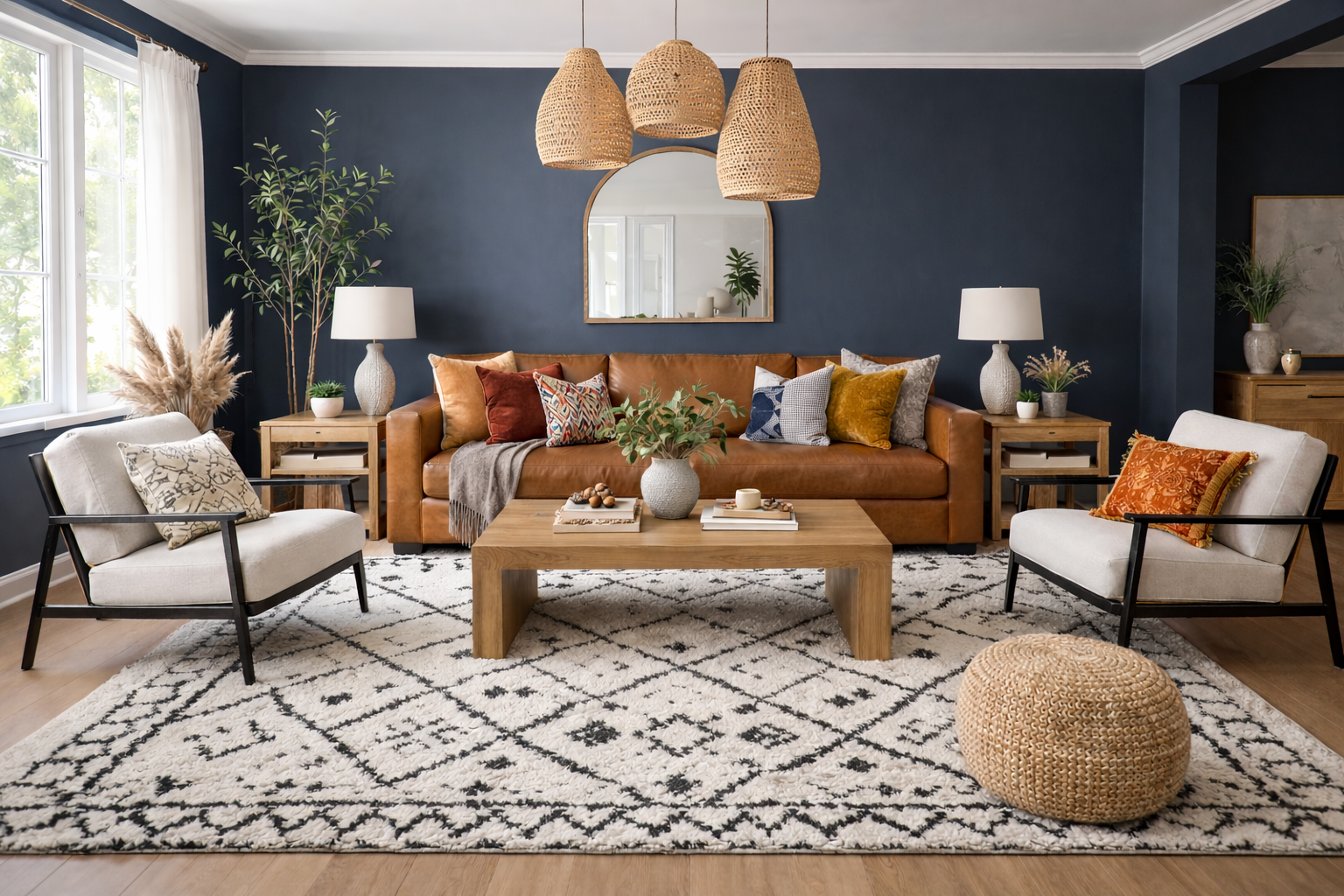
AI-generated image created to illustrate proper living room rug sizing and furniture placement.
Living Room Rug Size Rules (With Furniture Placement)
In a living room, rug size matters more than the pattern or color. A rug that’s too small can make the furniture feel disconnected, while the right size helps anchor the seating area and visually pull the room together.
The most common mistake people make is choosing a rug that only fits under the coffee table. While it may technically “fit” the space, it usually makes the room feel smaller and less intentional. Instead, the rug should relate to the furniture — not float beneath it.
A good rule of thumb is to choose a rug large enough so at least the front legs of your sofa and chairs sit on the rug. This creates a cohesive seating zone and makes the layout feel grounded. In larger living rooms, all furniture legs can sit on the rug, which gives the space a more expansive, polished look.
Standard living room rug sizes like 8×10 or 9×12 work well in most spaces, but proportions matter more than exact measurements. The rug should extend beyond the sides of the sofa and help define the overall seating area, not stop short of it.
If you’re deciding between two sizes, sizing up almost always looks better — and feels better — than choosing a rug that’s too small.
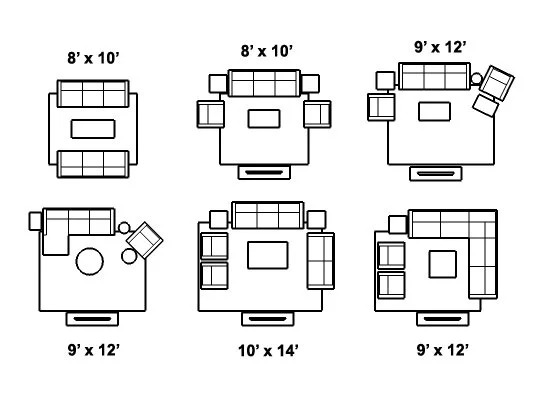
Living room layouts with rug size guide created by virtual interior designer Joshua Jones of JJones Design Co.
It’s easy to hesitate when you see the price tag on larger rug sizes — they can feel like a big investment. That often leads people to shave off a foot here or there to save money, but this is one of those cases where cutting corners usually backfires visually. A rug that’s too small can throw off the entire room, even if everything else is done right.
The good news is that there are plenty of reputable vendors offering properly sized rugs at a wide range of price points. You don’t have to sacrifice scale to stay within budget. And if you’re unsure where to look or which size will work best for your space, I’m always happy to help point you in the right direction.
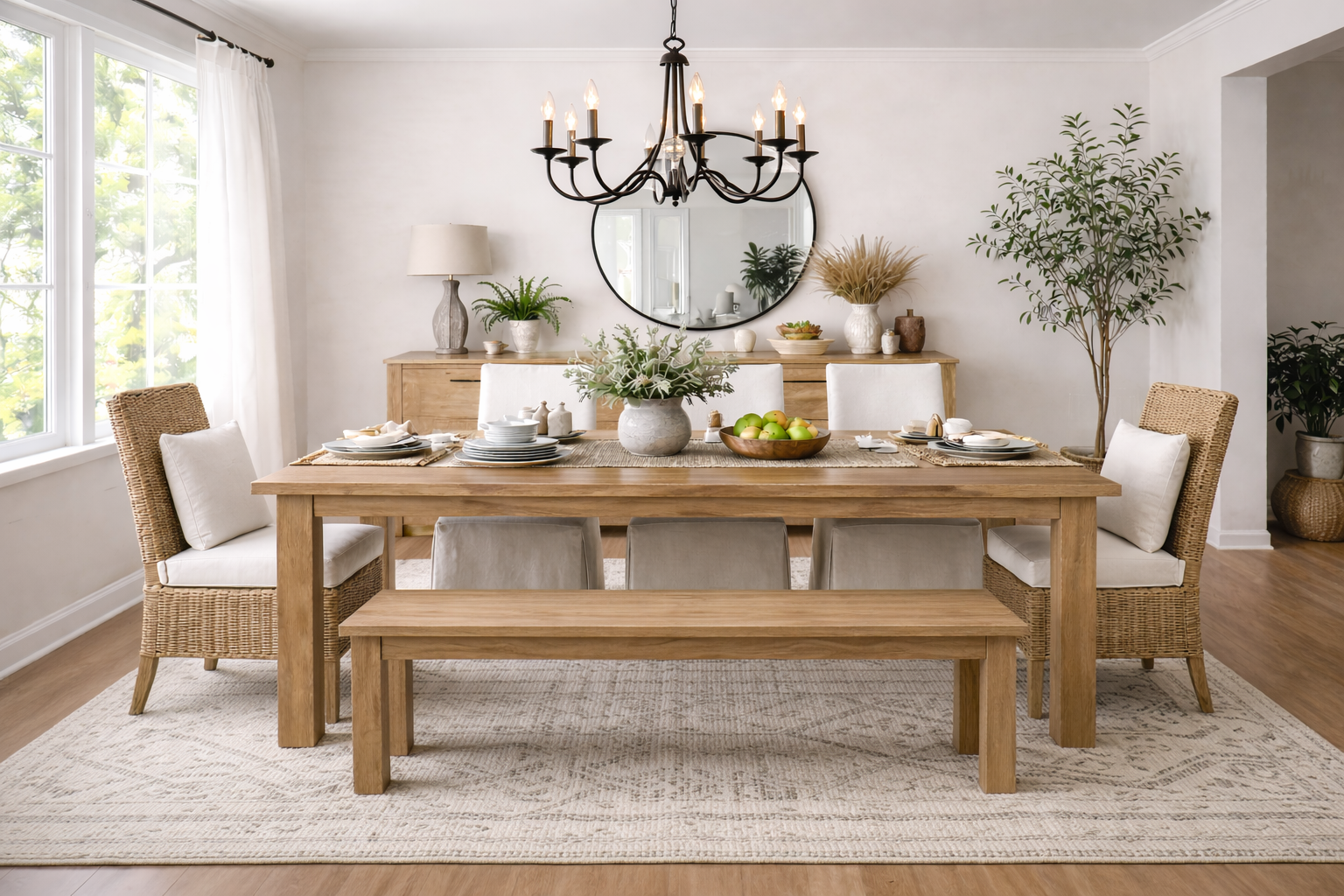
AI-generated image created to illustrate proper dining room rug sizing and seating clearance.
Dining Room Rug Sizes: What Actually Works
Choosing the right rug size for a dining room is less about style and more about function. The rug needs to comfortably accommodate both the table and the chairs — not just when they’re pushed in, but when they’re pulled out and in use.
A common mistake is selecting a rug that only fits beneath the table itself. While it may look fine at first glance, it quickly becomes impractical once chairs are moved. Chair legs catching on the edge of a rug is not only annoying, it also makes the room feel poorly planned.
A well-sized dining room rug should extend at least 24 inches beyond the table on all sides. This allows chairs to stay fully on the rug when seated and when pushed back, creating a smoother, more comfortable experience. In most dining rooms, this means choosing an 8×10 rug or larger, depending on the size of the table.
Low-pile or flat-weave rugs tend to work best in dining spaces since they’re easier to clean and allow chairs to slide more easily. The goal is a rug that supports how the room is actually used, while still framing the dining area in a way that feels intentional and balanced.
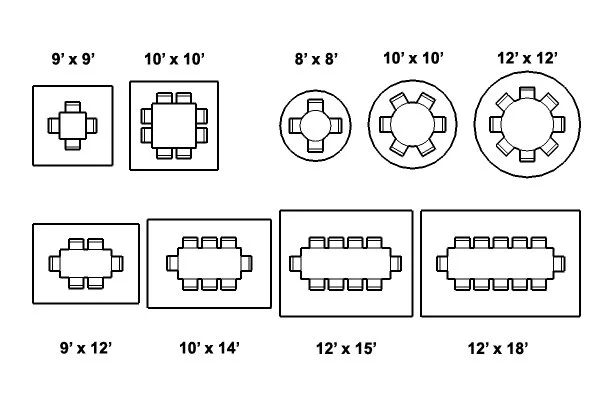
The dining room layouts with rug size GUIDE created by Joshua Jones from JJones Design Co.
One additional note to consider when sizing a dining room rug: if your space includes other furniture pieces, such as a buffet or sideboard, it’s best to keep those items one to three inches away from the edge of the rug. This small gap helps the room feel balanced and prevents the rug from looking crowded or awkwardly placed beneath multiple elements.
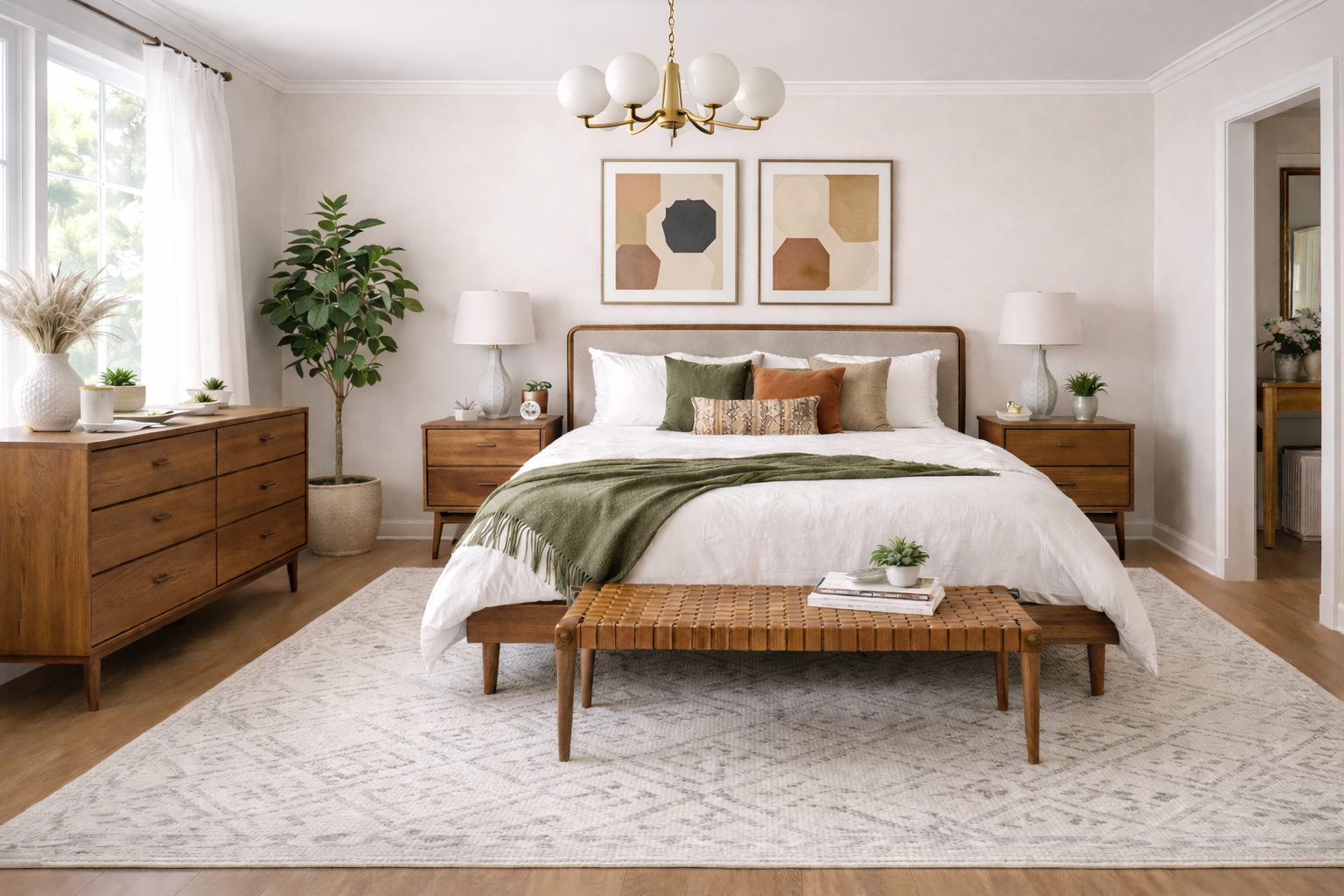
AI-generated image created to illustrate proper bedroom rug sizing and bed placement.
Bedroom Rug Size Guidelines (What Actually Looks and Feels Right)
In the bedroom, a rug should add warmth and comfort while visually anchoring the bed within the space. Because bedrooms are often where people first step onto the floor in the morning, rug placement here is as much about feel as it is about proportion.
The most common approach is placing a large area rug beneath the bed so it extends beyond the sides and foot of the bed. This creates a balanced frame around the bed and ensures there’s a soft surface underfoot on both sides. In most bedrooms, 8×10 or 9×12 rugs work well, depending on bed size and room dimensions.
A frequent mistake is choosing a rug that only covers the lower portion of the bed or sits just beneath the footboard. While this can work in very small rooms, it often looks visually disconnected in standard or larger bedrooms. When possible, the rug should extend at least 18 to 24 inches beyond the sides of the bed to feel intentional rather than incidental.
For narrower rooms or alternative layouts, runners placed on either side of the bed can also be a practical solution. This approach provides comfort underfoot while maintaining clean sightlines and flexibility in tighter spaces.
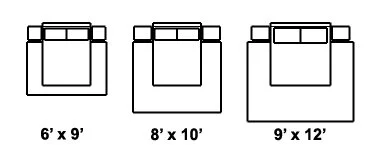
The bedroom layout with rug size guide created by Joshua Jones from JJones Design Co.
Final Takeaway: When in Doubt, Size Up
Choosing the right rug size can completely change how a room looks and feels. While it’s tempting to go smaller to save money or play it safe, rugs that are properly scaled to the furniture almost always create a more polished, cohesive space. In most cases, sizing up — even slightly — makes the room feel more intentional and visually balanced.
Beyond size, don’t overlook what goes underneath your rug. A rug pad helps keep rugs in place, adds comfort underfoot, and can extend the life of the rug itself. If you’re unsure whether you really need one, I break it all down in this post on do you really need a rug pad and what actually matters, which covers when rug pads are worth it and when they’re not.
When you get the size and foundation right, everything else — furniture placement, flow, and overall comfort — tends to fall into place.
